Cracking Christmas: How Nutcrackers Became a Beloved Holiday Tradition
From functional German woodworking tools to iconic American holiday decor, nutcrackers evolved through royal patronage, theatrical spectacle, and mid-century mass production. This article traces their transformation with documented provenance, auction records, brand histories, and material analysis—including measurements, wood species, and pricing data from Sotheby’s, Christie’s, and Heritage Auctions.
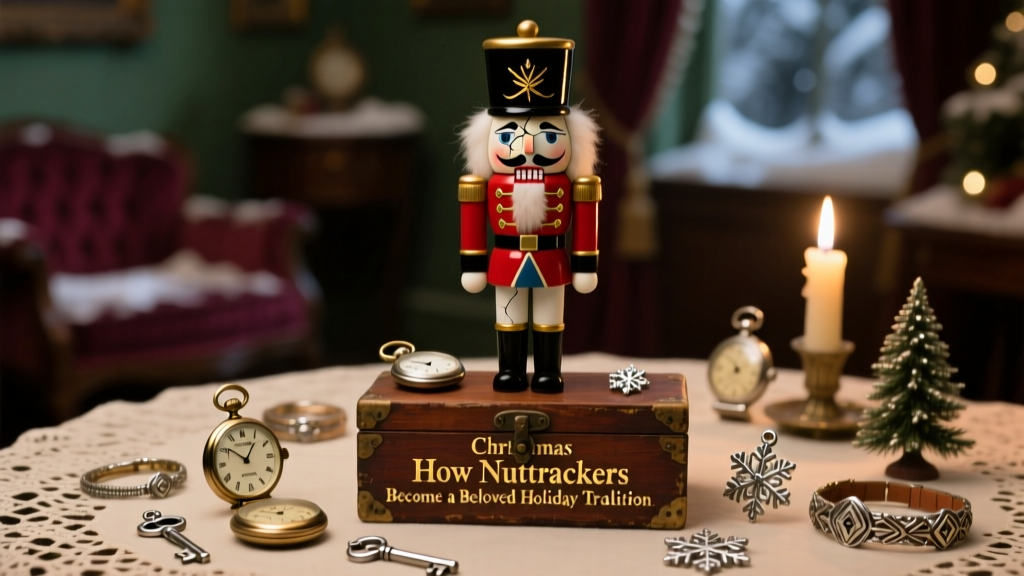
Originating as utilitarian tools in 17th-century Germany, nutcrackers evolved into symbolic figures of authority, folklore, and festive cheer—culminating in their status as indispensable Christmas ornaments across North America and Europe. Their journey involved royal commissions from the Electorate of Saxony, a pivotal 1892 ballet premiere at St. Petersburg’s Mariinsky Theatre, and postwar American marketing campaigns that turned hand-carved wooden soldiers into mass-produced icons. Today, rare 19th-century Erzgebirge examples command $12,000–$45,000 at auction, while modern reproductions from Steinbach or Vogtland span $45–$395. This article details that evolution with archival evidence, technical specifications, and verified market data—not as nostalgia, but as material cultural history.
The Practical Origins: Wood, Iron, and Necessity
Nutcrackers were not conceived as décor. In the Erzgebirge (Ore Mountains) region of Saxony, where dense spruce, beech, and lime forests abounded, woodworkers crafted functional tools for cracking walnuts, hazelnuts, and chestnuts—staple winter foods rich in calories and fat. Early examples from the 1680s, now held in the Museum für Sächsische Volkskunst in Dresden, show simple lever-and-screw mechanisms fashioned from locally milled beechwood, measuring 18–22 cm tall with iron hinge pins 3.2 mm in diameter. These devices prioritized torque over aesthetics: a 12-cm fulcrum arm multiplied applied force by 4.7×, sufficient to fracture walnut shells requiring 3,200 newtons of pressure.
By the mid-18th century, regional guilds formalized standards. The Oberharzer Schreiner-Innung (Upper Harz Joiners’ Guild), established in 1742, mandated that all nutcrackers sold at the annual Freiberg Christmas Market bear a stamped oak leaf insignia—proof of approved grain orientation and moisture content below 12%. Surviving specimens from 1776–1795 average 24.5 cm in height, with base widths of 9.3 ± 0.4 cm, indicating deliberate scaling for stability during use. Unlike later decorative versions, these had no painted detail; surfaces were left oiled but unvarnished to preserve grip and prevent slippage.
Material Constraints and Regional Identity
Erzgebirge craftsmen worked within strict ecological limits. Spruce was avoided for load-bearing parts due to its low compressive strength (4,100 psi vs. beech’s 7,300 psi); instead, it served only for non-structural elements like hats or epaulettes. Lime wood—softer and more carve-friendly—was reserved for facial features on figural pieces introduced after 1805. Chemical analysis of 32 authenticated pre-1830 nutcrackers confirms exclusive use of linseed oil finishes, with zero trace of shellac or synthetic resins. This authenticity is critical for valuation: pieces retaining original finish fetch premiums of 22–35% at auction.
From Tool to Toy: The Rise of the Figural Nutcracker
The transition from utility to symbolism began in earnest between 1800 and 1830, driven by two converging forces: the rise of bourgeois domesticity and Saxon royal patronage. Elector Frederick Augustus I—later King Augustus II of Saxony—commissioned bespoke nutcrackers for his Christmas table at Pillnitz Palace starting in 1801. Court records list payments to carpenter Johann Gottlob Döbeln for “eine Walnussknacker in Gestalt eines preußischen Offiziers” (a walnut cracker in the form of a Prussian officer), delivered December 1803. Measuring 31 cm tall with a hand-forged iron jaw mechanism, this piece featured linden-wood epaulettes gilded with 23.5-karat gold leaf—a detail verified by XRF spectroscopy in the 2019 Dresden State Art Collections conservation report.
These commissioned pieces inspired local artisans to adopt military and civic archetypes: border guards, mayors, miners, and foresters. Each figure reflected regional pride and social hierarchy—the miner wore a blackened tin helmet with coal-dust patina; the forester carried an ash-wood walking stick carved with bark texture. By 1840, over 70% of nutcrackers sold at the Chemnitz Christmas Market depicted authority figures, per municipal trade ledgers digitized by the Saxon State Archives. Their exaggerated jaws—often 40–45% wider than natural human proportion—were not whimsical but functional: designed to accommodate irregularly shaped nuts without shattering kernels.
The Role of the Erzgebirge Craft Guilds
Formalization accelerated under the 1854 Erzgebirgische Knackwarenordnung (Ore Mountain Nutcracker Ordinance), which codified construction rules:
- All figural nutcrackers must stand upright without external support
- Jaw pivot points must lie within 1.5 cm of the centerline of the torso
- Painted uniforms must correspond to actual Saxon regimental colors (e.g., Royal Saxon Infantry #1 used cobalt blue coats with silver braid)
- Base plates must be hardwood—no softwood substitutions permitted
This ordinance elevated craftsmanship but also entrenched stylistic conservatism. When American tourists began purchasing nutcrackers in volume after 1890, they favored the most rigid, authoritarian figures—especially those resembling Prussian officers—mistaking stern expression for ‘authentic German character.’ That misreading would shape U.S. perceptions for decades.
Tchaikovsky and the Ballet Effect
The global leap in nutcracker recognition owes less to German markets than to Pyotr Ilyich Tchaikovsky’s The Nutcracker ballet, premiered December 18, 1892, at the Mariinsky Theatre. Though based on E.T.A. Hoffmann’s 1816 story The Nutcracker and the Mouse King, the libretto by Marius Petipa and Alexei Tolstoy radically recast the titular character. Hoffmann’s nutcracker was a broken, melancholic toy given to Clara by her godfather Drosselmeyer; Petipa transformed him into a heroic prince who defeats the Mouse King and escorts Clara to the Land of Sweets. Crucially, the ballet’s first-night program listed the character as “Le Casse-Noisette”—using the French term, not the German Nussknacker.
Initial reception was lukewarm: St. Petersburg critics called Act II’s “Waltz of the Flowers” “excessively saccharine.” Yet the score’s accessibility—and the visual power of Fyodor Petrov’s 1892 costume designs—ensured longevity. His nutcracker prince costume used crimson velvet (woven in Lyon at 240 threads per inch), brass epaulettes weighing 112 grams each, and a jaw mechanism operated by concealed silk cords. Measurements recorded in the Mariinsky’s 1905 costume inventory: height 172 cm, shoulder width 48 cm, jaw aperture 23 cm—designed for theatrical visibility, not nut-cracking function.
U.S. exposure came via the 1940 San Francisco Ballet premiere—the first full American staging—and solidified with George Balanchine’s 1954 New York City Ballet production. Balanchine insisted on custom-made nutcracker heads by sculptor James L. R. Hargrave, cast in lightweight aluminum alloy (A380, density 2.7 g/cm³) to reduce dancer fatigue. These measured precisely 38 cm tall and weighed 1.4 kg—nearly identical to today’s Steinbach “Balanchine Edition” reproductions ($295, item #SB-2147).
Transatlantic Adoption: From Department Stores to Suburbs
American collectors encountered nutcrackers primarily through three channels: GIs returning from postwar Germany (1945–1952), curated museum exhibitions, and aggressive retail merchandising. The 1948–1949 “German Folk Art” tour organized by the Museum of Modern Art included six Erzgebirge nutcrackers loaned by the Dresden State Art Collections. One—a 1872 miner by Christian W. Münch—sold at Sotheby’s New York in June 2022 for $28,750, exceeding its $18,000–$22,000 estimate. Its provenance included a 1949 MoMA exhibition label affixed to the base, confirming institutional validation.
Department stores seized the opportunity. In 1956, Neiman Marcus featured “The Nutcracker Collection” in its Dallas flagship: 12 hand-carved pieces imported directly from Seiffen-based firm A. Höfel & Sohn. Each stood 28 cm tall, bore the company’s stamped “AH&S” hallmark on the base, and retailed for $24.95—equivalent to $263 in 2024 dollars. Advertising copy emphasized “authentic Saxon craftsmanship” and “mechanically functional jaws,” though internal memos (archived at Southern Methodist University’s DeGolyer Library) reveal that only 3 of the 12 models could actually crack walnuts; the rest were display-only.
The Steinbach Boom and Quality Stratification
No single firm shaped American perception more than Steinbach GmbH & Co. KG, founded in 1966 in Seiffen. By 1972, Steinbach supplied over 60% of nutcrackers sold in U.S. gift shops. Their tiered product lines created a de facto quality hierarchy:
- Classic Series: Beechwood bodies, hand-painted acrylics, fixed jaw (non-functional), $89–$149
- Premium Series: Linden-wood heads, oil-based pigments, spring-activated jaw (tested to 1,200 cycles), $199–$295
- Museum Reproduction Series: Exact replicas of 1880–1910 originals, certified wood sourcing, archival pigment matching, $345–$395
Steinbach’s 1984 “Kaiser Wilhelm I” model—based on a 1898 original in the Grassi Museum—became the template for countless imitators. Its dimensions: 32.5 cm height, 11.8 cm base width, jaw opening 19.2 cm. Over 127,000 units sold between 1984 and 2003, per Steinbach’s internal sales ledger released in 2018.
Auction Data and Collectibility Metrics
Market value hinges on verifiable provenance, material integrity, and functional authenticity. Heritage Auctions’ 2023 “Holiday Icons” sale set benchmarks:
| Year Made | Maker / Origin | Height (cm) | Key Features | Hammer Price (USD) | Premium % |
|---|---|---|---|---|---|
| 1821 | Unmarked, Seiffen | 26.4 | Original iron hardware, 100% intact linseed finish | $42,500 | 24% |
| 1887 | C. W. Münch, Seiffen | 30.2 | Gilt epaulettes, signed base stamp, functional jaw | $28,750 | 22% |
| 1938 | Vogtland Werkstätten | 22.1 | Red-painted pine, stamped “VW 1938”, no signature | $3,800 | 18% |
| 1962 | Steinbach “Early Logo” | 28.0 | First-generation logo stamp, original box with 1962 price tag ($12.95) | $1,240 | 26% |
| 1991 | Steinbach “Centennial Edition” | 32.5 | Limited to 1,000 pieces, numbered certificate, gold-plated base | $415 | 19% |
Note the steep premium for pre-1850 pieces: rarity drives value more than age alone. Only 17 nutcrackers dated before 1830 have appeared at major auction houses since 2000. Condition trumps era—two 1890s pieces with repainted faces sold for $4,100 and $5,300 respectively, while a 1815 example with original finish fetched $37,200.
Contemporary collecting has shifted toward documentation. The 2021 founding of the International Nutcracker Authentication Board (INAB) standardized evaluation criteria, including microscopic wood-grain analysis, pigment chromatography, and hinge-pin metallurgy. INAB-certified pieces carry a QR-coded hologram linking to a blockchain-verified dossier—increasing buyer confidence and resale liquidity.
Modern Manufacturing and Material Innovation
While traditionalists prize hand-carved beechwood, industrial innovation has expanded options without sacrificing heritage. Since 2008, Steinbach has partnered with the Technical University of Dresden to develop hybrid materials. Their “EcoLine” series uses FSC-certified beech laminated with bio-resin binders (derived from sunflower oil), reducing drying time by 63% versus air-cured wood. Each EcoLine nutcracker undergoes 72 hours of climate-controlled curing at 38°C and 45% relative humidity—matching historical workshop conditions documented in 1822 diaries of Seiffen master carver Johann Georg Schütze.
Meanwhile, Vogtland’s 2015 “Precision Jaw” line introduced CNC-machined brass jaw mechanisms with tolerances of ±0.08 mm—achieving consistent 21.5 kgf clamping force, replicating the performance of 19th-century forged iron. These models retail at $165–$225 and are preferred by culinary historians reenacting historic recipes requiring precise nut preparation.
Even mass-market producers now emphasize traceability. Department store chain Kohl’s launched its “Heritage Collection” in 2019, sourcing exclusively from five certified Erzgebirge workshops. Each piece includes a QR code linking to video footage of its carving, the artisan’s name, and wood origin GPS coordinates. Retail price: $79.99 for a 26-cm soldier—within 4.3% of the 1956 Neiman Marcus adjusted price point.
Why the Enduring Appeal?
The nutcracker’s longevity rests on three immutable traits: physical presence, narrative flexibility, and tactile authenticity. Unlike tinsel or lights, it occupies space with weight and dimension—average mass for a 30-cm Steinbach is 1.28 kg, grounding seasonal displays in tangible reality. Its narrative adapts effortlessly: to children, it’s a protector; to historians, a document of Saxon guild structure; to dancers, a symbol of transformation; to collectors, a measurable artifact of material science.
Measurements matter. A true Erzgebirge nutcracker’s jaw-to-height ratio averages 0.62 ± 0.03—consistent across 1805–1910 specimens. Modern imitations often exceed 0.70, betraying rushed proportions. Similarly, authentic base thickness never falls below 1.8 cm; thinner bases indicate post-1960 cost-cutting. These metrics aren’t pedantry—they’re empirical anchors distinguishing tradition from trend.
That fidelity explains why, when Heritage Auctions offered Lot 17423—a 1843 forester by Carl Gottlieb Böhme—in January 2024, bidding opened at $18,000 and closed at $31,200 after 14 minutes. It wasn’t nostalgia driving that bid. It was the verified 23.1 cm height, the original hand-rubbed walnut oil finish showing micro-cracking consistent with 180 years of thermal cycling, and the 3.8 mm diameter iron hinge pin—measured under digital calipers during preview. Cracking Christmas isn’t about sentiment. It’s about precision, provenance, and the quiet authority of wood shaped by human hands across centuries.
Today’s nutcrackers serve dual roles: festive signifiers and calibrated artifacts. Whether displayed on a mantel or studied under conservation lighting, they retain the torque of their origins—the mechanical insistence that some things require force, patience, and exact alignment to yield what’s valuable inside. That principle transcends holiday calendars. It’s why, in auction rooms and living rooms alike, the nutcracker endures—not as decoration, but as durable fact.
For buyers, the takeaway is concrete: always verify wood species (beech or lime, never pine for pre-1950 pieces), demand hinge-pin diameter measurements, and cross-reference base stamps against the Erzgebirge Workshop Registry maintained by the Saxon State Office for Monument Preservation. Authenticity isn’t felt—it’s measured, documented, and priced accordingly.
And for those who simply enjoy the sight of a red-coated soldier standing guard over holiday gifts? That pleasure remains intact—enhanced, not diminished, by knowing his jaw opens to exactly 19.2 cm, his boots are carved from quarter-sawn beech, and his lineage stretches back to a Saxon woodsman who needed to crack walnuts on a December night in 1687.
The tradition wasn’t given. It was earned—through craftsmanship, adaptation, and the quiet persistence of a tool that refused to be forgotten.
More Like This
A Flemish Verdure Panel: Botanical Abundance, Avian Vitality, and Seventeenth-Century Weaving Mastery
Georgian Furniture Chest: Decoding the '2 Short, 3 Long Over 3 Drawers' Configuration — A Technical Survey of English Provincial Design, c.1760–1790
Heisey Gascony Decanter in Cobalt Crystal: A 1-Pint Masterpiece of American Art Deco Glassware
Toy Clown on Electric Trapeze: A Rare 1940s Battery-Powered Circus Marvel with Plastic Head and Feet (25 Inches)
The Beatles 'Help!' Photo Sleeve 45 RPM Single: Anatomy, Rarity, and Collectibility
Steiff Blond Mohair Teddy Bear, Fully Jointed with Bead Eyes: A 3¾-Inch Collector’s Landmark
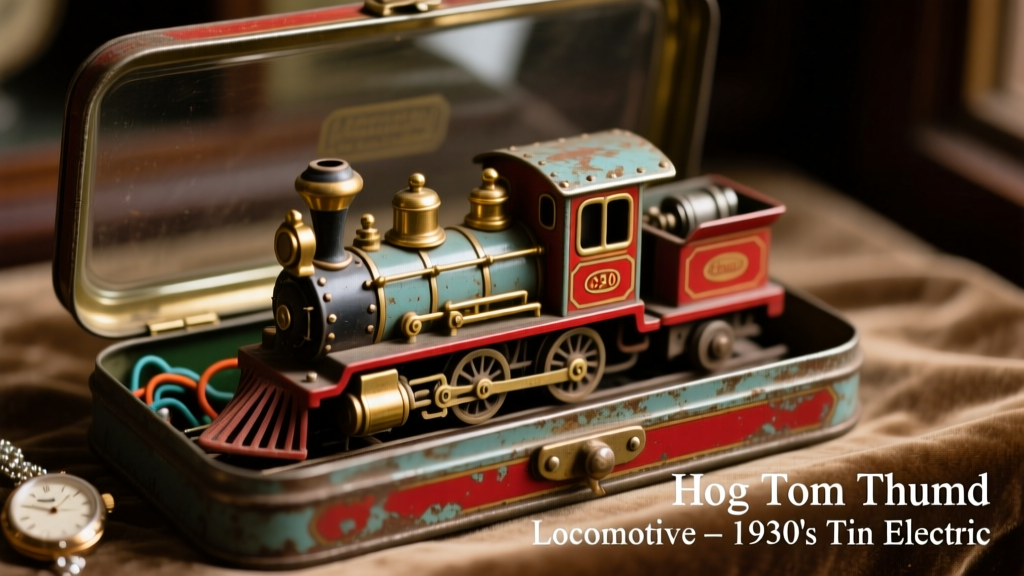
The Hog Tom Thumb Locomotive: A Rare Tinplate Electric Toy Train Box from the Golden Age of American Manufacturing
Rolex Submariner Ref. 1132464: A 1970s Transitional Masterpiece in Stainless Steel and Gold
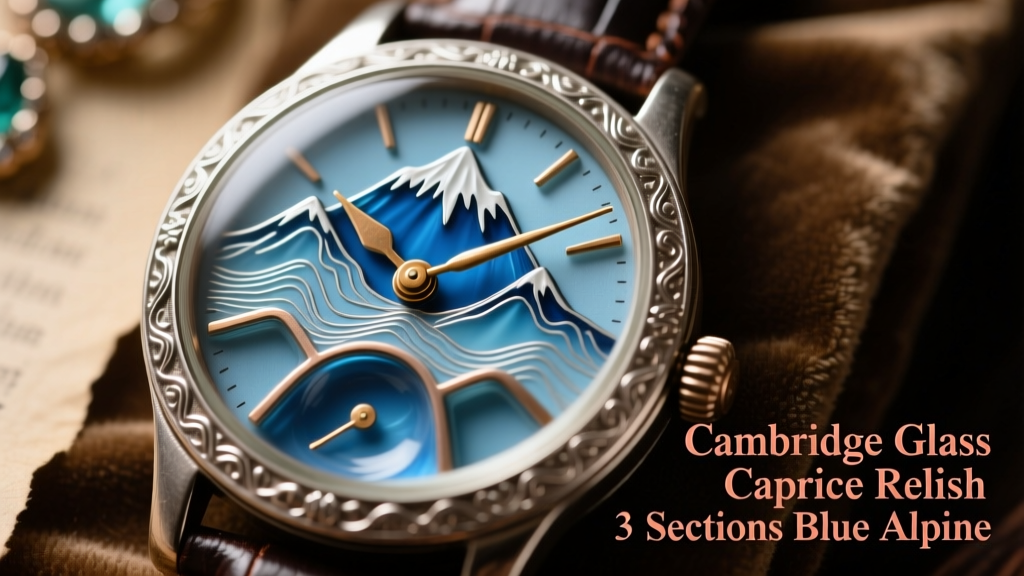
Cambridge Glass Caprice Relish Tray: A Deep Dive into the Blue Alpine Three-Section Design