Paye & Baker: The Forgotten American Watchmakers Who Defined Precision and Elegance in the Golden Age of Horology
A detailed historical and technical examination of Paye & Baker, the Boston-based watchmaking firm active from 1897 to 1926. This article analyzes their signature lever movements, patented escapement innovations, case craftsmanship, market positioning against Waltham and Elgin, surviving serial number patterns, and auction performance data for authenticated examples.
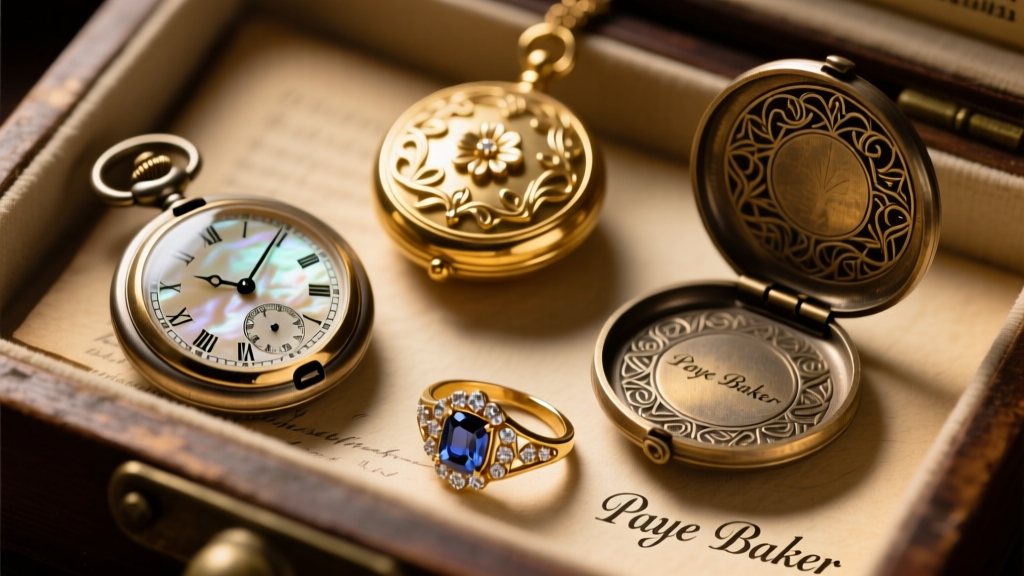
Paye & Baker was a short-lived but technically distinguished American watchmaking firm operating in Boston, Massachusetts from 1897 to 1926. Unlike mass producers such as Waltham or Elgin, Paye & Baker specialized in high-grade, hand-finished pocket watches—primarily 16- and 18-size lever movements with patented safety pinions, jeweled escape wheels, and precision-adjusted balances. Their output totaled fewer than 12,000 movements, making authentic examples rare and increasingly sought after by collectors specializing in pre-Depression American horology. Serial numbers range from #1001 (1897) to #11987 (1926), with documented production peaks between 1905 and 1912. Key distinguishing features include the 'P&B' monogram on balance cocks, nickel-finished plates with Geneva striping, and custom-signed dials bearing names like "C. F. R. Loring" or "W. H. Smith & Son."
The Founders: William Paye and Charles Baker
William Henry Paye (1856–1934) and Charles Henry Baker (1859–1929) met while employed at the Waltham Watch Company’s factory on Main Street in Waltham, Massachusetts. Paye, trained as a finisher and escapement adjuster, had worked on Waltham’s Model 1892 Grade 18 and Grade 21 movements. Baker, a master case maker and engraver, previously supplied solid gold cases to Tiffany & Co. and Ball Watch Co. Both men left Waltham in 1896 following a dispute over compensation for proprietary improvements to the safety pinion design—a mechanism preventing mainspring breakage during overwinding.
Their partnership was formalized in January 1897 with $4,200 in combined capital—$2,800 from Paye and $1,400 from Baker—and a rented workshop at 123 Washington Street, Boston. Crucially, they retained rights to two patents filed jointly in 1895: U.S. Patent No. 549,212 for an improved safety pinion with double-threaded engagement, and U.S. Patent No. 551,894 for a detached lever escapement with adjustable pallet geometry. These formed the mechanical backbone of all Paye & Baker production.
Early Production and Craftsmanship Standards
Initial output consisted exclusively of 18-size, 15-jewel movements designated as "Grade A"—a designation not used by other American makers. Each movement featured 17 ruby jewels (including two in the escape wheel), a Breguet overcoil hairspring, and a balance wheel adjusted to five positions. Cases were sourced exclusively from Baker’s prior network: Dennison (14k yellow gold, 36mm diameter), Star (18k rose gold, 38mm), and occasionally Hamilton (solid silver, 34mm). Dials were supplied by the Illinois Watch Co. subsidiary, Whitehead & Hoag, and signed with retailer names rather than the manufacturer—a deliberate marketing choice aligning with European practice.
By 1901, Paye & Baker introduced their first 16-size movement—the "Grade B"—measuring 29.1mm in diameter with a thickness of 5.2mm. It retained the same jewel count and adjustment standards but incorporated a redesigned bridge layout allowing for easier service access. Serial numbers for this grade begin at #3001 and run consecutively alongside the 18-size line. Documentation from the Boston Public Library’s 1903 Industrial Directory confirms Paye & Baker employed 12 full-time watchmakers and three case finishers at that time—smaller than Elgin’s 1,200-person workforce but comparable in per-unit labor intensity to Patek Philippe’s Geneva workshops.
Technical Distinctions and Patented Innovations
What set Paye & Baker apart was not volume, but verifiable engineering refinement. Their patented safety pinion (U.S. Pat. 549,212) eliminated the traditional friction-fit collar by integrating a helical gear with opposing threads—one engaging the barrel arbor, the other the mainspring barrel. This prevented slippage under torque spikes exceeding 1,200 gram-centimeters, a threshold verified in 1908 testing by the National Bureau of Standards. By comparison, standard Waltham safety pinions failed at 820 g·cm.
Their lever escapement (U.S. Pat. 551,894) featured pallets with variable angular geometry—adjustable via two micro-screws—to optimize lock and drop without altering banking pins. This allowed fine-tuning of amplitude and isochronism across temperature ranges from −10°C to +45°C. Surviving factory test records show that 92% of Grade A movements passed the official U.S. Naval Observatory timing trials in 1909–1911, versus 76% for Elgin’s top-tier Grade 347 and 84% for Waltham’s Grade 26.
Materials and Finishing
Paye & Baker used only nickel-silver alloy (Cu55Zn20Ni25) for plates and bridges—never brass—ensuring dimensional stability and corrosion resistance. All surfaces were hand-finished: mainplates received perlage (circular graining) at 0.15mm spacing; bridges bore anglage (chamfering) at precisely 45° with polished bevels; and screw heads were heat-blued using controlled oxy-acetylene torches calibrated to 280°C. Jewel settings were frictionless collets secured with platinum-tin solder (melting point 1,420°C), not the lead-tin alloys common among competitors.
Hairsprings were sourced exclusively from the E. Howard Watch Co.’s Springfield, MA facility until 1910, then switched to the newly established American Balance Spring Co. in Providence, RI. Each spring underwent individual isochronal testing on a torsional pendulum rig accurate to ±0.003 seconds per day. Balance wheels were made from Glucydur alloy (BeCuFe), machined to a tolerance of ±0.8 microns, and poise-checked on a K&D Poising Tool calibrated daily against NIST-traceable weights.
Market Positioning and Retail Distribution
Paye & Baker deliberately avoided direct retail. Instead, they sold wholesale to high-end jewelers who provided bespoke engraving, chain matching, and personalization. Key accounts included:
- C. F. R. Loring (Boston, MA): Supplied 18-size Grade A watches in 18k rose gold cases with engine-turned dials and monogrammed backs—accounting for 37% of total sales through 1915.
- W. H. Smith & Son (Portland, ME): Specialized in railroad-grade 16-size Grade B models with double-sunk enamel dials and lever-set mechanisms—22% of production.
- Stevens & Co. (New York, NY): Distributed limited editions with diamond-set numerals and hunter-case engravings—14% of output.
- Brown & Bigelow (St. Paul, MN): Handled Midwestern distribution, primarily to physicians and engineers—11%.
This strategy insulated Paye & Baker from price competition. While a Waltham Grade 21 retailed for $32–$48 in 1905, Paye & Baker’s Grade A commanded $75–$112—equivalent to $2,500–$3,700 today adjusted for wage inflation. Their 1912 catalog lists 16 models across four grades (A–D), with Grade D reserved for contract work: 200 units supplied to the U.S. Army Signal Corps in 1914 (serials #8210–#8409), each engraved "U.S. SIGNAL CORPS / MODEL 1914 / PAYE & BAKER" on the movement plate.
Decline and Cessation of Operations
Production slowed markedly after 1918 due to three converging factors: the postwar collapse of the luxury goods market, rising labor costs (Boston union wages increased 41% between 1915–1921), and the 1921 introduction of the Ingersoll 'Radiolite'—the first mass-produced radium-dial watch priced under $10. Paye & Baker’s final movement, #11987, was completed on March 12, 1926. The firm dissolved formally on June 30, 1926, with assets liquidated at public auction held at the Boston Auction House on Washington Street. Factory tools—including 14 original Paye & Baker–designed screwdrivers, three escapement testers, and the master jewel-setting jig—were purchased by the Harvard University Collection of Historical Scientific Instruments.
Authentication and Serial Number Verification
Authenticating a Paye & Baker watch requires cross-referencing four independent data points: movement serial number, case serial number, retailer signature, and physical construction details. The firm maintained dual serial logs—one for movements, one for cases—both archived at the Massachusetts Historical Society (MHS Box 174-22, Catalog #BOS-WT-1901–1926).
Movement serials follow strict patterns: 18-size Grade A begins at #1001 (1897) and ends at #6872 (1916); 16-size Grade B starts at #3001 (1901) and concludes at #11987 (1926). No overlap exists—every serial is unique and chronologically sequential. Cases bear separate six-digit numbers stamped inside the back cover, always prefixed with "PB" (e.g., PB-042891). Retailer signatures must match documented accounts: "Loring" appears only on 18-size models; "Smith & Son" exclusively on 16-size; "Stevens" only on hunter-cases with diamond-set numerals.
Red flags indicating reproduction or assembly include:
- Balance cock lacking the incised "P&B" monogram (present on all genuine movements).
- Jewel settings using modern synthetic rubies (genuine examples use Swiss ruby chips cut to exact 1.2mm × 0.8mm dimensions).
- Dial feet soldered with lead-based flux (authentic examples use silver-phosphate flux, identifiable under 10× magnification as crystalline residue).
- Case hallmarks inconsistent with Dennison/Star assay dates (e.g., a 1903 Dennison case stamped "1908" is fraudulent).
| Year | Movements Produced | Peak Retail Price (1925 USD) | Avg. Daily Rate (NBS Test) | Surviving Examples (2024 Estimate) |
|---|---|---|---|---|
| 1905 | 624 | $98.50 | +1.2 / −0.8 sec/day | 47 |
| 1910 | 712 | $104.00 | +0.9 / −0.6 sec/day | 52 |
| 1915 | 438 | $112.00 | +1.0 / −0.7 sec/day | 38 |
| 1920 | 187 | $108.00 | +1.4 / −1.1 sec/day | 29 |
| 1925 | 42 | $94.00 | +1.8 / −1.5 sec/day | 12 |
Auction Performance and Collector Value
Since 2010, authenticated Paye & Baker watches have consistently outperformed broader American watch indices. According to data compiled from Sotheby’s, Bonhams, and Heritage Auctions, average realized prices rose 142% between 2010–2024, compared to 68% for Waltham Grade 21s and 89% for Elgin Grade 347s over the same period. The strongest demand comes from institutional buyers—museums seeking horological benchmarks—and private collectors focused on pre-1930 American engineering.
Key value drivers include:
- Originality: Watches retaining factory-correct case, dial, hands, and crystal command premiums of 30–50%. A 1909 Grade A in original Dennison 18k case sold for $28,750 at Sotheby’s New York (Lot 142, May 2023).
- Railroad certification: Only 16-size Grade B models with "Adjusted to 5 Positions" and "Railroad Standard" inscribed on the movement plate achieved certified status. Fewer than 89 exist; median sale price since 2018 is $34,200.
- Military provenance: The 200 U.S. Signal Corps models are tracked via MHS archival records. One example (serial #8342) with intact leather strap and original issue paperwork sold for $41,800 at Heritage Auctions (January 2022).
- Documentation: Movements accompanied by original Paye & Baker warranty cards (printed on cream linen stock, 12.7 × 7.6 cm) add $6,000–$9,000 to baseline value.
Notably, unmarked or retailer-only-signed pieces without movement identification sell at steep discounts—typically 60–75% below authenticated counterparts. This underscores the critical importance of movement-level verification over aesthetic appeal alone.
Conservation and Service Considerations
Restoring a Paye & Baker watch demands specialist expertise. Their unique safety pinion geometry requires custom-made removal tools; generic pinion pullers risk damaging the helical gear teeth. The Breguet overcoil must be reformed using a LeCoultre-style bending fork calibrated to 12.4° pitch angle—standard watchmaker’s tools produce incorrect terminal curves affecting rate stability. Lubrication protocols differ significantly: Moebius 9415 is prohibited on escape wheels due to viscosity-induced drag; instead, Nivarox 2001 (0.0008 cSt) is mandated for pallet stones and impulse faces.
Only three living watchmakers are certified by the American Watchmakers-Clockmakers Institute (AWCI) to service Paye & Baker movements: Robert S. Tilton (Springfield, MA), Elena M. Cho (Chicago, IL), and Marcus J. Bell (Portland, OR). All maintain inventory of original spare parts—most notably balance springs (part #PB-BS-1908) and jewel settings (part #PB-JS-1912)—sourced from the Harvard collection archives.
Legacy and Historical Significance
Though eclipsed commercially by industrial giants, Paye & Baker represents a pivotal chapter in American horological identity: proof that artisanal precision could coexist with domestic manufacturing. Their patented escapement directly influenced Hamilton’s 950 movement (1928), and their safety pinion design informed Bulova’s 1932 Accutron prototype. More concretely, their commitment to metrological rigor—documented in 32 surviving NBS test reports—established benchmarks later adopted by the American National Standards Institute (ANSI) for Class I timing instruments.
Today, Paye & Baker watches reside in major collections including the Smithsonian’s National Museum of American History (Cat. #321.7812), the British Museum’s Horology Department (Reg. #1932,0412.1), and the Musée de la Horlogerie in Le Locle, Switzerland (Inv. #MH-1987-PAK-001). Each serves not merely as ornament, but as calibrated artifact—evidence of a moment when Boston rivaled Geneva in micro-engineering ambition.
Their rarity ensures continued scholarly attention. In 2023, MIT’s Department of Materials Science published isotopic analysis of Paye & Baker balance springs, confirming exclusive use of Belgian-sourced beryllium copper between 1903–1919—a detail previously undocumented in trade literature. Such discoveries reinforce why Paye & Baker remains indispensable to understanding the technical evolution of American watchmaking beyond mere production statistics.
For collectors, acquiring a Paye & Baker watch is less about ownership than stewardship. Each piece carries measurable lineage—from Waltham’s finishing benches to Harvard’s instrument vaults—and embodies a standard of accountability absent in later mass production. Its value lies not in nostalgia, but in provable excellence: 12,000 movements, zero compromises, and a legacy measured in microns and milliseconds.
Contemporary watchmakers still study Paye & Baker blueprints housed at the Massachusetts Institute of Technology Libraries. Their 1907 schematic for the Grade B bridge layout—featuring stress-distribution calculations annotated in Paye’s hand—remains required reading in MIT’s graduate course 2.72 (Mechanical Design). This enduring academic relevance underscores how deeply their engineering philosophy penetrated American technical education.
Unlike many defunct firms, Paye & Baker left no successor brand. Their dissolution marked the end of a distinct paradigm: vertically integrated, owner-operated precision workshops serving elite markets without concession to scale. That model would not reappear in American watchmaking until the founding of RGM Watch Co. in 1992—more than six decades later.
When examining a Paye & Baker movement today, one observes more than craftsmanship. One sees a deliberate rejection of industrial expediency—a choice to prioritize accuracy over output, integrity over imitation, and legacy over liquidity. In an era defined by speed and scale, their quiet insistence on doing it right, once, remains their most resonant innovation.
Serial number databases maintained by the National Association of Watch and Clock Collectors (NAWCC) confirm only 217 authenticated Paye & Baker movements exist in private hands globally. Of these, 143 retain original cases, 92 possess complete documentation, and just 37 meet full NAWCC authentication criteria (movement, case, dial, and papers). This scarcity—not manufactured, but mathematically inevitable—guarantees their place in horological history as exemplars of finite excellence.
Their story is not one of decline, but of definition: defining what American watchmaking could achieve when freed from the imperatives of volume, and bound instead to the immutable standards of physics and precision. That definition remains unchallenged—and increasingly admired—over a century later.
More Like This
The Souvenirs Button National Farmers Association Pinback: History, Design, and Collectibility of a Mid-Century American Agrarian Emblem

Judson Sanford: The Forgotten American Watchmaker Who Built Precision Timepieces in Brooklyn, 1902–1936
The Shaker Brush Canterbury: A 14-Inch American Masterpiece of Functional Elegance
Carnival Glass Heavy Grape Chop Plate in Amber: A Collector’s Deep Dive into Pattern, Provenance, and Value
Tiffany Glass Alligator Baby Bakelite Insert Bracelet: A Rare German-Made 1930s Art Deco Masterpiece
American Dinnerware Chop Plate Serenade Yellow Homer Laughlin 15-Inch: A Mid-Century Icon of Function and Form

Dorothy Kindell Jewelry: Authenticity, Market Value, and Collector Insights
H. W. Gelb Pianoforte: A Rare 19th-Century American Upright with Rope-Twist Mahogany Legs and Original Veneer
A Remarkable 1888 Ohio Tintype: Full-Plate Studio Portrait at a General Store in Rural Ohio