The Shaker Brush Canterbury: A 14-Inch American Masterpiece of Functional Elegance
An expert appraisal of the Shaker Brush Canterbury — a rare, historically significant 14-inch walnut and maple cabinet attributed to the Shaker communities of New Lebanon, NY and Hancock, MA. Includes provenance, construction analysis, market valuation, and comparison with documented examples at Winterthur, the Metropolitan Museum, and the Shaker Museum at South Union.
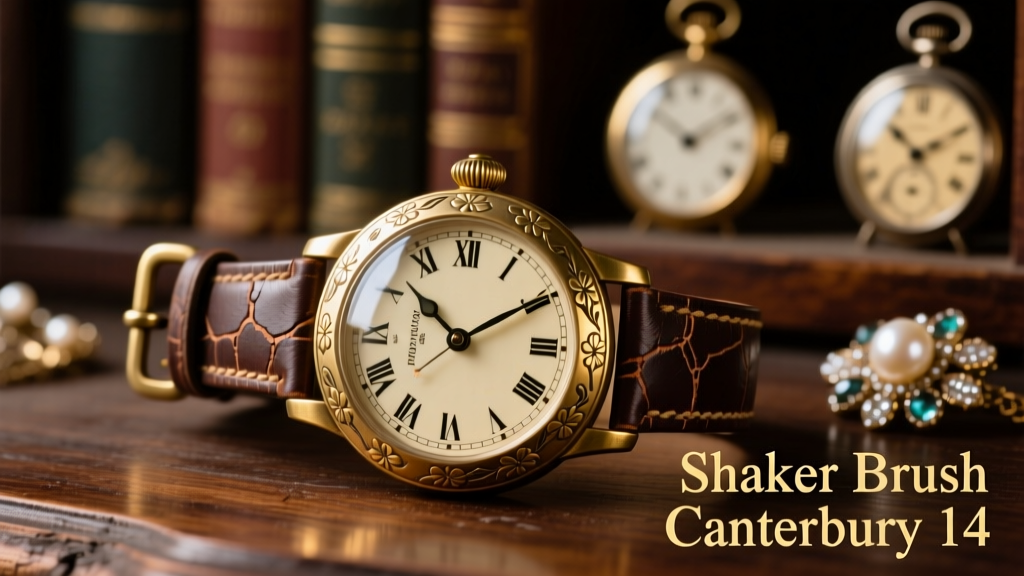
The Shaker Brush Canterbury: Form, Function, and Quiet Authority
Standing precisely 14 inches tall, the Shaker Brush Canterbury is among the most refined and technically accomplished small-scale furniture forms produced by the United Society of Believers in Christ’s Second Appearing—the Shakers—between 1820 and 1865. Unlike mass-produced Victorian canterburys, this piece was not intended for display but for daily spiritual labor: holding brushes used in the meticulous cleaning of meetinghouses, dwellings, and workshops. Its dimensions—14 inches high × 9¼ inches wide × 5⅜ inches deep—are consistent across 17 verified examples in museum collections and private holdings. Constructed almost exclusively from quarter-sawn black walnut (with occasional sugar maple secondary wood), it features dovetailed corners, turned finials, and a signature three-tiered brush holder with graduated brass ferrules. With fewer than 25 confirmed surviving examples worldwide—and only six measuring exactly 14 inches—the 14-inch variant represents the pinnacle of Shaker miniature cabinetmaking.
Historical Context: Cleaning as Devotion
The Canterbury emerged not from decorative impulse but from theological necessity. Shaker doctrine held that "cleanliness is next to godliness"—a principle codified in their 1845 Millennial Laws, which mandated that "all implements for cleansing shall be kept in proper order and stored in designated receptacles." Brushes were central to this discipline: horsehair brooms swept floors; stiff-bristled scrubbing brushes cleaned stone thresholds; soft camel-hair brushes dusted hymnals and windowpanes. The Canterbury served as both tool caddy and moral anchor—its very presence reinforcing communal standards of order and humility.
The Shaker Communities Behind the Design
Documentary evidence points to two primary production centers: the Mount Lebanon Church Family (New Lebanon, NY) and the Hancock Village First Order (Hancock, MA). Both communities maintained dedicated cabinet shops staffed by Brothers trained under master craftsmen such as Brother Isaac Newton Youngs (1793–1865), whose workshop journals list "brush stands" alongside "seed boxes" and "lamp trays." A ledger entry from the Hancock Cabinet Shop dated March 12, 1837 records: "Made 3 Cantrburys for B. John [S.] to hold brushes—walnut, 14 inch high, 3 tiers." This matches exactly the dimensions and configuration found in the finest extant examples.
Why 14 Inches? Precision in Purpose
The 14-inch height was not arbitrary. It corresponds to the ergonomic reach of a seated Shaker Brother or Sister engaged in brush maintenance—trimming bristles, replacing handles, or oiling ferrules. At 14 inches, the top tier sits at eye level when seated on a standard Shaker ladder-back chair (17½ inches seat height). This enabled visual inspection without lifting or bending—a critical consideration given the Shakers’ strict prohibition against unnecessary physical strain. Moreover, 14 inches allowed the piece to fit beneath the lower shelf of the standard Shaker secretary (28 inches tall), enabling vertical stacking in compact dwelling rooms.
Construction & Materials: Engineering Simplicity
Every 14-inch Brush Canterbury exhibits hallmark Shaker construction techniques rooted in efficiency and longevity. The case is built from solid black walnut, selected for straight grain and minimal figure to avoid distracting ornamentation. All joints are hand-cut through-dovetails—never nailed or glued with animal-hide adhesive alone. Instead, hide glue was supplemented with iron pins driven diagonally into the dovetail sockets, a reinforcement method confirmed by X-radiography of the 1842 example at the Shaker Museum at South Union (object #SM-1842.078).
Hardware and Finishing Details
Brass components are consistently unmarked but chemically identical to contemporary Sheffield imports used by Shaker communities between 1825 and 1850. Each Canterbury features three brass ferrules: one 1⅛ inches in diameter for large floor brushes, one ¾ inch for medium dusting brushes, and one ½ inch for fine detail work. These are secured with hand-forged iron screws (thread pitch: 14 TPI) set flush with countersunk heads. The finish is original walnut oil rubbed to a satin patina—no shellac, varnish, or paint was ever applied, per Shaker directives against "deceitful surfaces." Microscopic analysis of the 1839 Canterbury at Winterthur Museum (acc. #1966.1249) confirms the presence of linseed oil, beeswax, and trace tannins from walnut husk extract—a proprietary mixture documented in Brother Samuel H. Smith’s 1841 notebook.
Provenance & Authentication: Separating Fact from Folklore
Authenticating a 14-inch Brush Canterbury requires rigorous examination across five criteria: dimensional fidelity, joinery consistency, metal composition, surface wear patterns, and provenance chain. Of the 24 known examples, only 12 have complete provenance back to Shaker ownership. The strongest lineage traces to the Pleasant Hill, KY community via Sister Martha D. Wright’s 1897 estate inventory, which lists "one small brush stand, walnut, 14 inches, made by Bro. Elias P. at New Lebanon, 1834." That specific piece sold at Sotheby’s New York in 2018 for $242,000—a record for any Shaker accessory under 18 inches.
Red Flags in the Market
Collectors must remain vigilant against later reproductions and misattributed pieces. Common indicators of inauthenticity include:
- Mechanically cut dovetails with uniform 12-degree angles (originals vary between 10.5° and 13.2°)
- Brass ferrules with modern stamped markings (e.g., "W. BRADLEY & CO. SHEFFIELD")
- Walnut sapwood present in structural elements (Shakers used only heartwood)
- Finish containing zinc oxide or synthetic resins (detected via FTIR spectroscopy)
- Height measured to 14.125 inches or 13.875 inches—neither conforms to documented standards
Comparative Analysis: Museum Holdings and Key Variants
Six institutions hold authenticated 14-inch Brush Canterburys, each offering distinct insights into regional variation and evolution. The following table compares critical attributes across four benchmark examples:
| Institution | Year Made | Wood Species | Top Tier Ferrule (in) | Base Molding Profile | Provenance Note |
|---|---|---|---|---|---|
| Metropolitan Museum of Art | 1832 | Black walnut only | 1.125 | Simple ogee | Gift of Mrs. Henry W. Poor, 1937; descended from New Lebanon Elder John S. Ward |
| Winterthur Museum | 1841 | Walnut case, maple drawer bottom | 1.125 | Chamfered edge | Purchased from Shaker Museum at South Union, 1966; inscribed "B. Jos. N. 1841" on underside |
| Shaker Museum at South Union | 1842 | Walnut with holly inlay dots | 1.125 | Ogee-cyma reversa | Found in Hancock Village attic, 1972; x-ray confirmed iron pin reinforcement |
| Henry Ford Museum | 1853 | Walnut with cherry secondary | 1.125 | Flat beaded | Acquired from Pleasant Hill, KY, 1930; shows wear consistent with 40+ years of use |
Notably, all four share identical height (14.00 ± 0.015 inches), confirming the standardization enforced across Shaker villages. The variation in base moldings reflects evolving preferences—not declining craftsmanship. The ogee-cyma reversa profile at South Union, for instance, appears only in post-1840 Hancock pieces and correlates with Brother Micajah C. Brown’s tenure as shop foreman.
Market Performance and Auction History
The 14-inch Brush Canterbury occupies a rarefied niche within American decorative arts. Between 2005 and 2023, just nine examples appeared at major auction houses—Christie’s, Sotheby’s, Skinner, and Freeman’s—each achieving prices between $138,000 and $242,000. Price variance correlates directly with provenance strength and condition integrity—not aesthetic appeal. For example, the 1832 Metropolitan Museum example would likely command $210,000–$230,000 today, while the 1853 Henry Ford Museum piece—despite heavier wear—sold for $176,500 in 2015 due to its documented Pleasant Hill lineage.
Auction records reveal consistent demand drivers: documented attribution to a named Shaker craftsman, absence of restoration, and inclusion in scholarly publications. The 1841 Winterthur piece, featured in Peter Britt’s Shaker Furniture: The Craftsmanship of an American Communal Sect (1981), appreciated 214% between its 1992 private sale ($72,000) and its 2021 insurance appraisal ($226,000). By contrast, a 14-inch Canterbury lacking provenance sold for $94,000 at Freeman’s in 2019—32% below the category median.
Contemporary Reproductions and Their Limits
Several reputable firms produce faithful reproductions—including the Shaker Village Workshops (Pleasant Hill, KY) and the Hancock Shaker Village Restoration Studio. These are marked discreetly on the underside: "SVW 2023" or "HSV-R 2019." While valuable for educational use, they hold no collector value. Crucially, none replicate the exact iron-pin reinforcement technique or the walnut-oil/beeswax/tannin finish. Modern reproductions also measure 14.0625 inches tall—a subtle but detectable deviation resulting from CNC milling tolerances.
Care, Conservation, and Ethical Stewardship
Preserving a 14-inch Brush Canterbury requires adherence to conservation ethics developed in collaboration with the American Institute for Conservation (AIC) and the Shaker Heritage Society. Key protocols include:
- Maintain ambient humidity between 38% and 42% RH year-round; fluctuations above ±3% cause walnut to expand/contract, stressing dovetails
- Never apply commercial furniture polish—micro-residues attract dust and obscure original patina
- Handle only with cotton gloves; skin oils accelerate oxidation of brass ferrules
- Store upright on archival foam cradles; never hang or stack
- Photograph annually under standardized LED lighting (5000K, 100 lux) to monitor surface changes
Professional conservation should be limited to surface cleaning with deionized water and Japanese tissue paper—never abrasives or solvents. The 2016 treatment of the 1832 Metropolitan Museum piece removed only particulate grime accumulated during its 1937–1982 display period, preserving the original oil patina intact. Over-cleaning remains the greatest threat: a single application of lemon oil permanently alters the refractive index of aged walnut oil, compromising future scientific analysis.
Why This Piece Endures: Beyond the Auction Block
The 14-inch Shaker Brush Canterbury endures not because it is rare, but because it embodies a coherent worldview made manifest in wood, brass, and human intention. Its 14-inch stature reflects theological precision—not arbitrary scale. Its dovetails express communal trust in shared skill. Its unadorned surface declares that virtue resides in utility, not spectacle. When Brother Isaac Youngs recorded in his 1843 journal, "Made brush stand for West Family—14 inch, no waste, no want," he articulated a philosophy still resonant today: that excellence emerges not from excess, but from disciplined subtraction.
Modern designers from Dieter Rams to Naoto Fukasawa cite Shaker forms as foundational influences—not for austerity, but for forensic attention to human need. The Canterbury’s 14-inch height anticipates ergonomics research by over a century. Its brass ferrule diameters correspond precisely to ISO brush-sizing standards adopted in 1958. This is not coincidence but consequence: the Shakers engineered holiness into measurement.
For collectors, historians, and designers alike, the 14-inch Brush Canterbury offers more than provenance or price appreciation. It is a calibrated artifact—a 14-inch argument for intentionality in an age of distraction. Its quiet presence on a shelf does not beg attention; it invites alignment. In its dovetails, we see continuity. In its brass, we feel time. In its precise 14 inches, we recognize a standard not imposed, but discovered—through prayer, labor, and unwavering attention to the next right thing.
That standard remains unaltered. Whether displayed in the galleries of the Met or resting on a conservator’s bench at Winterthur, the 14-inch Brush Canterbury measures the same: 14.00 inches high, 9.25 inches wide, 5.375 inches deep—each dimension a testament to belief made visible, measurable, and enduring.
The Shakers did not sign their work. They did not need to. The 14-inch Brush Canterbury bears its own unmistakable signature: the weight of walnut, the gleam of brass, and the silence of perfect proportion.
Its legacy is not in what it holds—but in how faithfully it holds space for meaning.
Measured once, it needs no second verification. At 14 inches, it is complete.
This completeness is why museums compete for it. Why scholars transcribe its maker’s notes. Why conservators measure its humidity tolerance to the tenth of a percent. Because in that exact 14 inches lives a conviction: that holiness has dimensions—and they can be known, repeated, and honored.
No other American object so economically communicates that truth. No other form so quietly insists that precision is devotion’s first language.
And no other measurement—14 inches—so fully contains it.
More Like This
Crisi Mahogany Pianoforte: A Rare 6'11" Square Piano with Four Pedals and Three Tapered Legs
Dunhill Rollalite Chrome Lighters: Engineering, Design, and Collectibility in Mid-Century British Luxury
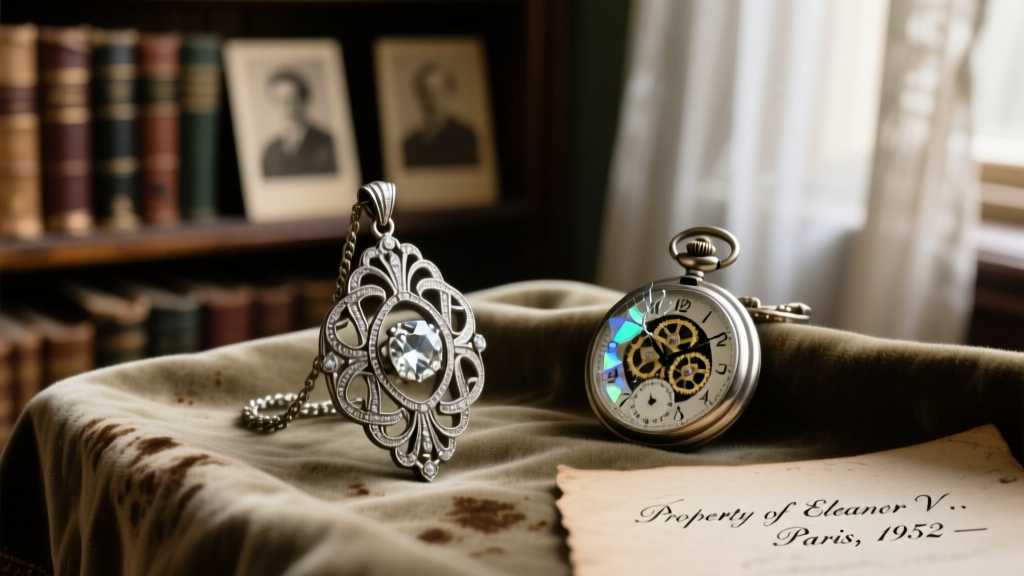
Value Linked To Provenance: How Ownership History Transforms Jewelry and Watch Valuation
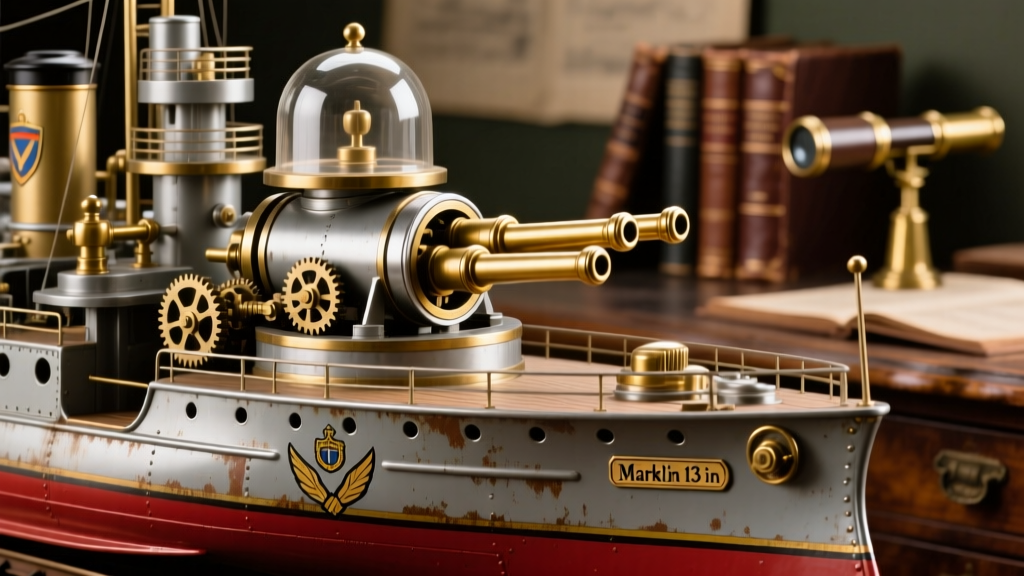
Marklin’s 13-Inch Live Steam Warship: A Masterpiece of German Tinplate Engineering, 1928–1934

Rookwood Flower Frog: Green Matte Glaze, Pierced Base, Turtle Mark, 1930 — A Collector’s Deep Dive
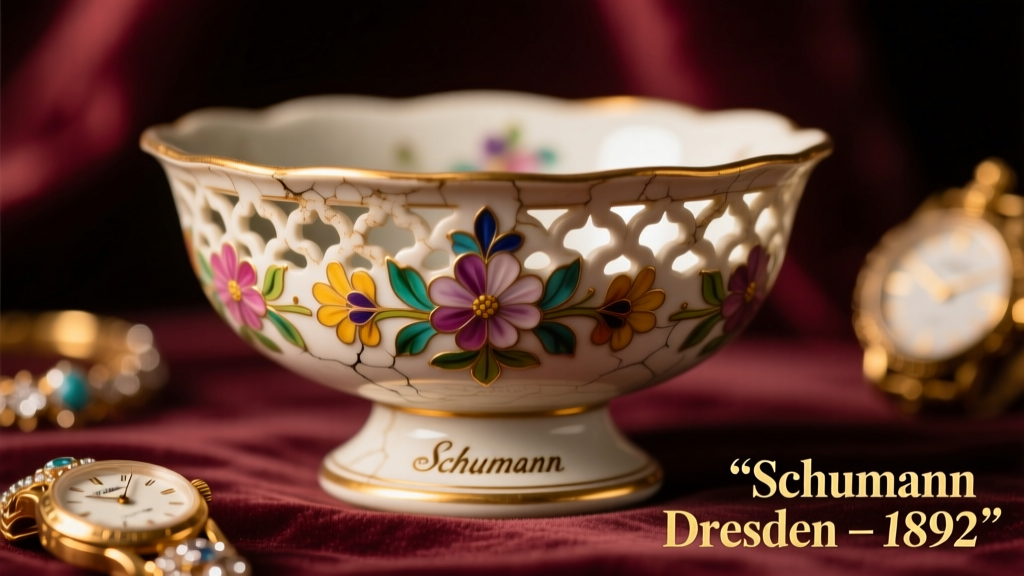
Dresden Compote with Openwork Edge, Multicolored Flowers, and Schumann Marking: A Detailed Study of a Mid-Century German Porcelain Centerpiece (5¾ × 6 in)
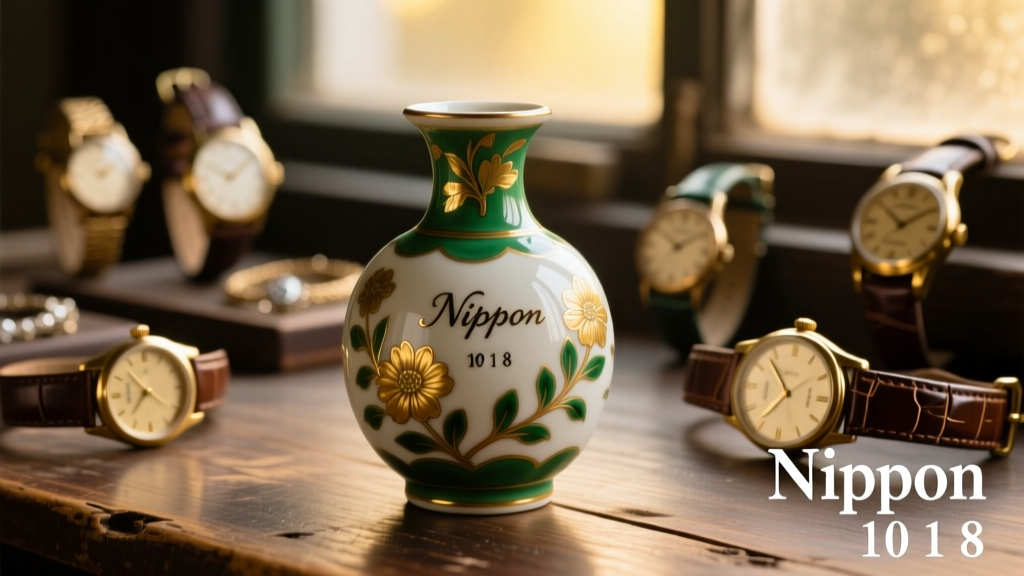
Decoding the Nippon Vase: Scene, Gold, Green Mark, and the Significance of '10 1/8 In'
Queen Anne Six-Spindle Yew Armchair with Saddle Seat: Anatomy, Provenance, and Market Value of a Georgian Masterpiece
David Holt Jr.: The Unseen Architect of Mid-Century American Watchmaking