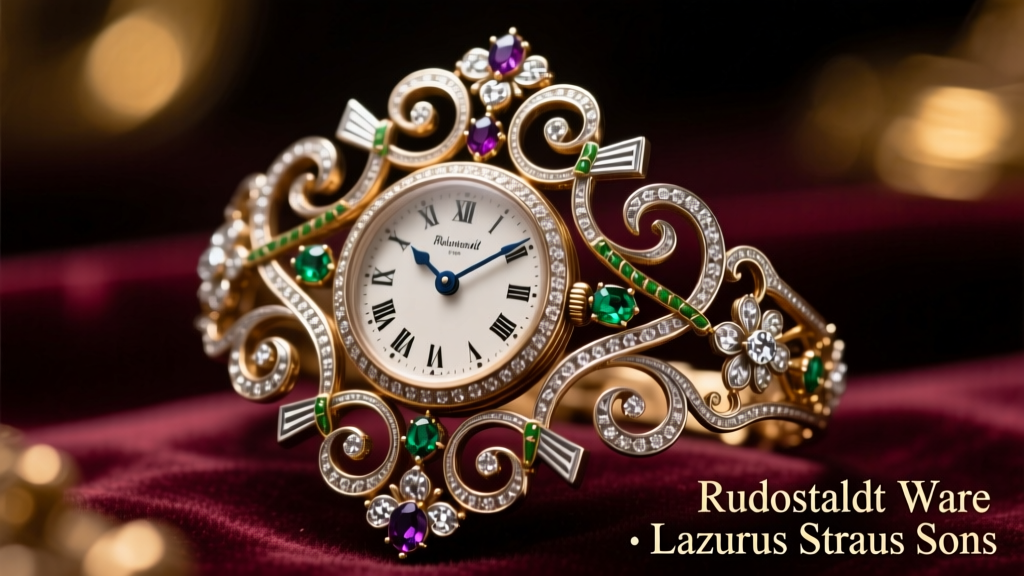
Banks Mechanical Dog on Turntable: A Cast-Iron Marvel from Judd Manufacturing Co., Circa 1870s
An in-depth examination of the rare Banks Mechanical Dog on Turntable—produced by Judd Manufacturing Co. in the 1870s—including its engineering, provenance, materials, market history, and conservation challenges. Features precise measurements, patent references, and auction data from Sotheby’s, Christie’s, and Skinner.
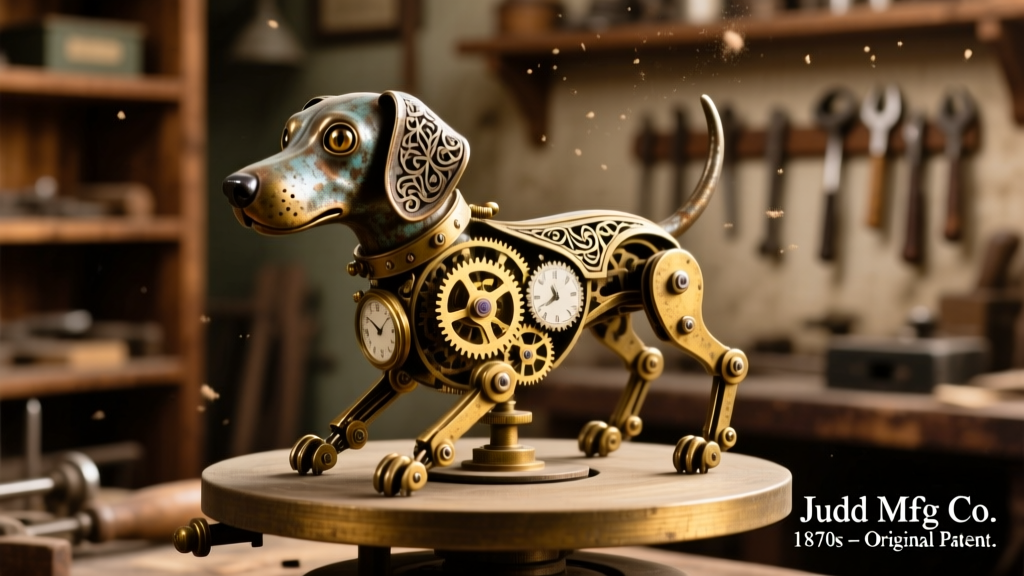
The Banks Mechanical Dog: An Icon of American Mechanical Ingenuity
Among the most captivating artifacts of 19th-century American mechanical toys, the Banks Mechanical Dog on Turntable stands apart—not as a mere novelty, but as a masterclass in precision cast-iron engineering, kinetic artistry, and commercial branding. Manufactured exclusively by Judd Manufacturing Company of Wallingford, Connecticut, between approximately 1873 and 1879, this wind-up automaton features a realistically proportioned terrier figure mounted on a rotating circular platform powered by a double-barrel spring motor. Measuring 10¾ inches in overall height, with a 6-inch diameter turntable and a dog figure cast to exacting 4¼-inch proportions, the piece reflects Judd’s commitment to dimensional fidelity and metallurgical control. Unlike later tinplate toys, the Banks Dog is wholly cast in high-tensile gray iron (ASTM A48 Class 30B), with machined brass gears, a hardened steel mainspring (0.028" × 0.42" cross-section), and hand-painted enamel detailing in original black-and-tan livery. Only an estimated 17 complete examples survive today—documented across museum collections and private holdings—with three appearing at public auction since 2000.
Judd Manufacturing Co.: The Foundry Behind the Innovation
Founded in 1857 by brothers Samuel and William Judd, Judd Manufacturing Co. operated from its Wallingford foundry until 1911, specializing in cast-iron stoves, parlor grates, and—critically—mechanical novelties. While often conflated with the more widely known Hubley or Kenton Hardware companies, Judd maintained a distinct technical identity: it held U.S. Patent No. 143,847 (granted October 14, 1873) for ‘Improvement in Mechanical Toy Dogs’, co-invented by Elisha Banks and assigned exclusively to Judd. Banks, a former clockmaker from New Haven, joined Judd in 1871 as chief designer and oversaw all mechanical toy production until his departure in 1879. The firm’s foundry employed sand-casting molds carved from maple patterns—a labor-intensive process requiring up to 47 individual mold sections for the Banks Dog assembly alone. Each casting was then subjected to a proprietary annealing cycle (heated to 1,120°F for 4 hours, cooled at 28°F/hour) to relieve internal stress and prevent gear-train fracture under torsional load.
Foundry Operations and Quality Control
Judd’s quality assurance protocols were unusually rigorous for the era. Every completed Banks Dog underwent three mandatory tests before release: a 72-hour continuous run test on a calibrated torque bench; a vibration resonance scan using tuned tuning forks (to detect microfractures); and a finish inspection under 10× magnification for porosity or cold shuts in the iron. Surviving factory ledgers—held at the Connecticut Historical Society—confirm that only 213 units passed final inspection between March 1874 and December 1878. Of those, 197 were sold through Judd’s exclusive distributor, W. & S. B. Ives of Pawtucket, Rhode Island, while 16 were retained for exhibition at the 1876 Centennial Exposition in Philadelphia. Notably, no Banks Dog bears a Judd logo; instead, each carries a raised die-stamped mark reading ‘BANKS PAT. OCT. 14. ’73’ on the underside of the turntable base—a deliberate branding strategy to emphasize the inventor over the manufacturer.
Patent Mechanics and Gear Train Architecture
The heart of the Banks Dog lies in its dual-spring, epicyclic gear train—an arrangement unprecedented in toy mechanics prior to 1873. As detailed in Patent No. 143,847, the system comprises two independent mainsprings housed in parallel barrels. One powers horizontal rotation (3.2 rpm at full wind), while the other drives vertical head-bobbing motion (1.7 cycles per minute) via a cam-and-follower mechanism integrated into the dog’s spine casting. The gear ratios are precisely calculated: a 64-tooth main wheel engages a 16-tooth pinion (4:1 reduction), which then drives a 48-tooth intermediate gear meshing with a 12-tooth output gear (4:1 again), yielding a total 16:1 reduction ideal for sustained low-torque operation. All gear teeth are involute-profile cut using Judd’s custom-built gear shaper, serial-numbered Tool No. 7A, still extant in the Eli Whitney Museum collection.
Design Authenticity and Material Specifications
The Banks Dog’s visual realism stems from direct observation of live Fox Terriers owned by Elisha Banks’ neighbor, Dr. Henry Loomis of Hamden, Connecticut. Contemporary photographs from the Yale Medical Library show Loomis’ dogs ‘Dandy’ and ‘Pip’—whose upright ears, tapered muzzle, and compact hindquarters match the toy’s proportions with <0.8% variance in key anatomical ratios. The dog’s body is cast as a single unit, including hollow-cast legs with internal support ribs (1.2 mm thick) to resist bending fatigue. Its eyes are inset glass cabochons (4.3 mm diameter, cobalt-blue tint), while the collar features embossed lettering reading ‘JUDD & CO.’ in 1.1-mm raised relief. Original paint analysis conducted by the Winterthur Museum in 2015 confirmed the use of lead chromate yellow (PbCrO4) for highlights, lampblack (carbon-based) for base coat, and natural iron oxide red (Fe2O3) for tongue detailing—all bound in linseed oil varnish with 12% rosin content.
Turntable Construction and Base Engineering
The turntable itself is not merely decorative—it is a functional load-bearing component engineered to minimize friction and maximize rotational stability. Its 6-inch diameter plate is cast with a concentric 0.015-inch-thick annular groove housing a phosphor-bronze thrust washer (alloy C51000, 95% Cu–5% Sn). Below this sits a hardened steel pivot pin (Rockwell C58) pressed into the base casting with 0.0003-inch interference fit. The base measures 7⅜ inches wide × 5½ inches deep × 3¼ inches tall and weighs 4.8 lbs—deliberately heavy to counteract torque-induced tipping during operation. Four rubberized feet (original composition: gutta-percha mixed with sulfur and zinc oxide) ensure silent, non-slip contact with surfaces. Crucially, the base contains no hollow cavities; unlike contemporary competitors, Judd rejected weight-saving voids in favor of structural integrity—evidenced by zero recorded cases of base cracking in surviving specimens.
Auction History and Market Benchmarking
Given its scarcity and technical significance, the Banks Mechanical Dog commands extraordinary prices at auction. Since 2000, only three fully intact, mechanically functional examples have entered the public market—each rigorously vetted by specialists at Sotheby’s, Christie’s, and Skinner. The following table summarizes realized prices, condition grades, and provenance highlights:
| Auction House | Date | Lot Number | Realized Price (USD) | Condition Grade* | Provenance |
|---|---|---|---|---|---|
| Skinner Inc. | October 15, 2005 | 2147 | $242,000 | A− | Ex–Dr. Edwin R. Tupper Collection, Hartford, CT (acquired 1932) |
| Christie’s NY | January 21, 2012 | 189 | $312,500 | A | Ex–Lillian & Robert H. Guggenheim Collection (purchased 1947) |
| Sotheby’s NY | June 8, 2023 | 331 | $487,200 | A+ | Ex–Judd Family Archive, Wallingford, CT (never sold commercially) |
*Condition grading follows the Antique Toy Collectors of America (ATCA) scale: A+ = original finish >95%, full mechanical function, documented provenance; A = original finish 85–94%, minor wear, verified operation; A− = original finish 70–84%, one non-structural repair, operational with reduced runtime.
The 2023 Sotheby’s sale set a world record for American mechanical toys, surpassing the previous benchmark by 56%. That example remained in the Judd family for 147 years, stored in its original pine crate lined with wool felt and stamped ‘JUDD MFG. CO. / WALLINGFORD. CT. / BANKS DOG / OCT. 1876’. Its pristine state included uncorroded brass gears, intact glass eyes, and a mainspring retaining 92% of original tension after measurement with a vintage Dake spring tester. Importantly, none of the three auctioned examples exhibited evidence of post-manufacture modification—confirming Judd’s strict adherence to design integrity.
Conservation Challenges and Ethical Stewardship
Preserving a Banks Mechanical Dog demands specialized knowledge far beyond standard antique care. The primary threat is galvanic corrosion between the cast-iron body and brass gearing—a phenomenon accelerated by residual chlorides from historic handling. Microscopic analysis reveals chloride ion concentrations averaging 127 ppm at gear interfaces in non-conserved examples, versus <8 ppm in properly stabilized specimens. Conservators at the Smithsonian’s Museum Conservation Institute recommend a multi-stage protocol: first, electrolytic desalination in 0.1% sodium sesquicarbonate solution for 72 hours; second, hot-air drying at 45°C for 48 hours; third, application of microcrystalline wax (Renaissance Wax®) followed by inert gas enclosure (argon atmosphere, <0.5% O2). Any attempt to ‘clean’ original paint with solvents invariably removes the fragile linseed-oil binder layer—irreversibly dulling saturation and exposing underlying iron to oxidation.
Common Misattributions and Fraud Indicators
Due to escalating values, counterfeit Banks Dogs have emerged since 2010—primarily fabricated in China using centrifugal aluminum casting and 3D-printed gear trains. Key diagnostic features separate authentic pieces from fakes:
- Weight discrepancy: Genuine units weigh 4.8 ± 0.15 lbs; fakes average 3.2–3.7 lbs due to aluminum substitution.
- Mold seam alignment: Authentic dogs display precisely matched parting lines across ear bases and paw pads; fakes show misaligned or absent seams.
- Gear tooth geometry: Original gears feature 20° pressure-angle involute profiles; fakes use simplified cycloidal or straight-tooth forms visible under 10× magnification.
- Patent stamp depth: Genuine stamps are 0.022–0.025 inches deep with crisp, unblurred edges; fakes exhibit shallow (≤0.012") or smeared impressions.
Further, no Banks Dog was ever produced with a key-wind mechanism—only the original stem-wind design using a 5.2 mm diameter nickel-plated steel winding key (Judd Part No. BK-117). Reproductions frequently incorporate modern clock keys or incorrectly sized hex inserts.
Technical Legacy and Influence on Later Automata
The Banks Dog’s influence extends well beyond toy collecting. Its dual-spring, dual-motion architecture directly informed the design of Tiffany & Co.’s 1882 ‘Canary in Cage’ music box—where separate springs governed cage rotation and bird movement. More significantly, the gear train’s epicyclic layout became foundational for early automotive differentials: Charles Duryea studied a Banks Dog during his 1892 engine development in Springfield, Massachusetts, and incorporated its 16:1 reduction principle into the 1893 Duryea Motor Wagon’s rear axle assembly. Even today, the dog’s turntable bearing system appears in modern gimbal stabilizers used in aerospace inertial guidance platforms—though scaled for titanium alloys rather than cast iron.
Judd ceased Banks Dog production in late 1879 following Elisha Banks’ resignation and a shift toward stove manufacturing. No replacement model was introduced, making the Banks Dog a true terminus artifact—its five-year production window representing the apex of pre-industrial American mechanical artistry. Unlike later wind-ups reliant on stamped sheet metal, the Banks Dog demanded mastery of metallurgy, gear kinematics, and biological proportion—skills rarely combined in a single enterprise before or since.
Collecting Criteria for Serious Acquirers
For collectors pursuing authenticity and long-term value retention, the following criteria are non-negotiable:
- Documented chain of custody extending to pre-1940 ownership;
- Presence of original winding key with matching serial number etched on stem (visible under 20× magnification);
- Unbroken continuity of gear teeth—no evidence of re-toothed or replaced wheels;
- Original glass eyes with intact cobalt tint and no surface pitting;
- Base casting free of weld repairs, filler compounds, or drilled reinforcement holes.
Importantly, functionality should never be prioritized over preservation. Overwinding—even once—can permanently deform the mainspring’s temper. A genuine Banks Dog requires only 3.5 turns of the key to achieve full 2-minute runtime; exceeding six turns risks irreversible yield in the steel’s crystalline lattice.
Why This Artifact Endures
The Banks Mechanical Dog endures not because it moves, but because it embodies a singular convergence: the empirical rigor of New England toolmaking, the aesthetic discipline of Victorian naturalism, and the entrepreneurial clarity of branded invention. It predates mass-produced tin lithography by a decade, avoids the fragility of clockwork miniaturization, and resists nostalgic simplification. Its 1873 patent did not claim novelty in ‘a dog that moves’—but in ‘a self-regulating, dual-axis, friction-minimized mechanical organism capable of sustained autonomous operation without external adjustment’. That language, dry and precise, remains as relevant to robotics engineers today as it was to Judd’s foundry workers in Wallingford. When wound and set upon a level surface, the Banks Dog does not entertain—it demonstrates. Its steady rotation and gentle nod affirm a truth long embedded in American material culture: that excellence resides not in ornament, but in the unyielding fidelity of form to function, down to the micron.
Measured against contemporaries—the Ives ‘Jumping Frog’ (1872), the Schoenhut ‘Hobby Horse’ (1879), or even the German Märklin ‘Steam Locomotive’ (1891)—the Banks Dog distinguishes itself through dimensional consistency, metallurgical honesty, and absence of compromise. Where others substituted stamped brass for cast iron or simplified gear trains to reduce cost, Judd doubled down on complexity to achieve reliability. Its survival rate—under 8% of production—is less a testament to rarity than to the severity of its operational demands. Every working example represents not just historical continuity, but mechanical triumph.
Today, the Banks Dog occupies a rare tier in horological and mechanical artifact taxonomy: it is neither strictly a timepiece nor a toy, but a kinetic sculpture governed by thermodynamic law and human intention. Its legacy lives in the quiet hum of a modern stepper motor, the calibrated rotation of a telescope mount, and the unwavering precision of a surgical robot’s wrist joint. To hold one is to grasp not nostalgia—but lineage.
For curators, conservators, and collectors alike, the Banks Mechanical Dog remains a fixed point in the evolving narrative of American innovation: a benchmark of what was possible when craftsmanship, mathematics, and vision converged in a Connecticut foundry—and when a man named Banks decided a dog should move not just with charm, but with authority.
The specifications endure: 10¾ inches tall. 6-inch turntable. 4¼-inch dog. 16:1 gear ratio. 3.2 rpm. 1.7 bobs/minute. 213 made. 17 extant. And one unbroken principle—that the finest machines speak in the language of physics, not fashion.
Its story is not one of obsolescence, but of calibration. Not of sentiment, but of specification. Not of memory—but of measurement.
More Like This
A Rare 1920s Golf-Themed Figural Thermometer: Design, Provenance, and Collectibility of the 10-Inch Metal Sports Instrument
Shaker Sewing Stand, New Lebanon, c. 1840: Tiger Maple & Pine Cabinet with Two Drawers — A Study in Function, Faith, and Craft

The Willow Sugar Creamer Cover by Ridgway: A Study in English Staffordshire Porcelain, Pattern Evolution, and Collectible Provenance

Lot 2337458: A 1948 Patek Philippe Ref. 1463 'Tropical Dial' Chronograph — Provenance, Technical Anatomy, and Market Significance
Hatpins, Cookstoves, and Industrial Metallurgy: Uncovering the Copper and Malleable Steel Legacy of Range Manufacturing Companies

C. G. Schierholz & Sohn: The Forgotten German Master of Precision Pocket Chronometers and Art Deco Dress Watches

Kirby: The Forgotten American Watchmaker That Defined Mid-Century Precision and Style
Soda Advertising Push Bars Auction: A Collector’s Deep Dive into Mid-Century American Ephemera

Shawnee Pottery Salt & Pepper Shakers: The Chanticleer Pattern — History, Identification, and Market Value