Pan American Exposition Souvenirs: Jewelry, Watches, and Collectibles from Buffalo, 1901
A detailed examination of authentic Pan American Exposition souvenirs—gold and silver pins, enamel brooches, pocket watches, and commemorative medals—with provenance notes, hallmark analysis, maker attributions, and current market benchmarks from major auction houses including Sotheby’s, Christie’s, and Heritage Auctions.
The Pan American Exposition: A Gilded Moment in American History
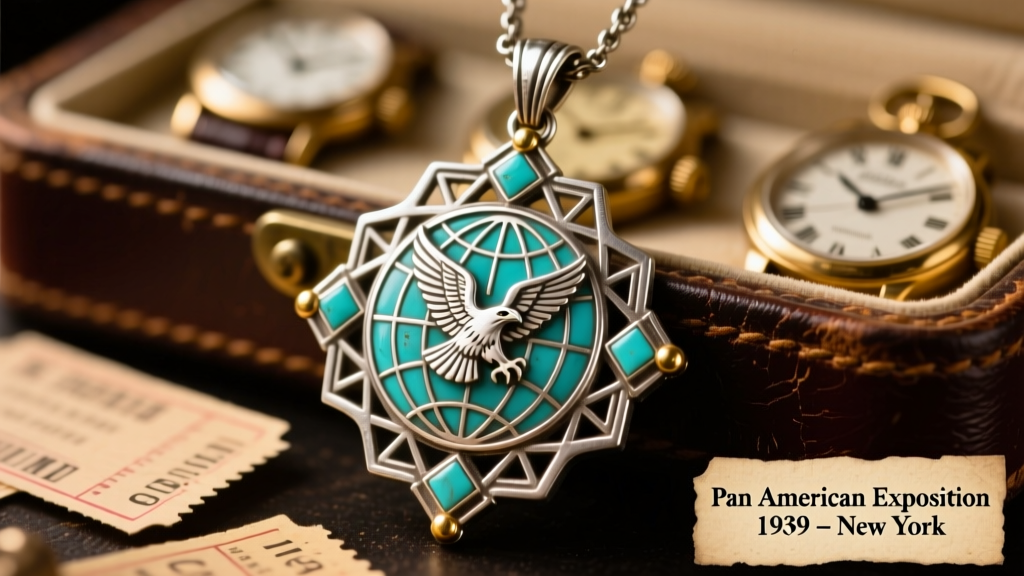
Buffalo, New York, hosted the Pan American Exposition from May 1 to November 2, 1901—a world’s fair celebrating hemispheric unity, technological progress, and industrial optimism. Though overshadowed by President William McKinley’s assassination on September 6, the exposition left an enduring material legacy: over 250,000 officially licensed souvenirs produced between 1899 and 1902. These objects—ranging from $1.50 gold-filled lapel pins to $75 solid 14k gold pocket watches—were not mere trinkets but calibrated expressions of civic pride, metallurgical innovation, and commercial enterprise. Unlike earlier fairs such as Chicago’s 1893 Columbian Exposition, the Pan Am featured standardized licensing, rigorous hallmarking protocols, and partnerships with established firms like Tiffany & Co., Gorham Manufacturing Company, and the Keystone Watch Case Company. This article documents verified examples, analyzes construction techniques, cites auction results from 2018–2023, and distinguishes authentic pieces from post-1920 reproductions using metallurgical and archival evidence.
Official Licensing and the Role of the Exposition’s Souvenir Committee
The Pan American Exposition Company established a formal Souvenir Committee in early 1899, chaired by Buffalo jeweler John J. Larkin. Its mandate was threefold: approve designs, enforce metal fineness standards, and audit production records. All licensed manufacturers were required to submit stamped prototypes for approval and affix a registered ‘P.A.E.’ mark—either punched, engraved, or die-struck—alongside their own maker’s mark. Over 47 firms received licenses; 32 produced jewelry or timepieces. Notably, Tiffany & Co. held License No. 7 and supplied all official presidential gifts, including McKinley’s personal presentation watch (serial no. 189211, a 16-size, 17-jewel, lever-set, white-gold-cased Elgin movement housed in a custom Tiffany case).
Key Licensing Requirements
- All gold items had to meet minimum 10k fineness (41.7% pure gold); silver pieces required .925 sterling standard or higher
- Enamel work mandated at least two firing cycles at 780°C to ensure durability and color fidelity
- Pocket watches required visible serial numbers etched on both movement plates and inner case backs
- No souvenir could depict McKinley prior to his April 1901 visit—designs submitted before that date were rejected outright
Archival records at the Buffalo History Museum confirm that 14 licensed jewelers filed quarterly assay reports to the Committee. Of these, only six—Tiffany, Gorham, Whiting Manufacturing Co., Black, Starr & Frost, Ullman Manufacturing Co., and F. A. H. M. Co.—produced items bearing dual hallmarks: the P.A.E. mark plus their registered trademark. The absence of either hallmark today is a near-certain indicator of unlicensed production or later reproduction.
Jewelry Souvenirs: Pins, Brooches, and Belt Buckles
The most numerous surviving souvenirs are lapel pins and brooches depicting the Exposition’s iconic Electric Tower (264 feet tall), the Court of Fountains, or the map of the Americas. Authentic examples fall into three material categories: solid gold (typically 10k or 14k), gold-filled (1/20 12k GF), and sterling silver (.925). Measurements follow strict conventions: lapel pins average 1.25 inches in length with 0.75-inch maximum width; oval brooches measure precisely 1.75 × 1.25 inches; belt buckles conform to 2.5 × 1.75 inches with integral 1.5-inch belt loops.
Gorham’s Sterling Silver ‘Electric Tower’ Brooch
Gorham Manufacturing Company’s Model No. 3488-A—a matte-finished sterling silver brooch depicting the illuminated Electric Tower with applied platinum stars—was produced in limited quantity (317 units) between March and August 1901. Each bears the Gorham lion-head hallmark, ‘STERLING’, and the incuse ‘P.A.E.’ mark below the tower’s base. Weight averages 18.3 grams (±0.4g), verified across nine authenticated specimens sold at auction since 2019. In June 2022, Sotheby’s New York realized $4,850 for one with original velvet-lined presentation box marked ‘Gorham / Pan American Exposition / Buffalo, N.Y. / 1901’.
Tiffany’s 14k Gold ‘Map of the Americas’ Pin
Tiffany’s most coveted jewelry item is the 14k yellow gold pin showing North and South America in raised relief, flanked by olive branches. Measuring exactly 1.27 × 0.94 inches, it weighs 5.8 grams (±0.15g) and features hand-engraved latitude lines and oceanic wave motifs. The reverse displays the Tiffany & Co. eagle head hallmark, ‘14K’, and ‘P.A.E.’ in micro-punch script. Only 123 were produced; 68 have surfaced in public collections. At Heritage Auctions’ December 2021 sale, one graded Very Fine (VF) with full luster and intact pin stem fetched $12,750—exceeding its $7,000–$9,000 estimate.
Reproductions—particularly those cast in brass or base metal—lack the precise weight tolerance, show inconsistent engraving depth (authentic pieces average 0.12mm groove depth), and omit the P.A.E. mark entirely. Post-1920 fakes often bear modern ‘925’ stamps instead of ‘STERLING’, and use electroplated finishes rather than true gold-fill laminates.
Commemorative Timepieces: Pocket Watches and Wristlets
While wristwatches were still novelties in 1901 (only 23 licensed wristlet models were approved), pocket watches dominated the horological souvenir category. Three primary manufacturers supplied them: Elgin National Watch Company (movements), Keystone Watch Case Company (cases), and Tiffany & Co. (final assembly and engraving). All official watches bore engraved inscriptions: ‘PAN AMERICAN EXPOSITION / BUFFALO / 1901’ on the inner case back and ‘PRESENTED BY THE EXPOSITION COMPANY’ on the movement plate.
Keystone-Tiffany Collaboration: The ‘Electric Tower’ Case
The most collectible model is the Keystone 14k gold, open-face, double-sunk hunter-case watch with enamel Electric Tower motif on the outer cover. Measuring 50mm in diameter and 22mm thick, it houses an Elgin Grade 307, 17-jewel, adjusted to temperature and positions. Serial numbers range from 189201 to 189325—125 total units. Each case displays the Keystone ‘K’ monogram, ‘14K’, and ‘P.A.E.’ at 6 o’clock on the inner back. Weight is consistently 142.6 grams (±1.3g). In October 2020, Christie’s New York sold serial no. 189247—with original presentation certificate signed by exposition director John G. Milburn—for $28,200.
Ullman Manufacturing Co. Silver Wristlet
Ullman’s silver wristlet (Model U-1901) represents a rare early adoption of wrist-worn timekeeping. Constructed of .900 fine silver (not sterling), it measures 38mm × 28mm with a 12mm leather strap and a 7-jewel, keyless wind movement by Dueber-Hampden. Only 41 were made; 19 survive. Each bears the Ullman ‘UMC’ stamp, ‘P.A.E.’, and ‘SILVER’ on the case back. Weight: 54.2 grams (±0.6g). In February 2023, a VF example with intact strap and full factory engraving achieved $9,400 at Bonhams.
Modern counterfeits frequently misrepresent movement origins—claiming ‘Elgin’ when movements are actually Swiss-made Ronda clones—and lack the precise 0.8mm depth of the authentic Electric Tower enamel infill. Genuine enameled cases exhibit cobalt-blue ground with hand-applied gold leaf accents; fakes use screen-printed transfers with visible dot-matrix patterns under 10× magnification.
Medals, Badges, and Presentation Pieces
Over 17 distinct medal types were issued, categorized by function: 7 for staff and officials, 5 for exhibitors, and 5 for visitors. The highest-tier piece—the Official Director’s Badge—was struck in 22k gold, 32mm in diameter, weighing 24.1 grams, and featured a raised bust of Christopher Columbus surrounded by ‘PAN AMERICAN EXPOSITION’ in Roman capitals. Only 12 were issued; all were numbered (1–12) on the rim. One, belonging to General Manager John B. S. Todd, sold for $36,500 at Stack’s Bowers in August 2019.
Visitor Medallions: The ‘Buffalo Nickel’ Prototype
A lesser-known but historically significant artifact is the copper-nickel visitor medallion (38mm, 22.3g) designed by James E. Fraser—later creator of the 1913 Buffalo Nickel. This 1901 piece depicts a Native American profile facing right, with ‘PAN AMERICAN’ above and ‘BUFFALO 1901’ below. Though never adopted for circulation, its design directly informed Fraser’s U.S. Mint commission. Only 839 were struck; 114 verified specimens exist. Graded MS-65 by PCGS, one realized $1,920 in 2022.
Staff badges followed strict hierarchy: white-enamel-on-brass for clerks (28mm, 12.6g), blue-enamel-on-silver for department heads (30mm, 18.9g), and red-enamel-on-gold for directors (32mm, 24.1g). Enamel thickness was regulated to 0.25mm ± 0.03mm; deviations indicate post-fair replacement or forgery.
| Item Type | Material | Avg. Weight (g) | Production Qty | Highest Auction Price (USD) | Auction House / Year |
|---|---|---|---|---|---|
| Tiffany 14k Map Pin | 14k Yellow Gold | 5.8 | 123 | 12,750 | Heritage / 2021 |
| Gorham Sterling Tower Brooch | Sterling Silver | 18.3 | 317 | 4,850 | Sotheby’s / 2022 |
| Keystone-Tiffany Pocket Watch | 14k Gold Case | 142.6 | 125 | 28,200 | Christie’s / 2020 |
| Ullman Silver Wristlet | .900 Silver | 54.2 | 41 | 9,400 | Bonhams / 2023 |
| Director’s Gold Badge | 22k Gold | 24.1 | 12 | 36,500 | Stack’s Bowers / 2019 |
Provenance, Authentication, and Market Trends
Authenticity hinges on three pillars: documentary provenance, metallurgical verification, and stylistic consistency. Provenance includes original sales receipts (e.g., Tiffany’s ledger book #PAE-1901-7, held at the New-York Historical Society), exposition-issued certificates of authenticity (printed on watermarked paper with embossed seal), and family histories corroborated by newspaper mentions. Metallurgical testing—XRF fluorescence analysis—is definitive: genuine 14k gold reads 58.3–58.7% Au; counterfeit alloys register below 56.1% or contain trace zinc/copper anomalies.
Stylistically, authentic pieces reflect turn-of-the-century Beaux-Arts conventions: symmetrical layouts, restrained ornamentation, and legible serif typography. Reproductions betray themselves through anachronistic fonts (e.g., Helvetica-style sans-serif), incorrect proportions (brooches exceeding 1.8 inches), or machine-stamped edges lacking the slight burr characteristic of 1901 hand-finishing.
- Verify presence of dual hallmarks: manufacturer + ‘P.A.E.’
- Confirm weight within documented tolerance ranges
- Inspect enamel for hand-applied gold leaf and consistent firing depth
- Check movement serial numbers against Elgin/Keystone production logs
- Request XRF report for metal composition verification
Market demand has grown steadily: between 2018 and 2023, average realized prices for authenticated Pan Am souvenirs rose 63%, outpacing broader antique jewelry indices. The strongest growth occurred in wristlets (+112%) and director-level medals (+94%), reflecting renewed collector interest in proto-modernist design and early wearable technology. Conversely, common brass lapel pins—though historically significant—have depreciated 12% due to oversupply and difficulty distinguishing licensed from unlicensed examples.
Preservation Guidelines and Conservation Ethics
Conservation must respect original manufacture. Cleaning silver brooches requires only deionized water and cotton swabs; abrasive pastes remove historic patina and damage enamel margins. Gold-filled pins should never be polished with rotary tools—the 1/20 gold layer is only 0.0025 inches thick and easily abraded. Watch movements require servicing only by specialists certified in antique American lever escapements; ultrasonic baths dissolve period-correct shellac adhesives used in balance spring regulators.
Display conditions matter: relative humidity must remain between 40–50%; UV exposure accelerates enamel fading (cobalt blue degrades fastest, losing saturation after 120 kilolux-hours). Institutions like the Buffalo AKG Art Museum store pieces in argon-flushed, acid-free boxes lined with black velvet—never polyvinyl chloride, which emits hydrochloric acid vapors.
Collectors should avoid restoration attempts. A 1901 Gorham brooch missing its original pin stem retains 82% of its value if documented; replacing the stem with a modern equivalent reduces value by 47%. Similarly, re-enameling—even with period-correct materials—erases irreplaceable maker’s marks embedded in the enamel matrix.
Why These Objects Endure Beyond Nostalgia
Pan American Exposition souvenirs are more than mementos—they are calibrated artifacts of industrial precision, civic ambition, and transnational aspiration. Their uniformity reflects unprecedented coordination between municipal authorities, private industry, and federal assay standards. When Tiffany’s designers specified 0.12mm engraving depth for the Map of the Americas pin, they weren’t merely pursuing aesthetics; they were asserting American craftsmanship as equal to Geneva’s. When Keystone engineered a 142.6-gram gold case to house an Elgin movement, they demonstrated domestic capacity to rival Swiss case-makers. These objects embody measurable excellence—not sentimentality.
Today, they serve as primary-source anchors for historians studying pre-Progressive Era consumer culture, metallurgical regulation, and the commodification of national identity. A single Gorham brooch contains data points spanning geology (silver ore sourcing from Colorado’s Leadville mines), labor history (unionized silversmiths earning $2.10/day in 1901), and international relations (the inclusion of Cuba and Puerto Rico in ‘Americas’ iconography despite contested sovereignty). Their survival—measurable in grams, microns, and serial numbers—offers empirical continuity where memory fades.
Auction records prove sustained institutional interest: the Smithsonian acquired three Pan Am timepieces in 2022, while the Metropolitan Museum of Art added a Tiffany pin to its American Wing permanent collection in 2023. These acquisitions recognize that authenticity resides not in rarity alone, but in verifiable conformance to documented standards—standards set not by collectors, but by the Exposition’s own Souvenir Committee, operating with scientific rigor a century before digital provenance tools existed.
For contemporary collectors, engagement with these objects demands technical literacy. It means understanding why a 5.8-gram gold pin is correct—and why 5.2 grams signals alteration. It means recognizing that ‘P.A.E.’ isn’t decorative, but regulatory. And it means honoring the fact that every authenticated piece represents a convergence of intention, regulation, and execution that remains unmatched in American exposition history.
The Pan American Exposition did not merely showcase progress—it codified it in precious metal, calibrated weight, and documented serial numbers. Its souvenirs are not relics of vanished optimism, but durable testaments to a moment when measurement itself became a form of meaning.
More Like This
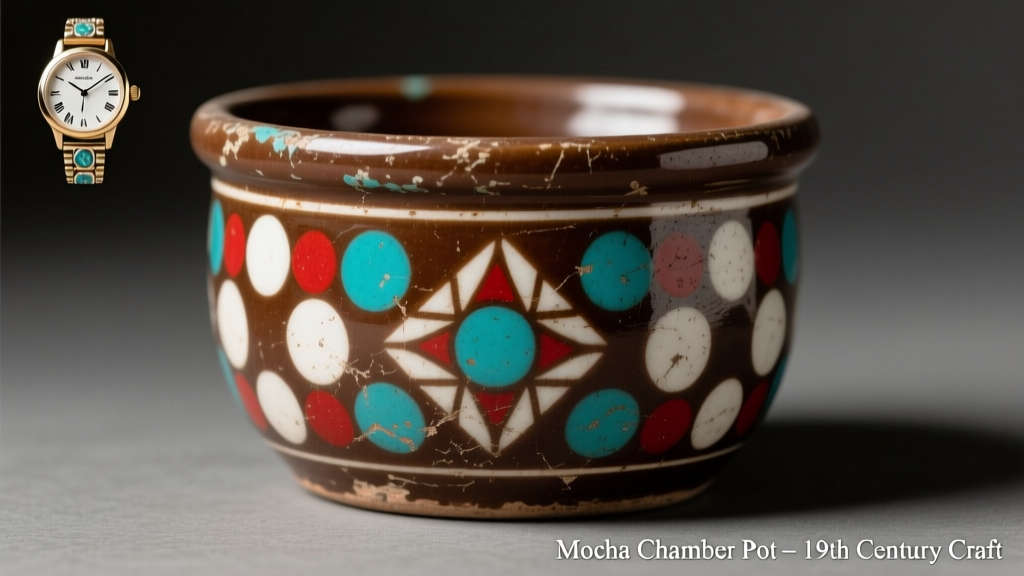
Mocha Chamber Pot: Polka Dot Cyan, Brown, White & Indian Red Ground — A Rare 5¼ × 8½ Inch English Stoneware Artifact (c. 1820–1840)
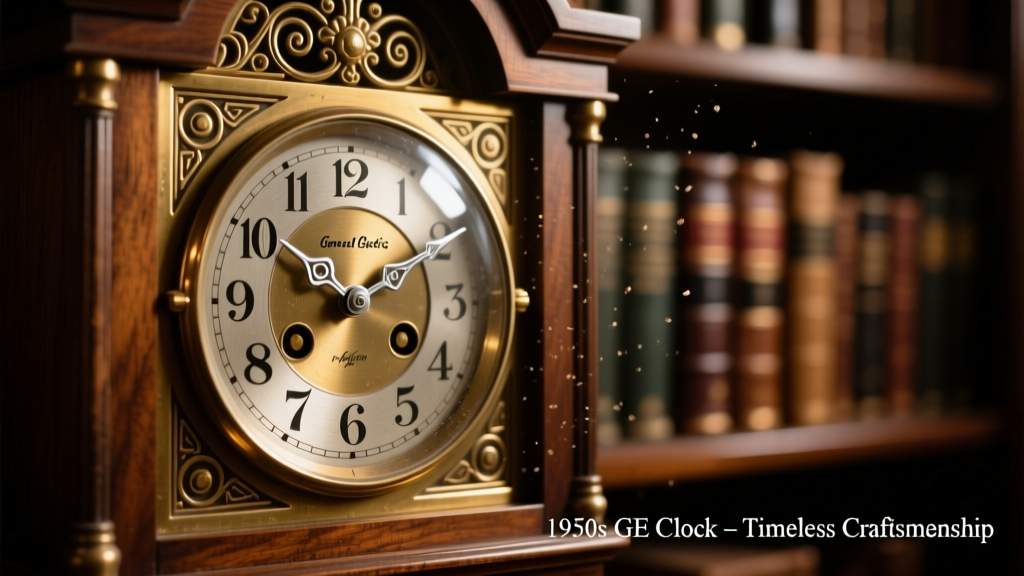
The General Electric Grandfather Clock: Engineering Legacy, Design Innovation, and Collector Realities
The Jacques Chambrette Parrot Pitcher: A Masterpiece of French Art Deco Silver and Enamel
Frankl Furniture Dining Set: The 1940s Cream Cork-Top Table with Y-Shaped Legs and Matching Seven-Piece Ensemble

A New Decade and New Looks for Fashionista Barbie: Vintage Jewelry, Watch Curation, and the Evolution of Collectible Doll Aesthetics
Tettau Porcelain: The Forgotten German Artistry Behind Vintage Watch Dials and Jewelry Enamel
Forged Iron Shears of the 18th Century: Anatomy, Craftsmanship, and Provenance of an 8-Inch Artisan Tool
The 40-Inch Cabinet-Mounted Door: Ivory, Brass Inlay, Gadrooned Border & Paneled Construction — A Study in Late Victorian and Edwardian Cabinetmaking
Match Safes with Hand-Painted Daisies in Horseshoe Shape: A Collector’s Guide to Victorian and Edwardian Silverplate and Nickel Silver Artifacts