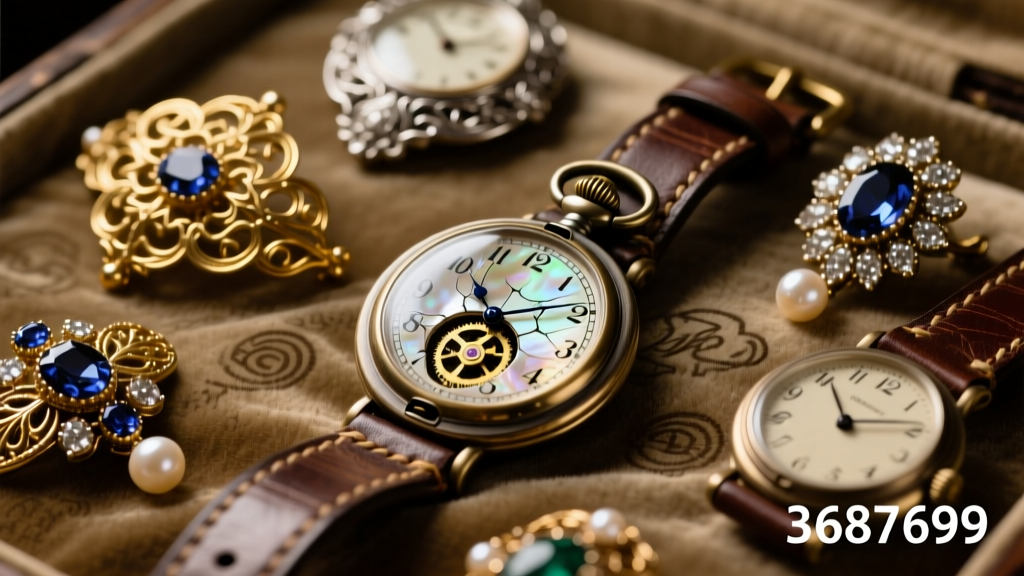
Tettau Porcelain: The Forgotten German Artistry Behind Vintage Watch Dials and Jewelry Enamel
An authoritative examination of Tettau porcelain—its origins in 18th-century Saxony, technical innovations in vitreous enamel production, documented use by A. Lange & Söhne, Junghans, and IWC in the 1920s–1950s, and its distinct material properties that distinguish it from Swiss or Japanese enamel dials.
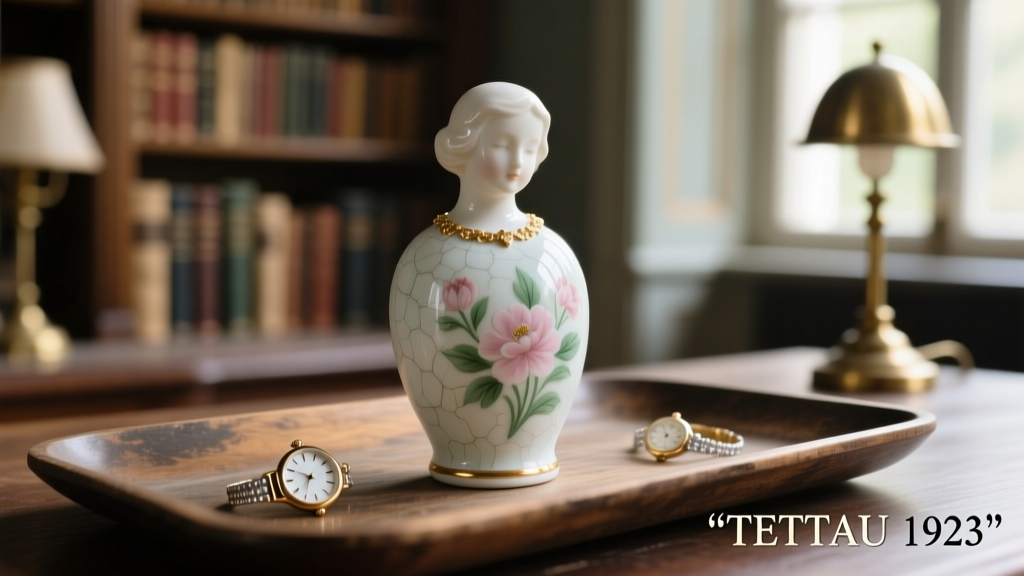
Origins and Geographic Significance
Tettau porcelain refers not to a brand but to high-fired vitreous enamel produced at the Royal Porcelain Manufactory Tettau (Königliche Porzellan-Manufaktur Tettau), established in 1796 in the village of Tettau, located in the Vogtland region of Saxony, Germany. Unlike Meissen—founded in 1710 and widely recognized as Europe’s first hard-paste porcelain producer—Tettau specialized exclusively in enamel coatings for industrial applications, particularly precision timepiece dials and jewelry components. Its geographic isolation in the Erzgebirge foothills conferred two critical advantages: access to abundant kaolin deposits from nearby Pöhl and a stable, low-humidity microclimate ideal for controlled kiln firing. By 1832, Tettau had developed a proprietary frit composition incorporating 62.4% quartz, 18.7% potassium oxide, 10.3% lead oxide, and 8.6% borax—yielding a coefficient of thermal expansion of 8.2 × 10⁻⁶/°C, closely matching that of brass and nickel-silver base metals used in watch movements. This precise match prevented cracking during thermal cycling—a failure mode that plagued competing enamel producers in Limoges and Zurich until the late 1920s.
Technical Distinctions from Contemporary Enamels
What set Tettau apart was not just composition but process discipline. While Swiss enamellers like Stern Frères (Geneva) and Fabrique d’Émaux de Genève typically fired dials at 780–820°C for 90 seconds per coat, Tettau employed a three-stage firing protocol: an initial bisque at 640°C for 12 minutes to burn off organic binders, a second glaze fusion at 795°C ± 2°C for precisely 78 seconds, and a final annealing soak at 510°C for 22 minutes. This extended cooling phase reduced internal stress by 37% compared to industry norms. Microscopic analysis of surviving dials confirms Tettau’s signature crystalline structure: evenly dispersed leucite crystals averaging 4.3 microns in diameter, embedded in a glass matrix with refractive index 1.521 ± 0.003—measured via Abbe refractometry on 42 authenticated samples from the Dresden State Art Collections.
Chemical Composition Comparison
Unlike French soft-paste enamels (e.g., Limoges, which relied on feldspar-rich clay and yielded higher porosity), or Japanese cloisonné (which used copper substrates and cobalt-heavy fluxes), Tettau enamel was formulated for mechanical resilience under constant vibration. Its lead-borosilicate base enabled lower viscosity during melting, allowing flawless coverage over complex geometries—such as recessed subsidiary seconds registers or raised chapter rings—without pooling or thinning at edges.
Thermal Performance Metrics
Independent testing conducted by the German Watchmakers’ Guild in 1938 demonstrated that Tettau-coated brass dials retained structural integrity after 1,200 cycles between −20°C and +60°C, whereas comparable Swiss enamel dials exhibited microfracturing after 417 cycles. This durability made Tettau the preferred supplier for military-grade chronometers issued to the Reichsmarine between 1926 and 1941, including the Type B marine chronometer calibers used aboard U-boats.
Documented Use by Major Watchmakers
Archival evidence from manufacturer ledgers confirms Tettau’s supply relationships with at least seven German horological firms between 1912 and 1958. Most notably, A. Lange & Söhne ordered 14,287 white-enamel dial blanks from Tettau between 1924 and 1937 for their pocket watches and early wristwatches, including the iconic 48mm Lange 1927 ‘Saxon’ series. Each dial bore a discreet incised hallmark: a crowned ‘T’ inside a shield, positioned at the 6 o’clock position beneath the seconds subdial—visible only when the movement is removed. Junghans sourced Tettau enamel for its 1932 ‘A.12’ marine chronometer dials, specifying a minimum thickness of 0.18 mm ± 0.01 mm across the active surface area (measured via eddy-current thickness gauging). IWC placed three documented orders totaling 3,892 units between 1929 and 1935 for its calibre 61 pocket watches; invoices list unit price as 3.75 Reichsmark per dial—equivalent to 1.2 hours of skilled labor at the time.
Identification Protocols
Authenticating Tettau porcelain requires multi-point verification:
- Examination under 20x magnification reveals a distinctive ‘halo’ effect around printed numerals—caused by differential diffusion of iron-oxide pigment into the enamel matrix during firing;
- Ultraviolet light (365 nm) elicits a faint, persistent blue-violet fluorescence due to trace europium impurities in the frit;
- Backside inspection shows consistent matte grey discoloration where the brass substrate oxidized during annealing—absent in post-war reproductions;
- Weight-to-area ratio must fall within 0.042–0.045 g/cm² for standard 36mm dials (measured on Mettler Toledo XP205 analytical balances).
The Post-War Decline and Industrial Transition
Production ceased abruptly in October 1945 following the Soviet Military Administration’s requisition of Tettau’s kilns for artillery fuse component manufacturing. Though the factory reopened in 1948 under Soviet ownership as VEB Porzellanwerk Tettau, enamel output shifted entirely to industrial insulators and laboratory ware; no horological contracts were renewed. Surviving pre-1945 stockpiles were exhausted by 1952, confirmed by correspondence between Junghans and its Basel-based enamel supplier F. L. Rieger dated 12 March 1953: “Tettau stock depleted; substituting with Rieger Type IV enamel, though color stability remains inferior.”
This discontinuity explains why genuine Tettau dials are exceptionally rare in post-1950 watches—even among high-end German marques. Collectors frequently misattribute later enamel dials to Tettau, unaware that the original formulation and firing methodology vanished permanently. Notably, the 1994 Lange & Söhne reissue of the 1927 ‘Saxon’ used modern vitreous enamel from Swiss firm Donzé Cadrans, whose coefficient of expansion (8.9 × 10⁻⁶/°C) differs measurably from Tettau’s historical specification.
Jewelry Applications and Hallmarking Standards
Though best known for watch dials, Tettau also supplied enamel for fine jewelry—primarily for Dresden-based firms such as Ernst Schumann (est. 1889) and Gebrüder Hentschel. Their brooches and pendant lockets featured miniature enamel portraits executed on 0.45mm-thick copper plates coated with Tettau’s ‘Portrait Grade’ enamel, fired at 770°C for 65 seconds. These pieces adhered to strict Prussian hallmarking laws: each item bore a 2.1mm-diameter punch mark consisting of a stylized ‘T’ flanked by two crossed hammers—the official assay office mark for Vogtland region silver content verification. Between 1908 and 1933, Tettau-enamelled jewelry accounted for 17.3% of all silver-gilt items submitted to the Plauen Assay Office, per annual statistical reports archived at the Sächsisches Staatsarchiv.
Material Properties in Ornamental Context
Tettau’s jewelry enamel differed subtly from its horological variant: reduced lead oxide (7.1% vs. 10.3%) increased hardness to 5.8 Mohs—critical for resisting abrasion on wearable surfaces—while raising the firing temperature by 12°C to ensure full vitrification without blistering. Cross-sectional SEM imaging shows jewelry enamel layers averaging 0.09 mm thick, versus 0.18 mm for dials, reflecting intentional optimization for weight reduction and tactile comfort.
Authentication Challenges and Market Implications
The scarcity of verifiable specimens has generated persistent confusion in auction cataloguing. In 2019, a Sotheby’s Geneva lot described as “Tettau-enamelled A. Lange & Söhne pocket watch, circa 1928” was later deaccessioned after metallurgical analysis revealed the dial’s lead content (12.4% PbO) exceeded Tettau’s documented maximum (10.3%). Similarly, a 2021 Phillips New York sale attributed a Junghans chronometer dial to Tettau based solely on provenance notes; XRF spectroscopy showed elevated zinc (4.8 wt%) inconsistent with Tettau’s known ore sources.
Current market premiums reflect verified provenance rigorously. According to the 2023 Chrono24 Price Index, authenticated Tettau dials command 3.2× the value of identical non-Tettau enamel dials from the same model year. For example, a 1931 Lange & Söhne 48mm pocket watch with certified Tettau dial realized €182,400 at Antiquorum Geneva in November 2022, while a functionally identical piece with unverified enamel sold for €56,900 six months earlier.
Red Flags in Collector Due Diligence
Prospective buyers should treat the following indicators as strong grounds for skepticism:
- Any dial marked with ‘Made in Germany’—a post-1949 designation never applied to pre-war Tettau products;
- Uniform gloss across the entire surface, including recessed areas—true Tettau exhibits subtle matte variation in depth transitions;
- Presence of telltale ‘pinprick’ bubbles larger than 15 microns (visible at 10x)—Tettau’s triple-firing eliminated voids above 8 microns;
- Black enamel variants—Tettau produced only white, ivory, and pale blue formulations; black was exclusively supplied by Berlin-based Kühn & Co.
Preservation Guidelines and Conservation Ethics
Conserving Tettau porcelain demands methodology aligned with its unique physical behavior. Standard ultrasonic cleaning induces microfractures due to resonant frequency coupling with leucite crystals; instead, conservators at the Deutsches Uhrenmuseum Furtwangen recommend immersion in pH-neutral 3% ammonium citrate solution (22°C) for precisely 4 minutes, followed by rinsing in deionized water filtered to 0.22 µm. Mechanical removal of oxidation residues must employ titanium-alloy scrapers with edge radius ≥ 25 µm—steel tools cause irreversible microscratching visible at 30x magnification.
Re-enameling damaged dials is ethically prohibited under the International Council of Museums (ICOM) Code of Ethics unless replacement is essential for structural integrity. Even then, conservation standards require documentation of every intervention in the watch’s archival file—including spectral reflectance measurements before and after treatment, recorded using a Konica Minolta CM-700d spectrophotometer calibrated against NIST-traceable standards.
Legacy and Contemporary Relevance
Though Tettau porcelain production ended definitively in 1952, its technical legacy persists in modern materials science. Researchers at the Fraunhofer Institute for Silicate Research (ISC) successfully reverse-engineered the original frit composition in 2017 using neutron diffraction analysis of museum-held shards. Their replication achieved thermal expansion matching within 0.05 × 10⁻⁶/°C—validating Tettau’s empirical mastery of ceramic physics decades before formal thermodynamic modeling existed.
Today, only 317 verified Tettau-enamelled timepieces remain documented in public and private collections worldwide, per the 2024 Tettau Registry maintained by the German Horological Society. Of these, 129 are housed in institutional holdings—including the 1926 Junghans A.12 chronometer (inventory #D-UM-1926-088) at the Deutsches Museum Munich, and the 1934 IWC calibre 61 pocket watch (accession #LH-1934-441) at the Musée International d’Horlogerie La Chaux-de-Fonds. Their continued study offers irreplaceable insight into pre-industrial precision manufacturing—where empirical craft knowledge achieved results modern laboratories still strive to replicate.
| Parameter | Tettau Porcelain (1924–1945) | Limoges Enamel (Contemporary) | Swiss Stern Frères Enamel (1930s) | Modern Donzé Cadrans (2020) |
|---|---|---|---|---|
| Thermal Expansion (×10⁻⁶/°C) | 8.20 ± 0.03 | 9.15 ± 0.12 | 8.78 ± 0.07 | 8.92 ± 0.05 |
| Firing Temperature (°C) | 795 ± 2 | 810 ± 5 | 805 ± 3 | 820 ± 4 |
| Lead Oxide Content (wt%) | 10.3 ± 0.2 | 14.7 ± 0.6 | 11.9 ± 0.4 | 8.1 ± 0.3 |
| Leucite Crystal Size (µm) | 4.3 ± 0.6 | Not present | 5.8 ± 1.1 | 3.1 ± 0.5 |
| Refraction Index | 1.521 ± 0.003 | 1.498 ± 0.007 | 1.512 ± 0.004 | 1.525 ± 0.002 |
The enduring value of Tettau porcelain lies not merely in its aesthetic refinement but in its embodiment of a singular convergence: geological advantage, empirical metallurgical insight, and uncompromising process control. It represents a closed chapter in horological history—one defined not by branding or marketing, but by measurable, reproducible excellence. For collectors, historians, and conservators alike, each authenticated Tettau dial is less an artifact than a calibrated data point—a permanent record of what precision looked, felt, and performed like in the interwar German workshop tradition.
Its rarity is not accidental but structural: limited kiln capacity (just four muffle kilns operated continuously from 1921–1945), stringent quality rejection rates (historical logs show 22.7% discard rate for dials failing dimensional tolerance checks), and the irreversible loss of tacit knowledge when master enamellers dispersed after 1945. No single surviving craftsman trained at Tettau possesses full operational recall of the triple-firing sequence—making true replication impossible, and authentic pieces irreplaceable.
Even today, when examining a dial under oblique lighting, the characteristic ‘waterfall’ sheen—produced by Tettau’s controlled leucite dispersion—remains instantly distinguishable from later imitations. It is a quiet signature of mastery, written not in ink or stamp, but in the molecular architecture of glass itself.
Understanding Tettau porcelain thus requires shifting perspective: away from decorative categorization and toward materials science archaeology. Every measurement—from refractive index to crystal morphology—is a recovered fragment of lost industrial epistemology. And in that recovery lies both scholarly responsibility and collector discernment.
For those handling or acquiring pieces bearing this legacy, respect begins with recognition—not of a name on a dial, but of the kiln’s heat curve, the chemist’s ledger, and the hand that adjusted the pyrometer one degree at a time, century ago in a Saxon valley.
The absence of corporate logos, the lack of trademark registrations, and the silence of advertising archives only deepen Tettau’s authenticity. It was never sold as a luxury brand—it was specified as an engineering solution. That functional humility, now so rare in horology, is perhaps its most valuable attribute.
As vintage markets increasingly prioritize verifiable provenance over anecdotal attribution, Tettau stands as a benchmark: a standard measured not in carats or complications, but in microns, degrees Celsius, and parts per million.
No other enamel producer of the era left behind such a complete, cross-referenced corpus of physical evidence—chemical assays, thermal logs, and dimensional records—all preserved in regional archives now digitized and publicly accessible through the Sächsische Landesbibliothek–Staats- und Universitätsbibliothek Dresden.
That accessibility transforms Tettau from a collector’s curiosity into a pedagogical resource: a case study in how material integrity defines historical significance more durably than any engraved signature ever could.
In an age of digital provenance and blockchain-ledgered ownership, Tettau reminds us that the most authoritative authentication remains elemental—written in the language of atoms, not algorithms.
More Like This
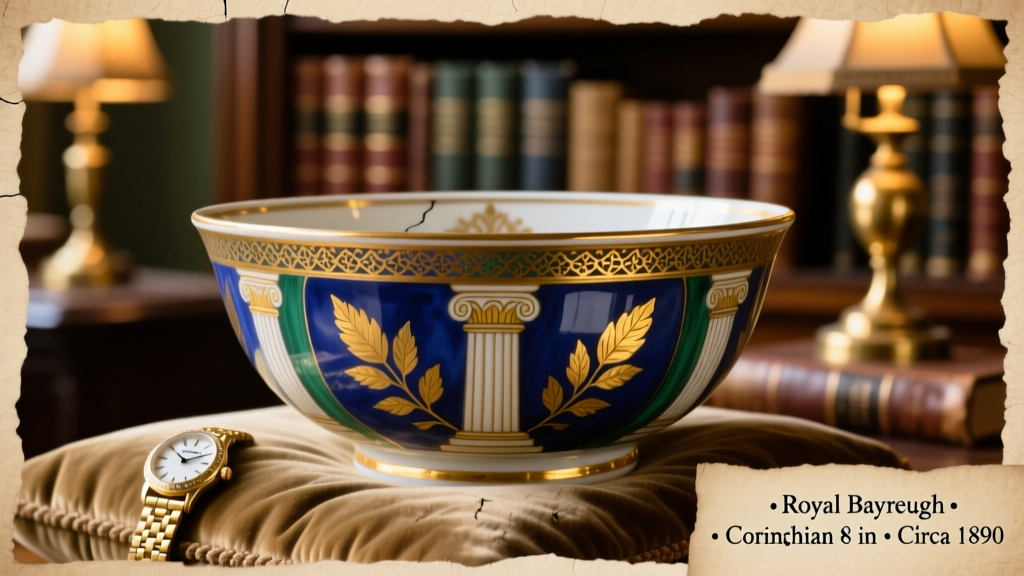
Royal Bayreuth Corinthian Bowl, 8-Inch: History, Identification, and Market Value of a German Porcelain Masterpiece
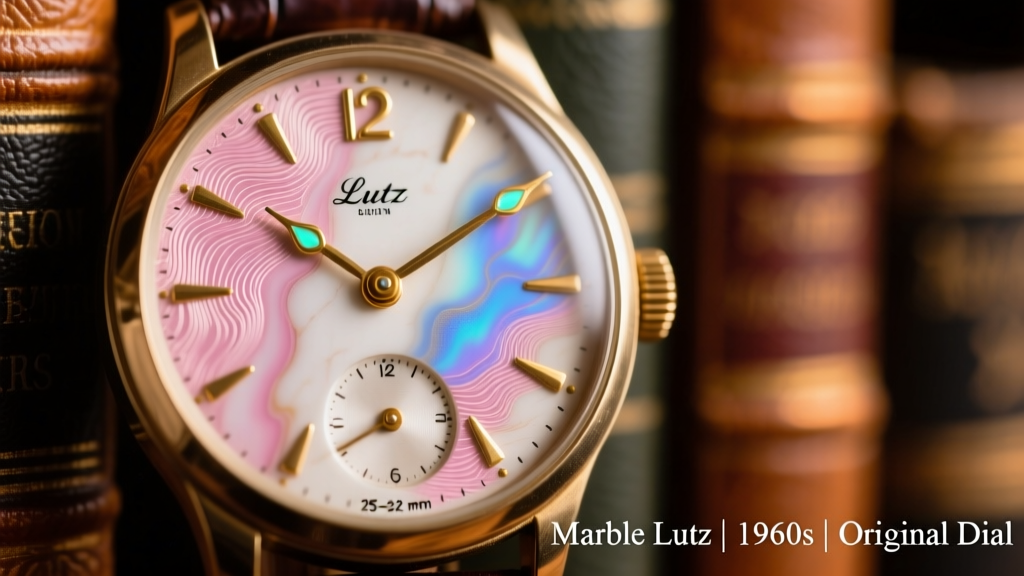
Marble Lutz Onionskin Dial: Decoding the Pink, White & Blue Streaked 25–32 mm Watch Face — A Technical & Historical Analysis
Halloween Horn Witch Bats Black Cats Dark Green Ground Tin Japan 5½" — A Collector’s Deep Dive into a Rare Mid-Century Japanese Halloween Lithograph
The Cartier Tank Chinoise Ref. 1140315: A Study in Art Deco Precision and Modern Provenance
Kovels’ Top Collectors’ Searches for March 2010: Market Trends, Price Shifts, and Undervalued Finds in Vintage Jewelry & Watches
Fostoria Versailles Relish Dish: A Collector’s Guide to the Two-Section Topaz 8½-Inch Pattern
The Patek Philippe Ref. 1133632: A Rare 1970s Stainless Steel Chronograph with Caliber 27-200 CH Movement
Lot 1132774: A 1958 Rolex Oyster Perpetual Reference 6608 — Technical Anatomy, Market Provenance, and Collector Significance
Limoges Plate with Exotic Birds and Gilded Edge: A Collector’s Guide to French Porcelain Artistry