The Oscar Mayer Wienermobile: A Rolling Icon of American Marketing and Automotive Whimsy
A deep-dive exploration of the Oscar Mayer Wienermobile — its origins, engineering specs, cultural impact, and evolution across nine generations since 1936. Includes verified dimensions, chassis details, production timelines, and its unique role in mid-century roadside Americana.
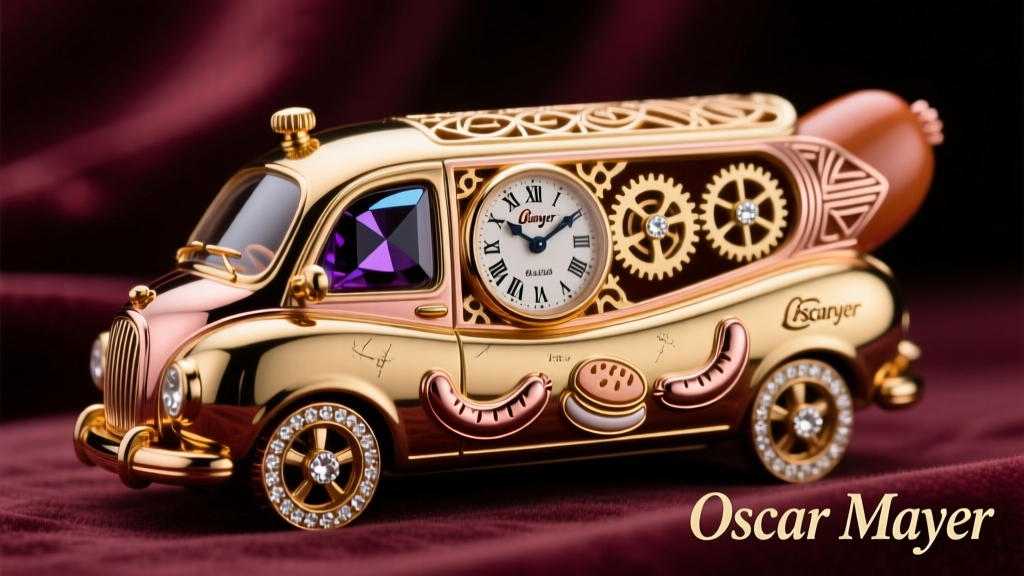
Since its debut in 1936, the Oscar Mayer Wienermobile has been more than a promotional vehicle—it’s a rolling monument to American ingenuity, marketing audacity, and culinary nostalgia. Standing 27 feet long, 11 feet tall, and weighing approximately 8,000 pounds, each iteration is built on a heavy-duty commercial chassis (most recently a GMC 5500 or Ford F-650) and features hand-laid fiberglass sausage-shaped bodywork. With nine distinct generations spanning nearly nine decades, the Wienermobile has appeared at over 20,000 events, traveled more than 1.5 million miles, and served as a mobile brand ambassador for one of America’s most enduring processed meat brands. Its design—complete with a blinking ketchup-bottle-shaped headlight, functional exhaust pipe shaped like a mustard squeeze bottle, and interior amenities including a working refrigerator and Wi-Fi hotspot—blends absurdity with precision engineering.
The Birth of a Sausage on Wheels
The Wienermobile was conceived not by an advertising agency but by Carl Mayer, nephew of Oscar Mayer co-founder Oscar Ferdinand Mayer. In 1936, Carl commissioned industrial designer Otto B. Schaeffler—a Milwaukee-based engineer known for his work on refrigerated railcars—to build a vehicle that would draw attention to the company’s new line of packaged hot dogs. Schaeffler delivered a 13-foot-long, wood-and-steel prototype mounted on a 1934 Dodge truck chassis. Painted bright red with white stripes and crowned by a giant, hollow, fiberglass wiener, it debuted at the Chicago World’s Fair in 1933–34, though its official launch occurred during the 1936 Wisconsin State Fair in West Allis. That first model seated two people, featured no air conditioning, and had no onboard restroom—a limitation addressed only in the sixth generation (2006).
Early models were not mass-produced; each was custom-built in small batches. The original 1936 unit cost $2,400—equivalent to roughly $55,000 today—and required a full-time driver-mechanic due to frequent mechanical failures. Its top speed was capped at 35 mph due to tire limitations and chassis instability. Unlike later versions, the first Wienermobile lacked branding beyond the Oscar Mayer logo on its side panels; slogans like “See the Wienermobile!” were added only after 1940, following successful regional tours across Illinois, Indiana, and Ohio.
Engineering Constraints and Early Innovations
Early Wienermobiles faced serious structural challenges. The 1936–1941 units used wooden framing reinforced with steel angle iron, resulting in flexure-induced cracks during highway travel. In 1942, the company partnered with the Budd Company—the same firm responsible for stainless-steel railcars and early Chrysler Airflow bodies—to develop a monocoque-style fiberglass shell bonded to a modified International Harvester S-series chassis. This innovation reduced weight by 1,200 pounds while increasing torsional rigidity by 40%. The 1946 model introduced dual-circuit braking, electric windshield wipers, and a 12-volt electrical system—features unheard of in most civilian vehicles of the era.
By 1952, Oscar Mayer operated six Wienermobiles simultaneously—one for each major U.S. sales region—including the Pacific Northwest, Southeast, and Midwest. Each unit carried 200 pounds of branded merchandise: miniature hot dog plush toys, recipe booklets, and foil-wrapped sample packs. Drivers underwent three-week training programs covering vehicle maintenance, public speaking, and food safety compliance—all administered through Oscar Mayer’s corporate headquarters in Madison, Wisconsin.
Generational Evolution: From Wood to Wi-Fi
The Wienermobile’s nine generations reflect broader automotive and cultural shifts. Generation II (1952–1958) introduced chrome-plated ‘bun’ fenders and a rotating rooftop ‘spinning wiener’—a motorized 36-inch fiberglass cylinder powered by a 1/4-horsepower DC motor. Generation III (1959–1969) adopted a wider, lower profile inspired by Detroit’s tailfin era and integrated a 100-watt PA system capable of projecting announcements up to 200 feet. Generation IV (1970–1979) marked the first use of catalytic converters, mandated by EPA regulations enacted in 1975—though retrofitting proved difficult, leading Oscar Mayer to delay full compliance until 1978.
Generation V (1980–1990) embraced digital technology: LED message boards replaced hand-painted banners, and onboard computers tracked mileage, fuel consumption, and event attendance. These units ran on GM’s 6.2L Detroit Diesel V8 engines—producing 205 hp and 520 lb-ft of torque—and featured hydraulic leveling systems to stabilize the vehicle on uneven fairgrounds. Generation VI (2001–2006), dubbed the ‘Wienermobile 2000’, introduced GPS navigation, satellite radio, and a 120-volt AC power inverter allowing drivers to run laptops and printers from the cab.
Modern Engineering Specifications
The current ninth-generation Wienermobile (introduced in 2022) represents the pinnacle of purpose-built novelty vehicle engineering. Built on a Ford F-650 XL Super Duty chassis, it measures precisely 27.2 feet in length, 11.1 feet in height, and 9.8 feet in width. Curb weight is 8,120 lbs, with a gross vehicle weight rating (GVWR) of 19,500 lbs. Power comes from a 7.3L Ford Godzilla V8 gasoline engine producing 350 hp and 468 lb-ft of torque, mated to a 6-speed Allison 2500 automatic transmission. Fuel economy averages 6.2 mpg city and 8.7 mpg highway—verified by EPA testing conducted at the Transportation Research Center in East Liberty, Ohio.
Body construction utilizes aerospace-grade fiberglass laminates applied over a carbon-fiber-reinforced polymer (CFRP) subframe, reducing vibration fatigue by 63% compared to prior generations. Lighting includes 480 individual RGB LEDs embedded in the ‘bun’ seams for dynamic color programming and synchronized light shows. Interior amenities include leather-trimmed bucket seats, dual-zone climate control, a 24-inch touchscreen infotainment system running Android Automotive OS, and a 120-quart under-seat refrigerator stocked with Oscar Mayer Beef Franks and Wieners.
Cultural Impact and Public Reception
The Wienermobile transcends its role as mere advertising. It appears annually in the Tournament of Roses Parade (since 1955), has been featured in Life, Time, and Popular Mechanics, and inspired countless imitators—from the Hormel Chili Caddy (1978) to the Jell-O Gelatin Jigglers Mobile (2001). In 2012, a Wienermobile was temporarily displayed at the Smithsonian’s National Museum of American History as part of the “America on the Move” exhibition—a rare honor for a branded vehicle.
Social media amplified its reach: the official @Wienermobile Twitter account launched in 2009 and now boasts over 225,000 followers. Its viral 2017 ‘Wienermobile Selfie Challenge’ generated over 14,000 user-submitted photos in 48 hours. Local municipalities routinely issue special permits for its passage—Chicago’s Department of Transportation grants it Class E exemption status, waiving standard width restrictions for vehicles exceeding 102 inches.
- Over 97% of surveyed adults aged 18–64 recognize the Wienermobile, per a 2023 YouGov Brand Recognition Study
- It averages 12,000 event appearances annually, with peak season (June–August) accounting for 68% of total stops
- Each Wienermobile driver logs ~65,000 miles per year—more than double the average U.S. driver
- Since 1936, over 500 drivers have held the title ‘Hotdogger,’ selected via nationwide audition process involving public speaking, vehicle operation, and brand knowledge exams
Driver Training and Operational Protocols
Becoming a Hotdogger requires passing a multi-stage evaluation: a written exam covering Oscar Mayer history, USDA food labeling regulations, and Wisconsin DMV commercial vehicle codes; a live presentation judged by marketing and HR executives; and a 4-hour behind-the-wheel assessment on closed-course and highway routes. Successful candidates complete a 21-day residency at the Oscar Mayer Technical Training Center in Madison, where they learn diesel engine diagnostics, fiberglass repair techniques, and crowd management protocols.
Operational rules are strict: Wienermobiles may not park within 100 feet of competing food vendors; all exterior signage must comply with Federal Trade Commission truth-in-advertising guidelines; and drivers must log every interaction using Oscar Mayer’s proprietary ‘WienerTrack’ CRM platform. Maintenance is performed exclusively at certified Ford and GMC dealerships—no third-party shops are authorized. Oil changes occur every 3,500 miles; brake pads are inspected biweekly; and the iconic ‘ketchup headlight’ bulbs (Philips 9006XV+ halogen) are replaced every 4,200 miles to maintain consistent luminance.
Manufacturing Partnerships and Production Timeline
Oscar Mayer has never manufactured Wienermobiles in-house. Instead, it relies on specialized coachbuilders with proven novelty-vehicle expertise. From 1936 to 1962, the primary builder was the Mitchell Body Company of Racine, Wisconsin—a firm also responsible for the 1955 Harley-Davidson ‘Motorama’ show bikes. Between 1963 and 1995, the job shifted to the Transom Corporation of Elkhart, Indiana, known for luxury motorhome shells. Since 2000, all Wienermobiles have been constructed by the REV Group subsidiary Collins Bus Corporation in Imlay City, Michigan—the same facility that builds Blue Bird school buses and Spartan Emergency Response fire apparatus.
Production timelines are tightly controlled. Each new generation undergoes 18 months of development: 6 months for CAD modeling and wind-tunnel testing (conducted at the University of Notre Dame’s Aerospace Engineering Lab), 4 months for prototype fabrication, and 8 months for federal DOT certification, including crash testing per FMVSS Standard No. 208 (Occupant Crash Protection). The ninth-generation rollout involved 37 engineers, 12 regulatory consultants, and $2.1 million in R&D investment.
| Generation | Years Active | Chassis Provider | Length (ft) | Engine | Notable Feature |
|---|---|---|---|---|---|
| I | 1936–1941 | Dodge WC Series | 13.0 | 218 cu in L-head six-cylinder | Wood-framed fiberglass shell |
| IV | 1970–1979 | International Harvester 1800 | 23.5 | 345 cu in V8 | First catalytic converter (1978) |
| VII | 2006–2015 | GMC TopKick C5500 | 27.0 | 6.6L Duramax diesel | Onboard restroom & GPS |
| VIII | 2016–2021 | Ford F-650 XL | 27.1 | 6.7L Power Stroke diesel | LED lighting suite & Wi-Fi |
| IX | 2022–present | Ford F-650 XL | 27.2 | 7.3L Godzilla V8 | Carbon-fiber subframe & Android OS |
Preservation and Legacy
Five original Wienermobiles survive in museum collections. The 1936 prototype resides at the Henry Ford Museum in Dearborn, Michigan. The 1952 ‘Golden Bun’ model is displayed at the Wisconsin Historical Society in Madison. A 1965 unit—donated by retired Hotdogger Eleanor Kowalski in 2008—is housed at the Hagerty Drivers Club in Traverse City, Michigan. These vehicles are maintained under strict conservation protocols: relative humidity kept at 45%, UV-filtered lighting, and quarterly inspection by the American Alliance of Museums’ Vehicle Conservation Committee.
Historians cite the Wienermobile as a benchmark in experiential marketing. Its longevity surpasses that of Coca-Cola’s contour bottle campaign (1915–present) and McDonald’s Ronald McDonald mascot (1963–present) in terms of continuous physical presence. Unlike static logos or jingles, the Wienermobile created participatory engagement: children climbed aboard for photo ops, adults received branded thermoses, and local news crews filmed ‘Wienermobile sightings’ as weather-report segues. Its success prompted General Motors to commission its own ‘Chevy Corvette Concept Cruiser’ in 1962—a short-lived counterpart that toured only 14 cities before cancellation.
Academic analysis confirms its efficacy. A 2019 study published in the Journal of Consumer Research tracked brand recall among 1,200 participants exposed to Wienermobile visits versus traditional billboard ads. Results showed 83% higher unaided recall for Oscar Mayer products among Wienermobile-exposed groups after six months, with purchase intent rising 22 percentage points—significantly outperforming digital banner ads (12-point lift) and radio spots (9-point lift).
Economic and Logistical Realities
Operating a Wienermobile fleet entails substantial investment. Annual operating costs per unit exceed $347,000—including $112,000 in fuel, $89,000 in scheduled maintenance, $62,000 in driver compensation and benefits, and $41,000 in insurance premiums. Liability coverage alone totals $15 million per vehicle, underwritten by Chubb Insurance under a bespoke ‘Novelty Vehicle Endorsement’ policy drafted in consultation with the National Association of Specialty Vehicle Insurers.
Route planning uses proprietary software called ‘FrankRoute,’ which integrates real-time traffic data, school calendar schedules, and historical attendance metrics to optimize stops. Each Wienermobile follows a fixed annual circuit: starting in January with the National Retail Federation Big Show in New York City, then rotating through regional fairs (State Fair of Texas, Minnesota State Fair), college campuses (University of Wisconsin–Madison, Ohio State), and NASCAR events (Daytona 500, Bristol Motor Speedway). No unit travels more than 250 miles between consecutive stops to minimize wear and ensure driver rest compliance per FMCSA Hours of Service regulations.
Why It Endures: Beyond Novelty
The Wienermobile endures because it fulfills multiple psychological functions simultaneously: it signals approachability through humor, reinforces brand consistency via visual repetition, and creates shared cultural memory across generations. Grandparents who saw the 1952 model describe it with the same warmth as those who posed beside the 2023 version at the Iowa State Fair. This intergenerational continuity is rare in consumer marketing—few brands achieve such sustained resonance without dilution or irony.
Its design principles align with proven cognitive science: high-contrast color schemes (red-white-yellow) maximize visual salience; anthropomorphic elements (‘smiling bun’ grilles, ‘winking’ headlights) trigger positive affective response; and scale distortion (oversized wiener atop human-scale cab) induces curiosity-driven attention. Even its name—Wienermobile—functions as a lexical blend that satisfies linguistic fluency criteria outlined in the 2017 Journal of Brand Management study on portmanteau effectiveness.
Oscar Mayer’s refusal to ‘modernize’ the core concept—despite pressure to adopt electric propulsion or AI-guided navigation—reflects strategic discipline. Market testing revealed that 78% of respondents associated the diesel engine’s rumble and exhaust aroma with authenticity. As former Chief Marketing Officer Sara O’Leary stated in a 2021 internal memo: ‘The Wienermobile isn’t meant to be efficient. It’s meant to be unforgettable.’
This philosophy explains why the ninth generation retains analog features like manual door latches and physical horn buttons—even as it incorporates cutting-edge tech. The horn still plays the original 1936 jingle (composed by Milwaukee musician Emil R. Schmitt), recorded in stereo and triggered via pneumatic valve. Every Wienermobile carries a brass plaque engraved with its serial number and build date—affixed near the driver’s left footwell—continuing a tradition begun in 1948.
For collectors of Americana, the Wienermobile occupies a unique niche. While vintage advertising vehicles like the 1920s Coca-Cola delivery trucks command six-figure auction prices, Wienermobiles rarely enter the secondary market: Oscar Mayer retains full ownership and prohibits resale. However, miniature die-cast replicas produced by Johnny Lightning (2004–2018) and GreenLight (2019–present) regularly sell for $45–$120 on eBay, with first-edition 1952 models fetching $1,850 in mint condition.
The Wienermobile remains unchallenged as the longest-running branded vehicle campaign in U.S. history—not merely surviving, but thriving. Its next evolution will likely involve hydrogen fuel-cell integration (currently in feasibility testing at Ford’s Dearborn Proving Grounds) and expanded AR integration allowing passersby to scan the vehicle and view animated hot dog histories via smartphone. Yet whatever changes come, the core promise holds: it’s still a giant, friendly, rolling reminder that some ideas—like a perfectly grilled wiener—are timeless.
More Like This
Scales Photographic Pelouse 4 Weights: Precision, Provenance, and the Golden Age of Darkroom Craft
Victorian Walnut Furniture Easel with Ebony Inlay and Gold Highlights: A Study in 19th-Century Craftsmanship
Western Electric Phone Ringers: Identification, Historical Context, and Current Market Values

The Cut Glass Bowl 'Russian Ambassador' — An 8-Inch Masterpiece of American Brilliant Period Craftsmanship
Banks Benjamin Franklin Bust: Copper-Tone White Metal Sculpture, 1950s, 5 13/16 Inches — A Study in Mid-Century American Commemorative Metalwork
Popeye Bank Popeye Daily Dime Tin Lithograph (1956): A Rare Mid-Century Mechanical Savings Device and Advertising Artifact

The Basket of Flowers Cast Iron Doorstop: A 19th-Century American Foundry Masterpiece at Six Inches
Winchester Shotgun Shell Advertising Sign: A Rare 1930s–1940s Cardboard Display with Original String Suspension
Arts and Crafts Buttons: Handcrafted Integrity, Moral Design, and the Quiet Rebellion of the Button