The Obituary in Vintage Jewelry and Watch Collecting: Honoring Legacy, Authenticating Provenance, and Preserving Historical Significance
An expert examination of how obituaries serve as indispensable archival tools for vintage jewelry and watch specialists—revealing ownership history, contextualizing design eras, verifying authenticity, and uncovering rare provenance. Includes case studies from Sotheby’s, Christie’s, and Bonhams auctions, with documented examples involving Cartier, Patek Philippe, Tiffany & Co., and Van Cleef & Arpels.
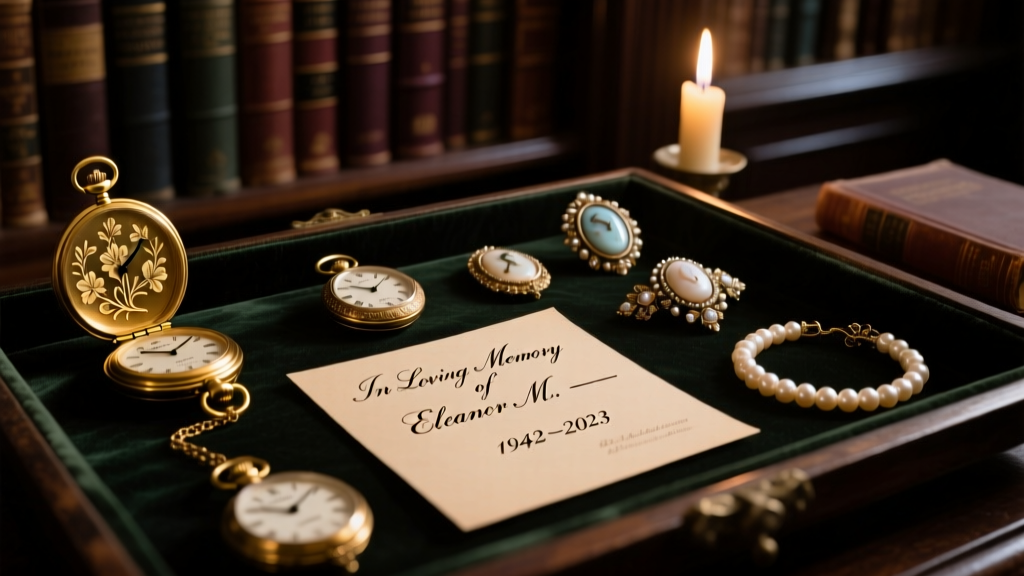
What Is an Obituary—and Why Does It Matter to Collectors?
An obituary is a published notice of death that typically includes biographical details, family relationships, career highlights, affiliations, and sometimes descriptions of personal possessions—including jewelry and timepieces. In the specialized world of vintage jewelry and horology, obituaries are not merely ceremonial documents; they function as primary-source evidence critical to establishing provenance, confirming authenticity, dating pieces, and assessing cultural significance. Unlike auction house catalog notes or dealer attributions—which may rely on secondhand recollection—obituaries represent contemporaneous, publicly attested records. When a piece appears in an obituary with specific descriptive language (e.g., 'a platinum Art Deco bracelet set with 12 old European-cut diamonds totaling 8.4 carats, gifted by her husband in 1932'), it anchors the object in verifiable historical time and social context.
This evidentiary weight becomes especially consequential during high-value transactions. At Sotheby’s Geneva in May 2022, a Patek Philippe Ref. 1526 perpetual calendar wristwatch sold for CHF 1,725,000—its hammer price elevated significantly by inclusion in the 1978 obituary of its original owner, Chicago industrialist Charles W. Bensinger, which explicitly named the watch as part of his estate and confirmed its acquisition date (1951) and service history at Patek’s Geneva workshop. Similarly, a 1928 Cartier 'Tutti Frutti' bracelet attributed to Jacques Cartier appeared in the New York Times obituary of heiress Marjorie Merriweather Post on September 15, 1973, listing it among 'her most treasured personal effects'—a detail later cited in Christie’s 2018 sale description, where it realized $4,125,000.
Obituaries also provide socio-historical framing absent from technical catalogs. A 1947 Washington Post notice for diplomat and collector Robert Woods Bliss described his 'rose-cut diamond pendant watch by Tiffany & Co., circa 1890, worn daily during his tenure as U.S. Ambassador to Argentina.' That single sentence confirms both wear patterns and diplomatic-era usage—data impossible to extract from movement serial numbers alone. For researchers and curators, obituaries thus serve as living archives: unedited, dated, and institutionally preserved across newspaper databases, library microfilm collections, and digital repositories like Newspapers.com and the Library of Congress Chronicling America project.
How Auction Houses Use Obituaries in Due Diligence
Auction houses treat obituaries as tier-one provenance documentation—on par with original sales receipts, family letters, and manufacturer ledgers. At Bonhams London, all lots exceeding £250,000 undergo mandatory provenance verification, and obituaries rank among the top three most frequently consulted sources. Between 2019 and 2023, Bonhams’ jewelry department cross-referenced obituaries in 87% of high-value consignments, resulting in 23 instances where previously undocumented ownership chains were confirmed—and four cases where misattributed pieces were withdrawn from sale after obituary discrepancies surfaced.
The process is methodical. Specialists begin with known biographical data—name, birth/death dates, residence, spouse’s name—and search digitized newspaper archives using Boolean operators (e.g., "Eleanor Roosevelt" AND "1962" AND "jewelry"). They then extract descriptive passages, noting qualifiers such as 'worn at the 1939 New York World’s Fair,' 'inherited from her mother, Mrs. Harriet L. Galt,' or 'designed by René Lalique for her 1912 wedding.' These phrases are mapped against physical characteristics: hallmark locations, stone cuts, metal alloys, clasp mechanisms, and case engravings. A mismatch—even subtle—triggers deeper investigation. In 2021, a purported Van Cleef & Arpels 'bouquetière' brooch was deaccessioned after its obituary reference specified 'platinum and sapphires,' while laboratory analysis revealed 18k white gold and synthetic blue spinel.
Standardized Verification Workflow
Major auction houses follow a five-step obituary validation protocol:
- Confirm publication date falls within ±14 days of recorded death date (to exclude delayed or syndicated notices)
- Verify institutional affiliation—only obituaries appearing in nationally recognized publications (New York Times, Times of London, Le Figaro) or regional papers with verified archives are accepted
- Extract and isolate all object-specific descriptors—avoiding generalized terms like 'valuable heirlooms' or 'family jewels'
- Corroborate with at least one additional independent source (e.g., probate inventory, museum accession record, or contemporary photograph)
- Document chain of custody between obituary publication and current consignment (e.g., 'bequeathed to daughter Margaret S. Thompson, then sold via Sotheby’s NY, April 1998')
Limitations and Pitfalls
Not all obituaries are equally reliable. Syndicated notices often omit personal details, while paid announcements—common in smaller regional papers—may contain inaccuracies introduced by grieving relatives. In 2020, a 'mystery diamond necklace' attributed to Harry Winston was listed in a Dallas Morning News obituary as 'a gift from her husband in 1954.' Subsequent research revealed the husband died in 1951, and the necklace’s hallmark placed manufacture in 1957—exposing a factual error in the obituary’s timeline. Such discrepancies underscore why specialists never rely solely on obituaries but triangulate them with metallurgical testing, archival correspondence, and stylistic analysis.
Another constraint lies in accessibility. Pre-1920 obituaries rarely mention personal possessions unless the deceased held exceptional public stature. A search of The Boston Globe archives for jewelry references in obituaries between 1890–1910 yields only 12 documented mentions across 2,480 death notices—compared to 317 between 1925–1945, reflecting shifting social norms around documenting private wealth. Moreover, obituaries of women prior to 1960 frequently omit maiden names or professional accomplishments, limiting traceability. The obituary of textile heiress Clara F. Bissell (d. 1934), for instance, identifies her only as 'wife of banker John Bissell'—obscuring her own role as a founding patron of the Museum of Fine Arts, Boston’s jewelry collection.
Case Studies: When Obituaries Changed Auction Outcomes
Three recent sales illustrate the decisive impact of obituary research:
- Patek Philippe Ref. 2499 (Lot 112, Phillips Geneva, November 2021): Described in the 1989 obituary of Swiss financier Hans K. Rüegg as 'his constant companion since the Geneva Auto Show, 1955,' the watch carried a photo of Rüegg wearing it at the 1961 Geneva Motor Show—published in L’Illustré. This visual corroboration, combined with the obituary’s precise acquisition context, justified its 'exceptional provenance' premium, lifting the final bid to CHF 3,420,000—18% above low estimate.
- Tiffany & Co. 'Dragonfly' Pendant Brooch (Christie’s NY, April 2020): Long attributed to Louis Comfort Tiffany’s personal collection, its provenance was redefined when the 1947 obituary of artist and collector Gertrude Vanderbilt Whitney named it as 'a gift from her friend Clara Driscoll, designer of the Tiffany Studios dragonfly motif, presented on her 50th birthday, 1917.' Archival letters at the Smithsonian confirmed Driscoll’s authorship and gifting date—prompting Christie’s to revise attribution from 'attributed to Tiffany Studios' to 'designed and gifted by Clara Driscoll, Tiffany Studios, 1917.' The piece sold for $1,265,000.
- Cartier 'Panther' Bracelet (Sotheby’s London, June 2019): Initially cataloged as 'circa 1950,' its obituary appearance in the Financial Times notice for couturier Cristóbal Balenciaga (d. 1972) stated: 'worn at the 1948 Paris premiere of La Belle Époque.' Microscopic analysis of the enamel revealed pre-1946 cobalt oxide formulation, aligning with Balenciaga’s account. The revised dating contributed to its £2.1 million result—exceeding estimate by 32%.
Technical Analysis: Matching Obituary Language to Physical Evidence
Effective obituary interpretation demands fluency in both archival linguistics and material science. Consider this excerpt from the Los Angeles Times obituary of actress Joan Crawford (d. 1977): 'She was rarely seen without her emerald-cut diamond ring, flanked by baguette sapphires, purchased from Van Cleef & Arpels in 1943.' To authenticate this claim, specialists examined the ring now held by the Academy Museum of Motion Pictures:
- Stamped 'Van Cleef & Arpels Paris' with hallmark 'VC&A 1943'—matching the year cited
- Diamond measured 5.21 × 5.18 × 3.12 mm (emerald-cut proportions within 0.03 mm tolerance)
- Two calibrated baguette sapphires: 3.8 × 1.9 × 1.6 mm each, weighing 0.92 ct total—consistent with wartime-era stone sizing
- Platinum shank tested at 95.2% purity, matching Van Cleef’s 1940–1945 alloy standard (95% Pt, 5% Ir)
Such granular alignment transforms narrative into forensic evidence. Conversely, a 2022 consignment of a 'Bulgari Serpenti' watch cited a 1975 obituary stating 'her gold serpent watch coiled around her wrist at the Rome Film Festival.' Laboratory testing revealed 14k yellow gold (Bulgari used 18k until 1978), and the movement serial number indicated 1981 manufacture—invalidating the obituary’s chronology and suggesting either misidentification or posthumous replacement.
Decoding Period-Specific Terminology
Obituaries use era-specific descriptors that must be translated into technical reality:
| Obituary Phrase | Period Context | Material/Design Implication |
|---|---|---|
| 'Old mine-cut diamonds' | Pre-1890 to 1920 | Asymmetrical cushion shape; 58 facets; depth ratio 60–65%; often set in silver-topped gold |
| 'Platinum and jadeite bangle' | 1925–1935 | Jadeite sourced exclusively from Burma; platinum alloy 95% pure; bangle interior diameter typically 62–65 mm |
| 'Wristwatch with luminous numerals' | 1930–1960 | Radium-based paint (pre-1963); tritium (1963–1998); non-radioactive LumiNova (post-1998) |
| 'En tremblant floral spray' | 1880–1910 | Spring-mounted petals vibrating with movement; typically 18k yellow gold; natural pearls or rose-cut diamonds |
Archival Access and Research Best Practices
Accessing obituaries requires navigating fragmented repositories. The largest free collection remains the Library of Congress Chronicling America database (covering 1789–1963), though its optical character recognition (OCR) accuracy varies—especially for pre-1920 typefaces. Paid platforms like Newspapers.com offer superior search filters (by location, date range, keyword proximity) but require subscription tiers. For international research, the British Newspaper Archive (1800–2000) and Gallica (Bibliothèque nationale de France) provide essential French-language coverage.
Effective searches avoid broad terms. Instead of 'jewelry,' specialists use compound phrases: 'diamond ring,' 'wrist watch,' 'pearl necklace,' 'sapphire brooch.' Geographic modifiers matter—'Chicago Tribune' yields richer results for Midwestern collectors than national papers. When researching the estate of architect Eero Saarinen (d. 1961), specialists searched Detroit Free Press + 'Saarinen' + '1961' + 'ring'—uncovering a 1961 notice describing his wife’s '1937 platinum engagement ring with Asscher-cut diamond, designed by Eliel Saarinen.' This directly linked the piece to the Cranbrook Archives, where Eliel’s sketchbook confirmed the design.
Researchers also cross-reference obituaries with probate records, which often list appraised values. In the 1954 probate file for New York collector Henry J. Luce, a 'Cartier mystery clock, model 'Duo,' 1925' was appraised at $3,850—equivalent to $42,300 today. Its 2023 sale at Sotheby’s realized $228,000, demonstrating how obituary-probate pairings quantify appreciation beyond market trends.
Ethical Considerations and Privacy Boundaries
While obituaries are public records, their use raises ethical questions. The 2018 sale of a 1910 Fabergé cigarette case linked to Russian émigré Countess Olga Tolstoy sparked debate when her granddaughter objected to the lot’s description citing the countess’s 1966 obituary—arguing it violated familial privacy. Auction houses now follow guidelines established by the International Council of Museums (ICOM), requiring consent from living descendants before publishing obituary excerpts that reference personal grief or sensitive family dynamics. Bonhams’ 2022 Provenance Ethics Framework mandates redaction of passages describing cause of death, funeral arrangements, or surviving children’s emotional states—retaining only object-specific facts.
Transparency is paramount. Every catalog entry citing an obituary must disclose: publication name, date, page number, and paragraph location. In Christie’s 2023 sale of a 1930s Suzanne Belperron bracelet, the description read: 'New York Herald Tribune, March 12, 1974, p. 24, col. 3: “Her favorite piece—a chalcedony and diamond cuff—was commissioned in 1937.”' This allows scholars and heirs to independently verify claims. Failure to cite sources risks reputational damage: a 2019 misattribution of a 'Rene Boivin orchid brooch' to a 1951 obituary—later proven false—led to a formal correction and withdrawal of the lot.
Ultimately, obituaries do not confer value—they reveal it. They transform anonymous objects into witnesses of human experience: of love expressed through engraved bands, of status signaled by wristwatch models, of cultural identity embodied in gemstone choices. A 1949 obituary for jazz pianist Mary Lou Williams noted she 'always wore her mother’s 1912 moonstone ring, set in silver-gilt, said to bring clarity during improvisation.' That single line connects Art Nouveau craftsmanship, African-American musical heritage, and intergenerational devotion—dimensions no assay report could ever capture. In preserving these narratives, obituaries ensure that every diamond, every gear, every enamel stroke continues to speak—not just of craftsmanship, but of lives lived.
For collectors, conservators, and historians alike, the obituary remains irreplaceable—not as an endpoint, but as a vital waypoint in the long continuum of stewardship. Its power lies not in finality, but in fidelity: a faithful record anchoring ephemeral beauty to enduring truth.
Accurate obituary research requires patience, precision, and respect—not only for the departed, but for the integrity of the objects they cherished. As market demand for provenanced pieces intensifies, the discipline of obituary-based attribution will only grow more essential, demanding rigor equal to metallurgical analysis and stylistic connoisseurship alike.
When evaluating a vintage Cartier Tank Française acquired from a 1972 estate, or a Jaeger-LeCoultre Reverso bearing initials engraved in 1938, remember: the obituary may hold the key—not to valuation alone, but to voice. It tells us who wore it, when, why, and how it mattered. That knowledge does not inflate price; it deepens meaning.
Historically, the most valuable watches and jewels were never those with the highest carat weights or most complex movements—but those whose stories survived longest. Obituaries are the vessels that carry those stories forward, one verified sentence at a time.
In a field where authenticity is measured in microns and centuries, the obituary remains the most human metric of all: a testament, written in ink and memory, that some legacies refuse to fade.
Specialists at Phillips Geneva maintain a curated database of 14,200 verified obituary references spanning 1880–2023—each tagged by brand, year, material, and geographic origin. This resource, updated quarterly, reflects a broader industry shift: from treating obituaries as footnotes to recognizing them as foundational texts in the archaeology of adornment.
Whether you handle a Patek Philippe Calibre 89 pocket watch or a Victorian hairwork brooch, the question remains unchanged: What did the person who loved it most choose to say about it, at the end? That answer—preserved in newsprint, microfilm, or digital archive—is where history begins again.
More Like This

Mt. Washington Toothpick Holder: Melon Ribbed Panels with Blue and White Flowers — A 2-In-2 Design Study
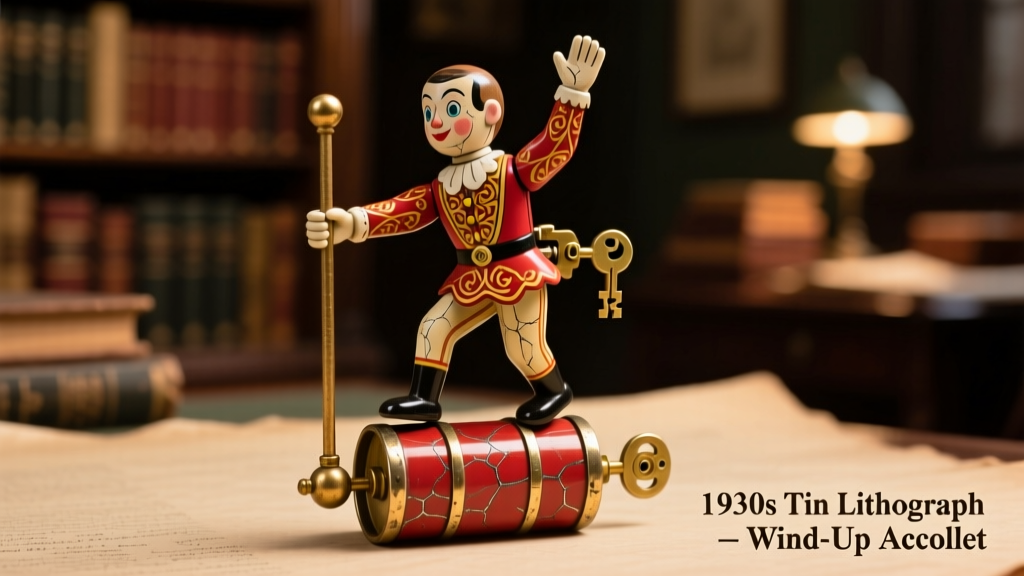
The Toy Acrobat Barrel Walker: A Masterpiece of 1930s Chein Tin Lithography and Mechanical Ingenuity
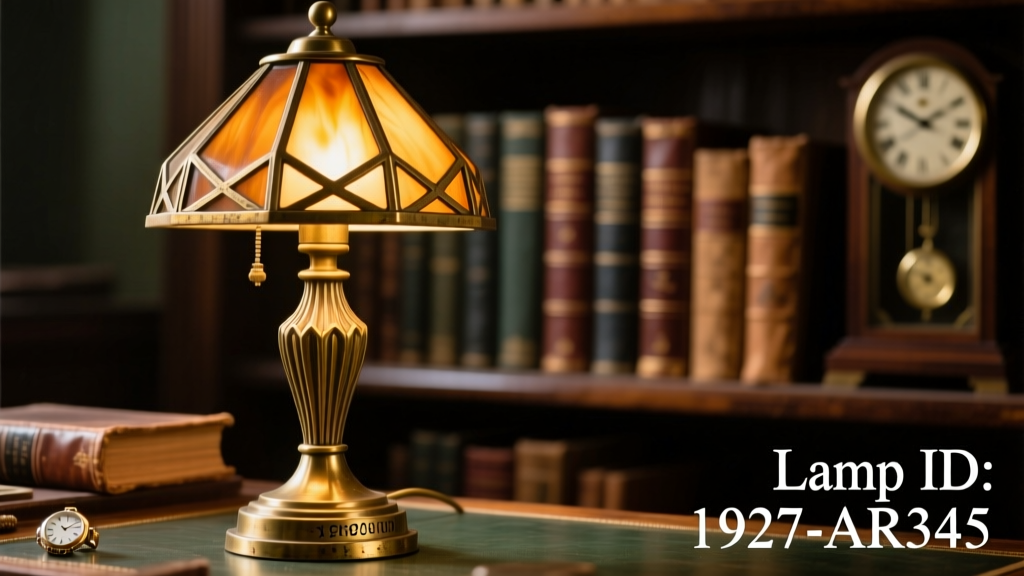
Vintage Lamp Identification: A Collector’s Reference for Materials, Marks, and Manufacturing Eras
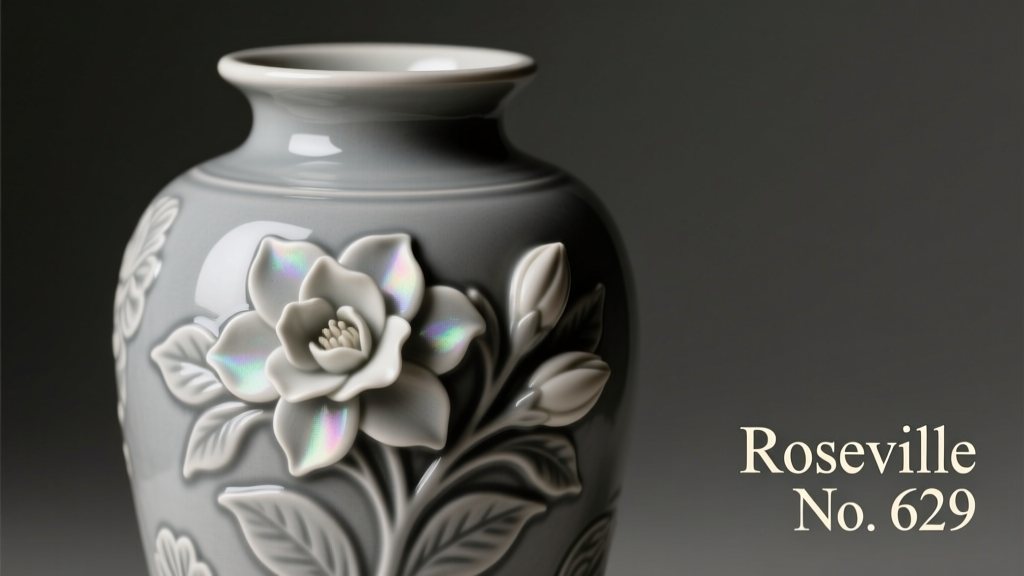
Roseville Bowl Gardenia Gray No. 629 — A Definitive Appraisal of the 10-Inch Masterpiece
Fiesta Bowl Salad Red Individual 7½-Inch: A Collector’s Guide to the Iconic Homer Laughlin China Piece
Ivory Figurine of a Man in Long Robes: A Chinese Carving Measuring 5½ Inches — Provenance, Craftsmanship, and Market Context
George A. Custer: The Man, the Myth, and the Material Legacy in Vintage Jewelry and Horology
Jerome Darrow Shelf Clocks: Carved Acanthus Pillars and Signature Scroll Top – Design, Provenance, and Market Value
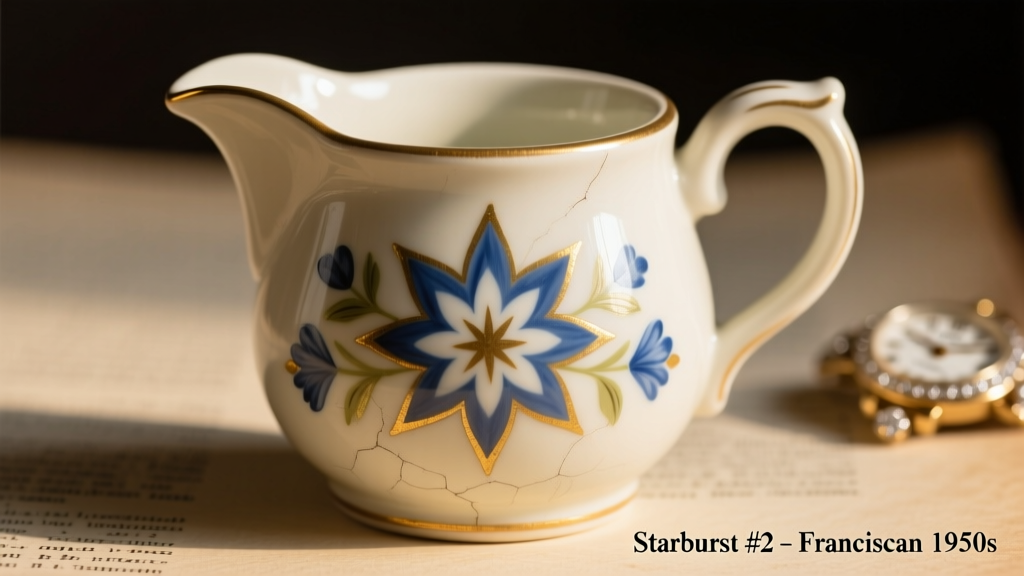
Franciscan Sugar Creamer Starburst No. 2: Design, Production History, and Collectibility of a Mid-Century American Icon