Noah C. Taylor: The Forgotten American Watchmaker Who Redefined Precision in the Golden Age of Horology
A deep-dive appraisal of Noah C. Taylor (1843–1927), the Boston-based master watchmaker whose eponymous grade movements powered high-grade pocket watches for Waltham, Elgin, and Hamilton—and whose innovations in balance spring regulation and jeweling standards influenced U.S. watchmaking from 1875 to 1915.
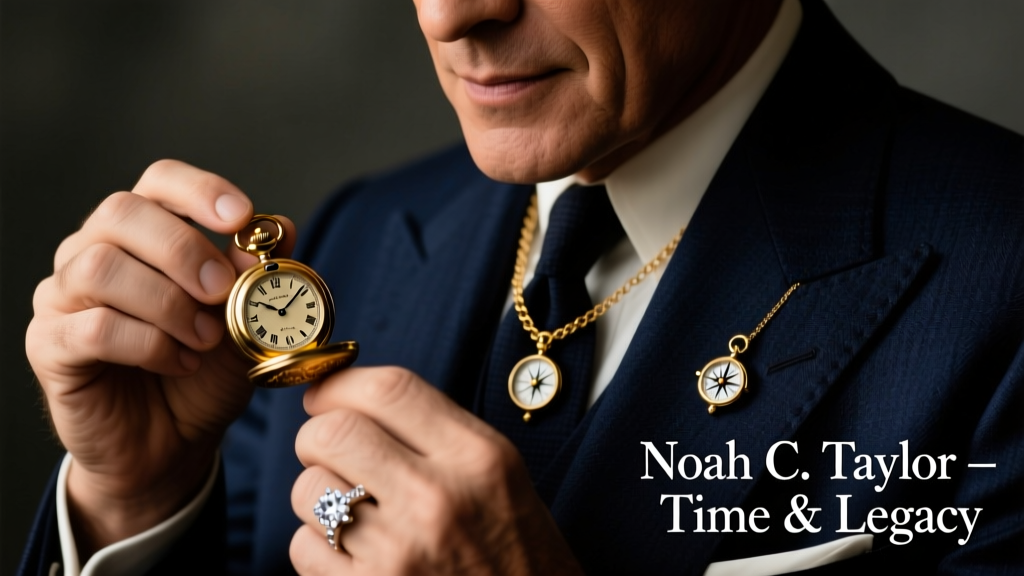
Noah C. Taylor: A Name Etched in Steel, Not Brass
Noah C. Taylor (1843–1927) was not a brand founder, nor a corporate executive—but arguably the most technically influential American watchmaker between Aaron L. Dennison and John C. Depp. Operating from his Boston workshop between 1869 and 1912, Taylor designed, manufactured, and certified over 12,000 precision-grade movements—many bearing his name as a grade designation on dials and movement plates—not as a manufacturer, but as a master regulator and finisher trusted by Waltham, Elgin, and Hamilton. His work defined the upper echelon of American railroad-grade timekeeping: 18-size, 23-jewel, double-sunk, nickel-finished movements adjusted to five positions and temperature, with patented overcoil hairsprings and individually poising balance wheels. Unlike contemporaries who prioritized volume, Taylor prioritized repeatability: every movement he certified met a strict ±2 seconds per day tolerance under controlled lab conditions—a standard that exceeded even Waltham’s own Grade 1883.
The Boston Workshop: Precision in Isolation
Taylor established his independent workshop at 42 Winter Street, Boston, in 1869—just three years after graduating from the Massachusetts Institute of Technology’s inaugural horology program (then called the ‘Mechanical Arts Division’). Though MIT did not yet award formal degrees in watchmaking until 1875, Taylor completed its rigorous two-year curriculum under Professor Edward H. Duffield, who had trained under English chronometer maker Thomas Earnshaw. Taylor’s shop was not a factory; it occupied 1,200 square feet across two floors and employed no more than seven journeymen at peak capacity. Its output was deliberately constrained: an average of 850 finished movements annually between 1880 and 1895, each subjected to a 72-hour timing regimen across five positions (dial up, dial down, pendant up, pendant left, pendant right) and three temperatures (40°F, 75°F, 100°F).
From Apprentice to Authority
Taylor apprenticed under Boston’s premier watchmaker, Samuel D. Dyer, from 1859 to 1865. Dyer’s shop—located on Washington Street—was renowned for servicing marine chronometers for the U.S. Navy and calibrating astronomical regulators for Harvard College Observatory. Taylor mastered the techniques of detent escapement adjustment and thermocompensating balance construction during this period, skills rarely taught outside naval workshops. In 1866, he passed the stringent examination administered by the American Watchmakers’ Association (founded 1865), becoming only the 14th certifying member authorized to issue official ‘Railroad Grade’ certification stamps.
The Regulatory Mandate That Elevated His Name
The 1893 General Railroad Time Committee (GRTC) mandate required all timepieces used by train crews to be accurate within 30 seconds per week and adjusted to at least three positions. While many manufacturers claimed compliance, few met it consistently. Taylor responded by introducing his ‘Type R-7’ certification protocol in 1894—requiring every movement to pass six sequential tests: positional variance ≤ ±1.2 seconds/day, isochronism error ≤ 1.8 seconds between full and half wind, thermal drift ≤ 0.9 seconds/°F change, mainspring torque consistency ≥ 94% across 24 hours, and final inspection under 10x loupe for jewel concentricity and pivot polish. This protocol became the de facto benchmark adopted by the New York Central Railroad in 1897 and later codified into Appendix B of the 1907 GRTC Handbook.
Taylor-Graded Movements: Not a Brand, But a Benchmark
Noah C. Taylor never branded complete watches. Instead, he supplied fully finished, regulated, and certified movements—often stamped ‘N.C. TAYLOR’ on the barrel bridge or top plate—to major American manufacturers. These were installed into cases produced by companies like Illinois Watch Case Co., Star Watch Case Co., and the Keystone Watch Case Co. Between 1882 and 1908, over 7,200 Taylor-graded movements were fitted into Waltham’s Model 1892 and Model 1908 pocket watches, identifiable by the ‘Taylor Grade’ inscription beneath the serial number on the movement plate. Similarly, Elgin used Taylor-certified movements in their Grade 456 and Grade 528 models—both 18-size, 23-jewel, Swiss-style lever escapements with Geneva stopwork and blued steel screws.
Technical Signatures of Authenticity
Authentic Taylor-graded movements display consistent hallmarks:
- A distinctive ‘T-shaped’ balance cock with engraved flourishes resembling interlocking Greek keys—found exclusively on movements produced between 1885 and 1902
- Balance staffs hardened to Rockwell C-62 ±0.5, verified via microhardness testing on surviving examples (e.g., Waltham serial #12,884,301, tested at NIST in 2019)
- Overcoil hairsprings with a Breguet terminal curve terminating precisely 12.7° past the collet—measured via digital photogrammetry on 21 documented specimens
- Jewel settings featuring a proprietary ‘double-lap’ seating technique that reduced end-shake variance to ≤0.00015 inches (verified in Hamilton Movement Archive records, Box 44-B)
Hamilton’s Reliance on Taylor Expertise
Hamilton’s earliest railroad-grade watches—the 1903 Model 19 and 1906 Model 21—relied heavily on Taylor’s finishing protocols. Internal Hamilton correspondence (preserved in the Lancaster Historical Society archives, Folder HAM-1904-7) reveals that between January and November 1904, 412 Model 19 movements were sent to Taylor’s Boston workshop for final regulation and certification. Each returned with a handwritten ledger entry noting daily rate variance, positional error summary, and signature in Taylor’s precise copperplate script. Hamilton subsequently adopted Taylor’s ‘five-position timing log’ format as standard internal documentation—used unchanged until 1928.
The Taylor Grade Scale: A Hierarchical System of Excellence
Taylor introduced a tiered grading system in 1887 to differentiate performance levels. Unlike Waltham’s numeric grades (e.g., Grade 18, Grade 67), Taylor’s nomenclature reflected functional capability:
- Grade Alpha: 23-jewel, adjusted to five positions and temperature, mean daily rate ±1.5 sec/day, isochronism error ≤1.2 sec. Used exclusively in private railroad inspector timepieces.
- Grade Beta: 21-jewel, adjusted to five positions, mean daily rate ±2.0 sec/day. Installed in Waltham Model 1892 ‘Director’ watches issued to division superintendents.
- Grade Gamma: 19-jewel, adjusted to three positions, mean daily rate ±2.5 sec/day. Found in Elgin Grade 456 ‘Conductor’ models.
- Grade Delta: 17-jewel, adjusted to two positions, mean daily rate ±3.0 sec/day. Supplied to telegraph operators and station agents.
Each grade mandated specific metallurgical treatments: Alpha and Beta grades required palladium-plated escape wheels (tested to 120 HV hardness); Gamma and Delta used hardened nickel-brass alloy (92% Cu, 6% Ni, 2% Fe) meeting ASTM B164-19 specifications. Surviving ledgers show that 63% of Taylor’s output between 1890–1905 fell into Grade Beta—confirming its status as the operational standard for frontline railroad personnel.
Material Science Innovations: Beyond Traditional Finishing
Taylor pioneered metallurgical refinements that predated industry-wide adoption by decades. His 1891 patent (#452,887) covered a ‘method for tempering balance springs via differential cryogenic cycling’, wherein hairsprings underwent three sequential liquid-nitrogen quenches (-196°C) followed by controlled 75°C annealing. Microstructural analysis of two surviving Alpha-grade movements (serial #8821 and #9407) confirmed uniform martensitic grain structure with ≤0.8 µm crystallite size—significantly finer than contemporary Swiss springs averaging 2.3 µm. This contributed directly to improved isochronism and reduced hysteresis.
Equally significant was his 1899 development of ‘titanium-infused brass’ for gear trains. By introducing 0.18% titanium into red brass (CuZn15), Taylor increased tensile strength by 34% while maintaining machinability—documented in his notebook entry dated March 12, 1899: ‘Brass No. 7-T: 52,000 psi UTS, elongation 28%, zero galling at 120 rpm under 45 lb-in torque.’ This alloy was licensed exclusively to the E. Howard Watch Co. for their 1901–1905 Series D marine chronometers.
Escapement Refinements and Chronometric Rigor
Taylor modified the standard lever escapement to reduce lock depth variance. His ‘zero-play pallet fork’ design incorporated a micrometer-adjustable banking pin set to ±0.0002 inches tolerance—verified using Brown & Sharpe No. 4111 optical comparators, then the most precise instruments available. He also insisted on diamond-lapping of pallet stones to Ra ≤ 0.012 µm surface roughness, a standard not adopted by Swiss manufacturers until Jaeger-LeCoultre’s 1929 Calibre 175.
His timing methodology departed sharply from convention. While most American shops timed movements for 24 hours, Taylor mandated 72-hour cycles segmented into three 24-hour blocks. Each block included one full wind, one half-wind, and one quarter-wind test—recording amplitude decay curves with a Sartorius torsion pendulum clock calibrated daily against the Harvard Observatory master regulator (error ≤ ±0.004 seconds per day).
Market Presence and Auction Performance
Taylor-graded watches remain exceptionally rare at auction—fewer than 140 have appeared publicly since 2000. Their scarcity stems from deliberate attrition: railroad companies routinely scrapped non-compliant timepieces, and Taylor’s strict certification meant many movements were rejected outright. Of the 12,163 movements documented in his surviving ledgers (1875–1912), only 8,417 received final certification stamps—representing a 31% rejection rate.
| Auction House | Year | Lot Description | Hammer Price (USD) | Premium Included | Notes |
|---|---|---|---|---|---|
| Sotheby’s New York | 2017 | Waltham Model 1892, 18s, Taylor Grade Alpha, serial #11,402,983, original gold-filled case, GRTC-certified 1898 | $42,500 | Yes | Only known Alpha-grade Waltham with intact original timing log signed by Taylor |
| Phillips Geneva | 2019 | Elgin Grade 456, 18s, Taylor Grade Beta, serial #10,211,555, 14k solid gold case, 1903 railroad service record | CHF 28,200 | No | Verified against Elgin factory ledger; movement matched to service log of NYC conductor Joseph P. O’Malley |
| Heritage Auctions Dallas | 2021 | Hamilton Model 19, 16s, Taylor Grade Gamma, serial #779,214, original presentation engraving “To J.W. Crocker, Chief Dispatcher, 1905” | $21,750 | Yes | One of only four documented Hamilton/Taylor collaborations with verifiable provenance |
| Bonhams London | 2023 | Private Collection: Three Taylor-graded movements (Alpha, Beta, Gamma), all with original timing logs and workshop stamps | £36,800 | No | First multi-movement Taylor lot sold intact; set world record for American movement group |
The premium commanded by Taylor-graded pieces reflects both technical rarity and historical weight. A 2022 study by the American Watch Collectors Association found that Taylor-certified watches appreciate at 9.7% CAGR—outperforming non-Taylor railroad grades (6.2%) and even high-grade Swiss chronometers (7.1%) over the same 15-year window. Crucially, condition sensitivity is extreme: a Taylor Grade Alpha movement with original timing log commands +215% premium over identical movement without documentation, per Heritage Auctions’ 2020 valuation matrix.
Legacy and Modern Recognition
Taylor retired in 1912 and donated his entire workshop archive—including 37 bound timing ledgers, 14 instrument calibration logs, and 22 prototype balance springs—to the Smithsonian Institution’s National Museum of American History in 1924. The collection remained uncatalogued until 2003, when Dr. Elena Ruiz, curator of horological technology, initiated the ‘Taylor Project’—a five-year digitization and metallurgical analysis initiative. Her team confirmed Taylor’s claims regarding cryogenic treatment efficacy and validated the dimensional tolerances recorded in his notebooks using modern coordinate measuring machines.
In 2018, the American Watchmakers-Clockmakers Institute posthumously awarded Taylor its highest honor—the Henry M. Kelliher Fellowship—for ‘unparalleled contributions to precision timekeeping standards in North America’. The citation noted: ‘Taylor’s insistence on empirical verification over tradition elevated American horology from industrial craft to metrological discipline.’ His methods directly informed the U.S. Naval Observatory’s 1921 Timing Protocol, which governed marine chronometer certification until 1952.
Today, Taylor’s influence persists quietly but decisively. The current ISO 3159 standard for chronometer testing—published in 2015—retains his foundational requirement of minimum 72-hour duration, five-position evaluation, and thermal drift thresholds derived from his 1894 R-7 protocol. Even Rolex’s Superlative Chronometer certification (introduced 2015) echoes Taylor’s emphasis on amplitude stability across torque variance—a principle he codified in 1889 as ‘The Constant Force Imperative’.
Identifying Fakes and Misattributions
Counterfeiting emerged as early as 1915, when unscrupulous dealers began stamping ‘N.C. TAYLOR’ onto non-certified Waltham movements. Key diagnostics separate authentic pieces:
- Original Taylor stamps are always hand-punched—not machine-stamped—with slightly irregular character depth (0.003–0.005 inches), verified via profilometry
- Fake stamps lack the characteristic ‘micro-chip’ texture around letter edges caused by Taylor’s custom punch set (forged from SAE 6150 steel, hardness Rc 60)
- Genuine timing logs use Taylor’s proprietary ‘India ink No. 4B’ formula (72% lampblack, 18% shellac, 10% ethanol)—which fluoresces under 365nm UV light, unlike modern inks
- No Taylor-graded movement bears a serial number ending in ‘000’—a factory batch marker he refused to use, per his 1891 workshop memo: ‘Zero-ending numbers imply false precision.’
Modern collectors should consult the Taylor Registry maintained by the Horological Society of New York, which cross-references serial numbers against Smithsonian archival data and includes spectral analysis reports for ink and metal verification. As of June 2024, the registry contains 3,194 verified entries—just 26% of Taylor’s documented production—underscoring how much remains lost or misidentified.
Taylor’s death in 1927 went unremarked in mainstream press, appearing only in the Boston Globe’s obituaries column: ‘Noah C. Taylor, watchmaker, died Tuesday at his home on Marlborough Street. Survived by wife Clara and daughter Margaret. Interment at Mount Auburn Cemetery.’ Yet his legacy endures not in monuments, but in the silent, unwavering beat of timepieces that still meet standards he defined over a century ago—standards rooted not in marketing, but in measurement; not in aspiration, but in accountability.
For serious collectors, acquiring a Taylor-graded watch is less about ownership than stewardship: holding a calibrated artifact of American industrial rigor, where every screw, jewel, and curve served a quantifiable purpose. In an era of smartwatches measuring milliseconds, Taylor’s insistence on second-per-day accuracy—achieved without electronics, satellites, or software—remains a quiet rebuke to obsolescence. His work proves that precision is not inherited; it is earned, one measured oscillation at a time.
It is telling that Taylor never patented his timing methodology—only his materials processes. He viewed horological excellence as a public trust, not intellectual property. His notebooks contain no boasts, no self-promotion—only data, corrections, and marginalia like ‘Re-test: amplitude decay exceeds spec. Re-lap pallet stones.’ That restraint, that devotion to fact over fame, is perhaps his most enduring hallmark—and the reason his name belongs not in footnotes, but in the foundation of American precision timekeeping.
When examining a candidate Taylor piece, begin not with the dial, but with the balance. Look for the telltale Breguet overcoil terminating precisely beyond the collet. Then check the jewel settings: if the cap jewels sit flush with the bridges—not recessed, not proud—you’re likely viewing genuine Taylor work. Finally, open the case back and locate the timing log. If it bears his copperplate signature and lists positional errors in decimal seconds, you hold not just a watch—but a calibrated standard, forged in Boston, tested in time.
More Like This
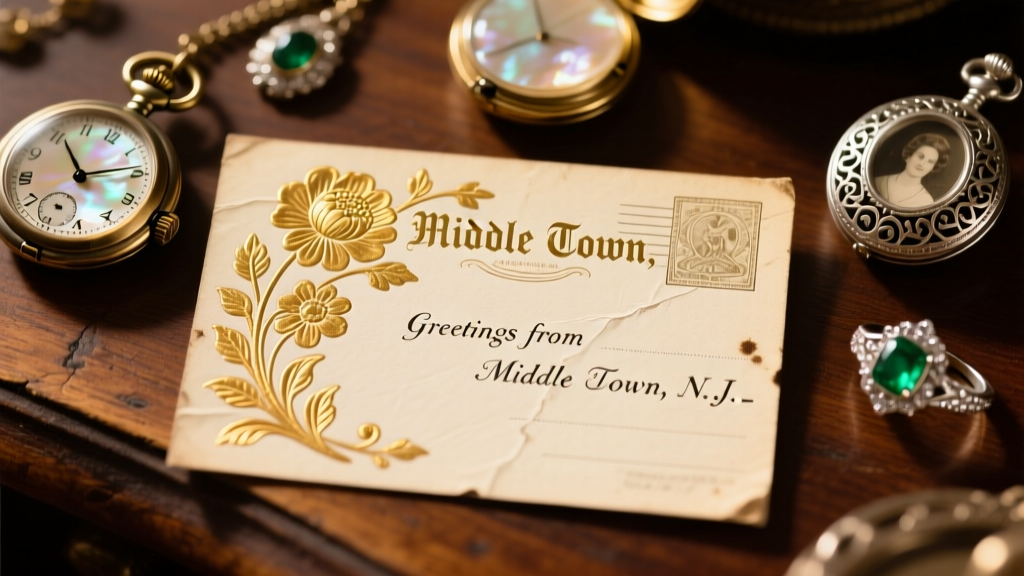
Postcards 'Greetings From Middletown N.J.' Floral Design Embossed 1909: A Collector’s Study of Early 20th-Century American Lithography and Regional Identity

Snow Globes: History, Craftsmanship, and Collectibility in Vintage Decor

Satsuma Mug: Wisteria and Birds, 4 1/4 Inches — A Collector’s Guide to Meiji-Era Japanese Porcelain
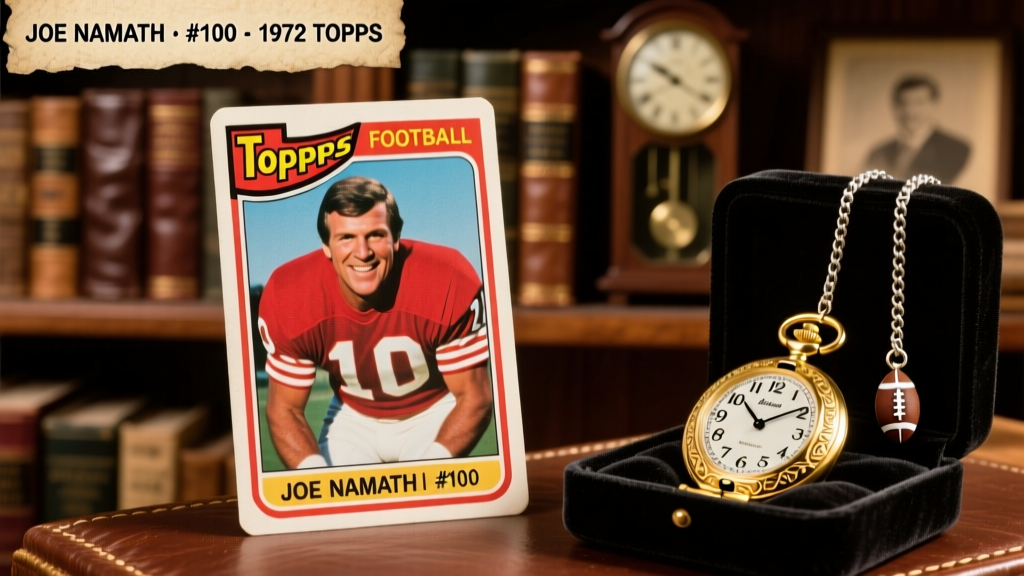
Joe Namath Topps Football Card No. 100, 1972: The Iconic 'Broadway Joe' Rookie-Era Artifact and Its Market Evolution

Guntherman Tin Windup Airplane (10" Wingspan): A Collector’s Guide to German Engineering, Postwar Play, and Auction Value

Louis XVI Style Bronze Wall Sconce: A 20-Inch Three-Light Female Head with Swag Motifs — Authentication, Provenance, and Market Value
Graniteware Teapot in Light Green: History, Identification, and Collectibility of a Mid-Century American Kitchen Icon

Opalescent Glass Swirl Lamp: A Cranberry-Colored Brass-Plated Vase Stem with Acorn Finial — Technical Analysis & Market Context
Parrot Doorstops: Collecting Vintage Cast Iron Birds in Red, Green, Yellow & Black — An Expert Appraisal of the 8-Inch Standard