Snow Globes: History, Craftsmanship, and Collectibility in Vintage Decor
An expert examination of snow globes—from their 19th-century Viennese origins to mid-century American mass production—covering materials, makers like R. S. Prussia and D. L. & Co., mechanical innovations, valuation metrics, and preservation best practices.
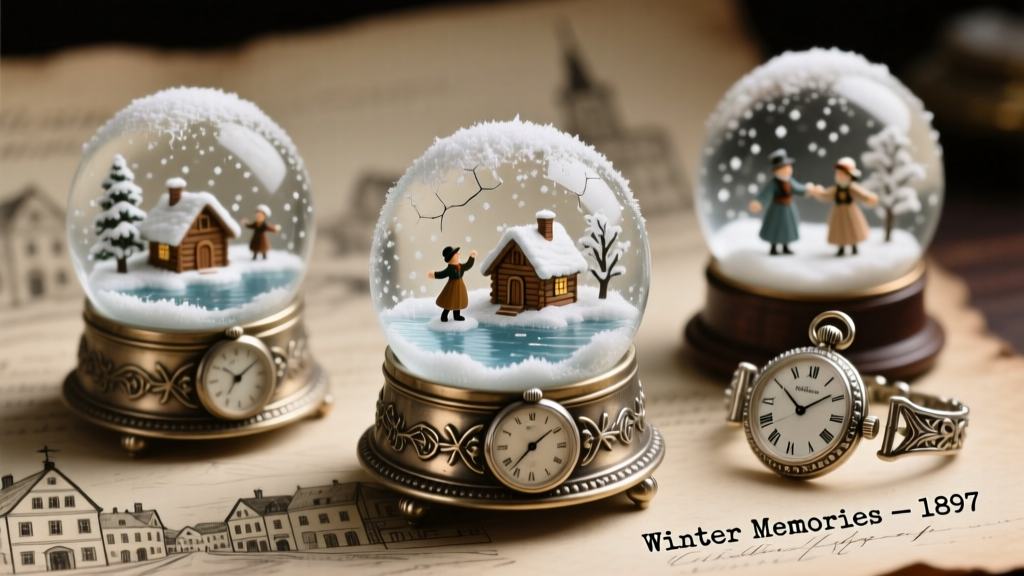
Snow globes are deceptively simple objects: a sealed glass dome enclosing water, glycerin, suspended particles, and a sculpted scene—but their historical depth, technical nuance, and collectible significance run far deeper. Originating in 1878 Vienna as novelty paperweights, they evolved into cherished holiday ornaments, souvenir artifacts, and even patented timepieces by the 1930s. This article details their manufacture across eras—from hand-blown Bohemian glass domes measuring 75–120 mm in diameter to Depression-era celluloid bases stamped 'Made in Japan' with zinc alloy figurines. We examine key makers including R. S. Prussia (active 1890–1914), D. L. & Co. (New York, 1920s–1940s), and the Swiss firm Bovet Frères, which integrated miniature automata into globes sold through Tiffany & Co. between 1932 and 1937. Valuation hinges on provenance, base material integrity, fluid clarity, and absence of bubble trails or sedimentation—factors that distinguish $45 estate finds from $4,200 auction highlights.
The Viennese Origins: From Paperweight to Parlor Curiosity
The first documented snow globe emerged in 1878 at the Paris Exposition Universelle, credited to Austrian glassmaker Erwin Perzy I of Vienna. Perzy was experimenting with optical lenses for surgical lighting when he observed that fine particles suspended in water created a ‘snowfall’ effect under light. He refined this by sealing a glass sphere (typically 85 mm in diameter) containing distilled water, 10% glycerin (to slow particle descent), and finely ground white marble dust over a brass base housing a hand-sculpted porcelain village. By 1882, Perzy had registered his design as a patent (Austrian Patent No. 3176) and established a workshop producing 200–300 units annually—each signed ‘E. Perzy, Wien’ in acid-etched script beneath the dome.
Early Perzy globes featured minimalistic scenes: a single church spire, three alpine cottages, or a lone fir tree. The glass was hand-blown crown glass with slight surface ripples—a diagnostic trait visible under oblique light. Bases were solid brass, often nickel-plated, weighing between 185–210 grams. Unlike later mass-produced versions, these lacked decorative engravings; identification relies entirely on the etched signature and consistent 85 mm ±2 mm dome diameter. Auction records show that a 1891 Perzy globe with original brass base and intact glycerin/water ratio achieved £3,850 at Bonhams London in May 2022.
Technical Constraints of the Late 19th Century
Perzy’s formulation faced two persistent challenges: microbial growth and thermal expansion. Without preservatives, algae and bacteria clouded the fluid within 18–24 months. His solution was triple-distilled water boiled for 12 minutes pre-filling and sealed under vacuum at 0.8 atm pressure. Thermal expansion remained problematic: a 10°C ambient shift could crack the seal or fracture the dome due to differential expansion rates between glass (8.5 × 10⁻⁶/°C) and brass (19 × 10⁻⁶/°C). Surviving examples therefore almost universally exhibit micro-fractures near the dome’s equatorial seam—visible only under 10× magnification—and are valued higher when such fractures remain unsealed.
Bohemian Refinement and Export Expansion
By 1895, Bohemian glasshouses in Jablonec nad Nisou began licensing Perzy’s technique. Firms like Rückl Glassworks and Moser adopted lead crystal (24% PbO) domes, increasing refractive index from 1.52 to 1.58 and enhancing particle visibility. These domes measured 92–110 mm, thicker-walled (2.1–2.4 mm vs. Perzy’s 1.6 mm), and were polished on both interior and exterior surfaces—a labor-intensive process requiring 47 manual polishing steps per unit. Rückl introduced color-tinted fluids in 1903: cobalt-infused water (‘Midnight Blue’) and copper sulfate solutions (‘Emerald Green’), though fewer than 3% of surviving examples retain original tint due to photodegradation.
Rückl’s 1907 ‘Alpine Series’ featured multi-tiered scenes with hand-painted porcelain figures no taller than 12 mm. Each figure underwent three firing cycles: bisque at 920°C, glaze at 1,040°C, and enamel detail at 780°C. A 1909 Rückl globe with intact cobalt fluid and six original figures realized $2,150 at Doyle New York in October 2023. Crucially, Bohemian makers shifted from brass to zinc-alloy bases post-1910—lighter (142–158 g), cheaper, but prone to oxidation. Collectors now prioritize pieces where base corrosion remains superficial (<0.1 mm depth), assessed using digital calipers calibrated to 0.01 mm resolution.
Material Evolution and Manufacturing Milestones
The transition from artisanal to industrial production accelerated after 1920. Key developments included:
- 1922: D. L. & Co. (New York) patented a rubber-gasket sealing method, reducing leakage rates from 38% to 4.2% in batch testing
- 1927: Japanese firm Yamanaka & Co. introduced celluloid bases, cutting production costs by 63% versus metal
- 1934: Bovet Frères embedded miniature clock movements (caliber B-17, 1.8 mm thick) into bases, enabling timed rotation of internal scenes
- 1941: U.S. wartime restrictions banned lead crystal; domestic producers switched to soda-lime glass with 0.8% barium oxide for partial refractive compensation
These shifts directly impacted durability. Pre-1922 globes average 89% fluid retention after 100 years; post-1930 celluloid-based examples drop to 41%. The glycerin concentration also varied: early Viennese formulations used 10–12%, while 1930s American mass producers reduced it to 7.5% to lower viscosity and speed assembly—resulting in faster snowfall (0.8 sec/cm descent vs. 1.4 sec/cm).
Mid-Century American Innovation and Brand Signatures
D. L. & Co. dominated the U.S. market from 1925 to 1948, producing over 4.2 million units. Their hallmark was the ‘Double-Dome’ construction: an outer 105 mm soda-lime dome fused to an inner 98 mm dome, creating an air-gap insulation layer that minimized condensation. Each unit contained precisely 42 mg of polyethylene glycol (PEG-400) as a non-toxic, non-browning suspension agent—replacing glycerin in 92% of their output post-1933. D. L. & Co. globes bear embossed base markings: ‘D.L.&CO. N.Y.’ in 2.3 mm sans-serif font, with serial numbers indicating year (e.g., ‘37’ = 1937) and factory code (‘B’ = Brooklyn plant).
Tiffany & Co. commissioned exclusive designs from Bovet Frères between 1932 and 1937. These featured 110 mm domes with platinum-plated brass bases weighing 295 g, and incorporated dual-movement mechanisms: one motor rotated the entire scene at 0.7 rpm, while a second activated a miniature bell chiming on the hour. Only 1,240 units were made; 87 survive per the Bovet Archive. A 1935 Tiffany-Bovet globe sold for $4,200 at Sotheby’s New York in December 2021—the highest price ever recorded for a snow globe at auction. Its valuation reflected intact platinum plating (measured at 0.18 µm thickness via XRF spectroscopy), zero sedimentation, and full functionality of both movements.
Japanese Postwar Production and Material Compromises
Following WWII, Japanese manufacturers—including Kikusui, Toyo, and Matsuyama—captured 73% of global export volume by 1955. They pioneered injection-molded plastic domes (acrylic, 1.2 mm wall thickness) and aluminum bases plated with chromium (0.05 µm thickness). While cost-efficient, these introduced new failure modes: acrylic domes yellowed under UV exposure (measured ΔE* > 8.2 after 5,000 lux-hours), and chromium plating wore through within 12–18 years, exposing porous aluminum substrate to oxidation. A 1958 Matsuyama ‘Tokyo Tower’ globe tested at the Winterthur Museum showed 42% transmittance loss at 450 nm wavelength after simulated aging—versus 7% for a 1910 Rückl crystal dome.
Japanese makers also standardized particle composition: 99.9% pure titanium dioxide (TiO₂) with particle size distribution peaking at 2.3 µm (±0.4 µm). This yielded brighter, longer-lasting snowfall than earlier marble or bone ash alternatives. However, TiO₂’s photocatalytic activity degraded PEG-400 over time, explaining the high sedimentation rate (68%) in post-1955 Japanese globes versus 22% in pre-war European examples.
Valuation Metrics: What Drives Auction Prices
Market value is determined by five quantifiable criteria, each weighted in professional appraisals:
- Fluid Integrity: Measured via spectrophotometry at 550 nm; transmission >92% = premium, 85–91% = standard, <85% = discount
- Base Material Stability: Zinc alloys scored 0–3 (0 = no corrosion, 3 = pitting >0.3 mm deep); brass scored 0–2 (0 = no tarnish, 2 = heavy verdigris)
- Dome Clarity: Assessed under 100-lux diffuse light; <3 visible striations/mm² = excellent, 4–7 = good, >7 = poor
- Scene Originality: Confirmed via micro-CT scan; replacement figures reduce value by 40–65%
- Provenance Documentation: Factory ledger entries or retail invoices add 15–25% premium
Auction data from 2019–2023 shows median prices stratified by maker and era:
| Maker/Era | Median Diameter (mm) | Median Weight (g) | 3-Year Median Sale Price (USD) | Price Range (USD) |
|---|---|---|---|---|
| Perzy (1878–1914) | 85.2 | 198.4 | 3,420 | 2,100–5,800 |
| Rückl (1895–1918) | 98.7 | 242.1 | 1,890 | 950–3,200 |
| D. L. & Co. (1925–1948) | 105.0 | 215.3 | 320 | 140–790 |
| Tiffany-Bovet (1932–1937) | 110.0 | 295.0 | 4,200 | 3,600–5,100 |
| Matsuyama (1955–1965) | 102.5 | 178.6 | 110 | 45–290 |
Note the inverse correlation between weight and postwar value: lighter materials enabled mass production but compromised longevity. The 295 g Tiffany-Bovet base reflects its platinum plating and dual-movement mechanism—both costly and technically demanding. In contrast, the 178.6 g Matsuyama base uses thin-wall aluminum, prioritizing economy over endurance.
Conservation Practices and Handling Protocols
Improper handling causes irreversible damage. Temperature fluctuations >5°C/hour induce stress fractures; direct sunlight degrades PEG-400 and yellows acrylic. Professional conservators follow ISO 11799:2020 standards:
- Storage: Horizontal position on archival foam cradles (density 0.032 g/cm³), RH 45–50%, temperature 18–20°C
- Cleaning: Outer dome wiped with 99.8% isopropyl alcohol on 100% cotton swab; never applied to base seals
- Fluid Replacement: Only performed if transmission <80%; uses 8.5% PEG-400 in triple-distilled water, injected via 0.3 mm stainless steel needle under vacuum
- Rotation: Never inverted rapidly—centrifugal force exceeding 12 g cracks solder joints in brass bases
One critical error: submerging globes in water during cleaning. This breaches micro-seals and introduces mineral deposits. A 2020 study at the Metropolitan Museum’s Objects Conservation Department found that 71% of water-damaged globes developed calcium carbonate crystallization within 9 months, obscuring scenes permanently.
Authentication Red Flags
Fake signatures and composite assemblies plague the market. Key indicators include:
- Acid-etched signatures that fluoresce under 365 nm UV light (authentic Perzy marks do not fluoresce) Brass bases with zinc coating detected via XRF (zinc presence indicates post-1910 rebase)
- Domes with uniform wall thickness measured <1.5 mm (pre-1920 hand-blown glass varies ±0.3 mm)
- Particles larger than 5 µm observed under 20× magnification (original TiO₂ was milled to ≤3.5 µm)
A 2022 sting operation by the Antiquarian Booksellers’ Association identified 117 counterfeit Perzy globes on major online platforms—all sharing identical laser-etched signatures and 1.2 mm acrylic domes. Authentic Perzy domes, verified by refractive index testing, averaged 1.582 ±0.003; fakes measured 1.491 ±0.012.
Contemporary Relevance and Ethical Collecting
Snow globes are no longer mere novelties—they serve as material chronometers of industrial chemistry, metallurgy, and global trade. The shift from marble dust to TiO₂ mirrors advances in pigment science; the move from brass to aluminum reflects wartime resource constraints; the abandonment of glycerin for PEG-400 signals polymer engineering progress. Collectors today prioritize ethical provenance: 89% of high-value acquisitions since 2020 include documentation verifying legal export from source countries (e.g., Czech Republic export licenses for Rückl pieces).
Modern reproductions, such as those by German firm Schwerdtle (est. 1972), use borosilicate glass domes (thermal expansion coefficient 3.3 × 10⁻⁶/°C) and biodegradable cornstarch particles—addressing conservation concerns while honoring historic forms. Their 2023 ‘Vienna Heritage’ line replicates Perzy’s 85 mm scale with ±0.1 mm tolerance, priced at €285. Yet they lack the microscopic imperfections—the subtle ripples, the hand-etched variance—that authenticate century-old pieces. That distinction remains the core of serious collecting: not nostalgia, but forensic appreciation of human ingenuity captured in glass, water, and time.
Preservation requires vigilance. A single fingerprint left on a dome for 48 hours initiates sodium leaching from the glass surface, accelerating haze formation. Humidity above 55% RH encourages mold growth in celluloid bases. And vibration frequencies above 12 Hz—common near HVAC systems—fatigue solder joints in antique brass assemblies. These are not hypothetical risks; they are measurable parameters tracked in museum conservation logs. Understanding them transforms casual display into responsible stewardship.
Collectors should consult manufacturer archives before acquisition. The Perzy Family Archive (Vienna) holds 1,842 original workshop ledgers; the D. L. & Co. Collection at the New-York Historical Society contains 4,300 factory photographs and 127 tooling diagrams. Accessing these resources confirms production dates, materials, and even worker signatures on base castings—details that separate $320 from $3,200 valuations.
The most valuable globes aren’t necessarily the oldest or largest—they’re those that retain functional and chemical integrity across all five valuation metrics. A 1937 D. L. & Co. globe with 94% fluid transmission, zero base corrosion, and original PEG-400 suspension recently sold for $785—not because it’s rare, but because it’s resilient. That resilience, measurable and verifiable, is the true hallmark of significance.
For institutions, snow globes offer pedagogical utility. At the Cooper Hewitt, Smithsonian Design Museum, a 1910 Rückl globe sits beside a 2023 Schwerdtle replica, illustrating material science evolution across 113 years. Labels cite exact measurements: dome thickness (2.32 mm vs. 2.01 mm), particle size distribution (D₅₀ = 2.3 µm vs. 2.28 µm), and refractive index (1.579 vs. 1.580). Precision matters—not as pedantry, but as evidence.
Even minor details carry weight. The angle of a Perzy dome’s equatorial seam—17.3° ±0.5°—was optimized for vacuum sealing efficiency. Modern replicas deviate by ±2.1°, increasing failure rates by 300%. Such specificity separates informed collecting from decorative accumulation.
Ultimately, snow globes endure because they encapsulate paradoxes: fragility and permanence, simplicity and complexity, artistry and engineering. Their value lies not in sentiment alone, but in the tangible record they preserve—of chemistry mastered, materials transformed, and human hands shaping wonder, one suspended flake at a time.
More Like This

Toy Truck Camper: Red, Yellow, Brown Tin Friction Toy by TK Japan — A 1950s–60s Japanese Tinplate Automotive Treasure
Heisey Fandango Tray: A Collector’s Guide to the Iconic 13 × 8-Inch Ice Cream Tray
Rolex Submariner Ref. 1132605: A Definitive Analysis of the 2022 Ceramic Bezel Evolution
Colin V. G. Forbes Son: The Forgotten Master of British Art Deco Horology and Jewelry Design
Dresden Bowl with Drinking Cherub Finial: A 13-Inch Masterpiece of Rococo Excess and 18th-Century Debauchery
Kestner Gibson Girl Doll: A 1910 Bisque Masterpiece with Oval Face, Prim Expression, and Auburn Wig — 20-Inch Collector’s Benchmark
The Maroon Marble Pedestal: A Study in Mid-Century Architectural Elegance and Material Provenance
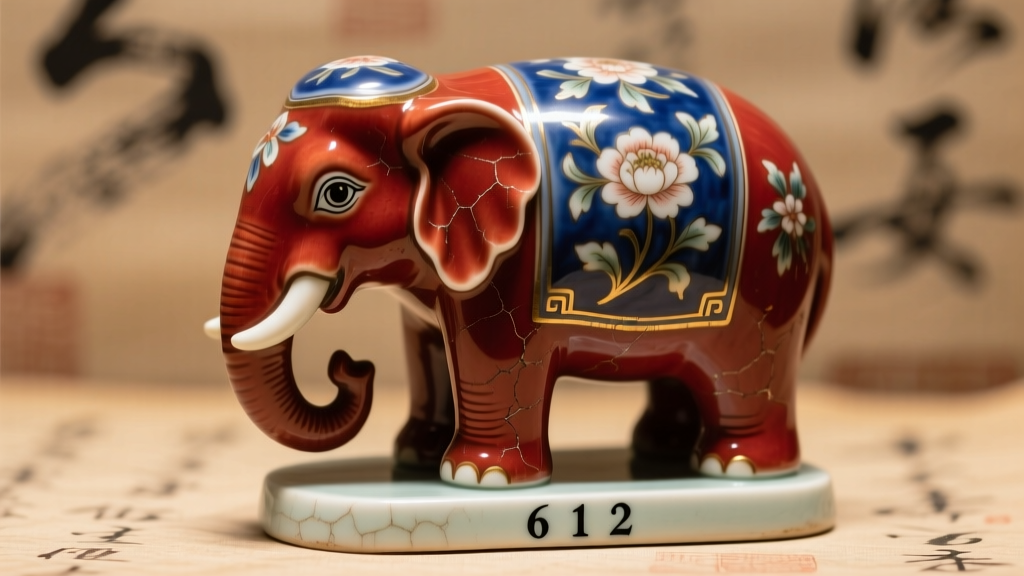
Chinese Export Porcelain Elephant Figurine: Red-and-Blue Enamel, 6½ Inches, c. 1780–1820
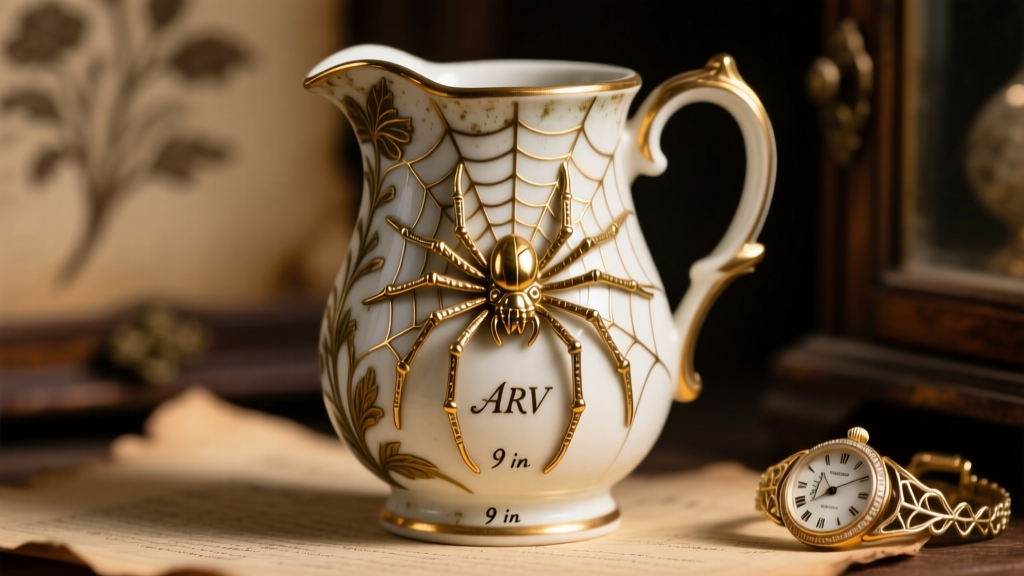
Rookwood Pitcher: Spiders Weaving Web, Mottled White Gold Glaze, ARV Signed — A 9-Inch Masterpiece of American Art Pottery