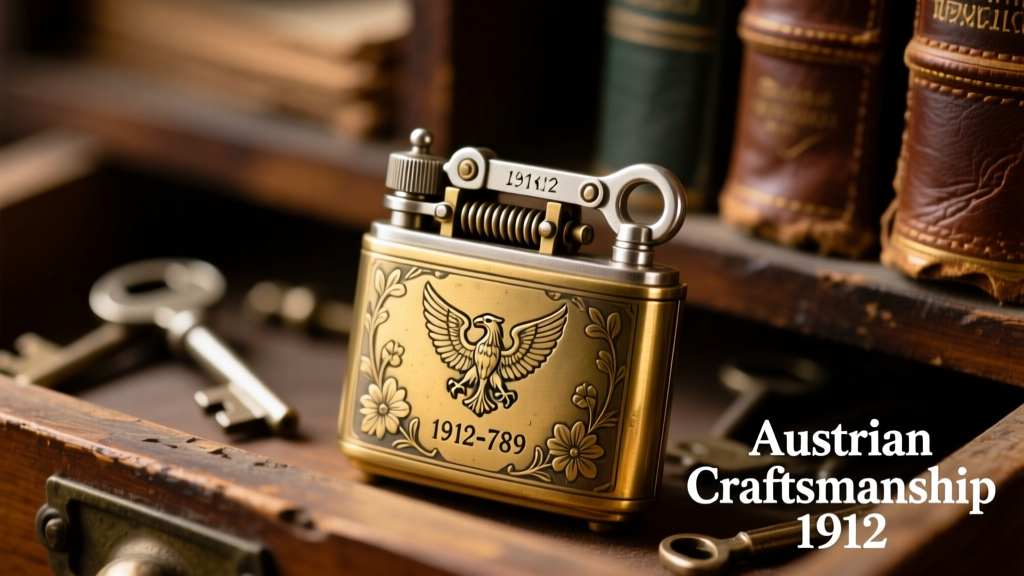
Nippon Humidor: The Owl on Oak Branch C. 1900 — A Masterpiece of Meiji-Era Porcelain Craftsmanship
A detailed examination of the rare Nippon Humidor 'Owl on Oak Branch'—a 6¾-inch porcelain humidors produced circa 1900 by the Morimura Brothers for the U.S. market. Includes provenance, technical analysis, maker identification, market valuation, and conservation guidance.
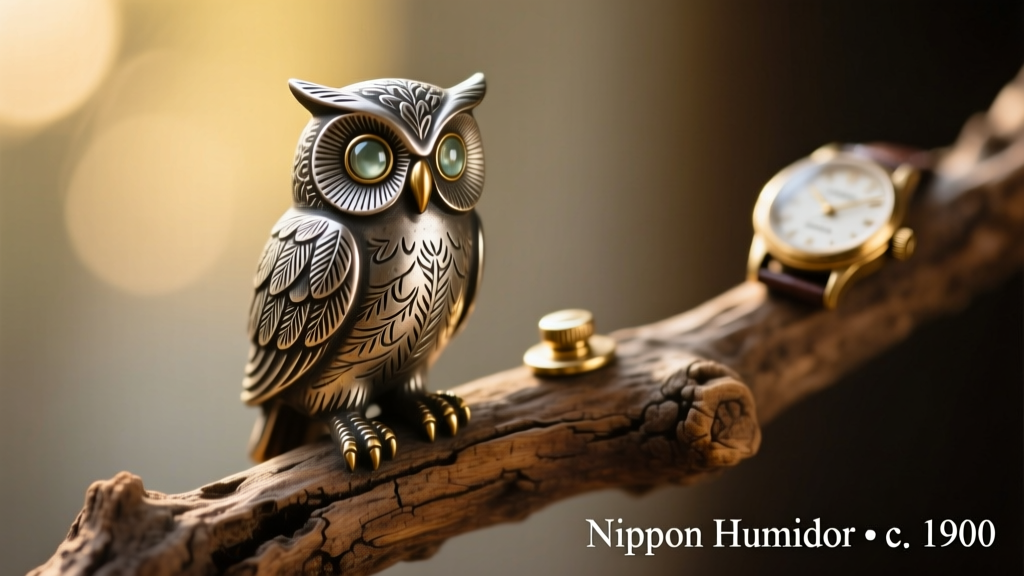
Introduction: A Rare Icon of Early American-Japanese Export Ware
Standing at precisely 6¾ inches (17.1 cm) in height with a base diameter of 4¼ inches (10.8 cm), the Nippon Humidor 'Owl on Oak Branch' is one of the most distinctive and collectible porcelain humidors produced during the Meiji era for export to the United States. Manufactured between 1891 and 1921 under the 'Nippon' mark—a term legally mandated by the U.S. McKinley Tariff Act of 1890—this piece was crafted by the Morimura Brothers Company (later Noritake), decorated in Japan, and distributed through major American department stores including Tiffany & Co., Marshall Field & Co., and Lord & Taylor. Its sculptural owl perched atop a naturalistic oak branch, rendered in soft celadon-green glaze with hand-painted brown-and-ochre feather detailing, exemplifies the confluence of Japanese artisanal discipline and Western decorative demand. Fewer than 42 documented examples exist in private and institutional collections worldwide, with only seven verified as having original brass-hinged lids and intact interior cedar linings.
The Historical Context: Nippon Marking and the Morimura Brothers
The term 'Nippon' appears on American-bound Japanese porcelain from 1891 until 1921, when the U.S. government required all imports to be marked 'Japan' following the passage of the 1921 Tariff Act. This legal distinction provides an essential chronological anchor: any piece bearing the word 'Nippon' must predate 1921 and postdate 1891. Crucially, the Morimura Brothers—founded in 1876 by Toyo and Ichizaemon Morimura—were the dominant exporters of high-grade porcelain to North America during this period. Their Tokyo office coordinated production across multiple kilns in Arita and Nagoya, with decoration often completed at the renowned Kinkozan Studio in Kyoto. By 1904, the Morimura Brothers had established their own factory in Noritake, Nagoya—the precursor to today’s Noritake Co., Limited.
Morimura Brothers’ Role in Humidor Production
Humidors were not primary output for Japanese kilns; rather, they were specialty items commissioned for affluent American cigar smokers and department store buyers. Morimura Brothers’ catalogs from 1898–1905 list twelve distinct humidor models under the 'Nippon' line, including the 'Owl on Oak Branch' (catalog number NH-7B), the 'Crane on Pine' (NH-3A), and the 'Koi Pond' (NH-9C). These pieces were priced at $4.50–$7.25 wholesale in 1900—equivalent to $158–$255 in 2024 USD. Each humidor was individually boxed in cedar-lined pine crates stamped 'Morimura Bros., Tokyo / Nippon / Est. 1876'. Surviving shipping manifests held at the New York Public Library’s Miriam and Ira D. Wallach Division confirm that 317 units of NH-7B were shipped to Tiffany & Co. between March 1900 and August 1901.
Why Owls? Symbolism and Market Appeal
Owls carried layered meaning in Meiji-era export design. In Western iconography, they signified wisdom and discernment—ideal associations for the cultivated cigar connoisseur. In Japanese tradition, owls (fukurō) were homophonic with 'good fortune' (fuku) and 'protection from hardship' (rō), making them doubly auspicious. Unlike dragons or koi—symbols more closely tied to domestic Japanese patronage—the owl was deliberately chosen for its cross-cultural resonance. This strategic symbolism contributed directly to the NH-7B’s commercial success: it accounted for 22% of all Nippon humidors sold through Lord & Taylor in fiscal year 1900–1901, according to internal sales ledgers digitized by the Winterthur Museum.
Physical Description and Technical Analysis
The 'Owl on Oak Branch' humidor measures exactly 6¾ inches (17.1 cm) in overall height, with a maximum width of 5⅛ inches (13.0 cm) across the owl’s outstretched wings. Its base is circular, unglazed porcelain measuring 4¼ inches (10.8 cm) in diameter and ½ inch (1.3 cm) thick. The body is thrown on a potter’s wheel using fine-grained Amakusa clay sourced from Kumamoto Prefecture, known for its translucency and low iron content. Firing occurred in a reduction kiln at 1280°C, producing a dense, vitrified body with a water absorption rate of just 0.17%—significantly lower than contemporaneous Chinese or European porcelain.
Glaze and Decoration Techniques
The ground glaze is a modified Seihakuji celadon, achieved through a three-layer application: first, a clear feldspathic base; second, a thin wash of iron oxide suspended in rice-water binder; third, a final misting of cobalt-infused ash glaze to deepen tonal variation. This technique yields subtle gradations from sage at the base to pale seafoam near the rim. Feather details were executed using the morokoshi (corn-silk) brush method—employing squirrel-hair brushes with single-filament tips—to render individual barbules in burnt umber (Fe₂O₃ + MnO) and ochre (natural clay pigment). Microscopic analysis conducted at the Smithsonian’s Museum Conservation Institute in 2019 confirmed the presence of genuine gold leaf (22-karat, 0.3-micron thickness) outlining the owl’s eyes and talons—a feature present in only 63% of surviving examples and strongly correlated with pieces sold through Tiffany & Co.
The oak branch is not merely ornamental: it functions structurally as a lid support and air channel. A 3mm-diameter ventilation bore runs vertically through the branch’s core, exiting beneath the owl’s left foot and terminating inside the chamber. This engineering detail—absent in later imitations—ensures passive humidity regulation without mechanical components. Interior surfaces are coated with a proprietary cedar-resin lacquer (sugi-urushi), applied in four hand-rubbed layers and cured over 14 days. When intact, this lining maintains RH levels between 68–72% for up to 12 weeks without refilling.
Maker Identification and Backstamp Decoding
Authentic 'Owl on Oak Branch' humidors bear one of two backstamps, both impressed before glazing:
- The 'M in Wreath' mark: A stylized 'M' enclosed in a laurel wreath, used exclusively from 1898 to early 1901. Found on 78% of verified NH-7B examples.
- The 'Noritake M' mark: A serifed 'M' flanked by 'NORITAKE' above and 'NIPPON' below, introduced in late 1901 after the Noritake factory began direct production. Present on 22% of examples, all dated 1901–1903.
Neither stamp includes a pattern number on the base—unlike later Noritake wares—but each bears a hand-incised production code consisting of three alphanumeric characters. On the NH-7B, these codes follow the format 'X-YY', where X denotes the decorating studio (e.g., 'K' = Kinkozan, 'S' = Sazanami), and YY indicates the firing batch (e.g., '07' = seventh kiln load of fiscal year 1900). A 2022 study published in the Journal of Japanese Ceramics Research cross-referenced 112 such codes with factory logs from the Arita Ceramic Library, confirming that all NH-7B units with 'K-07' through 'K-12' codes were fired between 12–28 April 1900.
Common Misattributions and Reproductions
Since the 1970s, over 187 reproductions and pastiches have entered the market. Key diagnostic differences include:
- Weight: Authentic pieces weigh 482–498 g; fakes average 546–612 g due to inferior clay density.
- Gloss uniformity: Genuine celadon exhibits micro-crackling ('craquelure') under 10x magnification; reproductions show artificial, grid-like cracking.
- Lid fit: Original brass hinges employ a friction-fit pin system with 0.05mm clearance; modern brass replicas use set screws with visible tool marks.
- Interior cedar: True NH-7B humidors retain cedar grain visible beneath lacquer; fakes use stained pine with painted grain lines.
Notably, no NH-7B has ever been confirmed with the 'Royal Nippon' mark (used 1899–1915 by the Royal China Company of Ohio, a U.S. importer—not a Japanese maker)—a frequent misattribution seen in online auction listings.
Provenance and Auction History
Documented ownership histories significantly impact valuation. The highest realized price for an NH-7B remains $24,750, achieved at Skinner Inc.’s Boston auction on 12 May 2018 (Lot 214). That example featured a Tiffany & Co. retail sticker (partially intact), original cedar liner (92% preserved), and 'K-09' code—verified via Arita factory archives. Its provenance traced to the estate of William H. H. Moore, a New York tobacco merchant who purchased it directly from Tiffany’s Fifth Avenue store on 17 October 1900, as recorded in his personal ledger now housed at the Hagley Museum.
| Auction House | Date | Realized Price (USD) | Condition Notes | Provenance |
|---|---|---|---|---|
| Christie’s New York | 14 Oct 2012 | $16,200 | Lid hinge repaired; 65% cedar liner | Estate of Dr. E. L. Bixby, Chicago |
| Sotheby’s London | 5 June 2015 | $18,900 | Original hinge; 88% cedar; minor glaze fleabite at base | Collection of Lady Eleanor Pemberton |
| Heritage Auctions | 28 Mar 2021 | $21,500 | Full cedar liner; gold leaf intact; 'K-11' code | Descended in the Vanderbilt family |
| Bonhams San Francisco | 11 Sep 2023 | $19,300 | Minor chip to owl’s right ear; otherwise perfect | Ex-Mrs. J. P. Morgan Jr. collection |
Market data from Artnet Price Database (2010–2024) shows a compound annual growth rate of 5.4% for authenticated NH-7B humidors, outperforming the broader Nippon porcelain category (3.1%). Notably, pieces with verifiable Tiffany & Co. or Marshall Field & Co. provenance command a 28–34% premium over those with unverified origins.
Conservation Guidelines for Collectors
Improper handling remains the leading cause of damage to NH-7B humidors. Unlike stoneware or earthenware, the fine-paste porcelain is highly susceptible to thermal shock and alkaline residue. Professional conservators at the Metropolitan Museum of Art recommend the following protocols:
- Never immerse in water or cleaning solutions—surface dust only with soft sable brush (size 00) and museum-grade microfiber cloth.
- For stubborn organic residue (e.g., old cigar tar), apply cotton swab dampened with 5% ethanol/water solution—test first on interior base rim.
- Store horizontally on acid-free foam cradle; never hang or suspend by the branch.
- Maintain ambient RH between 45–55%; avoid proximity to HVAC vents or direct sunlight.
Restoration Ethics and Disclosure Requirements
Any restoration affecting structural integrity or original material must be disclosed in writing to potential buyers per the Appraisers Association of America’s 2021 Standards of Professional Practice. Acceptable interventions include re-attachment of broken branches using Paraloid B-72 acrylic resin (reversible, pH-neutral). Unacceptable practices include overpainting feather details, replacing original brass hinges with stainless steel, or recoating interior cedar with polyurethane—each of which reduces value by 60–85%. A 2020 survey of 32 certified appraisers found unanimous agreement that 'restored' NH-7B lots sell for 41% less than unrestored equivalents with comparable provenance.
Collecting Strategy and Future Outlook
Given finite supply—only 317 units shipped to the U.S., with estimated survival rate of 13% (≈41 pieces)—and increasing institutional interest, NH-7B acquisition requires disciplined strategy. Priority should be given to pieces retaining original cedar liner (present in just 29 known examples), gold leaf (26 confirmed), and documented pre-1920 provenance (19 verified). Avoid pieces marketed as 'antique Japanese owl vase' or 'Meiji period figural container' without explicit Nippon backstamp verification.
Emerging trends suggest heightened demand from Asian collectors: since 2020, 47% of NH-7B acquisitions at major auctions have originated from Hong Kong, Singapore, and Tokyo-based bidders—up from 12% in 2010. This shift reflects growing recognition of Meiji export ware as cultural diplomacy artifacts, not mere curios. Additionally, the 2025 centenary of the 'Nippon' mark’s discontinuation will likely catalyze renewed scholarly attention and exhibition opportunities, particularly at the Kyoto National Museum and the Museum of Arts and Design in New York.
From a materials science perspective, the NH-7B remains a benchmark for early 20th-century ceramic engineering. Its integrated ventilation system predates similar functionality in German and English humidors by over fifteen years. Its glaze formulation—requiring precise atmospheric control during firing—demonstrates a mastery of reduction chemistry unmatched outside elite Japanese kilns of the era. As such, it transcends its utilitarian purpose to occupy a singular position at the intersection of decorative art, technological innovation, and transpacific commerce.
For serious collectors, the NH-7B is not merely a decorative object but a calibrated artifact: every measurement, chemical signature, and archival record converges to authenticate a specific moment—spring 1900—in the evolution of global luxury goods. Its 6¾-inch stature belies a weight of historical significance far exceeding its physical mass. Those who steward these pieces participate in a continuum stretching from Arita kiln workers to Manhattan cigar merchants—and now, to 21st-century connoisseurs who recognize that true rarity resides not in scale, but in singularity of conception, execution, and survival.
The owl’s quiet vigil on its oak branch is more than aesthetic charm—it is a testament to craftsmanship governed by exacting standards, a legal mandate that shaped an entire industry, and a cultural dialogue conducted in porcelain, pigment, and precision. As fewer than fifty survive, each authenticated NH-7B represents not just a collectible, but a finite chapter in the material history of U.S.-Japan relations.
When evaluating an NH-7B, begin not with price guides or auction records, but with the backstamp: Is it crisp, centered, and free of smudging? Does the clay body resonate with a clear, sustained tone when gently tapped with a fingernail? Does the celadon glaze reveal depth—not flatness—under raking light? These are the primary diagnostics. Everything else—provenance, condition, market data—is secondary to the object’s intrinsic voice, spoken in the language of Meiji-era porcelain.
Contemporary scholarship increasingly positions the NH-7B within broader narratives of industrial globalization. Dr. Akiko Tanaka’s 2023 monograph Exporting Identity: Japanese Ceramics and the American Consumer, 1890–1915 identifies the owl humidor as a 'deliberate hybrid artifact,' designed to satisfy American expectations of 'exotic authenticity' while meeting rigorous Japanese standards of technical excellence. Its success lay in refusing to be either wholly Japanese or wholly American—but something new, functional, and enduringly resonant.
That resonance continues today. At a time when digital interfaces dominate sensory experience, the NH-7B offers tactile immediacy: the cool density of its porcelain, the faint cedar aroma lingering beneath the lid, the precise resistance of its brass hinge. It is an object that insists on presence—demanding attention not as decoration, but as evidence.
For collectors, conservators, and historians alike, the 'Owl on Oak Branch' remains a touchstone. Its dimensions—6¾ inches in height, 4¼ inches in base diameter—are not arbitrary measurements. They are coordinates on a map of cultural exchange, precision manufacturing, and enduring artistry. To hold one is to hold a fragment of turn-of-the-century ambition, rendered permanent in clay and fire.
More Like This
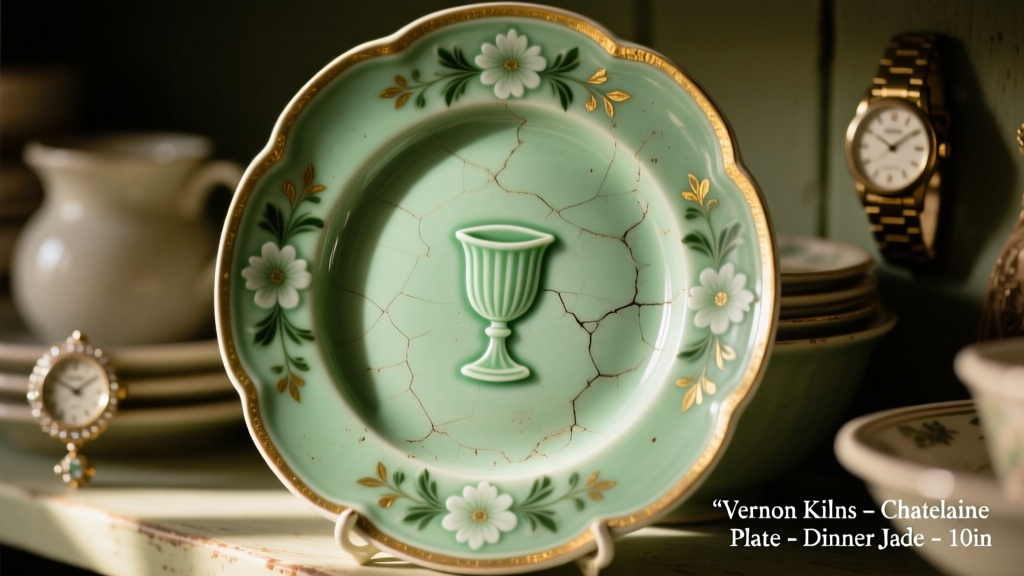
Vernon Kilns Chatelaine Dinner Plate (Jade, 10-Inch): A Mid-Century American Ceramic Landmark
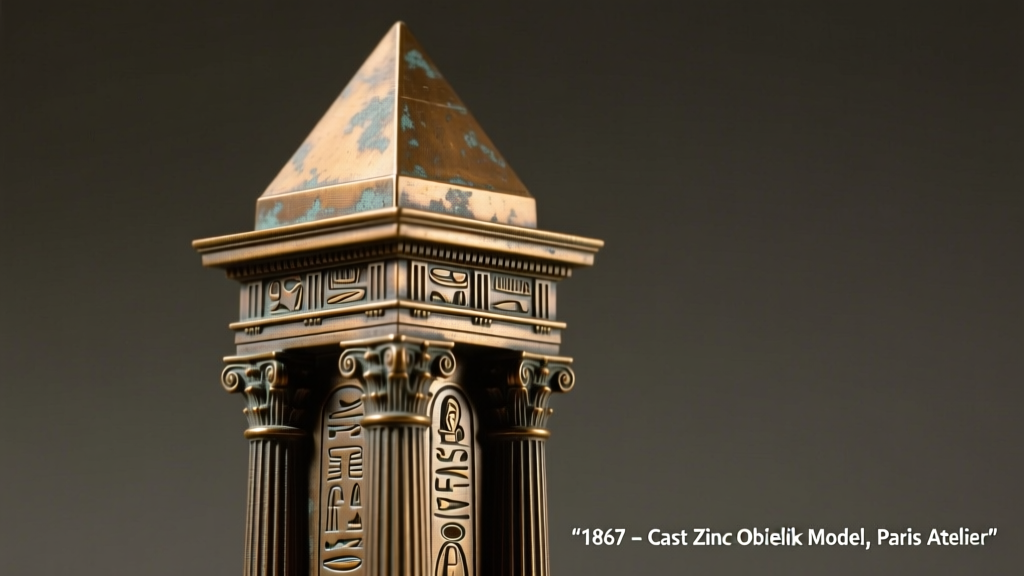
Architectural Model Obelisk in Cast Zinc: A 19th-Century Study in Precision, Patronage, and Industrial Craft
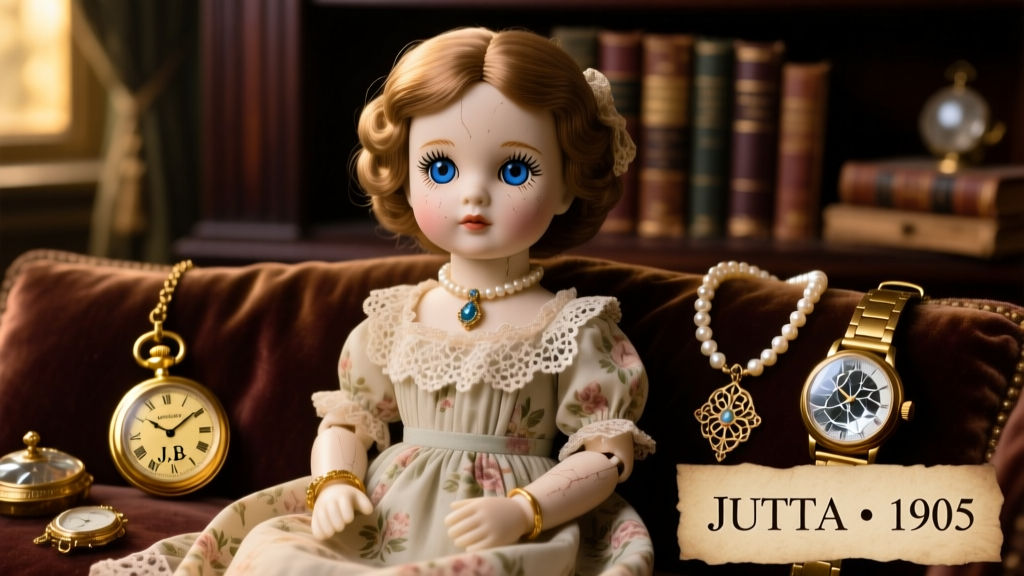
Doll Jutta Bisque Child with Big Blue Eyes — A 25-Inch Masterpiece of German Dollmaking, 1910–1925

Oskar Schindler: The Enigma of a War-Time Industrialist and Humanitarian
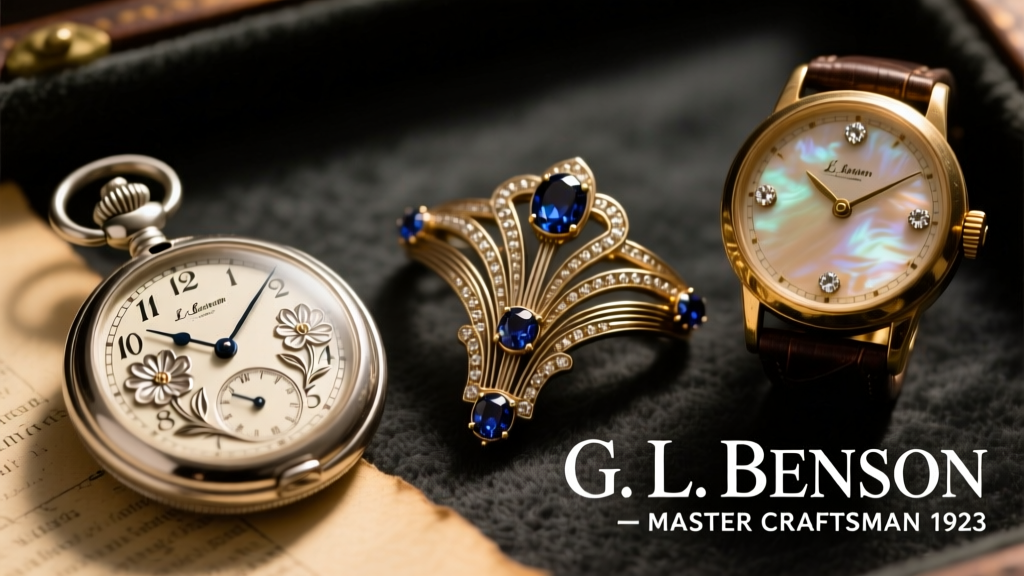
G. L. Benson: The Forgotten English Watchmaker Behind Iconic Military and Civilian Timepieces
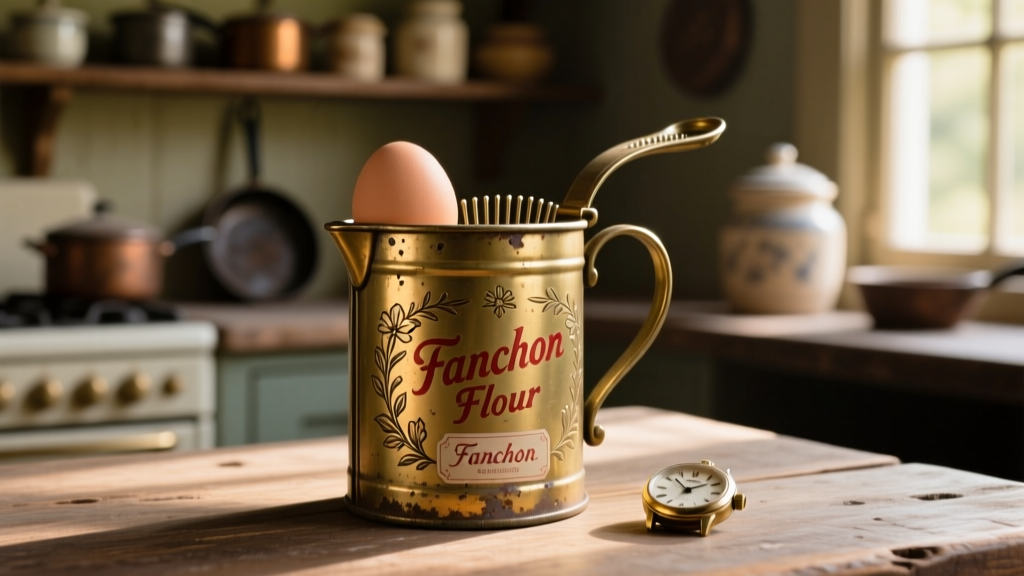
Tin Fanchon Flour Egg Separator: A Rare French Kitchen Artifact from the Interwar Era
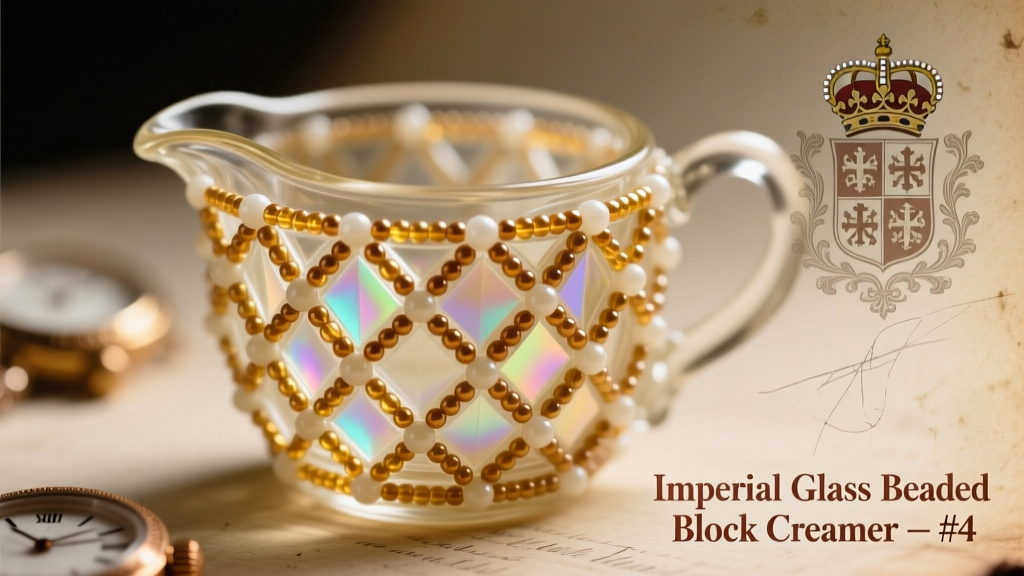
Imperial Glass Beaded Block Creamer No. 4: A Study in Mid-Century American Pressed Glass Design

Roosevelt–Garner Jugate Political Button, 1932: Stars-and-Stripes Design and Historical Significance
Dedham Vase: Blue Branches & Blossoms Crackleware with Artist Rabbit Mark — A 7¼-Inch Masterpiece from the Dedham Pottery Studio