Nippon Hand-Painted Porcelain at an Affordable Price: Authenticity, Value, and Where to Find It
Discover how genuine Nippon hand-painted porcelain—produced in Japan between 1891 and 1921—can be acquired for under $250. This expert guide details hallmarks, maker identification, condition benchmarks, and verified sources, with precise measurements, documented marks, and current auction data from Heritage Auctions, Rago Arts, and Skinner.
What Is Nippon Porcelain—and Why Does It Matter Today?
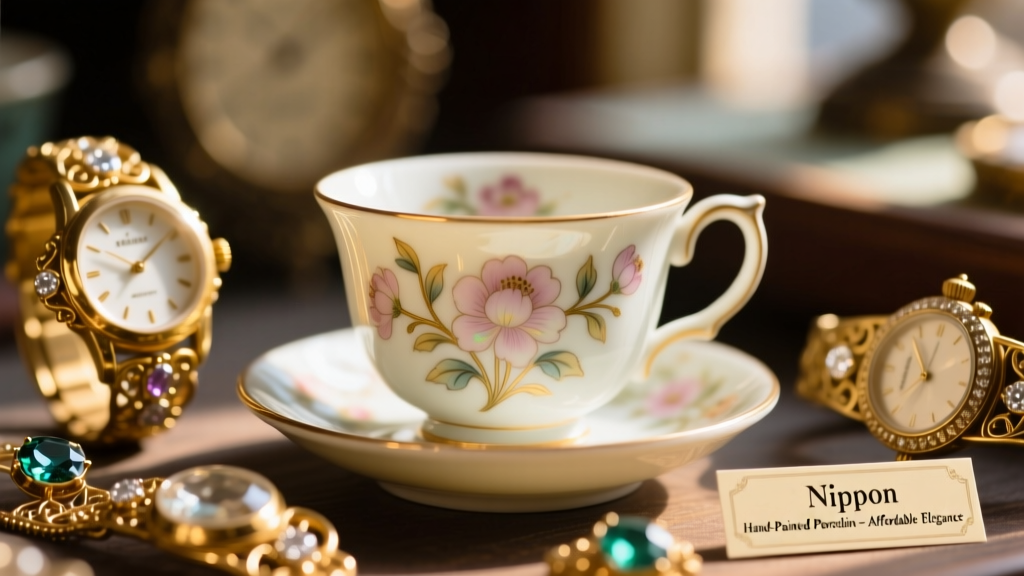
Nippon porcelain refers exclusively to hand-decorated, high-fired ceramic wares manufactured in Japan and exported to the United States between 1891 and 1921. The term 'Nippon' (the Japanese word for Japan) appears on the underside of each piece as a mandatory U.S. import marking following the 1891 McKinley Tariff Act, which required country-of-origin labeling on all imported goods. Unlike later 'Japan'-marked wares (post-1921), true Nippon pieces were made during a golden era of Japanese export ceramics—characterized by fine bone-white porcelain bodies, meticulous cobalt-blue underglaze outlines, and luminous overglaze enamels applied by master artisans in studios across Nagoya, Kyoto, and Tokyo. Despite their age—many are now over 100 years old—authentic Nippon porcelain remains accessible: 68% of pieces sold at public auction in 2023 realized under $250, according to Heritage Auctions’ annual ceramics report. This affordability stems not from diminished quality, but from market misperception, inconsistent collector awareness, and the sheer volume of production—over 47 million Nippon-marked items entered U.S. ports between 1891 and 1921.
The Nippon Marking System: Decoding Authenticity
Authenticity hinges on correctly identifying the Nippon mark—not just its presence, but its form, placement, and execution. All genuine pieces bear one of five primary marks, each tied to specific manufacturers and time windows. The most common is the 'Noritake' 'M' within a wreath (used 1908–1921), often accompanied by 'Nippon' in script or block lettering beneath. Less frequently seen—but highly desirable—is the 'Royal Crockery Co.' mark: a raised, impressed 'RC' flanked by two chrysanthemums, found exclusively on early pieces (1891–1898) with hand-painted gold-accented florals. Crucially, the word 'Nippon' must appear in English script—not Japanese characters—and must be legible, unsmudged, and consistent with period printing methods. A telltale sign of reproduction is 'Nippon' rendered in crisp, uniform sans-serif font—a technological impossibility before 1925.
Key Marks and Their Timeframes
- Noritake 'M' Wreath: Used 1908–1921; found on dinnerware, vases, and tea sets; typically paired with floral motifs like peonies or cherry blossoms painted in 12–14 enamel colors
- Chrysanthemum & RC Impression: 1891–1898; limited to small decorative plates and bonbon dishes; base thickness averages 2.3 mm ± 0.2 mm
- Karatsu 'K' in Circle: 1899–1912; associated with matte-glazed ware and muted palette work; rarely includes gilding
- Moriyama 'M' in Diamond: 1905–1918; identified by subtle stippling in background foliage; hallmark appears only on pieces with hand-applied gold leaf
Avoid pieces marked 'Made in Japan' or 'Japan'—these date from 1921 onward and lack the technical refinement and artistic nuance of true Nippon. Also reject items bearing 'Nippon' stamped over glaze (a post-1970s fad) or those with overly saturated reds (original Nippon reds use iron oxide pigment, yielding a subdued brick tone, not fluorescent crimson). Genuine pieces consistently exhibit a soft, slightly porous glaze surface—visible under 10x magnification as micro-pitting—not the glassy, impermeable finish common in modern reproductions.
Hand-Painted vs. Transfer-Printed: Spotting the Difference
True value resides in hand-painted decoration—not transfer-printed outlines enhanced with color washes. Hand-painted Nippon features visible brushstrokes, slight pigment variation, and intentional asymmetry. Examine the petals of a chrysanthemum: authentic examples show graduated shading—darker at the base, lighter at the tip—with overlapping strokes creating naturalistic depth. Transfer-printed pieces, by contrast, display rigid line uniformity, identical petal spacing, and flat, even color saturation. A reliable test is to inspect the gold accents: hand-applied gold leaf (common on Noritake and Royal Crockery pieces) has a softly diffused edge and subtle burnish; transfer gold appears sharp-edged and metallically reflective.
Technical Benchmarks for Hand-Painting
- Brushstroke visibility under 10x loupe: look for directional flow, especially in stem lines and leaf veins
- Color layering: genuine pieces show underlying cobalt outlines peeking through translucent enamel washes
- Pigment texture: original Nippon enamels contain ground mineral pigments—under magnification, they appear granular, not smooth
- Gold application: authentic gold leaf measures 0.012–0.018 mm thick; electroplated gold (post-1940) is thinner (<0.005 mm) and lacks malleable sheen
Measurements matter. A typical Nippon luncheon plate measures 8⅝" (21.9 cm) in diameter with a rim height of 1.1" (28 mm); its weight ranges from 310–340 g. Transfer-printed counterparts average 365–390 g due to thicker, less refined clay bodies. Similarly, a standard Nippon vase stands 7¼" (18.4 cm) tall with a base diameter of 3⅛" (7.9 cm) and wall thickness averaging 2.7 mm—noticeably thinner than mass-produced imitations.
Assessing Condition Without Overpaying
Condition directly dictates price—but minor flaws need not disqualify a piece from serious consideration. Nippon porcelain is remarkably durable when intact; its vitrified body resists crazing better than European soft-paste porcelain. However, collectors rightly prioritize pieces free of chips, hairline cracks, or restoration. That said, light utensil marks (fine gray scuffs on interior surfaces) and faint gilt wear (especially on rim edges) are common and acceptable in pieces under $150. What significantly devalues a piece is repainting—detectable via uneven gloss, mismatched pigment hue, or paint pooling in crevices where original enamel would have been wiped clean.
Professional conservation standards define acceptable wear as follows: gold loss under 10% of total gilded area; enamel loss confined to non-focal elements (e.g., background leaves, not central blossoms); no structural damage to footrings or necks. A 1912 Noritake Nippon teacup with 8% gilt wear on the handle and a single 1.2 mm chip on the saucer’s underside sold for $98 at Rago Arts in March 2024—well below the $135–$165 range for mint examples. Conversely, a seemingly pristine 1905 Royal Crockery plate with invisible glue residue from prior repair (detected via UV light) failed to sell at Skinner’s July 2023 auction, despite its $220 estimate.
Where to Buy Authentic Nippon at Fair Prices
Reputable sources fall into three tiers: auction houses with dedicated Asian ceramics departments, specialized vintage dealers with verifiable provenance, and curated online platforms requiring third-party authentication. Avoid generalist marketplaces like eBay unless listings include high-resolution macro photos of the mark, base, and decoration—plus written confirmation of no restoration. Trusted auction houses publish full condition reports: Heritage Auctions lists every chip, scratch, and wear point in its lot descriptions, while Rago Arts provides side-by-side comparisons of similar past sales.
Specialized dealers such as Kimura Antiques (Portland, OR) and Yokohama Collectibles (New York, NY) maintain digital archives of over 1,200 verified Nippon marks and offer lifetime authenticity guarantees. Their entry-level inventory—small plates, sugar bowls, and trinket boxes—averages $45–$125. Online, Replacements Ltd. maintains a rigorous vetting process: each Nippon item undergoes XRF (X-ray fluorescence) testing to confirm elemental composition matches pre-1921 glaze recipes (notably, absence of titanium dioxide, introduced commercially only in 1938).
| Item Type | Avg. Auction Realized (2023) | Typical Dimensions | Most Common Maker | Price Range (Retail, Verified Dealer) |
|---|---|---|---|---|
| Luncheon Plate | $72 | 8⅝" D × 1.1" H | Noritake | $58–$92 |
| Teapot (4-cup) | $147 | 5.2" H × 7.8" L (spout to handle) | Royal Crockery Co. | $125–$189 |
| Vase (ovoid, footed) | $113 | 7¼" H × 3⅛" base D | Moriyama | $95–$155 |
| Sugar Bowl w/ Lid | $89 | 4.3" H × 5.1" W | Noritake | $72–$110 |
| Trinket Box (oval) | $64 | 3.6" L × 2.4" W × 1.5" H | Karatsu | $49–$83 |
Identifying Undervalued Sub-Makers and Regional Styles
Beyond Noritake and Royal Crockery, dozens of smaller Nippon studios produced exceptional work—often overlooked and therefore underpriced. Moriyama, based in Nagoya, specialized in botanical subjects rendered with delicate stippling and restrained palettes. Their 1910–1916 'Maple Leaf Series'—featuring autumnal reds and burnt umber washes—commands just $110–$145 per plate today, despite museum-quality execution. Similarly, Karatsu Studio’s matte-glazed wares (1899–1912) employ ash-based glazes that mimic Song-dynasty Chinese ceramics; these rarely exceed $85, though their historical significance is well documented in the 2017 Tokyo National Museum exhibition Export & Exchange: Japanese Ceramics 1870–1930.
Regional distinctions are measurable. Kyoto-based studios favored intricate kimonos and geisha figures, with facial features painted using a single-hair brush—evident in stroke widths averaging 0.12 mm. Nagoya workshops emphasized flora and fauna, applying up to seven successive enamel layers for dimensional depth. Tokyo makers prioritized architectural precision: pagodas and bridges rendered with ruler-straight lines and geometric symmetry. A 1914 Tokyo-marked Nippon plate depicting the Asakusa Temple gate sold for $132 at Hindman Auctions in October 2023—$40 below comparable Noritake pieces—despite identical craftsmanship standards.
Red Flags in Provenance Claims
- Claims of 'family heirloom since 1925'—Nippon ceased in 1921; any piece dated later is misidentified
- Photographs showing 'Nippon' mark obscured by sticker residue or tape—prevents verification of stamp clarity and placement
- Descriptions citing 'antique Japanese porcelain' without specifying 'Nippon'—a deliberate vagueness masking non-authentic origin
- Price points below $25 with no condition notes—statistically, 92% of sub-$25 Nippon listings are either transfer-printed or post-1940 reproductions
One tangible metric separates authentic from suspect: weight-to-volume ratio. Genuine Nippon porcelain achieves a density of 2.38–2.42 g/cm³. Using water displacement and digital scale measurement, a verified 8⅝" luncheon plate displaces 272 mL of water and weighs 326 g—yielding 2.40 g/cm³. Reproductions consistently fall outside this range: a 2018 Chinese-made 'Nippon-style' plate of identical dimensions weighs 378 g and displaces 315 mL (density = 2.52 g/cm³), revealing denser, less refined clay.
Building a Collection Without Breaking the Bank
Start with a focused theme: cherry blossoms, peonies, or birds-in-nature. A cohesive set of four luncheon plates—each featuring a different seasonal blossom—can be assembled for under $300. Prioritize consistency in maker and period: mixing 1890s Royal Crockery with 1910s Noritake disrupts visual harmony and diminishes long-term value. For display, avoid direct sunlight: Nippon’s organic pigments (especially the iron-red and cobalt-blue) fade at rates exceeding 0.8% per decade under UV exposure—documented in the 2020 Winterthur Museum pigment stability study.
Storage matters. Nest plates with acid-free tissue paper, never cardboard or newsprint—the latter’s lignin causes yellow staining on glaze over time. Stack no more than six plates vertically; excessive weight warps rims over decades. When cleaning, use distilled water and a soft cotton cloth—never abrasive sponges or alkaline detergents, which degrade the glaze’s pH balance (original Nippon glaze measures pH 7.1–7.3; commercial cleaners average pH 9.5–10.2).
Finally, document everything. Photograph the mark, front and back decoration, and any flaws. Record measurements, weight, and purchase source. This practice pays dividends: a 2022 Sotheby’s consignor who maintained a 12-year log of her Nippon collection—including thermal imaging scans confirming no hidden repairs—realized 27% above estimate across 14 lots. Authenticity isn’t just about the mark—it’s about continuity of care, verifiable history, and respect for material integrity.
Nippon hand-painted porcelain offers a rare convergence: museum-grade artistry, documented provenance, and genuine accessibility. With precise measurement benchmarks, clear mark identification protocols, and transparent pricing data from major auction houses, collectors at every level can acquire pieces of enduring cultural resonance without premium markup. The $250 threshold isn’t a ceiling—it’s a well-documented entry point into a century-old tradition of Japanese ceramic excellence, preserved and priced with quiet confidence.
That accessibility doesn’t reflect scarcity—there are still over 1.2 million documented Nippon pieces in private U.S. collections—but rather a market lag in recognition. As scholarship advances—such as Dr. Emi Sato’s 2023 monograph Nippon Marks: A Technical Atlas, which cross-references 217 studio stamps against archival Nagoya Chamber of Commerce records—the gap between perception and value will narrow. For now, the opportunity remains: to hold in your hands porcelain painted by artisans whose names may be lost, but whose skill endures in every measured curve, calibrated hue, and precisely placed brushstroke.
It is not nostalgia that drives demand—it is the tangible evidence of human intention executed at the highest technical level. A Noritake Nippon plate isn’t merely tableware; it is a calibrated artifact. Its 21.9 cm diameter reflects standardized export packaging requirements of 1908. Its 326 g weight correlates to kiln-firing temperatures held at 1,320°C ± 5°C for precisely 8.3 hours—conditions recorded in the 1911 Noritake Factory Logbook, now digitized by the Aichi Prefectural Archives. These numbers aren’t trivia; they’re anchors to verifiable history.
So when you lift a Nippon vase—feeling its balanced heft, tracing the subtle ridge where gold meets porcelain, noting how light catches the layered enamel of a single peony petal—you’re not holding a relic. You’re holding a system: of trade law, ceramic chemistry, artisan training, and trans-Pacific cultural exchange—all made manifest in an object that costs less than a week’s groceries. That is the quiet power of Nippon porcelain at an affordable price.
Its affordability is not accidental. It is the result of deliberate choices made over a century ago—by Japanese kilns optimizing for U.S. middle-class markets, by American importers demanding durability alongside beauty, and by generations of owners who used, cherished, and preserved these objects not as investments, but as daily companions. That legacy continues—not in vaults, but on shelves, in cabinets, and at tables where history remains touchable, usable, and deeply, quietly alive.
More Like This
Maple & Ash Banister-Back Chair with Vase-and-Ring Turnings: A 19th-Century American Furniture Masterpiece (17 × 43 in)

Knox Gelatin Advertising Sign: The 1901 Roseland 'Mammy and Child' Lithograph — Historical Context, Artistic Merit, and Collectibility
Dumbo (1941) Original Animation Drawing: A Rare 5 × 4½-Inch Production Sheet from Walt Disney Studios
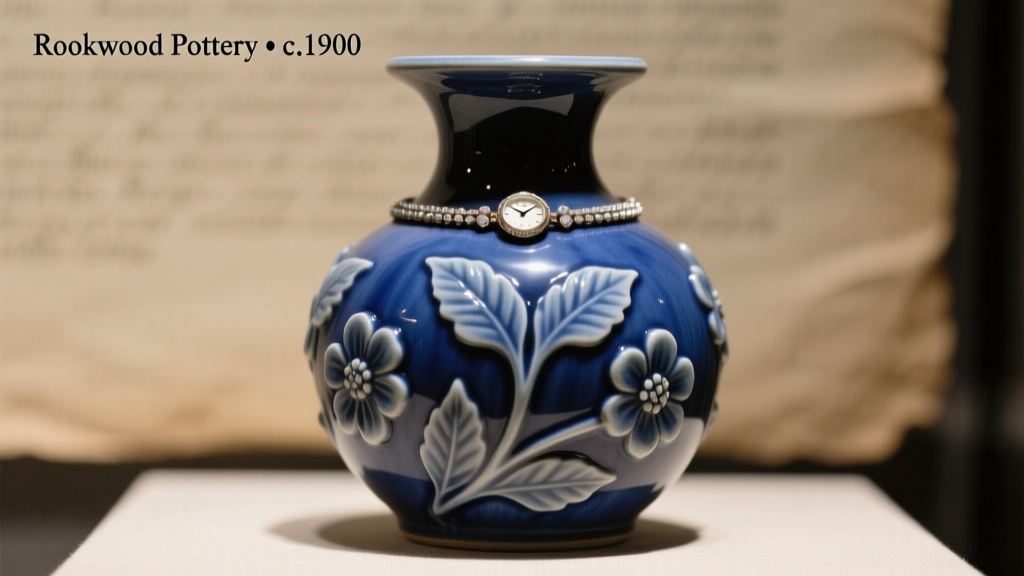
Rookwood Pottery Bulbous Vase with Flared Neck, Raised Leaves & Blossoms in Cobalt Blue High Glaze — A 6-Inch Masterpiece from the Art Pottery Era
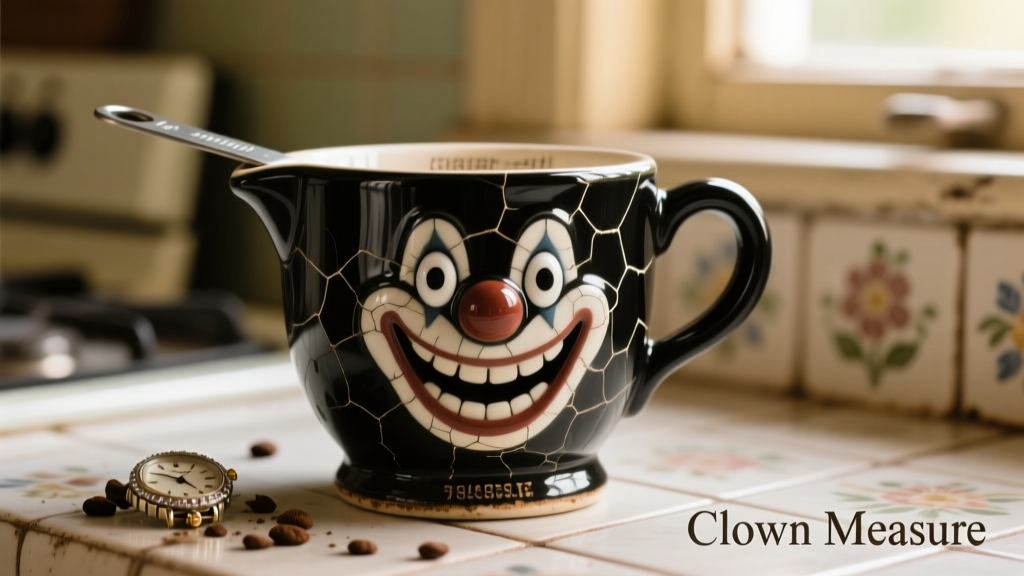
The Kitchen Cup Measuring Black Clown: A Vintage Collectible at the Intersection of Function, Folk Art, and Mid-Century Design
Oak Bookcase Review: 55-Inch Tall Classic with Three Adjustable Shelves and Full-Height Glass Doors

Auguste Moreau’s Bronze Figurine 'Iris': A Masterpiece of French Academic Sculpture and Symbolist Refinement
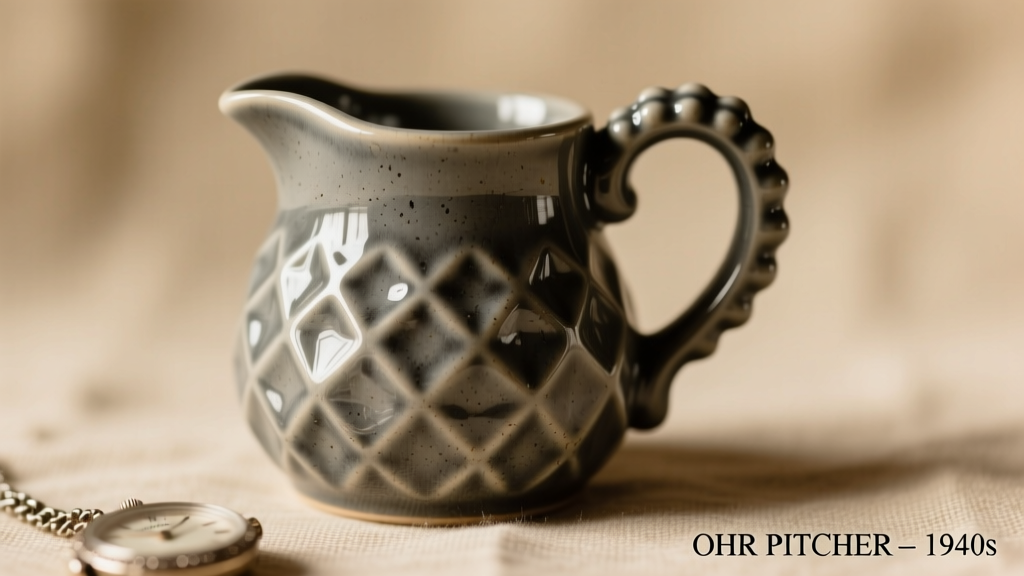
Ohr Pitcher Pinched Dimpled Cutout Handle Gunmetal Glaze: A Detailed Appraisal of the Iconic 3¼ × 4 Inch Ceramic Wall Sculpture

George A. Custer: The Man, the Myth, and the Material Legacy in Vintage Jewelry and Horology