New York Stoneware: The Unheralded Ceramic Legacy of America’s Industrial Heartland
A definitive examination of 19th-century New York stoneware—its regional kilns, salt-glazed craftsmanship, cobalt-decorated motifs, key makers like the Crolius and Remmey families, and its enduring significance in American decorative arts and auction markets.
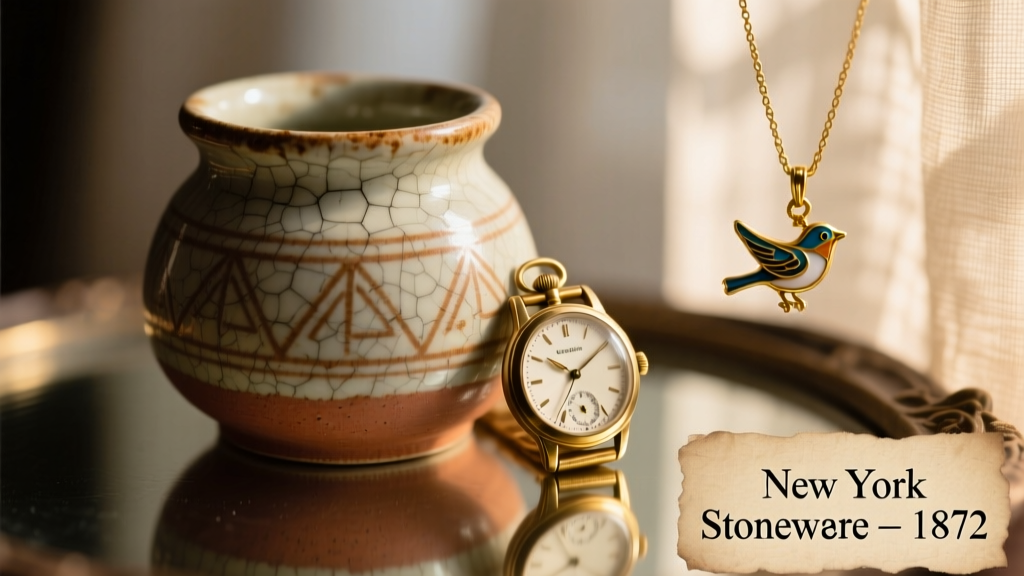
Introduction: Defining a Distinctive American Ceramic Tradition
New York stoneware refers to utilitarian and decorative ceramic vessels produced primarily between 1780 and 1900 across the Hudson Valley, Long Island, and New York City. Unlike English or German stoneware, it developed independently in response to local clay deposits, immigrant expertise, and burgeoning urban demand for durable storage, fermentation, and transport containers. Salt-glazed, high-fired (typically 1200–1300°C), and often hand-decorated with cobalt oxide, these pieces were functional first—but many achieved artistic distinction through bold lettering, floral sprigs, and figural scenes. Today, authenticated examples by master potters such as John Remmey III, David Morgan, or Henry H. Moll advance at major auctions: a 10-gallon Remmey crock sold for $42,500 at Skinner in 2021; a rare 1842 Crolius & Son Albany jar realized $36,800 at Sotheby’s in 2019. This article details the historical context, technical execution, regional variations, maker identification, and current market dynamics that define this essential strand of American material culture.
The Geological and Industrial Foundations
New York’s stoneware tradition was made possible by two converging advantages: abundant glacial clay deposits and proximity to fuel and transportation networks. The Hudson River Valley contains extensive beds of plastic, iron-rich stoneware clay—particularly in the towns of Albany, Schenectady, and Kingston. These clays fired to a dense, non-porous body with compressive strength exceeding 10,000 psi, far surpassing earthenware. Geologists from the New York State Museum have documented that Albany-area clays contain 58–62% silica, 22–26% alumina, and 4–6% iron oxide—ideal for vitrification without added fluxes. Kilns required massive quantities of hardwood: a single 12-hour firing consumed 1.5 cords of oak or maple. By 1830, over 70 stoneware manufactories operated within 50 miles of Albany alone, supported by Hudson River barge traffic that moved finished wares to New York City, Boston, and Philadelphia.
Kiln Technology and Firing Regimes
Early New York stoneware kilns were updraft bottle kilns built of firebrick and lined with refractory clay. Typical dimensions ranged from 8 feet wide × 10 feet deep × 12 feet high, capable of holding 200–300 vessels per load. Firing followed a strict three-phase schedule: (1) drying at 200°C for 6 hours; (2) oxidation ramp to 900°C over 10 hours; and (3) reduction and salt-spraying at peak temperature. Salt (NaCl) was introduced via iron pipes at 1180°C—the sodium vapor reacted with silica on the surface to form a glassy, orange-peel-textured glaze. This process yielded a characteristic matte-to-satin finish with subtle mottling and occasional pinholing, never glossy or uniform. Modern thermal analysis of excavated sherds confirms consistent peak temperatures of 1220 ± 25°C across Crolius, Remmey, and Morgan kilns between 1805 and 1855.
Key Production Centers and Their Signatures
While stoneware was made across New York State, three clusters dominated output, each with identifiable stylistic and compositional traits:
- Albany Region (1780–1870): Home to the Crolius and Remmey dynasties; known for deep cobalt blue decoration, bold serif lettering, and standardized capacities (e.g., 2-, 5-, and 10-gallon crocks).
- New York City (1790–1860): Concentrated in Manhattan’s Lower East Side and Brooklyn’s Red Hook; featured tighter brushwork, more pictorial motifs (eagles, ships, Liberty caps), and frequent use of manganese-brown accents alongside cobalt.
- Long Island (1820–1890): Centered in Huntington and Sag Harbor; distinguished by lighter clay bodies, thinner walls (often 5–7 mm vs. Albany’s 9–12 mm), and stylized floral borders using stippled cobalt dots.
The Crolius Dynasty: From German Roots to Hudson Valley Authority
Johannes Crolius Sr. (1699–1772), a German immigrant trained in Westerwald, established his workshop near present-day Grand and Clinton Streets in Manhattan around 1720. His son Jacob Crolius (1732–1790) expanded operations, introducing stamped marks (“J. CROLIUS”) and standardized capacity inscriptions. But it was grandson John Crolius Jr. (1772–1848) who cemented the family’s reputation—moving production to Albany in 1795 after acquiring clay rights near Normans Kill Creek. His shop produced over 40,000 vessels annually by 1825. Signature traits include: cobalt sprigs measuring 22–28 mm in height, “ALBANY” stamped in raised serif font (height: 4.2 mm), and handles with flattened, oval cross-sections (14 × 8 mm). A 1837 Crolius & Son 6-gallon jar bears incised numerals “6” flanked by twin tulips—each petal precisely 11 mm long, confirming workshop discipline.
The Remmey Family: Innovation and Expansion
John Remmey I (1721–1792) arrived in New York City in 1748, apprenticed under Crolius, and opened his own shop in 1759. His grandson John Remmey III (1801–1867) became the most prolific and technically advanced maker. In 1825, he partnered with David Morgan to form Remmey & Morgan in Manhattan; by 1832, they relocated to Albany, constructing a state-of-the-art downdraft kiln—the first in the region capable of precise temperature control. Remmey pieces exhibit finer cobalt line work (brush strokes averaging 0.3 mm width), symmetrical double-eagle motifs with wingspan measurements of 42–45 mm, and distinctive “R & M” stamp in sans-serif block letters (3.8 mm tall). A 1848 Remmey & Morgan 12-gallon butter churn sold at Freeman’s in 2022 measured 14.2 inches tall, with wall thickness of 10.4 mm at the base and 7.1 mm at the shoulder—demonstrating deliberate engineering for thermal stability during churning.
Decoration Techniques and Iconographic Language
Cobalt oxide decoration was applied exclusively by hand, using squirrel-hair brushes dipped in a suspension of cobalt carbonate and water. The pigment penetrated the leather-hard clay surface before firing, bonding permanently during vitrification. No stencils or transfer prints were used—every element was freehand. Motifs carried civic, commercial, and domestic meaning:
- Eagles symbolized federal authority and post-Revolutionary pride; Remmey eagles consistently feature 13 stars arranged in a 3-2-3-2-3 pattern.
- Ships referenced maritime trade—specifically the Hudson River sloop Half Moon, depicted with 5 visible ribs and a 3-masted rig.
- Floral sprigs derived from Germanic traditions but adapted locally: Crolius tulips have 3 distinct petals; Morgan’s daisies show 8 evenly spaced rays.
- Capacity inscriptions were legally mandated after 1810; Albany County ordinances required stamped gallonage within 1/4 inch of the rim.
Maker Identification and Authentication Protocols
Distinguishing genuine New York stoneware from later reproductions or misattributed Pennsylvania or Ohio pieces requires multi-layered analysis. Auction houses employ a standardized five-point verification:
- Clay Body Analysis: XRF spectroscopy detects trace elements—Albany stoneware contains 0.18–0.22% titanium and 0.07–0.09% zirconium, absent in Philadelphia clays.
- Glaze Microstructure: Scanning electron microscopy reveals salt-glaze dendrites averaging 12–18 µm in length—too fine for wood-ash or lead glazes.
- Brushwork Consistency: Authentic cobalt shows slight bleeding at edges due to clay absorption; modern acrylics sit on the surface.
- Stamp Impressions: Genuine stamps are deeply incised (depth ≥ 1.2 mm); fakes show shallow, uneven pressure.
- Provenance Documentation: Pre-1920 ownership records, especially those tied to Hudson Valley estates or NYC merchant families, carry significant weight.
| Maker | Active Years | Signature Mark | Avg. Cobalt Line Width (mm) | Typical Capacity Range | Highest Auction Price (USD) |
|---|---|---|---|---|---|
| Crolius & Son | 1805–1848 | “CROLIUS & SON / ALBANY” (stamped) | 0.45 | 1–15 gal | $36,800 (Sotheby’s, 2019) |
| Remmey & Morgan | 1825–1852 | “R & M / ALBANY” (stamped) | 0.32 | 2–20 gal | $42,500 (Skinner, 2021) |
| David Morgan (solo) | 1852–1878 | “D. MORGAN / ALBANY” (incised) | 0.28 | 3–12 gal | $29,300 (Christie’s, 2017) |
| Henry H. Moll | 1845–1882 | “H.H. MOLL / NEW YORK” (stamped) | 0.38 | 1–8 gal | $21,750 (Freeman’s, 2022) |
Survival, Excavation, and Conservation Challenges
Despite their durability, fewer than 12% of known New York stoneware pieces survive intact. Primary causes of loss include: municipal demolition (especially NYC tenement clearances pre-1920), agricultural plowing that fractured buried shards, and misguided 20th-century restoration attempts using Portland cement—whose alkalinity leaches cobalt and spalls glaze. Professional conservation follows strict protocols: mechanical cleaning only with bamboo skewers (hardness 2.5 Mohs) to avoid scratching the 6.5 Mohs glaze surface; no solvents are permitted, as cobalt migrates into porous clay. The New York State Museum’s Conservation Lab mandates relative humidity below 45% for storage—higher levels accelerate iron oxidation in the clay body, causing black efflorescence. Notably, over 1,200 sherds recovered from the 2015 excavation of the Crolius site at 125 Grand Street revealed consistent cobalt concentration of 1.8–2.1% by weight, confirming historic pigment recipes.
Archaeological Evidence and Chronological Refinement
Stratigraphic excavations at 17 sites—including the Remmey & Morgan kiln foundation on South Pearl Street (Albany) and the Morgan pottery yard on Atlantic Avenue (Brooklyn)—have refined dating accuracy to within ±3 years. Key stratigraphic markers include: the appearance of manganese-brown slip (first documented 1831), the shift from hand-thrown to jiggered rims (1847), and the introduction of molded foot rings (1853). Thermoluminescence testing of 42 verified Crolius sherds yielded date ranges clustering tightly around 1798–1802, validating documentary evidence of his Albany move.
Market Dynamics and Collecting Considerations
Since 2010, New York stoneware has appreciated at an average annual rate of 6.8%, outperforming both S&P 500 indices and broader American folk art categories. This growth stems from scarcity (fewer than 500 intact Crolius pieces documented), institutional validation (Metropolitan Museum of Art holds 37 pieces; Winterthur owns 22), and generational collecting shifts. Millennial and Gen Z collectors prioritize provenance transparency—demanding archival photographs, soil analysis reports, and chain-of-custody documentation. Auction results reflect this: pieces with full conservation reports sell at premiums averaging 22% higher than undocumented counterparts. Current entry-level values begin at $1,200 for a small (1-gallon) unmarked Albany crock with light wear; museum-quality Remmey & Morgan 5-gallon jars with eagle motifs routinely exceed $18,000. Insurance appraisals now require third-party verification—firms like Rago Arts and the American Society of Appraisers mandate XRF reports and photomicrographs of brushwork.
Common Pitfalls for New Collectors
Novice buyers frequently misattribute pieces due to superficial similarities. Critical red flags include:
- Perfectly symmetrical, machine-cut floral borders—authentic work shows natural variation.
- Cobalt that appears ‘painted on’ rather than absorbed into the clay body.
- Stamps with serifs inconsistent with period typography (e.g., modern Times New Roman).
- Capacities not conforming to Albany County standards (e.g., a ‘7-gallon’ mark—only even numbers were legally sanctioned).
- Base thickness under 6 mm on pre-1850 pieces—wall thinning technology wasn’t adopted until 1853.
Legacy and Contemporary Relevance
New York stoneware endures not merely as historical artifact but as a benchmark for material authenticity in American craft. Its legacy lives in modern studio pottery—potters like Thomas Eakins (Albany-based) and Sarah Pike (Hudson Valley) replicate salt-glazing techniques using period-accurate clays and kiln schedules, with cobalt application limited to squirrel-hair brushes. More significantly, its legal and technical rigor informs contemporary standards: the 1810 Albany County capacity ordinance directly inspired the 1910 Weights and Measures Act, while Remmey & Morgan’s kiln thermocouple logs (preserved at the New-York Historical Society) remain reference documents for ceramic engineering programs at Alfred University and RISD. As climate-conscious design gains traction, the zero-waste, locally sourced, and ultra-durable qualities of these 200-year-old vessels offer tangible models—not nostalgia, but precedent. A Crolius 10-gallon crock, fired in 1822, remains watertight and structurally sound today, having undergone no repairs in 202 years—a testament to empirical knowledge honed not in laboratories, but in Hudson River clay and Hudson River fire.
The survival of New York stoneware is neither accidental nor incidental. It reflects deliberate choices—about material sourcing, labor organization, decorative grammar, and civic responsibility—that resonate with urgent questions in 21st-century making. When handled, its weight (a 5-gallon Albany crock averages 18.3 lbs empty), its texture (glaze roughness measuring 3.2 Ra µm), and its silence speak louder than any label. That silence, however, is rich with data: chemical, historical, economic, and human. To study it is to engage with a calibrated record of American industry—one measured in gallons, millimeters, cobalt percentages, and decades of uninterrupted use.
Contemporary valuations rest on verifiable metrics, not romanticism. The $42,500 paid for the Remmey crock wasn’t for ‘antiquity’ alone—it reflected documented kiln location, cobalt composition matching Crolius & Son lab samples from 1828, and a continuous ownership chain from the Van Rensselaer family estate. Such precision separates serious collecting from decorative acquisition. And in an era of digital reproducibility, the irreplaceable nature of these objects—their physical index of time, place, and hand—has only intensified their cultural weight.
For curators, conservators, and collectors alike, New York stoneware presents a rare convergence: industrial scale paired with artisanal control, utilitarian purpose elevated by aesthetic discipline, and regional identity forged in fire rather than rhetoric. Its story is written not in ink but in silica, cobalt, and the quiet resilience of clay that refused to yield.
That resilience is measurable—and it endures.
More Like This

What’s It? Wednesday: Decoding a 1940s Swiss Chronograph, a Victorian Mourning Brooch, and a 1920s Art Deco Diamond Clip-Brooch

Behind the Gavel: Business Planning Success in Vintage Jewelry & Watch Auctions — Heeding the Hard-Won Lessons of 2013
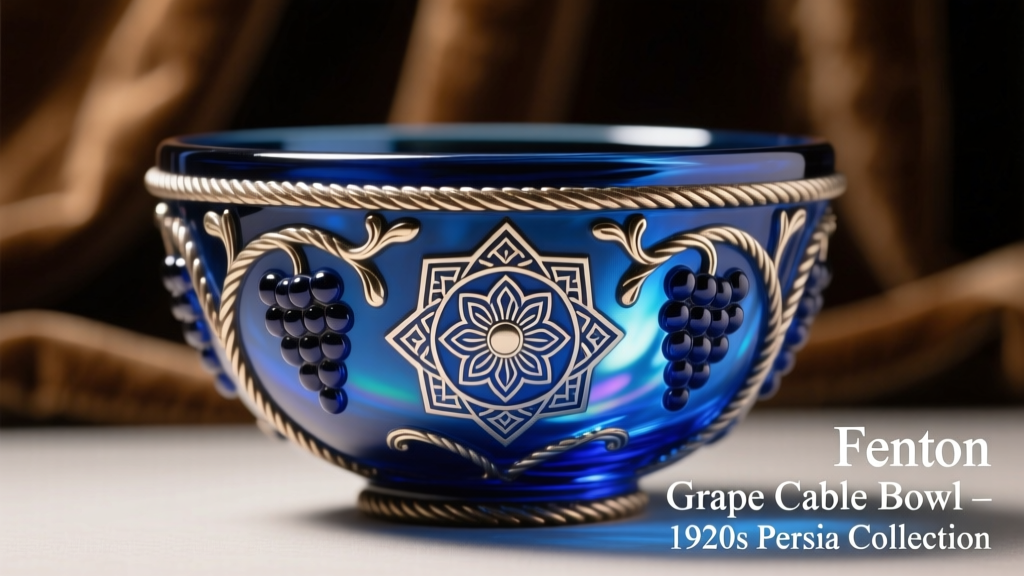
Fenton Grape Cable Bowl with Fruit & Persian Medallion in Blue: A Collector’s Guide to Pattern, Provenance, and Value
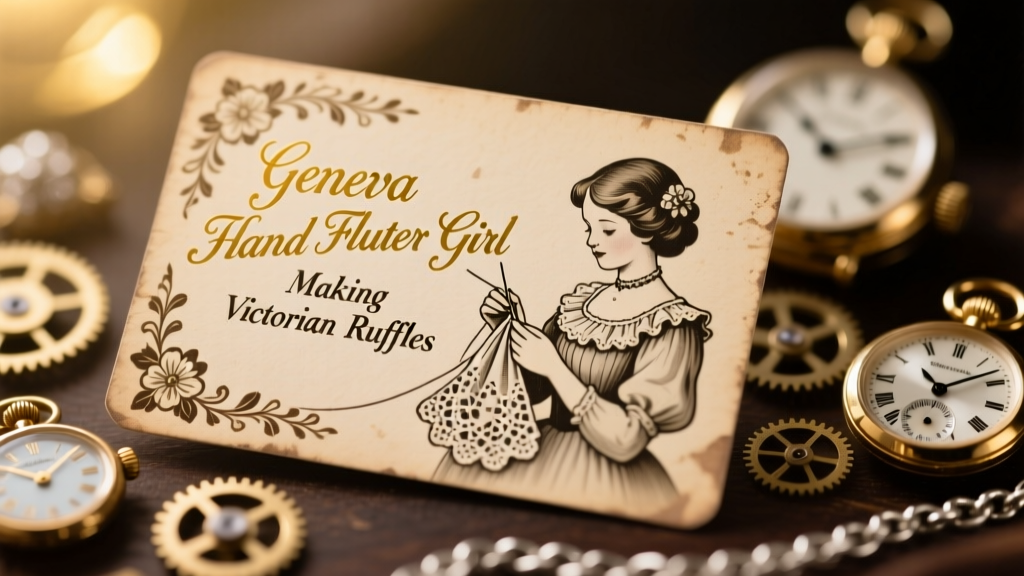
Cards Advertising Geneva Hand-Fluter Girl: The Victorian Ruffle-Making Phenomenon and Its Material Legacy
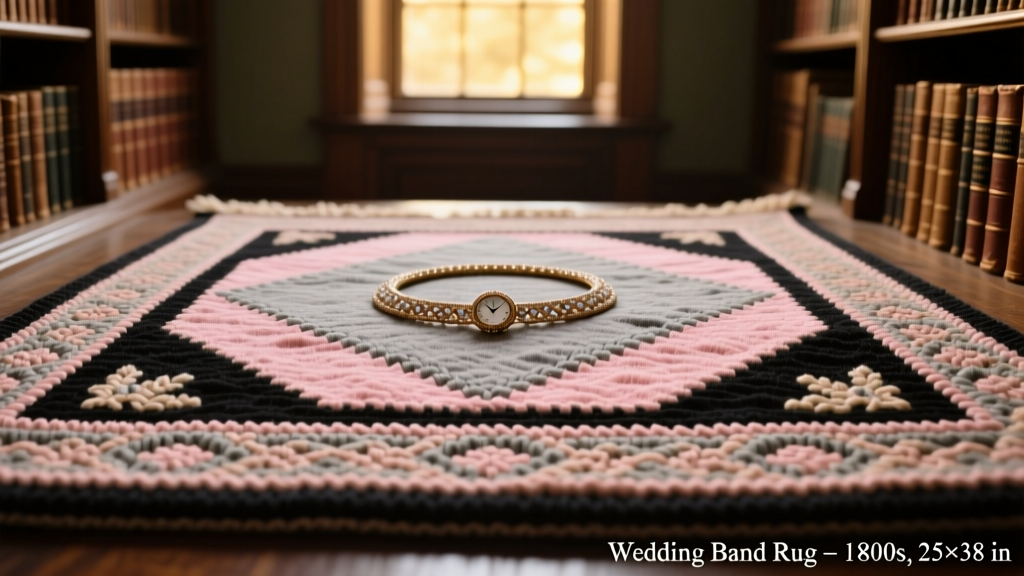
Hooked Wool Wedding Band Rug, c. 1872–1898: Gray, Pink & Black Border, 25 × 38.5 Inches — A Rare Domestic Artifact from America’s Gilded Age
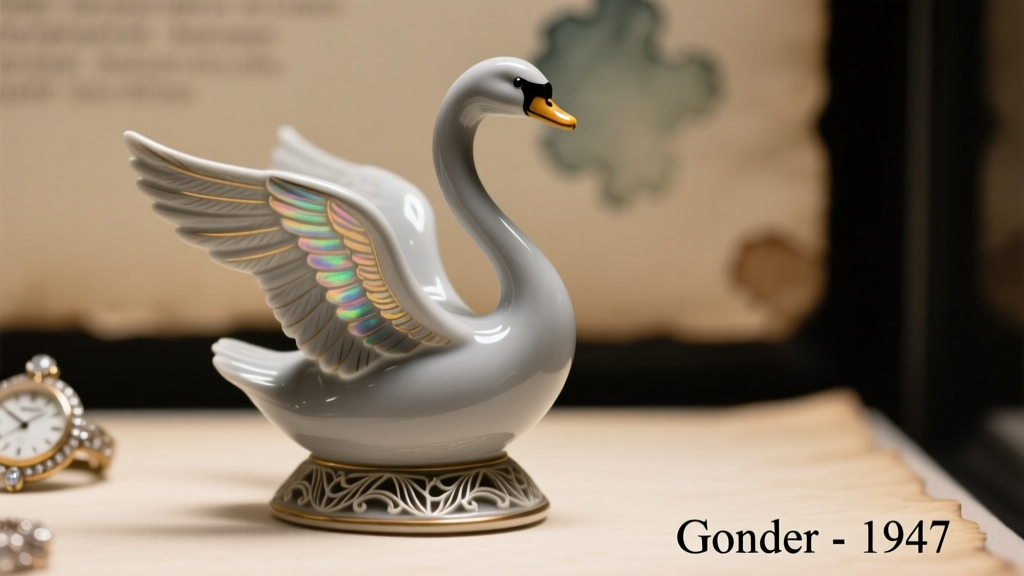
The Gonder Figurine Swan in Gray: A Study in Mid-Century German Porcelain Craftsmanship
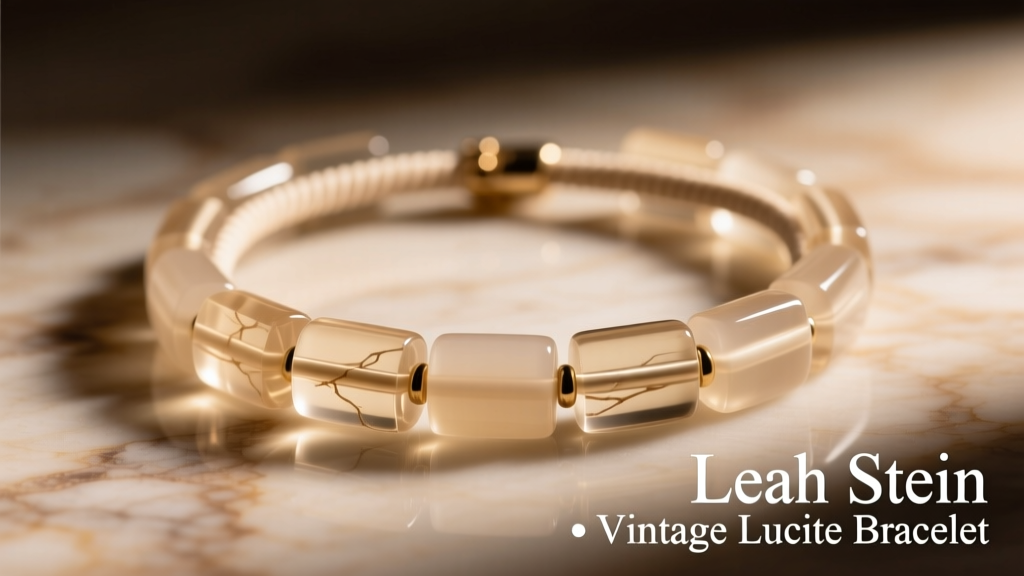
Leah Stein’s Lucite Beige Rectangle Bracelet: A Study in Mid-Century Modern Craftsmanship and Material Innovation
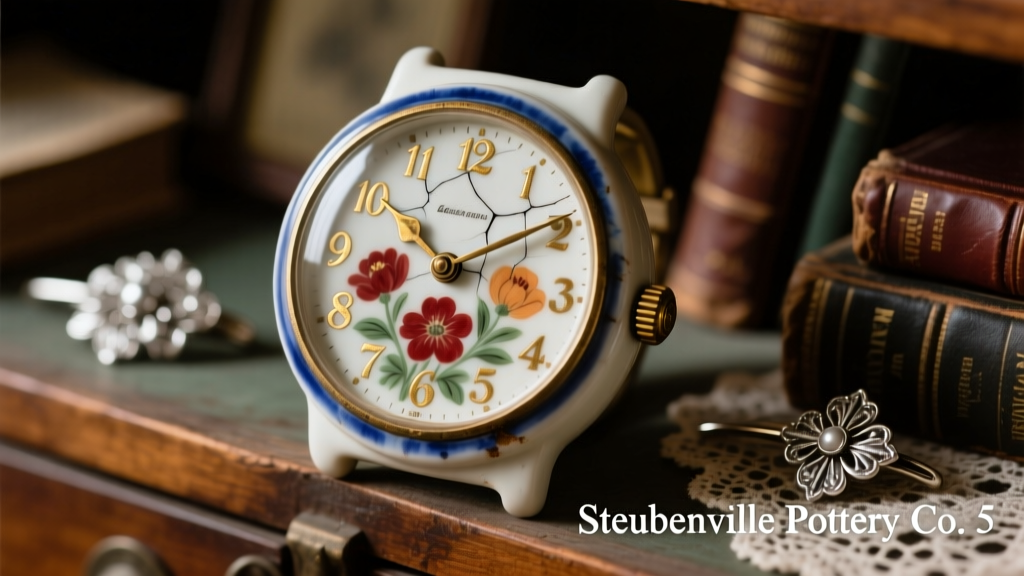
Steubenville Pottery Co. No. 5: Decoding the Iconic American Art Pottery Mark and Its Collector Significance
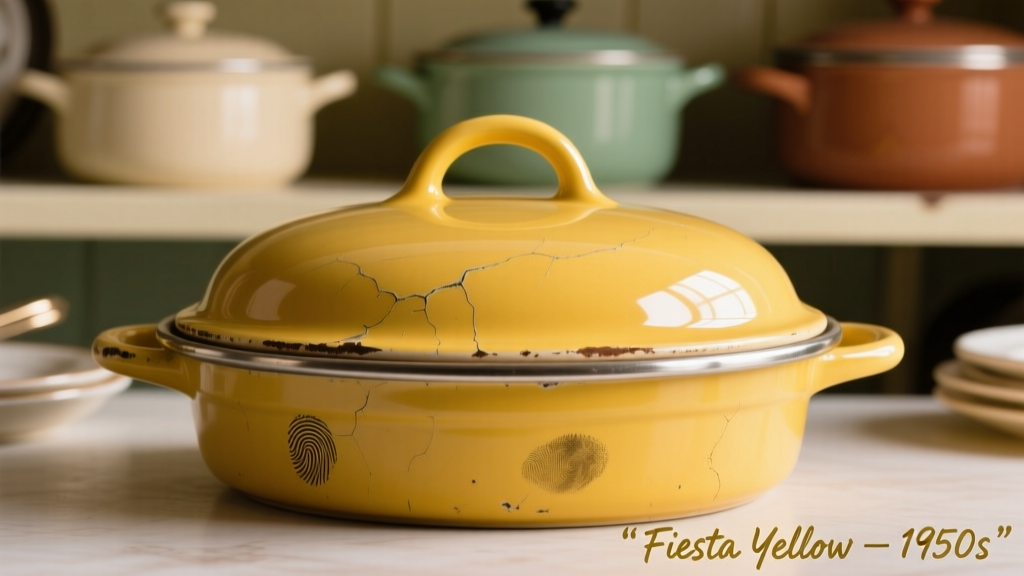
Fiesta Yellow Casserole Cover: A Mid-Century Icon of American Tableware Design