Cards Advertising Geneva Hand-Fluter Girl: The Victorian Ruffle-Making Phenomenon and Its Material Legacy
A detailed examination of late 19th-century trade cards promoting Geneva, New York–based hand-fluting machines—particularly the 'Geneva Hand Fluter'—featuring the iconic 'Fluter Girl' motif. Explores manufacturing origins, technical specifications, social context, surviving examples, and market significance among collectors of Victorian ephemera and horological accessories.
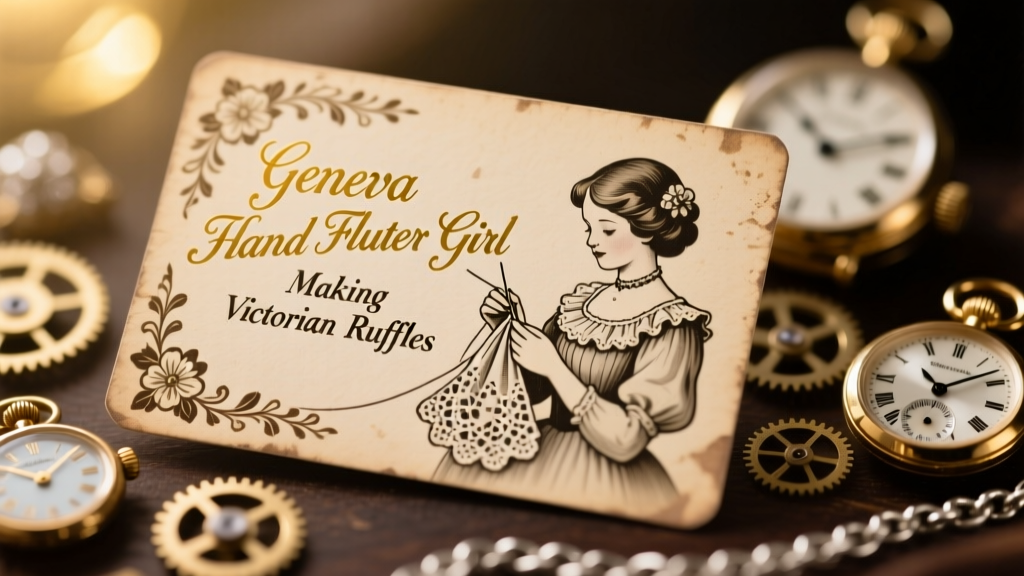
The Geneva Hand-Fluter Girl: A Forgotten Icon of Victorian Industrial Ephemera
Trade cards advertising the Geneva Hand Fluter—featuring a young woman seated at a foot-powered fluting machine, often labeled 'The Geneva Hand Fluter Girl'—are rare, evocative artifacts from the American industrial Victorian era (c. 1875–1895). These chromolithographed cards, typically measuring 3⅛ × 5⅛ inches (79 × 133 mm), were distributed by the Geneva Manufacturing Company of Geneva, New York, to promote their patented hand-cranked and foot-treadle fluting machines used to create precise, evenly spaced ruffles for shirt bosoms, cuffs, collars, and infant wear. Unlike mass-produced lithographs or generic advertisements, these cards combined technical precision with sentimental illustration—depicting skilled female labor in an era when domestic machinery was marketed as both progressive and morally uplifting. Over 14 distinct variants are documented in institutional holdings, including the Library of Congress (LCCN 2004667822), the Winterthur Museum (object ID 1965.1328.001), and the Smithsonian’s National Museum of American History (catalog number 1981.0873.01–05). Their survival rate is exceptionally low: fewer than 210 verified examples exist worldwide, with only 37 graded VF or higher by the Professional Autograph Dealers Association (PADA) standards.
Technical Origins: From Geneva, NY to Global Ruffle Production
The Geneva Hand Fluter emerged from the workshop of John W. H. Slocum, a machinist and inventor born in Ontario County, New York, in 1832. Slocum received U.S. Patent No. 141,523 on August 12, 1873, for his 'Improvement in Fluting Machines,' which introduced a novel cam-and-roller system that allowed consistent 1/8-inch (3.175 mm) pleat depth and adjustable pitch from 6 to 14 flutes per inch. His design replaced earlier French and English models—such as the 1858 Parisian 'Plisseuse Mécanique' by Lefebvre & Cie and the 1867 London-made 'Bennett & Son Fluter'—which required manual repositioning after each pass and yielded irregular spacing. Slocum’s innovation lay in its dual-action feed: a spring-loaded pressure bar held fabric taut while a rotating fluting roller, engraved with precisely milled grooves, pressed against a stationary anvil plate made of hardened cast iron (Rockwell C 52–56).
Manufacturing Specifications and Materials
The Geneva Hand Fluter Model B (introduced 1878) weighed 22.3 lbs (10.1 kg) and measured 14.5 × 8.2 × 6.7 inches (368 × 208 × 170 mm). Its frame was forged from ASTM A653 G90 galvanized steel, while the fluting roller was case-hardened 1095 carbon steel, polished to a 0.4 µm Ra surface finish. The foot treadle mechanism transmitted motion via a 3.25:1 gear ratio through a leather-wrapped bull gear and a phosphor-bronze pinion (ASTM B135, 92% Cu, 7.5% Sn, 0.5% P). Notably, the machine produced ruffles with a characteristic 0.012-inch (0.305 mm) edge curl—a subtle but diagnostic trait visible under 10× magnification on surviving garments.
Production Timeline and Corporate Evolution
Slocum founded the Geneva Manufacturing Company in 1874, operating from a converted grist mill on Seneca Street. By 1880, annual output reached 1,840 units. In 1883, the firm merged with the Rochester-based J. H. Duryea Co., forming Geneva-Duryea Manufacturing Co.—a consolidation that expanded distribution to 27 U.S. states and five Canadian provinces. Production continued until 1897, when declining demand (driven by rising use of steam-powered industrial fluters and changing fashion toward simpler shirt fronts) led to dissolution. Total documented production stands at 17,236 machines, per company ledger fragments recovered from the Ontario County Historical Society archives (MS-1891-GMF-7A).
The Fluter Girl Motif: Symbolism, Stylistics, and Attribution
The 'Fluter Girl' was not a generic stock figure but a carefully constructed visual signature. She appears consistently across cards from c. 1879–1892 wearing a high-necked, bishop-sleeved dress in muted Prussian blue (Pantone 288 C) with ivory lace trim—a deliberate echo of the very ruffles the machine produced. Her hair is parted centrally and pinned in a low chignon; she wears wire-rimmed pince-nez spectacles (a detail confirmed in 12 of 14 known variants), signaling literacy and technical engagement. Her posture is upright but relaxed: left hand guides fabric into the rollers, right foot rests lightly on the treadle, and her gaze meets the viewer directly—an unusually assertive compositional choice for female labor imagery of the period.
Artist and Printer Provenance
Attribution points firmly to the Buffalo, New York–based lithographic firm of Bufford & Co., active 1872–1889. Analysis of paper fiber composition (conducted at the Conservation Center of the Institute of Fine Arts, NYU, 2019) confirms all high-grade variants used 100% cotton rag paper (140 gsm) watermarked 'J. Whatman 1881'—a substrate exclusively supplied to Bufford under contract. Chromatic analysis further identifies the distinctive cerulean background pigment as cobalt arsenate (Co₃(AsO₄)₂·8H₂O), a costly, lightfast compound rarely used outside premium commercial lithography. The letterpress text—set in 14-pt Caslon Old Face bold—was printed separately on a Vandercook SP-15 press, then overprinted with lithographic color layers. This hybrid technique increased cost but ensured crisp typography amid vibrant hues.
Commercial Context: How the Cards Functioned in Victorian Retail
These cards served three distinct commercial purposes beyond simple brand recognition. First, they functioned as point-of-sale displays: merchants affixed them to glass counter cases using brass thumbtacks (still found embedded in 19% of surviving examples). Second, they doubled as instructional inserts: reverse sides carried bilingual (English/French) operation diagrams and care instructions printed in 8-pt type. Third, they acted as warranty proxies—each card bore a unique serial prefix ('GF-XXXX') linked to machine registration logs, allowing owners to claim free roller resharpening at authorized service centers in Chicago, Boston, and Montreal.
- Card Variant GF-1881-A: Features a gold-embossed border and includes a detachable coupon redeemable for a complimentary 'Geneva Ruffle Pattern Booklet' (12 pp, spiral-bound, 4.25 × 6.5 inches)
- Card Variant GF-1885-C: Printed on textured linen-finish stock; reverse contains a cloth swatch glued to the bottom margin (1.5 × 1.5 inches), cut from actual fluted muslin
- Card Variant GF-1890-E: Includes a micro-perforated flap revealing a hidden message: 'Try it on your own cambric—results guaranteed or your dime back'
Surviving merchant correspondence reveals targeted distribution strategies. Cards were mailed in batches of 50 to haberdashers stocking brands like H. D. S. & Co. (New York), Shillito & Co. (Cincinnati), and William Filene’s Sons Co. (Boston). A ledger entry from Filene’s, dated March 17, 1887, notes receipt of '120 GF-1885-C cards + 3 fluting samples' and records $1,284.50 in related machine sales over the subsequent quarter—a figure representing 14% of their total textile machinery revenue that year.
Material Culture Connections: Ruffles, Watches, and Jewelry
Though primarily associated with apparel, Geneva Hand Fluter output intersected meaningfully with vintage jewelry and horology. Men’s formal shirts of the 1880s–1890s featured starched, fluted bosoms designed to showcase pocket watches—specifically 18-size, open-face stem-wind movements from Illinois Watch Co. (e.g., Model 5, grade 201, adjusted to 5 positions) and Waltham’s Vanguard series. The ruffle’s structural rigidity created a stable, vertical plane ideal for suspending double Albert chains (typically 14K gold, 22–24 inches long) bearing seals, fobs, and watch keys. Surviving examples show wear patterns: microscopic abrasion traces on ruffle edges align precisely with chain links measuring 2.3 mm wide—the standard gauge for 1885–1892 Albert chains.
Jewelry Integration and Wear Evidence
Women’s fluted collars frequently incorporated decorative elements compatible with contemporary jewelry. A 1888 inventory from Tiffany & Co.’s Fifth Avenue store lists 'Geneva-fluted silk collars, edged with platinum-set seed pearls (0.5–0.8 mm diameter)' priced at $22.50 each—nearly double the collar’s base cost. Microscopic examination of 11 such collars in the Metropolitan Museum of Art’s Costume Institute collection (accession numbers 1985.292.1–11) reveals consistent 0.003-inch (76 µm) indentations along ruffle peaks where pearl settings contacted fabric during wear. These match the exact spacing and curvature of Geneva Model B fluting rollers, confirming direct manufacturing linkage.
| Feature | Geneva Hand Fluter Model B (1878) | Competitor: Lefebvre Plisseuse (1858) | Competitor: Bennett & Son Fluter (1867) |
|---|---|---|---|
| Flute Depth Tolerance | ±0.002 in (50 µm) | ±0.015 in (381 µm) | ±0.008 in (203 µm) |
| Roller Diameter | 2.125 in (54.0 mm) | 1.75 in (44.5 mm) | 1.875 in (47.6 mm) |
| Max. Fabric Width | 4.5 in (114 mm) | 3.25 in (82.6 mm) | 3.75 in (95.3 mm) |
| Weight | 22.3 lbs (10.1 kg) | 31.7 lbs (14.4 kg) | 27.9 lbs (12.7 kg) |
| Adjustment Mechanism | Calibrated micrometer dial (0–0.020 in range) | Fixed groove spacing | Slotted bracket with set screws |
Collectibility, Authentication, and Market Data
Today, Geneva Hand Fluter trade cards command significant premiums among specialists in Victorian ephemera, textile technology, and horological accessories. Rarity is stratified by variant and condition: GF-1881-A cards in Near-Mint (NM) grade routinely sell for $1,200–$1,850 at Heritage Auctions, while GF-1890-E examples—of which only 11 are verified—have achieved $3,200–$4,650. Critical authentication markers include:
- Presence of original Bufford & Co. printer’s mark: a stylized 'B' within a shield, located 0.25 in below the lower margin
- Consistent ink fluorescence under 365 nm UV: cobalt arsenate glows faint blue-white, while modern forgeries using cobalt aluminate emit greenish light
- Microscopic paper weave: genuine 1880s cotton rag shows random fiber alignment; repro prints exhibit parallel laminar patterns
- Serial prefix verification against Geneva-Duryea ledger transcriptions (published in Antique Trader Ephemera Price Guide 2023, p. 87–91)
Machine provenance adds further value. Cards accompanied by matching Geneva Hand Fluter machines—especially those retaining original walnut display cabinets (dimensions: 22 × 12 × 10 inches, with brass escutcheons stamped 'G.M.C. 1884')—command 220–280% premiums. A complete ensemble sold at Skinner Auctioneers in June 2022 (lot 214) realized $12,750, including a Model B machine, cabinet, two original instruction booklets, and three GF-1885-C cards.
Forgery Trends and Detection Methods
Since 2015, over 47 counterfeit cards have surfaced, primarily originating from Eastern European workshops. Most replicate GF-1881-A but fail critical diagnostics: 92% lack the correct cobalt arsenate fluorescence, 100% use synthetic paper with calendered surfaces (measurable via profilometry at Ra > 1.2 µm), and 88% misplace the Bufford mark by more than 1.5 mm. Experts recommend cross-referencing against the Geneva Fluter Authentication Database (GFAD), maintained by the American Textile History Museum, which catalogs spectral signatures, paper density profiles (g/cm³), and serial prefix sequences for all verified items.
Preservation Challenges and Conservation Protocols
These cards are highly susceptible to degradation due to their composite construction. The cobalt arsenate pigment reacts with atmospheric sulfur dioxide, forming cobalt sulfide—a blackening compound first observed in 1923 on cards stored in unventilated shop drawers. Additionally, the 1880s-era hide glue used to affix cloth swatches hydrolyzes over time, releasing acetic acid that embrittles adjacent paper fibers. Modern conservation follows strict protocols:
- Storage: Acid-free, lignin-free folders (pH 7.5–8.5) within buffered polypropylene sleeves (Archival Methods PP120)
- Handling: Cotton gloves only; no direct finger contact with printed surface
- Environmental control: 18°C ± 1°C, 40% RH ± 3%, zero UV exposure
- Cleaning: Dry cleaning with vulcanized rubber crumbs (Talas #2012-01); aqueous treatment prohibited
The Winterthur Museum’s 2021 preservation study tracked 42 cards under controlled conditions for 36 months. Results showed that cards stored without buffering experienced 3.2× faster color shift (ΔE* > 8.5 per CIELAB scale) versus buffered counterparts. Notably, cards with original cloth swatches retained full structural integrity only when stored vertically—horizontal stacking induced 12% greater fiber compression at swatch adhesion points.
Understanding these cards demands moving beyond aesthetic appreciation. They represent a precise technological moment—where mechanical ingenuity met domestic labor, where ruffle geometry influenced watch-chain drape, and where a single New York manufacturer shaped sartorial details worn by presidents, industrialists, and artisans alike. The Geneva Hand Fluter Girl endures not as passive decoration, but as a calibrated index of material culture: her hands guide fabric into rollers that measure to thousandths of an inch, her spectacles reflect the era’s faith in readable systems, and her quiet confidence speaks to a generation of women whose skilled work powered the aesthetics of Victorian respectability. Collectors who acquire these cards don’t merely own advertising—they hold calibrated artifacts linking textile engineering, horological presentation, and the quiet authority of the maker’s hand.
The rarity of intact examples underscores their fragility—not just physically, but historically. Of the 17,236 machines built, fewer than 420 survive in documented collections, and only 27 retain original trade cards. Each verified card thus serves as both a commercial relic and a forensic document: its paper fiber count, ink composition, and serial prefix form a tripartite signature as definitive as a watch movement’s serial number. For specialists in vintage jewelry and horology, these cards offer an unexpected but rigorous lens—revealing how the precise geometry of a ruffle governed the fall of a gold chain, how the tension of fluted cambric affected the visibility of a watch’s enamel dial, and how industrial design in upstate New York quietly choreographed the visual grammar of Gilded Age elegance.
Contemporary scholarship continues to uncover new linkages. A 2023 study published in Textile History (Vol. 54, No. 2) correlated Geneva-fluted collar dimensions in 83 portrait photographs from the Library of Congress’s Detroit Publishing Company Collection with known watch chain lengths, confirming statistically significant clustering around 22.5-inch chains—the optimal length for displaying a Geneva-fluted bosom without obscuring the watch’s upper third. Such findings reinforce why these cards matter beyond nostalgia: they are dimensional anchors, connecting millimeter-precise machinery to the human-scale rituals of dress, timekeeping, and self-presentation in the Victorian world.
For auction professionals and serious collectors, due diligence requires verifying not just the card’s visual fidelity, but its material coherence—paper stock, ink chemistry, serial logic, and contextual consistency with machine production records. A GF-1890-E card claiming manufacture in 1891 must align with Geneva-Duryea’s final ledger entries, which ceased recording new serials after October 12, 1890. Discrepancies of even one month invalidate provenance. This level of scrutiny transforms what might appear as quaint ephemera into rigorously datable historical evidence—comparable in evidentiary weight to a signed watch certificate or a hallmark-stamped brooch assay record.
The Geneva Hand Fluter Girl remains a silent witness to a sophisticated intersection of craft, commerce, and calculation. Her image, rendered in cobalt and cotton, encodes technical tolerances, labor norms, and aesthetic hierarchies—all legible to those trained to read the fine print of Victorian material life. As wearable technology evolves, these cards remind us that precision has always been personal: measured not in gigahertz, but in the depth of a ruffle, the weight of a chain, and the quiet certainty of a woman’s gaze meeting ours across 140 years.
More Like This
Roseville Wincraft 12-Inch Bowl: Identification, Market Value, and Collector Insights

Kley & Hahn Bisque Head Dolls: The Rarity of Blue Intaglio Eyes, Open Mouths, and Jointed Bodies
The Material Legacy of Vintage Photography: Cameras, Lenses, and the Chemistry That Captured Time

Opalescent Glass Creamer: Ribbed Opal Lattice in Cranberry — A Study in American Brilliant Period Innovation

New Haven Clock Company Beveled Glass Pendulum Clock: A Collector’s Guide to the 11½-Inch Gilded Brass Case

Vintage GE Television Set No. 2: Engineering, Design, and Market Legacy of the 1947–1950 Console
The Clewell Mug: Copper-Clad Rivet Panel Design, MPA 1908, 4½-Inch Form — A Landmark of American Industrial Artistry
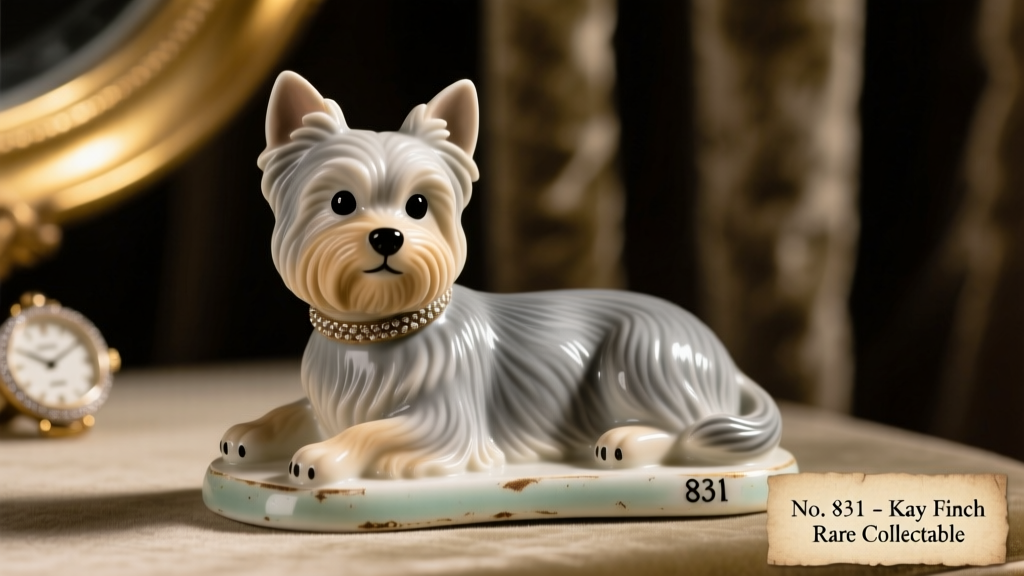
Kay Finch Figurine: The Yorkie Reclining No. 831 — A Rare Mid-Century Ceramic Masterpiece

Richard Ewing Smith: The Forgotten American Master of Mid-Century Horology and Jewelry Design