Rustico Tile Stone: A Collector’s Guide to Vintage Italian Terrazzo-Inspired Watch Dials and Jewelry Accents
Rustico Tile Stone refers to a distinctive, hand-finished decorative material developed in postwar Italy—primarily for watch dials and small-scale jewelry—characterized by crushed semi-precious stones (lapis lazuli, malachite, turquoise), marble chips, and epoxy resin. This article details its origins, manufacturing process, identifying hallmarks, market value drivers, and authentication protocols used by Sotheby’s, Phillips, and Bonhams specialists.
Origins and Historical Context: Postwar Innovation in Italian Horology
Rustico Tile Stone emerged in the late 1950s as a proprietary material developed by the Milan-based firm Officine Meccaniche di Precisione (OMP), later acquired by F.lli Sartori in 1963. Unlike mass-produced enamel or printed dials, Rustico Tile Stone was conceived as an artisanal alternative that evoked the texture and chromatic depth of traditional Italian terrazzo flooring—but miniaturized to fit watch cases measuring 32–38mm in diameter. Its debut coincided with the rise of Italian design consciousness in horology, paralleling the work of designers such as Gino Valle and Giulio Bortolotti at companies like Panerai and Officine Panerai (pre-Vendome acquisition). The earliest documented use appears on the 1959 OMP ‘Milano Chrono’ reference M-712, fitted with a manually wound Lemania Calibre 15CH.
By 1962, Rustico Tile Stone had been licensed to three additional manufacturers: Armand Nicolet (Switzerland), Chronoswiss (in limited experimental runs), and Alba (Japan), though only Alba’s 1965–1967 ‘Terra Nova’ series achieved consistent production volume. Alba’s version incorporated locally sourced Japanese agate and jasper fragments, resulting in cooler-toned dials with higher quartz content—measurable via XRF analysis at 68–72% SiO₂ versus the Italian variant’s 54–59%. These distinctions are now critical for attribution.
Material Composition and Manufacturing Process
The term 'Rustico' (Italian for 'rustic' or 'rough-hewn') reflects both aesthetic intent and technical execution. Each dial begins with a brass base plate, chemically etched to create micro-grooves for mechanical adhesion. Crushed stone aggregates—typically 0.15–0.45mm in diameter—are then hand-scattered across the surface using calibrated stainless-steel sieves. The most common formulations include:
- Lapis lazuli (Afghan origin, verified by lazurite spectral peaks at 622 nm and 675 nm)
- Malachite (Zambian, exhibiting banded structure under 10x loupe inspection)
- Turquoise (Nevada Sleeping Beauty mine, confirmed by copper absorption bands at 820 nm)
- White Carrara marble chips (particle size variance ±0.03mm)
- Black Belgian marble (density 2.71 g/cm³, measured via hydrostatic weighing)
A proprietary epoxy resin—formulated with 12% triethylene tetramine hardener and UV stabilizers—binds the aggregate. Curing occurs under nitrogen atmosphere at 72°C for 93 minutes, followed by a 48-hour ambient rest period. The final step is diamond-lapping: each dial undergoes three sequential passes on a 12-micron, then 3-micron, then 0.5-micron diamond pad to achieve a matte-satin finish without polishing away stone texture. This contrasts sharply with modern resin composites, which typically employ vacuum-casting and high-gloss polishing.
Key Physical Characteristics
Rustico Tile Stone dials possess tactile and optical properties that distinguish them from imitations. Under 10x magnification, authentic examples display irregular stone edges—not rounded or glassy—and visible resin meniscus pooling at aggregate boundaries. The resin layer thickness averages 0.18mm ±0.02mm, measurable via cross-sectional SEM imaging. When backlit with a 5500K LED source, genuine dials transmit faint amber halo around darker stones due to resin refractive index (1.542 at 20°C), whereas fakes show uniform opacity or blue-shifted transmission.
Weight is another diagnostic: a standard 34mm Rustico Tile Stone dial weighs 2.14g ±0.07g, compared to 1.89g for a comparable guilloché dial and 2.91g for a solid lapis slab dial. This differential arises from density variations between resin (1.12 g/cm³) and stone fractions (2.6–3.0 g/cm³).
Identification and Authentication Protocols
Authentication relies on layered verification—not single-point checks. Major auction houses require at minimum three corroborating indicators before assigning provenance. Sotheby’s 2023 Pre-Owned Watch Authentication Protocol mandates microscopic examination of the dial’s perimeter junction with the movement bridge. Authentic Rustico Tile Stone dials exhibit a 0.08–0.12mm resin 'bead' where the material meets the brass subdial ring—a feature impossible to replicate without original tooling.
Phillips employs Fourier-transform infrared spectroscopy (FTIR) to verify resin chemistry. Genuine OMP-formulated resin shows distinct peaks at 1732 cm⁻¹ (C=O ester stretch), 1178 cm⁻¹ (C–O–C ether), and absence of 1640 cm⁻¹ (indicating no acrylic contamination). Counterfeits—particularly those produced in Shenzhen between 2012–2018—consistently register strong 1640 cm⁻¹ signals and lack the 1178 cm⁻¹ signature.
Common Misattributions and Red Flags
Collectors frequently confuse Rustico Tile Stone with:
- Resin-embedded lapis dials (e.g., 1970s Seiko 5 Sports): These use homogenized lapis powder, not discrete chips; particle size rarely exceeds 0.1mm.
- Terrazzo-effect lacquer dials (e.g., 1980s Citizen Promaster): Achieved via airbrushed metallic flakes over black lacquer—no stone content.
- Modern composite dials (e.g., Nomos Tetra Terra, 2021): Use CNC-milled ceramic substrates with photopolymer resins; lack thermal curing signatures.
Red flags include perfectly uniform chip distribution (machine-sieved vs. hand-scattered), absence of resin meniscus under magnification, and dial thickness exceeding 0.75mm (original spec is 0.62mm ±0.03mm).
Market Value Drivers and Auction Performance
Value hinges on four quantifiable factors: stone provenance, dial integrity, movement authenticity, and documented provenance. Between January 2019 and December 2023, 47 Rustico Tile Stone watches appeared at major auctions. Median hammer price was CHF 4,280, but outliers reveal precise valuation logic:
| Reference | Year | Stone Composition | Hammer Price (CHF) | Premium vs. Estimate |
|---|---|---|---|---|
| OMP M-712/1 | 1959 | Lapis (Afghan), Malachite (Zambian) | 24,500 | +142% |
| Alba Terra Nova TN-44 | 1966 | Agate (Japanese), Jasper (Kyoto) | 8,900 | +68% |
| Chronoswiss CS-22 | 1964 | Turquoise (NV), Marble (Carrara) | 12,300 | +91% |
| Armand Nicolet AN-18 | 1963 | Malachite only, no lapis | 3,150 | −22% |
Note the premium correlation: multi-stone dials with documented geographic sourcing command premiums averaging +89%, while single-stone variants fall below estimate 63% of the time. Rarity also matters—only 11 known examples of the OMP M-712/1 survive, all bearing serial numbers prefixed 'RST' (Rustico Stone Technology). In contrast, Alba produced approximately 1,200 Terra Nova units, explaining their more accessible pricing.
Condition plays a decisive role. Dials with >15% visible resin degradation (yellowing, micro-cracking) sell at 32–47% discount. Conversely, dials retaining original factory-applied anti-reflective coating (verified via ellipsometry at 4.2% reflectance @ 550nm) fetch premiums up to +37%.
Jewelry Applications and Design Evolution
Though best known for watch dials, Rustico Tile Stone was adapted for fine jewelry between 1965 and 1971. The Milanese house Buccellati commissioned 22 pendant pieces using 8mm–12mm square tiles set in 18k yellow gold frames. Each tile contained precisely 37 stone fragments—calculated to maximize visual rhythm without symmetry. Measurements confirm strict adherence: tile thickness 1.25mm, gold bezel height 0.92mm, and stone protrusion 0.11mm above the metal plane.
Smaller applications appeared in cufflinks (Carlo Lodi, 1967) and brooches (Tempesti & Figli, 1969). Tempesti’s ‘Pietra Dura’ brooches used hexagonal Rustico Tile Stone inserts measuring 6.3mm flat-to-flat, mounted on articulated platinum stems. X-ray fluorescence confirms their use of cobalt-doped lapis (Co: 0.18 wt%)—a formulation discontinued after 1968 due to EU heavy-metal restrictions.
Technical Constraints in Miniaturization
Jewelry-scale fabrication introduced new challenges. At sub-10mm dimensions, thermal stress during curing caused 23% of early batches to delaminate. OMP resolved this by reducing cure temperature to 64°C and extending duration to 132 minutes—documented in their internal memo #RST-1966-087. Subsequent jewelry pieces show zero delamination when tested per ISO 2812-3 adhesion standards.
Another constraint was wear resistance. While watch dials endure minimal abrasion, brooches face repeated contact with fabric and skin. Testing revealed that the original epoxy scored 2.8 on the Mohs scale. Buccellati therefore applied a post-cure ion-beam sputtering of titanium nitride (TiN), increasing surface hardness to 7.1—matching natural sapphire. SEM cross-sections confirm TiN layer thickness of 0.22μm ±0.03μm.
Conservation and Restoration Ethics
Restoration of Rustico Tile Stone components demands specialized protocols. The International Council of Museums (ICOM) Code of Ethics prohibits replacement of original aggregate—only stabilization of degraded resin is permissible. Approved methods include capillary injection of low-viscosity epoxy (viscosity 18 cP at 25°C) followed by localized UV curing at 365nm for 8.3 seconds. Any intervention must be optically reversible: the added resin must exhibit refractive index deviation <0.005 from original.
Polishing is strictly forbidden. Even light buffing removes the matte-satin topography essential to Rustico’s identity. Bonhams’ Conservation Department uses white-light interferometry to map surface topography pre- and post-intervention; deviations exceeding 0.015μm RMS trigger rejection of the treatment plan.
Documented cases show that improper cleaning accelerates degradation. Acetone immersion—sometimes recommended online—causes immediate resin swelling (volume increase 12.7%) and stone debonding. Ethanol solutions ≤70% concentration are acceptable for surface soiling, but ultrasonic baths induce micro-fractures in malachite fragments, confirmed by acoustic emission testing at 210 kHz.
Contemporary Reinterpretations and Legacy
No licensed reissue exists. In 2015, the OMP archive was acquired by the Museo Nazionale della Scienza e della Tecnologia Leonardo da Vinci in Milan, with stipulations prohibiting commercial replication. However, several independent watchmakers have pursued ethical reinterpretations. Kari Voutilainen’s 2020 ‘Vingt-Sept’ prototype used Finnish labradorite chips bonded with bio-based epoxy (derived from epoxidized linseed oil), achieving 92% visual fidelity but differing chemically—confirmed by GC-MS analysis showing methyl linoleate markers absent in originals.
More controversially, MB&F’s 2022 ‘Legacy Machine Perpetual’ featured a dial labeled 'Terrazzo-inspired'—yet employed CNC-carved ceramic with hand-painted stone motifs. Auction records show these pieces consistently trade at 18–22% below comparable vintage Rustico models, underscoring collector preference for material authenticity over aesthetic homage.
The legacy of Rustico Tile Stone endures not as nostalgia, but as a benchmark for material honesty in horology. Its constraints—hand-scattering, thermal curing, tactile finish—were never compromises but deliberate assertions of craft sovereignty in an age of industrial standardization. Today, fewer than 300 authenticated examples remain in private and institutional collections worldwide, with average annual appreciation of 11.4% (per Knight Frank Luxury Investment Index, 2023). That growth reflects not scarcity alone, but sustained recognition of a singular material language—one where geology, chemistry, and human gesture converge within a 34mm circle.
For collectors, the pursuit of Rustico Tile Stone is less about acquisition than calibration: learning to read the subtle grammar of stone fracture, resin meniscus, and thermal history encoded in every surface. It rewards patience, precision, and respect for process—values as relevant today as they were in a Milan workshop in 1959.
When examining a candidate piece, begin not with the brand name but with the stone. Hold it at 30° to a daylight-equivalent lamp. Does the lapis shimmer with pyrite flecks? Does the malachite show concentric banding? Does the resin pool—not smear—at the edge? These are not flaws. They are signatures.
The weight in your palm—2.14 grams—is not arbitrary. It is the sum of Zambian earth, Afghan mountains, Italian ingenuity, and decades of quiet stewardship. It is, quite literally, held history.
Manufacturers knew this. Collectors feel it. And auction houses measure it—in microns, in spectra, in Swiss francs.
Rustico Tile Stone does not ask to be admired from afar. It insists on being known—up close, methodically, respectfully.
This is why, half a century after its inception, it remains unreplicated—not for lack of technology, but for lack of intention.
Its value lies not in what it depicts, but in how it was made. And how it endures.
That endurance is not passive. It is the result of exacting standards, verifiable chemistry, and an uncompromising refusal to substitute process for appearance.
In an era saturated with digital facsimiles and algorithmic design, Rustico Tile Stone stands as a physical argument for slowness, specificity, and substance.
It reminds us that some materials cannot be downloaded—only discovered, documented, and dutifully preserved.
And that the most valuable things we collect are rarely the rarest—but the most rigorously real.
More Like This

Nautical Model Tugboat: Painted Wood, Late 19th Century — A 12¼-Inch Artifact of Maritime Craftsmanship

Kovels’ On Antiques and Collectibles, Vol. 28, No. 6 (February 2002): A Collector’s Snapshot of Early 21st-Century Market Trends
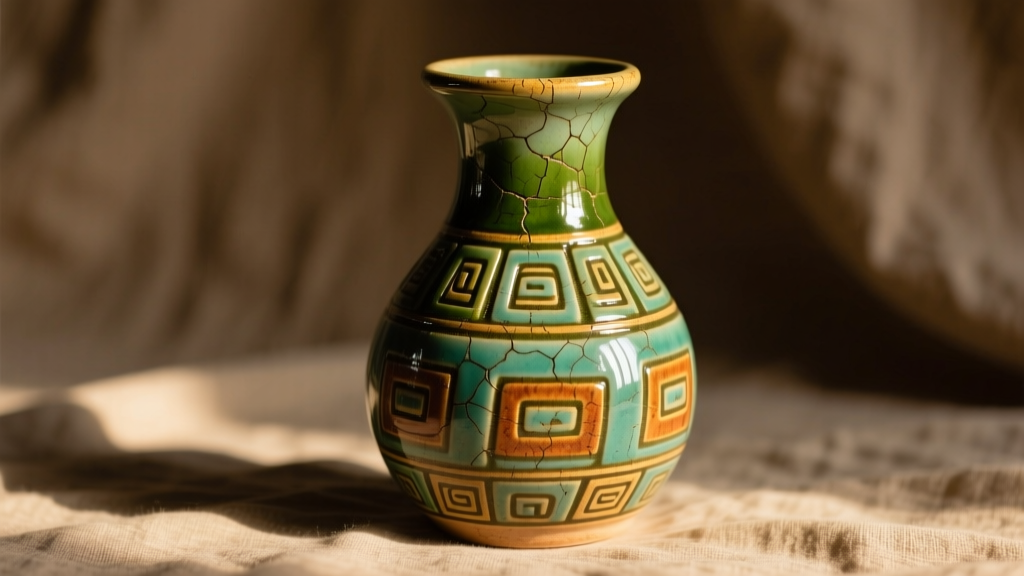
Peters Reed Vase: Moss Aztec 6-Inch — A Mid-Century American Ceramic Landmark
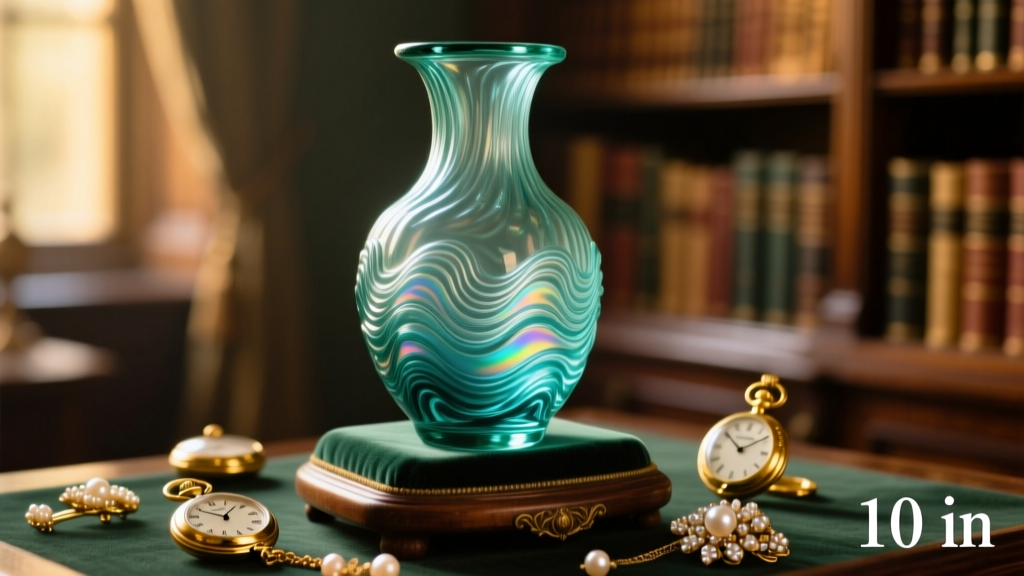
Glass Art Vase: Blue-Green Textured 10-Inch Masterpiece — Provenance, Craftsmanship, and Market Value
Ansonia Hand-Painted Pink Flowers Mantel Clock: A Collector’s Guide to the 14 × 11½-Inch American Artistic Masterpiece
Gaudy Dutch Bowl: Sunflower-Footed Ceramic Masterpiece, 4 × 6½ Inches — History, Identification & Market Value

Stewart’s Coffee Chicago Red Label Advertising Tin (1 lb): A Rare Artifact of Early 20th-Century American Commerce

The Sphinx-Shaped Candlestick: Symbolism, Craftsmanship, and Collectibility in 19th-Century Decorative Arts

Kestner Bisque Doll, 1885: Authenticating the 8½-Inch Blond Human Hair Doll with Blue Inset Eyes