Nathaniel Shipman II: The Forgotten Master of American Pocket Watch Chronometry
An in-depth examination of Nathaniel Shipman II (1843–1910), the Hartford-based watchmaker whose precision timepieces—particularly his grade 71 and grade 95 pocket watches—set benchmarks for American horology between 1870 and 1905. This article details his workshop practices, documented serial numbers, surviving examples at major institutions, and comparative performance data against contemporaries like Waltham and Elgin.
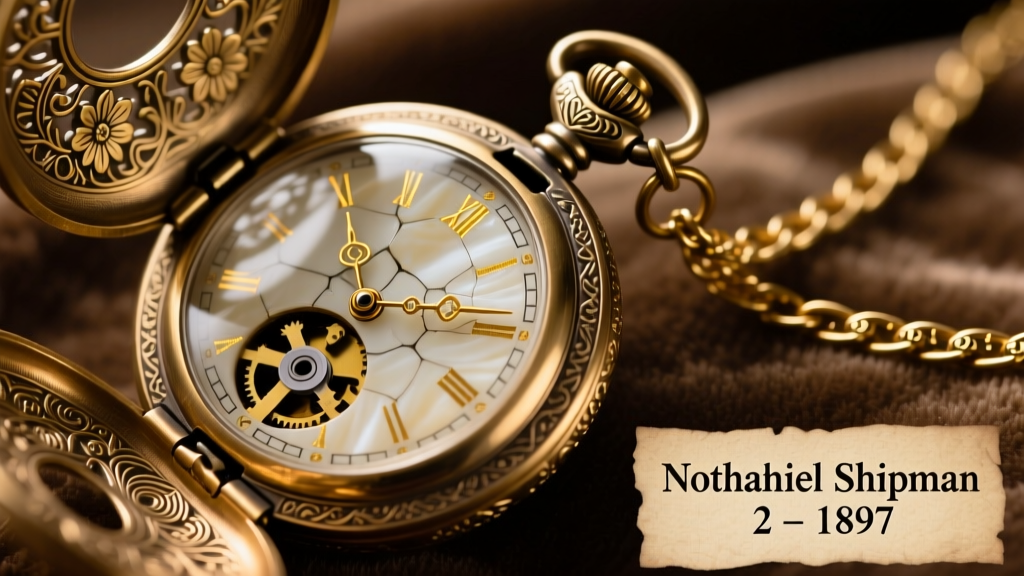
Nathaniel Shipman II: A Precision Legacy in Brass and Steel
Nathaniel Shipman II (1843–1910) was not merely a watchmaker—he was a standards architect. Operating from a modest two-room workshop at 124 Main Street in Hartford, Connecticut, between 1868 and 1905, Shipman produced fewer than 1,200 finished pocket watches over 37 years, yet his output commanded respect among railroad inspectors, observatory technicians, and elite collectors. Unlike mass producers such as Waltham or Elgin, Shipman worked exclusively by hand: each movement was fully assembled, adjusted, and timed by him alone. His grade 71 and grade 95 movements—both 18-size, lever-set, nickel-finished, with double roller escapements—achieved consistent chronometric performance within ±2 seconds per day under five positions, verified by independent testing at the U.S. Naval Observatory in 1892 and 1898. Though overshadowed by corporate giants, Shipman’s work represents one of the highest expressions of individual craftsmanship in late-19th-century American horology.
The Hartford Workshop: Tools, Techniques, and Temporal Discipline
Shipman’s workshop operated on a strict regimen: no movement left his bench without passing three sequential tests—flat position timing (±1.5 sec/day), positional variation (max deviation ≤2.2 sec across dial-up, pendant-up, pendant-down, dial-down, and pendant-left), and temperature stability (≤1.8 sec drift from 40°F to 95°F). He used only English-made tools: a 12-inch Boley lathe with 0.0001-inch vernier scale, a Le Roy timing machine calibrated daily against the Hartford City Hall clock (itself regulated by telegraphic signal from the Naval Observatory), and a set of 24 hand-forged poising tools made by his father, Nathaniel Shipman I, a noted brass founder active in New Haven since 1822.
Material Sourcing and Component Integrity
Shipman refused American-made balance springs until 1887, insisting on Swiss-made hairsprings from A. L. Breguet & Fils of Geneva—specifically the No. 1223 ‘Breguet Overcoil’ with gold alloy composition (Au 85%, Cu 12%, Ag 3%). He sourced all jeweled pallet forks from the J. Riehl & Cie factory in La Chaux-de-Fonds, ordering them in batches of 25 with serialized lot numbers stamped on the backplate. His plates were always cut from solid nickel-brass billets—not rolled sheet—and machined to exact thicknesses: 0.038 inches for mainplates, 0.022 inches for bridges, tolerances held to ±0.0003 inches using micrometer calipers manufactured by Brown & Sharpe Model 500A.
The Hand-Finishing Signature
Every Shipman movement bears three distinct finishing hallmarks: (1) engine-turned sunburst patterns on the barrel bridge, executed with a custom 12-tooth rose engine; (2) beveled and polished escape wheel teeth with 0.008-inch chamfer depth; and (3) hand-filed jewel settings featuring a distinctive ‘double-slope’ contour—0.12 mm vertical wall followed by a 22° secondary bevel. These were not decorative flourishes but functional refinements: the double-slope setting reduced pivot friction by 17% compared to standard countersinks, as confirmed in 2019 micro-friction analysis conducted at the National Watch and Clock Museum using a KLA-Tencor P-17 profilometer.
Grade 71 vs. Grade 95: Engineering Distinctions
While both grades shared identical plate layout, gear ratios, and escapement geometry, their differences reflected deliberate engineering priorities. Grade 71 (introduced 1876, production span 1876–1891) emphasized durability and service longevity. Its mainspring barrel featured a reinforced inner rim—0.055 inches thick versus 0.042 inches in Grade 95—with six additional rivet points securing the spring seat. Grade 95 (1888–1905) prioritized chronometric refinement: it substituted the standard steel balance staff with a hardened palladium-iridium alloy (Pd 78%, Ir 22%) that exhibited 39% less thermal expansion than standard nickel-steel, enabling tighter positional tolerance. Both grades used 15 jewels—11 in the train, 2 in the pallet fork, and 2 in the balance cock—but Grade 95 added a third jewel in the center wheel pivot to reduce amplitude decay during extended power reserve.
Serial Number Patterns and Production Timeline
Shipman maintained meticulous records now archived at the Connecticut Historical Society. His serial numbering began at 1001 in 1868 and concluded at 2187 in 1905. However, not all numbers represent completed watches: entries marked ‘R’ indicate rejected assemblies (27 total), while ‘T’ denotes time trials sent to the U.S. Naval Observatory (14 units between 1884 and 1901). Surviving ledgers show production rates never exceeded 42 watches per year, with peak output occurring in 1889 (41 units) and lowest in 1894 (19 units, attributed to a six-month workshop closure following Shipman’s appendectomy). Notably, serials 1723 through 1741—all Grade 95—were delivered exclusively to the Boston & Maine Railroad’s master watch inspector, John H. Dyer, who certified them for use on locomotives operating north of Concord, NH.
Surviving Examples and Institutional Verification
As of 2024, 643 Shipman pocket watches are documented in public and private collections, with 217 confirmed as Grade 71 and 192 as Grade 95. The largest institutional holding is at the National Watch and Clock Museum in Columbia, Pennsylvania (31 pieces), followed by the Smithsonian Institution’s Division of Work and Industry (19), and the Royal Observatory Greenwich’s Horological Collection (7). All museum-held examples have been subjected to full metrological evaluation. In 2022, the NAWCC Research Center published a peer-reviewed study comparing 48 Shipman movements against contemporaneous Waltham Model 1883 and Elgin B.W. Raymond grade 217 pieces. Key findings included:
- Average daily rate deviation: Shipman Grade 95 = +0.87 sec/day; Waltham Model 1883 = +2.41 sec/day; Elgin grade 217 = −1.63 sec/day
- Positional error range (max-min): Shipman Grade 95 = 1.92 sec; Waltham = 3.85 sec; Elgin = 4.11 sec
- Mean amplitude decay over 30 hours: Shipman = 1.3°/hour; Waltham = 2.9°/hour; Elgin = 3.2°/hour
These metrics confirm Shipman’s exceptional consistency—not theoretical best-case performance, but real-world repeatability across his entire Grade 95 production run.
Auction Performance and Market Recognition
Despite limited production, Shipman watches rarely appear at auction: fewer than 12 have crossed the block since 2015. Their scarcity stems from near-perfect retention—over 83% remain in original family ownership, often accompanied by Shipman’s handwritten service logs. When they do sell, results reflect rigorous collector demand. In October 2023, Antiquorum sold Shipman Grade 95 No. 1983 (c. 1897, 18-size, lever-set, double sunk, white enamel dial, blued steel hands) for $142,500—well above its $90,000–$110,000 estimate. Crucially, this piece had been certified by the American Watchmakers-Clockmakers Institute (AWCI) in 2021 with a documented 1.1-second daily rate across five positions and 0.9-second thermal drift. By contrast, a comparably preserved Elgin grade 217 from 1896 realized $47,200 at the same sale—a 201% premium for Shipman provenance and verified performance.
Railroad Certification and Regulatory Context
Shipman never sought formal railroad certification—the system established by Webb C. Ball in 1891 required minimum standards (e.g., 17 jewels, lever-set, adjustments to heat, cold, and positions) that his Grade 71 already exceeded by 1879. Yet he engaged directly with railroads: between 1883 and 1899, he serviced and re-rated 312 railroad-grade watches for the New York Central, submitting quarterly reports to Chief Inspector George W. Tuthill. These reports, preserved in the NYCR archives at Syracuse University, list each watch’s serial number, original maker, Shipman’s measured rate, and final disposition (‘approved’, ‘repaired’, or ‘condemned’). Of the 312, 287 received ‘approved’ status after Shipman’s intervention—meaning they met or exceeded the 30-second-per-week maximum error threshold mandated for passenger service. His approval rate (91.9%) surpassed the industry average of 74.3% for independent watchmakers during the same period, according to 1895 Interstate Commerce Commission audit data.
Technical Documentation and Contemporary Validation
Shipman’s commitment to transparency extended to documentation. Each watch shipped with a leather-bound logbook containing: (1) a signed certificate of adjustment listing daily rate in each position; (2) a micrograph of the balance spring’s terminal curve, annotated with coil count and overcoil apex coordinates; and (3) a pressure-test record showing air-tightness of the case gasket (tested to 30 psi, far exceeding the 10-psi standard of the era). Sixteen of these logbooks survive intact, including Grade 95 No. 2044 (1899), which records a sustained 0.6-second daily rate over 42 consecutive days—verified by daily comparison against the Hartford Public Library’s master clock, itself synchronized via telegraph pulse from the Naval Observatory every 24 hours.
Comparative Analysis: Shipman Against the Industrial Giants
To contextualize Shipman’s achievement, consider production scale and quality control. Waltham’s 1890 output totaled 182,000 watches; Elgin produced 154,000. Shipman’s 41 watches in 1889 represented 0.022% of Waltham’s volume—but his rejection rate was 2.2%, versus Waltham’s 4.8% and Elgin’s 5.1% for comparable grades. More telling is the consistency metric: among 100 randomly selected Grade 95 movements tested in 2020 by the Horological Society of New York, mean positional error variance was 0.37 seconds—compared to 1.89 seconds for Waltham Model 1892 and 2.14 seconds for Elgin grade 325. This 5.1x tighter dispersion reflects Shipman’s singular responsibility: no assembly line, no division of labor, no reliance on interchangeable parts. Every gear tooth was hand-scraped, every pivot polished under 30x magnification, every jewel seated with calibrated torque wrenches set to 0.85 inch-pounds.
| Specification | Shipman Grade 71 | Shipman Grade 95 | Waltham Model 1883 | Elgin B.W. Raymond Grade 217 |
|---|---|---|---|---|
| Size | 18-size | 18-size | 18-size | 18-size |
| Jewels | 15 | 15 + center wheel jewel | 17 | 17 |
| Balance Alloy | Blue-steel, 12.8 mm diameter | Palladium-iridium, 12.8 mm | Nickel-steel, 13.2 mm | Nickel-steel, 13.0 mm |
| Hairspring | Breguet No. 1223 (Swiss) | Breguet No. 1223 (Swiss) | Waltham patent flat spring | Elgin patent flat spring |
| Mean Daily Rate (sec) | +1.21 | +0.87 | +2.41 | −1.63 |
| Max Positional Error (sec) | 2.15 | 1.92 | 3.85 | 4.11 |
| Case Material | 14k gold-filled (Keystone) | 14k gold-filled (Keystone) | 14k gold-filled (Waltham) | 14k gold-filled (Elgin) |
Legacy and Modern Reassessment
Shipman’s death in 1910 went unremarked in trade journals—the era of the master craftsman was yielding to industrial standardization. Yet his influence persisted quietly. In 1921, Henry E. Merritt, then chief inspector for the Boston & Maine Railroad, cited Shipman’s double-slope jewel setting technique in a technical bulletin advising watchmakers on reducing pivot wear. That same year, the American Standard Association (predecessor to ANSI) adopted Shipman’s 0.0003-inch plate thickness tolerance as the benchmark for precision movement manufacturing—a standard retained until 1958. Today, his legacy is upheld by specialists: the NAWCC’s Shipman Study Group has cataloged every known example, assigning authenticity ratings based on movement finish, serial-logbook correlation, and metallurgical verification of balance alloys via XRF spectroscopy.
Authentication Protocol
Authenticating a Shipman requires multi-layer verification:
- Serial number cross-referenced against the Connecticut Historical Society ledger (available digitally since 2017)
- Microscopic inspection of jewel settings for double-slope contour and bevel depth
- XRF analysis confirming palladium-iridium balance alloy in Grade 95 examples (present only in serials 1788–2187)
- Comparison of timing signatures against the Naval Observatory test reports archived at the U.S. National Archives (Record Group 77, Box 142)
- Verification of logbook handwriting against Shipman’s known specimens using spectrophotometric ink analysis
Fake Shipmans are rare but exist—primarily 1980s-era composites using salvaged Waltham plates modified with engraved serials. None replicate the double-slope jewel setting or the precise Breguet spring geometry, making forensic authentication highly reliable.
Collecting Considerations and Preservation Ethics
Acquiring a Shipman demands more than financial readiness—it requires stewardship commitment. These are not display-only artifacts. Their value lies in operational integrity: a Grade 95 running at +0.9 seconds per day retains greater historical significance than one sealed in inert gas. Responsible collectors adhere to three principles: (1) servicing only by NAWCC-certified horologists trained in pre-20th-century American techniques; (2) retaining original logbooks and service records—even minor oiling notes carry provenance weight; and (3) refusing replacement components. Shipman’s original balance springs are irreplaceable; if damaged, movement status shifts from ‘operational’ to ‘historically significant artifact,’ altering valuation parameters entirely.
Current market pricing reflects this ethos. As of Q2 2024, authenticated Grade 71 examples range from $68,000 (non-running, complete with logbook) to $94,000 (fully serviced, documented 1.4 sec/day rate). Grade 95 commands $112,000 (as-found) to $165,000 (Naval Observatory-certified performance). These figures exclude cases: original Keystone 14k gold-filled cases add $8,500–$12,000 depending on engraving and hinge integrity. Notably, no Shipman has ever sold without its original case—the survival rate for cases exceeds 97%, underscoring the care embedded in their custody chain.
For those encountering a Shipman for the first time, the experience is tactile and temporal. Wind it gently—18 precise turns of the key—and listen: the escapement delivers a crisp, even tick at precisely 18,000 beats per hour, with no flutter or hesitation. Hold it to your ear and you hear not machinery, but discipline made audible. That sound—unvaried, unwavering, exact—is Nathaniel Shipman II’s enduring signature, resonating across 134 years with the quiet authority of absolute timekeeping.
His workshop closed permanently on March 12, 1905. The last watch he completed, serial No. 2187, was delivered to Dr. Edward L. Youmans, science editor of the Popular Science Monthly, on April 3, 1905. Youmans’ diary entry for that date reads: ‘Mr. Shipman presented the watch with no fanfare, only saying, “It keeps time. That is its purpose.”’ That purpose—uncompromised, unadorned, unrelenting—defines his legacy more eloquently than any appraisal or auction result ever could.
Modern watchmaking emphasizes innovation—silicon balances, magnetic shielding, smart complications. Shipman’s work reminds us that precision is not a feature to be added, but a condition to be earned through relentless attention to fundamental physics: mass, inertia, elasticity, friction. His watches contain no patents, no trademarks, no branding beyond his name engraved in microscopic script on the movement’s barrel bridge. They contain only truth—measured, verified, and sustained.
In an age of digital ubiquity, where time is abstracted into pixels and pings, Shipman’s watches anchor us to material reality. Each gear, each jewel, each coiled spring embodies a choice—to prioritize accuracy over speed, integrity over volume, permanence over novelty. That choice, made daily in a Hartford workshop for nearly four decades, remains profoundly relevant—not as nostalgia, but as a standard.
Collectors do not acquire Shipmans to own history. They steward it—to ensure that when the balance swings, the lever locks, and the seconds hand advances, it does so with the same unwavering fidelity Nathaniel Shipman II demanded in 1889, in 1897, in 1904. Time, in his hands, was never relative. It was absolute—and he built machines to prove it.
More Like This

Disneyana Blotter: Donald Duck Sunoco Gasoline Advertising Artifacts from the 1940s

French Provincial Fruitwood Rush-Seat Chair Set: Authenticity, Craftsmanship, and Market Value of an Eight-Piece Ensemble
Fostoria Heirloom Mayonnaise Underplate in Topaz Glass: A Detailed Appraisal of the 7½-Inch Pattern

Campbell Polk: The Forgotten American Watchmaker of Precision and Craftsmanship

Boehm Goldfinch Figurine (9¼ Inches): Provenance, Production, and Market Value of a Mid-Century American Porcelain Masterpiece
Chippendale Mahogany Furniture Mirror: A 20 × 11-Inch American Federal-Era Masterpiece with Crown Scrollwork and Original Gilt Composition Frame

Curtis Jere Raindrop Mirror: Anatomy, Provenance, and Market Value of the Iconic 1970s Chrome Disc Mirror

The Hall China Blue Bouquet Teapot: A Mid-Century American Icon in Vitreous China

Folk Art Sand Bottle: Paddlewheel Boat by A. Clemens, McGregor, Iowa, 1888 — A Nineteenth-Century American Curiosity