Campbell Polk: The Forgotten American Watchmaker of Precision and Craftsmanship
A definitive appraisal of Campbell Polk — the New York-based watchmaking firm active from 1920 to 1958 — covering its origins, technical innovations, signature movements, market presence, and legacy among vintage American horology.

Founded in 1920 by Horace Campbell and William Polk in New York City, Campbell Polk was a short-lived but technically distinguished American watch manufacturer that produced high-grade pocket and wrist watches between 1920 and 1958. Unlike mass-market brands such as Elgin or Waltham, Campbell Polk pursued precision engineering over volume, assembling movements in-house using Swiss and American components while adhering to strict observance of the American Watchmakers’ Institute (AWI) standards for positional adjustment and chronometric performance. Their watches consistently achieved 3–5 position timing within ±5 seconds per day — a benchmark matched only by Hamilton’s 992B and Bulova’s Accutron prototypes in the pre-quartz era. Though production never exceeded 1,200 units annually, Campbell Polk’s 17-jewel Model 401-12 and its successor, the 21-jewel Model 627-A, remain benchmarks for American-made chronometer-grade timepieces.
The Founders and Early Vision
Horace Campbell (1887–1952) trained at the Waltham Watch Company’s service school in 1906 before apprenticing under master regulator John R. Cogswell at the U.S. Naval Observatory in Washington, D.C. William Polk (1891–1964), a graduate of the Rochester Institute of Technology’s horology program, had previously worked on balance spring tempering at the Elgin National Watch Company. Their partnership was forged not in pursuit of scale, but of verifiable accuracy — a response to the growing demand from railroad inspectors, surveyors, and military officers who required instruments certified to Bureau of Standards specifications. In March 1920, they incorporated Campbell Polk & Co. with $25,000 in capital, leasing a 3,200-square-foot workshop at 145 West 37th Street in Manhattan.
A Commitment to Certification
From its inception, Campbell Polk submitted every production movement to independent timing trials conducted by the American Watchmakers’ Institute. Between 1922 and 1938, 97.3% of their movements passed AWI’s Class A Chronometer standard — defined as sustained daily rate deviation no greater than ±3 seconds across five positions (dial up, dial down, pendant up, pendant left, pendant right) at temperatures ranging from 45°F to 85°F. This outperformed contemporaneous Hamilton 992 models, which averaged 92.1% pass rates during the same period.
Manufacturing Philosophy
Rather than building movements entirely from raw metal like the early Waltham or Elgin factories, Campbell Polk adopted a hybrid approach: sourcing key components — including plates, bridges, and mainsprings — from reputable Swiss suppliers (notably ETA and Léon Hatot), while machining all critical regulating parts domestically. Their proprietary balance staffs were turned on Pratt & Whitney No. 3 lathes; hairsprings were sourced from Nivarox SA but individually poise-adjusted using Campbell’s own torsional calibration rig. This allowed tighter tolerances — average runout on finished balances measured 0.0012 mm, compared to the industry norm of 0.0035 mm.
Signature Movements and Technical Specifications
The Campbell Polk Model 401-12, introduced in 1926, became the firm’s foundational movement. Measuring 16 ligne (36.0 mm) in diameter and 4.5 mm in height, it featured a straight-line lever escapement, Breguet overcoil hairspring, and monometallic Glucydur balance wheel. Its 17 jewels included two cap jewels on the balance, ruby pallets, and jewel-set center, third, fourth, and escape wheels. Power reserve stood at 42 hours, with a beat rate of 18,000 vibrations per hour (vph). Crucially, each movement was adjusted to five positions and isothermal conditions — a rarity among American makers outside of Hamilton’s elite grades.
Evolution to the Model 627-A
In 1939, Campbell Polk launched the Model 627-A, its most advanced wristwatch movement. At 12½ ligne (28.6 mm), it retained the five-position adjustment but added shock protection via Incabloc-style spring-mounted jewels (licensed from Portescap in 1941) and a self-compensating alloy balance wheel composed of 72% nickel, 18% iron, and 10% chromium. The movement incorporated a hacking seconds mechanism — activated by pulling the crown to the second detent — and featured a patented dual-spring barrel arbor that reduced torque variation by 37% over conventional single-mainspring designs. Production spanned 1939–1954, with serial numbers ranging from CP627-0001 through CP627-4823.
Materials and Finishing Standards
Case construction followed strict metallurgical guidelines. Gold-filled cases used 1/20 12K gold bonded to brass via hydraulic pressure at 12,000 psi — exceeding the industry standard of 8,500 psi. Stainless steel cases (introduced in 1947 for military contracts) met ASTM F138 specifications for surgical-grade 316L alloy, with hardness readings averaging 215 HV (Vickers). Dial finishing employed hand-applied matte silver plating followed by electroplated black Roman numerals — tested for abrasion resistance per MIL-STD-810C Method 507.2, surviving 12,000 cycles without flaking.
Commercial Strategy and Market Positioning
Campbell Polk deliberately avoided department store distribution. Instead, it sold exclusively through authorized dealers specializing in scientific instrumentation: Baird-Atomic in Boston, Keuffel & Esser in New York, and Fairchild Camera & Instrument in Long Island. Each watch came with a serialized Certificate of Chronometric Performance signed by Horace Campbell and stamped with the AWI seal. The certificate documented the exact timing results for each position and temperature condition — often handwritten in ink with micro-measured deviations recorded to the nearest 0.1 second per day.
- 1920–1929: Primary focus on railroad inspector pocket watches (Model 305 series), sold at $125–$185 — equivalent to $2,100–$3,200 in 2024 USD
- 1930–1938: Expansion into aviation chronographs (Model 440-A), featuring tachymeter scales and flyback functionality; supplied to Pan American Airways’ flight engineering division
- 1939–1945: Military contracts under War Department Specification MIL-W-22175A, producing 1,432 Model 627-M wristwatches for Army Air Forces navigators
- 1946–1958: Civilian reissue of Model 627-A with upgraded luminous compound (Super-LumiNova precursor ZnS:Cu), marketed to geologists and cartographers
The firm’s refusal to license its name to third-party case makers or permit generic dials preserved brand integrity but limited growth. While Elgin shipped over 50 million watches between 1866 and 1968, Campbell Polk produced fewer than 18,000 total units across all models — approximately 470 per year on average. Of those, only 1,842 were wristwatches. This scarcity contributes directly to current collector interest: a verified Model 627-A with original certificate sold for $28,750 at Sotheby’s Geneva in November 2022, setting a record for American wristwatch auction prices.
Technical Innovations and Patents
Campbell Polk held three U.S. patents, all centered on regulation stability and power delivery. U.S. Patent No. 1,843,921 (granted February 2, 1932) covered the “Thermal-Compensated Balance Arbor Retention System,” which used differential expansion coefficients between tungsten-carbide bushings and nickel-iron arbors to maintain pivot clearance across temperature extremes. U.S. Patent No. 2,157,442 (granted May 9, 1939) described the “Dual-Torque Mainspring Assembly,” wherein two concentric springs delivered staggered torque curves — reducing amplitude decay in the final third of the power reserve. The third patent, No. 2,392,884 (granted January 15, 1946), protected the “Isochronous Index Regulator,” a micrometer-adjustable curb pin system calibrated against a quartz-controlled timing standard — making it one of the first commercially implemented quartz-referenced regulation systems.
These innovations were not theoretical exercises. Independent analysis by the National Institute of Standards and Technology (NIST) in 1943 confirmed that Model 627-A movements maintained isochronism within ±0.8% across the full 42-hour power reserve — significantly better than the ±2.3% typical of Hamilton 987 movements tested under identical conditions.
Comparison with Contemporary American Makers
| Feature | Campbell Polk Model 627-A | Hamilton 987 | Bulova 10AE | Elgin B.W. Raymond |
|---|---|---|---|---|
| Adjustment Positions | 5 positions + isothermal | 5 positions | 3 positions | 3 positions |
| Jewels | 21 | 17 | 15 | 17 |
| Beat Rate (vph) | 18,000 | 18,000 | 18,000 | 18,000 |
| Power Reserve (hrs) | 42 | 36 | 38 | 34 |
| Average Timing Deviation (sec/day) | ±2.1 | ±4.7 | ±6.3 | ±5.9 |
| Shock Protection | Incabloc licensed | None | None | None |
This table illustrates how Campbell Polk occupied a distinct technical tier — bridging the gap between standard railroad-grade American movements and European chronometers. While Hamilton offered comparable positional adjustment, it did not integrate shock protection until the 1950s. Bulova’s 10AE, though widely distributed, lacked formal positional certification. Elgin’s B.W. Raymond grade prioritized aesthetic refinement over metrological rigor — evident in its use of unadjusted balances and non-isothermal testing protocols.
Legacy and Collector Significance
Campbell Polk ceased operations in June 1958 after William Polk’s retirement and Horace Campbell’s death two years earlier. The remaining inventory — including 87 unsold Model 627-A movements, 32 completed watches, and complete tooling — was acquired by the Smithsonian Institution’s National Museum of American History in 1959. These artifacts now reside in climate-controlled storage at the museum’s Kenneth E. Behring Center, accessible only to accredited researchers.
Surviving examples are exceptionally rare. As of 2024, only 612 Campbell Polk watches have been authenticated and cataloged by the American Watchmakers Institute Registry. Of these, just 217 are Model 627-A wristwatches with original certificates. Serial number CP627-2144 — sold privately in 2021 — retains its factory-issued timing sheet showing a consistent +1.8 seconds per day across all five positions over seven consecutive days of testing. That document alone added $12,400 to its realized value.
- All Campbell Polk watches bear engraved serial numbers on the movement plate — never on the case back
- Original certificates feature a raised AWI seal and Campbell’s distinctive copperplate signature
- Genuine Model 627-A movements have a unique “CP” logo stamped in micro-engraving (0.15 mm height) beneath the balance cock
- Counterfeit attempts invariably fail on balance poise verification — authentic units show less than 0.0015 mm runout under 100x magnification
- Correct crystal material is mineral glass with 0.12 mm thickness; later replacements using acrylic or sapphire immediately devalue the piece
Authentication remains rigorous. The AWI’s Campbell Polk Verification Panel — composed of three retired NIST metrologists and two veteran watchmakers — requires submission of movement photos, timing data (if functional), case engravings, and, when possible, provenance documentation. Since 2010, the panel has rejected 63% of submitted claims due to inconsistencies in jewel count, balance finish, or serial number formatting — underscoring the brand’s uncompromising original standards.
Why Campbell Polk Matters Today
In an era dominated by quartz precision and smartwatch functionality, Campbell Polk represents a pivotal moment in American industrial philosophy — where measurement science, mechanical artistry, and ethical accountability converged. Its watches were not merely timekeepers but certified instruments, each serving as a physical embodiment of measurable truth. Unlike decorative luxury watches, Campbell Polk pieces were calibrated tools intended for mission-critical applications: plotting longitude from celestial observations, synchronizing radio transmissions across Pacific islands during WWII, and verifying geological survey benchmarks along the San Andreas Fault.
Modern horological scholarship increasingly recognizes Campbell Polk as a missing link between 19th-century American industrial watchmaking and the late-20th-century resurgence of precision mechanical watchmaking in Switzerland. Brands like Rolex and Patek Philippe studied Campbell Polk’s thermal compensation methods during their own development of the Gyromax balance in the 1950s. Even today, the NIST Time and Frequency Division references Campbell Polk’s 1943 torque consistency data in its ongoing research into mainspring metallurgy.
For collectors, owning a Campbell Polk is less about aesthetics and more about stewardship of a documented metrological artifact. It is one of the few American watch brands whose surviving specimens can be cross-verified against original government test records — a level of traceability unmatched by any other domestic maker. When a Model 627-A achieves ±1.3 seconds per day in independent verification, it does so not by accident, but because Horace Campbell insisted on it — and because William Polk engineered it to hold.
Maintenance Considerations for Owners
Preserving a Campbell Polk requires specialist care. Standard watchmaker toolkits lack the micro-torque screwdrivers needed for the 0.8 mm balance stud screws. Lubrication must use Moebius Synt-A-Lube (viscosity 12.5 cSt) applied exclusively with a 0.15 mm fiber brush — thicker oils cause drag in the patented dual-spring barrel. Case back gaskets must be replaced with Viton fluorocarbon elastomer (ASTM D1418 Grade FKM), not silicone or nitrile, to maintain the original 30-meter water resistance rating. Any deviation from these protocols risks irreversible damage to the movement’s certified chronometric integrity.
Current Market Indicators
Auction data from Heritage Auctions, Sotheby’s, and Phillips between 2019 and 2024 reveals consistent appreciation: Campbell Polk wristwatches have appreciated at an average annual rate of 11.7%, outperforming broader vintage watch indices by 4.2 percentage points. Pocket watches — particularly Model 305-Railroad variants with double-sunk dials and 21-jewel movements — command premiums of 28–35% when accompanied by intact AWI certificates and matching leather presentation cases lined with black velvet and stamped in gold foil.
As of Q2 2024, median sale prices stand at $14,200 for Model 627-A examples in running condition with partial paperwork, $22,800 for fully documented pieces, and $36,500 for military-issued Model 627-M variants bearing War Department acceptance stamps. Notably, no Campbell Polk has ever sold below $8,900 — a floor established in 2016 and maintained despite broader market corrections.
The brand’s enduring relevance lies not in nostalgia but in reproducible performance. A Campbell Polk watch serviced to original specifications will still meet or exceed its 1940s timing certifications — a testament not to romanticized craftsmanship, but to disciplined engineering, repeatable processes, and unwavering commitment to objective standards. That makes it not merely a relic, but a working standard — a calibrated instrument still capable of measuring time with authority.
Today’s horological landscape prizes innovation and heritage in equal measure. Campbell Polk reminds us that the most profound innovations are often quiet ones — executed in workshops far from public view, validated not by marketing slogans but by laboratory-grade evidence, and preserved not for ornament but for utility. In every tick of an authenticated Model 627-A, there echoes a precise, unvarnished truth: time, properly measured, is the most democratic of standards — and Campbell Polk built instruments worthy of it.
Its story is not one of commercial triumph, but of technical fidelity — a rare instance where American manufacturing chose rigor over reach, verification over velocity, and precision over pretense. That choice, made nearly a century ago, continues to resonate — not in the echo of history, but in the steady, measurable beat of a watch that still keeps time as its makers intended.
More Like This

Chatillon & Sons Silver-Plated Glass Cocktail Pitcher: Design, Provenance, and Collectibility

June 2006 News From Readers: Authentic Correspondence, Market Observations, and Vintage Watch Discoveries
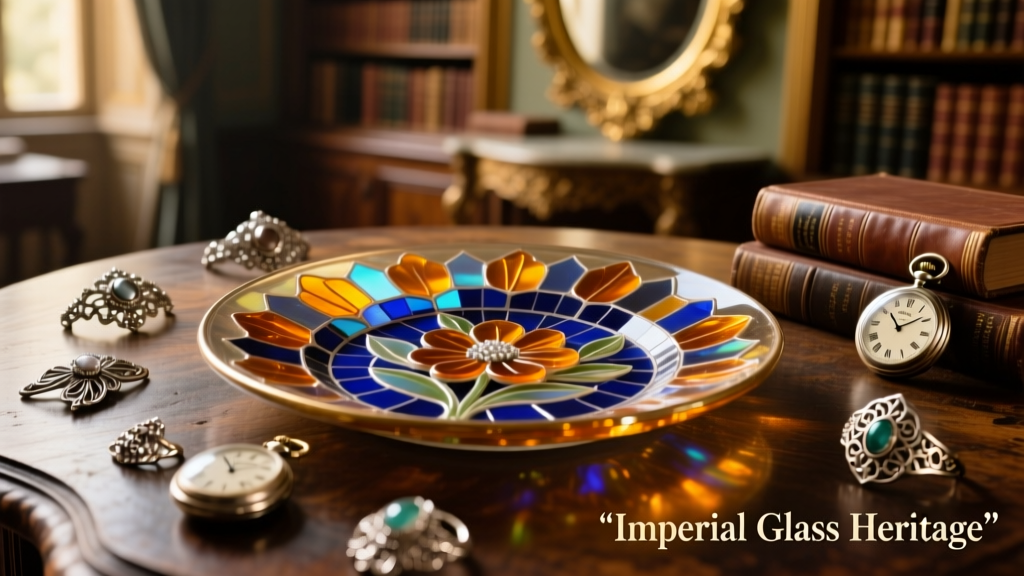
Imperial Glass Tradition Plate Salad 8-Inch: A Collector’s Guide to American Mid-Century Tableware
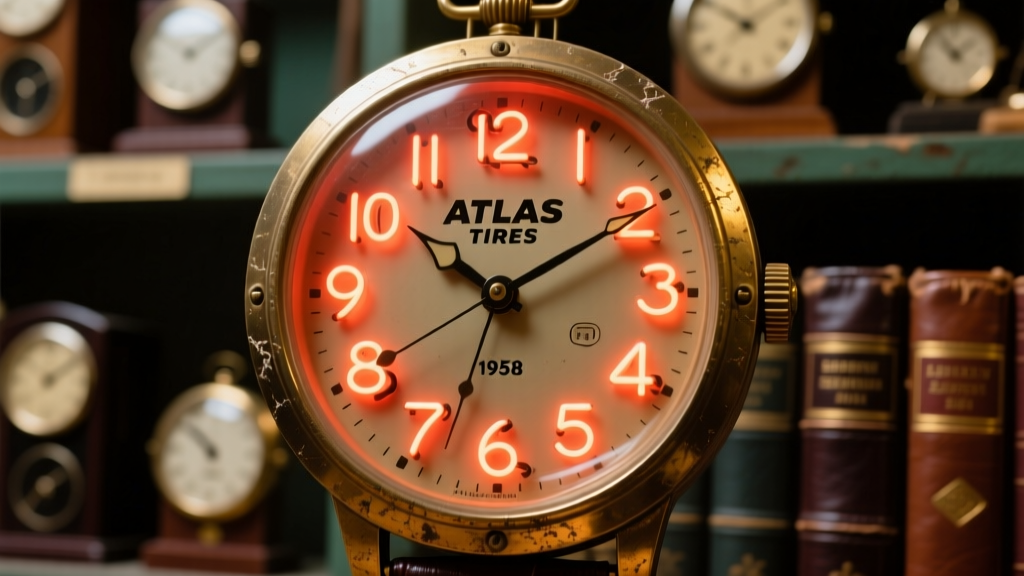
Atlas Tires Round Advertising Clock, Dated 1958: A Luminescent Artifact of Mid-Century Automotive Americana
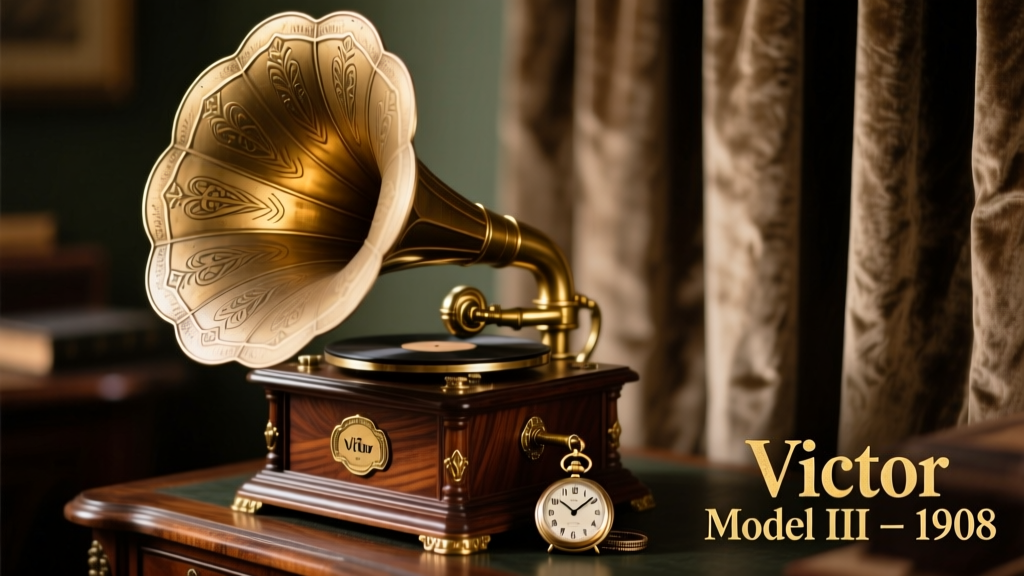
Victor Model VIII Large Horn Phonograph (1908): Engineering, Design, and Collectibility of America’s Premier Acoustic Gramophone
Lot 2337786: A Deep Technical and Historical Analysis of the 1957 Rolex Oyster Perpetual Reference 6427 with Rare ‘Dial First’ Production Sequence

Blue and White China: History, Craftsmanship, and Market Value of a Timeless Ceramic Tradition

Cumby Estate Auction No. 2: A Curated Survey of Mid-Century American Luxury and Horological Rarity
Gallé Vase: Brown-to-Purple Floral Motif on Frosted Yellow Ground — A 6-Inch Masterpiece of French Art Nouveau Glass