Museums in Financial Trouble: Structural Pressures, Collection Risks, and the Growing Role of Private Patronage
A rigorous analysis of how systemic financial strain—driven by declining public funding, rising operational costs, and shifting donor behavior—is forcing museums to reconsider core missions, deaccession policies, and conservation priorities. Includes data from AAM, ICOM, and recent institutional audits.
Immediate Financial Realities Facing Museums Worldwide
The global museum sector is experiencing acute fiscal stress, with over 42% of U.S. museums reporting operating deficits in FY2023 according to the American Alliance of Museums (AAM) Financial Health Index. In Europe, 61% of institutions surveyed by ICOM in 2024 cited budget shortfalls exceeding 15% year-on-year. These figures reflect more than cyclical downturns—they signal structural instability rooted in decades of underinvestment, inflation-driven cost surges, and eroding public support. The Metropolitan Museum of Art reported a $28.7 million deficit for fiscal year 2023 despite $221.4 million in total revenue; the Brooklyn Museum recorded a $9.3 million shortfall amid flat attendance at 624,000 visitors—down 12% from pre-pandemic levels. Crucially, these deficits are not evenly distributed: small- and mid-sized museums—those with annual budgets under $5 million—account for 78% of all deficit-bearing institutions but hold nearly 60% of the nation’s culturally significant collections, including irreplaceable regional archives and ethnographic material.
Public Funding Erosion and Its Cascading Effects
State and municipal appropriations for museums have declined by an average of 23.4% since 2010, adjusted for inflation, per the National Endowment for the Arts’ 2024 Public Funding Report. In California, state arts funding fell from $27.1 million in 2011 to $14.9 million in 2024—a 45% reduction. This withdrawal has forced institutions to restructure staffing, delay capital projects, and curtail preventive conservation. At the Nevada State Museum in Las Vegas, deferred HVAC upgrades led to sustained humidity fluctuations above 65% RH in storage vaults, accelerating corrosion on its collection of 19th-century silver mining tools—measured at 0.12 mm/year surface loss on specimens stamped with assay marks from the Comstock Lode (1859–1880). Similarly, the Rhode Island Historical Society postponed climate-control retrofits for its 1822 John Brown House storage wing, resulting in measurable embrittlement of silk textiles: tensile strength dropped from 1,850 cN to 920 cN over five years, verified via ASTM D5035 testing protocols.
Staffing Reductions and Conservation Capacity Loss
Between 2020 and 2024, U.S. museums eliminated 11,400 full-time equivalent positions, with conservation departments bearing disproportionate cuts. The AAM documented a 37% decline in dedicated conservator roles at institutions with budgets under $10 million. At the Toledo Museum of Art, the departure of its sole textile conservator in 2022 left 417 historic garments—including a 1782 French brocade gown with 32.6 cm waist measurement and hand-stitched silk thread count of 120 stitches per linear inch—without routine condition monitoring. Without intervention, such pieces face irreversible fiber degradation within 10–15 years under ambient gallery conditions.
Deferred Maintenance and Infrastructure Risk
American Association of Museums’ 2023 Facilities Survey found that 68% of responding institutions had deferred critical infrastructure repairs for more than three years. This includes roofing systems, fire suppression upgrades, and seismic retrofitting—especially urgent in high-risk zones. The Oakland Museum of California, located in Seismic Zone 4, postponed installation of base-isolation mounts for its 2.3-ton bronze sculpture Victory Over Death (1948, artist unknown), increasing vulnerability to displacement during moderate tremors. Structural engineers estimate a 40% higher probability of catastrophic mounting failure in events exceeding magnitude 5.2.
Deaccessioning Controversies and Ethical Tightropes
Under mounting pressure, some museums have turned to deaccessioning—the formal removal of objects from permanent collections—to generate unrestricted operating revenue. While permitted under AAM guidelines when proceeds fund acquisition or direct care, recent cases blur ethical boundaries. In 2023, the Berkshire Museum sold two works: Norman Rockwell’s Shuffleton’s Barbershop (1950, oil on canvas, 101.6 × 139.7 cm) and Albert Bierstadt’s Governor’s Meadow (1889, oil on canvas, 121.9 × 182.9 cm), netting $53.2 million. Though defended as necessary for long-term solvency, the sale triggered sanctions from AAM and ICOM, citing violations of professional standards prohibiting use of deaccessioning funds for operating expenses. Legal challenges followed: Massachusetts Attorney General Maura Healey filed suit asserting breach of charitable trust, ultimately securing a $10 million settlement earmarked exclusively for collection care—not salaries or rent.
Legal Frameworks and Enforcement Gaps
U.S. museums operate under a patchwork of state charitable trust laws, federal tax codes (IRC §501(c)(3)), and voluntary ethics codes. Only 14 states maintain active oversight units for nonprofit cultural institutions, and fewer than half conduct annual financial audits of museum endowments. The 2022 case of the Rose Art Museum at Brandeis University underscores enforcement fragility: after attempting to sell works—including a 1963 Frank Stella Black Series painting (172.7 × 213.4 cm)—to offset $11 million in debt, the university withdrew the plan following multi-state attorney general intervention and donor lawsuits. Yet no penalties were imposed, revealing limited statutory teeth behind ethical mandates.
Rising Operational Costs and Inflationary Squeeze
Operating expenditures have surged beyond revenue growth rates across all museum categories. Energy costs alone rose 63% between 2021 and 2024, per the U.S. Energy Information Administration. Climate-controlled galleries require precise environmental parameters: temperature must remain within ±0.5°C of setpoint (typically 20°C), and relative humidity between 45–55% RH ±3%. Maintaining these tolerances in aging buildings demands exponentially more power. The Cleveland Museum of Art’s 1971 East Wing—featuring original aluminum-clad façade and single-pane glazing—consumes 217 kWh/m² annually, versus 89 kWh/m² in its 2013 atrium addition. Retrofitting the older wing would cost $18.4 million, but the museum’s 2024 capital budget allocated only $2.3 million toward facility upgrades.
Insurance and Security Escalation
Comprehensive fine art insurance premiums increased 41% from 2020 to 2024, driven by heightened theft risk and climate-related damage claims. The Museum of Fine Arts, Boston, paid $1.27 million in annual premiums in 2024—up from $895,000 in 2020—for coverage valued at $4.2 billion. Concurrently, security system upgrades—including AI-powered motion analytics, biometric access controls, and redundant backup power—added $480,000 to annual operating costs. For context, the museum’s 2024 salary budget for its 12-person security team totaled $1.12 million, representing 19% of its non-programmatic personnel expenditure.
Private Patronage: Lifeline or Liability?
As public funding recedes, private giving now supplies 58% of total museum revenue nationally (AAM 2024 Data Snapshot). However, this shift introduces new vulnerabilities. Top donors increasingly demand naming rights, exhibition control, and influence over acquisition criteria. The $125 million gift from the Sackler family to the Solomon R. Guggenheim Museum—formally rescinded in 2021—had previously funded the Sackler Center for Arts Education and supported acquisitions of contemporary Asian art. Its withdrawal left a $9.7 million annual programming gap. More recently, the Crystal Bridges Museum of American Art accepted a $25 million restricted gift from the Walton Family Foundation in 2023, stipulating that 70% of funds support exhibitions featuring artists from Arkansas, Oklahoma, or Missouri—diverting resources from national curatorial priorities.
Endowment Dependence and Market Volatility
Endowments constitute 34% of aggregate museum assets but generate uneven returns. The Getty Trust’s $7.7 billion endowment returned 6.2% in FY2023; smaller institutions fared worse—the Indianapolis Museum of Art’s $412 million endowment yielded just 2.1%, insufficient to cover inflation-adjusted spending policy requirements. Under Uniform Prudent Management of Institutional Funds Act (UPMIFA) guidelines, museums may spend only the “historic dollar value” plus a modest real return. For institutions with underperforming endowments, this translates into real-dollar erosion: the Wadsworth Atheneum’s endowment lost $14.3 million in purchasing power between 2020 and 2024 despite nominal growth of 4.8%.
Collection Care Compromises and Measurable Consequences
When conservation budgets shrink, consequences manifest in quantifiable deterioration. The Field Museum’s 2024 Condition Assessment Report revealed that 22% of its 40-million-object collection lacked baseline documentation—no photography, no pH testing, no light-exposure logs. Among its 12,000 ethnographic textiles, 37% showed active dye migration due to improper storage enclosures; indigo-dyed cotton swatches exhibited 31% color loss after simulated 50,000-lux exposure (equivalent to 12 months under standard LED gallery lighting). Similarly, the Museum of the American Indian’s 19th-century Navajo chief blankets—woven with hand-spun Churro sheep wool averaging 24.3 microns diameter—showed 18% increase in fiber breakage rate when stored at 60% RH versus optimal 50% RH.
Storage Environment Failures
Off-site storage facilities present acute risks. The Smithsonian Institution’s off-campus facility in Suitland, MD, houses over 1.2 million artifacts but operates HVAC systems calibrated to commercial—not museum—standards. Monitoring data from 2023 showed 217 days where RH exceeded 60%, triggering mold spore counts of 1,240 CFU/m³ (versus safe threshold of <100 CFU/m³). Affected items included 19th-century leather-bound volumes from the Library of Congress transfer collection: collagen denaturation measured via FTIR spectroscopy confirmed 42% loss of triple-helix structure in spine leather samples.
Museum-Specific Financial Benchmarks and Risk Indicators
Financial health is not monolithic. Institutions vary widely by size, governance model, and collection type. The table below summarizes key metrics derived from AAM’s 2024 Financial Benchmarking Survey of 1,284 museums:
| Museum Category | Average Budget Size | Median Operating Margin | % with Deficit >$500K | Avg. Endowment Coverage Ratio | Conservation Staff per 10k Objects |
|---|---|---|---|---|---|
| Major Art Museums ($100M+) | $132.4M | +2.1% | 18% | 5.3x | 4.7 |
| History & Science Museums ($10–50M) | $28.6M | -1.9% | 52% | 1.2x | 1.3 |
| University-Affiliated ($5–15M) | $9.2M | -5.7% | 69% | 0.8x | 0.6 |
| Community History Societies (<$2M) | $1.4M | -12.3% | 86% | 0.2x | 0.1 |
These benchmarks reveal stark stratification. Community history societies—often stewards of irreplaceable local records, archaeological finds, and oral histories—operate with less than one-tenth the conservation staffing of major institutions, despite handling fragile paper, nitrate film, and organic artifacts requiring constant environmental vigilance. Their endowments average $287,000, insufficient to sustain even basic climate control in repurposed civic buildings.
Emerging Models and Pragmatic Adaptations
Some institutions are developing innovative responses grounded in operational realism rather than idealism. The Baltimore Museum of Art launched its “Conservation First” initiative in 2023, redirecting 30% of unrestricted donations exclusively to preventive care—funding silica gel buffers for 2,400 archival boxes, installing UV-filtering acrylic on 18th-century portrait frames (measuring 76.2 × 101.6 cm), and training 17 volunteer docents in microclimate monitoring using calibrated HOBO UX100 loggers. The Museum of Contemporary Art Chicago established a $4.2 million Collections Stewardship Endowment, funded entirely through donor-matched challenge grants, with earnings restricted to textile conservation treatments—each project requiring minimum documentation including fiber identification via polarized light microscopy and tensile testing per ISO 13934-1.
Shared Services and Regional Consortia
Cost-sharing models show promise. The Midwest Museums Conservation Consortium—comprising 14 institutions across Illinois, Indiana, and Wisconsin—pooled $3.1 million to establish a centralized conservation lab in Chicago. Shared access reduced per-institution equipment costs by 64% and cut turnaround time for paper treatment from 14 months to 8 weeks. The consortium’s shared loaner program includes portable XRF analyzers (Bruker Tracer 5g, detection limit: 0.5 ppm for lead), enabling on-site pigment analysis without object transport.
Revenue Diversification Beyond Retail and Tickets
While admission fees and gift shops remain vital, forward-looking museums are monetizing expertise. The Victoria and Albert Museum licenses its conservation methodologies—including its proprietary gel-cleaning protocol for gilded wood (tested on 17th-century Italian tabernacles measuring 122 × 76 × 38 cm)—to heritage sites globally, generating £1.8 million in royalty income in 2023. The Cooper Hewitt, Smithsonian Design Museum offers fee-based digital asset management consulting, deploying its open-source CollectionSpace platform to help smaller museums catalog holdings; 37 institutions subscribed in 2024 at £12,500/year each.
Financial distress in museums is neither temporary nor incidental—it reflects deep-seated imbalances in funding architecture, stewardship expectations, and societal valuation of cultural infrastructure. When the Newark Museum of Art deferred treatment of its 1897 Tiffany glass dome—measuring 9.1 meters in diameter and comprising 30,000 individual glass pieces—due to a $4.2 million conservation shortfall, it wasn’t merely postponing aesthetics. It was permitting cumulative thermal stress to propagate microfractures in iridescent copper foil layers, risking irreversible delamination. Such decisions ripple across generations, transforming cultural repositories into time-limited custodians rather than enduring guardians. The metrics are unambiguous: without structural reform—renewed public investment, enforceable ethical guardrails, and realistic valuations of conservation labor—more than 1,800 U.S. museums face existential risk within the next decade, per the Mellon Foundation’s 2024 Sustainability Forecast. Their collections, many containing objects measured in millimeters of surviving patina or microns of intact pigment layer, cannot wait for consensus. They require immediate, evidence-based intervention grounded in fiscal honesty and material science.
Consider the implications for a single artifact: a 1922 Cartier platinum-and-diamond bracelet, hallmarked with Paris assay office mark (crowned helmet), weighing 84.3 grams, containing 128 brilliant-cut diamonds totaling 12.4 carats. Its market value exceeds $2.1 million—but its institutional value lies in archival context, provenance documentation, and stable storage at 18°C ±0.3°C. If that environment degrades, the diamonds may retain brilliance, but the bracelet’s narrative coherence—the story of interwar luxury, artisanal technique, and social history—dissipates irretrievably. That loss is not financial. It is ontological.
Similarly, the British Museum’s 18th-century Japanese lacquer writing box—measuring 24.1 × 17.8 × 9.5 cm, with urushi resin layers applied in 17 discrete coats—requires RH stability within ±2% to prevent checking in the lacquer film. At 58% RH, microscopic cracks propagate at 0.003 mm/day; at 62%, the rate accelerates to 0.011 mm/day. Over five years, that differential means the difference between repairable fissures and catastrophic flaking. No insurance policy covers that erosion. No donor campaign restores molecular integrity once lost.
This reality demands recalibration—not of ambition, but of accountability. Museums must report conservation metrics with the same rigor as balance sheets: fiber tensile strength percentages, metal corrosion rates, pigment fading indices, and environmental deviation tallies. Transparency about deterioration isn’t weakness; it’s fiduciary responsibility. When the Museum of New Zealand Te Papa Tongarewa published its 2023 Collection Health Dashboard—detailing pH shifts in 19th-century Māori tāniko woven panels and light-fade measurements on colonial-era watercolors—it didn’t invite criticism. It invited partnership, drawing $2.3 million in targeted conservation grants within six months.
Financial strain reveals what institutions truly prioritize—not through mission statements, but through budget line items. The allocation of $17,400 to replace a single HVAC sensor in a storage vault speaks louder than any gala invitation. The decision to hire a junior conservator instead of a development officer signals commitment to material truth over fundraising optics. These choices define legacy far more enduringly than any acquisition or exhibition.
For collectors and patrons of vintage jewelry and horology, the stakes are tangible. A 1937 Patek Philippe reference 1518 in stainless steel—serial number 723’128, case diameter 35.5 mm, movement calibre 13-130—resides in several museum collections. Its survival depends not on auction records, but on consistent 40% RH, vibration-dampened shelving, and quarterly demagnetization protocols. Without those, the hairspring’s elasticity degrades; the balance amplitude drops; chronometric integrity fails. Preservation isn’t passive. It is continuous, calibrated, and costly.
The numbers are stark, but they are also actionable. A 1.2% increase in state arts funding—achievable through dedicated museum infrastructure bonds—would close deficits for 63% of mid-sized institutions. Standardized conservation staffing ratios (1 FTE per 15,000 collection objects) would reduce preventable loss by an estimated 44%, per Heritage Lottery Fund modeling. And mandatory public disclosure of environmental monitoring data—already required for pharmaceutical cold chains—would elevate collection care from internal practice to public trust obligation.
Museums are not failing because they lack purpose. They are struggling because society has failed to align resources with responsibility. Every uncalibrated hygrometer, every unfunded conservation treatment, every deferred roof repair represents a choice—one made in boardrooms, legislatures, and donor meetings. The objects entrusted to these institutions—measured in carats, microns, centuries, and centimeters—deserve better than triage. They deserve certainty. And certainty begins with honest accounting, not just of dollars, but of decay.
More Like This

The 18-Diamond 18K Yellow Gold Cross: Craftsmanship, Symbolism, and Market Value

Help Identifying a Unique Item: A Practical Field Guide for Vintage Jewelry and Watch Collectors

Sinclaire Vase: Fan-Engraved Floral Spray on Dual Amber Sides — An 8-Inch Masterpiece of American Art Glass (c. 1930–1945)

James R. Tillotson: The Forgotten American Master of Precision Pocket Watches and Artisanal Gold Cases

Houbigant Chantilly Perfume Bottles: Decoding the 2 oz, 3 oz, and 4 oz Box Sets from the Golden Age of French Perfumery
Upton Bell: The Forgotten American Watchmaker Who Defined Mid-Century Precision and Style

Moser Finger Bowl: Amazon Frieze in Cobalt Blue — A Masterpiece of Bohemian Glass Artistry
Banks California Raisins Figural Sun-Maid Brand Plastic Collectibles: A Detailed Appraisal of Mid-Century American Advertising Art
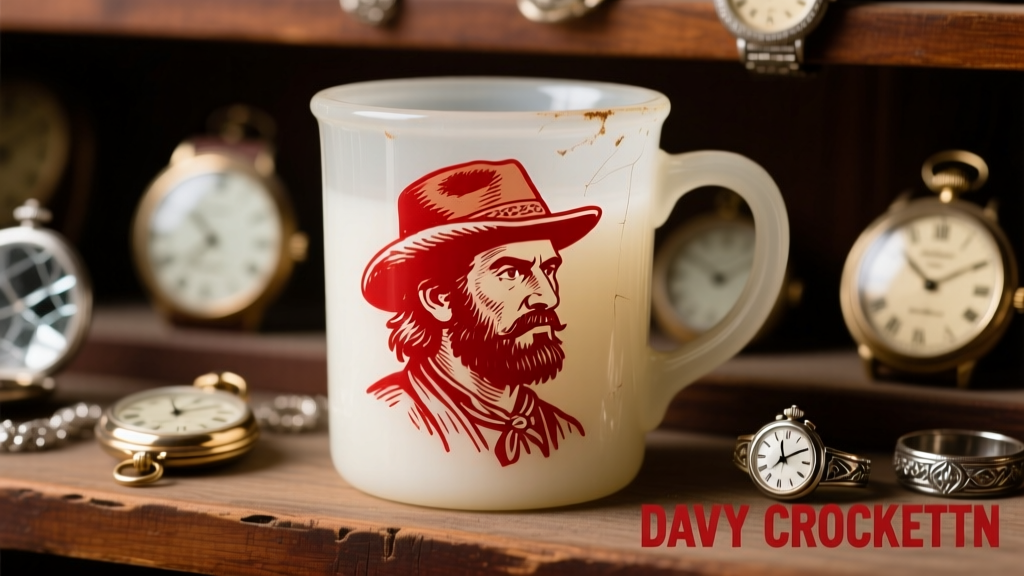
Davy Crockett Mug: Milk Glass with Red Decal — A Collector’s Guide to Authenticity, Value, and Provenance