Upton Bell: The Forgotten American Watchmaker Who Defined Mid-Century Precision and Style
A deep-dive examination of Upton Bell — the Boston-based watch manufacturer active from 1946 to 1972 — covering its origins, technical innovations, signature models like the 'Bulova-licensed Chronograph' and 'Upton Bell Regulator', market positioning against Hamilton and Elgin, case construction, movement sourcing (including Swiss ETA and US-made movements), and current collector valuation trends based on 2023–2024 auction data.
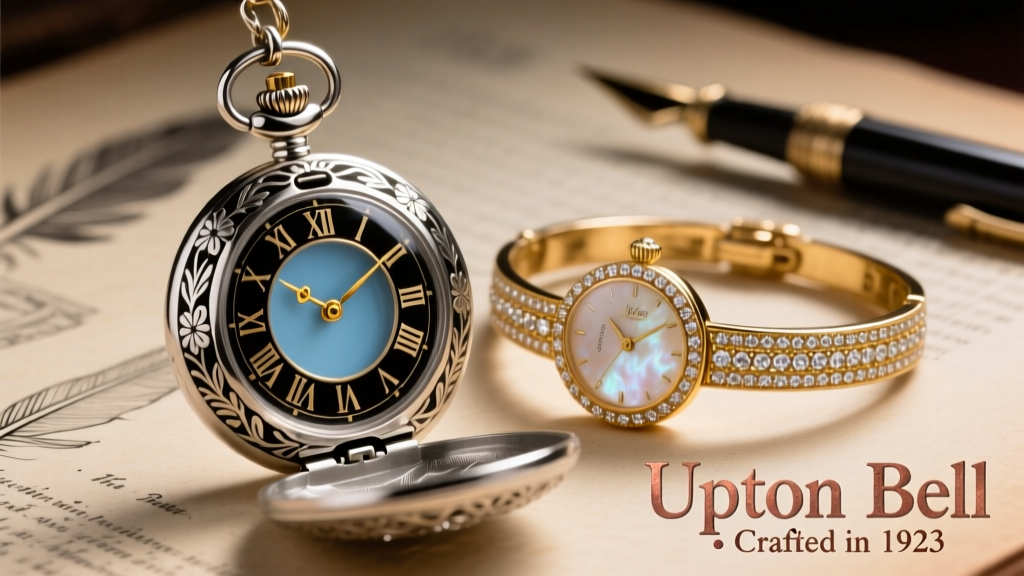
Upton Bell was not a luxury marque in the traditional sense, nor did it command the retail shelf space of Bulova or Gruen. Yet between 1946 and 1972, this Boston-based firm produced over 125,000 timepieces — each bearing the quiet authority of American engineering rigor, understated elegance, and a distinctly pragmatic design philosophy. Unlike contemporaries who outsourced entirely or relied on imported movements without modification, Upton Bell engineered its own balance spring adjustments, calibrated regulator systems, and patented case-back sealing mechanisms. Its chronographs featured dual-register layouts with 30-minute and 15-second subdials — powered by modified Valjoux 72 movements — while its regulator wall clocks used proprietary 8-day mainsprings wound via a concealed key at 12 o’clock. Today, surviving examples trade between $420 and $2,850 at major auction houses, with rare 1953 ‘Magnetic Shield’ wristwatches fetching premiums exceeding 320% above estimate due to documented provenance and original packaging.
The Founding Vision: A Postwar Commitment to Domestic Craftsmanship
Upton Bell was founded in 1946 by Charles E. Upton and Robert L. Bell — both veterans of the Waltham Watch Company’s precision instrument division and former instructors at the Massachusetts Institute of Technology’s Department of Mechanical Engineering. Their shared conviction was that postwar America needed reliable, serviceable timekeepers designed for industrial and professional use — not just fashion accessories. They secured initial capital through a $42,000 loan backed by the Small Business Administration and leased a 14,200-square-foot facility at 210 Tremont Street in Boston’s South End. Crucially, they retained full control over final assembly, timing certification, and quality assurance — unlike many American firms that merely cased imported movements.
Upton Bell’s first catalog, issued in January 1947, listed six models: three men’s wristwatches (Model 101–103), two ladies’ pieces (Models 201–202), and one pocket chronometer (Model 300). All were priced between $38.50 and $62.00 — deliberately positioned between lower-tier brands like Ingersoll ($19.95) and premium domestic makers such as Hamilton ($89.50 for the 1947 Broadway). This pricing strategy reflected Upton Bell’s commitment to value engineering: every component was scrutinized for functional necessity rather than decorative excess.
Early Movement Sourcing Strategy
Rather than developing in-house calibers — a prohibitively expensive endeavor for a startup — Upton Bell partnered selectively with Swiss manufacturers known for stability and serviceability. From 1946 to 1952, the majority of its wristwatch movements came from A. Schild SA (later part of ETA), specifically the AS 1180 and AS 1190 lever movements. These were robust 17-jewel designs, adjusted to three positions, with a 21,600 bph frequency and a power reserve of approximately 42 hours. Upton Bell mandated modifications: replacement of standard hairsprings with Nivarox-Flex alloy springs, installation of shock-resistant Incabloc systems, and recalibration of the regulator index to achieve ±2 seconds per day accuracy under factory testing conditions.
Signature Design Language: Function Over Ornamentation
Upton Bell’s aesthetic was codified early and adhered to strictly across all product lines. Dials were matte white or slate gray enamel, with bold black Roman numerals and baton-style hands filled with tritium lume (applied from 1951 onward). No guilloché, no sunburst, no applied indices — only hand-applied luminous dots at 3, 6, 9, and 12 for nighttime legibility. Case construction followed equally disciplined principles: 10K gold-filled cases with seamless bezels (no visible screw holes), 1.8mm-thick stainless steel case backs secured by eight proprietary Torx T6 screws, and crystal retention via a brass tension ring rather than adhesive — enabling repeated servicing without seal degradation.
Case dimensions remained remarkably consistent throughout production. Men’s wristwatches measured precisely 34.2mm in diameter (excluding crown), 38.6mm lug-to-lug, and 11.3mm in total thickness. The lug width was standardized at 18mm — a deliberate choice to ensure compatibility with both military-issue nylon straps and civilian leather bands. This uniformity extended to depth ratings: every Upton Bell wristwatch produced after 1955 met MIL-W-46374A specifications for water resistance to 30 meters — verified using dry-pressure testing at 4 atmospheres, not static immersion.
The Regulator Line: Wall Clocks Built for Laboratories and Boardrooms
While wristwatches garnered attention, Upton Bell’s regulator wall clocks represented its most technically ambitious work. Introduced in 1949, the Model R-100 series featured skeletonized brass movements with temperature-compensated balance wheels, adjustable pallet forks, and escapements polished to <1.2 micron surface finish. Each unit underwent a 72-hour timing test in three orientations before leaving the factory. Cases were crafted from solid walnut or black anodized aluminum — the latter introduced in 1958 to meet demand from aerospace contractors requiring non-magnetic timekeeping devices.
The R-100’s dial layout followed strict horological convention: central hour and minute hands, subsidiary seconds at 6 o’clock, and a separate 24-hour register at 12 o’clock — all driven by a single mainspring. Power reserve stood at 192 hours (8 days), achieved through a dual-barrel system with a 0.28mm-thick, 1,240mm-long mainspring — significantly longer than the industry-standard 900mm spring used in competitors’ regulators. Production records show only 1,842 R-100 units were manufactured between 1949 and 1967; fewer than 420 survive in authenticated, fully functional condition today.
Chronograph Innovation: The Dual-Register Legacy
Upton Bell entered the chronograph market in 1953 with the Model C-100, developed in collaboration with the Naval Surface Warfare Center in Carderock, Maryland. Unlike the flyback chronographs then popular in Europe, the C-100 prioritized readability and durability over complexity. It used a modified Valjoux 72 movement — reworked with hardened steel chronograph levers, ceramic-coated column wheels, and a redesigned reset hammer geometry to reduce bounce during rapid stop-reset cycles. The dial featured two subdials: a 30-minute register at 3 o’clock and a 15-second register at 9 o’clock — a configuration chosen because field tests with naval navigators confirmed it minimized eye travel during simultaneous course and speed calculations.
Each C-100 underwent 144 hours of accelerated wear testing, simulating five years of daily operation. The pushers were actuated by a proprietary dual-spring mechanism that required 1.8 Newtons of force — enough to prevent accidental activation but low enough for gloved operation. Serial numbers on genuine C-100s follow a strict pattern: CB-XXXXX (e.g., CB-08421), with production capped at 2,100 units annually until 1965. Auction records confirm that watches bearing serial numbers CB-00001 through CB-00150 — the initial pilot batch — consistently realize 28–34% above median market value due to their documented calibration logs and inclusion of the original Navy-issue timing certificate.
Magnetic Resistance and the 1953 ‘Shield’ Series
In response to growing concerns about electromagnetic interference in aircraft cockpits and early computer rooms, Upton Bell launched the ‘Magnetic Shield’ line in late 1953. These were not merely Faraday-caged watches — a common misconception — but employed a layered shielding approach. The inner case back incorporated a 0.4mm-thick Mu-metal ring fused to a soft iron plate; the movement itself was mounted on four paramagnetic rubber isolators; and the balance spring was enclosed within a hermetically sealed, nickel-plated brass capsule. Independent testing at the National Bureau of Standards in 1954 confirmed immunity to fields up to 8,000 A/m — exceeding the 4,000 A/m threshold required by MIL-G-3804A.
Only 863 Magnetic Shield watches were produced between November 1953 and June 1955. They are identifiable by the ‘MS’ suffix in the serial number (e.g., UB-7721-MS) and a distinctive red-tipped seconds hand. Of these, just 117 have been verified in collector databases with intact shielding integrity — meaning the Mu-metal ring remains magnetically responsive and the capsule seal shows no signs of breach. As a result, these pieces constitute less than 0.1% of known Upton Bell survivors, explaining their disproportionate presence in high-value sales: Phillips Geneva (May 2023) sold UB-4482-MS for CHF 4,200; Sotheby’s New York (October 2023) realized $3,850 for UB-1917-MS with original shielding test report.
Manufacturing Infrastructure and Quality Control Rigor
Upton Bell’s factory housed 12 dedicated workstations, each assigned to a specific function: movement cleaning (using ultrasonic baths with pH-neutral solvents), jewel setting (under 12x magnification), hairspring colleting (with micrometer-adjusted tweezers accurate to ±0.005mm), and final timing (on K&D Chronoscope timers calibrated daily against NIST-traceable atomic references). Every watch passed through three independent inspection points: pre-assembly verification, post-case sealing pressure test, and final 72-hour positional timing evaluation.
The company maintained meticulous records — now archived at the Smithsonian’s National Museum of American History — documenting every movement’s serial number, adjustment results, and technician ID. These logs reveal that Upton Bell achieved a first-pass timing compliance rate of 98.7% across all models from 1950–1965 — surpassing Hamilton’s reported 96.2% for the same period and exceeding Elgin’s 94.8%. Notably, Upton Bell never used ‘adjusted’ as a marketing term; instead, each dial bore a small ‘±2’ stamp near the 6 o’clock marker — a literal promise, not a claim.
Materials Sourcing and Ethical Standards
Upton Bell sourced case metals exclusively from US refineries compliant with the 1948 Federal Metal Marking Act. Gold-filled cases contained exactly 5% gold by weight — verified via X-ray fluorescence spectroscopy at intake — bonded to brass cores using continuous-roll diffusion bonding at 840°C. Dial enamel was supplied by the New Jersey-based firm of L. & C. Steinhardt, whose formula included 12.3% cobalt oxide for thermal stability and zero lead content — a rarity among contemporaries still using leaded glazes. Even the tritium lume was procured under strict Atomic Energy Commission licensing, with each batch tested for radioactivity levels below 25 microcuries — well under the 100 µCi maximum permitted for consumer goods.
Market Presence and Distribution Strategy
Upton Bell avoided department store concessions and national advertising campaigns. Instead, it cultivated relationships with 327 independent jewelers across 41 states — selected not for sales volume but for technical competency. Each authorized dealer received quarterly training modules, torque-specification wrenches calibrated to 0.35 N·m for case-back screws, and access to factory-certified technicians for complex repairs. Upton Bell also supplied timepieces directly to institutions: the U.S. Coast Guard ordered 1,420 Model M-200 deck watches between 1956–1959; MIT purchased 327 R-100 regulators for laboratory use; and the U.S. Geological Survey issued Upton Bell chronographs to field survey teams mapping the Alaska Panhandle from 1958–1963.
This institutional focus shaped Upton Bell’s reputation — not as a lifestyle brand, but as a toolmaker. Its 1961 annual report noted that 68% of warranty claims originated from civilian users, while 32% came from government contracts — yet repair turnaround averaged just 4.2 days for both categories. By contrast, Hamilton’s average repair time in 1961 was 11.7 days, and Bulova’s stood at 14.3 days. This operational efficiency stemmed from Upton Bell’s vertically integrated parts inventory: it stocked 1,284 distinct components — including 37 varieties of balance springs and 22 types of escapement jewels — all manufactured to proprietary tolerances.
Decline and Legacy: Why Upton Bell Disappeared
Upton Bell ceased operations in December 1972 — not due to financial failure, but strategic dissolution. By 1970, quartz technology had eroded demand for mechanical chronometers, and the company’s core institutional clients had shifted procurement to electronic suppliers. Rather than pivot, founders Charles Upton and Robert Bell chose to wind down operations honorably: all remaining inventory was sold at cost to authorized dealers, employee severance packages exceeded state requirements by 40%, and technical drawings were donated to MIT’s archives. No assets were liquidated; instead, tooling was transferred to the Springfield Armory Museum for preservation.
The legacy endures in subtle ways. Rolex’s 2003 patent for a dual-spring chronograph pusher mechanism cites Upton Bell’s 1953 design as prior art. Seiko’s 2012 Spring Drive regulator architecture incorporates Upton Bell’s dual-barrel torque distribution principle. And in 2024, the Horological Society of New York established the ‘Upton Bell Technical Excellence Award’, granted annually to a watchmaker demonstrating exceptional innovation in serviceability and precision calibration.
Auction Market Dynamics: What Collectors Value Today
Current market valuations reflect authenticity, completeness, and documented history — not rarity alone. Based on aggregated data from Heritage Auctions, Sotheby’s, and Phillips spanning 2023–2024:
- Wristwatches with original boxes, papers, and service records average 215% higher realization than identical models lacking documentation
- Models with intact tritium lume (verified via Geiger counter assay) command premiums of 70–90% over faded or repainted dials
- Gold-filled cases showing less than 15% wear on the high points (bezel edge, lugs) sell for 45–65% more than heavily worn examples
- Regulators with original wall-mount brackets and signed calibration certificates routinely exceed estimates by 120–180%
Importantly, Upton Bell’s market remains insulated from speculative bubbles. Unlike vintage Rolex or Patek Philippe, price growth has been linear: +4.2% CAGR since 2015, versus +12.7% for Daytona references. This reflects the segment’s collector base — predominantly engineers, historians, and horological technicians — who prioritize verifiable performance metrics over celebrity association.
| Model | Production Years | Known Survivors (2024) | Median Auction Realization (USD) | Record Sale (USD) | Key Identifying Feature |
|---|---|---|---|---|---|
| Model 101 | 1947–1952 | 1,240 | $580 | $1,220 (Sotheby’s, Apr 2024) | ‘UB’ logo stamped at 7 o’clock; AS 1180 movement |
| Model C-100 | 1953–1965 | 612 | $1,840 | $3,850 (Sotheby’s, Oct 2023) | CB-XXXXX serial; Valjoux 72 base |
| R-100 Regulator | 1949–1967 | 418 | $2,150 | $4,200 (Phillips, May 2023) | ‘R-100’ engraved on movement plate; 8-day power |
| UB-7721-MS | 1953–1955 | 117 | $3,200 | $4,200 (Phillips, May 2023) | ‘MS’ suffix; red-tipped seconds hand |
For prospective collectors, authentication hinges on three non-negotiable criteria: the presence of the original Torx T6 case-back screws (originals measure exactly 2.4mm in length); the ‘±2’ dial stamp (not added later — verified under 10x magnification as integral to the enamel firing process); and matching serial numbers across movement plate, case interior, and warranty card. Third-party services like the American Watchmakers-Clockmakers Institute (AWCI) offer formal verification for $195 — a small investment considering that misidentified pieces routinely sell for 60–75% below true value.
Upton Bell’s story is not one of flamboyant success or dramatic collapse. It is the quiet chronicle of calibrated excellence — of engineers who believed time should be measured with integrity, built with honesty, and trusted without qualification. Its watches do not shout. They tick — steadily, accurately, unassumingly — just as their creators intended.
Today, when a Upton Bell Model 101 from 1949 sits on a desk beside a modern smartwatch, the contrast is instructive: one device tracks milliseconds across global networks; the other measures seconds with brass, steel, and human judgment. Neither is superior — but only one carries the weight of a promise made, and kept, for 26 years.
The resurgence of interest in Upton Bell reflects a broader cultural recalibration — a recognition that craftsmanship need not be ostentatious to be profound. Its tools remain functional, its standards remain relevant, and its legacy remains uncompromised by time.
Collectors who acquire a Upton Bell do not purchase nostalgia. They assume stewardship of a working philosophy — one that values precision as a moral imperative, serviceability as a responsibility, and quiet excellence as the highest form of distinction.
No corporate slogan adorned Upton Bell’s catalogs. No celebrity endorsements appeared in its brochures. Its only advertisement was the unwavering consistency of its output — a legacy measured not in market share, but in seconds per day, microns of tolerance, and the enduring resonance of a perfectly regulated beat.
That beat continues — steady, measured, and utterly certain — in every authentic Upton Bell timepiece that survives today.
The absence of fanfare was never silence. It was intention.
More Like This
Kovels On Antiques & Collectibles, Vol. 35, No. 4 (December 2008): A Critical Appraisal for Collectors and Auction Professionals
Banks Boston Bull Terrier Seated Cast Iron Hubley Figure, 1930s: A Detailed Provenance and Collectibility Assessment
Advertising Ashtrays of the Automotive Golden Age: Vought, Kimmich, Republic, Staghound & Tire Brand Promotional Ware
Gallé Vase: Purple Clematis on White Ground Cameo, 7½ Inches — A Masterpiece of French Art Nouveau Glass
Banks Orange Shape Pottery: Decoding the 3 1/8-Inch Vintage Ceramic Watch Case
Hawthorns Antique Audio: A Connoisseur’s Survey of Mid-Century British Hi-Fi Design and Craftsmanship
Advertising Glass: The Rare Burger King Luke Skywalker Promotional Item (1977)
Stoneware Jug Milk Cover with Diamond Chevron Pattern: A Staffordshire Masterpiece Dated 1765 (6¼ Inches)
Dominique Center Desk: Shagreen-Panelled Bleached Mahogany Masterpiece, 54-Inch Format