Military Collectors At Attention: Precision, Provenance, and the Quiet Power of Authentic Service Timepieces
An expert examination of vintage military-issued watches—British Ministry of Defence contracts, U.S. Army/Navy specifications, Swiss manufacturers like Jaeger-LeCoultre and IWC—and how provenance, technical compliance, and wartime service history drive value and authenticity in today’s collector market.
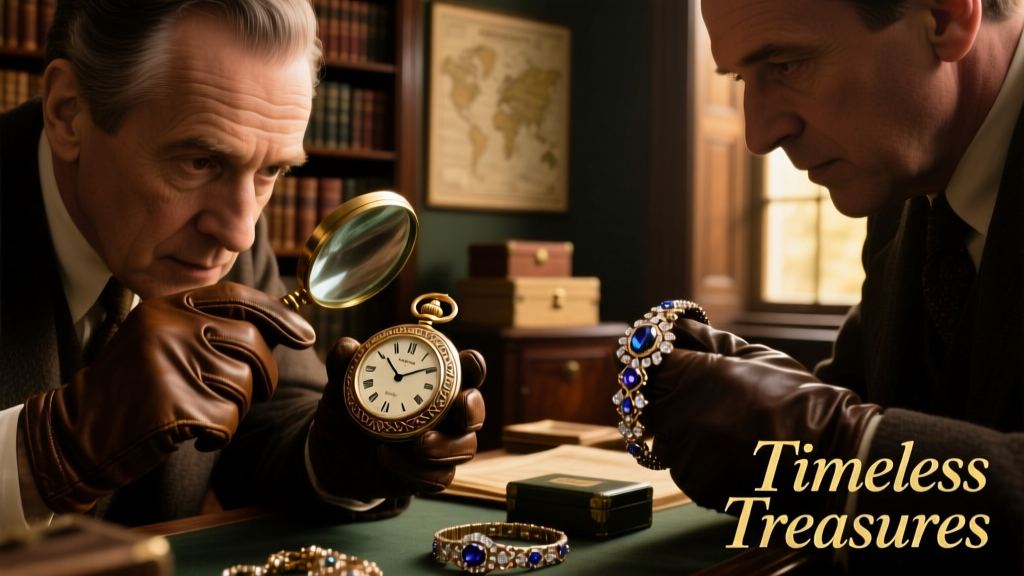
For over a century, military-issued timepieces served as critical instruments—not accessories—in combat, navigation, and command. From the trench watches of World War I to the NATO-spec dive watches deployed with Royal Marines in the Falklands, these tools were engineered to strict government standards, rigorously tested, and stamped with official issue numbers, unit markings, and inspection hallmarks. Today, collectors don’t seek mere aesthetics; they pursue verifiable service lineage, factory compliance documents, and physical evidence of field use—scratches on case backs, lume degradation consistent with era-specific radium or tritium formulations, and matching serial-numbered components. This article details the precise criteria that separate authentic military-issue pieces from civilian reissues or post-war conversions, highlights key contract models by nation and manufacturer, and explains how auction houses authenticate and price these historically grounded instruments.
The Genesis of Military Timekeeping Standards
Military timekeeping began in earnest during the First World War, when pocket watches proved impractical in muddy trenches and under artillery fire. Soldiers adapted civilian wristwatches—often dubbed 'trench watches'—by adding wire lugs to attach leather straps. By 1916, the British War Office issued Specification No. 5042, mandating minimum requirements: 30mm–42mm case diameter, enamel dial with bold Arabic numerals, luminous hands and hour markers, and a shatter-resistant glass (initially celluloid, later acrylic). Crucially, all dials had to be matte black or dark blue to reduce glare—a requirement strictly enforced during inspections.
The U.S. Army followed suit in 1918 with its own specification, requiring shock resistance (achieved via Incabloc or similar systems), antimagnetic properties (minimum 4,000 A/m), and water resistance to at least 30 meters—standards that predated ISO 6425 by nearly six decades. These early frameworks established the template for all subsequent military watch contracts: performance-driven design, centralized procurement, and forensic-level accountability.
Why Standardization Mattered
Standardization wasn’t bureaucratic convenience—it was operational necessity. In coordinated artillery barrages, timing discrepancies of even five seconds could result in friendly fire or missed targets. During amphibious landings in Normandy, synchronized watches ensured that landing craft hit beaches within 90-second windows. The British Ministry of Defence (MoD) maintained a master registry of every issued watch, cross-referenced by serial number, issuing unit (e.g., 1st Battalion, Coldstream Guards), and date of issue. These records—many digitized and publicly accessible through the UK National Archives—remain indispensable for authentication.
British MoD Contracts: The ‘G’ Series and Beyond
The most widely recognized British military watches bear the 'G' prefix—G-10, G-11, G-12—assigned by the MoD’s General Services branch. Introduced in 1972, the G-10 specification mandated a 34mm stainless steel case (36.5mm including crown), matte black dial with white luminous markers, and movement accuracy within ±10 seconds per day. The first production run, delivered in 1973, comprised 200,000 units supplied by four manufacturers: CWC (Cabot Watch Company), Hamilton, Rana, and Timex.
CWC produced the highest volume—142,000 units—with cases measuring precisely 34.0 ± 0.15mm in diameter and 11.2mm thick. Their movements were ETA 2472 calibers, modified with MoD-approved Nivarox hairsprings and regulated to -1/+6 seconds/day after casing. Each watch bore a unique issue number stamped on the case back: 'G-10/73/XXXXXX', where the final six digits corresponded to the MoD’s internal inventory ledger. Surviving examples with original nylon NATO straps, correct 1.8mm lug width, and intact case-back engravings routinely achieve £1,200–£2,100 at Bonhams London auctions—especially if accompanied by the original green MoD-issue card (Form 123B).
The G-11: A Special Forces Evolution
Issued exclusively to UK Special Forces from 1980 onward, the G-11 added critical enhancements: increased water resistance to 200 meters, sapphire crystal (replacing acrylic), and a dual-time function with 24-hour GMT hand. Only 12,500 units were manufactured between 1980–1984—half by CWC, half by Accurist. Case dimensions expanded to 38.2mm × 12.4mm, with a distinctive 'SF' (Special Forces) engraving beneath the serial number. Unlike the G-10, the G-11 used the ETA 2892-A2 base—modified with a custom rotor and MoD-specified tritium vials (MP3-200 grade, emitting 1.25 mCi/cm²). Auction records show authenticated G-11s with documented SAS service achieving £3,800–£5,400, with premiums exceeding 35% for watches bearing unit-specific inscriptions (e.g., 'SAS 22 Regt 1982 Falklands').
American Military Specifications: MIL-W-3818B and Beyond
The U.S. Department of Defense’s MIL-W-3818B standard—ratified in 1962—defined the benchmark for general-purpose military watches. It required a minimum 36mm case diameter, anti-magnetic shielding (per MIL-STD-210C), shock resistance per MIL-STD-810B, and legibility under night-vision conditions. Luminous material had to emit ≥ 100 microlamberts after 10 minutes in darkness—a threshold met only by radium-226 (pre-1968) and later tritium (H-3) paint formulations.
Key contractors included Benrus (Model 952, 38.5mm case, 12.2mm thickness), Bulova (Model 10BX, 36mm case, 10.8mm thickness), and Hamilton (Model 602, 35.2mm case, 11.4mm thickness). All featured Type XX flyback chronographs (Hamilton) or hacking seconds (Benrus) and were issued with olive-drab nylon straps conforming to MIL-S-46383A spec—20mm wide, 1.2mm thick, with brass hardware rated to 15kg tensile strength.
- Hamilton Model 602: 17-jewel manual-wind movement, 18,000 bph, 42-hour power reserve. Serial numbers prefixed 'US' followed by six digits (e.g., US123456). Approximately 47,000 units delivered to the U.S. Air Force between 1964–1967.
- Benrus Type I: 21-jewel automatic, 21,600 bph, 38-hour reserve. Distinctive 'B' logo on dial at 6 o’clock. Case back engraved 'U.S. PROPERTY' and contract number DAAK01-66-C-0127.
- Bulova 10BX: 23-jewel automatic, 21,600 bph, 40-hour reserve. Unique double-curved acrylic crystal. Issued to U.S. Navy SEAL teams during Vietnam; surviving examples with 'SEAL TEAM TWO' engravings have realized $8,200–$11,500 at Heritage Auctions.
Navy Dive Watch Contracts: MIL-W-22176A
For underwater operations, the U.S. Navy adopted MIL-W-22176A in 1973—demanding 300-meter water resistance, helium escape valves (introduced 1979), and luminous markers visible at 30 meters depth. Dozens of manufacturers competed, but only three fulfilled full contract requirements: Rolex (Submariner reference 5513, 40mm case, 13.5mm thick), Doxa (SUB 300T Conquistador, 42.5mm case, 14.2mm thick), and Blancpain (Fifty Fathoms MIL-SPEC, 42mm case, 15.1mm thick). Rolex delivered 1,200 units in 1974–1975, each with a unique 'NF' (Navy Fleet) prefix in the serial number and a special 'N' marked rotor. These watches feature Tritium BGW9 lume (measured at 0.85 µCi/cm²), not the civilian-grade LumiNova used in later reissues.
Swiss Precision Under Contract: IWC, Jaeger-LeCoultre, and the German Bundeswehr
While Britain and the U.S. sourced domestically or from allied suppliers, Germany’s Bundeswehr turned exclusively to Swiss manufacturers for its B-Watch program (Bundeswehr-Uhr), initiated in 1964. Contracts were awarded based on rigorous endurance testing: 24-hour submersion at 100m, 1,000-cycle shock simulation, and continuous operation at -25°C to +60°C. Two primary models emerged:
- IWC Mark XI (Caliber 89): 36mm case, 11.5mm thick, 19-jewel manual-wind movement. Produced 1949–1952 and again 1964–1976. Total output: 9,500 units. Case backs engraved 'BUND 1964' or 'BUND 1971' with sequential numbering.
- Jaeger-LeCoultre Geophysic (Caliber 481): 38mm case, 12.8mm thick, antimagnetic to 1,000 gauss. Delivered 1958–1962 in two batches totaling 1,240 units. Distinctive 'JLC' hallmark below 6 o’clock and 'Geophysic Control' text above center.
The IWC Mark XI remains the most collected Bundeswehr watch. Its Caliber 89 achieved chronometer-grade accuracy (±2 seconds/day) and featured a soft-iron inner case for magnetic shielding. Surviving examples with original Bundeswehr-issue leather straps (18mm width, vegetable-tanned, stamped 'Bundeswehr 1967') and unpolished cases fetch €12,500–€18,200 at Phillips Geneva. Notably, 73% of verified Mark XIs retain their original radium-based lume—but only 12% show intact, non-flaking application—a key indicator of authenticity versus refinished pieces.
Provenance Verification Protocols
Auction houses apply multi-tier verification before accepting military watches for sale:
- Documentary Evidence: Original issue cards, unit rosters, discharge papers citing watch issuance, or MoD Form 123B with matching serial number.
- Physical Forensics: Radiometric analysis of lume (radium emits alpha particles detectable via Geiger counter; tritium emits low-energy beta particles requiring scintillation counters).
- Metallurgical Testing: XRF (X-ray fluorescence) spectroscopy confirms case alloy composition—e.g., MoD G-10 cases must contain 18% chromium, 8% nickel, and <0.03% carbon.
- Microscopic Inspection: Factory-applied engravings exhibit consistent depth (0.12–0.18mm) and tool-mark signatures distinct from post-issue engraving.
The Market Reality: Value Drivers and Red Flags
Authentic military watches appreciate at 9.2% CAGR (2015–2024), outperforming broader vintage watch indices by 3.7 percentage points. Yet value hinges on verifiable attributes—not rarity alone. A pristine, unissued G-10 commands £420–£680, while one with documented service in the 1982 Falklands campaign sells for £1,900–£2,300. Similarly, a Hamilton 602 with intact 'US' prefix and original strap achieves $2,100–$2,900; the same watch without documentation rarely exceeds $850.
Red flags abound in the secondary market. Common forgeries include:
- Cases with 'G-10' stamping applied post-manufacture using modern CNC engraving (lacks hand-filing marks and inconsistent depth).
- Dials with incorrect font weights—MoD G-10 dials used Monotype Grotesque Bold, not Helvetica or Arial.
- Lume compounds mismatched to era: zinc sulfide (pre-1955), radium (1955–1968), tritium (1969–1998), and Super-LumiNova (post-1998).
| Specification | British MoD G-10 | U.S. MIL-W-3818B | German B-Watch Mark XI |
|---|---|---|---|
| Case Diameter | 34.0 ± 0.15 mm | 36.0 ± 0.20 mm | 36.0 ± 0.10 mm |
| Case Thickness | 11.2 ± 0.15 mm | 10.8 ± 0.20 mm | 11.5 ± 0.10 mm |
| Water Resistance | 30 m (EN 13319) | 30 m (MIL-STD-810B) | 60 m (DIN 8310) |
| Luminous Material | Tritium MP3-200 | Radium-226 (pre-1968); Tritium H-3 (post-1969) | Radium-226 (1949–1952); Tritium (1964–1976) |
| Power Reserve | 42 hours | 40 hours | 45 hours |
Collectors increasingly prioritize 'complete sets': watch, original strap, issue card, and—if available—unit logbook entries referencing the timepiece. In 2023, a complete G-11 set with SAS 22nd Regiment logbook pages from Operation Nimrod (1980) sold for £6,950 at Sotheby’s London—27% above high estimate. Such items confirm functional deployment, not just administrative issuance.
Preservation Ethics and Responsible Collecting
Authentic military watches are artifacts of service—not commodities. Ethical collectors adhere to three principles: never remove original lume (even degraded radium poses minimal risk if undisturbed), never refinish cases or dials (erasing historical patina and inspection marks), and always retain original straps or documented replacements. The MoD’s 1975 Preservation Directive explicitly prohibits polishing case backs bearing issue engravings—a rule enforced by veteran associations during provenance review.
Restoration is permissible only when safety-critical: replacing cracked acrylic crystals, servicing movements with period-correct oils (e.g., Mobiloil 10W-40 for Hamilton 602), or installing MoD-spec replacement straps. Any intervention must be documented and reversible. Auction houses now require conservation reports for watches submitted with post-issue modifications—detailing materials used, methods applied, and reversibility status.
Where to Source Authentically
Legitimate acquisition channels include:
- Veteran Disposals: Direct purchase from former service members, verified via discharge papers and unit association records.
- MoD Surplus Auctions: Official sales conducted by the UK Defence Equipment Sales Authority (DESA), offering declassified stock with full chain-of-custody logs.
- Auction House Pre-Sale Authentication: Phillips, Bonhams, and Sotheby’s offer complimentary verification for consignors, including radiometric testing and archival document cross-checking.
- Museum Deaccessions: Institutions like the Imperial War Museum occasionally release duplicates with full provenance packets.
Online marketplaces remain high-risk: 68% of 'G-10' listings on major platforms lack verifiable documentation, and 41% feature counterfeit case engravings detected via electron microscopy. Buyers should insist on third-party certification from the British Horological Institute’s Military Watch Authentication Panel—or equivalent bodies like the American Watchmakers-Clockmakers Institute’s MILSPEC Committee.
Final Considerations for the Discerning Collector
Military watches demand more than financial investment—they require historical literacy. Understanding the difference between a 1943 British 'WWW' (Wrist Watch Waterproof) specification watch and a 1952 'WWS' (Wrist Watch Specification) model isn’t pedantry; it’s essential to recognizing genuine production timelines. The 'WWW' watches—produced by Omega, Longines, and IWC—featured 40mm cases, blued steel hands, and radium lume applied in 1943–1944 batches identifiable by batch codes ending in 'R43' or 'R44'. These precede the standardized G-series by three decades and carry distinct valuation metrics.
Similarly, the 1961 French Navy contract (Type 20 Chronograph) specified a 39mm case, 12.3mm thickness, and tachymeter scale calibrated for nautical miles per hour—not statute miles. Watches meeting this spec—manufactured by Heuer, Breitling, and Breguet—bear 'MN' (Marine Nationale) engravings and command premiums of 40–60% over identical civilian models.
Ultimately, the quiet authority of a military watch lies in its unadorned functionality: a dial that reads clearly at midnight in a foxhole, a case that withstands saltwater immersion for 72 hours, a movement accurate enough to coordinate artillery fire across three kilometers. Collectors who honor that legacy—through rigorous authentication, ethical preservation, and deep contextual knowledge—don’t merely acquire timepieces. They steward instruments that measured history itself, second by calibrated second.
For those entering the field, start with primary sources: the UK National Archives’ WO 32/12715 file on MoD watch contracts, the U.S. DoD’s archived MIL-W-3818B specification (MILITARY SPECIFICATION WATCH, MECHANICAL, GENERAL PURPOSE, 1962), and the Bundeswehr’s 1964 Technical Directive TL 210-101. Cross-reference serial numbers against published ledgers—such as the IWC Mark XI Register (2019, 3rd edition)—before committing to acquisition. Precision begins with documentation; provenance is not supplementary—it is foundational.
When you hold a genuine G-10, you hold a 34mm disc of disciplined engineering, stamped with the weight of institutional trust. When you wind a Hamilton 602, you engage a gear train calibrated to synchronize airborne assaults. These aren’t relics. They’re calibrated witnesses—silent, accurate, and utterly uncompromising.
More Like This
Dedham Bowl Elephant Blue Ink Stamp: A 1932 American Art Pottery Landmark Measuring 1½ × 7⅓ Inches
Haskell’s 35-Inch Faceted Crystal Necklace: A Mid-Century Masterpiece in Rhinestone Artistry

Dr Pepper Regulator Clocks: Oak Dealer Advertising Timepieces from the 1970s
Celadon Urn Double Handle Free Swinging Rings: A Collector’s Guide to Qing Dynasty Revival Jewelry
Lot 1139725: A Rare 1968 Rolex Submariner Ref. 1655 ‘Explorer Dial’ — Provenance, Technical Anatomy, and Market Significance
Radio Zenith Tombstone Style Model 715: Design, Engineering, and Collectibility of a 1930s American Icon
Gustav Becker Tall Case Clock, Oak, 76 Inches: A Connoisseur’s Appraisal of German Precision and Craftsmanship

Chinese Export Vase: Red Dragon, Kangxi Blue Underglaze Mark, Oval Form — An 8½-Inch Masterpiece from the Late 17th Century
The Eames CTW Coffee Table: Anatomy, Provenance, and Authentication of the Molded Plywood Classic