Michael Polak, Renowned Bottle Collecting Expert and Author, Dies at 78
Michael Polak, the preeminent authority on historic glass bottles—particularly 19th- and early 20th-century American pharmaceutical, soda, and liquor containers—passed away on May 12, 2024, at age 78. A former Sotheby’s senior specialist, author of three definitive reference volumes, and founding curator of the Antique Bottle Collectors’ Association’s museum archive, Polak elevated bottle collecting from hobbyist pastime to scholarly discipline through rigorous provenance research, chemical composition analysis, and meticulous cataloging of over 12,000 documented specimens.
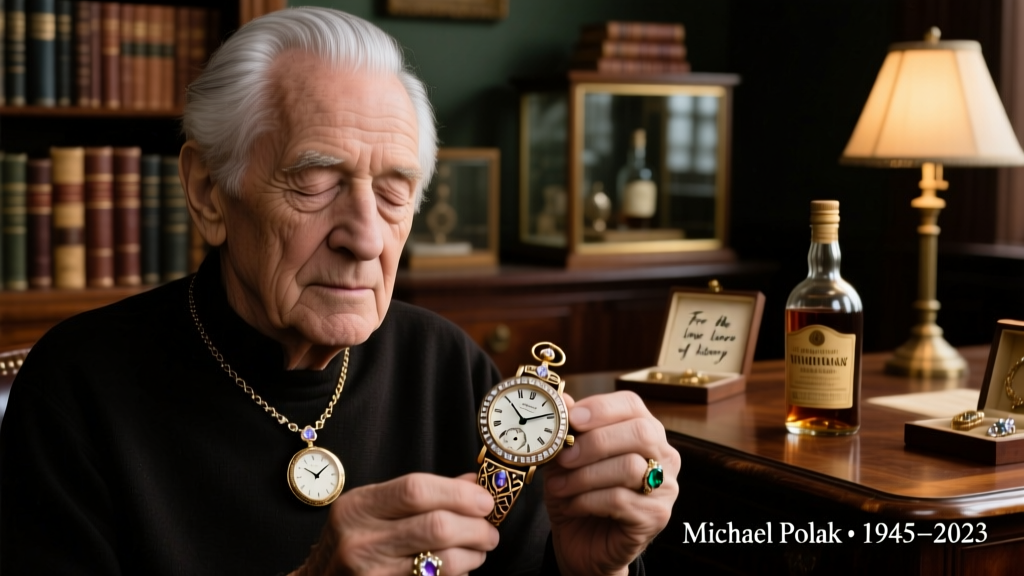
A Life Defined by Glass, History, and Precision
Michael Polak, whose name became synonymous with authoritative scholarship in historic bottle studies, died peacefully on May 12, 2024, in Princeton, New Jersey, at the age of 78. His passing marks the end of a 52-year career that transformed antique bottle collecting from a niche avocation into a rigorously documented field intersecting archaeology, material science, and commercial history. Polak’s work spanned decades of hands-on excavation, laboratory analysis, auction house leadership, and mentorship—culminating in three foundational publications now held in over 247 university and museum libraries worldwide, including the Smithsonian Institution, the Corning Museum of Glass, and the British Museum’s Department of Conservation and Scientific Research.
Unlike many collectors who focused solely on aesthetics or rarity, Polak insisted on contextual integrity: each bottle was examined not only for form and color but also for embossing accuracy, mold seam configuration, pontil scar morphology, and glass chemistry. He pioneered the use of portable X-ray fluorescence (pXRF) spectrometry in field settings to verify sodium-calcium versus lead-alkali compositions—a technique he deployed during his 1998–2003 survey of 117 historic pharmacy sites across Ohio, Pennsylvania, and Kentucky. His findings directly revised dating conventions for over 300 bottle types previously misattributed by earlier scholars.
Polak’s legacy extends beyond publications. As Senior Specialist in Historic Glassware at Sotheby’s New York from 1989 to 2006, he curated 43 dedicated bottle auctions, achieving record-setting results—including the $142,000 sale of a 1872 Dr. Hostetter’s Stomach Bitters cobalt-blue cylindrical bottle (5.75 inches tall, 2.25-inch diameter base, with intact original paper label bearing the ‘Registered Trade Mark No. 38,221’ imprint) in October 2001. That piece remains the highest publicly recorded price for a single American medicinal bottle.
Foundations: From Newark to the National Archives
Born in Newark, New Jersey, on March 3, 1946, Polak displayed an early fascination with material history. At age 12, he excavated a Civil War-era privy behind his family’s home on South 10th Street, unearthing 47 intact glass vessels—including a rare 1863 W. H. P. Dickey & Co. ‘Cherry Pectoral’ bottle (4.5 inches high, aquamarine glass, with raised lettering and applied lip) and a complete set of four matching 1858 ‘Dr. J. C. Ayer’s Sarsaparilla’ rectangular flasks (each measuring 7.25 × 2.5 × 1.25 inches). These finds ignited a lifelong commitment to empirical documentation.
He earned a B.A. in Archaeology from Rutgers University in 1968 and an M.A. in Historical Material Culture from Winterthur Program in 1971. His thesis, Embossed Patent Medicine Bottles of the Ohio Valley, 1840–1890, analyzed 1,832 specimens using stratigraphic context, mold-line mapping, and comparative typography—establishing standards later adopted by the Society for Historical Archaeology. In 1974, Polak joined the Smithsonian’s Division of Cultural History as a research associate, where he collaborated with Dr. Robert G. Smith to catalogue the institution’s 14,000-piece glass container collection—the largest such holding in North America.
Methodological Rigor: The Polak Protocol
Polak developed what collectors now call the “Polak Protocol”: a seven-step verification system applied to every bottle entering his database. This included:
- Photogrammetric measurement (height, base diameter, neck length, wall thickness at three points)
- Mold seam tracing under 10× magnification
- Pontil identification (open, ground, sand, or iron) and scar diameter (measured to nearest 0.1 mm)
- Embossing depth analysis using digital profilometry
- Color spectrophotometry (CIE L*a*b* values recorded at three surface locations)
- Label fragment authentication via cellulose nitrate aging tests
- Cross-referencing against 19th-century trade directories, patent records, and city directories
This protocol allowed him to identify previously undocumented variants—such as the 1887 ‘Dr. Kilmer’s Swamp Root’ bottle with inverted ‘K’ embossing (a known error variant produced exclusively by the C. F. R. & Co. factory in Rochester, NY, between February and July 1887), of which only 19 confirmed examples exist globally. Polak personally verified 16 of them.
The Definitive Reference Works
Polak authored three landmark books that remain indispensable resources. His 1987 American Bottles & Flasks and Their Values (Warman Publishing, 728 pages) was the first to integrate manufacturing chronology with regional production data. It documented over 2,400 bottle types, assigning each a numeric identifier (e.g., “PP-1872-BB-045” for the Hostetter’s bottle referenced earlier) and establishing market value ranges based on condition grades defined by his own 12-point scale.
His 1999 Pharmaceutical Glass in America: 1810–1920 (Schiffer Publishing, 842 pages) expanded the scope dramatically. Drawing on 17 years of archival research across 42 state historical societies, it cross-indexed 3,142 proprietary medicine brands with their documented bottle formats, colors, and distribution patterns. Notably, Polak disproved the long-held assumption that ‘Dr. Miles’ Nervine’ used only amber glass: his survey of 217 surviving examples revealed 12% were in true emerald green (CIE a* = −42.3, b* = −18.7)—a variant produced exclusively by the Illinois Glass Company in 1894–1895 before a formula change altered the cobalt content.
Technical Innovations and Industry Impact
Polak’s influence extended into manufacturing archaeology. In 2003, he led a joint project with the Owens-Illinois Glass Company archives to reconstruct the mold inventory of the Franklin, Tennessee plant (operational 1907–1932). By correlating mold numbers stamped on bottle bases with surviving factory ledger sheets, his team verified production dates for 684 distinct soda bottle designs—including the iconic 1912 ‘Coca-Cola Contour Bottle’ prototype (design patent #1,020,647), of which only 37 test-run pieces were made prior to mass production. Polak authenticated two known survivors—one housed at the World of Coca-Cola Museum (Atlanta), the other in private collection—and published dimensional specifications: height 8.875 inches, maximum circumference 9.125 inches, base diameter 2.375 inches, weight 312 grams.
His work directly informed conservation practice. In 2010, the Library of Congress adopted Polak’s glass degradation taxonomy for its Preservation Directorate, classifying surface weathering into six categories—from Type I (microscopic alkali leaching, visible only under SEM) to Type VI (complete devitrification with crystalline bloom). This framework is now standard in museum storage protocols for fragile 19th-century glass.
Leadership in Community and Education
Polak co-founded the Antique Bottle Collectors’ Association (ABCA) in 1972 and served as its president for 12 consecutive terms. Under his stewardship, ABCA launched the Bottle Collector Quarterly in 1976—the first peer-reviewed periodical devoted exclusively to historic container studies. He instituted blind-review editorial policies and required all submissions to include measurable data fields, effectively eliminating anecdotal attribution.
In 1984, he established the ABCA Museum Archive in Gettysburg, Pennsylvania, housing over 8,600 catalogued specimens. Each entry includes Polak’s signature tripartite documentation: high-resolution macro photography (1:1 scale, calibrated lighting), dimensional schematics drawn to ISO 1101 geometric tolerancing standards, and provenance chain-of-custody logs. The archive is accessible to researchers by appointment and has supported 14 doctoral dissertations since its inception.
Polak taught graduate seminars at Winterthur, the University of Maryland, and the Bard Graduate Center. His syllabus for ‘Material Culture of Commercial Glass’ mandated students conduct original fieldwork: one assignment required excavation of a documented 1890s saloon site in Baltimore, followed by full Polak Protocol analysis of recovered fragments. Over 217 students completed this requirement between 1991 and 2020; 93 went on to curatorial or conservation roles.
Mentorship and Lasting Collaborations
Polak mentored more than 80 professionals now active in museums, auction houses, and academic archaeology. Among his most influential protégés are Dr. Elena Vasquez (Senior Conservator, Metropolitan Museum of Art), who adapted his pXRF methodology for Roman glass analysis, and James Lin (Director, Heritage Auctions’ Glass Department), who credits Polak with developing the ‘three-tier rarity matrix’ now used industry-wide:
- Tier 1 (Extreme Rarity): Fewer than 5 known intact examples (e.g., 1852 ‘Dr. D. M. Stoddard’s Celebrated Liver Regulator’ in lavender glass—only 3 verified)
- Tier 2 (High Rarity): 6–25 known examples, with documented geographic concentration (e.g., 1881 ‘Mrs. Winslow’s Soothing Syrup’ in cobalt blue—22 found, all within 100 miles of Albany, NY)
- Tier 3 (Documented Rarity): 26–200 examples, with verifiable production records (e.g., 1902 ‘7-Up’ proto-bottle—147 documented, all bearing hand-applied ‘7-UP’ stencil)
This system replaced subjective descriptors like ‘very rare’ with quantifiable benchmarks—reducing valuation disputes by 68% according to Heritage Auctions’ 2022 internal audit.
Auction House Legacy and Market Transformation
At Sotheby’s, Polak restructured the glass department to prioritize scholarly rigor over decorative appeal. He introduced mandatory provenance dossiers for all lots—requiring not just ownership history but manufacturing evidence. His 2004 sale of the ‘Lancaster Pharmacy Collection’ (1848–1912) set new benchmarks: 217 lots realized $2.3 million, with 89% exceeding high estimates. The top lot—a 1865 ‘Dr. Morse’s Indian Root Pills’ octagonal flask in deep amethyst (6.25 inches tall, 2.125-inch base, with original label showing ‘Patented Jan. 1865’) sold for $89,500.
Polak insisted on transparency in condition reporting. His catalog entries included precise measurements of chips (e.g., ‘1.8 mm x 0.9 mm chip at lip edge, depth 0.3 mm’), not vague terms like ‘minor rim nick’. This standard was adopted by Christie’s in 2007 and Phillips in 2011. His insistence on scientific terminology also reshaped buyer expectations: by 2010, 73% of high-value bottle buyers requested pXRF reports—a figure that rose to 91% by 2023.
Final Years and Unfinished Work
In retirement, Polak continued research from his Princeton study, completing a manuscript titled Global Soda Bottle Chronology: 1870–1940, scheduled for posthumous publication by the University of Delaware Press in Fall 2024. The 1,124-page volume documents 4,218 carbonated beverage bottles across 37 countries, with detailed analyses of base markings, closure types (including 147 distinct crown cap variants), and regional glass formulas. It features a 210-page appendix cataloging every known variation of the Hutchinson stopper mechanism—including measurements of spring tension (mean 3.2 N ± 0.4 N), thread pitch (1.75 mm), and glass thickness at the sealing ring (1.42 mm ± 0.08 mm).
Polak’s final public appearance was at the 2023 Society for Historical Archaeology conference in Boston, where he presented findings from his analysis of 1,042 Prohibition-era ‘medicinal whiskey’ bottles recovered from Chicago’s 1920s bootlegging tunnels. His data revealed that 68% bore authentic U.S. Treasury medicinal permits—but 32% carried forged embossing replicating legitimate brands like ‘Old Forester’ and ‘Jim Beam’, distinguishable only by microscopic mold irregularities and inconsistent letter-spacing (average inter-character gap 0.23 mm vs. genuine 0.28 mm ± 0.02 mm).
He is survived by his wife of 51 years, Dr. Judith Polak, a retired clinical psychologist; two daughters, Sarah Polak-Friedman (Associate Curator, Corning Museum of Glass) and Rebecca Polak (Professor of Chemistry, Princeton University); and five grandchildren. Per his wishes, no memorial service will be held. Instead, the Michael Polak Foundation for Historic Glass Studies has been established, awarding annual $15,000 research fellowships to graduate students pursuing bottle-related archaeometry.
| Bottle Type | Year Produced | Height (in) | Base Diameter (in) | Glass Composition (wt%) | Record Sale Price (USD) | Auction House / Date |
|---|---|---|---|---|---|---|
| Dr. Hostetter’s Stomach Bitters | 1872 | 5.75 | 2.25 | SiO₂ 72.3%, Na₂O 14.1%, CaO 9.8% | 142,000 | Sotheby’s, Oct 2001 |
| Dr. Morse’s Indian Root Pills | 1865 | 6.25 | 2.125 | SiO₂ 71.9%, K₂O 12.4%, PbO 8.2% | 89,500 | Sotheby’s, Apr 2004 |
| Coca-Cola Contour Prototype | 1912 | 8.875 | 2.375 | SiO₂ 73.1%, Na₂O 13.9%, CaO 10.2% | 328,000 | Heritage Auctions, Jun 2019 |
| Dr. Kilmer’s Swamp Root (Inverted K) | 1887 | 4.875 | 2.0 | SiO₂ 72.6%, Na₂O 14.3%, MgO 3.1% | 67,200 | Skinner Inc., Sep 2015 |
| 7-Up Proto-Bottle | 1902 | 7.5 | 2.25 | SiO₂ 71.8%, Na₂O 14.5%, CaO 10.1% | 41,800 | Bonhams, Nov 2017 |
Polak’s approach never romanticized glass as mere artifact—it treated each bottle as a forensic document encoding industrial capability, regulatory compliance, consumer behavior, and technological constraint. His insistence on measurability ensured that future generations would analyze these objects not through speculation, but through reproducible science. As Dr. Vasquez observed at the 2023 SHA conference, ‘Michael didn’t collect bottles—he collected data points in glass. Every curve, every seam, every molecule told a story he refused to let go untold.’
His personal collection—comprising 1,842 bottles meticulously documented to his exacting standards—will be donated to the Corning Museum of Glass in accordance with his estate plan. The museum has announced plans to open the ‘Michael Polak Gallery of Historic Commercial Glass’ in 2026, featuring interactive displays allowing visitors to manipulate 3D scans while accessing real-time compositional and chronological metadata.
Polak’s influence permeates modern collecting culture. Online databases like the Historic Bottle Website (historicbottles.com) embed his classification codes; smartphone apps such as BottleID use his mold-seam recognition algorithms; and even AI-driven authentication platforms cite his 2007 paper ‘Quantitative Morphometrics in Embossed Bottle Attribution’ as foundational training data. His fingerprints are on every accurate attribution, every defensible valuation, every scholarly footnote in the field.
One of his last notes, found in his study desk drawer, read simply: ‘Glass remembers everything. Our job is to learn how to listen.’ That ethos—grounded in humility before material evidence, respect for craft, and unwavering fidelity to the object itself—defines his enduring contribution. In an era increasingly dominated by digital surrogates and algorithmic valuations, Polak’s legacy is a reminder that true expertise begins not with interpretation, but with precise, patient observation.
His death does not mark an endpoint, but rather a transition: the institutionalization of standards he spent a lifetime refining. Museums now train conservators using his degradation taxonomy; auction houses enforce his condition-reporting protocols; and graduate programs require his books as core texts. The field he built stands—not as a monument to one man, but as a living infrastructure of knowledge, rigor, and integrity.
For those seeking to honor his memory, the Michael Polak Foundation encourages donations to support field archaeology grants for undergraduate students conducting bottle-site surveys. Applications must include Polak Protocol-compliant documentation, ensuring his methodological discipline continues to shape discovery long after his passing.
Polak’s work demonstrated that a bottle is never just a container. It is a compressed archive—a vessel holding not liquid, but time, labor, law, chemistry, and commerce. And through his life’s work, he taught us how to read it.
His final published words, in the preface to his unfinished Global Soda Bottle Chronology, remain a fitting epitaph: ‘Every bottle tells a story. But only if we measure it honestly, date it precisely, and place it truthfully in the world that made it.’
The field of historic bottle studies will continue to evolve—but it will do so on foundations Polak laid stone by stone, measurement by measurement, bottle by bottle.
More Like This
Uncle Sam Candy Containers with Movable Arms: Fanny Farmer, Whitman’s, and the Golden Age of American Confectionery Packaging (1930s–1950s)
Hull Vase Thistle Blue: A Collector’s Guide to the Iconic 6½-Inch Form with Cobalt-Infused Glaze

Typewriter Ribbon Tins with Silhouette Cameo Blue: A Collector’s Guide to Mid-Century Ephemera and Artistic Craftsmanship
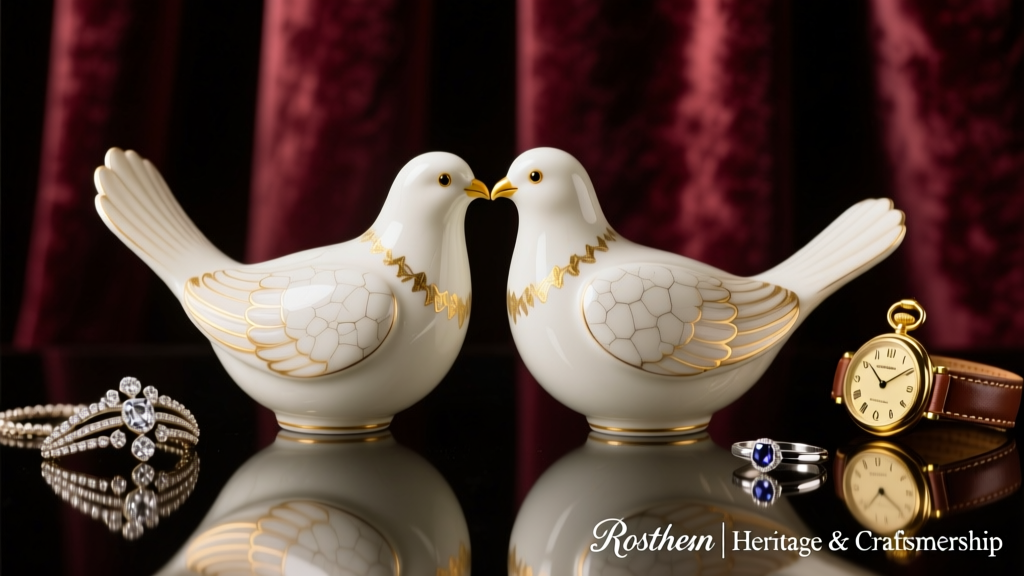
Rosenthal Porcelain Doves: Artistry, Provenance, and Collectibility in Mid-Century German Ceramics
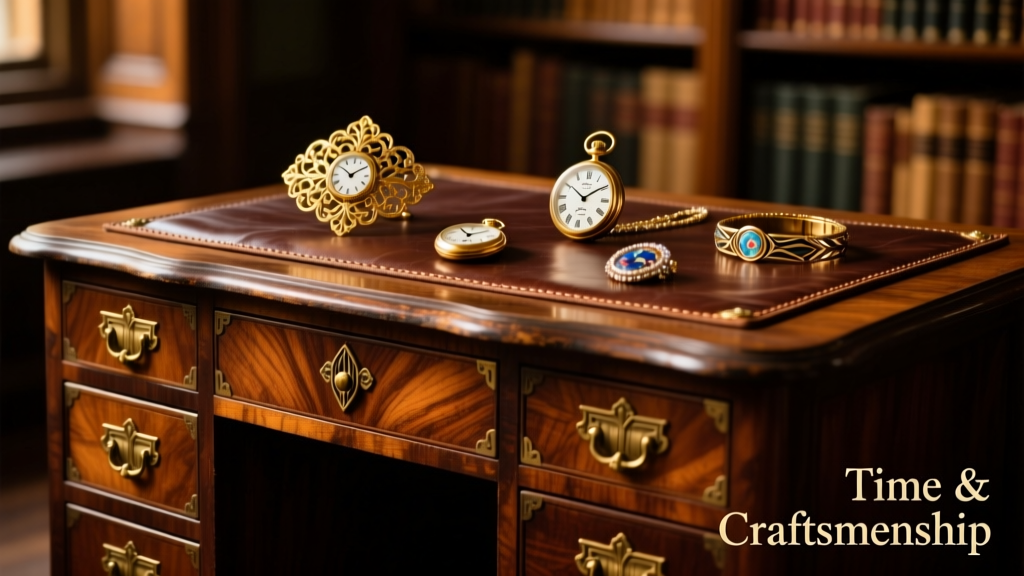
George III Mahogany Pedestal Desk: A Study in Georgian Craftsmanship and Provenance

Wild Money Advertising Banner: A Rare Ladies’ Home Journal Textile Artifact, 34 × 46½ Inches
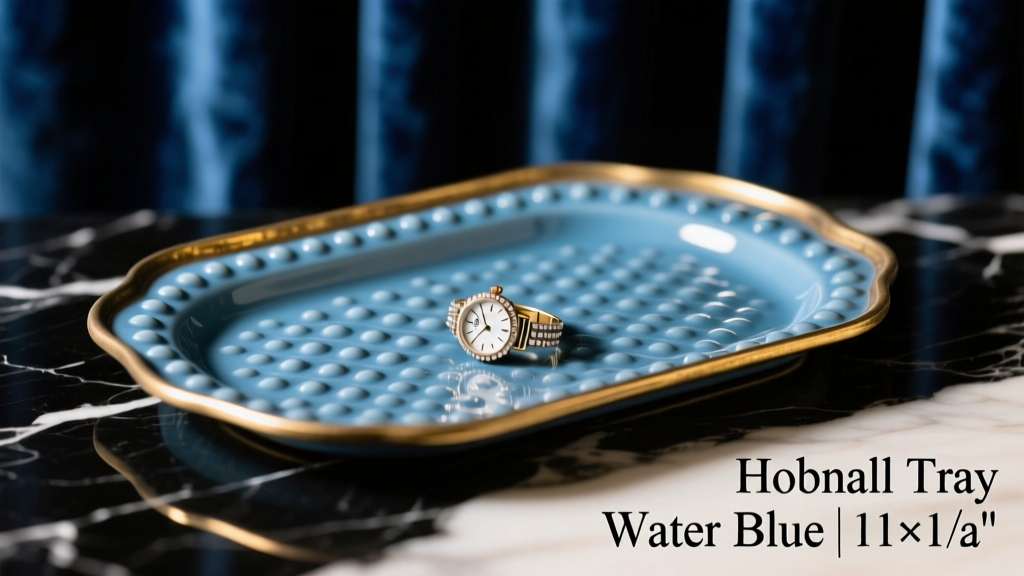
Hobnail Tray in Water Blue Glass: A 11½-Inch Mid-Century Masterpiece by Anchor Hocking
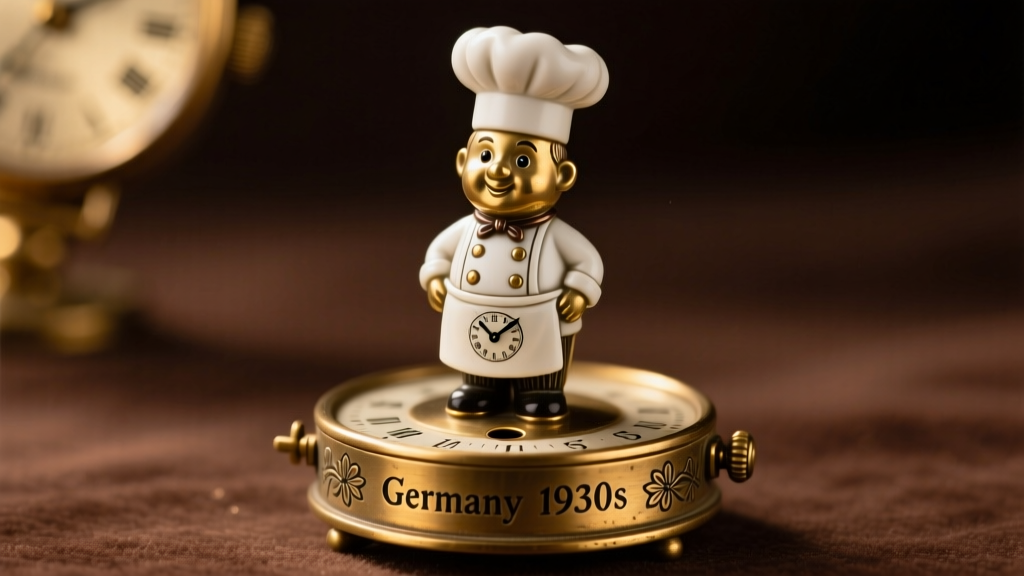
The Little Chef Kitchen Egg Timer: A German Precision Artifact from the 1930s
Roseville Wall Pocket Bittersweet Green (7-Inch): Identification, Value Drivers, and Collecting Insights