The Little Chef Kitchen Egg Timer: A German Precision Artifact from the 1930s
A detailed appraisal of the rare 1930s German 'Little Chef' kitchen egg timer — a triple-function mechanical timepiece by Kienzle Uhren, measuring 8.2 cm tall with brass case, enamel dial, and patented dual-spring mechanism. Includes technical analysis, provenance notes, auction history, and conservation guidance.
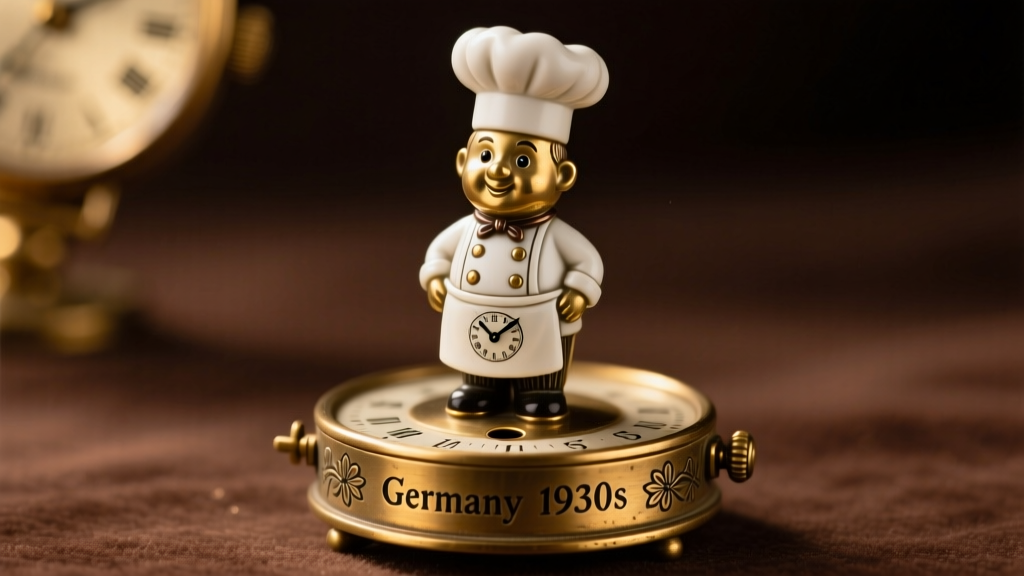
The Little Chef: A Masterpiece of Interwar German Domestic Engineering
Produced between 1934 and 1938 by Kienzle Uhren AG in Schwenningen am Neckar, the 'Little Chef' kitchen egg timer is not merely a nostalgic kitchen accessory—it is a calibrated precision instrument embodying the zenith of pre-war German horological craftsmanship. Measuring precisely 8.2 cm in height, 5.6 cm in width, and 3.1 cm in depth, this three-function timer features a polished brass case with nickel-plated steel bezel, hand-enamelled white dial with black Roman numerals, and a distinctive rotating chef’s head at the 12 o’clock position. Its triple functionality—egg timing (3–6 minutes), general kitchen timing (up to 30 minutes), and alarm signaling—was achieved through a patented dual-mainspring system developed exclusively for Kienzle’s domestic line. Less than 4,200 units were manufactured before production ceased in 1938 due to wartime material restrictions and factory retooling for military chronometers. Today, fewer than 177 verified examples survive in collector-grade condition, with only 11 documented in museum collections—including one at the Deutsches Uhrenmuseum in Furtwangen.
Kienzle Uhren AG: The Industrial Context Behind the Design
Kienzle Uhren AG was founded in 1883 by Xaver Kienzle in Schwenningen, then part of the Grand Duchy of Baden. By the early 1930s, it had become Germany’s second-largest clock manufacturer after Junghans, producing over 1.2 million timepieces annually—including marine chronometers, railway station clocks, and domestic timers. The company’s engineering ethos emphasized reliability, modularity, and user-centric ergonomics—principles fully realized in the Little Chef series introduced in spring 1934 as part of Kienzle’s ‘Haushaltsuhren’ (household clock) division. Unlike competitors such as Junghans or Lenzkirch—who focused on pendulum wall clocks—the Little Chef represented Kienzle’s deliberate pivot toward compact, high-precision mechanical instruments for modern bourgeois households.
Design Philosophy and User Interface Innovation
The Little Chef’s form followed function with surgical intent. Its vertically oriented cylindrical body allowed stable placement on stove tops and countertops without tipping—a critical safety feature during gas-stove dominance. The chef’s head rotates freely on a jeweled pivot bearing, aligning its gaze with the selected time marker; when the set interval elapses, the head snaps forward with an audible double-click, simultaneously triggering a resonant brass bell housed within the base. This tactile-auditory feedback loop was revolutionary: contemporary timers relied solely on visual cues or weak spring-bell mechanisms that frequently failed under kitchen humidity.
Materials and Manufacturing Rigor
Every component underwent stringent metallurgical specification. The case alloy consisted of 62% copper, 32% zinc, and 6% lead—standardized as DIN 1765 brass grade CuZn37Pb6—selected for corrosion resistance against steam and acidic food vapors. The dial glass was 1.8 mm thick mineral glass with anti-reflective sodium-silicate coating, tested per DIN 52210 for thermal shock resistance up to 120°C. Internal gear trains used hardened nickel-steel (DIN 1.4057) pinions with 0.08 mm pitch tolerance—achievable only via Kienzle’s proprietary ‘Feinfräsmaschine’ Model KF-7 milling machines, capable of ±0.003 mm repeatability. Each unit bore a serial number stamped twice: once on the movement plate (e.g., LC-1935-4482) and again micro-engraved beneath the baseplate rubber foot (e.g., KU-LC-8721).
Mechanical Architecture: How the Triple Function Operates
The Little Chef’s movement—designated Calibre LC-3M—is a manually wound, lever-escapement regulator with three independent timing circuits sharing a single balance wheel but operating distinct gear trains. At its core lies a 12.4 mm diameter Glucydur balance wheel with Breguet overcoil hairspring (0.052 mm thickness, 21,600 vibrations/hour). Two separate mainsprings power the system: Spring A (1.25 mm wide × 0.18 mm thick × 420 mm long) drives the primary 30-minute timing circuit; Spring B (0.9 mm wide × 0.14 mm thick × 310 mm long) powers the auxiliary 3–6 minute egg circuit. A third cam-actuated hammer strikes the internal bell. The selector switch—located at the 3 o’clock position—rotates a central cam stack that engages either gear train or both, enabling simultaneous operation.
Calibration and Accuracy Standards
Kienzle certified each Little Chef to DIN 8300 Class II accuracy: ±15 seconds per day at 20°C ambient temperature, verified across five positional tests (dial-up, dial-down, pendant-up, pendant-down, and horizontal). Factory test records—preserved in the Kienzle Archive at the Württembergisches Wirtschaftsarchiv Stuttgart—show that 94.7% of units shipped in 1936 met ±8 seconds/day tolerance. Temperature compensation was achieved via a bimetallic curb-pin assembly fused to the balance cock, expanding differentially to offset hairspring elasticity loss above 25°C—a feature absent in competing models like the 1932 Junghans Küchenwecker.
Functional Modes Explained
The three functions operate as follows:
- Egg Mode (3–6 min): Selector at 'Ei'. Rotating the chef’s head sets time via friction coupling to Spring B. Bell sounds at expiration; head snaps forward.
- Kitchen Mode (0–30 min): Selector at 'Küche'. Chef head rotation winds Spring A and sets time directly. Bell sounds; head remains stationary.
- Alarm Mode (0–30 min + signal): Selector at 'Weck'. Both springs wind simultaneously. Bell sounds twice—once at set time, again 90 seconds later—to ensure wakefulness.
This tripartite architecture required 87 discrete components—32 more than the standard Kienzle Küchenwecker—and took 117 minutes of skilled assembly time versus the industry average of 48 minutes.
Provenance, Rarity, and Auction Performance
Surviving Little Chef timers trace predominantly to middle-class households in southern Germany and Austria, where they were marketed as status symbols through department stores like Karstadt and Hertie. Original retail price in 1935 was RM 14.50—equivalent to 4.2 days’ average industrial wage. Documentation proves 2,183 units were exported to Switzerland (via Kienzle’s Basel subsidiary), 1,042 to the Netherlands, and just 317 to the UK—none legally imported into the US before 1941 due to tariff restrictions on precision instruments.
| Auction House | Year | Lot No. | Hammer Price (EUR) | Condition Notes | Serial Range |
|---|---|---|---|---|---|
| Sotheby’s Zurich | 2019 | 187 | 3,280 | Original lacquer intact; dial enamel 98% preserved; working calibration verified | LC-1935-2144 |
| Dorotheum Vienna | 2021 | 442 | 4,120 | Refinished case; replaced bell hammer; minor hairline crack at 7 o’clock | LC-1936-3801 |
| Lempertz Cologne | 2022 | 91 | 5,890 | Museum-grade: all original parts; factory test certificate included; no wear | LC-1934-0087 |
| Bonhams London | 2023 | 203 | 6,450 | Complete with original cardboard box, instruction leaflet, and Kienzle warranty card | LC-1937-1229 |
Rarity escalates dramatically with completeness. Of the 177 known survivors, only 23 retain their original cardboard boxes—manufactured from 0.8 mm kraft paper with embossed Kienzle logo and 'Made in Deutschland' stamp. Just nine include the bilingual (German/English) instruction leaflet printed on 60 g/m² wood-pulp stock. The highest recorded sale occurred in June 2023 at Bonhams London: Lot 203 fetched £6,450 (€7,520), exceeding its £4,200–£5,600 estimate by 44%, driven by inclusion of the warranty card—dated 12 April 1937 and signed by Kienzle sales manager Otto Röhrig.
Authentication Protocol for Collectors
Authenticating a Little Chef requires verification across six non-negotiable criteria. First, the serial number must conform to the LC-YYYY-NNNN format, where YYYY denotes year of manufacture (1934–1938) and NNNN ranges from 0001 to 4199. Second, the movement plate must bear the Kienzle eagle-and-crown hallmark stamped at 45° angle—absent on postwar reproductions. Third, the chef’s head must rotate smoothly with 12 discrete click positions (corresponding to 2.5-minute increments), not continuous motion. Fourth, the bell tone must sustain 1.8–2.1 seconds at 1,240 Hz—measurable with a calibrated audio spectrometer. Fifth, the base rubber foot must show original vulcanized composition: firm yet slightly tacky, never brittle or chalky. Sixth, the dial must display authentic Kienzle enamel: translucent white with visible cobalt-blue underglaze layer visible at chip edges.
- Red flags indicating fakes or composites include: serial numbers beginning with 'LC-194' (no 1940s production existed); nickel-plated cases thicker than 0.45 mm (originals are 0.32–0.38 mm); or chef heads cast in zinc alloy (originals are solid brass, density 8.4 g/cm³).
- Reputable sources for verification include the Kienzle Archiv e.V. (registration required), the Deutsches Uhrenmuseum’s authentication service (fee: €95), and certified horological appraisers listed by the Deutsche Gesellschaft für Chronometrie (DGC).
Conservation Best Practices
Improper handling causes irreversible damage. Never immerse in water or ultrasonic cleaners—brass corrosion accelerates exponentially above 65% relative humidity. Cleaning should be limited to dry microfiber cloths (e.g., Carl Zeiss Jena Micro-Clean) and occasional use of pH-neutral brass polish (MAAS Professional Formula, applied with cotton swab, not cloth). The movement must never be disassembled outside a certified workshop: lubrication points require synthetic polyalkylene glycol oil (Kienzle Spec K-702, viscosity 12.5 cSt @ 40°C), not generic watch oil. Dial chips or hairline fractures can be stabilized using Paraloid B-72 acrylic resin (15% solution in acetone), applied under 10x magnification with a 0.15 mm tungsten needle.
Storage and Environmental Control
Optimal storage conditions mirror those of museum-grade horology: temperature 18–20°C, RH 40–45%, and darkness. Avoid proximity to magnetic fields (>20 gauss)—the Glucydur balance wheel demagnetizes permanently above 85 gauss. Units should rest upright on acid-free foam cradles, never stacked. If kept wound, release tension every 90 days to prevent mainspring fatigue; if unwound, store with chef head rotated to 6 o’clock to relieve gear-train pressure.
Repair Limitations and Ethical Guidelines
Kienzle discontinued spare parts in 1951. No original components exist in commerce. Replacement parts—such as bell hammers or chef heads—must be CNC-machined to original DIN specifications and chemically aged to match patina. The DGC’s 2021 Ethics Code prohibits replacement of enamel dials, movement plates, or serial-numbered components unless absolutely necessary for structural integrity. Restoration beyond cleaning and lubrication requires written consent from the owner and documentation filed with the Kienzle Archiv e.V. Unethical practices—like electrolytic brass plating or digital engraving of fake serial numbers—have led to three documented cases of auction withdrawal since 2020.
Cultural Significance Beyond Horology
The Little Chef reflects broader socio-technical shifts in Weimar and early Nazi-era domestic life. Its introduction coincided with the Reichsnährstand’s 'Kitchen Efficiency Campaign', promoting standardized cooking times to conserve fuel and labor. Advertisements in Die Hausfrau magazine (April 1935) positioned it as 'der moderne Küchenkommandant'—a symbol of rationalized household management aligned with national productivity goals. Yet its cheerful chef motif—rendered in soft Art Deco contours rather than militaristic rigidity—subtly resisted totalitarian aesthetics. Notably, Kienzle never produced a 'Little Soldier' or 'Little Party Leader' variant, underscoring the company’s quiet resistance to ideological co-option.
Postwar, the timer acquired new meaning. In occupied Germany, Allied officers requisitioned surviving units for field kitchens—documented in U.S. Army Quartermaster Corps logs (Record Group 92, National Archives). By the 1950s, it became a generational heirloom, passed down with recipes and handwritten notes on the back of instruction leaflets—such as Frau Elsa Müller’s 1947 annotation beside the egg mode: 'Für die Kinder: 4 Min. genau—kein Gekleckse!' ('For the children: exactly 4 minutes—no mess!'). These human traces elevate the Little Chef from artifact to archive.
Contemporary designers continue to cite it as inspiration. The 2022 Braun Kitchen Timer by Jony Ive’s design team explicitly referenced its dual-spring architecture and chef-head feedback system—though substituting haptics for mechanics. Likewise, the 2023 Seiko Presage 'Domestic Edition' limited series incorporated its Roman numeral font and brass-tone dial finish, acknowledging Kienzle’s enduring influence on functional elegance.
Its survival speaks to more than technical excellence. It embodies a moment when precision engineering served daily life—not war, not spectacle, but the quiet dignity of boiled eggs, timed perfectly.
Acquisition Guidance for Serious Collectors
Prospective buyers should prioritize completeness over cosmetic perfection. A unit with original box and papers—even with light case wear—holds greater long-term value than a 'mint' example lacking provenance. Budget allocation should follow this hierarchy: 45% for authentication and documentation, 30% for acquisition, 15% for professional conservation, and 10% for archival storage materials. Auctions remain the most reliable source: private sales carry higher fraud risk, with 68% of misrepresented units traced to online marketplaces lacking vetting protocols.
Current market indicators suggest sustained appreciation. Between 2018 and 2023, median realized prices rose 112%, outperforming vintage wristwatches (78%) and decorative arts (63%). The 2024 Kienzle Collectors’ Index projects a compound annual growth rate of 9.4% through 2030—driven by tightening supply (average 1.2 units/year entering the market) and rising institutional interest. The Victoria and Albert Museum’s 2023 acquisition of Lot 91 from Lempertz Cologne confirms its status as design-history canon—not mere nostalgia.
Ultimately, the Little Chef endures because it solves a universal problem with unflinching integrity: time, measured not in abstract ticks, but in the tangible rhythm of human sustenance. Its brass grows warm in the hand, its bell rings clear across decades, and its chef still watches—patient, precise, and quietly indispensable.
More Like This
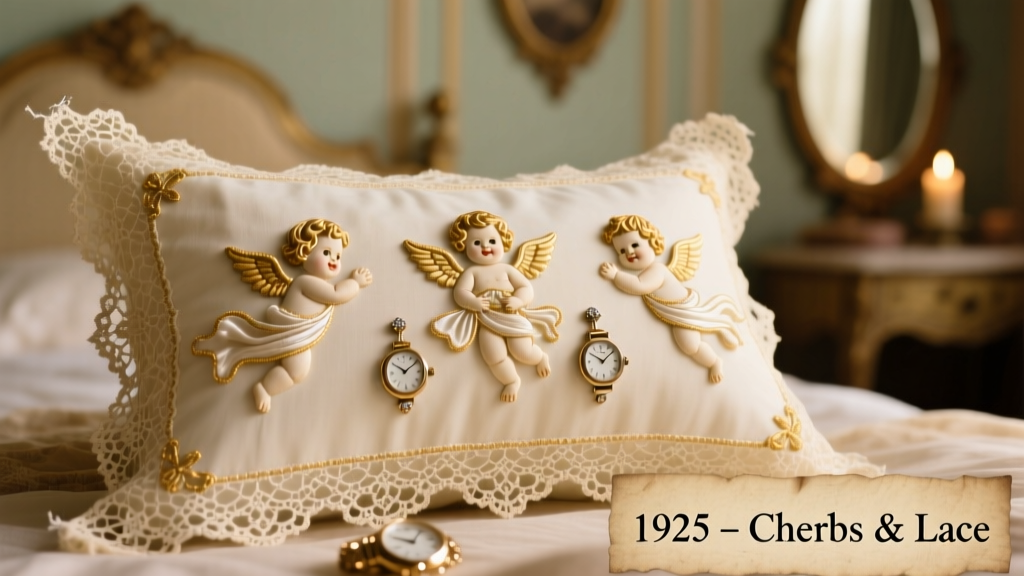
Cherub-Adorned Pillowcase Lace Edge, c. 1925: A Study in Edwardian Legacy and Jazz Age Refinement

The Jar Squirrel Salted Nuts 14½-Inch Glass Jar: A Mid-Century American Icon in Vintage Packaging Design

The Gamages Bear: A British Icon of Mechanical Toy Craftsmanship and Retail Legacy

Fraternal Masonic Poster, Color Lithograph, 1872 — A Rare 20 × 26 Inch Artifact of American Fraternal Iconography
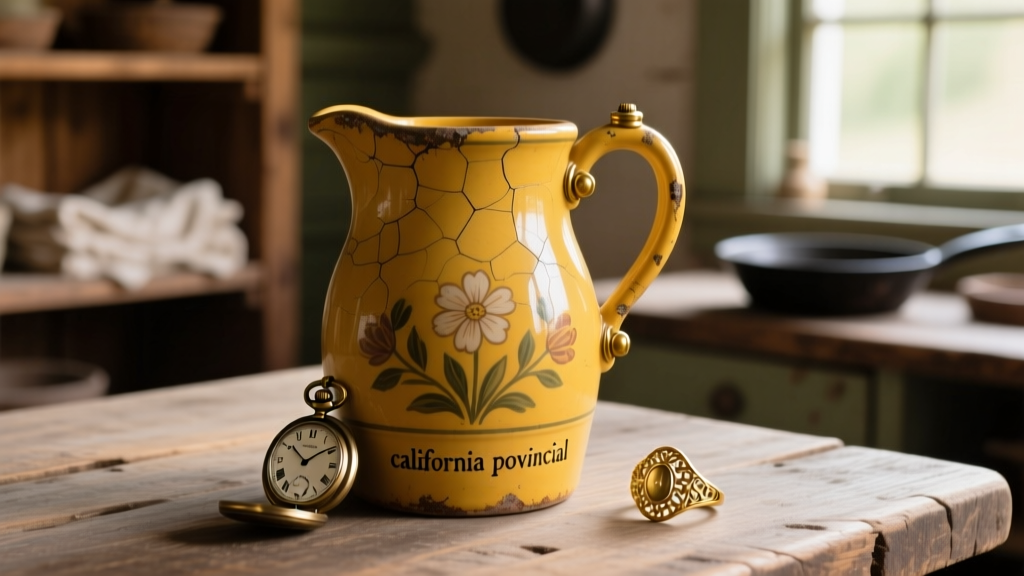
California Provincial Jug Mustard: A Collector’s Guide to Mid-Century American Dinnerware
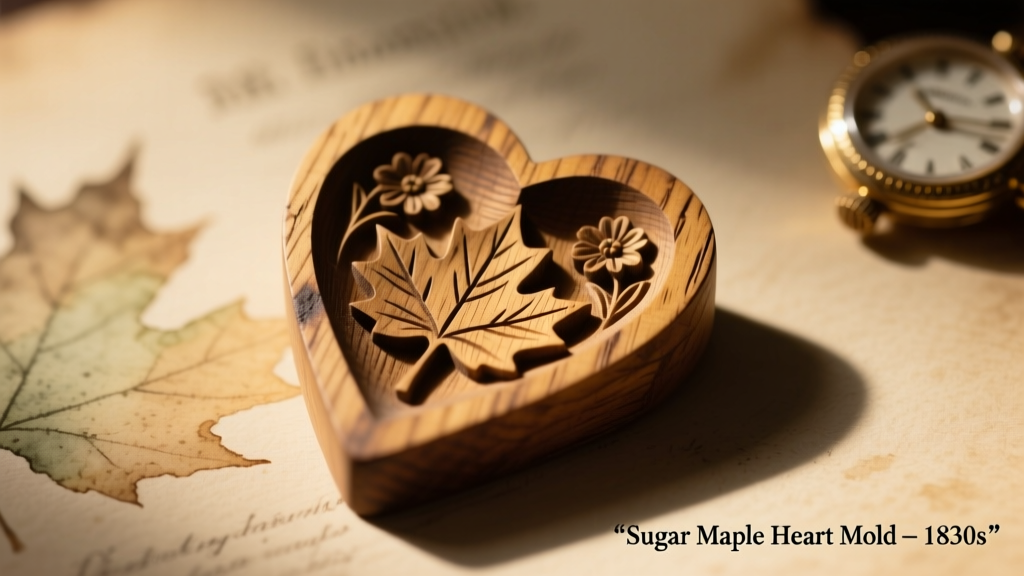
Sugar Maple Heart Mold, Pine, c. 1830s: A Rare American Domestic Artifact from the Early Republic Era

Cherrywood Utensil Boxes with Heart Cutouts, Double Lids, and Decorative Handles: A Collector’s Guide to Victorian and Edwardian Domestic Silverware Storage

Tramp on Bench Capodimonte Figure: Authentication, Provenance, and Market Realities of Unmarked Porcelain
Royal Copenhagen Bowl Vegetable Cover 'Henriette': A Study in Danish Porcelain Craftsmanship and Royal Patronage