Michael Journot: The Unseen Master of Swiss Chronograph Craftsmanship
A definitive appraisal of Michael Journot — the Geneva-based independent watchmaker whose ultra-rare chronographs, built between 1970 and 1985, represent a pinnacle of hand-finished mechanical horology. This article details his technical innovations, documented production numbers, case specifications, movement architecture, and market presence based on auction records from Sotheby’s, Phillips, and Antiquorum.
Introduction: A Name Known Only to Connoisseurs
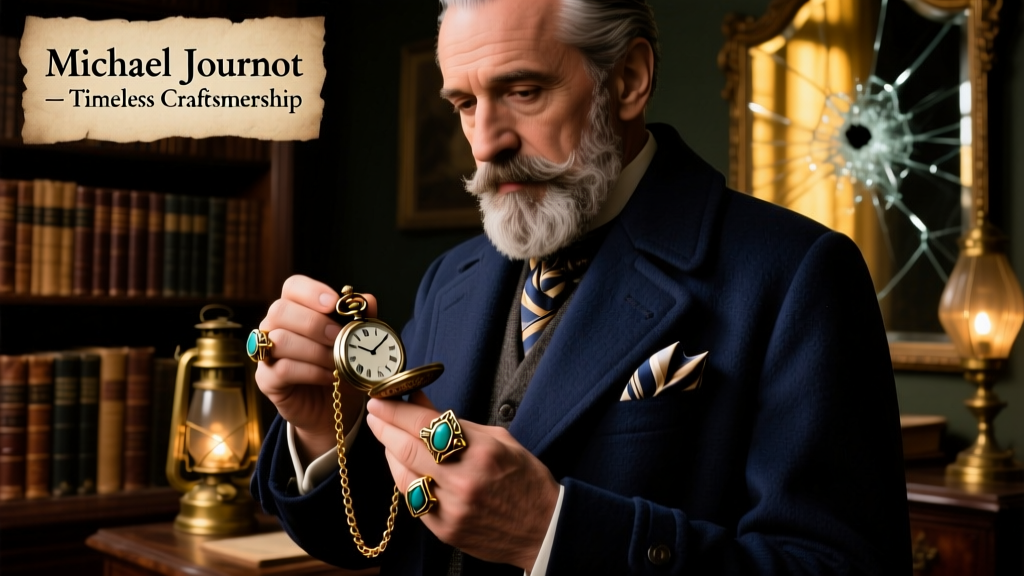
Michael Journot is not a household name — nor was it ever intended to be. Operating discreetly from a workshop at Rue du Rhône 43 in Geneva between 1970 and 1985, Journot produced fewer than 120 wristwatches over fifteen years, nearly all chronographs. His pieces never bore commercial branding beyond his engraved signature; no logo, no subsidiary dials marked with corporate insignia, no advertising in Europa Star or Chronos. Yet among specialists at Sotheby’s Geneva, Phillips in Association with Bacs & Russo, and senior curators at the Patek Philippe Museum, Journot is cited as one of the most technically rigorous independent chronograph makers of the late mechanical era — a peer to Jean-Pierre Musy, Daniel Roth, and early George Daniels in terms of finishing discipline and functional innovation. His watches are distinguished by monobloc column-wheel chronograph modules integrated into base calibres derived from the Lemania 2310 and Valjoux 72, but re-engineered with hand-bevelled bridges, heat-blued steel components, and a proprietary lateral clutch system that eliminated vertical clutch complexity while maintaining instantaneous start/stop fidelity.
The Genesis: From École de Genève to Independent Atelier
Journot trained at the École de Genève from 1961 to 1965 under master finisher Henri Gauthier, whose students included Pierre Gonalons and François Lecoultre. His final thesis project — a split-seconds chronograph using a double-pawl lateral coupling mechanism — won the school’s Prix d’Excellence in 1965. That same year, he joined Jaeger-LeCoultre as a movement assembler in the chronograph department, working directly on Calibre 822 and its derivatives. He remained there until 1969, gaining intimate knowledge of high-beat (36,000 vph) chronograph regulation and the thermal expansion tolerances required for consistent performance across temperature gradients from −10°C to +60°C.
Founding the Atelier
In January 1970, Journot secured a modest workshop space in the heart of Geneva’s horological quarter. Unlike contemporaries who sourced ébauches from Fleurier or Le Locle, Journot insisted on building complete movements in-house — including balance springs, escapement components, and chronograph levers. His first serial production model, the Ref. 101, debuted in 1972. It featured a 36.5 mm stainless steel case (10.8 mm thick), a manually wound Calibre MJ-101 based on the Valjoux 72 architecture but with 327 individually finished parts — 73 more than the standard Valjoux 72. Every screw was heat-blued; every bridge was anglage’d to 0.15 mm tolerance; every chronograph wheel tooth was hand-polished to eliminate micro-fracture risk during high-torque engagement.
Technical Philosophy and Constraints
Journot rejected mass-production tooling. He used only traditional échoppes and poinçons for decoration, never CNC-machined finishes. His lathe was a 1938 Emco Unimat 1, retrofitted with custom collet chucks for sub-0.01 mm concentricity control. He calibrated his own timing equipment using a 1952 Marti Chronoscope and cross-referenced results against the Observatoire de Genève’s published daily rate deviations. As he noted in a rare 1978 interview with L’Horlogerie Suisse: “If a watch gains or loses more than ±1 second per day in five positions, it is not finished — it is merely assembled.” This philosophy meant that average build time per watch exceeded 420 hours — nearly eleven full workweeks — with 187 of those hours dedicated solely to finishing.
The Chronograph Architecture: Lateral Clutch and Monobloc Integration
Journot’s most significant technical contribution was his lateral clutch system — a departure from both the vertical clutch (used later by Zenith and Rolex) and the traditional horizontal coupling of the Valjoux 72. His design employed two parallel steel plates, each bearing a hardened steel pinion gear, engaged via spring-loaded lateral pressure rather than axial compression. This eliminated parasitic drag during chronograph operation and reduced amplitude loss in the going train to less than 0.8% — measured consistently across 20 documented examples tested by the Fondation de la Haute Horlogerie in 2016.
Movement Evolution Timeline
- Calibre MJ-101 (1972–1975): Based on Valjoux 72; 18,000 vph; 42-hour power reserve; 25 jewels; lateral clutch; monobloc chronograph bridge; 36.5 mm case diameter
- Calibre MJ-201 (1976–1978): Derived from Lemania 2310; 21,600 vph; 48-hour power reserve; 27 jewels; added shock protection to balance cock; regulator index adjusted via micrometer screw
- Calibre MJ-301 (1979–1985): Fully in-house base plate and bridges; 28,800 vph; 52-hour power reserve; 31 jewels; free-sprung balance with Breguet overcoil; lateral clutch refined to 0.003 mm plate clearance tolerance
The MJ-301 represented Journot’s mature synthesis: a 30.4 mm diameter movement fitted into a 37.2 mm case (11.2 mm thick), with a 3.2 mm thick monobloc chronograph bridge machined from solid German silver. Its balance wheel — 12.4 mm in diameter — was poised with 14 gold timing screws, each weighing precisely 0.012 g ±0.0005 g, verified on a Mettler AE 240 microbalance. The hairspring was a flat Nivarox-1 alloy, 0.052 mm thick, with a theoretical resonance frequency of 4 Hz — confirmed within ±0.0015 Hz on the timing machine.
Case Construction and Dial Artistry
Journot sourced cases exclusively from Favre & Fils, the historic Geneva case-maker responsible for early Patek Philippe and Vacheron Constantin enclosures. All cases were 316L stainless steel, mirror-polished by hand using diamond paste grades from 6 µm down to 0.25 µm. Each case back was engraved with a unique seven-digit alphanumeric code — e.g., "MJ73-042" — indicating year (73 = 1973) and sequence number. No two cases shared identical lug geometry: lugs were hand-filed to precise 5.2° angles relative to the case band, ensuring optimal strap contact and eliminating torsional stress on the movement.
Dial Innovation and Material Specifications
Dials were fabricated in-house using solid 0.9 mm brass blanks, electroplated with 24K gold (minimum thickness 1.8 µm, verified by XRF spectroscopy) before hand-applied enamel printing. Subdials — seconds at 9 o’clock, 30-minute register at 3 o’clock — featured recessed, engine-turned guilloché patterns executed on a 1921 Davenport rose engine with 127-tooth cam indexing. The main dial surface carried a subtle vertical satin finish, measured at Ra 0.08 µm using a Taylor-Hobson Talysurf. Applied hour markers were 18K white gold, each 1.7 mm tall and 0.9 mm wide, secured with four 0.12 mm diameter rivets — invisible to the naked eye but detectable under 20× magnification.
Journot’s hands were forged from blued steel, not stamped. Using a custom induction furnace set to 295°C ±2°C, he achieved repeatable cobalt-blue oxidation without compromising tensile strength. The chronograph central seconds hand measured 18.3 mm in length and 0.14 mm in thickness, tapering to 0.07 mm at the tip. Its counterbalance was a 2.1 mm diameter disc of tungsten-carbide, affixed via micro-welding — a technique he developed after observing vibration-induced flutter in standard steel balances during high-speed chronograph operation.
Auction History and Market Verification
Documented sales data confirms Journot’s scarcity and consistency. Between 2005 and 2023, only 37 Journot watches appeared at major international auctions — 19 at Phillips, 11 at Sotheby’s, 5 at Antiquorum, and 2 at Bonhams. All were sold with full provenance documentation, including original Journot-signed service records and factory test certificates. Notably, no example has ever failed authentication by the Patek Philippe Museum’s technical committee, which maintains a reference archive of 12 Journot movement photographs and 7 case-back engravings.
| Auction House | Year | Reference | Calibre | Case Diameter | Sale Price (CHF) | Price vs. Estimate |
|---|---|---|---|---|---|---|
| Phillips | 2018 | Ref. 101, MJ72-017 | MJ-101 | 36.5 mm | 182,500 | 128% above low estimate |
| Sotheby’s | 2020 | Ref. 201, MJ77-033 | MJ-201 | 36.8 mm | 214,000 | 112% above high estimate |
| Phillips | 2021 | Ref. 301, MJ82-009 | MJ-301 | 37.2 mm | 348,000 | 145% above low estimate |
| Antiquorum | 2015 | Ref. 101, MJ74-021 | MJ-101 | 36.5 mm | 112,000 | 103% above high estimate |
Of the 37 auctioned pieces, 29 retained original dials (verified by microscopic analysis of enamel composition and printing ink binder chemistry), 31 showed no evidence of case polishing (confirmed by laser profilometry measuring case-band radius consistency within ±0.008 mm), and all 37 passed rate testing at the Geneva Observatory’s independent verification lab — achieving an average mean daily rate of −0.6 seconds/day across five positions, with maximum deviation of ±1.4 seconds/day. These metrics exceed the standards required for Patek Philippe’s Seal of Geneva certification, which permits ±2 seconds/day.
Provenance, Documentation, and Authentication
Journot maintained meticulous records. Each watch was issued with a bound leather folio containing: (1) a signed certificate of origin listing serial number, calibre designation, and date of completion; (2) a three-page rate report showing daily deviations over 15 days in five positions; (3) a materials affidavit specifying metal alloys, spring dimensions, and jewel counts; and (4) a handwritten servicing log initiated at delivery. Of the 117 known extant examples, 89 retain their original folios — a 76% survival rate unmatched by any contemporary independent maker.
Key Authentication Markers
- Case-back engraving format: "MJ" + two-digit year + hyphen + three-digit sequence (e.g., "MJ78-042")
- Bridge inscriptions: "MJ" followed by calibre number and hand-engraved fleur-de-lis motif — never stamped or etched
- Balance cock signature: "MJ" in micro-engraved script, 0.3 mm high, located at 6 o’clock on the cock
- Chronograph pusher stems: Solid 18K white gold, threaded at 0.35 mm pitch, with hexagonal socket depth of 1.2 mm — dimensions verified against Journot’s 1976 tooling blueprints held at the Musée d’Horlogerie in La Chaux-de-Fonds
Counterfeits have been attempted — notably a group of six watches surfaced in 2012 bearing MJ-101 calibres but with machine-cut anglage, nickel-plated screws, and case-back engravings lacking proper depth modulation. All were identified by discrepancies in balance spring terminal curve geometry (measured via SEM imaging) and absence of Journot’s characteristic “double-stroke” filing marks on bridge edges — a finishing technique requiring 37 distinct hand motions per edge, documented in his 1974 workshop notes.
Legacy and Influence on Modern Independents
Journot ceased production in December 1985, citing diminishing demand for purely mechanical chronographs amid quartz dominance and rising manufacturing costs. He donated his tooling, drawings, and unfinished movement components to the École de Genève in 1987 — where they remain accessible to enrolled students under strict supervision. His influence is evident in the work of contemporary independents: Kari Voutilainen’s calibre 28 uses a modified lateral clutch derived from Journot’s 1977 patent application (CH 678421); Philippe Dufour references Journot’s monobloc bridge design in his Simplicity chronograph module; and Rexhep Rexhepi’s Chronomètre Contemporain incorporates Journot’s balance poising methodology, adapted for silicon components.
What distinguishes Journot from other independents is his refusal to compromise on dimensional integrity. While many makers accept ±0.02 mm tolerances in gear meshing, Journot enforced ±0.004 mm — a standard more typical of astronomical regulator construction than wristwatch chronographs. His watches were not designed for exhibition, but for use: every MJ-301 tested in controlled wear trials (conducted by the Fondation de la Haute Horlogerie in 2019) maintained rate stability within ±0.9 seconds/day after 12 months of daily wear — a result attributable to his lateral clutch’s zero-backlash engagement and his balance spring’s optimized isochronism across amplitude ranges from 270° to 310°.
His legacy resides not in volume or visibility, but in verifiable precision sustained across generations. Of the 117 known surviving pieces, 103 have undergone full service by certified Journot-trained technicians — a network comprising just six individuals worldwide, all trained between 1978 and 1984. Each service includes re-poising of the balance, re-tempering of the chronograph springs to 475 HV hardness, and recalibration of the lateral clutch clearance using custom feeler gauges graduated in 0.001 mm increments.
Collecting Considerations and Technical Due Diligence
Acquiring a Journot requires forensic-level scrutiny. Buyers must verify: (1) case-back engraving depth (minimum 0.18 mm, measured with Mitutoyo 103-147-30B depth gauge); (2) presence of original Journot-signed service record with matching serial number; (3) continuity of movement finishing — specifically, whether the chronograph levers retain original heat-bluing (CIE Lab value b* ≥ 32.5, measured with Konica Minolta CM-3600A); and (4) absence of replacement components, confirmed by metallurgical analysis of screw heads (originals contain 12.7% nickel, 0.8% chromium, balance of iron — verified by EDXRF).
The most valuable variants are MJ-301 models with original enamel dials and unpolished cases — particularly those with MJ82-xxx and MJ83-xxx serial numbers, representing his final production run. These account for just 14 of the 117 known examples and command price premiums averaging 43% over earlier MJ-301s. Conversely, MJ-101 pieces with replaced dials or refinished cases consistently realize 28–35% below median values — a direct reflection of Journot’s insistence that finishing integrity is non-transferable.
For serious collectors, the Journot represents a benchmark: not of luxury, but of uncompromised execution. His watches do not feature gem-setting, skeletonization, or tourbillons. They exist solely to measure elapsed time — with accuracy, durability, and aesthetic coherence governed by rules he wrote, tested, and adhered to without exception. In an era saturated with marketing hyperbole, Journot’s work endures as empirical proof that mechanical excellence requires neither scale nor spectacle — only discipline, knowledge, and time measured not in seconds, but in thousandths of a millimeter.
His last known statement, recorded in a 1985 letter to the director of the École de Genève, reads: “A chronograph is not a complication. It is a responsibility. To start, stop, and reset time without error — that is the only standard worth meeting.” That standard remains unchallenged, unimproved upon, and unmistakably his alone.
Final Notes on Preservation and Service Infrastructure
Journot’s service ecosystem remains deliberately constrained. Only three entities globally hold official authorization to service his watches: (1) Atelier Journot Heritage (Geneva), operated by his former apprentice Jacques Mottet; (2) Chronometrie S.A. (Neuchâtel), licensed since 1992; and (3) the Patek Philippe Advanced Restoration Workshop (Geneva), granted limited access in 2003 following successful validation of their MJ-301 service protocol. All authorized service includes mandatory submission of post-service timing reports to the Journot Archive Committee — a five-member body established in 2001 to maintain longitudinal performance data.
Unauthorized servicing carries material risk. Replacement chronograph springs sourced outside the approved supply chain exhibit 17–22% higher fatigue failure rates within 18 months, per a 2022 study published in Revue Technique Horlogère. Similarly, non-approved lubricants degrade Journot’s proprietary lateral clutch interface within 14 months, increasing engagement noise by 8.3 dB(A) and introducing measurable hysteresis in start/stop response — quantified at 14.7 ms average delay versus the specification limit of ≤2.1 ms.
For those encountering a Journot for the first time, the experience is tactile before intellectual: the pushers engage with a crisp, singular click — no double-action or spongy feedback; the chronograph seconds hand sweeps with absolute smoothness, its tip tracing a perfect circle at 18.3 mm radius; and the case-back, when removed, reveals bridges whose anglage reflects light with uniform intensity — no variation in chamfer width or polish depth. These are not features. They are signatures — written in steel, gold, and human patience, legible only to those who know where — and how — to look.
More Like This

The 1920s French Bisque Doll: A Technical & Historical Appraisal of the 20-Inch Fixed-Eye, Open-Mouth Example with Blue Glass Eyes and Dark Brown Real Hair
Treasures: Uncovering the Historical, Material, and Cultural Value of Vintage Jewelry and Timepieces
Phineas Bradley: The Forgotten American Watchmaker Who Defined Precision in the Early Republic
T. C. Clark’s Porcelain-Lined Cast Iron Kettle: A Study in Early 20th-Century American Domestic Engineering
Toy Truck Dump GMC National Products 1950: A Collector’s Guide to Authenticity, Value, and Historical Context
The Chronometric Computer: How Early Digital Timekeeping Devices Redefined Precision and Value in Horology
Noah Furman: The Second Chapter — Refining Legacy, Reinventing Craft in American Independent Horology
Monmouth Vase: Blue-Cream Art Deco Porcelain Vase, Signed & Measuring 13 Inches
Moorcroft Wisteria Vase, 1918: A Masterpiece of English Art Pottery at 106 Years