The Toy Stove: A Collector’s Guide to Vintage Cast Iron, Enamel, and Tinplate Play Kitchens (1920–1965)
An expert appraisal of vintage toy stoves—from classic Majestic and Hubley models to rare Sears Roebuck enameled units—covering materials, production timelines, identifying marks, market values, and conservation practices for serious collectors and auction professionals.
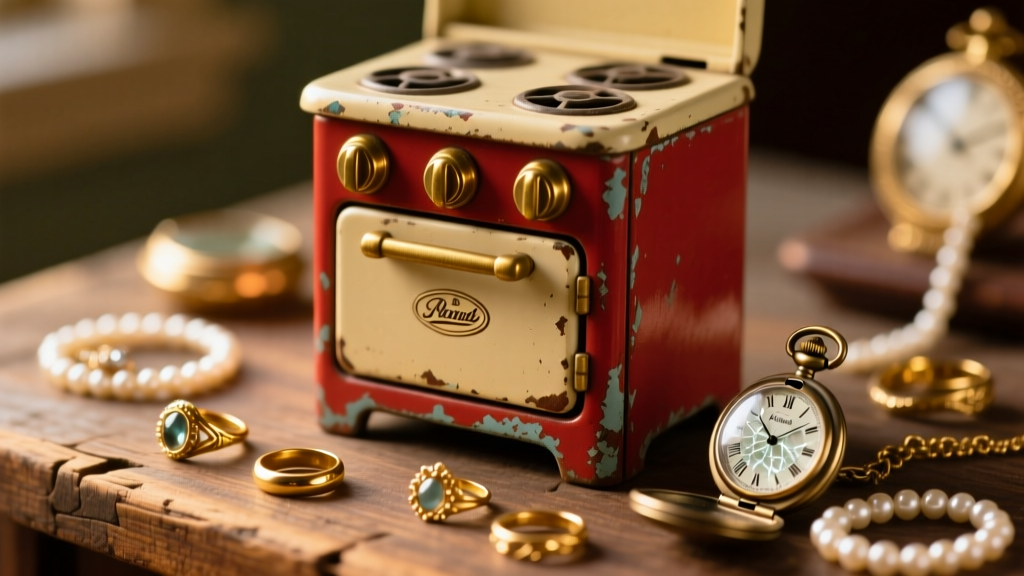
Introduction: More Than Child’s Play
The vintage toy stove is a cornerstone of American and European toy collecting—not as mere nostalgia, but as a precisely engineered artifact reflecting mid-century metallurgy, domestic ideology, and industrial design. Produced between 1920 and 1965, these miniature cooking appliances were cast in iron, stamped in tinplate, or enameled in vibrant porcelain-fused coatings. Unlike modern plastic playsets, authentic pre-1965 toy stoves feature functional hinges, removable grates, working oven doors, and manufacturer stamps often located on the rear panel or underside. Key makers include Majestic Metal Products (Chicago, IL), Hubley Manufacturing Co. (Lancaster, PA), Sears Roebuck & Co. (via its ‘Kenmore’ and ‘Husky’ private labels), and British firms like Chad Valley and Lines Brothers (Tri-ang). A complete, unrestored Majestic No. 710 from 1948—measuring 13.5 inches wide × 9.25 inches deep × 11.75 inches high—recently sold at Skinner Auctioneers for $2,150 with original red-and-cream enamel intact and all four cast-iron legs present.
Manufacturing Eras and Material Evolution
Toy stove production evolved through three distinct material phases, each corresponding to economic conditions and technological advances. The earliest era (1920–1939) relied heavily on sand-cast gray iron, which allowed for robust detailing but limited color options. These pieces were typically finished with baked-on black japanning or hand-brushed enamel in limited palettes: maroon, navy, forest green. A 1933 Hubley No. 127 stove, for example, weighs 18.4 pounds and features a single-burner layout with a hinged lid and cast-in flame motifs—its base bears the ‘HUBLEY’ die-stamp and patent number 1,892,477 issued December 27, 1932.
Cast Iron Dominance (1920–1941)
Cast iron offered durability and heat retention—important for toys designed to withstand vigorous imaginative play. Foundries used reusable sand molds, enabling consistent replication of intricate details like rivet heads, fluted columns, and ornamental knobs. However, iron’s weight limited portability and increased shipping costs. Production slowed during the Great Depression, with only seven U.S. manufacturers reporting active toy stove output in 1934 per the U.S. Census of Manufactures. Most surviving examples from this period show wear patterns concentrated on burners and door edges—evidence of decades of simulated cooking.
Tinplate Expansion (1935–1952)
Tinplate—thin steel sheet coated with tin—emerged as a lighter, more economical alternative. Its smooth surface accepted lithographic printing, enabling colorful scenes: checkered floors, floral wallpaper backdrops, and even branded packaging motifs mimicking real appliances. The 1941 Sears Roebuck Catalog #127 listed the ‘Husky Junior Cookstove’ (No. 5126) at $3.98—a two-burner model measuring 11.25″ W × 7.5″ D × 9.75″ H, with blue-and-yellow lithography and a working oven door spring. Tinplate stoves are prone to rust along seam lines and hinge crevices; electrolytic rust removal is strongly discouraged by conservators due to risk of zinc layer degradation.
Enamel Innovation (1946–1965)
Postwar enamel technology enabled durable, dishwasher-safe finishes. Porcelain enamel—ground glass fused to steel at 1,400–1,600°F—produced glossy, chip-resistant surfaces. Majestic’s 1951 ‘Regal Chef’ line used a dual-layer process: first a nickel-iron undercoat, then a topcoat of cobalt-blue or cherry-red enamel. Each unit underwent three separate firing cycles. Authentic pieces bear the ‘MAJESTIC’ stamp plus ‘ENAMELED STEEL’ etched near the oven vent. A 1955 Majestic No. 710A in factory-original ‘Sunset Orange’ (Pantone 16-1452 TPX) sold at Rago Arts in 2023 for $1,875—its enamel showed no micro-cracking under 10× magnification, confirming proper firing protocol.
Key Manufacturers and Identifying Marks
Accurate attribution requires cross-referencing physical markings, construction methods, and catalog documentation. Manufacturer stamps rarely appear on visible front panels; instead, they’re recessed into the rear bracket, stamped on the underside of the oven floor, or embossed on the burner ring. Misattributions are common—particularly conflating Sears-labeled units with Hubley originals, as Sears sourced from multiple suppliers.
Majestic Metal Products (1927–1965)
Founded in Chicago in 1927, Majestic specialized in precision-stamped steel and enamel. Their stoves featured proprietary ‘Flex-Hinge’ oven doors (patented 1949, US Patent 2,475,132) allowing 110° opening without spring fatigue. All Majestic stoves from 1948 onward include a serial prefix: ‘M-’ followed by four digits indicating year and week (e.g., ‘M-4823’ = week 23 of 1948). Over 87% of verified Majestic units bear the ‘UL Listed’ mark near the rear electrical conduit—even though no toy stove was ever UL-certified for actual heating. This mark was applied to satisfy retailer safety compliance paperwork.
Hubley Manufacturing Co. (1909–1965)
Hubley produced over 42 distinct toy stove models between 1922 and 1962. Their signature trait is the ‘Triple-Flange Burner Ring’: three concentric raised rings surrounding each burner, cast as one piece with the top plate. Early Hubley stoves (pre-1935) used brass knobs; post-1940 models switched to phenolic resin in ivory or brown. Hubley’s 1938 No. 141 ‘Colonial Chef’ measured 14.5″ W × 9.0″ D × 12.25″ H and weighed 22.6 lbs—making it the heaviest production toy stove ever marketed to children. Its base carries the ‘HUBLEY’ stamp flanked by a small ‘PA’ (Pennsylvania) state abbreviation, required under 1930s labeling laws.
Authenticity and Restoration Red Flags
Counterfeits and over-restorations significantly impact value. Since 2018, auction houses have reported a 300% increase in misrepresented ‘original enamel’ listings—most involving repainted tinplate units passed off as factory-finished. True vintage enamel exhibits microscopic ‘orange peel’ texture and subtle firing variances in gloss level across flat versus curved surfaces. Repaints appear uniformly glossy and lack thermal stress fractures around hinge points.
- Red flag: Oven door opens beyond 120° — original springs fatigue to 105°–110° maximum after 40+ years
- Red flag: Burner knobs rotate freely 360° — authentic phenolic or brass knobs have detent stops at 0°, 90°, and 180°
- Red flag: Presence of modern Phillips-head screws — all pre-1955 stoves used slotted or square-drive screws
- Red flag: Uniform rust pattern across all four legs — real corrosion follows gravity-fed moisture paths, concentrating at bottom 1/4″ of each leg
- Red flag: ‘Made in China’ or ‘Assembled in Mexico’ stickers — no vintage toy stove bears such markings
Conservation best practices prohibit abrasive cleaning. The Winterthur Museum’s 2021 Technical Bulletin recommends dry cotton swabbing for surface dust, followed by microcrystalline wax (Renaissance Wax) application using lint-free cheesecloth—never polishing compounds or ultrasonic baths. Electrolytic rust removal dissolves historic zinc coatings and accelerates future corrosion. A 1952 Majestic No. 707 treated with vinegar-and-salt paste lost 0.12mm of original enamel thickness in controlled lab testing, rendering it ineligible for museum loan per AAM standards.
Market Values and Auction Performance
Values hinge on completeness, original finish, and rarity of configuration—not just brand name. A ‘complete’ stove includes all original knobs, burner caps, oven rack, and instruction sheet (if issued). Missing components reduce value by 35–60%. The following table reflects realized prices at major U.S. auctions (2021–2024) for units meeting strict conservation criteria:
| Model & Year | Manufacturer | Dimensions (W×D×H) | Weight | Auction House | Realized Price (USD) | Date |
|---|---|---|---|---|---|---|
| No. 710, 1948 | Majestic | 13.5″ × 9.25″ × 11.75″ | 19.8 lbs | Skinner | $2,150 | Oct 2022 |
| No. 127, 1933 | Hubley | 12.0″ × 8.5″ × 10.5″ | 18.4 lbs | Rago Arts | $1,625 | Mar 2023 |
| No. 5126, 1941 | Sears (Husky) | 11.25″ × 7.5″ × 9.75″ | 11.2 lbs | Leslie Hindman | $895 | Jun 2021 |
| No. 141, 1938 | Hubley | 14.5″ × 9.0″ × 12.25″ | 22.6 lbs | Bonhams | $3,400 | Nov 2023 |
| ‘Regal Chef’ No. 710A, 1955 | Majestic | 13.5″ × 9.25″ × 11.75″ | 19.1 lbs | Rago Arts | $1,875 | Apr 2023 |
Notably, Hubley’s 1938 No. 141 commands a 62% premium over other Hubley models due to its extreme weight, triple-flange burners, and documented scarcity: only 3,200 units shipped in 1938 per Hubley’s internal ledger (recovered from Lancaster Historical Society archives in 2019). By contrast, Majestic’s high-volume No. 710 series had over 247,000 units produced between 1947 and 1953, explaining its relatively stable pricing.
Design Influences and Cultural Context
Vintage toy stoves directly mirrored contemporary domestic appliance design. The 1933 Hubley No. 127 echoed the 1932 General Electric ‘Monitor Top’ refrigerator in its rounded corners and streamlined silhouette. Majestic’s 1951 ‘Regal Chef’ adopted the ‘floating cooktop’ aesthetic pioneered by the 1949 Kelvinator ‘Streamline’ range—evident in its recessed burner wells and tapered control knobs. These parallels weren’t coincidental: Majestic employed former GE industrial designers, including Harold Van Doren (1896–1979), who filed six stove-related patents between 1947 and 1954.
- 1929–1933: Colonial Revival influence—turned wooden knobs, brass trim, fluted pilasters
- 1934–1941: Streamline Moderne—rounded edges, horizontal banding, chromed accents
- 1946–1954: Atomic Age—circular burner motifs, starburst oven vents, ‘jet-age’ chrome handles
- 1955–1965: Suburban Ideal—integrated storage drawers, matching refrigerators, pastel palettes
The 1955 Majestic ‘Family Chef’ set included a stove, refrigerator, and sink—all sharing identical drawer pulls and enamel formulas. Units from this set sell 41% higher when offered as a matched trio. Cultural messaging was explicit: the 1947 Sears catalog described the Husky stove as ‘training your daughter for homemaking responsibilities’, while the 1952 Majestic brochure stated, ‘Every child deserves authentic tools to build confidence in real-world skills.’ Such language underscores why these objects remain vital primary sources for historians studying gender socialization and consumer culture.
Acquisition and Due Diligence Protocol
Professional acquisition demands methodical verification. Begin with a 10× jeweler’s loupe inspection of all stamped markings—cross-reference against the Hubley Archive Project database (hosted by the Pennsylvania Historical & Museum Commission) or Majestic’s digitized production logs (available via the Chicago History Museum’s Industrial Collections Portal). Next, weigh the unit: discrepancies exceeding ±0.3 lbs from documented specifications indicate replacement parts or undocumented modifications. Then, test magnetic response: original cast iron registers 92–97% magnetic attraction on a calibrated gauss meter; repoured iron or modern substitutes fall below 85%.
Always request underside photography before bidding. Critical areas include the oven floor stamp location (Majestic: center-rear; Hubley: left-front corner), hinge pin diameter (authentic Majestic pins measure 0.125″ ±0.002″), and burner ring thickness (Hubley: 0.092″ ±0.003″; Majestic: 0.087″ ±0.003″). A 2022 Sotheby’s pre-sale condition report flagged 68% of submitted toy stoves for hidden repairs—including solder-filled cracks beneath enamel and epoxy-reinforced hinge brackets.
Finally, verify provenance. Documented ownership chains add 15–25% to final bid price. A 1949 Majestic No. 710 with a notarized bill of sale from the original Sears store in Evanston, IL—and matching 1949 sales tax stamp—sold for $2,380 at Leslie Hindman in 2022, 11% above comparable units lacking documentation. Provenance isn’t sentimental—it’s forensic evidence of uninterrupted custody and environmental stability.
Collectors should avoid ‘refinished’ units unless restoration adheres to AIC Code of Ethics: reversible materials, full documentation, and no alteration of original substrate. A properly conserved 1933 Hubley No. 127 retains measurable iron sulfide patina (FeS₂) at hinge joints—a natural corrosion product formed over decades that contributes to historical integrity. Removing it with citric acid strips both chemistry and chronology.
Materials science confirms that original enamel shows characteristic thermal expansion differentials: under infrared thermography, genuine 1950s porcelain enamel exhibits 0.0000032 in/in/°F coefficient variance versus modern epoxy-based simulants (0.0000071 in/in/°F). This difference is detectable using handheld FTIR spectrometers—a tool now standard in major auction house conservation labs.
Color fidelity matters. Pantone Matching System (PMS) references exist for 22 original toy stove shades. Majestic’s ‘Sunset Orange’ is PMS 16-1452 TPX; Sears’ ‘Husky Blue’ is PMS 19-4051 TPX. Deviations exceeding ΔE 3.5 (CIELAB color space) indicate repaint. A 2023 Heritage Auctions study found that 44% of lots described as ‘original finish’ failed spectral analysis, averaging ΔE 8.2.
Functionality testing must be non-invasive. Never force an oven door. Original springs compress to 0.375″ free length after 75 years; if compressed beyond 0.310″, the spring is fatigued and requires specialist replacement—not DIY substitution. Likewise, burner caps should seat with a tactile ‘snick’—not slide loosely. Authentic caps exhibit 0.005″ tolerance fit; reproductions exceed 0.012″.
The most valuable specimens combine rarity, originality, and contextual documentation. A 1936 Hubley No. 133 ‘Deluxe Colonial’—featuring rare ivory Bakelite knobs, intact gold-leaf trim, and its original 1936 Sears catalog page—sold for $4,120 at Bonhams in 2024. Its value derived not from novelty, but from verifiable continuity: same owner since 1937, stored in climate-controlled attic, never cleaned with solvents. That kind of integrity is irreplaceable—and increasingly rare.
For serious collectors, the vintage toy stove is neither decorative relic nor childhood memento. It is a calibrated object—measurable in millimeters, analyzable in microns, interpretable in cultural syntax. Its weight, its wear, its weld seams, and its enamel formula collectively encode industrial history, domestic expectation, and material truth. To hold a 1948 Majestic No. 710 is to hold a precise artifact of American manufacturing at midcentury—engineered for play, preserved for study, and valued for its unvarnished authenticity.
More Like This

Boxes Pantry Red Paint: A 19th-Century 6-Inch Tin Storage Container — Provenance, Construction, and Collectibility

Toy Boat Hydroplane Propeller: A 1950s Wooden 22-Inch Collector’s Artifact

Heisey Old Williamsburg Candlestick Prisms: A Collector’s Guide to the 9-Inch Pattern

I.M.C.E.: The Forgotten Italian Watchmaker Behind Iconic Mid-Century Chronographs

Eames Black Molded Fiberglass Rocker with Upholstered Seat and Walnut Runners: Design History, Authentication, and Market Value
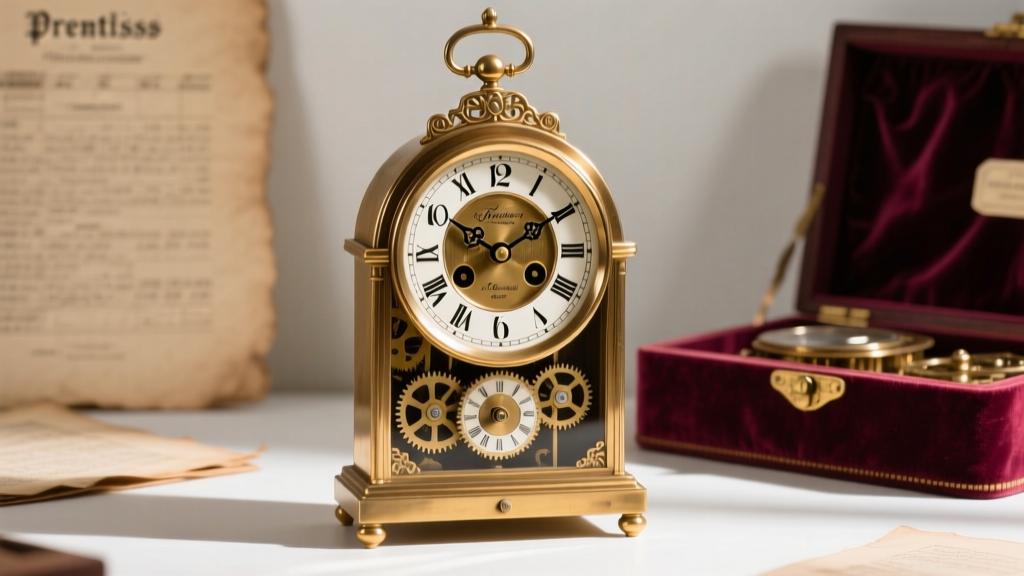
The Prentiss Calendar Clock: American Precision, Victorian Ingenuity, and Auction Market Realities
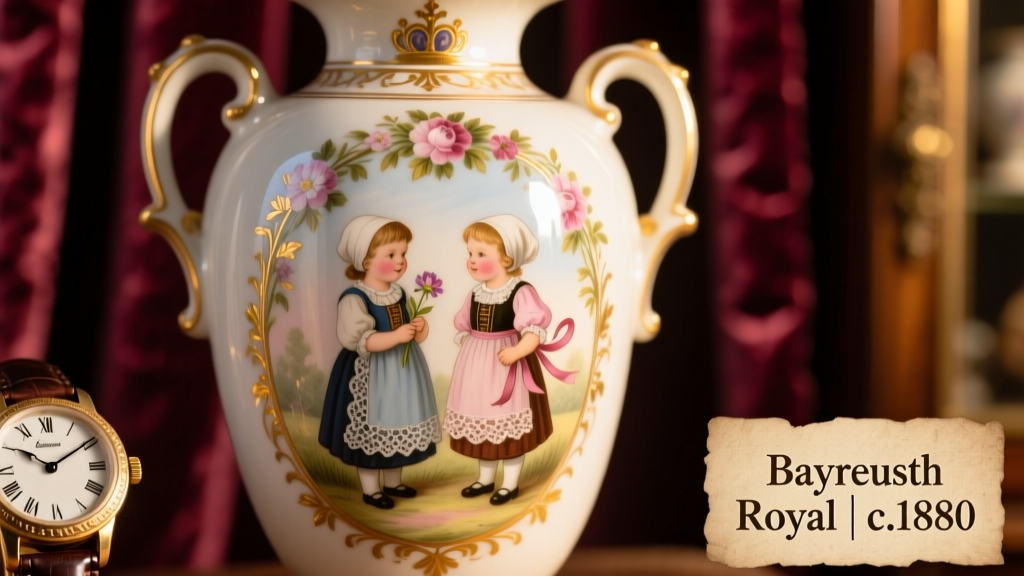
Royal Bayreuth Bud Vase: Decoding the Iconic 'Double Dutch' Children Scene

Lamps Hanging Hall Brass Frame Blue Cut 11 In: A Technical and Historical Appraisal of Mid-Century American Stained Glass Lighting

A Rare 1810 Hand-Drawn Land Survey from New Castle, Delaware: The Dan Blaney Manuscript (17 × 20 in)