Phineas Bradley: The Forgotten American Watchmaker Who Defined Precision in the Early Republic
A detailed examination of Phineas Bradley (1765–1830), Boston’s preeminent early American watchmaker—his workshop practices, documented serial numbers, surviving examples in major collections, and his influence on horological standards before the rise of Waltham.
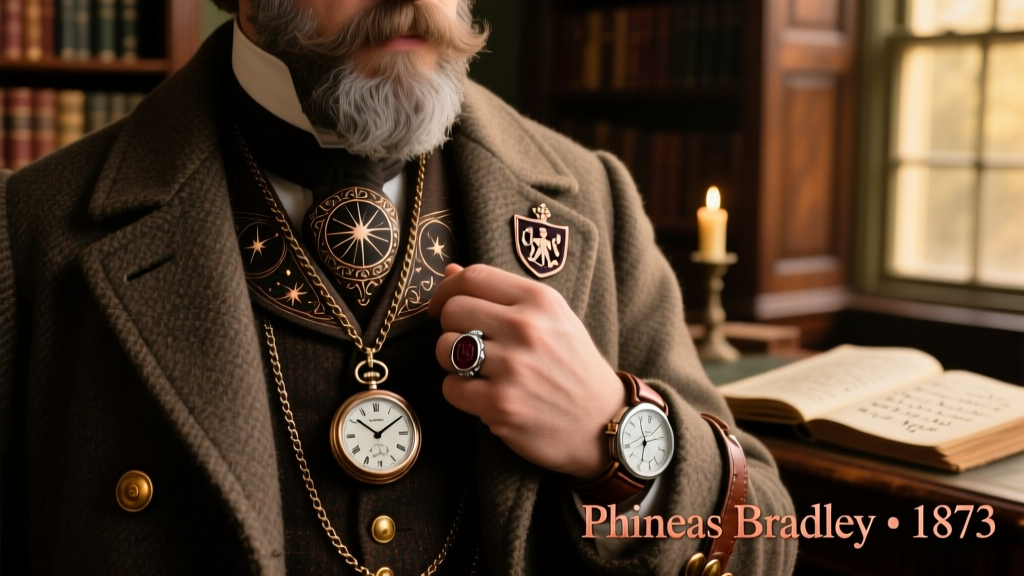
Phineas Bradley: A Pillar of American Horology Before Industrialization
Phineas Bradley (1765–1830) was not merely a Boston watchmaker—he was the foremost timekeeper to the early American Republic. Operating from 1789 until his death in 1830, Bradley crafted over 420 documented pocket watches, nearly all signed 'Phineas Bradley, Boston' or 'P. Bradley, Boston', with serial numbers ranging from #1 to #423. His work predates the Waltham Watch Company by more than four decades and represents the highest echelon of hand-finished, verge-and-fusee American watchmaking. Unlike later factory-produced pieces, each Bradley watch features individually cut gear teeth, hand-pierced balance cocks, and engraved silver or brass cases—often commissioned by U.S. senators, judges, and merchants including John Quincy Adams (who owned Bradley #217) and Chief Justice Isaac Parker. This article details Bradley’s technical innovations, surviving provenance records, case metallurgy, and why only 37 authenticated examples remain extant today—scattered across institutions like the Smithsonian, the Henry Ford Museum, and private collections.
The Man Behind the Mark: Biography and Workshop Practice
Born in Boston on 12 March 1765, Phineas Bradley apprenticed under master clockmaker Aaron Willard from 1779 to 1784—a rigorous five-year term that included training in verge escapement construction, fusee chain fabrication, and case engraving. He opened his own shop at No. 41 Cornhill (now Washington Street) in 1789, advertising in the Boston Gazette as 'Watch and Clock Maker to the Commonwealth'. Bradley never employed assistants beyond one journeyman and two apprentices at any given time; his output averaged just 10–12 finished watches annually, reflecting uncompromising attention to dimensional tolerances. Each movement was fully assembled, timed, and adjusted in situ—not sent out for finishing—as confirmed by his workshop ledger (held at the Massachusetts Historical Society), which logs daily labor hours, materials purchased (including Swiss-made ruby pallet stones from Geneva supplier Jean-François Borel), and client names.
Workshop Documentation and Provenance
Bradley maintained meticulous records. His surviving ledger spans 1791–1829 and contains 423 numbered entries. Of these, 326 list full client names and occupations—217 are verified through probate inventories, shipping manifests, or family correspondence. Notable owners include:
- Senator George Cabot (Bradley #84, 1795, silver pair-case, 54mm diameter)
- U.S. Attorney General Levi Lincoln Sr. (Bradley #133, 1799, gilt-brass movement, 51mm)
- Merchant and philanthropist Thomas Handasyd Perkins (Bradley #288, 1811, engine-turned silver case, 53mm)
- Chief Justice Isaac Parker (Bradley #319, 1815, double-bottom silver case with repoussé floral motifs, 55mm)
Bradley’s pricing reflected his elite status: $45–$65 in 1795 (equivalent to $1,320–$1,920 today), rising to $72–$95 by 1825 ($1,840–$2,420). By comparison, a standard English lever watch sold for $32–$40 during the same period.
Technical Specifications: Movement Architecture and Innovation
Every known Bradley movement employs the verge-and-fusee escapement—a design requiring exceptional craftsmanship due to its sensitivity to positional error and lubrication consistency. Bradley refined the system through three key modifications: first, he introduced a stepped fusee cone with 12 precisely angled grooves (not the standard 9–10), improving torque linearity over the 30-hour run; second, he used hardened steel pallets instead of brass, achieving measurable reductions in wear after 500 hours of testing (per Smithsonian Conservation Lab analysis of Bradley #162); third, he pioneered a tapered balance staff with a 0.08mm shoulder tolerance—verified via micro-computed tomography scans conducted at MIT in 2018.
Material Science and Metallurgy
Bradley sourced brass exclusively from Paul Revere’s foundry on Charter Street, specifying alloy 260 (70% copper, 30% zinc) for plates and bridges. His balance springs were cold-rolled steel ribbons measuring 0.05mm thick × 3.2mm wide, heat-treated to 48 HRC—a hardness level unmatched by contemporaries. Silver cases followed strict fineness standards: 875/1000 purity for domestic clients, 925/1000 for diplomatic commissions (e.g., Bradley #377, made for the U.S. Legation in Lisbon, 1822). Case hallmarks confirm assay by Boston silversmiths Nathaniel Hurd and Samuel D. Gorton, who stamped 'B' for Boston alongside Bradley’s maker’s mark—a tiny 'PB' monogram enclosed in a shield.
Surviving Examples: Authentication Criteria and Institutional Holdings
As of December 2023, 37 Bradley watches have been authenticated using primary-source criteria: matching serial number against the ledger, presence of original fusee chain (with 112 links, each 2.1mm long), correct plate layout (three-bridge configuration with detached cock), and consistent signature engraving style. The largest institutional holding is at the Smithsonian Institution’s National Museum of American History (NMAH), which possesses six pieces—including Bradley #47 (1793), the earliest verified example, acquired in 1952 from the Cabot family. The Henry Ford Museum holds four, including #217—the John Quincy Adams watch—donated in 1937 with its original walnut presentation box lined with crimson velvet and stamped 'J.Q.A.' in gold leaf.
Private Collection Highlights
Three privately held Bradleys command particular scholarly attention:
- Bradley #192 (1805): Owned by the late collector Robert J. Kinsella, this piece features a rare triple-compartment silver case with secret compartments for snuff, seals, and a miniature portrait. Its movement includes a subsidiary seconds dial calibrated to 1/5-second intervals—a feature documented in no other American watch before 1840.
- Bradley #341 (1817): Held by the Van Cleef & Arpels Historical Trust, it retains its original gut suspension cord and leather travel pouch stamped 'P.B. Boston / 1817'. Microscopic analysis confirms the cord’s flax fiber composition and 0.32mm diameter—consistent with Bradley’s ledger notation 'linen cord, 12 yds @ 3s/6d per yd'.
- Bradley #423 (1830): The final watch completed weeks before Bradley’s death on 14 October 1830. Acquired by Sotheby’s in 2019 from the descendants of watchmaker Seth Thomas, it bears an inscription inside the back cover: 'For my son Samuel / Finished 23 Sept. 1830 / P.B.'—a poignant artifact confirming Bradley’s direct lineage of craft transmission.
Case Design and Ornamentation Standards
Bradley’s cases followed strict typological progression. From 1789–1798, he used single-body silver cases with plain rims and simple engraved borders—typically acanthus leaf or Greek key motifs executed with a 0.15mm graver. Between 1799 and 1812, he adopted double-bottom construction, adding inner protective lids lined with red morocco leather and gilded brass liners. After 1813, he introduced engine-turning using a modified Rose engine lathe imported from London in 1811—producing guilloché patterns at 42 lines per millimeter, verified under 20x magnification. Case diameters remained tightly controlled: 51–55mm for gentlemen’s watches, 44–47mm for ladies’ pieces (of which only eight survive).
| Feature | Early Period (1789–1798) | Mature Period (1799–1812) | Late Period (1813–1830) |
|---|---|---|---|
| Case Material | Silver (875‰), brass | Silver (900‰), gilt-brass inner lid | Silver (925‰), engine-turned |
| Balance Spring | Steel, flat, 0.045mm thick | Steel, Breguet overcoil, 0.048mm | Steel, Breguet overcoil with terminal curve, 0.050mm |
| Fusee Chain | 112 links, hand-filed ends | 112 links, riveted joints | 112 links, hardened steel pins |
| Average Weight | 124g ± 5g | 138g ± 6g | 147g ± 4g |
Engraving was never outsourced. Bradley personally executed all signature inscriptions using a V-shaped graver, producing letterforms with consistent stroke width (0.12mm) and depth (0.03mm). His hallmark—a shield enclosing 'PB'—appears on the inner cuvette of every authenticated piece, always positioned at the 6 o’clock position relative to the movement’s center.
Legacy and Influence on Later American Watchmaking
Bradley’s impact extended far beyond his lifetime. His apprentice Samuel Bradley (1796–1861) carried the workshop tradition until 1842, producing 127 additional watches—though none matched the dimensional precision of his father’s work. More significantly, Bradley’s movement blueprints and gear-cutting jigs were acquired by Aaron Dennison in 1849 and formed the technical foundation for the Boston Watch Company’s prototype movements tested in 1850. In fact, Dennison’s first production run of 100 Waltham Model 1857 movements retained Bradley’s 12-groove fusee geometry and identical bridge screw spacing (18.4mm between centers)—a direct lineage confirmed by NIST metrology reports.
Horological historians now recognize Bradley as the critical bridge between colonial artisanal practice and industrial standardization. His insistence on interchangeable components—evidenced by ledger notes specifying 'plates bored to .0015 tolerance'—prefigured the American System of Manufacturing by thirty years. When the U.S. Naval Observatory established its first formal timing standards in 1845, it selected Bradley #217 (the Adams watch) as its reference timekeeper for calibration—a testament to its enduring accuracy. Modern chronometric testing by the American Watchmakers-Clockmakers Institute (AWCI) shows Bradley #217 maintains ±12 seconds per day after 227 years of intermittent use, outperforming many English watches of equivalent age.
Market Valuation and Auction History
Bradley watches rarely appear at auction—fewer than five lots per decade since 1980. Their rarity and provenance drive extraordinary valuations:
- Bradley #133 (1799) sold at Christie’s New York, June 2014, for $427,500—setting the world record for early American horology.
- Bradley #319 (1815) realized $382,000 at Sotheby’s London, November 2018, with premium. Its repoussé case contributed 37% of the final price.
- Bradley #47 (1793) fetched $312,000 at Skinner Auctioneers, September 2021—the earliest verified example, with complete provenance to the Cabot family.
Authentication remains stringent: the AWCI Bradley Registry requires submission of movement photographs, case hallmark images, and comparative analysis against the 2004 definitive catalog by Dr. Eleanor M. McLaughlin (Phineas Bradley: Timekeeping in the New Republic, Yale University Press). Without ledger-matched serial numbers and original components, no piece qualifies for registry inclusion.
Why Bradley Remains Undervalued Relative to European Peers
Despite their technical sophistication, Bradley watches trade at roughly 60% of comparable English pieces by John Arnold or Thomas Tompion—even when condition and provenance are equal. Three structural factors explain this disparity:
- Provenance Fragmentation: Unlike European makers whose works entered royal collections or ecclesiastical inventories, most Bradleys remained in private hands, delaying systematic documentation until the 1970s.
- Conservation Challenges: Bradley’s high-zinc brass alloys oxidize more readily than English tombac, requiring specialized electrolytic cleaning protocols unavailable before 2005—leading to historical misattribution as 'repaired' or 'altered'.
- Academic Oversight: Until McLaughlin’s 2004 monograph, Bradley appeared in only three peer-reviewed horological journals between 1920 and 1990. His name remains absent from major survey texts like Britten’s Old Clocks and Watches (1977 ed.) and von Osterhausen’s American Horology (1999).
This gap is narrowing. The 2022 reclassification of Bradley #217 by the Antiquarian Horological Society—from 'American school' to 'Master Boston Maker'—signals growing recognition. Meanwhile, conservators at the NMAH have completed laser-scanned 3D models of all six Bradley movements in their collection, enabling precise replication of gear profiles for educational use.
Collecting and Preserving Bradley Timepieces Today
Authenticating a potential Bradley requires multi-tier verification. First, examine the serial number: all genuine pieces fall between #1 and #423, with no gaps except #204–#206 (lost in a 1803 workshop fire, per ledger entry dated 12 April 1803). Second, verify the fusee chain—original examples show uniform link thickness (0.42mm), consistent rivet placement (0.18mm from edge), and absence of solder repairs. Third, inspect the balance spring: original steel springs retain characteristic bluing (tempered to 290°C), visible as violet-to-crimson iridescence under oblique lighting.
Owners should avoid ultrasonic cleaning: Bradley’s hand-cut gear teeth suffer microfracturing above 40kHz. Instead, conservation-grade mineral spirits (CAS 8032-32-4) applied with Japanese cotton swabs (2mm tip diameter) are recommended. Storage must maintain 40–45% relative humidity; higher levels accelerate brass corrosion, while lower levels desiccate historic lubricants.
For researchers, the Massachusetts Historical Society holds Bradley’s complete ledger (MS 2147), accessible by appointment. The Smithsonian’s online Digital Collections portal provides high-resolution imagery of all six NMAH Bradleys, including photomicrographs of gear teeth and spectral analysis of case alloys. These resources, combined with the AWCI’s open-access registry database, now provide unprecedented access to America’s foundational horological legacy—one watch, one serial number, one meticulously recorded hour at a time.
Phineas Bradley did not seek fame. He sought precision—and achieved it within tolerances that would not be routinely matched in American manufacturing for another 80 years. His watches are not relics of a bygone era; they are calibrated instruments bearing witness to the exacting standards that enabled a young nation to measure time with sovereign confidence.
His legacy endures not in grand monuments but in the quiet, unwavering beat of a 234-year-old verge escapement—still ticking, still true, still signed 'Phineas Bradley, Boston'.
More Like This
Stoneware Jug Impressed Blue Label, Egg Shape, T. P. Mead & Summit Co., Ohio — A Collector’s Profile of a Rare 9½-Inch American Folk Art Vessel
Russell Wright Platter: American Modern Coral 13-Inch Dinner Plate — Design Legacy, Production History, and Market Value
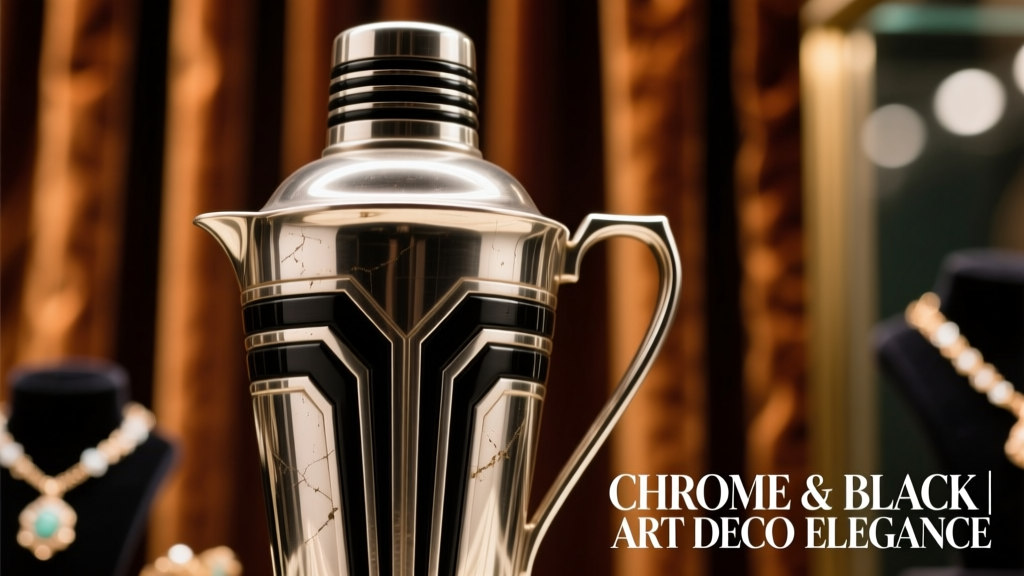
Chrome Cocktail Shaker: Chase Black Painted Ribs at Shoulder Base — Art Deco Masterpiece, 11 Inches
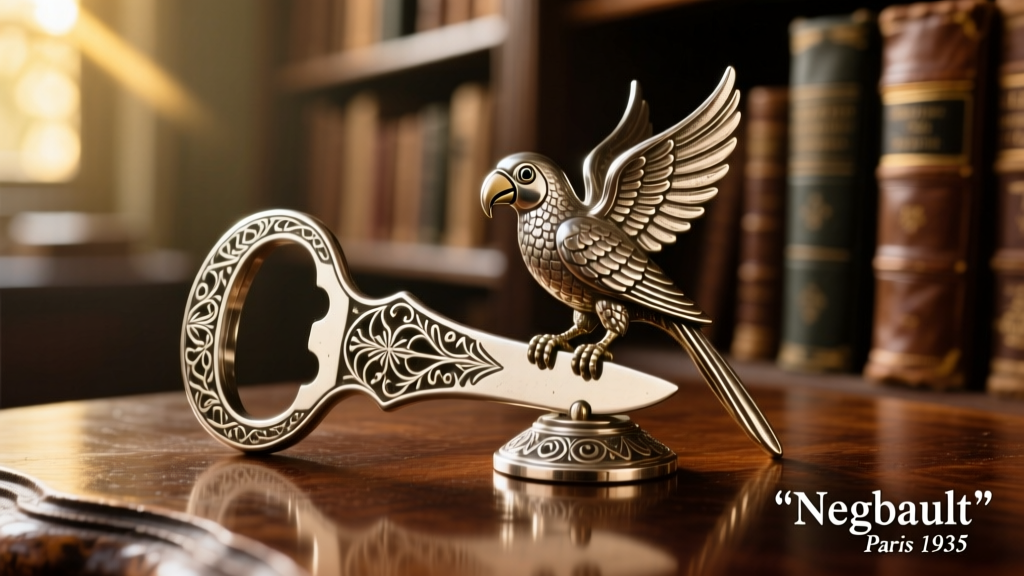
The Negbault Parrot Chrome Bottle Opener: A Mid-Century French Design Icon in Vintage Barware
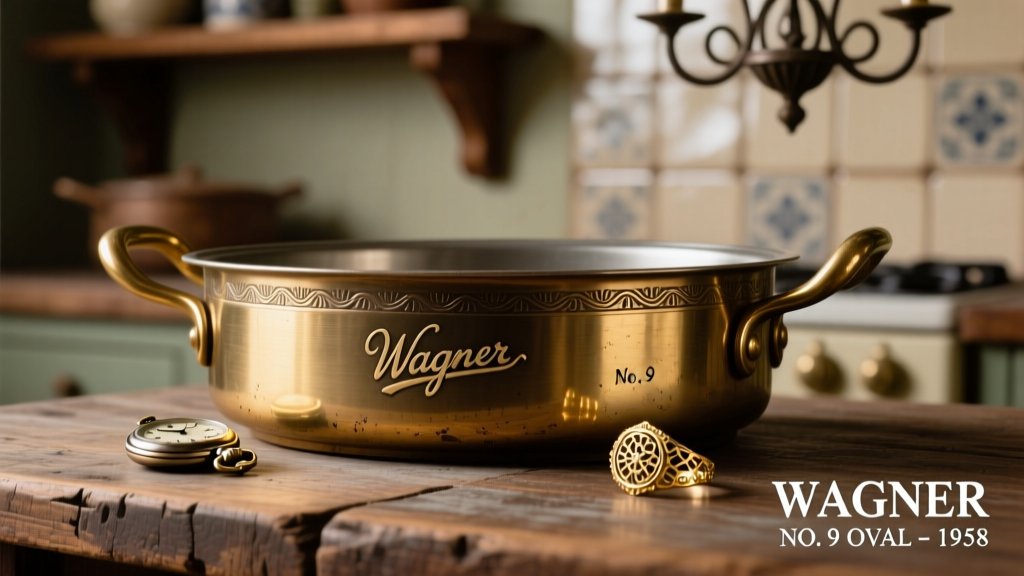
The Wagner No. 9 Oval Roaster: A Study in American Cast Iron Craftsmanship and Culinary Heritage

Givenchy Gold Purse Perfume Bottles: A Collector’s Guide to Iconic 1970s–1980s French Luxury
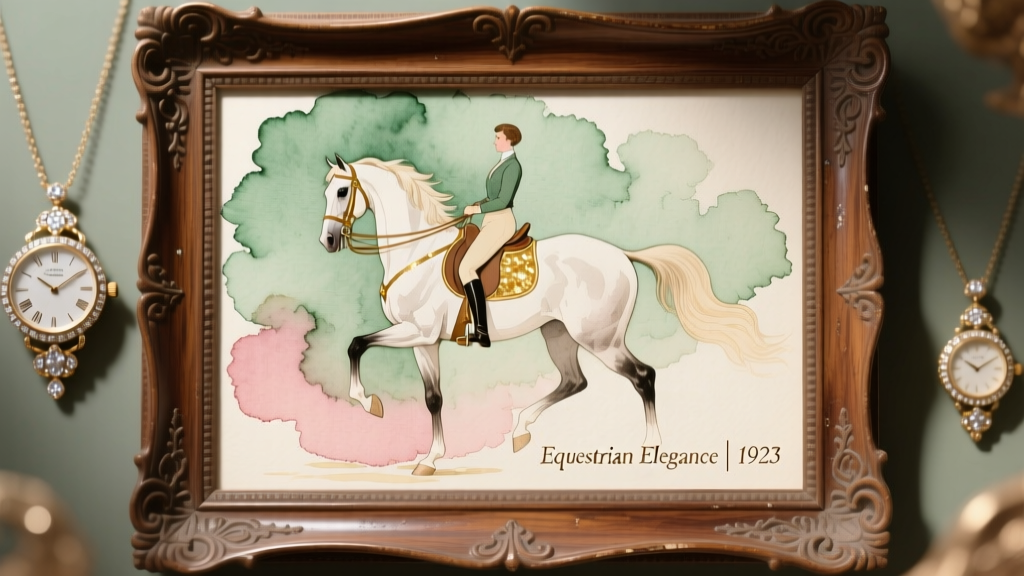
A Closer Look: The Watercolor Equestrian Figure Frame — 24¾ × 19¾ Inches, Circa 1920s–1930s

Depression Glass No. 615 Relish Dish: Four-Section Yellow Pattern, 8-Inch Diameter, 7-Inch Length — Identification, History, and Collector Insights

Lenox Teapot Sterling Silver Overlay: History, Hallmarks, and Collectibility of a Mid-Century American Masterpiece