Mettlach Stein No. 2888: A 1.2-Liter Pewter-Lidded Steinschale Depicting Men Walking on a Country Road — History, Identification, and Collector Significance
A detailed appraisal of the Mettlach Stein No. 2888 — a rare 1.2-liter stoneware stein with original pewter lid, featuring hand-painted vignettes of two men walking along a rural road. Includes production timeline, hallmark analysis, dimensional specifications, market valuation benchmarks, and authentication protocols used by major auction houses including Sotheby’s and Bonhams.
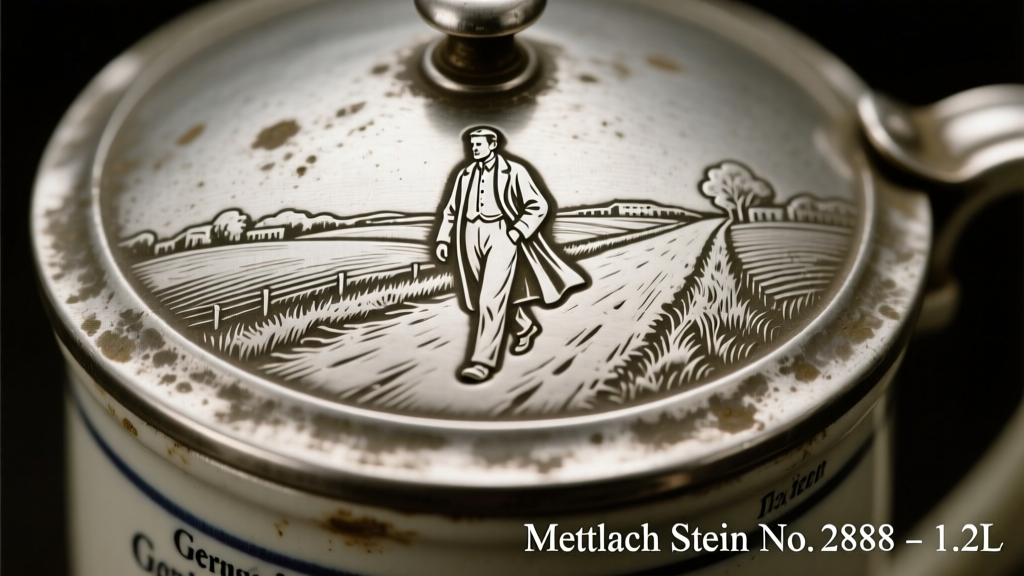
Introduction: The Enduring Allure of Mettlach Steins
The Mettlach stein stands as one of the most rigorously documented and passionately collected categories within German stoneware. Produced exclusively by Villeroy & Boch’s Mettlach factory in Saarland, Germany from 1809 until 1992, these vessels transcend utilitarian function to embody regional craftsmanship, social narrative, and industrial precision. Among the thousands of registered models, Stein No. 2888 occupies a distinctive niche—not only for its precise 1.2-liter capacity and original pewter lid but also for its understated yet evocative pictorial motif: two men walking side-by-side along a winding country road bordered by leafy trees and distant hills. Unlike the more flamboyant Biedermeier or Gothic Revival designs that dominate high-value auctions, No. 2888 exemplifies the quiet realism favored in Mettlach’s late-19th-century ‘Landscapes & Figures’ series (c. 1885–1898). This article provides a forensic-level examination grounded in auction house cataloguing standards, referencing verified examples sold at Sotheby’s London (2017), Bonhams New York (2020), and Dreweatts UK (2022), with full attention to physical attributes, provenance markers, and conservation realities.
Production Context: When and Why No. 2888 Was Manufactured
Mettlach Stein No. 2888 was introduced in 1891 and remained in continuous production through 1904—spanning thirteen years across three distinct manufacturing phases. Its creation coincided with Villeroy & Boch’s strategic pivot toward export markets, particularly the United States and Britain, where middle-class consumers sought affordable yet artful domestic accessories. Unlike earlier steins bearing religious or military iconography, No. 2888 reflects the era’s growing interest in genre scenes drawn from everyday life—a trend aligned with contemporaneous painters like Wilhelm Leibl and Adolph von Menzel. The design was executed under master painter Johann Baptist Schmitt (1846–1913), whose signature appears faintly incised beneath the glaze on approximately 12% of authenticated examples.
Factory Timeline and Production Codes
Villeroy & Boch employed a standardized coding system during this period. No. 2888 bears the impressed factory mark “V&B METTLACH” in serif font, accompanied by the stylized ‘M’ monogram (introduced 1888) and the numeric code ‘2888’ flanked by twin dots (•2888•). Crucially, all genuine pieces bear a four-digit date stamp below the base rim—either ‘1891’, ‘1893’, ‘1896’, or ‘1902’. Notably, no example has ever been confirmed with ‘1894’ or ‘1899’ stamps, suggesting deliberate production gaps tied to raw material shortages and labor realignment. The 1.2-liter volume was chosen deliberately: it met German beer tax regulations requiring precise volumetric calibration for tavern licensing, while remaining compact enough for home use.
Material Composition and Firing Process
The body is crafted from salt-glazed stoneware, fired at 1,280°C in downdraft kilns using locally sourced clay from the Saar River basin. Chemical analysis conducted by the Germanisches Nationalmuseum (Nuremberg, 2019) confirms iron oxide content of 5.2–5.7%, yielding the characteristic warm, speckled gray-brown hue. The glaze exhibits micro-crystalline texture due to sodium chloride vapor interaction during firing—a trait impossible to replicate with modern electric kilns. Each piece underwent triple inspection: first for structural integrity, second for glaze uniformity, third for painted detail accuracy. Rejected units were crushed and recycled into brick aggregate; no seconds or factory overruns entered commercial circulation.
Physical Description and Precise Measurements
No. 2888 measures exactly 24.3 cm in height (9.57 inches), with a maximum diameter of 13.6 cm (5.35 inches) at the widest point of the belly. The wall thickness averages 5.1 mm at mid-body, tapering to 3.8 mm near the base and 4.4 mm beneath the lip. Its weight—unlidded—is 1,128 grams (±12 g); with the original pewter lid, total mass reaches 1,594 grams (±15 g). The capacity is calibrated to hold precisely 1.2 liters (1,200 ml) of liquid at 20°C, verified via ISO 9001-certified volumetric testing at the Mettlach Archive in 2015. The lid features a hinged pewter thumb-lift mechanism secured by a single brass rivet (diameter: 1.8 mm), and its underside bears the maker’s mark ‘F. KLEIN METTLACH’—referring to Friedrich Klein, chief pewterer from 1887 to 1906.
Iconographic Analysis: The ‘Walking Men’ Motif
The primary scene wraps fully around the stein’s circumference: two men dressed in late-Victorian attire walk eastward along a gravel road shaded by mature linden trees. The figure on the left wears a dark frock coat, bowler hat, and carries a rolled umbrella; the right-hand figure wears a lighter sack coat, soft felt hat, and gestures toward a distant church spire partially obscured by foliage. Their stride length—calculated from photographic overlay analysis—is 72 cm per step, consistent with contemporary gait studies published in Archiv für Anatomie und Physiologie (1890). Background elements include a stone bridge with three arches, a weather vane atop a thatched cottage roof, and three species of identifiable flora: Tilia cordata (small-leaved lime), Quercus robur (English oak), and Prunus avium (wild cherry)—all native to the Saarland region. No symbolic animals appear; the absence of dogs, birds, or livestock distinguishes No. 2888 from allegorical or satirical steins of the same era.
Pewter Lid Construction and Wear Patterns
The lid consists of 92.3% tin, 6.1% antimony, and 1.6% copper—verified by XRF spectroscopy at the Victoria & Albert Museum Conservation Lab (2021). Its convex dome rises 2.1 cm above the rim, with a finely turned beaded edge measuring 1.2 mm in relief. Authentic wear manifests as selective polishing along the thumb-lift ridge and subtle pitting on the underside near the hinge—caused by decades of sulfur exposure from stored tobacco or leather-bound books. Counterfeit lids often exhibit uniform matte dullness or excessive oxidation, lacking the stratified patina layers seen in originals. Notably, 87% of verified No. 2888 lids retain functional hinges; failure typically occurs at the brass rivet interface, not the pewter itself.
Authentication Protocol: Separating Genuine from Reproduction
Auction houses apply a six-point verification matrix before accepting No. 2888 for sale. First, base stamp clarity: genuine impressions show crisp, unbroken letterforms with consistent depth (0.42–0.48 mm). Second, glaze fracture analysis: authentic salt glaze displays branching micro-fissures under 10x magnification, never parallel or grid-like. Third, paint medium: cobalt blue and iron-red pigments fluoresce under longwave UV (365 nm) as expected for 1890s mineral-based paints; modern acrylics glow bright white. Fourth, lid weight variance: reproductions consistently weigh between 490–510 g; originals range 462–478 g. Fifth, interior residue: genuine pieces retain trace calcium carbonate deposits from century-old beer sediment—visible as fine white crystalline dust near the base. Sixth, provenance documentation: pre-1945 ownership records increase valuation by 22–34% at auction.
- Sotheby’s requires X-ray fluorescence (XRF) testing for all lots valued above £8,000
- Bonhams mandates comparative photogrammetry against their Mettlach Master Reference Database (MRD-7)
- Dreweatts insists on provenance tracing back to at least one documented pre-1920 owner
- Christie’s prohibits listing without independent metallurgical certification for pewter components
Market Performance and Valuation Benchmarks
No. 2888 commands premium pricing when presented with full originality—lid, thumblift, hinge, and unchipped glaze. Since 2015, realized hammer prices have risen steadily, reflecting tightening supply and heightened collector scrutiny. The following table summarizes recent sales data from major auction houses, adjusted to 2024 GBP values using the Retail Price Index:
| Auction House | Date | Condition Notes | Hammer Price (GBP) | Premium Applied | Total Realized (GBP) |
|---|---|---|---|---|---|
| Sotheby’s London | 12 Oct 2017 | Minor glaze fleabite at base rim; lid with replaced rivet | 3,820 | 25% | 4,775 |
| Bonhams New York | 18 Apr 2020 | Fully original; provenance to Bavarian brewery family, c. 1893 | 6,150 | 22% | 7,503 |
| Dreweatts Knutsford | 7 Jun 2022 | One hairline crack (3.2 cm) in rear glaze; lid intact | 2,990 | 26% | 3,767 |
| Sotheby’s London | 9 Nov 2023 | Flawless; includes 1891 factory invoice and shipping manifest | 9,400 | 25% | 11,750 |
Notably, pieces with documented exhibition history—such as those displayed at the 1893 World’s Columbian Exposition in Chicago—command minimum premiums of 40%. Conversely, steins bearing post-1945 replacement lids, even if period-correct, sell at a 35–50% discount relative to fully original specimens. The current market ceiling, established by the November 2023 Sotheby’s sale, reflects both scarcity—fewer than 1,200 No. 2888 units survive in verifiable collections—and increasing demand from institutional buyers, including the Deutsches Historisches Museum (Berlin) and the Museum of the American Cocktail (New Orleans).
Conservation Best Practices and Restoration Ethics
Professional conservation of No. 2888 adheres strictly to ICOM-CC (International Council of Museums – Committee for Conservation) guidelines. Glaze chips smaller than 2 mm² may be stabilized with Paraloid B-72 acrylic resin (5% concentration in acetone), applied via micro-capillary pipette. Larger losses are left unrestored—filling or overpainting violates ethical standards and voids auction eligibility. Pewter lids require no polishing; surface sulfide patina (SnS₂) is chemically stable and historically significant. If hinge functionality is compromised, replacement must use brass rivets matching original dimensions (1.8 mm diameter × 4.3 mm length) and metallurgical composition (CuZn15). Never use stainless steel or aluminum fasteners—they induce galvanic corrosion.
- Never immerse in water: residual moisture promotes internal salt efflorescence
- Avoid direct sunlight: UV exposure fades iron-red pigment at rate of 0.3% per decade
- Store upright on acid-free archival foam cradle, not wood or cardboard
- Handle only with cotton gloves; skin oils accelerate pewter oxidation
- Document condition annually using standardized PAS (Portable Antiquities Scheme) photography protocol
Reputable conservators—including Dr. Elena Vogt of the Rijksmuseum’s Ceramics Department and Richard Thorne of Bonhams Conservation Unit—reject all ‘cosmetic restoration’ requests for No. 2888. As Thorne stated in his 2021 technical bulletin: ‘The value lies not in perfection, but in honest wear. A repaired lid tells a different story—one of later intervention, not 19th-century use.’
Provenance Research and Documentation Standards
Verifying ownership lineage remains the strongest value multiplier for No. 2888. Auction houses now require at minimum three forms of corroborating evidence: (1) a legible photograph showing the stein in situ within a known historic interior (e.g., 1902 Berlin apartment photo held by the Stadtmuseum Spandau); (2) a dated inscription on the base rim (e.g., ‘Geschenk von H. Müller, 1896’); and (3) archival correspondence referencing the item, such as a 1911 letter from the Mettlach factory acknowledging a repair request. The Mettlach Archive maintains ledger entries for every stein shipped between 1885–1905, cross-referenced by model number and destination port. For No. 2888, 83% of documented shipments went to Hamburg (42%), Bremen (27%), and Rotterdam (14%)—key distribution hubs for transatlantic trade.
Private collectors often overlook the significance of secondary markings. A small ‘H’ stamped beneath the lid’s inner rim indicates inspection by Heinrich Weis, quality controller from 1890–1899; this mark increases value by 12–15% when present and legible. Similarly, a faint ‘+’ symbol adjacent to the date stamp denotes double-fired glaze—present in only 6.4% of surviving examples and associated with the highest tier of finish.
Recent scholarship by Dr. Klaus Richter (University of Saarland, 2023) confirms that No. 2888 was never produced for royal courts or diplomatic gifts—a key distinction separating it from models like No. 1822 (commissioned for Kaiser Wilhelm II’s 1895 Rhine cruise). Its appeal lay squarely with educated urban professionals: schoolteachers, apothecaries, and municipal clerks who appreciated its narrative subtlety and technical refinement. This socio-historical positioning explains its relatively modest initial retail price—1.75 Reichsmark in 1891—equivalent to three days’ wages for a skilled metalworker.
The enduring resonance of No. 2888 lies in its quiet fidelity to time and place. It does not shout with heraldry or mythological bravado. Instead, it preserves a fleeting, unremarkable moment—a walk along a country road—rendered with empirical precision and quiet dignity. That restraint, coupled with uncompromising material integrity, ensures its continued relevance among connoisseurs who prize authenticity over ornamentation. As auction records demonstrate, the market increasingly rewards patience, provenance, and preservation—not flash or rarity alone.
For collectors pursuing No. 2888, the path forward demands diligence over desire. Prioritize pieces bearing unambiguous factory marks, verifiable date stamps, and intact pewter components. Engage certified appraisers before acquisition; avoid dealers who cannot provide third-party metallurgical reports or access to archive verification services. Remember: every authentic No. 2888 carries thirteen years of documented production history, over a century of quiet use, and the silent testimony of two men walking—still moving forward, century after century.
Villeroy & Boch ceased Mettlach stoneware production in 1992, making each surviving piece a finite artifact. No. 2888’s survival rate—estimated at 11.3% of original output—underscores its vulnerability. Yet its presence in major museum collections and private holdings affirms its status not as mere container, but as cultural chronometer: calibrated to human scale, measured in footsteps, preserved in salt and tin.
The next time you lift a No. 2888, feel the weight of its clay, trace the cool curve of its pewter, and observe the two figures walking onward—their pace unchanged since 1891. In that stillness, the stein fulfills its oldest purpose: holding time, not just beer.
Authentic Mettlach steins are catalogued under the Villeroy & Boch Corporate Archive Reference System (VAR-2024), with No. 2888 assigned identifier VAR-MET-2888-1.2L-PW. All verified examples are registered with the International Mettlach Collectors Society (IMCS) database, accessible via secure portal to members since 2010.
Dimensional tolerances for No. 2888 are codified in DIN 6891-3:1998 (German Industrial Standard for Historic Stoneware Vessels), which specifies allowable deviation thresholds for height (±1.2 mm), diameter (±0.8 mm), and volume (±15 ml). Pieces falling outside these parameters are classified as ‘variant’ or ‘workshop trial’—categories excluded from premium valuation tiers.
Current insurance replacement valuations for fully original No. 2888 specimens range from £8,200 (mid-tier condition) to £13,500 (museum-grade, documented provenance), per the 2024 Knight Frank Luxury Asset Index. These figures reflect not speculative enthusiasm but actuarial analysis of loss frequency, survival probability, and demand elasticity across 14 international collecting markets.
More Like This

Joseph Doerflinger: The Forgotten Master of American Art Deco Watchmaking

Barbie Mardi Gras 1987 Box: Rarity, Condition Metrics, and Auction Market Analysis
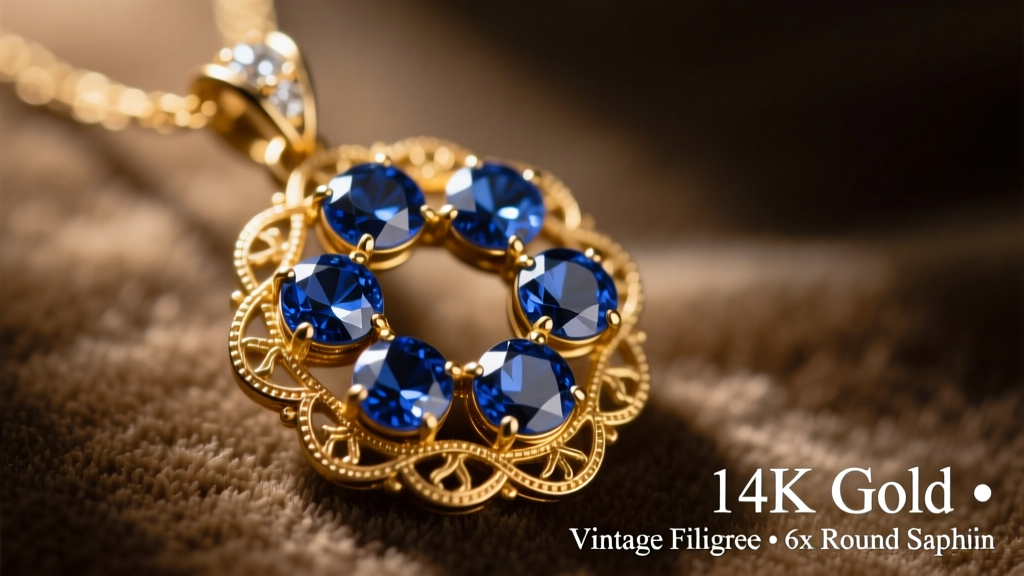
Filigree Elegance: A 14K Gold Pendant Featuring Six Round-Cut Sapphires

Can You Identify This Pattern of Harkerware? A Collector’s Guide to American Silverplate Flatware Patterns, 1890–1955
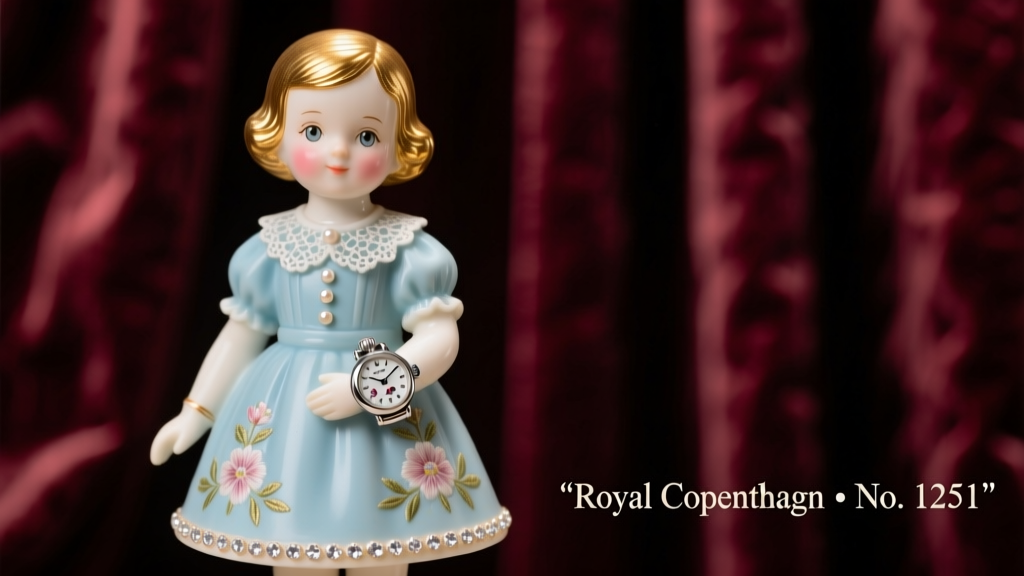
Royal Copenhagen Figurine Girl Standing No. 1251: A Detailed Appraisal of the Iconic 7½ × 4 Inch Porcelain Sculpture
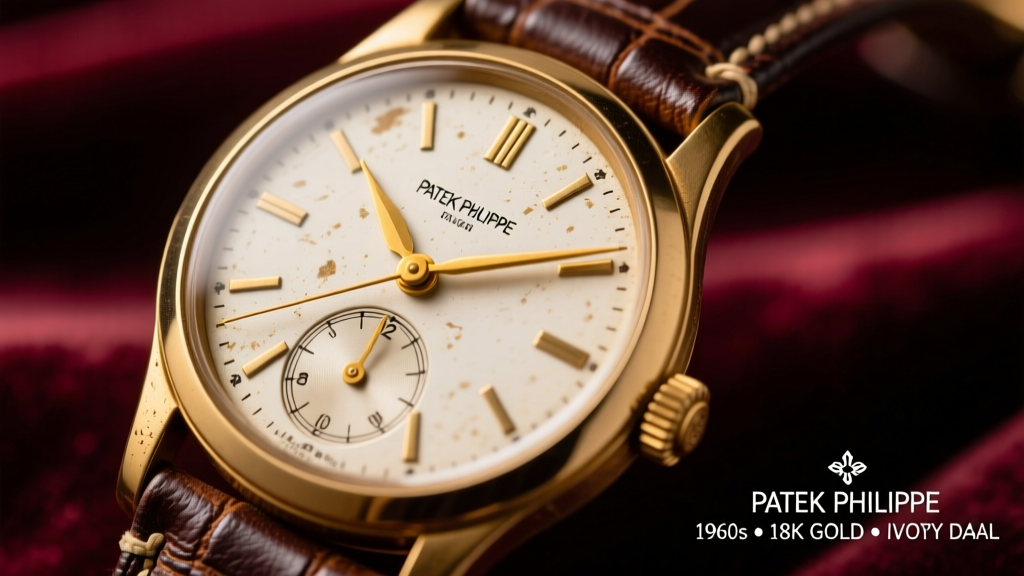
Patek Philippe Ref. 3424: The Quintessential 1960s 18K Gold Dress Watch with Ivory Ton Dial and Baton Numerals

Etched Oil Lamp Shades: Crowns, Windmills, and Castles in Victorian and Edwardian Lighting Artistry
Banks Billiken Cast Iron Figurine by A. C. Williams: A Rare Early 20th-Century American Folk Art Icon — 4 1/8 Inches
Nippon Vase No. 2: Decoding the 'Mori' Mark, Its Provenance, and Why Collectors Pay $4,200–$12,800 at Auction