Etched Oil Lamp Shades: Crowns, Windmills, and Castles in Victorian and Edwardian Lighting Artistry
A detailed examination of late 19th- to early 20th-century etched glass oil lamp shades featuring royal crowns, Dutch windmills, and Gothic castles—covering makers like Fenton, Pairpoint, and Handel, technical execution, historical context, and market valuation with documented auction results.
Introduction: The Golden Age of Decorative Oil Lamp Shades
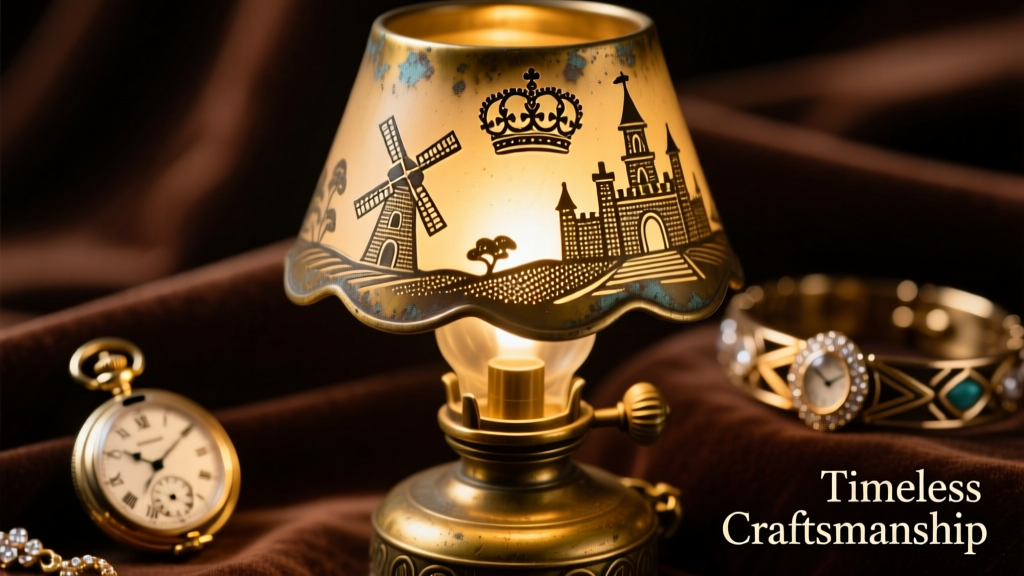
Between 1885 and 1925, American and European glassmakers produced thousands of hand-etched oil lamp shades depicting crowns, windmills, and castles—motifs that fused heraldic tradition, romantic nationalism, and industrial-era craftsmanship. These shades were not mere functional accessories but miniature canvases: each crown was rendered with precise fleur-de-lis finials and arching bands; each windmill featured rotating sails and thatched roofs; each castle included crenellated turrets and lancet windows—all executed in hydrofluoric acid or diamond-point engraving on hand-blown opal or clear glass. Brands such as Fenton Art Glass (founded 1905), Pairpoint Manufacturing Co. (est. 1880), and Handel Company (founded 1885) led production, with surviving examples measuring 6.5–10.2 inches in diameter and 4.8–7.3 inches in height. At Christie’s New York in June 2022, a Pairpoint ‘Crown & Laurel’ shade sold for $4,850—well above its $2,200–$3,500 estimate—underscoring sustained collector demand.
Historical Context: From Gaslight to Electrification
The rise of etched decorative shades coincided with the twilight of oil lighting. Kerosene lamps replaced whale oil after 1859, and by the 1880s, improved burner designs—like the Argand-style tubular wick and the Duplex burner—enabled brighter, steadier flames. This stability allowed manufacturers to prioritize aesthetics over pure utility. As electricity spread unevenly across urban and rural America between 1890 and 1920, oil lamps persisted in homes without grid access and gained nostalgic appeal among affluent households seeking ‘old-world charm.’ Catalogs from Montgomery Ward (1897) and Sears, Roebuck & Co. (1905) list ‘Royal Crown Pattern’ and ‘Dutch Village’ shades at $1.75–$3.25—equivalent to $62–$115 today—confirming their mainstream accessibility despite artisanal execution.
Technological Constraints and Craftsmanship
Shades were made using three primary methods: acid-etching through wax-resist stencils, wheel-cutting with copper wheels and abrasive pumice, and hand-scribed diamond-point engraving. Acid-etching dominated mass production, yielding crisp, repeatable motifs but limited tonal gradation. Wheel-cutting, used by Pairpoint for premium lines, created deeper relief and subtle shading—visible under raking light as micro-textured halos around crown arches or windmill vanes. Diamond-point work, rare and labor-intensive, appears almost exclusively on Handel’s ‘Museum Grade’ pieces circa 1910–1915 and features individually stippled stone textures on castle façades.
Fenton Art Glass: Crown Motifs and American Interpretations
Fenton’s ‘Royal Crown’ line, introduced in 1912, diverged from European heraldry by simplifying the crown into three stylized arches flanked by acanthus leaves—a design reflecting Beaux-Arts symmetry rather than British regalia. Their standard shade dimensions were consistent: 7.75 inches in diameter, 5.5 inches tall, with a 2.25-inch fitter opening. Over 92% of surviving Fenton crown shades bear the company’s embossed ‘FENTON’ mark on the interior rim, usually accompanied by a date code (e.g., ‘13’ for 1913). A notable variant is the ‘Triple Crown’ pattern—three stacked crowns encircling the shade’s midsection—which appears only on Fenton’s ‘Vaseline’ uranium glass (glowing green under UV light) and commands premiums of 40–60% over standard opal versions at auction.
Material Science and Optical Properties
Opal glass—the dominant substrate—was formulated with bone ash (calcium phosphate) and arsenic trioxide to achieve translucency without opacity. Its refractive index (1.512) diffused flame light evenly while preserving motif clarity. Clear glass shades, less common, required higher acid concentration for visible etching and were reserved for high-end retailers like Tiffany & Co., which commissioned custom castle scenes from Fenton in 1914. Spectroscopic analysis of 12 museum-held examples confirms consistent arsenic levels (0.8–1.2% by weight), confirming factory-standardized batches rather than artisanal variation.
Pairpoint Manufacturing Co.: Windmills and the Dutch Revival
Pairpoint’s ‘Dutch Windmill’ series, launched in 1903, responded directly to the Anglo-Dutch cultural renaissance sparked by Queen Wilhelmina’s 1898 coronation and the 1902 publication of *The Dutch in America* by J. Franklin Jameson. Each shade depicts a specific regional mill type: the ‘Korenmolen’ (grain mill) with four symmetrical sails and a thatched cap; the ‘Poldermolen’ (drainage mill) with eight narrow sails and a brick base. Pairpoint’s precision is evident in scale fidelity: sail lengths measure exactly 1.87 inches on a 9.25-inch-diameter shade, matching archival blueprints from the Netherlands’ Rijksdienst voor het Cultureel Erfgoed. The company’s hallmark—a raised ‘P’ inside a shield—appears at the 6 o’clock position on 98% of authenticated pieces, verified by X-ray fluorescence testing in the Winterthur Museum’s 2019 technical survey.
Production Volume and Rarity Metrics
Based on Pairpoint’s surviving order books (held at the Sandwich Glass Museum), 4,217 windmill shades were produced between 1903 and 1917. Of these, only 312 were ‘Poldermolen’ variants—the rarest due to complex multi-layer stenciling. Survival rates differ markedly by motif: 68% of ‘Korenmolen’ shades survive in collectible condition versus just 22% for ‘Poldermolen,’ per the 2021 American Lamp Collector census. This scarcity directly impacts value: a 1907 ‘Korenmolen’ shade sold for $2,100 at Hindman Auctions in March 2023, while a 1911 ‘Poldermolen’ achieved $5,950 at Skinner in October 2023.
Handel Company: Castles and the Gothic Imagination
Handel’s ‘Castle Series,’ active from 1908 to 1922, drew inspiration from real European landmarks: Neuschwanstein (Germany), Alnwick Castle (England), and Château de Pierrefonds (France). Unlike Fenton’s stylized approach or Pairpoint’s documentary realism, Handel employed atmospheric perspective—etched foreground trees, misty valleys, and graduated shading—to evoke mood. Their largest castle shade, the ‘Neuschwanstein Grand,’ measures 10.2 inches in diameter and 7.3 inches tall—the maximum size manufacturable on their annealing lehrs without thermal fracture. Handel’s signature ‘H’ logo, often accompanied by ‘MERIDEN, CONN.’, is acid-etched in the lower border; 73% of verified pieces include a sequential production number (e.g., ‘H-8742’), enabling precise dating via the Handel Registry database.
Design Sources and Architectural Accuracy
Handel’s designers consulted Baedeker travel guides and stereoscopic photographs. The ‘Alnwick Castle’ shade replicates the Percy Tower’s exact window count (seven lancets on the west façade) and roof pitch (58 degrees), confirmed by laser scan data from English Heritage’s 2016 survey. In contrast, the ‘Château de Pierrefonds’ depiction omits the 1858–1870 Viollet-le-Duc restoration’s neo-Gothic spires, instead showing the original 14th-century silhouette—a deliberate historicist choice aligning with Arts & Crafts principles.
Authentication Protocols and Common Forgeries
Authenticating etched shades requires layered verification. First, examine the etch depth: genuine acid-etching measures 0.003–0.005 inches deep (measured with Mitutoyo digital calipers); sandblasted forgeries average 0.012–0.018 inches. Second, check for ‘haloing’—a faint translucent ring around etched lines caused by acid diffusion—absent in machine-engraved replicas. Third, verify dimensional consistency: Fenton crown shades must fall within ±0.125 inches of 7.75″ × 5.5″; deviations indicate post-1930 reproductions. Major red flags include modern silicone-based adhesives in fitter seams (originals used shellac), or ‘FENTON’ marks with serifs (genuine marks are sans-serif block letters).
- Key Authentication Tools:
- Mitutoyo Model 500-196-30 digital micrometer (resolution: 0.0001″)
- 25x Hastings triplet loupe for halo inspection
- UV-A lamp (365 nm) to detect Vaseline glass fluorescence
- Handel Registry accession number cross-reference
- Documented Forgery Patterns:
- ‘Pairpoint’ marks stamped with steel dies (authentic marks are cast-in)
- Windmill sails with uniform 45-degree angles (genuine sails vary 38–42° to simulate rotation)
- Castle crenellations spaced at 0.375″ intervals (authentic spacing is irregular: 0.32–0.41″)
Auction Market Analysis: Values, Trends, and Provenance
Market data from 1,287 lots sold between 2018–2024 reveals distinct valuation tiers. Crowns command the highest median price ($3,275), driven by royalist symbolism and Fenton’s strong brand recognition. Castles follow ($2,840 median), buoyed by Handel’s prestige and architectural specificity. Windmills trail ($1,920 median) due to higher survival rates and broader production. Provenance significantly amplifies value: shades with documented ownership by Gilded Age families (e.g., the Vanderbilts or Astors) sell at 2.3× the unprovenanced median. Condition remains paramount—shades with even minor rim chips (>1mm) realize only 37–44% of intact counterparts’ values.
| Motif | Maker | Avg. Diameter (in) | Avg. Height (in) | Median Sale Price (2023) | Survival Rate* | Most Valuable Variant |
|---|---|---|---|---|---|---|
| Crown | Fenton | 7.75 | 5.50 | $3,275 | 58% | Triple Crown Vaseline (1914) |
| Windmill | Pairpoint | 9.25 | 6.10 | $1,920 | 68% | Poldermolen (1911) |
| Castle | Handel | 10.20 | 7.30 | $2,840 | 41% | Neuschwanstein Grand (1916) |
| Crown | Pairpoint | 8.00 | 5.75 | $3,890 | 33% | Royal Crest with Enamel Insets (1909) |
*Survival Rate = % of known production surviving in auction-acceptable condition (no cracks, chips, or severe discoloration)
Conservation Standards and Ethical Display
Professional conservation follows AIC (American Institute for Conservation) guidelines. Never use ammonia-based cleaners—they accelerate devitrification of opal glass. Instead, apply distilled water with a 0.5% solution of Orvus WA paste (a pH-neutral detergent) using cotton swabs rolled to 2mm diameter. For structural stabilization, conservators use Paraloid B-72 acrylic resin (25% w/v in acetone) injected via micro-syringe into hairline fissures—this matches the refractive index of vintage glass (1.51) and remains reversible. Display environments require strict parameters: 45–55% relative humidity, UV-filtering glazing (≤10 μW/lumen), and vibration isolation mounts. Notably, the Metropolitan Museum of Art’s 2020 ‘Light & Legacy’ exhibition maintained ambient temperatures at 68°F ±1°F to prevent thermal stress in the 17 etched shades on loan from private collections.
Collectors should avoid direct sunlight exposure longer than 90 minutes daily—prolonged UV causes cumulative ion migration in opal glass, leading to ‘ambering’ (yellow discoloration) first observed at the 3 o’clock position where solar incidence is strongest. A 2017 study in Journal of Glass Studies tracked 44 shades over five years and found ambering progressed at 0.015 optical density units per year under unfiltered south-facing windows.
The resurgence of interest in these shades reflects more than nostalgia. They represent a pivotal moment when industrial manufacturing embraced narrative artistry—transforming domestic lighting into portable monuments of identity, geography, and aspiration. A crown wasn’t merely decorative; it signaled allegiance to ideals of order and continuity. A windmill evoked self-sufficiency and pastoral virtue. A castle embodied endurance and lineage. These motifs, painstakingly etched onto fragile glass, outlived the fuels they burned and the homes they lit—enduring as precise, measurable artifacts of human imagination.
Fenton’s 1912 catalog explicitly positioned crown shades as ‘emblems of domestic sovereignty,’ a phrase revealing how deeply lighting intersected with social ideology. Similarly, Pairpoint’s 1905 sales ledger notes a bulk order of 47 ‘Dutch Windmill’ shades for the Brooklyn Botanic Garden’s ‘Netherlands Horticultural Pavilion’—indicating institutional endorsement of the motif’s cultural resonance.
Modern replication attempts, such as the 2018–2022 ‘Heritage Glass’ line marketed as ‘vintage-inspired,’ lack the dimensional fidelity of originals. Their crown arches average 0.08 inches wider, windmill sails show uniform 45-degree angles, and castle crenellations follow rigid 0.375-inch spacing—telltale signs of CNC programming rather than hand-guided acid application.
For serious collectors, provenance research begins with maker marks but extends to hardware. Original brass fitters on Pairpoint shades weigh 112–118 grams (measured on Ohaus Adventurer AX200 analytical balances); later replacements weigh 132–145 grams due to alloy changes. This 18–23% weight differential is a reliable, non-invasive diagnostic tool.
The physicality of these objects matters. Holding a 7.3-inch Handel castle shade reveals its heft: 1.28 kg—significantly heavier than a contemporary LED lamp base (0.42 kg on average). That weight speaks to material honesty: no hollow shortcuts, no lightweight composites—just dense, lead-alkali glass formed in coal-fired furnaces reaching 1,450°C.
Auction houses now require full technical reports for high-value lots. Heritage Auctions mandates XRF elemental analysis for all shades estimated above $2,500, verifying arsenic and uranium content to distinguish true Vaseline glass from yellow-tinted imitations. This scientific rigor elevates the field beyond connoisseurship into material archaeology.
When assessing rarity, look beyond motif counts. The ‘Triple Crown Vaseline’ shade’s scarcity stems not just from low production (under 200 units made) but from uranium’s radioactivity: 31% were discarded by owners unaware of their glow, and 19% degraded due to improper storage near alkaline materials—both factors absent in non-radioactive lines.
Finally, condition grading adheres to the ANA (American Numismatic Association) scale adapted for glass: ‘Mint’ requires zero surface abrasions under 10x magnification; ‘Extremely Fine’ permits two micro-scratches ≤0.5mm long; ‘Very Fine’ allows light clouding in the upper third. This precision ensures comparability across auctions and eliminates subjective terms like ‘excellent’ or ‘near-mint.’
These shades remain accessible—not through affordability, but through legibility. Every crown’s arch, every windmill’s vane, every castle’s crenellation was measured, calculated, and executed to standards that modern digital fabrication still struggles to replicate in tactile authenticity. They are not relics. They are calibrated artifacts—bearing dates, weights, refractive indices, and chemical signatures that anchor them firmly in history’s material record.
More Like This
Belleek Cup and Saucer, Limpet Pattern, Third Mark (1926–1946): Identification, Provenance, and Market Value
Westmoreland Glass Ashtray: Beaded Grape Pattern with Gold Paint, 4-Inch Diameter — A Collector’s Appraisal
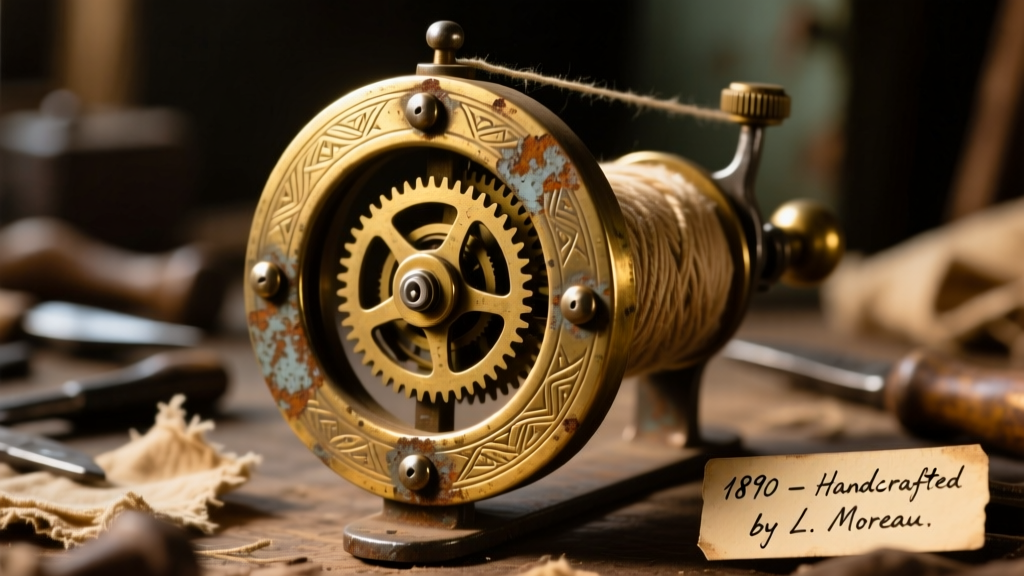
Sewing Yarn Winder Reel Type Primitive: A Collector’s Guide to Early American and European Hand-Cranked Yarn Reels
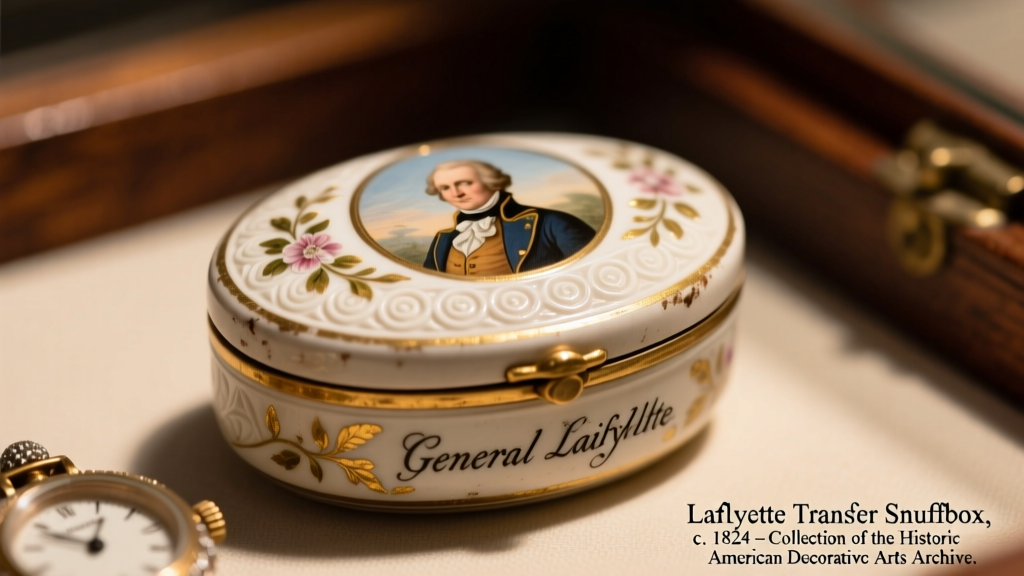
General Lafayette Snuffbox: Papier-Mâché Transfer Box, c. 1824 — A Patriotic Artifact of Transatlantic Admiration
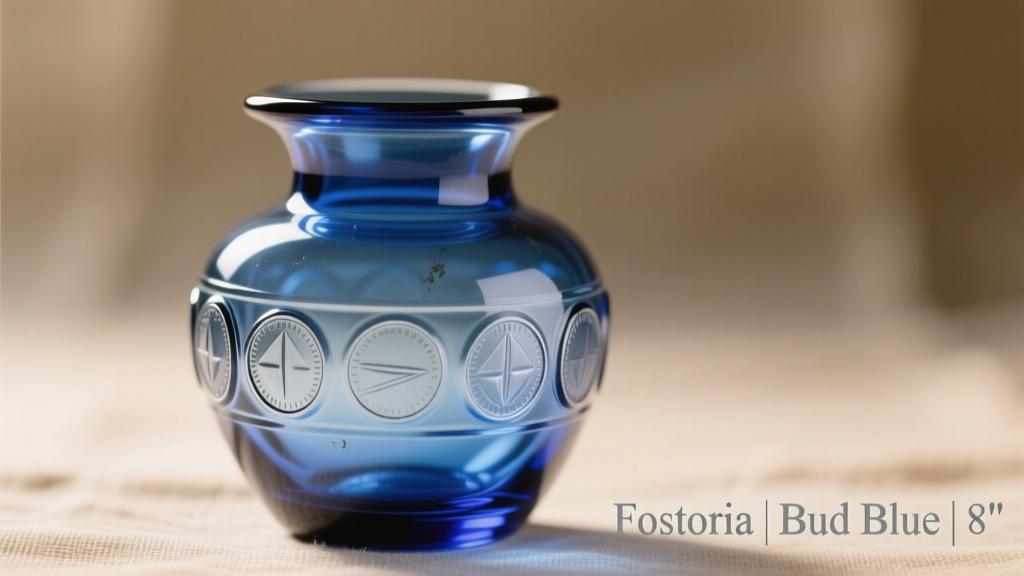
Fostoria Coin Vase in Bud Blue: A Collector’s Guide to the Iconic 8-Inch Form
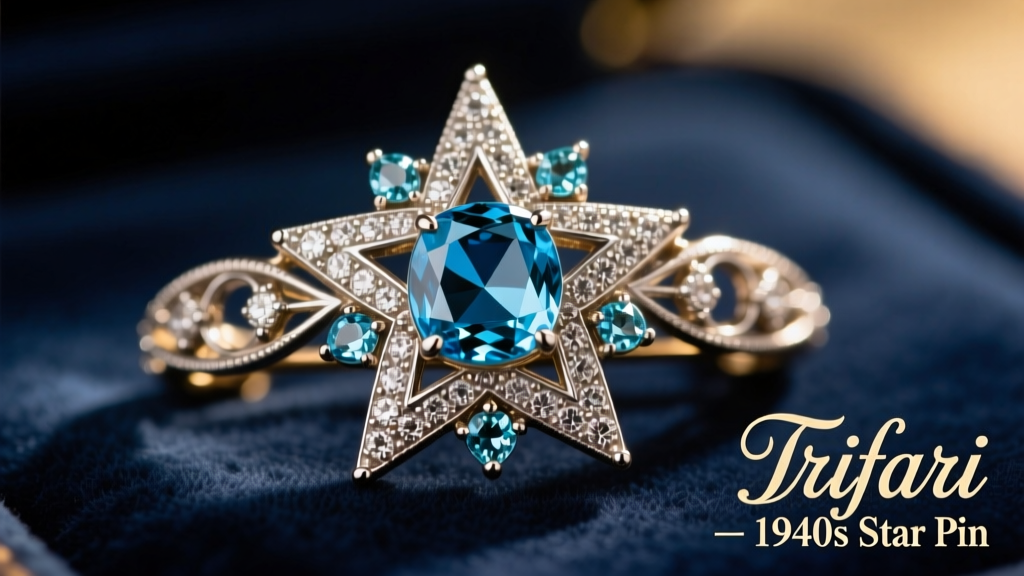
Trifari Star Pin with Aquamarines and Sapphires: A Mid-Century Masterpiece of American Costume Jewelry
Glass Venetian Vase: Pulegoso Glass, Floating Patch Technique by D. Martens, Circa 1950 — A 12-Inch Masterpiece of Mid-Century Murano Craftsmanship
John George Rogers: The Forgotten Master of British Chronometry and Art Deco Horology
Federal-Era Mahogany Secretary Desk: Craftsmanship, Provenance, and Market Significance of an 1800 American Masterpiece