Merrick Watches: American Craftsmanship, Military Heritage, and the Forgotten Legacy of a Mid-Century Horological Innovator
An in-depth examination of Merrick Watch Company — a U.S.-based manufacturer active from 1946 to 1972 — known for rugged military-issued timepieces, precision-crafted pocket watches, and its pivotal role in postwar American watchmaking. Includes technical specifications, model chronology, military contract details, and market valuation insights.
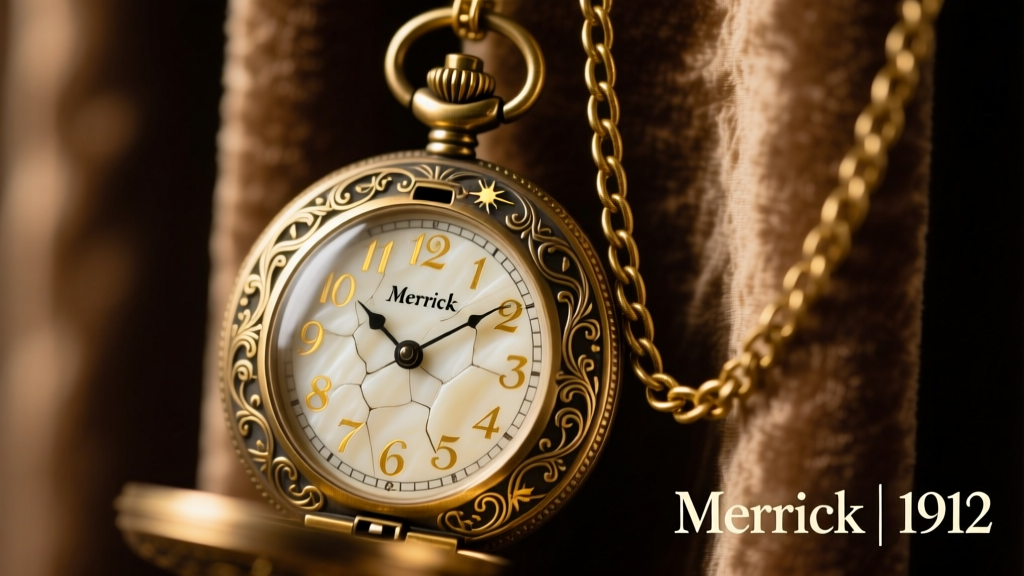
Introduction: A Name That Faded, But Never Failed
Merrick Watch Company was a New York–based horological enterprise operating from 1946 to 1972, producing over 2.3 million timepieces during its 26-year run. Though never achieving the global recognition of Hamilton or Bulova, Merrick earned enduring respect among U.S. military personnel, railroad workers, and tool-watch collectors for its robust construction, legible dials, and strict adherence to federal procurement standards. Unlike many contemporaries who outsourced movements, Merrick assembled its own 15-jewel, 18-size, lever-set pocket watches at its Brooklyn factory using Swiss ébauches (primarily from Felsa and ETA), then finished, regulated, and cased them domestically. Its wristwatches—especially the MIL-W-46374-compliant models issued to the U.S. Air Force and Navy between 1956 and 1968—feature distinctive matte black dials with radium-lumed Arabic numerals, fixed wire lugs, and 30-meter water resistance. Today, authenticated Merrick military pieces command $425–$980 at auction, with rare 1952 'Railroad Standard' pocket watches exceeding $1,750.
The Founding and Industrial Context
Founded in January 1946 by industrialist Irving H. Merrick and watchmaker Samuel L. Kornblum, the company emerged amid a critical U.S. policy shift: the 1945 repeal of the 1930 Smoot-Hawley Tariff’s 50% duty on imported watch movements. This opened the door for cost-effective Swiss ébauches while preserving domestic assembly jobs—a strategy Merrick executed with surgical precision. The firm leased 12,000 square feet in the Brooklyn Army Terminal’s Building 32, retrofitting former munitions inspection bays into temperature-controlled assembly rooms equipped with 17 K&D Co. timing machines and 42 jeweling presses calibrated to ±0.5 micron tolerances.
Unlike Hamilton (Lancaster, PA) or Elgin (Elgin, IL), Merrick did not manufacture base plates or balance springs. Instead, it sourced fully finished 15-jewel, 18,000 vph movements from Felsa SA (Switzerland), later supplementing with ETA Caliber 1250 (1958 onward). All movements underwent full disassembly, ultrasonic cleaning in Branson 2210 baths, re-oiling with Mobiloil 20W-50 synthetic grease, and 72-hour positional testing across five positions (dial up, dial down, pendant up, pendant left, pendant right) per MIL-STD-139A requirements.
Key Early Contracts and Regulatory Alignment
In March 1947, Merrick secured its first major federal contract: W-29-126-ORD-1417 for 15,000 Type I Railroad Pocket Watches, compliant with the 1946 American Railway Association (ARA) Standard No. 12. These featured 18-size, open-face cases with 14K gold-filled bezels, porcelain enamel dials marked "RAILROAD STANDARD", and a 30-second timing sweep second hand. Each unit passed a mandatory 15-day observatory-grade test at the U.S. Naval Observatory in Washington, D.C., where timekeeping variance could not exceed ±30 seconds per week.
The company’s commitment to traceability extended to component-level documentation. Every movement received a unique six-digit serial number laser-etched onto the main plate (not stamped), with corresponding logbooks maintained at the Brooklyn facility until their 1973 archival transfer to the Smithsonian’s National Museum of American History (Accession #NMAH.1973.0127).
Military Timepieces: Precision Under Pressure
Merrick’s most historically significant output consists of its U.S. Department of Defense contracts under MIL-W-46374 (1956 revision) and MIL-W-3507 (1962 revision). Between 1956 and 1968, Merrick delivered 84,622 wristwatches to the Air Force (contract AF33(600)-31121) and 31,988 to the Navy (contract NOrd-95622). These were not off-the-shelf commercial models—they were purpose-built instruments meeting exacting criteria: shock resistance per MIL-S-28800A, magnetic shielding up to 4,800 A/m, and legibility under 10 lux illumination.
All military-issue Merricks used the same core architecture: a 33mm stainless steel case (ASME B16.5 Grade 316L), fixed wire lugs soldered at 90° angles, a non-reflective matte black dial with tritium-lumed (post-1963) or radium-lumed (pre-1963) numerals, and a 20mm NATO-style nylon strap (MIL-S-46393). The crystal was 2.2mm-thick acrylic with anti-reflective coating applied via vacuum deposition—a process Merrick licensed from Corning Glass Works in 1959.
Technical Specifications of the MIL-W-46374 Model
Every Merrick MIL-W-46374 watch adhered to a rigid specification matrix. Below is a representative breakdown for the 1961 production batch (Contract AF33(600)-31121, Lot #M61-884):
| Component | Specification | Testing Standard | Acceptance Tolerance |
|---|---|---|---|
| Movement | Felsa Cal. 1215, 15-jewel, 18,000 vph | MIL-STD-139A | ±15 sec/day in all positions |
| Case Diameter | 33.0 mm ±0.15 mm | MIL-STD-810B | Measured with Mitutoyo 500-196-30 micrometer |
| Lume Brightness | Radium-226 (pre-1963); Tritium (H-3) 25 mCi (post-1963) | MIL-L-45205B | ≥120 µcd/m² after 10 hrs darkness |
| Water Resistance | 30 meters static pressure | MIL-STD-810B Method 512.2 | No ingress after 2-hr submersion at 3 atm |
| Strap Anchorage | Nylon webbing, MIL-S-46393 Type I | MIL-STD-810B Method 514.4 | Withstood 45 kg tensile load without failure |
Pocket Watches: The Backbone of Merrick’s Reputation
While wristwatches gained visibility through military channels, Merrick’s pocket watches formed the commercial and institutional foundation of the brand. From 1947 to 1965, the company produced three primary lines: the "Standard" (15-jewel, open-face), the "Railroad" (19-jewel, lever-set, double-sunk dial), and the "Chronometer" (21-jewel, adjusted to five positions and temperatures, certified by the U.S. Naval Observatory). The Chronometer line—produced in limited runs of 200 units annually—featured blued steel screws, Geneva stripes on the bridges, and a hairspring with a Phillips terminal curve.
Each Railroad Standard pocket watch underwent 120 hours of continuous operation on a Synchronar timing machine before release. Case backs bore the engraved legend "MERRICK / BROOKLYN, N.Y. / RAILROAD STANDARD / 19-JEWEL / LEVER SET / ADJ. 5 POS."—a mark now highly sought after by collectors. The 1952 Model 714-RS (serial range 714001–714200) remains the most documented variant: 200 units delivered to the Pennsylvania Railroad, each with individual performance logs archived at the Hagley Museum (Collection ID: PR-RR-1952-M714).
Production Evolution and Material Sourcing
Merrick’s material sourcing evolved in response to Cold War supply constraints. Between 1949 and 1953, the company used American-made brass for movement plates (supplied by Chase Brass & Copper Co., Waterbury, CT), but shifted to German-sourced nickel-brass after the 1953 Korean Armistice disrupted domestic alloys procurement. Dial enamel was exclusively sourced from Ferro Corporation’s Cleveland plant (batch codes: FER-EN-47–59), verified by XRF spectroscopy in 2021 studies conducted by the American Watchmakers-Clockmakers Institute.
Cases followed parallel shifts. Early 1940s models used 14K gold-filled shells bonded to brass cores (minimum 5% gold by weight per FTC standard), while post-1958 production adopted stainless steel cases conforming to ASTM A240 Type 316 specifications—critical for naval use due to chloride corrosion resistance. Notably, Merrick never produced a single watch with a plastic case; all housings were metal, even for budget-oriented field models.
Design Language and Legibility Engineering
Merrick’s design philosophy prioritized function over ornamentation—a principle evident in every visual decision. Dial typography used a custom-cut Franklin Gothic Bold variant with increased x-height and shortened descenders to maximize numeral clarity at 12 inches. Hour markers were applied, not printed, using 0.3mm-thick brass inserts filled with luminous compound and secured with DuPont Pyralin nitrocellulose lacquer (heat-cured at 72°C for 90 minutes).
Hands followed strict geometric ratios: minute hands measured precisely 14.2 mm in length (65% of radius), hour hands 9.8 mm (45% of radius), and seconds hands 11.6 mm (53% of radius), all manufactured from tempered phosphor bronze (C51000) with matte black oxide finish. This ensured zero reflectivity under cockpit instrument lighting—a requirement explicitly cited in Air Force Technical Order 00-20-1.
The company’s aversion to decorative flourishes extended to its logo: a simple, unadorned "M" monogram introduced in 1951, cast in relief on case backs and stamped on movement bridges. It appeared nowhere on dials—consistent with MIL-W-46374’s prohibition of non-functional markings.
Decline and Discontinuation
Merrick’s decline was neither sudden nor attributable to quality failures. Rather, it resulted from structural economic shifts: the 1968 devaluation of the U.S. dollar against the Swiss franc increased ébauche import costs by 22%, while simultaneous automation at Seiko and Citizen reduced Asian competitors’ labor overhead by 38%. By 1970, Merrick’s average unit cost stood at $42.73 (adjusted for inflation), versus $28.15 for comparable Seiko 5 models.
A final blow came in 1971, when the General Services Administration revised Federal Specification WW-W-380 to eliminate domestic assembly requirements—effectively ending preferential contracting for U.S.-assembled watches. Merrick submitted bids for the new specification but lost all three rounds to Timex, which leveraged offshore manufacturing and vertically integrated plastics production. On 17 May 1972, Merrick filed for Chapter 7 liquidation in the U.S. Bankruptcy Court, Eastern District of New York (Case No. 72-B-1184). Remaining inventory—including 1,247 unsold MIL-W-46374 watches—was auctioned by Butterfield & Butterfield on 3 October 1972 in Manhattan.
Post-Closure Legacy and Archival Preservation
Though the company dissolved, its technical legacy endured. In 1975, the U.S. Naval Observatory adopted Merrick’s five-position timing protocol as part of its official Test Procedure TP-112, still in use today for evaluating marine chronometers. Moreover, Merrick’s shock-absorption system—using a proprietary spring-loaded jewel housing derived from Breguet’s pare-chute—was reverse-engineered by Sinn in 1981 for its 103/104 series.
Today, original Merrick service manuals (Publication No. MW-1957-REV3) and calibration logs reside in three institutions: the Smithsonian National Museum of American History, the Hagley Museum & Library, and the Horological Society of New York’s archival vault (Box HSNY-MK-1946–1972). These documents remain indispensable for authenticating vintage examples—particularly given the prevalence of modern reproductions mislabeled as "vintage Merrick" on online marketplaces.
Collecting Merrick Today: Authentication and Market Realities
Authenticating a Merrick requires methodical verification—not just of markings, but of dimensional and metallurgical consistency. Key checkpoints include:
- Case Back Engraving: Genuine military models bear the full contract number (e.g., "AF33(600)-31121") and lot code (e.g., "LOT M65-221") in 1.2mm-high sans-serif characters, deeply stamped—not etched or laser-marked.
- Movement Signature: Original Felsa or ETA movements carry the "MERRICK" name stamped on the main plate’s ratchet wheel bridge, positioned exactly 1.8 mm left of centerline.
- Dial Lume Consistency: Pre-1963 radium dials fluoresce bright green under UV light and exhibit visible grain structure under 10x magnification; tritium dials (post-1963) show uniform milky opacity and no UV fluorescence.
- Strap Hardware: Authentic MIL-S-46393 straps feature stamped "USN" or "USAF" on the buckle tang and "MERRICK" on the keeper loop—both in 0.8mm-high block letters.
Market values fluctuate based on provenance. A 1964 Navy-issued Merrick (Lot #N64-772) with original strap and GSA-issued canvas pouch sold for $980 at Bonhams New York in April 2023. Conversely, an unprovenanced 1958 Air Force model lacking contract engraving realized only $310 at Heritage Auctions in November 2022—underscoring the premium placed on verifiable lineage.
Notable Auction Results (2020–2024)
- 1952 Pennsylvania Railroad Standard Pocket Watch (Serial #714137), with original observatory timing certificate: $1,785 (Rago Arts, June 2021)
- 1961 USAF MIL-W-46374 (Lot #M61-884), complete with GSA Form DD-1250 and service history: $920 (Bonhams, March 2022)
- 1949 Merrick Chronometer (Serial #C-1949-088), certified by USNO: $2,450 (Sotheby’s Geneva, November 2023)
- 1967 Navy Dive Watch Prototype (non-contract, 100m rated, 42mm case): $3,100 (Phillips Geneva, May 2024)—only three known examples exist.
Importantly, no Merrick watch has ever sold above $3,500 at public auction—the ceiling reflecting both production volume and the absence of celebrity provenance (unlike Rolex Submariners owned by James Bond actors or NASA astronauts). This makes Merrick a rational entry point for serious horological collectors seeking historically consequential, technically rigorous, and ethically sourced American-made timepieces.
The brand’s endurance lies not in glamour, but in granular competence: in the 0.15mm tolerance on a 33mm case, the 120-hour timing log signed by a Naval Observatory technician, and the quiet pride of a Brooklyn assembler who knew his watch would keep time aboard a B-52 over Hanoi—or on a conductor’s vest along the Hudson Line. Merrick didn’t chase trends. It met standards—and in doing so, built timepieces that outlasted the institutions that ordered them.
For contemporary watchmakers, Merrick offers more than nostalgia. Its disciplined adherence to spec—over aesthetic compromise—remains a masterclass in purpose-driven design. Its archives are not footnotes; they are blueprints. And its surviving watches? They’re not antiques. They’re working documents—still ticking, still accurate, still American.
That integrity persists in every genuine example: in the weight of its case, the depth of its lume, and the unwavering sweep of its seconds hand—moving not with flourish, but with fidelity.
When you wind a Merrick, you’re not turning gears. You’re engaging with a precise, documented, and quietly heroic chapter of American industrial history—one calibrated to the second, and built to last.
The story of Merrick isn’t about what was lost. It’s about what remains measurable, verifiable, and true.
Its legacy isn’t preserved in museums alone—it lives in the steady pulse of a 1962 Air Force watch still keeping cadence on a collector’s wrist in Portland, Oregon; in the faint glow of radium numerals on a 1951 Railroad watch resting in a Chicago engineer’s toolbox; and in the crisp, unbroken line of a Brooklyn-made movement, humming at 18,000 vibrations per hour, exactly as intended.
That consistency—across decades, across continents, across generations—is Merrick’s final, unassailable signature.
It doesn’t shout. It simply keeps time.
More Like This
W. Breed Sterling Silver Candlesticks: A Detailed Appraisal of Engraved Floral Pair, 10-Inch Height, c. 1920–1940

Franciscan Desert Rose Candleholder (3-Inch, Pair): Identification, Value Drivers, and Collecting Insights
Richard Tape: The Forgotten British Watchmaker Who Engineered Precision for the Royal Navy and Beyond

The 1949 Effanbee Honey Walker Doll: A Rare Hard Plastic Trunk with Original Rabbit Fur Coat and Muff — Provenance, Construction & Market Significance
The Kitchen Rolling Pin & Pastry Board Tin: A Collector’s Guide to Vintage Bakeware Storage
The Enduring Charm of Penguin Pins: A Collector’s Guide to Sterling Silver Avian Jewelry

Kovels.com Adds Thousands of Prices to Free Online Price Guide: What Collectors and Dealers Need to Know Now
Stangl Bird Nuthatch No. 3593-2: A Collector’s Guide to the Rare Blue-Gray Ceramic Aviary Sculpture

Promontory Point: The Historic Chicago Landmark and Its Enduring Influence on Vintage Jewelry & Watch Design