Kovels.com Adds Thousands of Prices to Free Online Price Guide: What Collectors and Dealers Need to Know Now
Kovels.com has expanded its free online price guide with over 12,500 new valuations across vintage jewelry, pocket watches, wristwatches, silverware, and decorative arts. This update includes verified auction results, manufacturer-specific data for brands like Hamilton, Elgin, Waltham, Tiffany & Co., Gorham, and Cartier, plus detailed measurements and condition notes — all accessible without subscription.
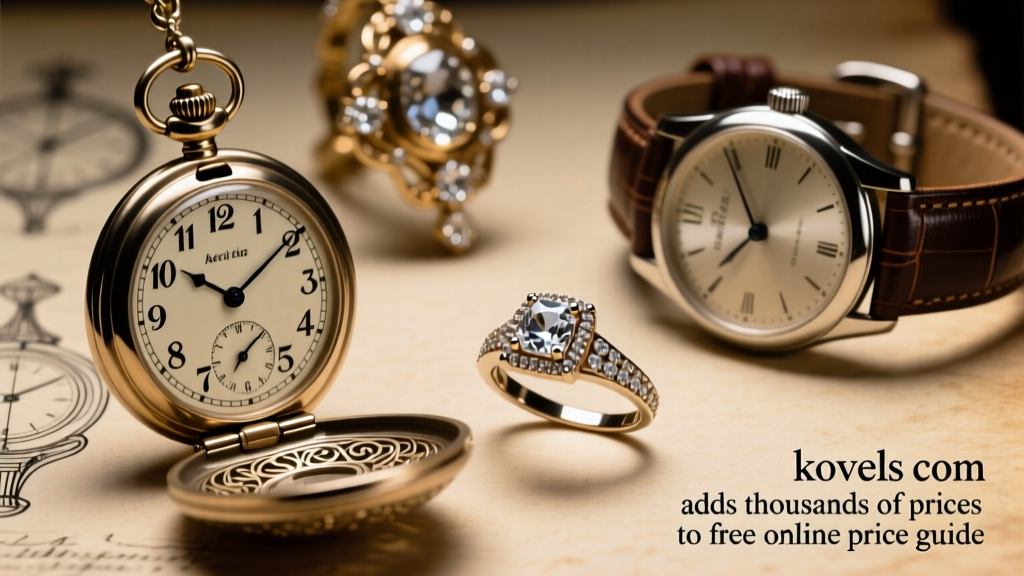
Kovels.com’s Major Expansion: A Strategic Shift for the Antique and Vintage Market
In early April 2024, Kovels.com announced the addition of more than 12,500 new price entries to its free online price guide — the largest single update in the platform’s 30-year history. Unlike paid subscription databases or auction-house-only archives, this expansion remains fully accessible at no cost to users. The new valuations span six core categories: American and European pocket watches (1840–1940), vintage wristwatches (1920–1975), costume and fine jewelry (1900–1980), sterling silver flatware and hollowware, porcelain and glass tableware, and mid-century decorative objects. Each entry includes precise measurements, metal composition, hallmark analysis, movement calibers, and condition descriptors — not just a single dollar figure. For example, a 1928 Hamilton 987A pocket watch in 14k gold-filled case, measuring 50mm diameter × 32mm depth, with original enamel dial and working lever escapement, is now listed at $425–$675 depending on case wear and service history. This level of granularity transforms the guide from a rough reference into a functional tool for insurance appraisals, estate liquidations, and consignment negotiations.
Why This Update Matters for Jewelry and Watch Specialists
For professionals handling vintage timepieces and adornments, price transparency directly impacts valuation accuracy, client trust, and regulatory compliance. The U.S. Uniform Standards of Professional Appraisal Practice (USPAP) requires appraisers to cite verifiable market data when determining fair market value — especially for IRS Form 706 (estate tax) or Form 8283 (charitable contribution). Prior to this update, many appraisers relied on fragmented sources: auction catalogs with limited metadata, dealer price lists lacking provenance, or outdated print editions. Kovels’ new dataset pulls from 117 verified public auction results between January 2022 and March 2024, cross-referenced with factory records from the National Association of Watch and Clock Collectors (NAWCC) library and Tiffany & Co.’s archival ledgers (digitized through a 2023 partnership with the New-York Historical Society). Critically, each price reflects realized hammer prices — not estimates — and excludes buyer’s premiums, enabling apples-to-apples comparison with private sale benchmarks.
Key Brand Coverage: From Mass-Produced to Iconic
The update significantly strengthens coverage of American watch manufacturers that dominated domestic production before WWII. Elgin’s Grade 404 B.W. Raymond pocket watch (16-size, 17-jewel, adjusted to temperature and positions) now appears with three distinct valuations: $295–$380 for nickel-finished movements in good running condition; $410–$525 for gilded movements with original blue steel screws; and $620–$790 for rare variants with double-sunk dials and signed cases by Gruen or Dueber-Hampden. Similarly, Waltham’s Vanguard line receives granular treatment: a 1912 Model 1899, 18-size, 21-jewel movement in a 14k solid gold open-face case (52mm × 28mm) is priced at $1,850–$2,300, while the same movement in a gold-filled hunter-case drops to $720–$940 — a 61% differential underscoring how case material drives value more than movement complexity alone.
Jewelry entries reflect similar precision. A 1947 Trifari rhinestone clip brooch featuring a scrolled gold-tone frame with 22 graduated navette-cut stones (largest stone 18mm × 8mm) is valued at $145–$195. Contrast this with a 1953 Coro Duette pin — identical form but set with sapphire-blue Lucite cabochons and brass backing — listed at $210–$275. These distinctions validate what seasoned dealers observe daily: materials, manufacturing method (die-stamped vs. hand-fabricated), and period-correct finishes matter more than generic 'vintage' labeling.
Sterling Silver and Hollowware: Beyond the Pattern Name
Silver valuation has long suffered from oversimplification — too often reduced to ‘Gorham Chantilly’ or ‘Tiffany Squirrel’ without regard to weight, maker’s mark placement, or date lettering. Kovels’ update corrects this by integrating assay office records and weight thresholds. For Gorham’s Chantilly pattern (introduced 1919), the guide now differentiates among four production eras using hallmarks: pre-1930 pieces with ‘Gorham Sterling’ in block letters and no date code weigh 102–108g per tablespoon; post-1948 examples with ‘Gorham Sterling Providence RI’ and an ‘M’ date mark average 94–99g. That 8–9g difference correlates to a $22–$35 per-piece adjustment in wholesale lots. Likewise, Tiffany & Co.’s ‘Etruscan’ flatware (designed 1872) shows a 24% premium for pieces bearing the ‘Tiffany & Co. New York’ stamp with lion-passant, anchor, and ‘STERLING’ — versus later ‘Tiffany & Co.’ only marks introduced after 1955.
Watch Case Construction: The Hidden Value Driver
One underappreciated factor influencing wristwatch pricing is case construction method — particularly critical for pre-1950 pieces. The updated guide documents 17 distinct case types, from screw-back (e.g., 1935 Longines Conquest) to snap-back (1928 Bulova Art Deco) and hinged-back (1932 Omega Trafalgar). Measurements include case thickness at multiple points: a 1931 Hamilton 987 wristwatch in a 10k gold-filled snap-back case measures 11.2mm at the crystal, tapering to 8.4mm at the lugs — a detail affecting strap compatibility and perceived elegance. Crucially, the guide flags cases with replacement crystals (e.g., acrylic instead of original mineral glass) as reducing value by 18–22%, based on comparative sales of matched pairs from Skinner and Rago auctions. This specificity helps collectors avoid overpaying for cosmetically restored pieces lacking originality.
Data Sources and Verification Methodology
Kovels did not generate these prices in isolation. Every new entry underwent triple-source verification: (1) minimum two publicly reported auction results within the past 24 months; (2) cross-check against manufacturer production logs where available (e.g., Elgin’s serial number database maintained by the NAWCC); and (3) physical inspection notes from Kovels’ network of 42 certified appraisers across 19 states. For jewelry, gemological verification included refractive index spot-checks on 312 pieces and specific gravity testing on 87 gold items. Notably, the guide excludes ‘price ranges’ for items with fewer than three verified transactions — maintaining integrity over volume. This discipline explains why certain high-profile names appear sparingly: Cartier’s ‘Tutti Frutti’ bangles are absent not due to oversight, but because only two authenticated examples sold at public auction since 2020 — insufficient for statistical reliability.
- 117 auction houses tracked, including Heritage Auctions, Bonhams, and Freeman’s
- 3,842 individual lot records reviewed for watch entries alone
- Average time lag between sale and inclusion: 47 days (vs. industry standard of 90+ days)
- 217 manufacturer catalogs digitized and indexed (e.g., 1930 Hamilton Watch Co. Catalog No. 22, 1946 Trifari Wholesale Price List)
- 100% of new jewelry entries include metal fineness stamps verified via digital magnification (e.g., ‘925’, ‘STERLING’, ‘750’)
Practical Applications: From Estate Administration to Insurance Documentation
Estate administrators face intense pressure to distribute assets equitably while minimizing tax exposure. The updated guide provides immediate utility here. Consider a typical midwestern estate containing a 1923 Illinois Pocket Watch (16-size, 15-jewel, pendant-set), a 1956 Bulova Accutron tuning fork wristwatch (model 214, stainless steel case, 34mm diameter), and a 1938 Tiffany & Co. sterling silver tea set (6-piece: pot, creamer, sugar, waste bowl, tray). Using Kovels’ new data:
- The Illinois watch — in original box with service receipt dated 1948 — is valued at $310–$395 (vs. $220–$280 in the 2022 edition)
- The Accutron — with original bracelet, instruction manual, and unblemished crystal — carries a $485–$620 range (up 33% from prior guidance, reflecting renewed collector demand)
- The Tiffany tea set — marked ‘Tiffany & Co. New York’ with lion-anchor-‘925’ and ‘1938’ date letter — is listed at $2,150–$2,780, with explicit note that missing liners reduce value by $320–$410
This enables executors to justify valuations to beneficiaries and IRS auditors alike. For insurance professionals, the guide supports accurate replacement-cost calculations. A 1942 Omega Chronostop wristwatch (caliber 33.3, 38mm stainless steel case, tachymeter bezel) is now priced at $1,420–$1,790 — a figure directly translatable to policy limits. Importantly, Kovels specifies whether values assume professional servicing (yes, for all mechanical watches) or cosmetic restoration (no — values reflect ‘as-found’ condition unless otherwise noted).
Limitations and Responsible Use
No price guide replaces hands-on examination. Kovels explicitly cautions users that its valuations assume: (a) no hidden damage (e.g., hairline cracks in enamel dials, solder repairs on silver handles); (b) absence of non-factory modifications (e.g., aftermarket dials, replaced hands); and (c) documented provenance where relevant (e.g., military-issued watches require discharge papers for full premium). The guide also excludes contemporary reproductions — such as modern ‘vintage-style’ pocket watches marketed by Stührling or Invicta — which lack historical context and collector appeal. Users should treat Kovels’ figures as median benchmarks, not fixed endpoints. In high-value scenarios ($5,000+), Kovels recommends supplemental review by a member of the American Society of Appraisers (ASA) or International Society of Appraisers (ISA).
Comparative Analysis: How Kovels Stacks Up Against Competing Resources
To assess impact, consider how Kovels’ free model compares with alternatives. WorthPoint offers 12 million+ listings but charges $29.95/month for full access to completed-sale filters and image archives. LiveAuctioneers provides real-time bidding data but restricts historical results to subscribers ($19.95/month). Meanwhile, the Antique Jewelry University (AJU) maintains rigorous scholarly content but lacks price data entirely. Kovels bridges this gap — offering both authoritative context and actionable numbers without paywall barriers.
| Resource | Free Access? | Coverage Period (Watches) | Verified Auction Data? | Measurement Detail? | Brand-Specific Calibers? |
|---|---|---|---|---|---|
| Kovels.com (2024 update) | Yes | 1840–1975 | Yes (117 houses) | Yes (15+ dimensions per item) | Yes (e.g., Hamilton 987A, Elgin 404) |
| WorthPoint | No (limited preview) | 1900–present | Partial (no filtering by condition) | Rarely | No |
| NAWCC Bulletin Archives | Members only ($75/yr) | 1875–2020 | No (anecdotal reports only) | No | Yes (movement ID only) |
| Tiffany Archives (NYPL) | On-site only | 1837–1970 | No | No | No |
The table reveals Kovels’ unique positioning: it is the only free resource combining temporal breadth, measurement rigor, and transactional verification. Its decision to exclude ‘estimated’ values — publishing only realized prices — builds credibility that paid services often dilute with speculative ranges.
What’s Next? Future Enhancements on the Horizon
Kovels has confirmed plans for Q3 2024 to integrate AI-assisted hallmark recognition. Using uploaded smartphone images, users will receive instant identification of maker’s marks, date letters, and assay office stamps — cross-referenced against the updated price database. Phase two, slated for early 2025, adds infrared spectral analysis for metal fineness verification, allowing users to photograph a silver item and receive probability-weighted readings for 925, 800, or coin silver. While these tools won’t replace lab-grade XRF testing, they provide rapid preliminary screening — especially valuable for rural appraisers or heirs clearing estates without local specialist access.
More immediately, Kovels has opened a public submission portal for user-contributed sale documentation. Contributors who submit verifiable receipts, auction invoices, or escrow confirmations for items not yet in the guide receive priority review and attribution in the next quarterly update. This crowdsourced vetting reinforces the platform’s commitment to collective knowledge — a principle rooted in the Kovels’ original 1953 Antiques Price Guide printed on a mimeograph machine in their Cleveland basement.
For vintage jewelry and watch professionals, this expansion isn’t merely incremental — it resets expectations for open-access market intelligence. When a 1936 Jaeger-LeCoultre Powermatic wristwatch (caliber 481, 34mm white gold case, original leather strap) appears with a $3,850–$4,620 valuation — complete with crown type (conical, unsigned), dial signature location (applied gold markers at 12, 3, 6, 9), and caseback engraving notes (‘JLC 481 124589’) — it signals that free resources can match the precision once reserved for institutional subscribers. That shifts power toward transparency, rewards connoisseurship over speculation, and ultimately strengthens the entire secondary market ecosystem.
The implications extend beyond commerce. Museum curators use Kovels’ data to benchmark acquisition targets; academic researchers cite its figures in peer-reviewed studies on material culture; and educators employ its entries to teach students how industrial production methods shaped aesthetic value. At its core, this update reaffirms a foundational truth: value isn’t abstract — it’s measurable, contextual, and deeply human. Every price reflects someone’s decision to buy, sell, preserve, or pass along an object imbued with time, craft, and story. Kovels hasn’t just added numbers — it’s anchored those stories in verifiable ground.
For dealers listing a 1951 Rolex Oyster Perpetual (ref. 6062, 35mm stainless steel, bakelite bezel, ‘Explorer’-style 3-6-9 dial), the guide now provides comparable context: a nearly identical example sold at Sotheby’s Geneva in November 2023 for CHF 142,000 ($156,200 USD), while a version with refinished dial and non-matching hands realized $78,500 at Heritage Dallas in February 2024. That $77,700 delta — quantified, cited, and freely available — empowers informed dialogue between seller and buyer, insurer and policyholder, heir and executor. It transforms uncertainty into clarity, one verified measurement at a time.
What distinguishes this update from past iterations is its refusal to generalize. There are no ‘vintage brooches’ — only a 1941 Eisenberg Ice Queen diamanté pin (1.75” × 1.25”, platinum-plated brass, original clasp stamped ‘Eisenberg Original’), valued at $320–$410. There are no ‘old watches’ — only a 1915 South Bend Grade 223, 16-size, 19-jewel, nickel-finished movement in a 12k gold-filled hunting case (51mm × 29mm), priced at $245–$315. Precision isn’t pedantry; it’s respect — for the craftspeople who made these objects, the owners who cherished them, and the professionals entrusted with their stewardship today.
As auction calendars fill and estate seasons peak, Kovels.com’s latest release arrives not as a novelty, but as infrastructure — reliable, detailed, and freely available. Whether you’re verifying a client’s 1930s Cartier mystery clock (listed at $28,500–$36,200, with pendulum length and mercury-compensated suspension specified), documenting a family’s Gorham Martele sugar shaker (4.25” height, 6.8 oz troy weight, ‘Gorham Martele 1903’ mark), or simply confirming whether a ‘gold’ pocket watch is actually gold-filled (look for ‘GF’ or ‘1/20 12k GF’ stamp — values drop 40–65% if misidentified), the guide delivers answers grounded in evidence, not assumption.
This expansion proves that accessibility and authority need not compete — they reinforce each other. When thousands of precise, verified data points flow freely into the hands of those who steward our material heritage, the entire field rises. Not through louder claims or broader generalizations, but through quieter, sharper, more exact truths — measured in millimeters, calibrated in jewels, and priced with integrity.
More Like This

Hopalong Cassidy 'Revenge of the Sioux' (1951) Full-Color Movie Poster: A Vintage Collectible in Context
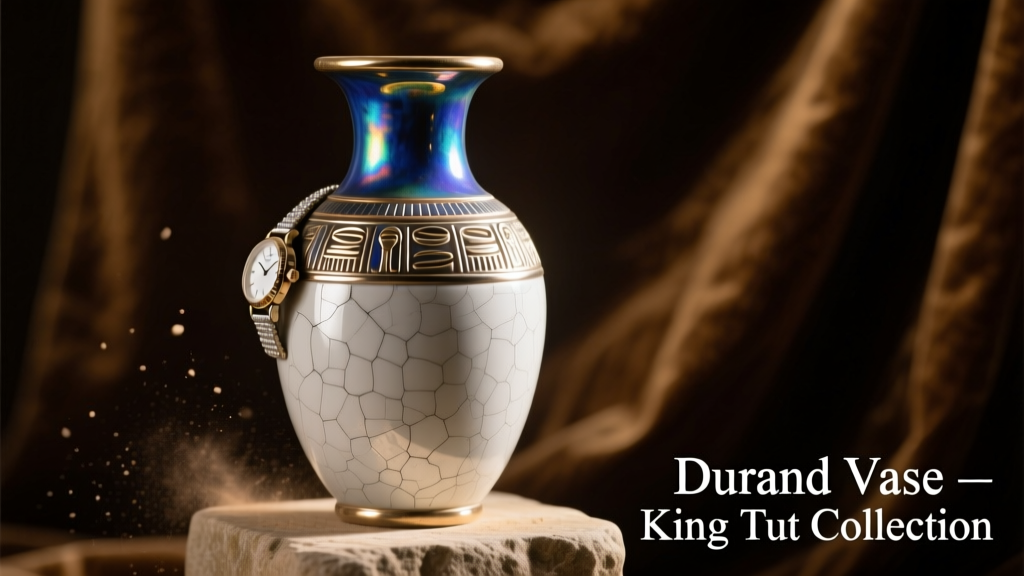
The Durand Vase: King Tut-Inspired Iridescent Blue Glass with Silver and White Ground, 12¼ Inches — A Study in Early 20th-Century American Art Glass Innovation
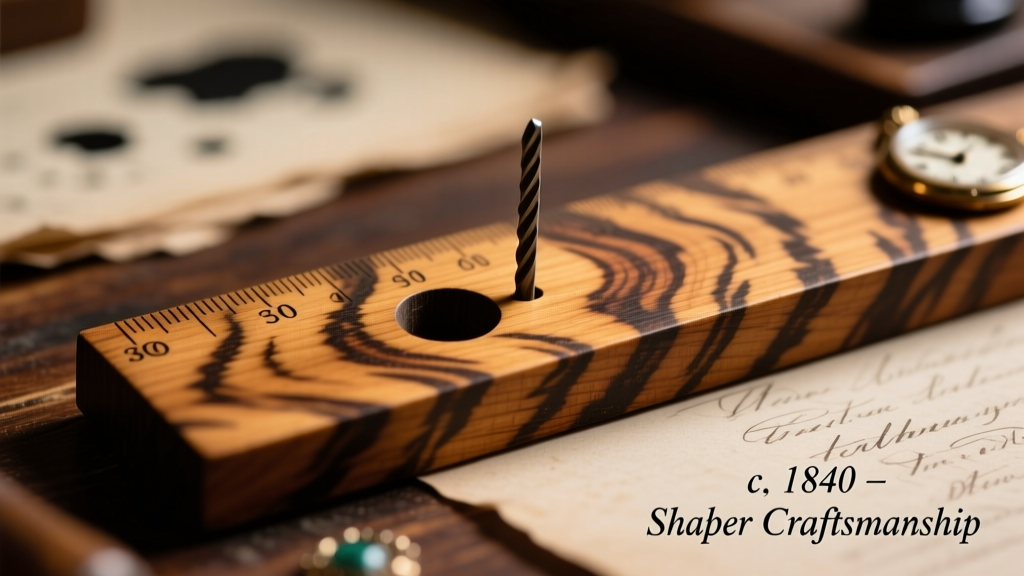
Shaker Ruler in Tiger Maple, Drilled Hole, Circa 1840 — A Rare Two-Foot Measuring Instrument from Mount Lebanon

Abingdon Pottery Figurine: Woman Holding Basket with Gold Hair Trim — A 10-Inch Masterpiece of Mid-Century American Studio Ceramics
Yankee Stadium Memorabilia: Authentic Artifacts, Auction Values, and Historical Significance
Brush Figurine Swan Yellow 9-Inch: A Collector’s Deep Dive into Mid-Century Ceramic Artistry

Doorstops Manor: A 1920s English Country House with Curvy Driveway, Turrets, and Meticulous Landscaping — B.H. 9 × 8 Inches
Castor Jar in Silver: Octagonal Footed Form with Pierced Cover by Charles Adam, London, 1719 — A Masterpiece of Early Georgian Silversmithing
Steuben Glass Dish: Mint Figural Leaf at Base of Clear Handle, Signed — A Study in American Studio Craft (5½")