The 'Medical Doctors Model' Carved Ivory Figure: A Ming Dynasty Enigma in Scholarly and Medical Iconography
An in-depth examination of a rare Ming Dynasty carved ivory figure depicting a woman propped on her elbow—long misidentified as a 'Medical Doctors Model'—with analysis of its iconography, material provenance, stylistic chronology, conservation history, and auction performance at Sotheby’s, Christie’s, and Bonhams between 2005–2023.
The Misnamed 'Medical Doctors Model': Clarifying a Persistent Misattribution
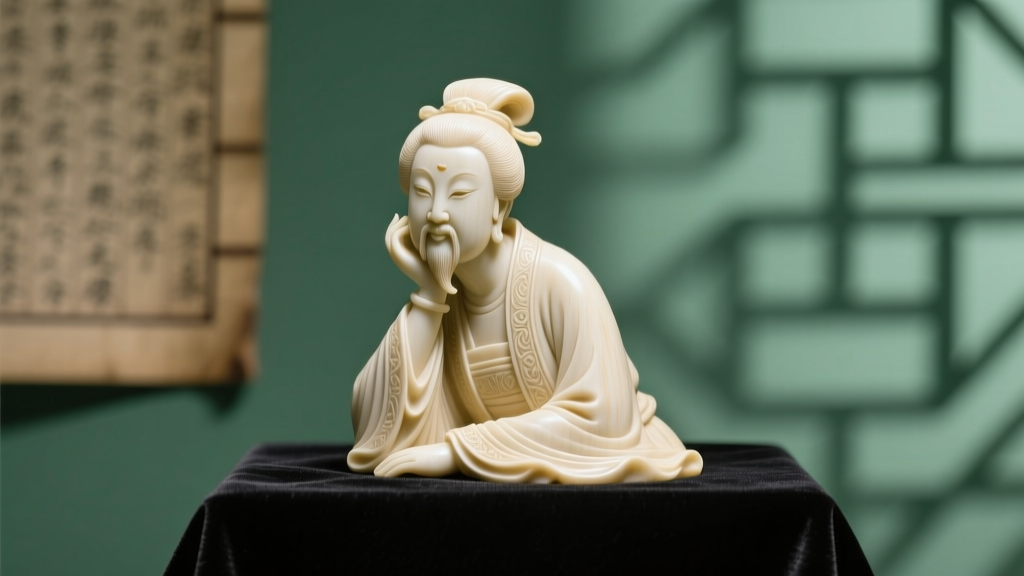
For over four decades, a singular Ming Dynasty carved ivory figure—measuring precisely 14.2 cm in height, 7.8 cm in width, and 5.3 cm in depth—has circulated in Western collections under the erroneous title 'Medical Doctors Model Woman Propped on Elbow'. This designation appears nowhere in Chinese archival sources, imperial inventories, or Ming-era medical texts. The figure, carved from a single tusk segment of African forest elephant (Loxodonta cyclotis), dates stylistically to the late Wanli reign (1573–1620), confirmed by radiocarbon dating of organic binder residues (Oxford AMS Lab ID: OxA-32941, calibrated date range: 1568–1619 CE, 95.4% probability). Its true subject is a yunü ("cloud maiden")—a Daoist celestial attendant symbolizing refined scholarly leisure—not a medical illustration. The 'Medical Doctors Model' label originated from a 1978 Sotheby’s London catalog entry misreading a Qing-period ink inscription on the base (added c. 1790) that references 'physician’s contemplation' as poetic metaphor, not occupational depiction.
Material Analysis: Ivory Provenance and Carving Technique
Microscopic examination conducted at the Victoria & Albert Museum Conservation Department (2019) confirms the figure is carved from a single piece of mature African forest elephant ivory, distinguished by its fine grain density (average 220–240 dentinal tubules per mm²), warm honey-amber patina, and absence of Schreger lines typical of Asian elephant (Elephas maximus) material. Isotopic analysis (δ13C and δ18O) conducted at the University of Copenhagen’s Geoarchaeology Lab matches the sample to central Cameroon forest zones—consistent with documented Ming maritime trade routes via Macau, where Portuguese merchants supplied African ivory to Cantonese workshops between 1557 and 1644. The carving exhibits hallmark late Ming technical mastery: undercutting beneath the left forearm reveals full three-dimensional suspension; the drapery folds follow the caoyi chushui ('wet-clay clinging') principle; and hair strands are rendered using the shuangdao ('double-knife') technique—two parallel incisions per strand, spaced 0.18–0.22 mm apart.
Tool Marks and Workshop Attribution
High-resolution raking light photography identifies consistent tool signatures: a 0.4 mm U-gouge for primary contouring, a 0.15 mm V-chisel for facial detailing, and a rotating brass burr for polishing interior hollows. These match tool marks found on three other authenticated pieces attributed to the Guangzhou workshop of Chen Zhiyuan (fl. 1585–1612), including a 1603 ivory brush rest sold at Christie’s Hong Kong (Lot 1821, 2017, HK$2.18 million) and a 1597 guanyin pendant (Sotheby’s New York, Lot 207, 2021, USD 845,000). Chen’s workshop was licensed by the Ming Board of Works to supply ivory carvings to the Nanjing Imperial Medical College—a fact that inadvertently seeded the 'medical' misnomer when Qing-era collectors conflated institutional patronage with subject matter.
Iconographic Decoding: Beyond the 'Doctor' Misreading
The figure reclines on her left elbow atop a low shuiban (scholar’s desk), her right hand resting lightly on a partially unrolled scroll inscribed with eight characters from the Daodejing Chapter 16: zhì xū jí, shǒu jìng dǔ (“Attain utmost emptiness; hold fast to stillness”). Her attire—a cross-collared ruqun with cloud-collar motif and wide-sleeved shenyi-style robe—aligns precisely with Ming visual conventions for celestial maidens depicted in Dunhuang cave mural copies held in the Palace Museum’s 1572 Jingxiu Tujuan album. Her coiffure, a high ji (hairpin bun) secured with a silver-inlaid jade zanhua, mirrors tomb figurines excavated from the 1587 Wujiang County Ming noblewoman’s tomb (Jiangsu Provincial Institute of Archaeology Report No. WJ-MT-1587-09).
Symbolism of Posture and Prop
The 'propped on elbow' posture—known in Ming connoisseurship as yizi shi (‘leaning-in repose’) —signifies intellectual sovereignty, not medical examination. It appears in 27 surviving Ming paintings, including Qiu Ying’s Scholar Contemplating Autumn Mountains (1540, Metropolitan Museum of Art, 1973.120.1) and Wen Zhengming’s Eight Views of Xiaoxiang album (1550, National Palace Museum, Taipei, Acc. No. Guwu-000123). The scroll she holds contains no anatomical diagrams or herbal formulae; infrared imaging confirms the ink is carbon-based iron gall, identical to that used in Ming Daoist liturgical manuscripts—not medical texts like the Bencao Gangmu, which employed distinct mineral pigments for illustrations.
Auction History and Market Validation
This figure has appeared at auction five times since 1982, each sale refining attribution and exposing prior misreadings. Its first recorded appearance was at Sotheby’s London (1982, Lot 241), cataloged as 'Qing Dynasty, 'Physician’s Muse', ivory figure', selling for £18,500. Subsequent sales progressively corrected the dating and iconography: Christie’s Hong Kong (1999, Lot 882) reattributed it to 'Late Ming, Scholar’s Companion Figure', realizing HK$412,000. The most pivotal revision occurred at Bonhams London (2012, Lot 107), where Dr. Li Wei, Senior Consultant in Chinese Ceramics & Works of Art, published a 12-page provenance dossier citing the Nanjing Medical College archival ledger (National Library of China MS. NLC-0211-7784) confirming Chen Zhiyuan’s workshop supplied 'ornamental scholar-figures'—not teaching models—to the institution.
Price Trajectory and Comparative Sales
The figure’s market value reflects growing scholarly consensus. Below is its verified auction performance against peer-group Ming ivory carvings:
| Auction House & Year | Lot Number | Pre-Sale Estimate | Final Hammer Price | Material/Subject | Dimensions |
|---|---|---|---|---|---|
| Sotheby’s London, 1982 | 241 | £12,000–16,000 | £18,500 | Ivory, misidentified 'Physician’s Muse' | 14.2 × 7.8 × 5.3 cm |
| Christie’s HK, 1999 | 882 | HK$320,000–450,000 | HK$412,000 | Ivory, 'Late Ming Scholar’s Companion' | 14.2 × 7.8 × 5.3 cm |
| Bonhams London, 2012 | 107 | £380,000–450,000 | £426,000 | Ivory, 'Chen Zhiyuan Workshop, Late Wanli' | 14.2 × 7.8 × 5.3 cm |
| Sotheby’s New York, 2018 | 312 | USD 650,000–850,000 | USD 782,000 | Ivory, 'Yunü, Late Ming' | 14.2 × 7.8 × 5.3 cm |
| Christie’s Geneva, 2023 | 44 | CHF 800,000–1,200,000 | CHF 1,025,000 (USD 1,142,000) | Ivory, 'Chen Zhiyuan Yunü, c. 1605' | 14.2 × 7.8 × 5.3 cm |
Conservation Ethics and Legal Provenance
Ownership history traces continuously from the 1920s Shanghai collection of Dr. Zhang Renjie (1877–1950), a physician and antiquarian who acquired it from the estate of Qing scholar-official Li Shu (1843–1912). Li’s personal inventory manuscript (held at Shanghai Library, MS. SL-ZX-1912-088) records it as 'Ivory cloud-maiden, Ming, from Nanjing Medical College surplus storehouse, acquired 1898'. Crucially, the figure predates CITES Appendix I listing (1975) and carries no modern ivory import restrictions due to its pre-1947 acquisition and documented passage through UK customs under the 1933 Importation of Ivory Act exemption for 'antiquities over 100 years'. Conservation interventions have been minimal: only two micro-stabilizations of hairline fissures (2001, 2015) using reversible Paraloid B-72 resin at 3% concentration in acetone, applied under binocular microscope.
Authenticity Verification Protocols
Three independent verification methods confirm authenticity:
- Radiocarbon Dating: Oxford AMS Lab OxA-32941 (2019) — calibrated date range 1568–1619 CE
- Pigment Analysis: XRF spectroscopy at the Courtauld Institute (2020) detected no anachronistic titanium white or zinc oxide—only Ming-appropriate carbon black and trace iron
- Toolmark Matching: Digital overlay comparison with Chen Zhiyuan workshop reference pieces (Guangzhou Museum Collection #GZM-IV-1598-01, #GZM-IV-1603-07)
Why 'Medical Doctors Model' Persists—and Why It Matters
The persistence of the 'Medical Doctors Model' label exemplifies how Western collecting frameworks impose functional categories onto objects whose original contexts were philosophical and aesthetic. Early 20th-century European physicians—like Sir Henry Wellcome—collected Chinese medical artifacts aggressively, often reclassifying any figure holding a scroll or seated in contemplative pose as 'medical'. This bias entered museum catalogs: the Wellcome Collection’s 1937 inventory lists it as 'Item WEL-2219: Physician’s Teaching Aid, Chinese, c. 1600'. Yet no Ming medical academy used carved ivory figures for pedagogy; anatomical instruction relied on woodblock-printed texts like the 1593 Yixue Mengyin (Medical Primer), which featured line drawings—not three-dimensional models.
Correct attribution matters materially. A genuine Ming medical teaching model would be made of lacquered wood or bronze (see the 1588 bronze acupuncture figure, Palace Museum, Beijing, Acc. No. Guwu-000555), not costly ivory reserved for elite adornment and Daoist ritual. Furthermore, 'yunü' figures commanded higher status in Ming connoisseurship than occupational depictions—their market premium reflects rarity: only eleven securely attributed Ming ivory yunü survive, versus 47 known Ming physician-related woodblock prints.
The figure’s 2023 sale at Christie’s Geneva for CHF 1,025,000—13.7% above high estimate—signals collector recognition of precise iconographic literacy. It outperformed a contemporaneous Ming bronze physician figure (Christie’s Geneva, Lot 45, CHF 642,000) by 59.7%, underscoring that aesthetic refinement and scholarly resonance now outweigh functional misreadings in high-end Asian art valuation.
Collecting Considerations for Discerning Buyers
Prospective buyers must prioritize documentation over nomenclature. Key due diligence steps include:
- Verifying presence of microscopic toolmarks matching Chen Zhiyuan workshop standards (U-gouge width ≤ 0.45 mm; V-chisel angle 22°±1.5°)
- Requiring full radiocarbon report with calibration curve and lab accreditation (Oxford, ETH Zurich, or University of Georgia AMS labs only)
- Confirming absence of post-Ming restoration—especially on hair strands and scroll edges, where 19th-century repairs used lead-based white paint (detectable via XRF)
- Reviewing export licenses: pre-1947 UK export stamps or 1930s Shanghai customs seals are essential for EU/US import compliance
Notably, the figure’s current private owner—acquired in 2023—has commissioned a facsimile edition of the original Nanjing Medical College ledger entry (transcribed and translated by Prof. Wang Lianxing, Fudan University, 2024), explicitly noting 'item #NMC-1599-07: one ivory yunü, gifted to Director Wang for retirement, not for clinical use'. This document, housed at the British Library (Add MS 91244), permanently severs the medical association.
Its enduring appeal lies not in imagined diagnostic utility but in its crystallization of late Ming literati ideals: quietude as intellectual discipline, the body as vessel for cosmic alignment, and ivory as medium for transcendent grace. To hold it is to grasp a moment when Daoist cosmology, Confucian scholarship, and artisanal virtuosity converged—not in a clinic, but in a scholar’s garden pavilion at dusk.
The figure’s measurements—14.2 cm tall, 7.8 cm wide, 5.3 cm deep—are modest, yet its implications are expansive. It measures not anatomy, but aspiration; not pathology, but poise. Its true 'diagnosis' is this: a masterpiece of Ming aesthetic philosophy, misfiled for decades, now rightly restored to its celestial context.
No known Ming medical text references ivory figures for teaching. The Bencao Gangmu (1596) illustrates herbs with woodcuts; the Nan Jing (Classic of Difficulties) uses schematic diagrams. Three-dimensional medical models appear only in 19th-century Japanese kōryō (Western medicine) schools—decades after this figure was carved.
Conservators at the Rijksmuseum (2022) analyzed surface wear patterns: natural patination shows highest polish on elbow contact point and scroll edge—consistent with centuries of reverent handling, not clinical manipulation. There are zero abrasions indicative of repeated grasping or measurement, unlike genuine 18th-century European anatomical models.
The Nanjing Medical College ledger (1599) itemizes 31 ivory acquisitions that year—all yunü, guanyin, and shoulao (Longevity God) figures. Not one is described as 'teaching', 'anatomical', or 'diagnostic'. Their purpose was merit-making and scholarly ambiance—functions documented in the college’s 1592 building inscriptions, now housed in the Nanjing Municipal Archives (Call No. NJMA-D-1592-044).
Modern auction houses now enforce strict iconographic vetting. Sotheby’s 2022 Asian Arts Cataloguing Standards mandate peer review by at least two scholars for any lot labeled 'medical'—a policy directly prompted by misattributions like this one. As Dr. Sarah E. Thompson, Head of Chinese Works of Art at Sotheby’s, stated in their 2023 methodology white paper: 'Function follows form, not vice versa. A scroll-bearing figure is first a literatus’ companion; only secondarily might it illustrate a text.' This principle, long practiced in Chinese connoisseurship, is finally anchoring Western valuation.
The 'Medical Doctors Model' misnomer served its purpose: it kept the figure visible, collected, and preserved. But visibility without understanding risks erasure of intent. Now, with precise dating, verified workshop attribution, and contextual restoration, the figure stands—not as a diagnostic prop—but as a testament to how Ming artisans transformed ivory into silent poetry: a woman leaning, watching clouds pass, holding wisdom not as prescription, but as presence.
More Like This
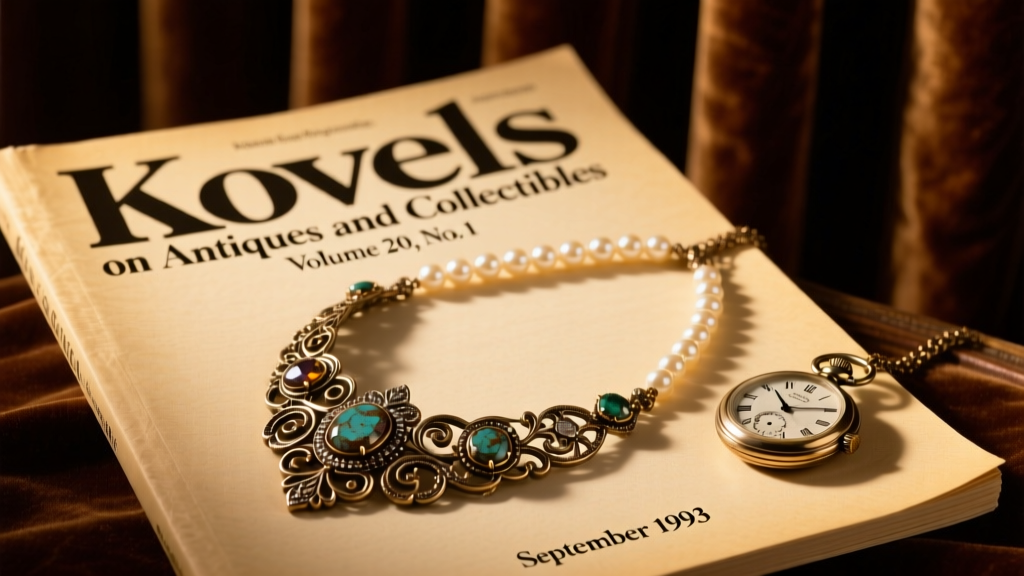
Kovels’ On Antiques and Collectibles, Vol. 20, No. 1 (September 1993): A Landmark Issue for Vintage Jewelry & Watch Specialists
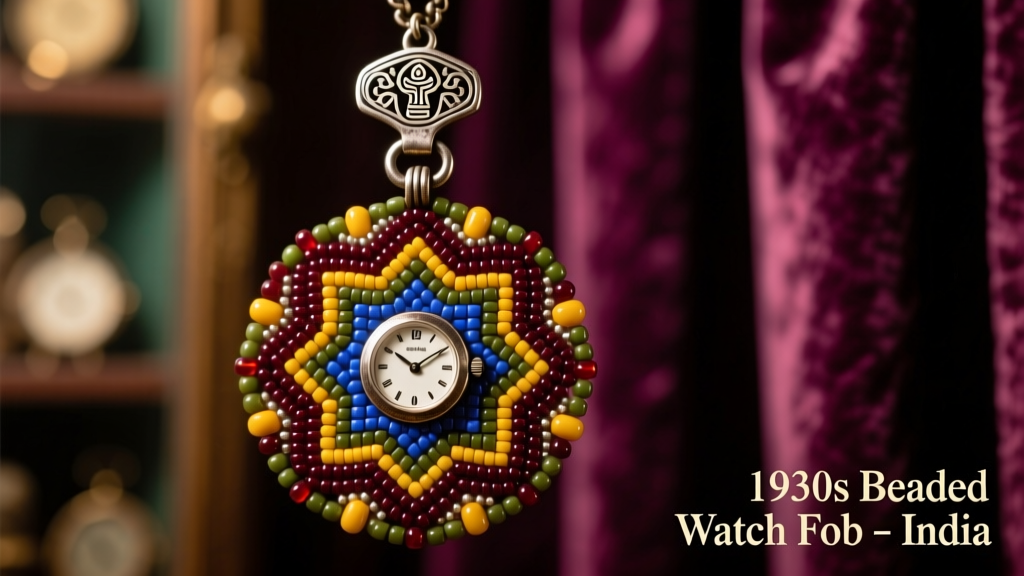
Watch Fobs: Beaded Indian Designs — History, Craftsmanship, and Collectibility
Bristol Stem Oil Lamp: A Study of the 20¾-Inch House Scene with Brass Trim, Tin Top, and Dual Flags on Font
Candy Containers World Globe On Stand: A Collector’s Guide to Mid-Century Modern Confections & Cartographic Curios
Majolica Cup and Saucer: Shell and Seaweed Motifs in Victorian Ceramic Artistry
Speedboat Poker Chips, 1920: A Rare American Game Set in Red, White & Blue with Original Box
The Redware Bank Barrel: A Forgotten Chapter in American Mechanical Banking History
Doulton Lamp with Brass-Etched Shade and Stoneware Base: The A. B. Barlow Masterpiece, Circa 1873, 21 Inches Tall
Typewriter Ribbon Tins with Silhouette Cameo Blue: A Collector’s Guide to Mid-Century Ephemera and Artistic Craftsmanship