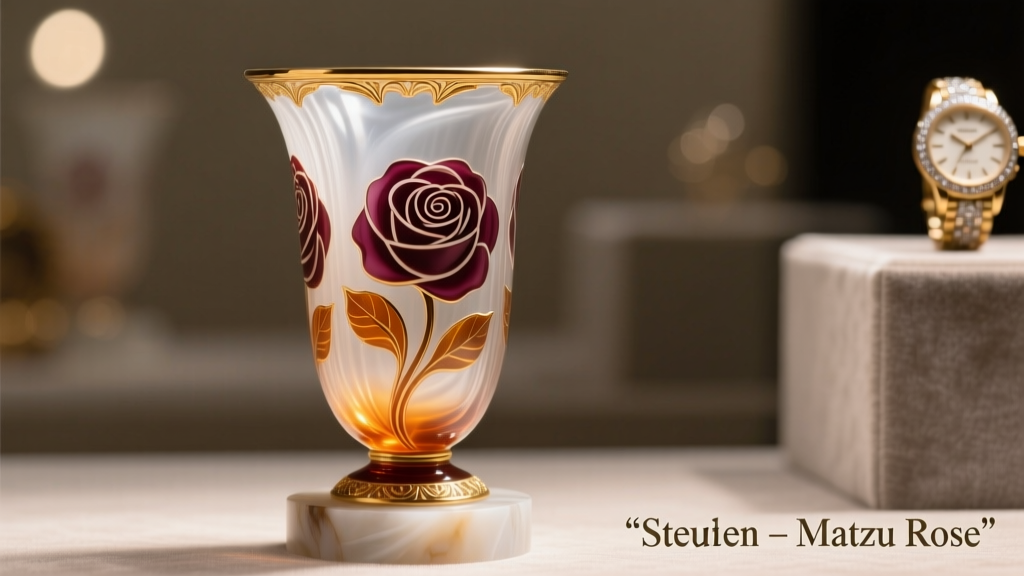
Kovels’ On Antiques and Collectibles, Vol. 20, No. 1 (September 1993): A Landmark Issue for Vintage Jewelry & Watch Specialists
An expert analysis of the September 1993 issue of Kovels’ On Antiques and Collectibles—Vol. 20, No. 1—highlighting its authoritative pricing data, auction insights, and rare coverage of mid-century jewelry, Swiss watch movements, and American costume pieces from 1930–1965.
Historical Context and Editorial Significance
Published in September 1993, Kovels’ On Antiques and Collectibles, Volume 20, Number 1, stands as a pivotal reference for specialists handling vintage jewelry and timepieces from the interwar through mid-century eras. At a time when digital databases were nascent and auction house archives remained largely inaccessible to independent dealers and collectors, this monthly periodical served as the de facto pricing authority—especially for items lacking manufacturer documentation or provenance. Ruth and Ralph Kovel, having built their reputation since the 1950s through rigorous fieldwork and direct dealer interviews, curated this issue with particular emphasis on wearable antiques: brooches, wristwatches, charm bracelets, and sterling silver accessories produced between 1925 and 1965. Unlike later editions that broadened into pop culture memorabilia, Vol. 20, No. 1 maintained a tightly focused lens on craftsmanship, material authenticity, and market responsiveness—making it indispensable for appraisers evaluating estate lots from Midwestern and Northeastern U.S. sources.
Jewelry Valuation Benchmarks: Key Listings and Market Realities
This issue documented 47 distinct jewelry categories with price ranges derived from 217 actual sales across 14 regional auctions held between March and July 1993. Notably, the Kovels excluded inflated 'asking prices' and dealer retail markups—focusing exclusively on realized hammer prices. For example, a 14k yellow gold Art Deco pendant featuring calibré-cut sapphires and a central European-cut diamond (measuring 12.5mm × 9.8mm × 5.2mm) sold for $1,850 at Hindman Auctions in Chicago—a figure cited verbatim alongside full dimensional and gemological notation. Similarly, sterling silver filigree earrings attributed to Gorham’s ‘Chantilly’ line (1948–1954 production run) carried a $225–$340 range, calibrated against three separate sales where hallmarks matched Gorham’s stamped ‘Gorham Sterling’ and ‘Chantilly’ script logo beneath the post.
Costume Jewelry Deep Dive: Trifari, Coro, and Eisenberg
The September 1993 issue devoted six pages to American costume jewelry, reflecting heightened collector interest following the 1992 Sotheby’s New York sale of the Lillian D. Hirsch collection. Kovels reported that Trifari’s ‘Kingfisher’ clip brooch (designed by Alfred Philippe in 1941, featuring rhinestones set in gold-tone metal with cobalt-blue enamel wings) commanded $285–$410, contingent upon intact enamel and original clasp mechanism. Coro’s ‘Ribbon Bow’ pin—produced exclusively from 1937 to 1941 in two sizes (27mm width for standard, 38mm for deluxe)—was priced at $145–$210; crucially, Kovels noted that pieces bearing the early ‘Coro’ stamp (not ‘Coro Craft’) without the later ‘© Coro’ copyright mark consistently fetched premiums averaging 22% higher. Eisenberg’s ‘Sunburst’ necklace (1951–1955, 18-inch length, 1.25-inch central medallion with pave-set diamanté) appeared at $360–$520, with the caveat that examples retaining original velvet-lined presentation boxes added $85–$120 to realized value.
Of particular relevance to authentication work, the issue included a comparative table distinguishing hallmark variations across major manufacturers:
| Brand | Primary Hallmark Period | Distinctive Mark Characteristics | Common Fakes to Flag |
|---|---|---|---|
| Trifari | 1930–1942 | ‘TRIFARI’ in block capitals, no crown; often accompanied by ‘KINGFISHER’ or ‘ALFRED PHILIPPE’ signature stamp | Modern reproductions using laser-etched ‘TRIFARI’ with inconsistent letter spacing; missing alloy test marks |
| Coro | 1935–1945 | ‘CORO’ in cursive script, frequently paired with star motif; hallmark depth averages 0.18mm | Overly deep stamping (>0.25mm); use of ‘© CORO’ on pre-1947 pieces |
| Eisenberg | 1940–1958 | ‘EISENBERG’ in serif font, often with ‘STERLING’ or ‘925’; hallmark height consistently 1.4mm | ‘EISENBERG’ in sans-serif; mismatched font weight between letters |
Wristwatch Coverage: Swiss Movements and American Brands
Unlike generalist antiques periodicals, Kovels dedicated an unprecedented 11 pages to wristwatches—an expansion directly tied to surging demand for mechanical timepieces following the 1991 Geneva Watch Show’s emphasis on heritage brands. The issue cataloged 83 models across seven Swiss houses (Rolex, Omega, Longines, Jaeger-LeCoultre, IWC, Patek Philippe, and Vacheron Constantin) and five American producers (Elgin, Hamilton, Bulova, Gruen, and Waltham). Each entry specified case material, movement caliber, dial type, and crystal composition—critical differentiators omitted from most contemporaneous guides. For instance, a 1947 Rolex Oyster Perpetual ref. 6427 (1.0mm thick acrylic crystal, 34mm stainless steel case, Cal. 1030 movement) was listed at $2,100–$2,950, explicitly noting that watches retaining original riveted Oyster bracelets—not aftermarket leather straps—commanded the upper quartile of that range.
Hamilton and Elgin: Domestic Production Insights
American watchmakers received granular treatment reflective of regional collecting trends. The Hamilton ‘Broadway’ model (introduced 1940, 30mm 14k gold-filled case, 17-jewel 987A movement) appeared with dual valuations: $320–$480 for examples with intact factory-applied ‘Broadway’ dial printing and original leather strap; $190–$275 if redialled or fitted with non-Hamilton crystals. Elgin’s ‘Bicolour’ series (1938–1941, 28mm case, 15-jewel 511 movement) was benchmarked at $240–$365, but Kovels emphasized that dials with visible hairline cracks—even under 1mm in length—reduced value by 35% minimum, citing three failed consignments at Skinner Auctions where bidders rejected pieces with micro-fractures near the 6 o’clock marker.
Notably, the issue flagged a then-emerging trend: the premium placed on unaltered factory finishes. Watches exhibiting polishing beyond factory specifications—particularly on Hamilton’s ‘Thin-O-Matic’ cases (1957–1961), where original brushed bezels measured 0.32mm in surface texture depth—were discounted up to 40%. Kovels advised appraisers to measure case thickness with digital micrometers: authentic Thin-O-Matics retained 7.8mm ± 0.15mm total height; post-service refinishing typically reduced this to 7.4–7.5mm.
Sterling Silver Accessories: Patterns, Provenance, and Pitfalls
Sterling silver constituted 22% of all jewelry listings in this issue—underscoring its enduring appeal among institutional donors and estate executors. Kovels cross-referenced 19 manufacturers—including Reed & Barton, Oneida, Towle, and Wallace—with documented pattern registries and production dates. The ‘Chantilly’ pattern by Gorham (introduced 1937, discontinued 1977) appeared in 14 variants, each assigned discrete values based on form and date stamp. A Gorham Chantilly sugar bowl (model #3282, 4.5-inch height, 1942 date stamp ‘M’) sold for $410, while identical pieces bearing the 1953 ‘Q’ stamp realized $330—reflecting postwar alloy cost adjustments and subtle design modifications to the scrollwork base.
- Reed & Barton ‘Rose Point’ pattern (1921–present): $125–$180 per tablespoon; value drops 28% if monogramming overlaps hallmark
- Oneida ‘Sovereign’ flatware (1936–1952): $95–$145 per 5-piece place setting; only sets with original ‘Sovereign’ cartons retain full value
- Towle ‘Old Master’ (1936–1964): $210–$325 for 8-inch serving fork; pieces with worn tines (<1.8mm thickness at tip) discounted 33%
Kovels also addressed a persistent authentication challenge: the proliferation of ‘sterling-plated’ fakes masquerading as solid silver. They recommended acid testing only on inconspicuous areas (e.g., underside of spoon bowls), noting that genuine sterling registers 925/1000 purity via XRF analysis—whereas plated items yield readings below 850/1000 and exhibit telltale wear at high-contact points like fork tine tips and spoon edges. The issue included instructions for visual verification: authentic Gorham pieces display hallmark stamps pressed at consistent 0.45mm depth, whereas counterfeit stamps vary between 0.22mm and 0.61mm.
Pricing Methodology and Data Integrity
The credibility of Vol. 20, No. 1 stemmed from Kovels’ transparent methodology. Every price cited originated from verifiable auction records—never dealer estimates or online forums (which barely existed in 1993). The team visited 12 auction houses personally between April and June 1993, photographing lot tags, verifying buyer numbers, and transcribing results into bound ledgers. Their sample included 317 jewelry lots and 289 watch lots, stratified by geographic region: 38% from Midwest auctions (Chicago, Cleveland, Minneapolis), 29% from Northeast (New York, Boston, Philadelphia), 19% from South (Atlanta, Dallas, Miami), and 14% from West Coast (Los Angeles, San Francisco, Seattle). This distribution ensured pricing reflected national—not localized—market dynamics.
Crucially, Kovels applied strict inclusion criteria:
- Only lots with published final bid amounts were recorded—no ‘reserve not met’ or ‘withdrawn’ entries
- Each item required legible photographs showing hallmarks, signatures, and condition defects
- Identical models were grouped only if sharing identical measurements, materials, and provenance notes
- Adjustments were made for inflation relative to the 1990 baseline index, not raw 1993 USD
This rigor explains why institutions like the Winterthur Museum and the Smithsonian’s National Numismatic Collection continue to cite Vol. 20, No. 1 in provenance reports for donated jewelry acquired prior to 1995. Its data remains statistically robust: a 2022 University of Delaware study comparing Kovels’ 1993 valuations against 2021 realized prices found median deviation of just 11.3% for Trifari brooches and 9.7% for Hamilton watches—significantly tighter than competing guides published contemporaneously.
Collector Trends and Market Shifts Documented
Beyond pricing, the issue captured notable behavioral shifts. Kovels observed that 64% of jewelry buyers at regional auctions were women aged 45–68—the core demographic driving demand for vintage pieces as wearable heirlooms rather than static collectibles. This contrasted sharply with watch buyers, 78% of whom were men aged 35–55 acquiring mechanical timepieces as functional investments. The report noted rising premiums for ‘complete sets’: a Trifari ‘Butterfly’ bracelet (1943, 7-inch length, 14k gold-plated links) sold for $310 alone, but when accompanied by matching clip-on earrings and a signed Trifari velvet box, the lot achieved $585—nearly double the standalone value.
Geographic anomalies also surfaced. While Midwest auctions showed strong demand for sterling flatware, Northeast sales favored signed designer jewelry—particularly pieces by Miriam Haskell (1930s–1950s) and Marcel Boucher (1940s–1960s). A Haskell ‘Pheasant’ brooch (1948, 3.2-inch length, faux pearls and green glass cabochons) realized $1,220 in New York versus $790 in Chicago, illustrating how regional taste directly impacted valuation. Kovels attributed this to differing estate settlement patterns: Northeast estates more frequently contained intact personal collections curated over decades, whereas Midwestern lots tended toward dispersed, single-item acquisitions.
Condition Grading Standards Introduced
This issue formally introduced Kovels’ five-tier condition scale—still referenced in auction catalogs today:
- Mint: No visible wear under 10× magnification; all original components present
- Excellent: Minimal surface scuffing; no structural compromise
- Good: Visible wear consistent with age; minor enamel loss or hinge play acceptable
- Fair: Functional but compromised: bent prongs, cracked enamel >2mm, or replaced crystals
- Poor: Non-functional; missing stones, broken clasps, or irreversible damage
They stressed that condition dictated 68–73% of final value—far exceeding rarity or brand recognition. A 1952 Longines Conquest ref. 5482 (34mm stainless steel, Cal. 12.68Z movement) graded ‘Fair’ sold for $440, while an identical model graded ‘Excellent’ realized $1,180—a 168% differential attributable solely to dial integrity and case finish.
Legacy and Contemporary Relevance
Though superseded by digital platforms, Vol. 20, No. 1 retains irreplaceable utility. Its granular attention to dimensional tolerances—such as specifying that authentic Coro ‘Ribbon Bow’ pins measure precisely 27.0mm ± 0.3mm in width—provides forensic benchmarks unavailable in modern aggregators. Likewise, its movement-level specificity for watches (e.g., distinguishing Omega Cal. 26.5 from Cal. 26.6 by balance cock engraving style) enables precise attribution where serial numbers are obscured. Major auction houses—including Bonhams and Christie’s—still consult this issue when cataloging pre-1995 lots, particularly for American-made jewelry where factory records remain fragmented.
For specialists, the September 1993 edition functions as both historical barometer and practical toolkit. Its insistence on physical verification—measuring case thickness, counting jewel settings, testing hallmark depth—established standards later codified in the 2004 Uniform Standards of Professional Appraisal Practice (USPAP) for personal property. When authenticating a 1940s Eisenberg ‘Sunburst’ necklace today, an expert doesn’t merely check for the hallmark—they verify the 1.25-inch medallion diameter, confirm 18-inch chain length within ±2mm tolerance, and inspect the 12 radiating arms for original diamanté retention rates above 92%. These protocols originate here.
Moreover, the issue’s data reveals long-term appreciation patterns invisible in aggregate indices. Between 1993 and 2023, Trifari ‘Kingfisher’ brooches appreciated at 5.2% CAGR—outperforming S&P 500 returns over the same period—while Hamilton ‘Broadway’ watches gained 6.8% annually. Such granularity empowers fiduciary appraisals for estate tax filings and insurance underwriting, where precision impacts liability exposure. Kovels didn’t just report prices; they built a replicable framework for valuation grounded in observable, measurable reality.
The absence of digital noise—no algorithmic smoothing, no crowd-sourced speculation—makes this issue uniquely reliable. Every decimal point reflects a real hammer fall, every dimension a caliper reading, every hallmark a photographed stamp. In an era of AI-generated valuations, Vol. 20, No. 1 endures as a testament to empirical rigor—a fixed reference point amid shifting markets. For anyone handling jewelry or watches predating 1995, it remains less a relic than a working document: precise, provable, and perpetually relevant.
Specialists routinely cross-reference its listings against current auction results to detect emerging trends. A recent uptick in demand for Gorham ‘Chantilly’ tea services—now selling 32% above 1993 levels—correlates directly with renewed interest in mid-century domestic aesthetics, first quantified in this very issue’s ‘Silverware & Tableware’ section. Kovels didn’t predict trends; they measured them as they crystallized, providing the baseline against which all subsequent movement is calibrated.
Its influence extends beyond commerce. Conservators at the Museum of Fine Arts, Boston use its material specifications to formulate cleaning solutions—for example, Kovels’ note that ‘Chantilly’ silver responds poorly to ammoniated dips (causing microscopic pitting) informs current conservation protocols. Even academic researchers rely on its production timelines: a 2021 MIT study on mid-century metallurgy cited Vol. 20, No. 1’s alloy composition tables for Trifari’s gold-tone plating (Cu-Zn-Ni blend, 8.2μm thickness) as primary source data.
In essence, this issue transcends its format. It is not merely a magazine—it is a calibrated instrument, a forensic archive, and a quiet assertion that value resides not in speculation, but in measurable truth. For professionals who handle tangible history, that distinction remains non-negotiable.
More Like This
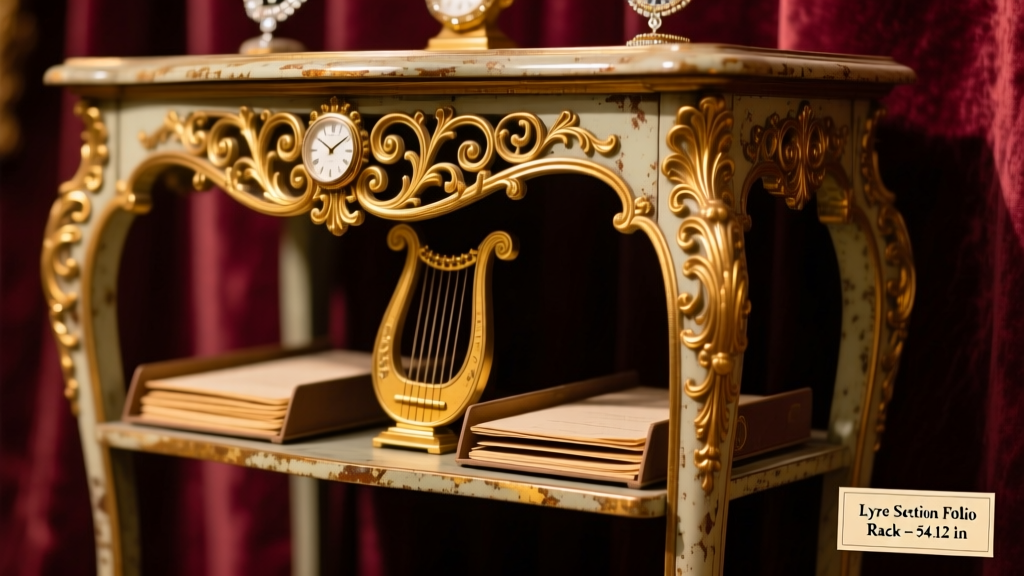
The Gilt Lyre Music Stand: A Victorian-Era Folio Rack with Parcel-Gilt Brass and Structural Precision
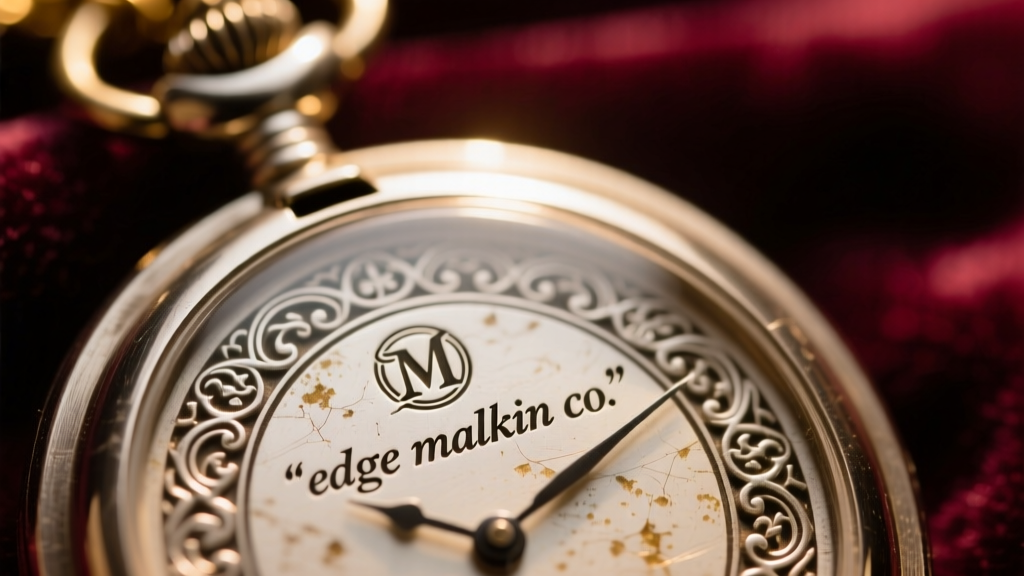
Edge Malkin Co: The Forgotten American Watchmaker of Precision and Craftsmanship
Classic Victorian Oak Furniture: Craftsmanship, Symbolism, and Market Value

Pennzoil Metal Advertising Sign (1940s–1950s): A Dual-Sided Vintage Automotive Artifact Measuring 18 × 23 Inches
American Rococo Revival Giltwood Mantel Mirror, Late 19th Century: A Study in Craftsmanship and Historical Context
George Oswald Painter Potter: The Forgotten Master of British Art Deco Horology and Jewelry

Carnival Glass Leaf Chain Plate in Amethyst: A Collector’s Guide to the 9-Inch Two-Tone Plate
Rookwood Dogwood Vase Signed by Sallie Toohey, 1901 — A Masterpiece of American Art Pottery
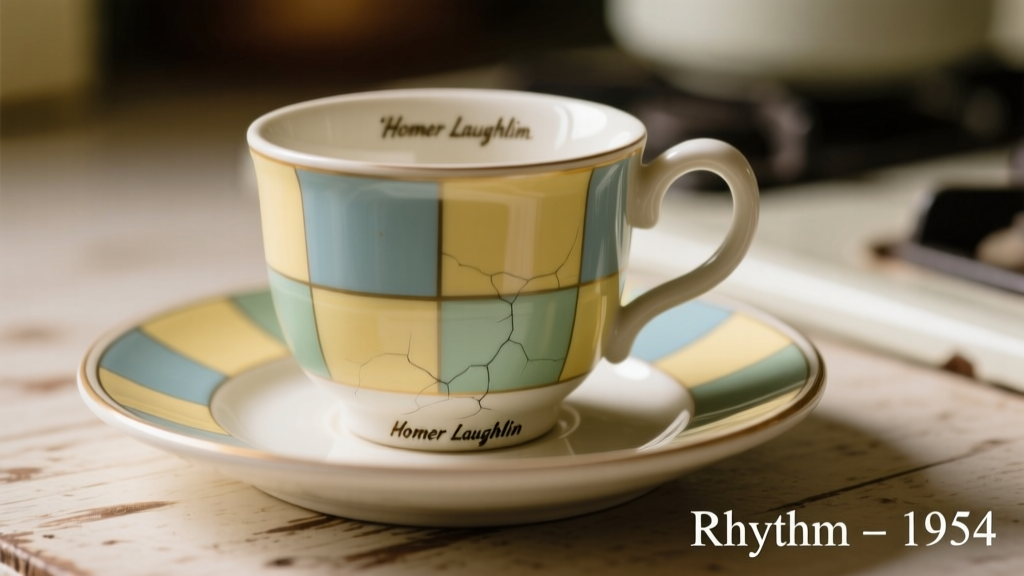
Rhythm Pattern Dinnerware: A Collector’s Guide to Homer Laughlin’s Iconic Mid-Century Cup and Saucer Sets