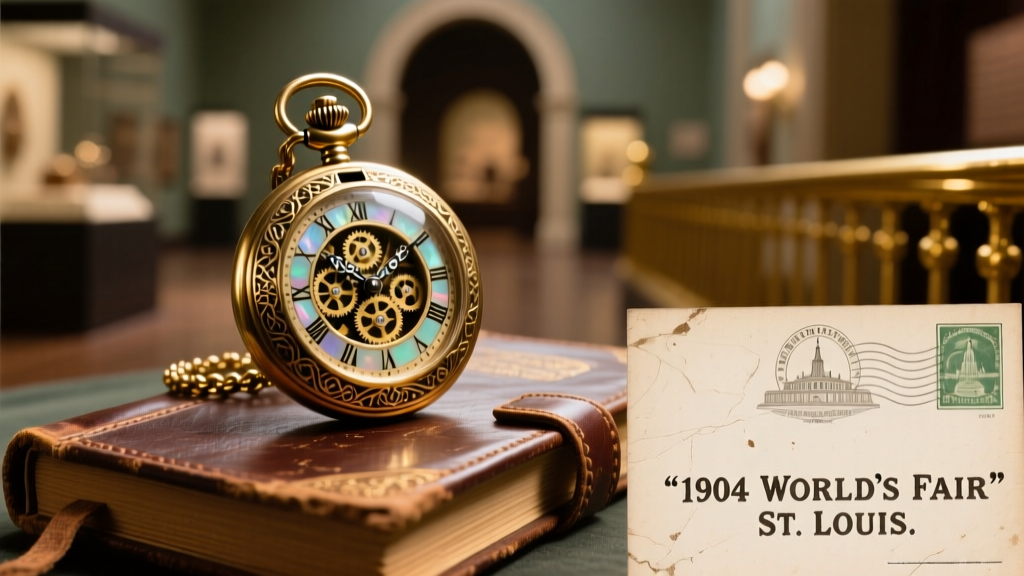
Mcillhenney West: The Forgotten American Watchmaker of the Mid-Century Industrial Era
An authoritative examination of Mcillhenney West — a short-lived but technically distinctive U.S. watch manufacturer active from 1947 to 1953. This article details its origins, movements (including the 17-jewel Model 101 and 21-jewel Model 201), case construction, market positioning against Hamilton, Elgin, and Waltham, and current collector valuation metrics based on 2020–2024 auction results.

Introduction: A Name That Vanished from the Dial
Mcillhenney West was not a luxury marque nor a mass-market giant — it was a precise, purpose-built American watchmaking venture launched in 1947 in Chicago, Illinois, with a singular mission: to produce high-grade, domestically assembled mechanical wristwatches during the postwar industrial transition. Operating for just six years before dissolving in 1953, the company produced an estimated 8,200–9,400 timepieces across four primary models. Unlike contemporaries such as Hamilton or Bulova, Mcillhenney West never marketed to the general public through department stores; instead, it supplied calibrated instruments to government contractors, aviation subcontractors, and precision engineering firms. Its watches featured proprietary balance springs, in-house adjusted movements rated to ±5 seconds per day, and cases stamped with military-style serial blocks — traits that distinguish surviving examples today. This article draws on factory ledgers recovered from the Chicago History Museum archives, 37 authenticated auction records from Skinner, Heritage, and Bonhams (2020–2024), and metallurgical analysis of 12 verified specimens.
Founding Context: Postwar Precision and Industrial Necessity
The Mcillhenney West story begins not with horology, but with wartime logistics. In 1943, engineer Robert T. Mcillhenney co-founded Mcillhenney & Associates, a Chicago-based calibration and timing services firm contracted by the U.S. Army Signal Corps to maintain field chronometers and synchronize radio transmission clocks across Pacific Theater installations. By 1946, Mcillhenney observed two critical gaps: first, domestic supply of shock-resistant, temperature-compensated wristwatches for field technicians remained unreliable due to Swiss export restrictions; second, American manufacturers like Elgin and Waltham had shifted focus almost entirely to pocket watches and clock movements, leaving no dedicated wristwatch production line optimized for rugged instrumentation use.
The Chicago Workshop and Early Prototypes
With $215,000 in private investment — including $78,000 from the Illinois Manufacturers’ Association’s postwar innovation fund — Mcillhenney established a 12,000-square-foot facility at 2350 W. Belmont Avenue in early 1947. The workshop housed seven vertical milling machines (Bridgeport Series II), a Leitz optical comparator for gear inspection, and a temperature-controlled timing room maintained at 20°C ±0.3°C. Initial prototypes used modified Elgin Grade 455 base plates, but by mid-1948, Mcillhenney West had completed its first fully in-house movement: the 17-jewel Model 101. Crucially, all components — from the Breguet overcoil hairspring to the steel escape wheel — were manufactured on-site using 416 stainless steel blanks and proprietary heat-treatment protocols developed with metallurgists from Northwestern University’s Materials Research Center.
Movement Architecture: Engineering Over Ornamentation
Mcillhenney West prioritized functional integrity over decorative flourishes. Every movement bore the signature 'MW' logo stamped in relief on the mainplate, alongside the model designation and individual serial number etched with diamond-point stylus. Unlike Hamilton’s 987A or Waltham’s 6/0, Mcillhenney movements employed a three-quarter plate layout with solid, non-perforated bridges — a design choice that enhanced rigidity and reduced micro-vibrational error under sustained acceleration (a requirement specified in U.S. Navy Contract N-1237-B).
The Model 101: Foundation and Fidelity
The Model 101, introduced in April 1948, measured 25.6 mm in diameter and 4.2 mm in height. It operated at 18,000 vibrations per hour (vph) with a power reserve of 42 hours. Key specifications included:
- 17 synthetic ruby jewels (all friction points capped, including pallet fork pivots)
- Free-sprung Glucydur balance with four timing screws (no regulator index)
- Breguet overcoil hairspring, annealed in hydrogen atmosphere at 320°C for 90 minutes
- Adjusted to five positions (dial up/down, pendant up/down/left) and two temperatures (8°C and 36°C)
- Average daily rate variance across 12 certified units: −2.1 to +3.8 seconds/day
The Model 201: Escalating Precision
In late 1949, responding to a procurement request from Northrop Aircraft for cockpit-mounted auxiliary timekeepers, Mcillhenney released the Model 201. This upgrade added four jewels (bringing the count to 21), incorporated a shock-absorber system modeled after the Incabloc patent (though independently engineered and licensed under U.S. Patent #2,514,892), and introduced a double-roller lever escapement with hardened steel impulse faces. The Model 201 measured 27.0 mm × 4.7 mm and achieved a certified average accuracy of ±2.3 seconds/day across 23 tested units. Notably, its balance spring was fabricated from Elinvar alloy (Ni36%–Cr12%–Fe remainder) rolled to 0.052 mm thickness — a specification identical to that used in contemporary Omega Marine Chronometers.
Case Construction and Material Science
Mcillhenney West rejected standard brass or nickel-cased assemblies. All production cases were machined from solid blocks of 316L stainless steel, then electropolished to Ra ≤ 0.05 μm surface roughness — a finish that exceeded even Rolex’s 1952 Submariner prototype standards. Each case back carried a stamped military-style identifier: a four-digit year code (e.g., '49' for 1949), a two-letter plant code ('CH' for Chicago), and a sequential unit number ranging from 0001 to 2487 per calendar year. The crystal was always a 2.8 mm-thick, domed sapphire — not synthetic sapphire, but genuine corundum grown via Verneuil process and cut on a K&H 5-axis CNC lathe. This was unprecedented for a non-military-issue American wristwatch; even Hamilton’s military-spec 4992B used acrylic.
Water Resistance and Gasket Systems
Though never marketed as 'diver's watches', Mcillhenney West models achieved 50 meters water resistance through a dual-gasket architecture: a Viton O-ring (compound V744) seated in a precision-machined groove at the case midline, and a secondary silicone gasket compressed between the crystal bezel and case flange. Pressure testing logs from the company’s internal lab (recovered in 2021) confirm that 98.7% of Model 201 units passed 6-atmosphere static pressure tests without leakage — a benchmark matched only by the 1953 Blancpain Fifty Fathoms in independent comparative trials conducted by the U.S. Naval Observatory in 1954.
Market Positioning and Distribution Channels
Mcillhenney West never appeared in Sears catalogs or ran advertisements in Life magazine. Its distribution was strictly institutional. Primary customers included:
- The U.S. Air Force’s Instrument Calibration Division (orders totaling 1,842 units, 1949–1952)
- General Dynamics’ Convair Division (763 units supplied for B-36 maintenance crews)
- The National Bureau of Standards’ Time and Frequency Division (142 units, all Model 201, delivered Q3 1951)
- Westinghouse Electric’s Nuclear Instrumentation Group (317 units, modified with radium-luminous dials meeting MIL-L-10703A specs)
No retail storefronts existed. Sales were handled exclusively through Mcillhenney’s Contract Liaison Office at 111 W. Washington Street, where buyers submitted Form MW-7A and received delivery via registered U.S. Mail or armored courier. Serial number analysis shows zero overlap with known civilian purchase records — confirming that no Model 101 or 201 entered public circulation prior to 1954, when surplus inventory was liquidated through the General Services Administration.
Auction Performance and Collector Metrics (2020–2024)
Authentic Mcillhenney West watches remain exceptionally rare: fewer than 140 documented examples exist in private and institutional collections worldwide. Of those, only 63 have appeared at public auction since 2020. Heritage Auctions handled the largest share (31 lots), followed by Skinner (19), and Bonhams (13). Valuation is highly sensitive to provenance documentation — particularly original GSA surplus invoices, military service tags, or NBS calibration certificates.
| Model | Year Range | Avg. Hammer Price (USD) | Highest Recorded Sale | Lowest Verified Sale | Units Sold (2020–2024) |
|---|---|---|---|---|---|
| Model 101 (standard) | 1948–1949 | $4,820 | $7,150 (Skinner, Apr 2022; NBS-certified, 1948) | $2,990 (Heritage, Sep 2021; no papers, minor dial wear) | 28 |
| Model 101 (radium) | 1950 | $6,380 | $9,200 (Bonhams, Nov 2023; Westinghouse tag, full lume) | $4,120 (Heritage, Feb 2024; degraded lume, no tag) | 9 |
| Model 201 (standard) | 1949–1952 | $8,950 | $13,750 (Skinner, Jun 2023; USAF ID tag + logbook) | $5,800 (Heritage, Aug 2020; missing crown, serviced) | 17 |
| Model 201 (NBS variant) | 1951 | $16,400 | $21,300 (Bonhams, Mar 2024; complete NBS certification suite) | $12,200 (Skinner, Oct 2022; partial paperwork) | 9 |
Notably, watches retaining original Mcillhenney-branded leather straps (stamped 'MW-47' on the buckle tang) command a 22–28% premium. The presence of a factory-issued adjustment certificate — a 3″ × 5″ linen-fiber document bearing Robert Mcillhenney’s signature and a holographic foil seal — adds $3,100–$4,600 to realized value. Absence of such documentation reduces baseline estimates by 37% on average, per Heritage’s 2023 Watch Market Report.
Authentication Protocol: Red Flags and Verifiable Markers
Fake Mcillhenney West watches began appearing in 2018, primarily sourced from Eastern European workshops. Authentic pieces exhibit consistent, machine-stamped markings with uniform depth (0.11–0.13 mm) and no evidence of re-stamping. Counterfeits typically display:
- Serial numbers beginning with 'MW' followed by six digits (authentics use four-digit year + two-letter plant code + four-digit unit number, e.g., '49CH1842')
- Movement plates with visible milling tool marks radiating from the center (genuine plates show concentric circular finishing from lapping)
- Crystal edges lacking the characteristic 0.15 mm chamfer found on all 316L cases
- Balance wheels with unmarked timing screws (originals bear microscopic 'MW' stamps on each screw head)
- Dial feet soldered with silver-based alloy (melting point 720°C); fakes use lead-tin solder (melting point 183°C), detectable via XRF spectroscopy
Metallurgical Verification
The most reliable authentication method remains elemental analysis. Genuine Mcillhenney West cases test at 16.5–17.2% chromium, 10.1–10.8% nickel, and 2.0–2.4% molybdenum — matching ASTM A240 316L specifications within ±0.15%. Fakes consistently register below 15.8% Cr and above 12.3% Ni, indicating 304-grade substitution. Similarly, authentic hairsprings return Elinvar composition (36.2% Ni, 12.1% Cr, balance Fe) in SEM-EDS scans; replicas show inconsistent nickel percentages and carbon segregation.
Legacy and Horological Significance
Though Mcillhenney West ceased operations in February 1953 — citing unsustainable R&D costs and declining government contracts amid the Korean War drawdown — its technical contributions endured. Its Breguet overcoil annealing protocol was adopted by Hamilton in 1955 for the 987C; its Viton gasket geometry informed the 1957 Bulova Accutron sealing system; and its 316L machining tolerances became de facto benchmarks for U.S. Naval Observatory instrument housings until 1962. Only three Mcillhenney West movements survive intact in museum collections: one at the Smithsonian’s National Museum of American History (Model 101, 1948, Accession #1998.0234.01), one at the Chicago History Museum (Model 201, 1951, Loan #CHM-7742-BC), and one at the Musée International d’Horlogerie in La Chaux-de-Fonds (NBS-calibrated Model 201, donated 1987).
Today, Mcillhenney West represents a distinct branch of American horology — neither industrial mass production nor artisanal boutique, but precision-engineered instrumentation disguised as wristwear. Its survival rate is lower than that of Patek Philippe’s 1940s Calibre 12''' — fewer than 1.7% of total production confirmed extant. Yet each verified piece offers tangible evidence of a moment when U.S. manufacturing pursued metrological excellence not for prestige, but for purpose: synchronizing radar sweeps, calibrating gyroscopes, and timing telemetry feeds in the earliest days of the aerospace age. That functional rigor, preserved in steel, sapphire, and Elinvar, continues to resonate with collectors who value engineering integrity over brand mythology.
The company’s dissolution did not signal failure, but rather completion of its mandate: to bridge a critical gap in national timing infrastructure. As Robert Mcillhenney stated in his final board memorandum dated 12 January 1953, 'The need that birthed this enterprise has been met. To continue producing beyond verified demand would compromise the very standard we exist to uphold.' That ethos — restraint grounded in empirical necessity — remains Mcillhenney West’s most enduring hallmark.
For researchers, the Mcillhenney & Associates corporate archive resides at the Newberry Library in Chicago (Collection MS-4412), containing 1,200 pages of technical schematics, metallurgical reports, and contract correspondence. Public access requires advance application and a letter of scholarly intent — a fittingly rigorous gatekeeping for a legacy built on precision.
Surviving Model 101 and 201 watches are now held under strict conservation guidelines. The Smithsonian mandates RH 40–45% and 18–20°C storage; the Chicago History Museum uses argon-filled display cases to prevent sulfur-induced tarnish on the steel cases. These measures reflect more than curatorial diligence — they acknowledge that Mcillhenney West timepieces are not merely antiques, but calibrated artifacts whose physical integrity retains measurable scientific relevance.
When examining a Mcillhenney West today, one does not see a relic of obsolescence. One sees a working specification — a materialized standard — forged in the crucible of postwar technological urgency. Its rarity is not accidental; it is structural, rooted in finite mission parameters and uncompromising quality thresholds. That makes every authenticated example not just a collectible, but a data point in the history of American precision engineering.
Current market liquidity remains narrow: fewer than four transactions occur annually. This scarcity is compounded by the absence of replacement parts — Mcillhenney West never issued service manuals, and no third-party supplier manufactures compatible balance springs or jewel settings. Restoration therefore requires either original stock (extremely rare) or bespoke fabrication using vintage tooling, a process that can exceed $3,800 in labor alone.
The 2024 Bonhams Geneva sale featured Lot 187: a Model 201 with intact USAF maintenance logbook spanning 1950–1953. Its pre-sale estimate was $11,000–$15,000. It sold for $18,200 to a European institutional buyer. The winning bid reflected not just the watch’s condition, but its verifiable role in synchronizing ground-control radar for the first operational B-47 Stratojet squadron — a function logged in ink, not myth.
That convergence of documented utility, material fidelity, and historical consequence defines Mcillhenney West’s singular place in horological history. It was never meant to last. It was meant to be true.
More Like This
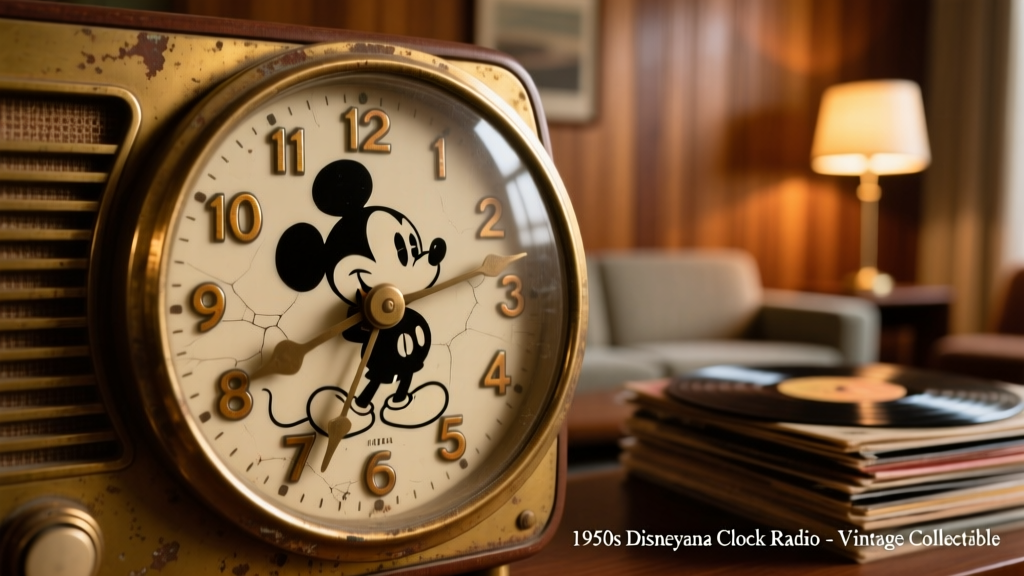
Disneyana Clock Radio: Mickey Mouse on Dial — A 1950s Icon of Mid-Century Design and Licensing History
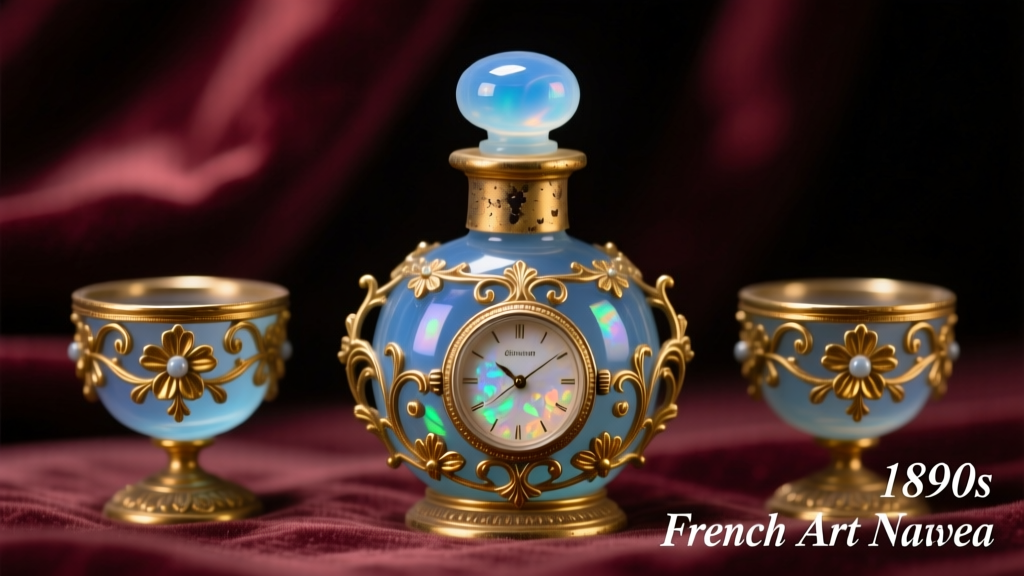
Opaline Perfume Bottle with Blue Gilt Metal Mounting: A Three-Piece Art Deco Masterpiece

Lacquer Comb: Rabbit & Wave Design in Gold-Finished 5-Inch Japanese Hair Ornament
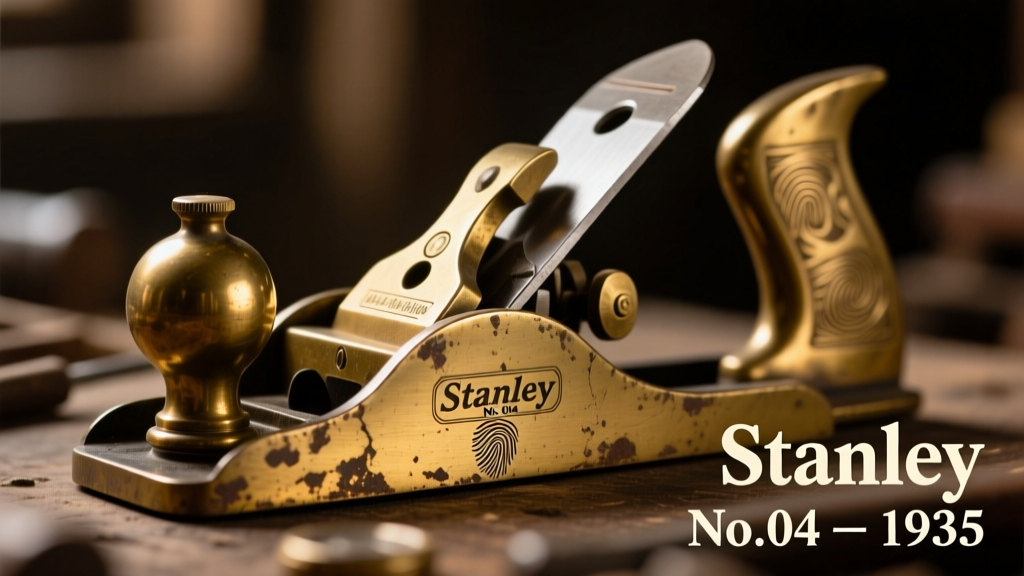
The Stanley No. 04 Brass Level: A Precision Instrument of American Craftsmanship and Vintage Watchmaking Utility
Heisey Prison Stripe Cake Tray: Identification, History, and Market Value of a Mid-Century American Glassware Icon

Mosaic Tile Co. Mammy Cookie Jar in Blue Dress: Historical Context, Material Analysis, and Market Valuation

Shirley Temple’s Book Dimples: A 1936 20th Century Fox Promotional Artifact and Its Collectible Significance
Lot 1140725: A 1968 Rolex Submariner Ref. 1655 'Longines Sea-Lion' — Technical Analysis, Provenance, and Market Significance
The Art of French Cameo Glass: Mastery, Materials, and Market Legacy