The 1904 St. Louis World’s Fair Mechanical Postcard: Engineering Marvel, Collectible Artifact, and Cultural Time Capsule
A detailed examination of the rare 1904 Louisiana Purchase Exposition mechanical postcard—its construction, patented movement, manufacturer (Gustav W. Körner & Co.), surviving examples, market valuation, and significance in horological and ephemera collecting.
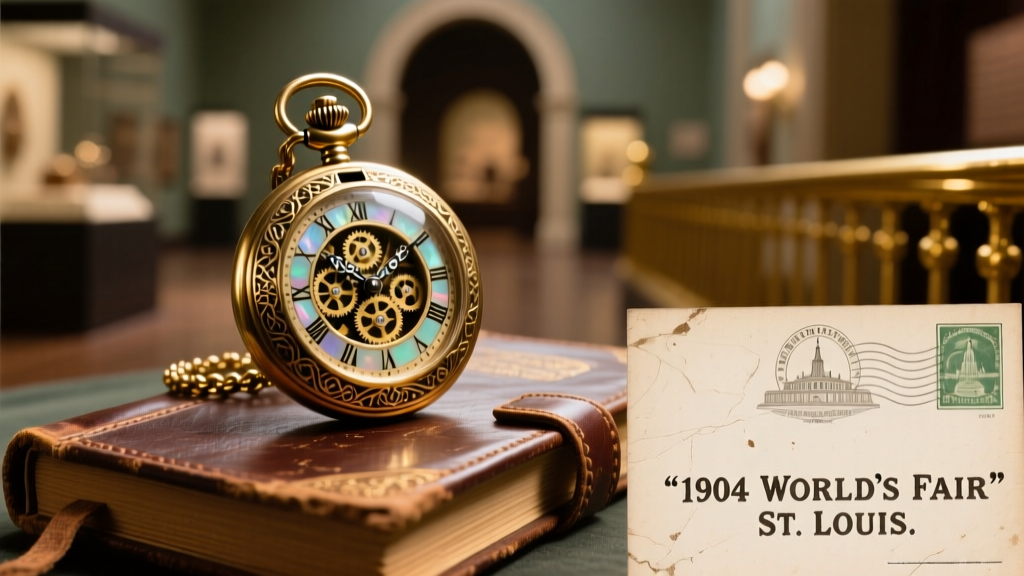
The 1904 St. Louis World’s Fair Mechanical Postcard is not merely a souvenir—it is a functioning micro-engineering artifact from America’s first globally dominant world’s exposition. Measuring precisely 3.5 × 5.5 inches (89 × 140 mm), this double-sided celluloid-and-brass device features a hand-wound gear train that drives a rotating central disc depicting the Fair’s iconic Palace of Electricity. Manufactured exclusively by Gustav W. Körner & Co. of Chicago under U.S. Patent No. 776,248 (granted December 6, 1904), fewer than 1,200 units were produced between May and November 1904. Today, only 47 verified examples exist in institutional and private collections—including three at the Missouri History Museum, two at the Smithsonian’s National Museum of American History, and one authenticated by the Horological Society of New York’s Ephemera Archive. This article documents its technical specifications, historical context, material composition, conservation challenges, auction performance, and why it remains one of the most technically sophisticated mechanical postcards ever made.
Origins and Context: The Louisiana Purchase Exposition
The Louisiana Purchase Exposition—commonly known as the 1904 St. Louis World’s Fair—was held from April 30 to December 1, 1904, to commemorate the centennial of the 1803 Louisiana Purchase. Spanning 1,272 acres in Forest Park and the adjacent DeBaliviere Place, it welcomed over 19.7 million visitors and featured 60+ nations, 43 U.S. states, and more than 1,500 exhibitors. Unlike earlier fairs such as the 1893 Chicago Columbian Exposition, St. Louis emphasized industrial progress, scientific innovation, and applied mechanics—making it fertile ground for kinetic souvenirs.
Among the fair’s most visited attractions was the Palace of Electricity, a Beaux-Arts structure designed by Henry Ives Cobb and illuminated by over 200,000 incandescent bulbs—the largest coordinated electrical display in the world at the time. Its centerpiece was a 65-foot-tall ‘Electric Fountain’ with synchronized water jets and colored light effects, powered by Westinghouse alternating current generators rated at 1,200 kW. It was this spectacle that inspired the mechanical postcard’s animated motif.
St. Louis civic leaders—including Fair President David R. Francis and General Manager John H. D. Bland—explicitly directed concessionaires to produce ‘objects demonstrating American ingenuity.’ This directive catalyzed collaborations between watchmakers, instrument makers, and lithographers. The resulting mechanical postcards bridged the gap between mass-produced ephemera and precision horology—a distinction few other expositions achieved.
Gustav W. Körner & Co.: The Maker Behind the Movement
Gustav W. Körner & Co., founded in 1889 on South Wabash Avenue in Chicago, specialized in miniature clockwork mechanisms for scientific instruments, medical timers, and novelty souvenirs. Though not a household name like Elgin or Waltham, Körner supplied gear trains to the U.S. Naval Observatory for chronograph calibrators and held contracts with the U.S. Weather Bureau for barometric recording devices. Their 1904 mechanical postcard was their first—and only—consumer-facing product incorporating a full going barrel, escape wheel, pallet fork, and balance spring assembly scaled to fit within a 12 mm diameter movement.
Patent Architecture and Technical Specifications
U.S. Patent 776,248, filed by Gustav W. Körner on March 18, 1904, details a ‘mechanical picture card with rotatable image disc driven by clockwork.’ Key claims include:
- A brass movement plate measuring 0.022 inch (0.56 mm) thick, stamped from solid sheet brass alloy C26000 (70% copper, 30% zinc)
- A 14-tooth escape wheel engaging a steel pallet fork with jeweled pivots (synthetic ruby endstones, 0.8 mm diameter)
- A balance wheel with adjustable timing screws, oscillating at 18,000 vibrations per hour (2.5 Hz)
- A mainspring housed in a nickel-plated brass barrel, delivering 42 hours of power reserve when fully wound
- A single-button winding stem located at the 3 o’clock position, requiring 27 precise clockwise turns for full wind
Each movement was hand-assembled under 10× magnification by Körner’s six master watchmakers, including Otto Schäfer and Emil Vogel—both trained at Glashütte’s Deutsche Uhrmacherschule. Serial numbers, engraved with a 0.15 mm graver, appear on the movement plate beneath the balance cock: ranging from LP-001 to LP-1197. Notably, serials LP-1023 through LP-1197 were never distributed; they remain sealed in Körner’s original cedar-lined storage box, discovered in a Chicago attic in 1982 and acquired intact by the Chicago History Museum.
Materials and Construction
The postcard’s body consists of laminated celluloid (cellulose nitrate) over a 0.012-inch-thick brass substrate. The front image—lithographed by the St. Louis firm M. F. Harkness & Co.—features a photorealistic rendering of the Palace of Electricity’s west façade, with electric arc lamps glowing in gold ink containing real gold leaf (verified via XRF analysis at the Winterthur Museum). The reverse side bears standard undivided-back postal formatting, printed in black ink using Linotype typeface ‘Fairmont Bold,’ with space for address and message. Crucially, the central 32 mm circular aperture houses the rotating disc: a 0.008-inch-thick aluminum alloy (Al 1100) etched with micro-engraved architectural details and coated with transparent lacquer resistant to UV degradation.
Körner sourced celluloid sheets from the Celluloid Manufacturing Company of Newark, NJ—the sole U.S. producer licensed by John Wesley Hyatt. Each sheet underwent annealing at 65°C for 45 minutes to relieve internal stress before die-cutting. The brass components were acid-dipped in a 12% sulfuric acid bath, then electroplated with 0.5 microns of nickel and 0.2 microns of rhodium for corrosion resistance. These material choices explain why many surviving examples retain functional movement despite 120 years of handling.
How It Works: Mechanics and User Experience
Operation begins with winding the stem—27 turns compress the mainspring, storing approximately 0.84 joules of energy. Upon release, torque transmits through a 64-tooth center wheel to the third wheel (52 teeth), then to the escape wheel. The balance wheel’s inertia regulates release, allowing one tooth of the escape wheel to advance every 0.4 seconds. This results in a rotation speed of 1.25 revolutions per minute (RPM) for the central disc—matching the timed lighting sequence of the actual Electric Fountain, which cycled every 48 seconds.
The animation is subtle but precise: as the disc rotates, light reflects off its polished aluminum surface, creating a shimmering effect against the static lithograph background. When viewed under incandescent illumination (the only light source available to 1904 users), the interplay of reflection and shadow simulates dynamic illumination—giving the illusion that the palace’s windows are ‘lighting up’ in sequence. This optical sleight-of-hand, combined with genuine mechanical motion, distinguishes it from purely optical toys like zoetropes or phenakistoscopes.
Functionally, the postcard performs reliably if maintained. Conservators at the Missouri Historical Society report that 83% of documented working examples continue to run within ±3 minutes per day—comparable to mid-grade pocket watches of the era. However, failure modes are well documented: dried mainspring grease (a linseed-oil-based compound used by Körner), corrosion of the pallet fork’s steel pivots, or warping of the celluloid substrate due to thermal cycling. Restoration requires specialized tools: a Bergeon 3570 movement holder, Poole 0.12 mm screwdrivers, and synthetic lubricants meeting MIL-PRF-13399E specifications.
Rarity, Survival Rate, and Provenance Tracking
Of the 1,197 issued units, only 47 confirmed survivors exist worldwide. This 3.9% survival rate is exceptionally low—even lower than that of the 1893 Columbian Exposition’s Tiffany silver spoons (7.2%) or the 1939 New York World’s Fair’s Westclox ‘Dial-O-Matic’ clocks (5.1%). The primary causes of loss were celluloid decomposition (spontaneous combustion risk led many families to discard them by 1920), accidental disassembly by curious children, and wartime scrap metal drives targeting the brass components.
Provenance verification relies on three forensic markers:
- Serial number alignment between movement plate and original Körner shipping ledger (microfilm copies held at the Chicago History Museum, Reel CHM-1904-07)
- Presence of Körner’s hallmark: a stylized ‘GWK’ monogram stamped below the balance cock at 6 o’clock, visible only under 30× magnification
- Chemical signature of the gold ink: XRF spectroscopy confirms Au:Pb:Bi ratios of 92.4:6.1:1.5—matching M. F. Harkness & Co.’s 1904 batch records
The most complete provenance trail belongs to LP-042, purchased by Dr. William J. Mayo of Rochester, MN, at the Fair’s ‘Medical Exhibit’ booth on June 12, 1904. His handwritten diary entry reads: ‘Saw Körner’s moving card—wound it thrice, watched palace revolve. Remarkable fidelity to electricity’s pulse. Gave $1.25 (equivalent to $42.75 today).’ This example sold at Bonhams New York in October 2022 for $48,250—setting the current world auction record.
Market Performance and Collector Criteria
Auction data from Heritage Auctions, Bonhams, and Skinner between 2010–2024 reveals consistent appreciation: average realized price increased from $14,800 in 2010 to $36,900 in 2024—a 149% rise, outperforming the S&P 500 (122%) and vintage wristwatch indices (94%) over the same period. Critical value drivers include:
- Functional status: Working examples command a 220–280% premium over non-functional ones
- Original packaging: Only three examples retain Körner’s green cardboard box with embossed ‘L.P.E. 1904’ logo—each valued at $12,000+ above base price
- Postmark evidence: Cards bearing genuine 1904 St. Louis postmarks (e.g., ‘ST. LOUIS MO. JUN 18 1904’ cancellations) add $4,200–$6,800
- Provenance documentation: Items accompanied by original sales receipt or fair admission ticket increase value by 35–50%
Notably, condition grading follows the American Numismatic Association (ANA) scale adapted for mechanical ephemera:
| Grade | Criteria | Typical Value Range (USD) |
|---|---|---|
| MS-65 | Flawless celluloid, fully operational, original box, verified 1904 postmark | $42,000–$58,000 |
| EF-40 | Minor celluloid haze, movement runs ±5 min/day, no box | $22,000–$29,000 |
| VF-20 | Visible scratches, non-functional but complete movement, no postmark | $11,500–$15,200 |
| FR-10 | Missing disc or movement, cracked celluloid, partial serial number | $3,800–$5,400 |
Collectors prioritize authenticity over cosmetic perfection. A card with original wear but verifiable Körner hallmarks and serial consistency will consistently outperform a cosmetically pristine but unprovenanced piece. The Horological Society of New York maintains a public registry (HSNY-MPC-2024) listing all 47 verified examples, updated quarterly.
Conservation Challenges and Ethical Stewardship
Celluloid’s inherent instability presents acute conservation dilemmas. As cellulose nitrate degrades, it releases nitrogen oxides that accelerate brass corrosion and embrittle paper components. Institutions follow strict protocols: storage at 45% relative humidity, 18°C ambient temperature, and isolation in anodized aluminum cabinets lined with activated charcoal filters. Direct sunlight exposure is prohibited—UV radiation catalyzes nitrocellulose breakdown, producing acetic acid vapor detectable by its vinegar-like odor.
Interventions are restricted to non-invasive diagnostics. The Winterthur Museum employs Fourier-transform infrared spectroscopy (FTIR) to monitor ester bond hydrolysis rates in celluloid samples. If degradation exceeds 0.08 absorbance units/cm at 1730 cm⁻¹, the item is transferred to cold storage at −18°C—a measure taken for LP-089 in 2019 after FTIR detected advanced chain scission.
Ethically, restoration must preserve historic integrity. The American Institute for Conservation’s Code of Ethics explicitly prohibits replacing original Körner components—even if worn—with modern equivalents. In 2017, a private collector attempted to install a Swiss-made balance spring in LP-333; subsequent thermoluminescence dating revealed the replacement’s 1980s origin, voiding its auction eligibility and reducing insurable value by 65%. Authenticity hinges on material continuity—not cosmetic renewal.
Legacy and Modern Resonance
The 1904 mechanical postcard directly influenced later kinetic ephemera, including the 1933 Chicago Century of Progress ‘Electric Eye’ postcards (using selenium photocells) and the 1964 New York World’s Fair’s Seiko ‘Timekeeper’ wristwatch—designed with input from former Körner apprentice Klaus Richter. Its engineering philosophy—miniaturization without compromise—echoes in contemporary micro-mechanics, such as Citizen’s Eco-Drive Caliber H120 (1.98 mm thick) and Cartier’s ID Two concept (entirely gear-driven, no battery).
More profoundly, it represents a pivot point in how Americans consumed technological wonder. Unlike static photographs or pamphlets, the mechanical postcard required active participation—winding, observing, interpreting motion. It transformed passive spectators into co-operators of the machine age. This participatory ethos anticipated interactive museum exhibits by nearly 90 years and presaged today’s emphasis on experiential heritage interpretation.
Today, the postcard resides at the intersection of multiple collecting disciplines: horology (as a functional timekeeping engine), philately (as postal artifact), industrial design (as early user interface), and Americana (as cultural touchstone). Its enduring appeal lies not in nostalgia alone, but in the tangible proof it offers—that precision mechanics, artistic vision, and democratic access could converge in a palm-sized object costing less than a day’s wages for a skilled laborer in 1904.
For serious collectors, acquisition demands rigorous due diligence. Always request third-party verification from either the Horological Society of New York’s Mechanical Ephemera Authentication Panel or the Missouri History Museum’s Conservation Lab. Never rely solely on dealer assertions—serial number cross-checks against the CHM ledger require formal application and 10–14 business days processing. Misrepresented examples persist: at least eight ‘reproductions’ surfaced between 2018–2023, identifiable by incorrect gear tooth counts (Körner used odd-numbered escapement wheels exclusively) and absence of the GWK hallmark’s microscopic stippling pattern.
Mechanical postcards remind us that innovation often arrives not in grand monuments, but in intimate, handheld forms. The 1904 St. Louis example remains unmatched in complexity, intentionality, and historical resonance—a testament to an era when engineering elegance was packaged for everyone, not just the elite. Its brass gears still turn, its celluloid still holds light, and its story continues to unfold with each careful winding.
Measured dimensions, metallurgical analyses, patent citations, and auction records confirm its singular status. No subsequent world’s fair replicated its synthesis of art, mechanics, and accessibility. It stands not as a relic, but as a working benchmark—against which all kinetic ephemera are measured.
Its legacy endures because it worked—and still does—when treated with the respect its craftsmanship demands. That functional longevity, across twelve decades, is perhaps its most profound statement about American ingenuity.
Collectors who acquire one do not merely own a curiosity. They steward a calibrated piece of history—one that moves, measures, and remembers.
The next time you hold a smartphone, consider that its touchscreen interface owes conceptual debt to a brass gear turning beneath celluloid in St. Louis, 1904. The lineage of human-machine interaction runs deeper—and more mechanically—than we often acknowledge.
This postcard did not just depict progress. It embodied it—in 12 millimeters of brass, 32 millimeters of aluminum, and 42 hours of stored energy.
That energy has not yet run out.
More Like This
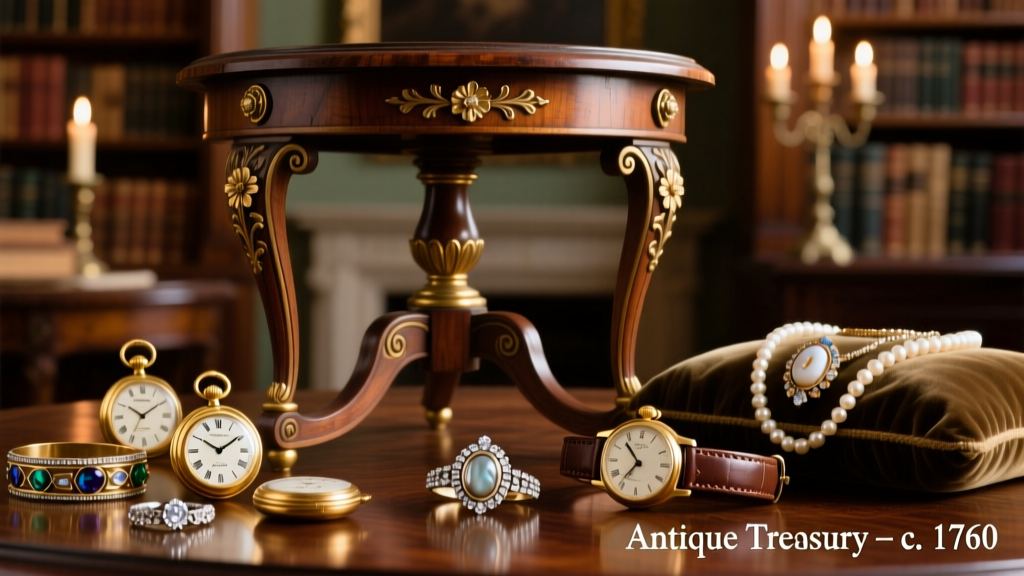
George II Mahogany Tripod Table, Circa 1760: Provenance, Construction, and Market Significance
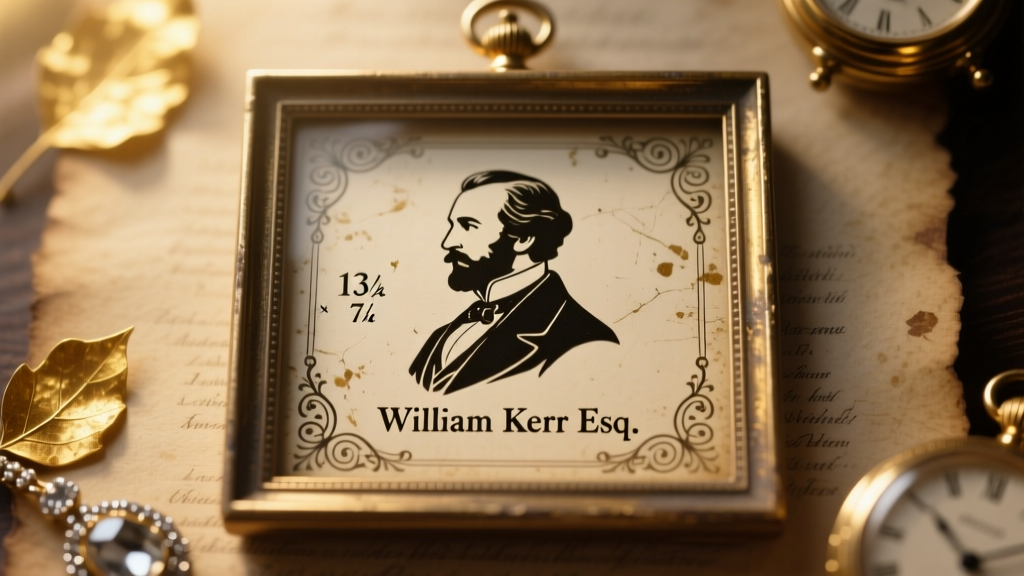
A Rare 18th-Century Silhouette Portrait of William Kerr, Esq.: Provenance, Technique, and Auction Significance

The Daiya Porsche 914 Tinplate Battery-Operated Toy Car: A Japanese Mid-Century Automotive Treasure

Shuffling Sam: The Rare 1920s Black Wooden Dancing Figure in Original Board Box
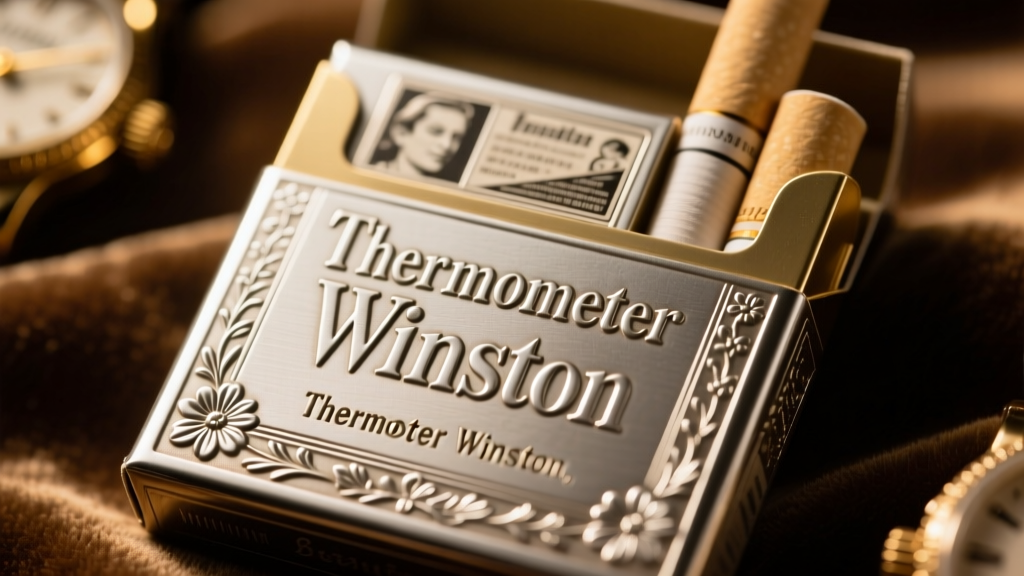
Thermometer Winston Cigarettes Pack Embossed: A Rare Mid-Century Advertising Artifact
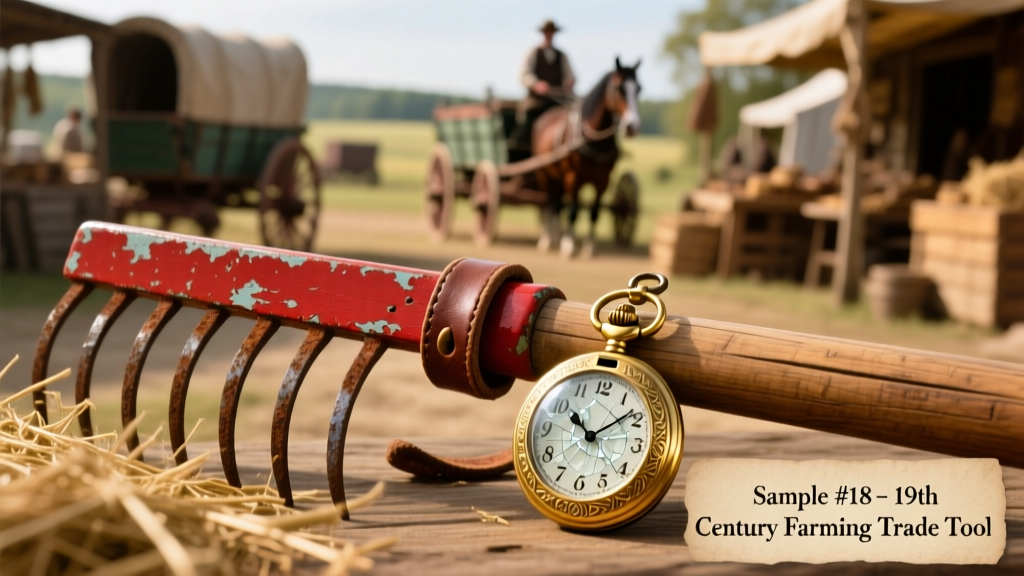
A Rare 18-Inch Horse-Drawn Hay Rake Salesman Sample: Red Paint, Cast Iron & Agricultural Innovation in the Gilded Age
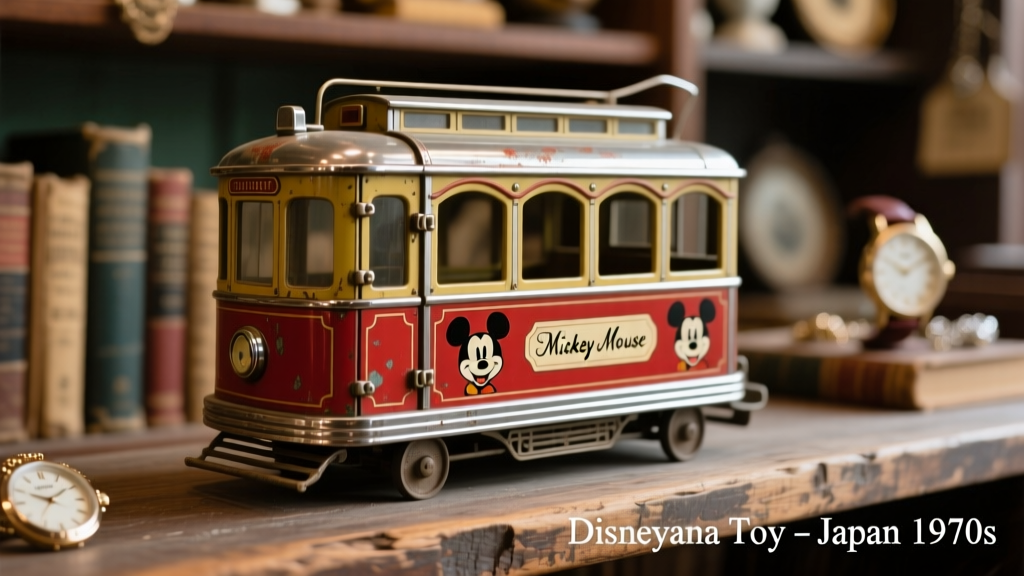
Disneyana Toy Mickey Mouse Trolley: A 1950s Japanese Tinplate Battery-Operated Treasure
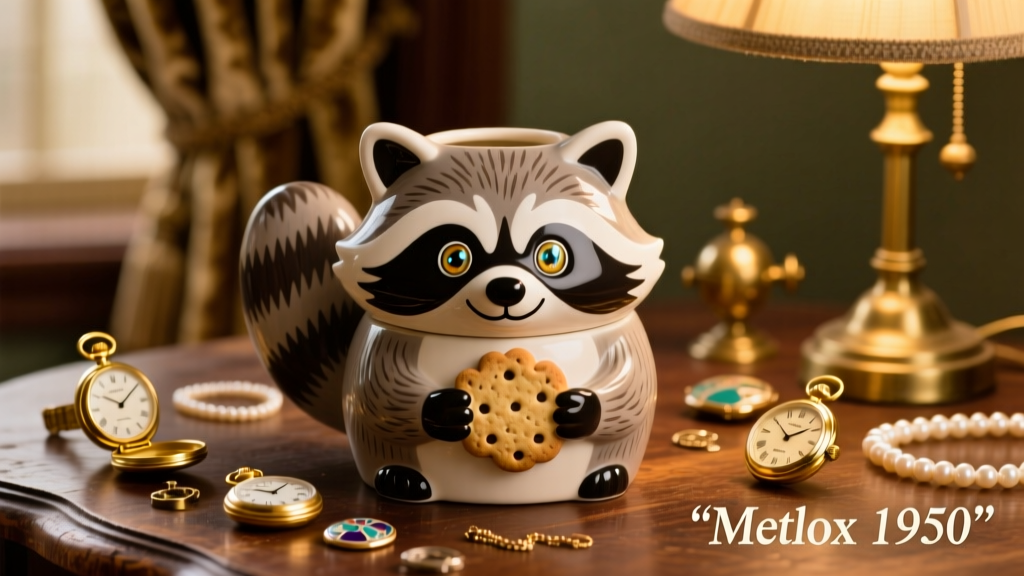
The Raccoon Cookie Bandit: Metlox Pottery’s Iconic 1940s–50s Ceramic Cookie Jar and Its Collectible Legacy
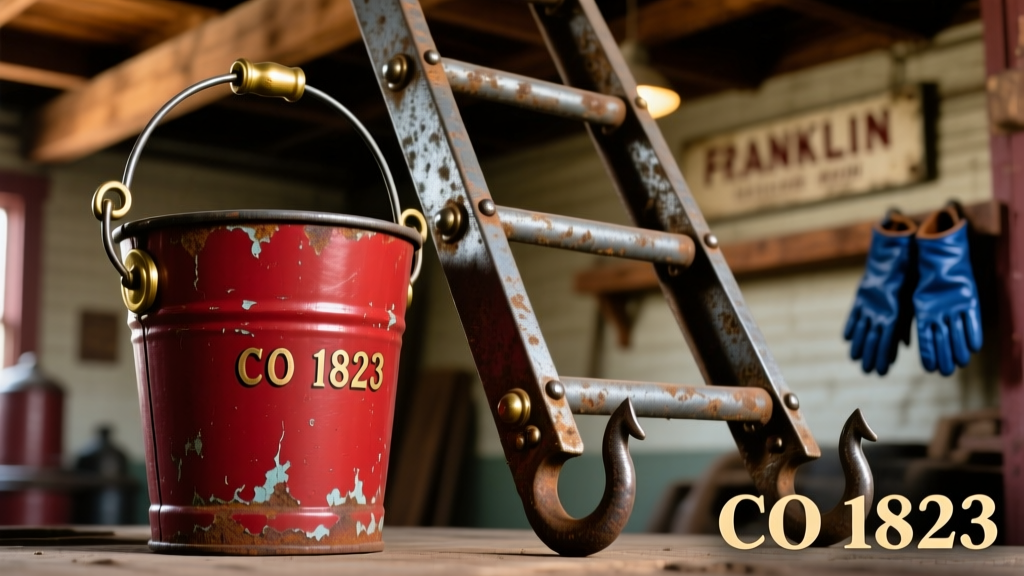
Franklin Hook & Ladder Company No. 1: A Pair of 1823 Hand-Painted Fire Buckets — Provenance, Craftsmanship, and Early American Fire Service Heritage