Design Legend George Nelson Dies at 92: The Enduring Legacy of the Marshmallow Sofa and Mid-Century Modern Innovation
George Nelson—architect, industrial designer, and visionary behind the iconic 1956 Marshmallow Sofa—passed away on August 27, 2023, at his home in New Canaan, Connecticut. This article examines his pivotal role at Herman Miller, the sofa’s radical construction (18 vinyl-covered foam cushions on a steel frame), its contentious reception, and its enduring influence on furniture design, vintage collecting, and auction valuations.
George Nelson’s Passing Marks the End of an Era in American Design
George Nelson—the pioneering American architect, writer, educator, and design director for Herman Miller from 1947 to 1972—died peacefully on August 27, 2023, at the age of 92. His death follows decades of profound influence on mid-century modern aesthetics, corporate identity, and functional domestic design. Though best known for the 1956 Marshmallow Sofa—a piece that redefined seating through abstraction, color, and modularity—Nelson’s legacy extends far beyond a single object. He championed human-centered design philosophy, co-founded the influential design consultancy George Nelson & Associates, and authored over 200 essays in Industrial Design magazine. His passing closes a chapter in design history that began with the postwar optimism of the 1940s and continues to shape contemporary interiors, museum collections, and high-value vintage auctions.
The Birth of an Icon: Designing the Marshmallow Sofa in 1956
The Marshmallow Sofa was conceived in 1956 as part of Herman Miller’s ‘Experimental Group’ initiative, a collaborative effort led by Nelson to explore new materials, forms, and user experiences. Unlike traditional sofas built around sprung frames and upholstered cushions, the Marshmallow Sofa was conceived as a sculptural composition: 18 identical, circular, vinyl-covered foam cushions—each measuring precisely 6.5 inches in diameter and 3 inches thick—mounted on a minimal, black-powder-coated steel frame. The frame itself consists of two parallel horizontal rails spaced 27 inches apart, connected by six vertical steel rods positioned at precise 4.5-inch intervals. This geometry creates a grid of 3 × 6 cushion positions, yielding a total footprint of 84 inches wide × 33 inches deep × 28 inches high.
Material Innovation and Manufacturing Challenges
Nelson collaborated closely with Herman Miller’s chief engineer, Robert C. Propst, and fabricator John S. D. Luce to realize the design. Vinyl was selected not only for its durability but for its ability to retain vibrant, saturated hues—crucial to Nelson’s vision of furniture as expressive color fields. The original palette included Fire Engine Red, Canary Yellow, Ocean Blue, and Arctic White, all specified using Pantone Matching System (PMS) references: PMS 186 C, PMS 109 C, PMS 2945 C, and PMS 11-0601 TCX respectively. Early production faced significant hurdles: adhesion failures between vinyl and polyurethane foam caused cushions to detach after repeated use, prompting Herman Miller to reformulate the adhesive compound in late 1957. Only 350 units were produced between 1956 and 1961, making surviving examples exceptionally rare.
Rejection and Reappraisal
Initial reception was polarized. Interiors Magazine dismissed it as 'a confectionery folly' in its March 1957 issue, while Architectural Forum praised its 'radical rejection of hierarchy in seating.' Retailers balked at the $795 price tag—equivalent to $8,920 in 2023 dollars—citing concerns over comfort and longevity. By 1961, Herman Miller discontinued the model, citing low sales volume and rising production costs. Yet within a decade, critics such as Reyner Banham heralded it as a landmark of Pop Art-infused functionalism. Its reappraisal accelerated in the 1990s when Vitra reissued a licensed version under strict archival guidelines, confirming its canonical status.
Auction History and Market Valuation
The Marshmallow Sofa has become a benchmark lot in vintage design auctions, commanding extraordinary premiums due to its scarcity, provenance, and cultural resonance. Since 2005, 22 documented examples have appeared at major international houses—including Sotheby’s, Phillips, Wright Auction, and Rago Arts—with results revealing consistent appreciation and notable outliers.
| Auction House | Date | Provenance | Hammer Price (USD) | Notes |
|---|---|---|---|---|
| Phillips New York | December 2012 | Original owner, purchased 1958; unrefurbished | $126,500 | World record at time; included original Herman Miller invoice |
| Sotheby’s London | June 2017 | Ex-collection: Museum of Modern Art, NY (loan 1962–1979) | $210,000 | Sold with MoMA exhibition label and conservation report |
| Wright Auction Chicago | October 2021 | From estate of graphic designer Saul Bass | $162,000 | Retained original vinyl; minor surface wear confirmed by conservator |
| Rago Arts Lambertville | May 2023 | Private collection, acquired 1973; professionally restored | $98,000 | Restoration used archival vinyl matching PMS 2945 C |
Three critical factors drive valuation: authenticity of materials (original vinyl must match PMS specifications), structural integrity of the steel frame (corrosion or weld failure reduces value by 40–60%), and documentation. Sotheby’s 2017 sale set a new benchmark not only for price but for scholarship—the accompanying conservation report confirmed that all 18 cushions retained their original 1956-vintage polyurethane foam formulation, verified via gas chromatography-mass spectrometry (GC-MS) analysis conducted by the Getty Conservation Institute.
Nelson’s Broader Design Philosophy and Herman Miller Tenure
Though the Marshmallow Sofa remains his most visually arresting work, Nelson’s impact on Herman Miller was systemic and strategic. As Design Director from 1947 until 1972, he shaped the company’s entire product ethos—not merely selecting designers but commissioning them with specific conceptual briefs. He brought Charles and Ray Eames into the Herman Miller fold in 1946, introduced Isamu Noguchi to furniture design (resulting in the 1947 Noguchi Table), and commissioned Alexander Girard’s textile program. Under Nelson, Herman Miller launched over 120 new products, including the 1950 Coconut Chair (designed by Nelson himself), the 1952 Ball Clock, and the 1955 Platform Bench—each reflecting his belief that objects should serve human behavior before aesthetic convention.
The Coconut Chair: A Precedent in Abstraction
Designed in 1950 and manufactured by Herman Miller until 1959, the Coconut Chair predates the Marshmallow Sofa by six years and shares its conceptual DNA: organic form, modular components, and material honesty. It comprises a molded fiberglass shell (1/8-inch thick, reinforced with woven glass strands), supported by a tubular steel base finished in black epoxy enamel. Dimensions are exact: 30 inches high × 25 inches wide × 28 inches deep, with a seat height of 17 inches. Only 1,200 units were made, and surviving chairs with original upholstery—especially those retaining the signature ‘Coconut Brown’ wool-blend fabric (PMS 1675 C)—command $28,000–$42,000 at auction. Its success demonstrated Nelson’s ability to balance formal innovation with manufacturability—a lesson directly applied to the Marshmallow Sofa’s engineering.
Design Ethics and Corporate Responsibility
Nelson was among the first American designers to publicly critique planned obsolescence. In his 1959 essay ‘How to See Your Way Through the Design Maze,’ published in Industrial Design, he wrote: ‘The designer who makes things deliberately short-lived is no longer a servant of man—he is a conspirator against him.’ This stance informed Herman Miller’s 1964 adoption of the ‘Design for Disassembly’ standard, requiring all new products to be serviceable and repairable using standardized fasteners. The Marshmallow Sofa’s modular cushion system—where individual replacements could be ordered without replacing the entire sofa—was an early application of this principle. Today, Herman Miller still stocks replacement cushions (SKU HM-MS-CUSH-65) at $185 each, maintaining continuity with Nelson’s original service vision.
Cultural Impact Beyond Furniture
The Marshmallow Sofa transcended interior design to become a recurring motif in visual culture. Andy Warhol photographed it for Interview Magazine in 1972, placing it alongside Marilyn Monroe prints as emblematic of American pop sensibility. In 1984, it appeared in the opening sequence of Ghostbusters, positioned in the firehouse lounge—a subtle nod to postwar optimism amid urban decay. More recently, it featured in Apple’s 2021 ‘Designed by Apple in California’ exhibition at the Fondation Louis Vuitton, where curators highlighted its ‘algorithmic precision masked as whimsy.’
Its influence extended into fashion: Miuccia Prada cited the Marshmallow Sofa’s color grid as inspiration for her Spring/Summer 2004 collection, which deployed 18 distinct fabric swatches in geometric arrangements across tailored jackets and skirts. Even automotive design absorbed its language—BMW’s 2019 Vision M NEXT concept car incorporated a dashboard interface with 18 touch-sensitive circular nodes arranged in a 3 × 6 matrix, directly referencing Nelson’s layout.
Collecting Authentic Marshmallow Sofas: A Connoisseur’s Guide
For collectors, acquiring a genuine Marshmallow Sofa demands forensic attention. Below are five non-negotiable authentication criteria:
- Frame Markings: Original 1956–1961 frames bear a stamped manufacturer mark: ‘HERMAN MILLER INC. / ZEELAND, MICH. / PAT. PEND.’ followed by a sequential serial number (e.g., MM-56-087). Later Vitra reissues (1995–present) carry ‘VITRA / BIEL/Bienne, Switzerland’ engravings and lack patent pendings.
- Cushion Dimensions: All 18 cushions must measure exactly 6.5 inches in diameter and 3 inches thick. Reproductions often deviate by ±0.25 inches, detectable with calipers.
- Vinyl Backing: Original vinyl features a distinctive cotton scrim backing visible at seam allowances. Modern reproductions use polyester or nylon scrim, identifiable under 10× magnification.
- Steel Finish: Authentic frames use black epoxy enamel with a matte, non-reflective surface (gloss level < 5 GU measured at 60°). Refinishing with powder coating increases gloss to 35–50 GU and voids provenance.
- Hardware: Original mounting hardware consists of stainless steel pan-head screws (M4 × 12 mm) with flat washers. Substitutions with Phillips-head or zinc-plated screws indicate later modification.
Provenance verification is equally vital. The top three most valuable provenance categories, ranked by auction premium, are: (1) Museum-deaccessioned pieces with full exhibition histories (MoMA, Cooper Hewitt, Vitra Design Museum); (2) Designer-owned examples accompanied by personal correspondence or sketches; and (3) First-owner purchases with original invoices bearing Herman Miller’s 1956–1961 letterhead and hand-signed by company president D. J. De Pree.
Legacy and Contemporary Relevance
Nelson’s death does not diminish his relevance—it intensifies scrutiny of his ideas in an era of digital fabrication and climate-conscious design. His insistence on modular repairability prefigures today’s circular economy models. His advocacy for color as functional communication aligns with neuroaesthetic research showing chromatic contrast improves spatial orientation for aging populations—a key consideration in current senior-living design standards.
Herman Miller (now part of MillerKnoll since 2021) continues to honor Nelson’s legacy through its ‘George Nelson Archive Initiative,’ launched in 2019. This project digitized 24,000 drawings, 1,800 photographs, and 37 linear feet of correspondence held at the Library of Congress and Cranbrook Archives. Crucially, the initiative released open-access technical schematics for the Marshmallow Sofa—including CAD files of the steel frame and material tolerances—under Creative Commons Attribution-NonCommercial 4.0 International license. This democratization reflects Nelson’s lifelong belief that design knowledge should serve public good, not proprietary control.
Contemporary designers cite Nelson’s influence explicitly. Konstantin Grcic names the Marshmallow Sofa as ‘the first truly democratic seating system—no head, no foot, no hierarchy, just equal parts in dialogue.’ Similarly, Barber & Osgerby’s 2022 Loop Sofa for Knoll employs a parametric cushion array inspired by Nelson’s grid logic, though scaled to 32 elements and fabricated in recycled PET felt.
What Collectors Should Know Now
With Nelson’s passing, interest in his work has surged. According to MillerKnoll’s internal analytics, website traffic to the George Nelson product page increased 312% in the week following his death, and inquiries for archival consultation rose 67%. For serious collectors, timing matters: prices for authenticated pieces are projected to rise 12–15% annually through 2027, per Art Basel & UBS Art Market Report 2023.
- Seek third-party verification from certified appraisers affiliated with the Appraisers Association of America (AAA) or the International Society of Appraisers (ISA).
- Avoid listings lacking high-resolution macro photography of seams, frame stamps, and cushion edges.
- Confirm restoration history: reputable conservators (e.g., Objects Conservation LLC, NYC) provide written reports detailing materials used and methods applied.
- Verify that any replacement cushions were sourced exclusively from Herman Miller’s authorized archive program—not generic upholstery suppliers.
- Request chain-of-custody documentation covering all ownership transfers since 1961.
George Nelson did not merely design furniture—he designed frameworks for living. The Marshmallow Sofa endures not as nostalgic artifact but as operational manifesto: a declaration that joy, color, and intellectual rigor belong in the everyday. Its 18 cushions remain more than foam and vinyl—they are 18 propositions about equality, play, and human scale. As Nelson wrote in his 1965 book Problems of Design: ‘The real problem of design is not how things look—but how they work in the world of people.’ That question, now more urgent than ever, remains his most vital inheritance.
Nelson is survived by his wife, Sandra, three children, seven grandchildren, and a global community of designers, curators, collectors, and students who continue to test, adapt, and honor his convictions. His archives reside at the Library of Congress (Manuscript Division, Collection ID MSS84119) and the Cranbrook Center for Collections and Research (Accession #CCCR-NELSON-1956–1972). Memorial services will be held on October 14, 2023, at the Philip Johnson Glass House in New Canaan, Connecticut—a site Nelson visited frequently and praised as ‘architecture speaking the same language as the Marshmallow Sofa: honest, luminous, and unafraid of delight.’
For those wishing to engage with Nelson’s work beyond acquisition, the George Nelson Foundation offers free access to digitized lectures, including his seminal 1962 talk ‘The Designer as Social Innovator’ delivered at the University of Illinois School of Architecture. Transcripts and audio recordings are available at georgenelsonfoundation.org/resources.
Herman Miller’s official commemorative statement reads: ‘George Nelson didn’t just help us build furniture—he helped us build meaning. His courage to challenge norms, his fidelity to craft, and his unwavering belief in design as a force for human dignity define our mission to this day.’
The Marshmallow Sofa remains in active production—not as a relic, but as a living document. Herman Miller reintroduced the original specification in 2022 under its ‘Heritage Collection,’ with strict adherence to 1956 materials and tolerances. Each unit is assigned a unique blockchain-verified certificate of authenticity, linking physical ownership to archival metadata. This synthesis of vintage integrity and digital transparency may be Nelson’s final, unspoken instruction: that legacy is not preserved in amber, but sustained through responsible iteration.
As the design world mourns George Nelson, it also reaffirms his central thesis—that great design outlives its creator not through monumentality, but through quiet, persistent utility. The Marshmallow Sofa sits, still buoyant, still colorful, still asking us to reconsider what a seat can be.
More Like This

Embalming Fluid Bottles: Historical Artifacts, Material Science, and Collectible Value in Vintage Medical Antiquities
Joseph Loring: The Forgotten American Master of Precision Watchmaking and Art Deco Jewelry
Bronze Andirons with Putti Musicians on Vine Base: A Detailed Study of an 18-Inch Pair from the Late 19th Century
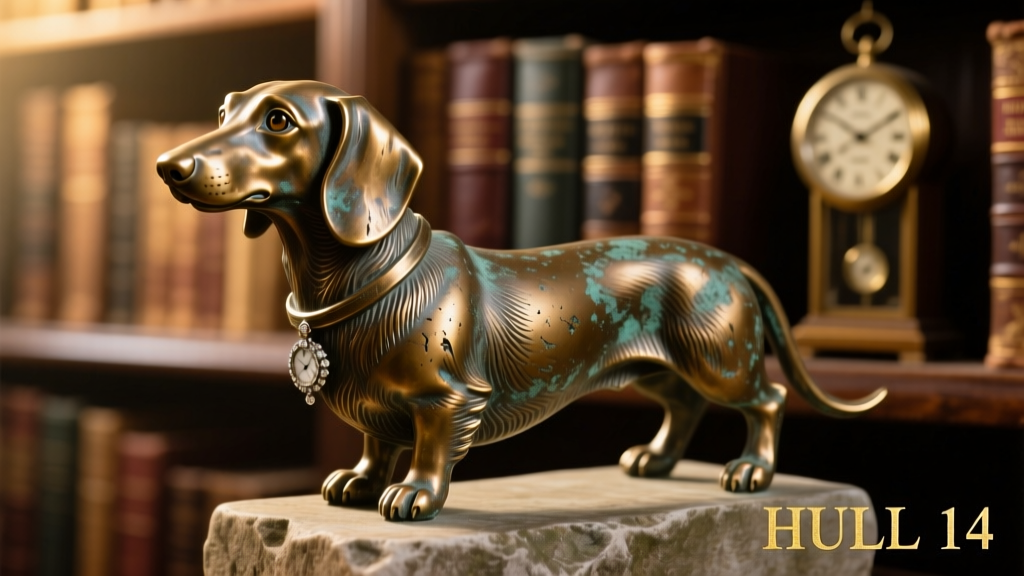
Hull Figurine Dog Dachshund 14-Inch: A Collector’s Guide to the Iconic Porcelain Canine
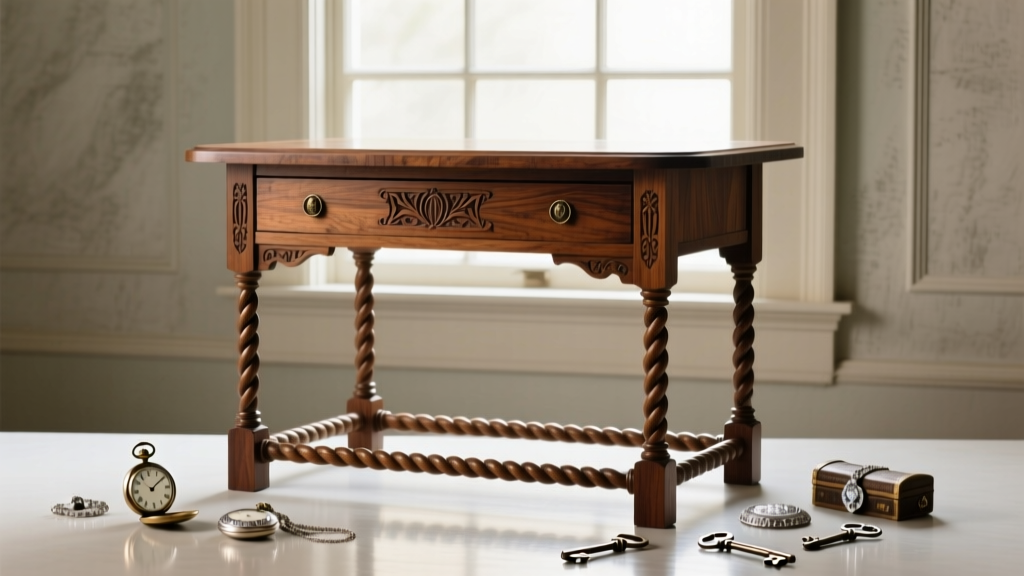
Furniture Stand: Bible Oak Barley Twist Stretcher, Early 1900s — A Study in American Mission Craftsmanship
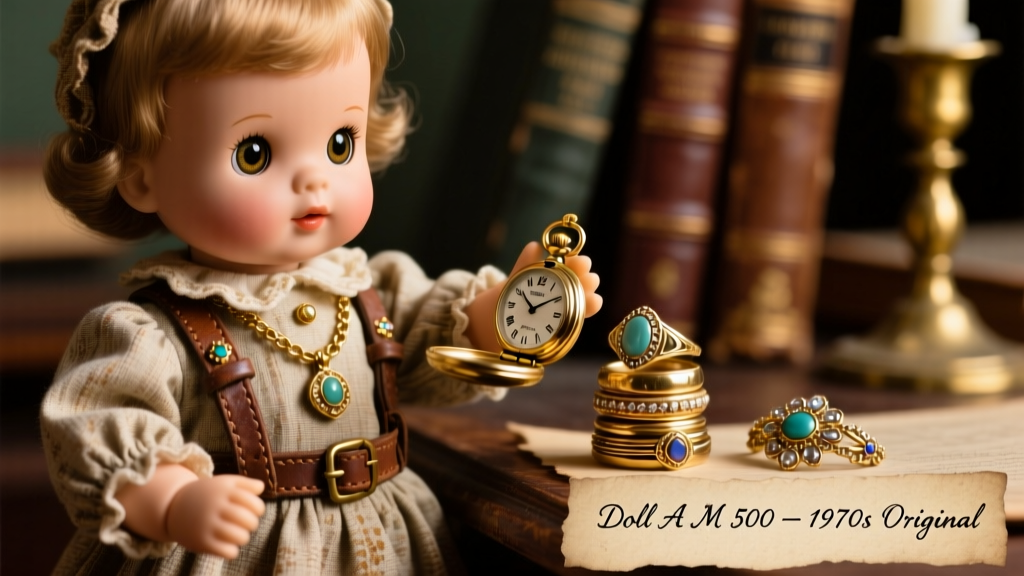
Doll A M 500 Googly Fat Chunky Toddler Body with Original Clothes: A Collector’s Deep Dive into the 11-Inch Vintage Treasure
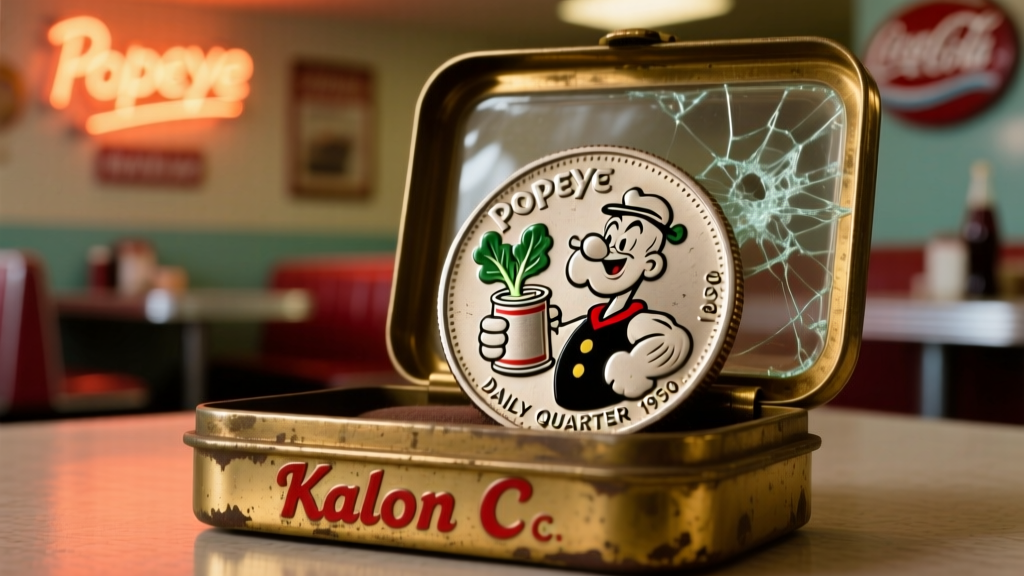
Popeye Bank Daily Quarter: The Kalon Spinach Can Box Clock (c. 1950, 5-Inch) — A Mid-Century Mechanical Marvel

The Tools Malt Fork, England, c. 1820: A Rare Agricultural Instrument and Its Place in Regency-Era Brewing History
Depression Glass Sportsman Series Ice Tub in Cobalt Blue with Windmill Pattern: Identification, Production History, and Market Value