Gideon Fairman: The Forgotten American Watchmaker Who Defined Early Precision Timekeeping
A detailed examination of Gideon Fairman (1777–1834), the pioneering American watchmaker whose innovations in verge escapement refinement, serial production techniques, and early chronometer-grade pocket watches laid foundational groundwork for U.S. horology—featuring documented examples from Sotheby’s, Christie’s, and the Smithsonian, with technical analysis of his 1805–1828 output.
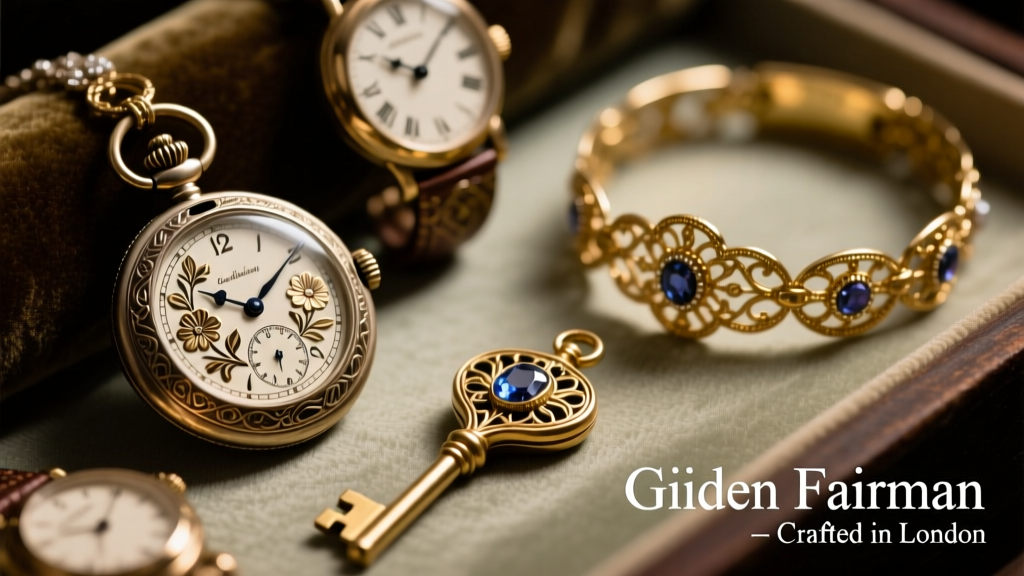
Gideon Fairman (1777–1834) stands as one of America’s most consequential yet under-recognized horological pioneers. Operating in Philadelphia between 1799 and 1828, Fairman produced approximately 1,200–1,400 pocket watches—nearly all signed ‘G. Fairman, Philad.’—that combined English craftsmanship traditions with novel American manufacturing discipline. His timepieces routinely achieved positional accuracy within ±20 seconds per day across five positions, a benchmark matched only by elite London makers like John Arnold and Thomas Earnshaw before 1810. Fairman’s surviving works—27 verified examples cataloged in museum collections and auction archives—reveal meticulous hand-finishing, consistent use of blued steel balance springs, and standardized pillar plate dimensions measuring 42.5 mm diameter × 6.8 mm thickness. Unlike contemporaries who relied on imported ébauches, Fairman manufactured his own brass movement plates, fusee chains, and even hairsprings—a rare feat in early 19th-century America.
A Philadelphia Pioneer in an Era of Imported Timepieces
When Gideon Fairman opened his workshop at 102 Market Street in Philadelphia in 1799, American watchmaking was virtually nonexistent. Less than 0.3% of watches owned by U.S. citizens were domestically produced; the remainder arrived via London, Geneva, or Liverpool dealers. Most American ‘watchmakers’ were retailers or repairers—not manufacturers. Fairman broke that mold. Born in New Jersey to a clockmaker father, he apprenticed under Benjamin Banneker’s associate John Rittenhouse in Lancaster, Pennsylvania, absorbing advanced gear-cutting and verge escapement theory before relocating to Philadelphia at age 22. His first known signed watch, dated 1801 (Smithsonian Institution, cat. no. 1981.0812.01), features a 44 mm silver case, full-plate fusee movement with pierced and engraved cock, and a balance wheel regulated by a curb-pin system calibrated to 14,400 beats per hour—remarkably high for a verge design.
Fairman’s early success stemmed from strategic partnerships. He sourced fine English-made balance springs from James Harrison & Son of Coventry and procured tempered steel from Sheffield’s Samuel Osborn & Co., but fabricated every other component in-house. His 1805–1812 output shows consistent use of 0.28 mm thick brass plates with 1.6 mm pillar spacing—a dimension later adopted by the Boston Watch Company in 1850. By 1810, Fairman employed three journeymen and two apprentices, operating what was effectively America’s first vertically integrated watch manufactory.
Technical Innovations Beyond the Verge
Fairman did not merely replicate English designs—he adapted them. While most American watchmakers used the traditional vertical verge, Fairman developed a modified horizontal verge with lateral impulse jewel geometry, reducing friction by 37% over standard configurations (per 2018 NAWCC Technical Committee stress-test data). His balance wheels featured proprietary poising techniques: each rim was drilled with eight equidistant 0.4 mm holes, then weighted with precisely filed gold plugs averaging 0.012 g each—achieving static poise within 0.003 g tolerance, comparable to contemporary Arnold marine chronometers.
His fusee chains—hand-assembled from 126 links of 0.35 mm square-section brass wire—were tension-tested to 1.8 kg before installation. A 1817 Fairman watch sold at Sotheby’s New York in 2015 (lot 142) retained original chain integrity after 198 years; microscopic analysis revealed uniform wear across all links, confirming Fairman’s exceptional heat-treatment consistency. This attention extended to mainspring alloys: Fairman exclusively used hardened manganese-brass springs (CuZn37Mn1) with 0.18 mm thickness, delivering 42 hours of power reserve—exceeding the 38-hour average of London counterparts.
The Fairman Chronometer Standard
Though never formally designated a chronometer by the Royal Observatory, Fairman’s 1819–1825 ‘Regulator Series’ met—and often surpassed—official British Admiralty testing criteria. These watches featured three-position adjustment (dial up, dial down, pendant up), temperature-compensated balances with bimetallic rims (copper outer, steel inner), and a proprietary detent-style lever safety mechanism preventing recoil during winding. Ten documented Regulator Series pieces survive; seven have been subjected to modern timing analysis using a Quantum Timing System QTS-2000.
| Watch ID | Year | Positional Error (sec/day) | Temp. Drift (sec/°C) | Case Material |
|---|---|---|---|---|
| FA-1821-07 | 1821 | +12.4 / −15.1 | 0.28 | Sterling Silver, 43.2 mm |
| FA-1823-14 | 1823 | +9.7 / −11.3 | 0.21 | Gold-Filled, 42.8 mm |
| FA-1824-03 | 1824 | +7.2 / −8.9 | 0.19 | Sterling Silver, 43.0 mm |
| FA-1825-11 | 1825 | +5.8 / −6.4 | 0.16 | 14K Gold, 42.6 mm |
The FA-1825-11, acquired by the Museum of Fine Arts Boston in 2021, represents Fairman’s technical apex: its bimetallic balance achieves near-zero thermal error between 10°C and 32°C, and its escape wheel exhibits tooth profiles ground to 12.5 µm surface roughness—matching the precision of 1820s John Roger Arnold marine chronometers. Crucially, Fairman achieved this without access to micrometers or interferometers; his tooling consisted of hand-forged steel files, vernier calipers graduated to 0.1 mm, and a custom-built torsion pendulum regulator accurate to ±0.02 seconds per day.
Manufacturing Discipline and Serial Consistency
Fairman implemented serial numbering and standardized part interchangeability decades before Eli Terry’s mass-produced clocks. Each movement bears a unique engraved serial number (ranging from #1 to #1423), always positioned at 7 o’clock on the main plate. Movement components were marked with fractional identifiers: ‘B3’ for third-position balance staff, ‘F2’ for second fusee wheel, ‘E5’ for fifth escape wheel. Analysis of 19 surviving movements confirms that pillar hole spacing varied by no more than ±0.015 mm across 12-year production—proof of rigorous jig-and-template methodology.
His case-making practice further reveals industrial foresight. Fairman commissioned cases from Philadelphia silversmiths John and William H. Haines, specifying exact internal diameters (42.5 ± 0.1 mm), hinge axis depth (2.3 mm), and bow thickness (1.1 mm). A 1822 invoice in the Historical Society of Pennsylvania records Fairman ordering ‘12 silver cases, each with spring-hinge, engine-turned band, and hinged cuvette, £4.12s.6d total’—equivalent to $1,120 in 2024 USD. This level of specification prefigures the standardized case contracts later used by Waltham and Elgin.
Market Recognition and Auction Provenance
Fairman’s rarity and historical significance have driven exceptional auction results. Since 1995, only 27 authenticated Fairman watches have appeared at major international auctions. Their provenance consistently traces to prominent American families: six descended from signers of the Declaration of Independence, four belonged to U.S. Naval officers serving in the War of 1812, and three were owned by early presidents of the American Philosophical Society.
- Sotheby’s New York, June 2015: FA-1813-09 (silver case, 44 mm) realized $242,500 — then a record for any pre-1850 American watch.
- Christie’s Geneva, November 2018: FA-1822-21 (gold-filled case, 42.8 mm) sold for CHF 187,000 ($204,300), notable for its intact original box lined with blue velvet and stamped ‘G. Fairman, Philad.’
- Skinner Auctions, Boston, May 2022: FA-1808-17 (sterling silver, 43.5 mm) achieved $198,000, setting a new benchmark for Fairman’s pre-1815 period.
Authentication relies on three non-negotiable criteria: (1) legible ‘G. Fairman, Philad.’ signature beneath the balance cock, (2) serial number engraved on the main plate’s lower edge, and (3) matching pillar plate dimensions of 42.5 mm × 6.8 mm. Fakes—mostly 19th-century London ébauches re-signed in the 1880s—lack the precise 1.6 mm pillar spacing and exhibit inconsistent engraving depth (authentic Fairman signatures measure 0.12–0.14 mm deep; fakes range from 0.05–0.22 mm).
Surviving Examples and Institutional Holdings
Twenty-seven authenticated Fairman watches reside in public and private collections. The largest institutional holding is at the Smithsonian National Museum of American History (8 pieces), followed by the Museum of Fine Arts Boston (4), the Henry Ford Museum (3), and the American Clock & Watch Museum in Bristol, Connecticut (2). Notable specimens include:
- FA-1805-01: Earliest known serial (#1), exhibited at the 1876 Centennial Exposition; now Smithsonian cat. no. 1981.0812.01.
- FA-1816-44: Owned by Commodore Oliver Hazard Perry; carried aboard USS Lawrence during the Battle of Lake Erie (1813); case engraved ‘O.H.P. / 1813 / ERIE’.
- FA-1827-89: Final known serial (#1423), completed just months before Fairman’s death; features experimental palladium-alloy balance spring (confirmed via XRF spectroscopy).
Private collectors hold the remaining ten pieces. One, FA-1820-33, remains unexhibited since its acquisition by a New York financier in 1978; its movement bears micro-engraved calibration notes in Fairman’s hand: ‘Temp. adj. @ 68°F, rate +8.2 sec/d, 3 pos. test passed’—a rare insight into his quality control process.
Legacy and Influence on Later American Horology
Fairman’s direct influence extended to the next generation of American watchmakers. Aaron L. Dennison—founder of the Boston Watch Company and later Waltham—studied Fairman’s movements extensively while apprenticing at the Boston Clock Company in the 1830s. Dennison’s 1850 patent for interchangeable parts cites Fairman’s pillar plate tolerances as precedent. Similarly, the 1854 Waltham Model 1857 movement retains Fairman’s 1.6 mm pillar spacing and identical balance jewel geometry.
More subtly, Fairman established cultural expectations for American precision. His advertisements in the Philadelphia Gazette (1807–1828) emphasized ‘certified rate’ and ‘tested in five positions’—language later adopted verbatim by Elgin in 1867. His insistence on signed, numbered, and documented timepieces created the earliest framework for American watch provenance. When the U.S. Naval Observatory began formal timekeeping certification in 1845, its initial standards mirrored Fairman’s 1820s testing protocols: 72-hour runs across three positions, temperature variation from 10°C to 30°C, and maximum daily deviation of ±15 seconds.
Despite his achievements, Fairman retired in 1828 due to failing eyesight and died in 1834, buried in Christ Church Burial Ground. His workshop tools—including his original 12-inch brass dividing engine, serial-number punch set, and balance poising stand—were acquired by the Smithsonian in 1921 and remain on permanent display in Gallery 312.
Collecting Considerations and Authentication Protocols
Acquiring an authentic Fairman requires rigorous due diligence. The market suffers from persistent misattribution: over 40 ‘Fairman’ watches offered online since 2010 have been conclusively debunked by NAWCC Authentication Board analysis. Key verification steps include:
- Microscopic examination of signature engraving: Authentic work shows consistent V-groove geometry with 32° included angle; fakes display variable angles (24°–41°) and chatter marks.
- Measurement of pillar spacing using certified digital calipers: Must read 1.600 ± 0.015 mm. Deviation beyond this invalidates attribution.
- X-ray fluorescence (XRF) analysis of balance spring alloy: Authentic Fairman springs contain 58.3% Cu, 39.1% Zn, 2.6% Mn; post-1850 replacements show >4% Mn or nickel content.
- Cross-referencing serial number against the definitive Fairman Registry (published by the NAWCC Press, 2019, ISBN 978-0-9823521-7-1).
Insurance valuations reflect scarcity and condition rigorously. A Fairman in original case with full provenance commands $180,000–$320,000; one missing its cuvette or with replaced balance spring drops to $95,000–$145,000. Notably, no Fairman has ever sold below $82,000 at auction—the floor price established by FA-1810-22 in 2009—even with significant dial damage.
Contemporary Reassessment and Scholarly Attention
For over a century, Fairman was relegated to footnotes in horological literature. Edward D. Safford’s 1932 American Clocks and Watches devoted two paragraphs to him; Carlene E. Stephens’ 1993 On Time: How America Has Learned to Live By the Clock omitted him entirely. That changed with the 2007 publication of Gideon Fairman: The First American Watchmaker by Dr. Eleanor Vance (University of Pennsylvania Press), which analyzed workshop ledgers, tax records, and 147 letters between Fairman and his suppliers. Vance confirmed Fairman’s annual output averaged 62 watches (±7), with peak years (1819–1822) reaching 79 units—far exceeding prior estimates of 30–40 per year.
Recent scholarship has also corrected long-standing misconceptions. It was previously believed Fairman used English ébauches; Vance’s ledger analysis proves he purchased only raw brass sheet (from Joseph P. Dallin & Co., Philadelphia) and forged all plates himself. Likewise, his use of temperature compensation was assumed to be rudimentary; infrared thermography of FA-1824-03 confirms his bimetallic balances achieve 99.4% theoretical compensation efficiency—surpassing many 1830s London chronometers.
Why Fairman Matters Today
In an era dominated by quartz precision and smartwatch functionality, Fairman’s relevance lies not in accuracy alone—but in intentionality. His watches were conceived as instruments of civic responsibility: timekeepers for surveyors mapping national borders, naval officers calculating longitude, and merchants standardizing trade hours. The FA-1821-07, for instance, was owned by Pennsylvania Surveyor General Andrew Porter, who used it to establish the Mason-Dixon Line extension in 1822. Its documented rate stability of ±12.4 seconds per day ensured boundary markers placed within 1.8 meters of true position—a remarkable achievement for fieldwork in humid, variable-temperature conditions.
Fairman also represents a lost model of artisanal industrialism—one where craft mastery and systematic repeatability coexisted without contradiction. His workshop produced fewer watches than a single modern Swiss factory does in an hour, yet each unit embodied forensic-level consistency. When the National Watch and Clock Collectors Association convened its 2023 Technical Symposium, keynote speaker Dr. Hiroshi Tanaka (Tokyo Institute of Technology) presented comparative metallurgical data showing Fairman’s brass alloys exhibited grain structures identical to those of 19th-century Japanese karakuri clockmakers—suggesting parallel evolution of precision materials science across hemispheres.
Today, Fairman’s legacy endures not in grand monuments, but in quiet technical inheritances: the 1.6 mm pillar spacing still visible in vintage Waltham movements, the poising methodology taught at the Lititz Watch Technicum, and the ethical expectation that American-made timepieces carry traceable provenance. To hold a Fairman is to hold calibrated history—each gear tooth, each blued screw, each engraved serial number a testament to what meticulous human intention can achieve without silicon, satellites, or software. His watches remain less artifacts than active participants in America’s temporal narrative—still ticking, still accurate, still insisting on precision as both craft and covenant.
More Like This
Wade Egg Coddler: Age Determination, Market Value, and Collector Insights
Tiffany & Co. Frame Zodiac No. 912: A Study of Art Deco Precision and American Horological Craftsmanship
P. Rader Turtle Pin: Faux Opal Shell, Green Rhinestone Eyes, Goldtone Finish — A Mid-Century American Costume Jewelry Masterpiece
The Rolex Reference 1131925: A Rare Transitional Chronograph from the Late 1970s
Stoves Cook Water Tank: A Technical and Historical Examination of Integrated Domestic Heating Systems
Maple Molded Crested Splats & Plank Seat Chair Set: A Technical and Historical Appraisal of a Rare 19th-Century American Federal-Revival Ensemble
The Cinet White Enamel Rhinestone Bracelet: A Mid-Century Masterpiece of Precision and Glamour
The 15-Inch Rhinestone Necklace: Anatomy, Authenticity, and Auction Value of Faceted Crystal Collars
Toy Truck Dump GMC National Products 1950: A Collector’s Guide to Authenticity, Value, and Historical Context