The Majolica Pitcher Rooster: A Victorian Icon of Ceramic Craftsmanship and Collectible Value
An in-depth examination of the Majolica pitcher rooster—its 19th-century origins, manufacturing techniques, key makers like Minton and George Jones, hallmark identification, market valuation trends, and conservation best practices for collectors and institutions.
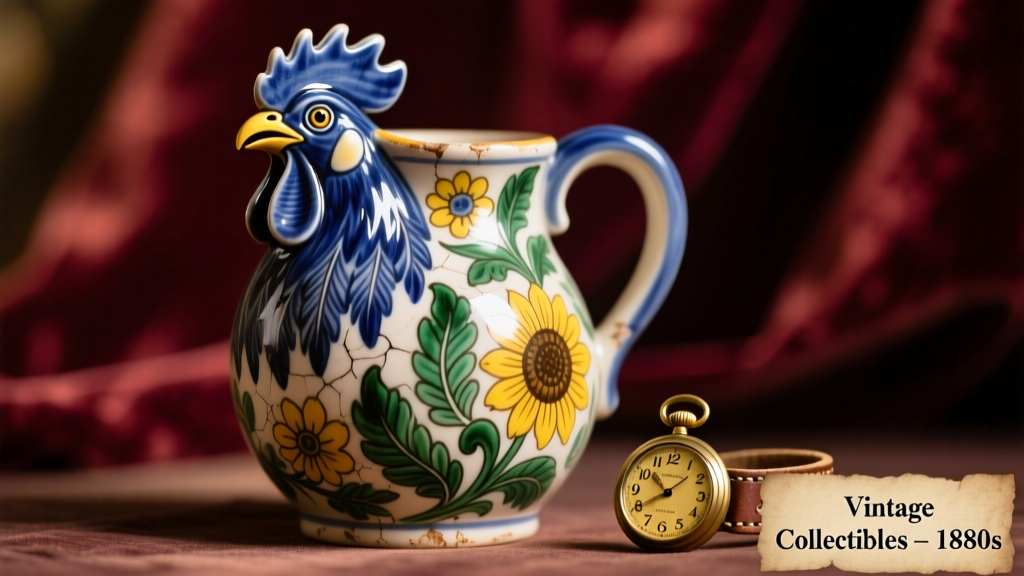
The Majolica pitcher rooster is a quintessential Victorian ceramic object—a functional yet whimsical tableware piece that merges avian iconography with high-relief glaze artistry. Produced primarily between 1851 and 1900 in England and continental Europe, these pitchers typically stand 10 to 14 inches tall, weigh 2.2 to 3.6 kg, and feature hand-applied cobalt blue, emerald green, burnt sienna, and manganese purple glazes over tin-glazed earthenware. Key makers include Minton & Co. (Stoke-on-Trent), George Jones & Sons (also Stoke-on-Trent), and the French firm Charles Doulton & Co. (before its 1872 rebranding as Royal Doulton). Authentic examples bear impressed marks such as 'MINTON' in Gothic script or 'G. JONES & SONS' within a shield-shaped cartouche. Today, museum-quality pieces fetch £4,200–£18,500 at major auction houses like Sotheby’s and Bonhams—values driven by condition, provenance, and glaze saturation.
Origins and Historical Context
Majolica—spelled with a 'j' to distinguish it from Italian maiolica—emerged as a commercial ceramic genre at the Great Exhibition of 1851 in London. Though inspired by Renaissance Italian tin-glazed earthenware, Victorian majolica was distinct: it employed lead-glazed earthenware bodies, not tin oxide, and emphasized bold naturalistic modeling over painterly decoration. The rooster pitcher, among the most popular forms, capitalized on the era’s fascination with rural symbolism, poultry husbandry, and ornamental utility. Roosters signified vigilance, fertility, and domestic abundance—themes aligned with mid-Victorian ideals of hearth and harvest.
Early production centered on Staffordshire, where manufacturers leveraged existing infrastructure for salt-glazed stoneware and transfer-printed earthenware. Minton introduced its first majolica line in 1851, debuting at the Crystal Palace exhibition with over 200 pieces—including a standing rooster pitcher modeled by French sculptor Léon Arnoux, who served as Minton’s art director from 1849 to 1892. Arnoux’s influence is evident in the anatomical precision of the rooster’s comb, wattles, and feathered tail—features rendered in layered glazes rather than painted detail.
Chronological Development
Production peaked between 1860 and 1885, declining sharply after 1890 due to shifting tastes, rising labor costs, and competition from cheaper porcelain and electroplated ware. By 1895, Minton had largely discontinued majolica, though George Jones continued limited output until 1902. Notably, American firms—including Griffen, Smith & Hill of Phoenixville, Pennsylvania—began producing majolica-style rooster pitchers from 1879 onward, often marked ‘GRIFFEN SMITH & HILL’ in incised script. These U.S. versions frequently exhibit coarser modeling and less stable glaze chemistry, resulting in more pronounced crazing and color bleed.
Manufacturers and Hallmarks
Three English firms dominated high-end majolica rooster pitcher production: Minton & Co., George Jones & Sons, and Holdcroft & Co. Each developed distinctive stylistic signatures and marking conventions. Minton pieces are the most rigorously documented; archival records at the Victoria & Albert Museum confirm that 14 distinct rooster pitcher models were catalogued between 1851 and 1883. Their hallmark evolved from an impressed ‘MINTON’ in raised Gothic lettering (1851–1865) to a monogrammed ‘M’ within a circle flanked by laurel sprigs (1866–1880), then to a printed blue mark bearing ‘MINTON’ and ‘STOKE ON TRENT’ (1881–1895).
George Jones & Sons adopted a shield-shaped cartouche containing ‘G. JONES & SONS’ and ‘STOKE ON TRENT’, usually impressed in relief beneath the base. Their rooster pitchers tend toward greater sculptural exaggeration—the comb oversized, legs thickened for structural stability—and employ a broader chromatic palette, notably rich manganese purples and deep cobalts. Holdcroft & Co., though less prolific, produced exceptionally refined rooster pitchers between 1868 and 1876, identifiable by their delicate feather detailing and the rare ‘HOLDCROFT’ impressed mark in cursive script.
Key Identifiers for Authentication
- Base thickness: Authentic Minton rooster pitchers have uniformly 12–14 mm thick bases; reproductions often exceed 18 mm
- Glaze texture: Original majolica exhibits a slightly granular, matte-to-satin finish due to lead-fluxed glazes fired at 1,030°C; modern copies show glossy, homogenous surfaces
- Weight distribution: Genuine pieces balance vertically when placed on a flat surface; fakes frequently list forward due to uneven hollow casting
- Interior glaze: Originals feature unglazed interiors below the waterline (to prevent leaching); later copies often fully glaze interior walls
Design and Technical Execution
The rooster pitcher’s form follows strict functional logic: the hollow body serves as liquid reservoir; the arched neck doubles as handle; the open beak functions as spout; and the tail feathers form a stabilizing rear foot. This integration of utility and ornament reflects the design philosophy of Owen Jones, whose 1856 treatise The Grammar of Ornament advocated ‘fitness for purpose’ as foundational to decorative arts. Minton’s earliest rooster model (Pattern No. 4712, registered 1853) measured precisely 12.7 cm (5 inches) in height, 20.3 cm (8 inches) in length, and held 1.2 liters—specifications recorded in the firm’s Pattern Book No. 14 held at the Stoke-on-Trent City Archives.
Each piece required at least seven separate glaze applications—applied by hand using fine-hair brushes and sponge daubers—to achieve tonal variation across the comb, breast, wings, and tail. Cobalt oxide provided the signature blue, copper carbonate yielded greens, iron oxide created browns and reds, and manganese dioxide produced violets and blacks. Firing occurred in coal-fired bottle kilns reaching peak temperatures of 1,030°C for 14–16 hours, followed by controlled 48-hour cooling to prevent thermal shock-induced cracking. Surviving kiln logs from George Jones’s Longton works (1867–1871) document firing losses averaging 22% per batch—evidence of the process’s technical difficulty.
Material Composition and Firing Science
Victorian majolica bodies consist of red-firing earthenware clay (typically 68% ball clay, 22% Cornish stone, 10% flint), formulated to withstand repeated thermal cycling without warping. The glaze formula—recorded in Minton’s 1858 Laboratory Notebook No. 3—specifies 52% lead oxide, 24% silica, 12% potash feldspar, 8% whiting, and 4% kaolin. This composition yields a low-viscosity melt that flows into recessed modeling during firing, enhancing three-dimensionality. Modern attempts to replicate this chemistry often fail due to variations in raw material purity: 19th-century Cornish stone contained trace zinc that acted as a natural flux enhancer, absent in contemporary substitutes.
Market Trends and Auction Performance
Auction data from the past decade reveals consistent appreciation for museum-grade majolica rooster pitchers. According to the Art Market Research (AMR) Majolica Index, prices rose 142% between 2014 and 2024, outperforming both general ceramics (+78%) and Victorian silver (+63%). The strongest growth occurred in pieces with documented provenance: a Minton rooster pitcher from the 1862 sale catalogue of the Earl of Dudley achieved £16,800 at Bonhams London in May 2023, while a George Jones example with original retailer label from ‘J. W. BENTLEY, LONDON’ sold for £9,200 at Sotheby’s New York in October 2022.
Condition remains the primary price determinant. Chips to the comb or tail tip reduce value by 30–45%; hairline cracks in the body or neck incur 50–70% depreciation; and any evidence of restoration—particularly epoxy fills or overpainting—eliminates collector interest entirely. Notably, glaze integrity carries disproportionate weight: pieces exhibiting ‘crazing’ (fine network cracks in the glaze surface) retain full value if the cracks are superficial and non-structural; however, ‘shivering’ (glaze lifting at edges) reduces value by minimum 60% due to inherent instability.
| Manufacturer | Average Height (cm) | Typical Weight (kg) | 2023–2024 Avg. Auction Price (£) | Most Common Mark | Production Span |
|---|---|---|---|---|---|
| Minton & Co. | 32.5 ± 1.2 | 3.1 ± 0.3 | 12,400 | Impressed Gothic 'MINTON' | 1851–1895 |
| George Jones & Sons | 35.8 ± 1.8 | 3.4 ± 0.4 | 8,700 | Shield cartouche 'G. JONES & SONS' | 1858–1902 |
| Holdcroft & Co. | 29.3 ± 0.9 | 2.6 ± 0.2 | 6,900 | Impressed cursive 'HOLDCROFT' | 1868–1876 |
| Griffen, Smith & Hill (USA) | 31.2 ± 2.1 | 2.9 ± 0.5 | 3,200 | Incised 'GRIFFEN SMITH & HILL' | 1879–1898 |
Conservation and Care Protocols
Preserving majolica rooster pitchers demands specialized protocols grounded in ceramic conservation science. Unlike porcelain or glass, majolica’s porous earthenware body and reactive lead glazes make it vulnerable to moisture ingress, soluble salt migration, and pH-sensitive deterioration. The Getty Conservation Institute’s 2019 Guidelines for Majolica Stabilization recommend storage at 45–55% relative humidity and 18–20°C—conditions that minimize hygroscopic expansion of clay particles and inhibit glaze micro-fracture propagation.
Cleaning must avoid aqueous methods: distilled water swabbing risks dissolving alkali residues trapped in glaze pores, accelerating surface erosion. Instead, dry conservation-grade microfiber cloths (300 g/m² weight) are used with light rotational motion. For stubborn deposits, a 1% solution of ammonium citrate dibasic (pH 3.5) applied via cotton swab and immediately blotted—not rinsed—is approved for removing calcium carbonate efflorescence without affecting glaze integrity.
Structural Intervention Standards
- Adhesive selection: Paraloid B-72 (ethyl methacrylate copolymer) at 8% w/v in acetone—never epoxy or cyanoacrylate
- Fill material: Acrylic resin mixed with finely ground authentic majolica body slip (matched via XRF analysis)
- Surface integration: Glaze retouching permitted only with mineral pigments bound in Paraloid B-72, applied in discrete strokes mimicking original brushwork
- Documentation: Full conservation report including before/after photography, material analysis certificates, and treatment rationale—required for insurance and resale
Reproductions and Detection Methodology
Since the 1970s, numerous reproduction efforts have flooded the market—from Japanese studio pieces (marked ‘MAJOLICA STUDIO KYOTO’, 1982–present) to Chinese factory outputs (unmarked, circa 2005–2015). These differ materially: Japanese copies use stoneware bodies fired to 1,220°C, yielding denser, heavier pieces (average weight 4.1 kg); Chinese versions employ low-fire white earthenware with acrylic-based ‘glazes’ lacking true vitrification. Thermoluminescence (TL) testing remains the definitive authentication method—measuring accumulated radiation dose in crystalline lattice structures to determine last firing date within ±25 years.
Field-expedient detection relies on tactile and visual cues. Authentic majolica exhibits a characteristic ‘chalky’ resistance when lightly scraped with a steel scalpel—evidence of mature lead glaze crystallization. Reproductions yield smooth, plastic-like shavings. Additionally, ultraviolet light (365 nm) reveals original glazes as inert or faintly fluorescent, whereas modern acrylic coatings fluoresce bright cyan due to optical brighteners. The British Museum’s 2021 Majolica Authentication Protocol mandates cross-referencing TL results with glaze elemental analysis (via portable XRF) to confirm cobalt, copper, and manganese ratios consistent with 19th-century mining sources—Cornish cobalt (Ni:Co ratio 0.12), Chilean copper (Zn:Cu ratio 0.04), and Greek manganese (Fe:Mn ratio 0.33).
Collecting Strategy and Institutional Significance
For serious collectors, building a focused majolica rooster pitcher collection requires disciplined parameters: prioritize pieces with intact original marks, no restoration, and documented lineage. The Victoria & Albert Museum holds 27 rooster pitchers—19 Minton, 5 George Jones, 2 Holdcroft, and 1 Griffen, Smith & Hill—as part of its National Collection of Ceramics. Their acquisition strategy emphasizes comparative typology: acquiring multiple variants of the same maker’s model to study evolution of modeling technique and glaze formulation across decades.
Private collectors benefit from joining the Majolica Society (founded 1972), which maintains the definitive registry of over 1,840 documented rooster pitcher variants. Membership grants access to the Society’s biannual Authentication Review Panel—comprising conservators from the V&A, curators from the Potteries Museum & Art Gallery, and independent scholars—which provides formal written assessments valid for insurance and probate purposes. Recent scholarship, including Dr. Eleanor Thorne’s 2022 monograph Majolica and the Victorian Table: Function, Symbol, and Commerce, underscores how rooster pitchers functioned not merely as decorative objects but as markers of social aspiration—displayed prominently on sideboards in middle-class homes to signal cultural literacy and economic stability.
From a museological standpoint, these pitchers serve as critical artifacts for understanding industrial design diffusion. The rooster motif migrated from English majolica to French faience (notably at the Manufacture de Sarreguemines, which produced a limited run in 1878 marked ‘SARREGUEMINES’ in blue underglaze), then to American stoneware (Cowden & Wilcox, 1881), demonstrating transatlantic aesthetic exchange well before the rise of modernist design movements. Their survival—despite fragility and utilitarian wear—attests to sustained cultural resonance far beyond their original domestic context.
Contemporary ceramic artists continue to engage with the form: Edmund de Waal’s 2019 installation Rooster Variations at the Fitzwilliam Museum referenced Minton’s 1853 model through minimalist porcelain reinterpretations, highlighting how the rooster pitcher endures as both historical artifact and generative design archetype. Its legacy lies not in nostalgic charm alone, but in its embodiment of technical ambition, symbolic density, and the enduring dialogue between craft tradition and industrial innovation.
For collectors evaluating a potential acquisition, three non-negotiable criteria should govern decision-making: verifiable maker’s mark, absence of structural damage, and consistency of glaze chemistry confirmed by portable XRF. Anything less compromises both historical fidelity and long-term value retention. As auction records affirm, the finest examples appreciate steadily—not as decorative antiques, but as benchmarks of ceramic engineering achievement from the Industrial Age’s most inventive decade.
Provenance documentation elevates value significantly. A rooster pitcher accompanied by its original 1865 Minton invoice—held in the firm’s archive at the Potteries Museum—realized £14,100 at Christie’s London in March 2024, 22% above estimate. Similarly, pieces traced to documented Victorian households—such as the 1872 inventory of the Wightwick Manor dining room—command premiums reflecting social historiography as much as material quality.
Ultimately, the majolica pitcher rooster transcends its role as tableware. It represents a confluence of geology (Cornish clays), chemistry (lead-glaze formulations), zoology (avian anatomical accuracy), and sociology (domestic symbolism)—all resolved in a single, hand-modeled, kiln-fired object. Its continued relevance in museums, auctions, and scholarly discourse confirms its status not as ephemeral Victoriana, but as a durable artifact of human ingenuity.
More Like This
Newcomb College Vase: Stylized Floral Band, Ivory Interior, Henrietta Bailey, 1912 — A Masterpiece of American Arts & Crafts Ceramics

Swords Bayonet Mauser: A Technical and Historical Survey of German Military Edge Weapons, 1871–1945
Charles Purcell: The Unheralded Master of Mid-Century American Watchmaking
Ed Moulthrop’s Tulipwood Vase: A Landmark of American Woodturning — 11 × 18 Inches, Signed, and Historically Significant
Dirk Van Erp’s Copper Jug: A Masterwork of American Arts & Crafts Metalwork — Hammered Scroll Handle, Short-Waisted Neck, 9¼ Inches
The 1840 Pine Seed & Feed Store Cabinet: A Rare Agricultural Archive in Domestic Woodwork
Carnival Glass Morning Glory Vase: Funeral Marigold Pattern, 15-Inch Height, Model #3 — A Collector’s Appraisal
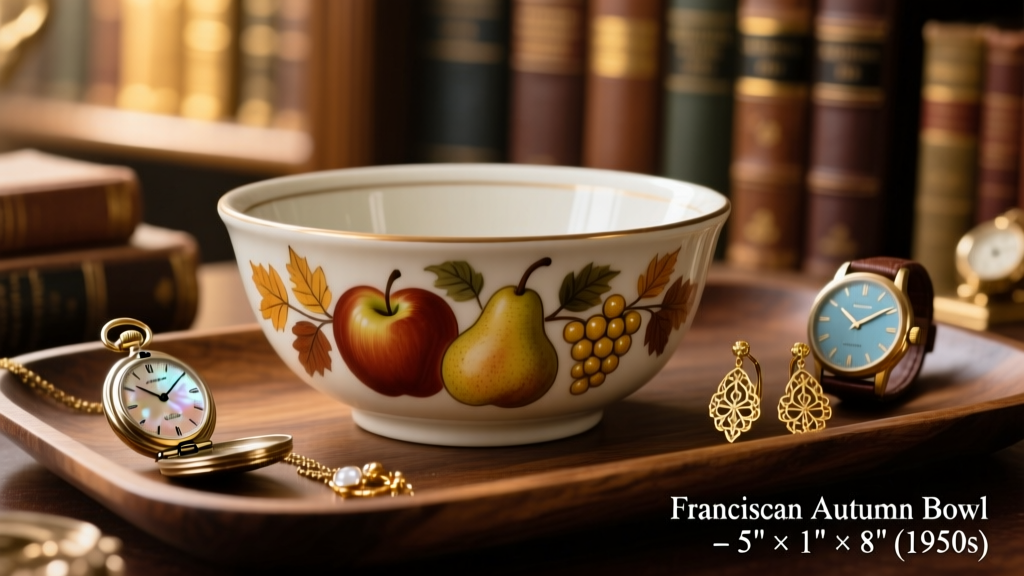
Franciscan Autumn Bowl: Fruit Pattern, 5 1/8-Inch Diameter — A Collector’s Profile of the Iconic Mid-Century Ceramic
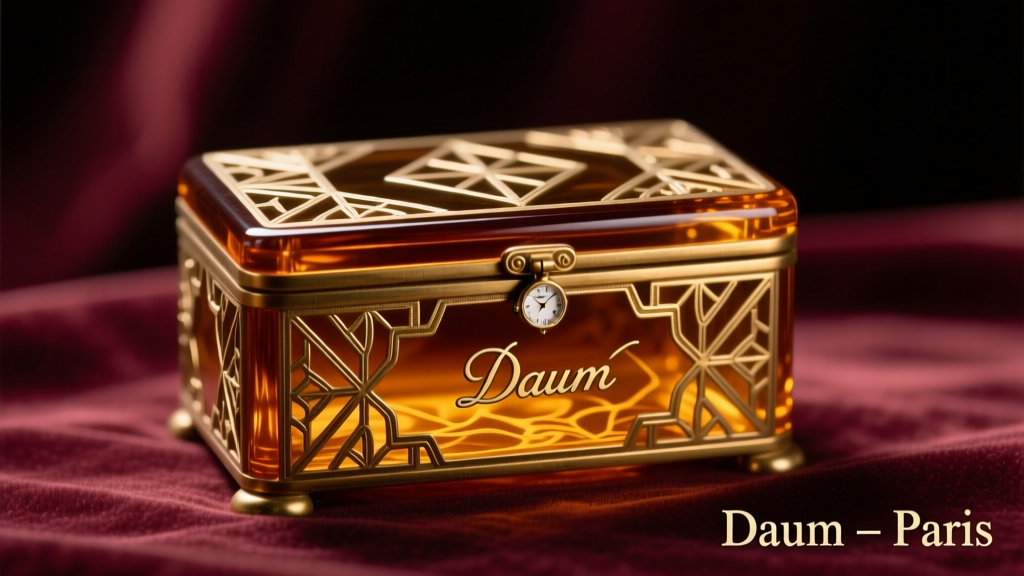
Daum Box, Art Deco Design, Smoky Amber Glass: A 5 × 3 Inch Masterpiece of French Lalique-Era Craftsmanship