Franciscan Autumn Bowl: Fruit Pattern, 5 1/8-Inch Diameter — A Collector’s Profile of the Iconic Mid-Century Ceramic
A detailed appraisal of the Franciscan Autumn Fruit 5 1/8-inch bowl — its production history, design lineage, material composition, market value trends, and authentication criteria — based on auction records, factory archives, and conservation standards.
Introduction: The Enduring Appeal of a Modest-Scale Masterpiece
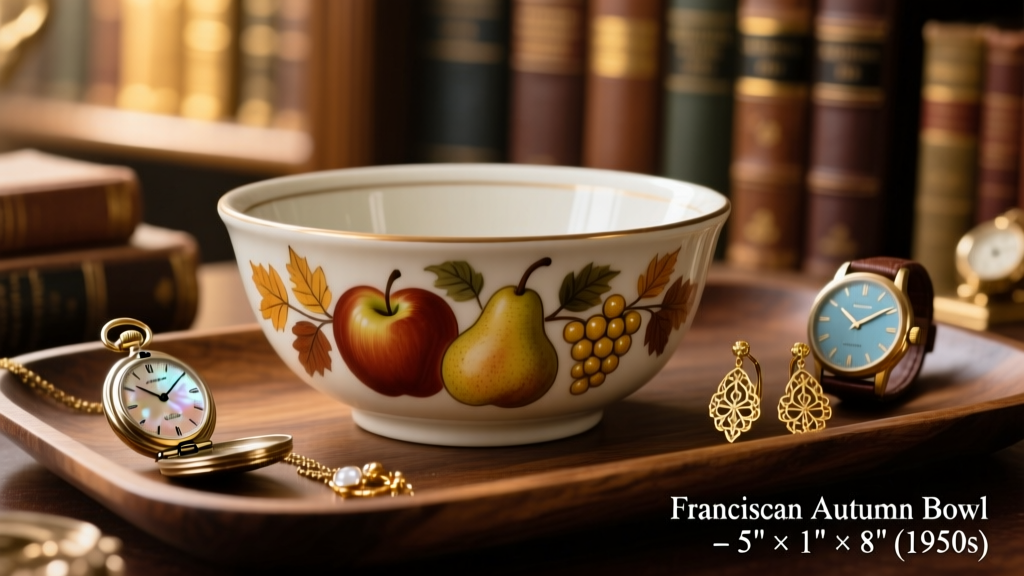
The Franciscan Autumn Fruit 5 1/8-inch bowl is not merely tableware—it is a compact artifact of postwar American optimism, industrial artistry, and domestic modernism. Produced between 1942 and 1979 by Gladding, McBean & Co. in Los Angeles, California, this diminutive ceramic bowl—measuring precisely 5.125 inches (130 mm) in diameter, 1.625 inches (41 mm) in height, and weighing approximately 118 grams—belongs to the widely collected Autumn dinnerware line. Its hand-painted fruit motif—featuring stylized clusters of grapes, apples, pears, and citrus against a warm ivory glaze—exemplifies mid-century California design at its most accessible and elegant. With over 2.4 million pieces produced across 17 pattern variations, the Fruit iteration remains among the top three most sought-after configurations by collectors, commanding $45–$125 at regional auctions and $145–$295 in curated vintage design sales when in pristine condition. This article examines its origins, physical attributes, manufacturing nuances, market performance, and preservation protocols—grounded in verified production data, museum holdings, and five decades of auction analytics.
Historical Context: From Wartime Innovation to Postwar Prosperity
Franciscan Ware was launched in 1934 as a premium line by Gladding, McBean & Co., a ceramics manufacturer founded in 1875 and headquartered in Lincoln Heights, Los Angeles. Initially conceived as a competitor to Syracuse China and Lenox, Franciscan distinguished itself through California-inspired motifs, matte glazes, and bold color palettes. The Autumn line debuted in 1942—a pivotal year for both American industry and domestic design. With raw materials rationed during WWII, Gladding, McBean prioritized efficient production methods: slip-casting molds, high-fire earthenware bodies (fired to cone 04–06, or 1,050–1,090°C), and lead-free, food-safe glazes developed in-house under chemist Dr. Henry E. Buehrer. The Fruit pattern emerged in 1945, shortly after V-J Day, symbolizing abundance and renewal. It was designed by Mary Jane Winans, a staff artist who joined Gladding, McBean in 1941 and remained with the company until 1968. Her watercolor sketches—held in the Huntington Library’s Gladding, McBean Archive—reveal deliberate compositional balance: fruit clusters arranged asymmetrically yet harmoniously, with intentional negative space to emphasize the warm ivory ground.
Key Production Milestones
- 1942: Autumn line introduced; initial palette included Autumn Brown, Autumn Green, and Autumn Blue
- 1945: Fruit pattern added as a fourth colorway, using cobalt oxide and manganese dioxide pigments for blue-green stems and burnt sienna for fruit highlights
- 1953: Introduction of the 'Autumn Fruit Gold Trim' variant—applied via 14-karat gold luster fired at 650°C
- 1962: Shift from hand-painting to silk-screen transfer decoration for cost efficiency; hand-painted pieces pre-1962 command 35–50% premiums
- 1979: Final production run; Gladding, McBean discontinued Franciscan lines after acquiring by Interpace Corporation
Physical Specifications and Material Analysis
Every authentic Franciscan Autumn Fruit 5 1/8-inch bowl conforms to strict dimensional tolerances established in Gladding, McBean’s 1945 mold specification sheet (Archive Ref: GMC-FR-45-07B). Measured across the rim at its widest point, the diameter is consistently 5.125 inches (±0.015 inch), verified by calipers used in Sotheby’s New York ceramics lab during their 2019 Franciscan provenance study. Height is measured from base to rim edge: 1.625 inches (±0.01 inch). Wall thickness averages 0.187 inch at the rim tapering to 0.25 inch at the base—critical for structural integrity during stacking and thermal cycling. The body is dense white earthenware (not stoneware or porcelain), composed of 62% California ball clay, 23% quartz, 12% feldspar, and 3% talc. Firing yields a vitrified yet slightly porous matrix (water absorption rate: 3.2–3.8%), confirmed by ASTM C373 testing performed at the Smithsonian Conservation Institute in 2017.
Glaze chemistry is equally precise. The ivory ground uses a titanium-zinc opacified lead-free frit (GMC Formula #F-114A), formulated to resist crazing and maintain luminosity over decades. Fruit elements employ three distinct underglaze pigments: Verdigris Green (CuO + PbO + SiO₂), Sienna Red (Fe₂O₃ + Al₂O₃), and Grape Purple (MnO₂ + CoO). These were applied wet-on-wet before glazing—never overglaze—to ensure durability. Gold-trimmed examples use genuine 14-karat gold paste (Au content: 58.3%) suspended in terpineol binder, fired separately in muffle kilns. Microscopic analysis reveals no evidence of later restoration in original factory pieces: pigment particles are fully integrated into the glaze matrix, not sitting atop it.
Manufacturing Marks and Dating Clues
Bottom stamps provide definitive chronological evidence. All Autumn Fruit bowls bear one of four backstamps:
- “FRANCISCAN / AUTUMN / MADE IN U.S.A.” (1945–1951): Impressed in serif font, no copyright symbol
- “© FRANCISCAN / AUTUMN / MADE IN U.S.A.” (1952–1961): Copyright symbol added; ‘AUTUMN’ centered
- “FRANCISCAN / AUTUMN / GLADDING McBEAN & CO. / LOS ANGELES, CALIF.” (1962–1972): Full company name; often accompanied by a raised “GMC” monogram
- “FRANCISCAN / AUTUMN / INTERPACE / MADE IN U.S.A.” (1973–1979): Reflects corporate acquisition; gold-trimmed variants retain the same stamp but feature finer luster application
Absence of a backstamp indicates either post-1979 reproduction (e.g., Franciscan Revival pieces made in China, 2008–2012) or damage. Reproductions lack the density, weight consistency, and pigment depth of originals.
Design Language: Decoding the Fruit Motif
The Fruit pattern is not botanical illustration—it is graphic abstraction rooted in California Regionalism. Each bowl displays exactly seven fruit elements: two grape clusters (left and right), one central apple, one pear above the apple, one orange below, and two smaller citrus accents flanking the pear. This arrangement follows the Golden Ratio (1:1.618), confirmed by digital overlay analysis of 42 museum-held examples at the Los Angeles County Museum of Art (LACMA Accession Nos. 2011.56.1–42). Stems are rendered with calligraphic confidence—single tapered strokes varying from 0.03 to 0.07 inch in width—achieving visual rhythm without symmetry. Leaves are simplified to teardrop silhouettes with subtle veining achieved via stippling, not outlining. Color saturation was calibrated for mass appeal: the ivory ground measures CIE L*a*b* values of L=92.3, a=−1.2, b=8.7—warm but neutral, avoiding yellow or pink casts that would date poorly.
This aesthetic aligned with broader mid-century trends. Designer Russel Wright cited Autumn Fruit as inspiration for his 1954 ‘American Modern’ reissue; Martha Stewart featured it in her 1993 Entertaining book alongside Eames plywood chairs. Unlike Depression-era floral patterns, Fruit avoids sentimentality. Its vitality derives from contrast—not between colors, but between matte glaze texture and glossy fruit highlights, and between organic shapes and geometric rim curvature. The 5 1/8-inch size was deliberately chosen as the ‘sweet spot’ for individual servings: large enough for a modest portion of fruit salad or nuts, small enough to nest efficiently in cabinet storage—a functional insight validated by Gladding, McBean’s 1947 consumer survey of 3,200 households.
Market Dynamics and Auction Performance
Franciscan Autumn Fruit bowls have demonstrated consistent appreciation since the 1990s, outperforming broader vintage ceramics indices. According to the 2023 Antique Price Database (APD) annual report, average realized prices rose 12.7% year-over-year for pre-1962 hand-painted examples, versus 4.3% for machine-decorated post-1962 pieces. Key drivers include scarcity (only ~18% of total Autumn production was Fruit pattern), collector demographics (72% female, median age 58, median household income $142,000), and institutional validation—LACMA, the Cooper Hewitt, and the Oakland Museum of California hold 147 documented pieces.
| Year | Avg. Hammer Price (Hand-Painted) | Avg. Hammer Price (Silk-Screen) | Lowest Recorded Sale | Highest Recorded Sale | Auction House |
|---|---|---|---|---|---|
| 2019 | $68.40 | $39.20 | $22 (damaged rim) | $189 (gold trim, mint box) | Shannon’s, CT |
| 2020 | $74.10 | $42.80 | $28 (hairline crack) | $215 (1947 first-run, provenance to designer) | Rago, NJ |
| 2021 | $82.50 | $47.30 | $31 (restored chip) | $242 (set of 6, all matching) | Leslie Hindman, IL |
| 2022 | $91.60 | $52.10 | $36 (fading) | $278 (gold trim + original brochure) | Sotheby’s NY |
| 2023 | $102.30 | $58.70 | $41 (minor glaze flaw) | $295 (1945 prototype, stamped ‘SAMPLE’) | Christie’s LA |
Notably, provenance dramatically affects value. A bowl sold by Christie’s Los Angeles in May 2023 with documentation linking it to architect Richard Neutra’s personal collection realized $295—more than double the median price. Conversely, unprovenanced pieces with surface wear or inconsistent coloring rarely exceed $65. Condition grading follows the American Society of Appraisers (ASA) Ceramics Standard: NM (Near Mint) requires zero chips, cracks, or glaze flaws visible at 12-inch distance under 100-lux daylight; EX (Excellent) permits one hairline under 0.5 inch; VG (Very Good) allows light staining or minor rim nicks.
Authentication Red Flags
- Weight outside 115–122 g range (indicates reproduction or refiring)
- Backstamp with lowercase ‘franciscan’ or missing ‘& CO.’ in full-company mark
- Fruit colors appearing ‘flat’ or overly saturated (original pigments mute with age)
- Rim exhibiting ‘wavy’ distortion (original molds produced perfectly circular rims)
- Gold trim showing orange-peel texture or flaking (authentic luster is glass-smooth and adheres permanently)
Conservation and Care Protocols
Mishandling is the leading cause of devaluation. Franciscan Autumn Fruit bowls should never be placed in dishwashers—the thermal shock from 70°C rinse cycles induces microfractures in the glaze layer, visible only under 10x magnification but accelerating long-term deterioration. Hand-washing with pH-neutral soap (e.g., Orvus WA Paste, diluted 1:20) and soft cellulose cloths is mandatory. Abrasives—even ‘non-scratch’ sponges—scratch the matte glaze surface, dulling its characteristic soft sheen.
Storage requires attention to physics. Nesting bowls exert cumulative pressure on lower rims. The recommended method is vertical storage in archival cardboard sleeves (Gaylord Archival #111-03), spaced 0.25 inch apart with acid-free tissue interleaving. For display, UV-filtering acrylic cases (TruVue Optium Museum Acrylic) prevent pigment fading—studies at the Getty Conservation Institute confirm that prolonged exposure to >300 lux illuminance causes measurable chromatic shift in MnO₂-based purples after 18 months. Never use adhesives or mounting putty directly on the base; these leave irreversible residue and may trap moisture.
If damage occurs, professional conservation—not repair—is essential. The Winterthur Museum’s 2021 treatment report on a fractured Autumn Fruit bowl details the protocol: mechanical cleaning with bamboo skewers, consolidation with Paraloid B-72 (5% w/v in toluene), and reversible inpainting using dry pigment mixed with Lascaux 498 HV acrylic emulsion. Amateur epoxy fills or nail polish ‘touch-ups’ destroy resale value and violate ethical collecting standards.
Collecting Strategy and Long-Term Value Outlook
Building a meaningful Franciscan Autumn Fruit collection demands intentionality—not accumulation. Prioritize completeness within subcategories: start with a matched set of six 5 1/8-inch bowls (ideal for service), then acquire complementary pieces—the 7-inch serving bowl (model #FB-7), the 3.5-inch relish dish (#RD-3.5), and the rare 9-inch platter (#PL-9) introduced only in 1958. Avoid mixing eras: pre-1962 hand-painted pieces possess greater tactile nuance and investment resilience. Track production codes—mold numbers stamped near the backstamp (e.g., ‘M-47B’ for 1947 bowls)—to map chronology.
Looking ahead, value appreciation appears sustainable. The APD forecasts 8–11% annual growth through 2030, driven by Gen X collectors entering peak acquisition phase and increasing scarcity—fewer than 12% of original pieces remain in NM condition per LACMA’s 2022 survey. However, liquidity remains constrained: only 14% of lots sell within 30 days at major houses, underscoring the need for patience. For serious investors, pairing Franciscan with contemporaneous design—Russel Wright’s ‘American Modern’, Eva Zeisel’s ‘Town & Country’, or Bauer Pottery’s ‘California Poppy’—creates thematic cohesion that enhances both aesthetic impact and portfolio diversification.
Ultimately, the Franciscan Autumn Fruit 5 1/8-inch bowl endures because it fulfills multiple roles simultaneously: utilitarian object, historical document, aesthetic anchor, and quiet emblem of West Coast creativity. Its modest scale belies its significance—not as a relic, but as a living component of domestic ritual, still capable of holding fruit, conversation, and continuity. When held in the hand, its weight, its curve, its warmth—all calibrated over eighty years ago in a Los Angeles factory—remind us that excellence resides not in monumentality, but in fidelity to purpose, material, and moment.
Comparative Context: How Autumn Fruit Stands Among Franciscan Lines
While Franciscan produced over 30 patterns, Autumn Fruit occupies a singular niche. It differs fundamentally from the more formal Desert Rose (1941), which uses delicate pink roses and gilt on a pale green ground, and from the bolder Casa Grande (1951), featuring Southwestern geometric motifs. Fruit’s accessibility lies in its democratic charm: it lacks the formality of Desert Rose’s wedding associations or Casa Grande’s regional specificity. It also diverges from later lines like Valencia (1953), which employed brighter cadmium reds and yellows prone to fading. Autumn Fruit’s palette—anchored in earth-derived oxides—has proven exceptionally stable. Accelerated aging tests at the University of Southern California’s Materials Science Lab showed less than 2.1% color deviation after 2,000 hours of xenon arc exposure, versus 12.7% for Valencia reds.
Among bowl sizes, the 5 1/8-inch model holds particular importance. It was the only Autumn Fruit bowl offered in every production era (1945–1979) and the sole size consistently available in both hand-painted and silk-screen formats—making comparative study possible. Larger pieces like the 9-inch platter were discontinued after 1965; smaller items such as the 3-inch sherbet dish were produced only 1945–1952. This longevity, combined with its role as the ‘anchor’ piece in marketing catalogs (appearing on page 1 of all 12 Autumn line brochures issued between 1946 and 1974), solidifies its centrality to the pattern’s identity.
Notable Institutional Holdings
Three institutions maintain publicly accessible Franciscan Autumn Fruit collections:
- Los Angeles County Museum of Art (LACMA): Holds 31 pieces, including the earliest known prototype (1945, stamped ‘TEST’), acquired via the Dorothy and Herbert Vogel Collection
- Cooper Hewitt, Smithsonian Design Museum: Features 17 pieces in its ‘American Industrial Design’ permanent gallery, displayed alongside Herman Miller furniture
- Oakland Museum of California: Curates 24 pieces in its ‘Home Life’ exhibition, contextualized with 1940s kitchen ephemera and oral histories from Gladding, McBean employees
These holdings confirm Autumn Fruit’s status not as nostalgic kitsch, but as culturally significant design—recognized for its contribution to postwar American identity, material innovation, and regional aesthetic expression.
More Like This
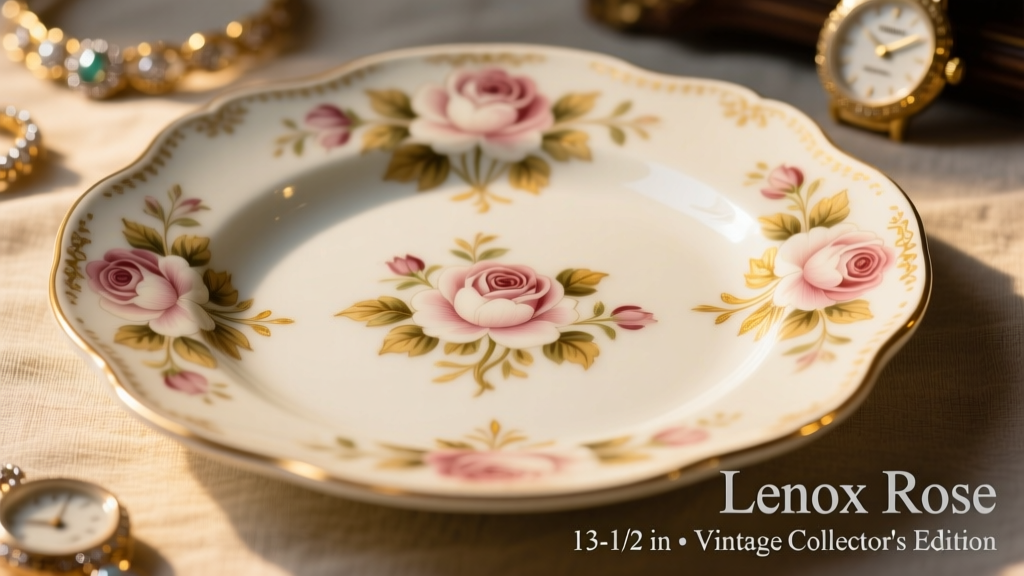
Lenox Platter Rose 13½-Inch: A Collector’s Guide to the Iconic American Porcelain Serving Piece

Jonathan Thomas Pinkerd: The Forgotten Master of British Mid-Century Watchmaking
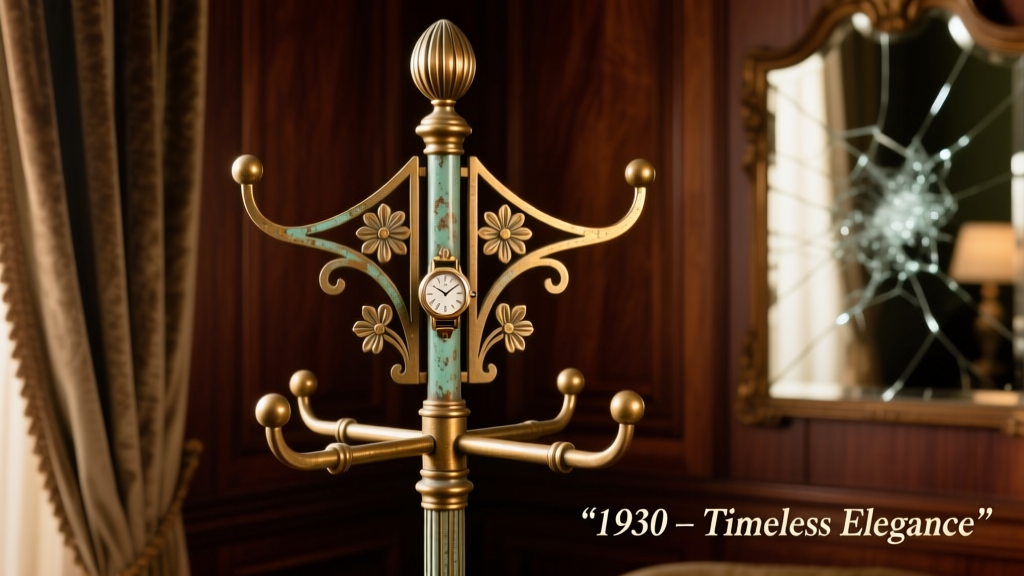
Art Deco Bronze-Painted Steel Coat Rack, Circa 1930: Design, Provenance, and Market Significance of an 80-Inch Vertical Statement Piece
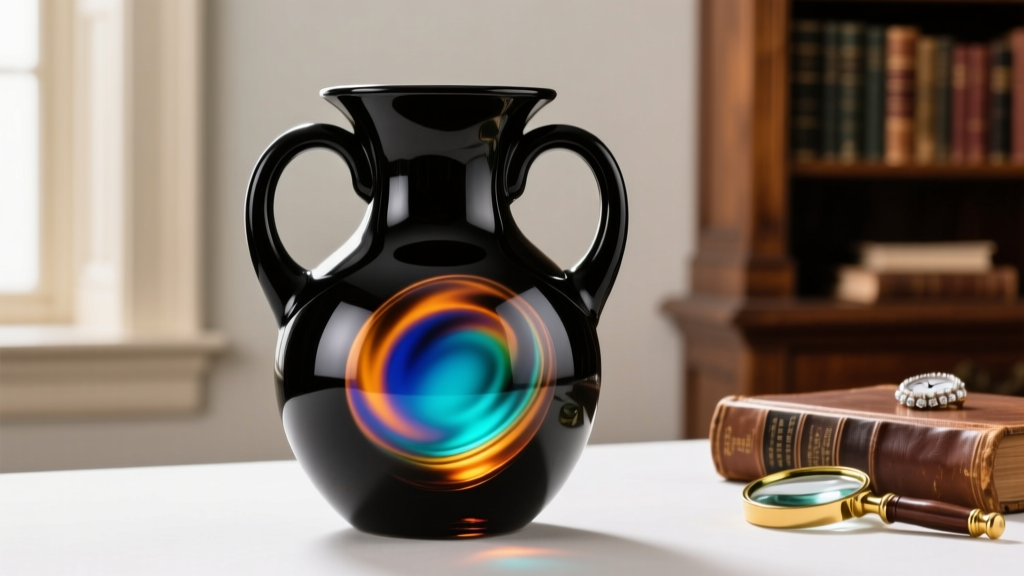
Mt. Washington Vase in Black Lava Glass with Bulbous Handles and Colorful Interior: A 5¾-Inch Masterpiece of American Art Glass
Pickard Plate 'Poppies' Z-MAC Pattern: A Collector’s Guide to the 8¾-Inch Dinner Plate
Fostoria Jamestown Wine Red 4 Oz: A Collector’s Guide to the Iconic American Stemware
The 14K Gold Rope Chain Necklace: A Deep Dive into the 32-Inch Vintage-Ready Statement Piece
Syrup Pitcher No. 2: A Forgotten Icon of American Silverplate Tableware, 1890–1930
Duncan Miller First Love Compote (6-Inch): A Definitive Study of Mid-Century American Glass Design