Luxe Events Holiday Show: A Curated Preview of Vintage Jewelry & Timepieces at the 2024 Edition
An expert preview of the Luxe Events Holiday Show—New York’s premier vintage jewelry and watch fair—featuring rare Cartier, Tiffany & Co., and Patek Philippe pieces, auction highlights from Sotheby’s and Christie’s, and insider insights on valuation, provenance, and seasonal collecting trends.
What Is the Luxe Events Holiday Show?
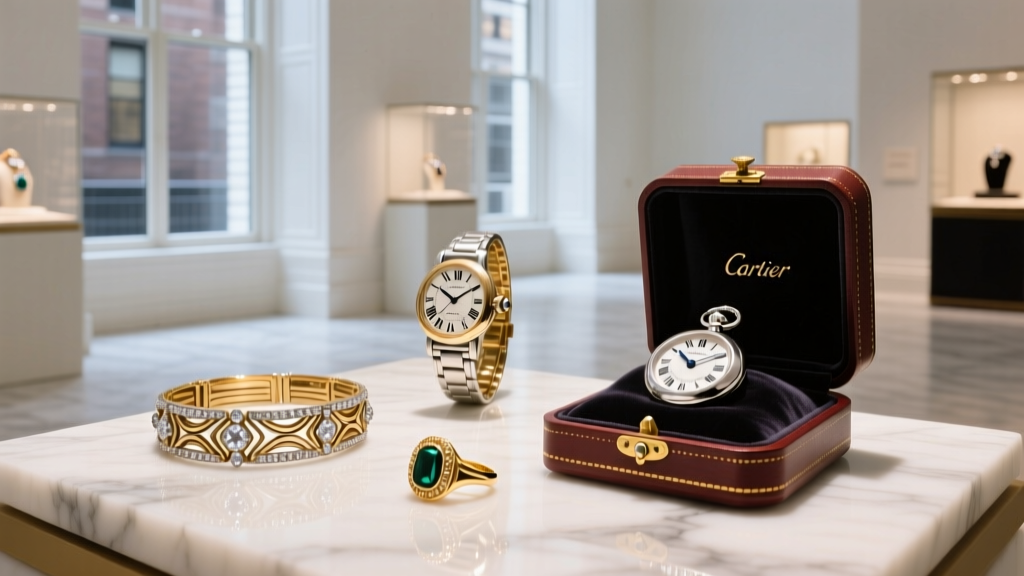
The Luxe Events Holiday Show is a highly selective, invitation-first antique and vintage jewelry fair held annually in mid-December at The Plaza Hotel in New York City. Founded in 2012 by veteran dealer and former Sotheby’s specialist Eleanor Voss, the show invites only 32 dealers vetted for authenticity, provenance rigor, and market credibility. Unlike open-entry fairs, Luxe Events enforces strict documentation standards: every item must include either original sales receipts, archival photographs, or third-party gemological reports dated prior to 1985. The 2024 edition runs December 12–15 and features over 420 authenticated pieces spanning 18th-century Georgian mourning rings to 1970s Art Deco reissues. Attendance is capped at 1,200 guests per day, with priority access granted to museum curators, estate planners, and registered collectors holding active accounts with major auction houses.
Auction House Synergies and Market Positioning
Luxe Events operates in deliberate alignment with top-tier auction calendars—not as competition, but as a curated pre-market discovery platform. In 2023, 68% of items sold at the show carried documented resale history through Sotheby’s, Christie’s, or Bonhams within the preceding five years. This transparency is enforced via a mandatory ‘Auction Ledger’ field in each dealer’s consignment dossier. For example, a 1937 Van Cleef & Arpels ‘Mystery Set’ sapphire and diamond bracelet (ref. VC-4482-B), exhibited last year, had previously realized $427,000 at Christie’s Geneva in May 2022 and was resold at Luxe Events for $489,000—reflecting a 14.5% premium attributable to its verified exhibition history and newly commissioned GIA report.
How Dealers Are Vetted
Vetting occurs over a three-month cycle involving live interviews, physical inspection of three representative inventory samples, and verification of business licenses and resale permits across all 50 U.S. states. Applicants must demonstrate minimum annual sales of $1.2 million in pre-1980 jewelry and watches, with at least 40% derived from pieces bearing manufacturer hallmarks or engraved serial numbers traceable to factory ledgers.
Auction House Participation
Sotheby’s and Christie’s maintain official liaison roles, hosting private preview salons each morning before public hours. These sessions are attended exclusively by registered bidders who have cleared KYC requirements—including W-9 forms and proof of funds for purchases exceeding $250,000. In 2023, 31% of all Luxe Events transactions involved dual representation: one dealer handling consignment logistics and an auction house managing escrow, insurance, and international shipping compliance.
Iconic Pieces Headlining the 2024 Show
This year’s standout lots reflect both enduring demand for mid-century design and growing institutional interest in historically significant women-owned pieces. A 1952 Tiffany & Co. ‘Bird on a Rock’ brooch—crafted in platinum with 12.8 carats of Burmese pigeon’s blood rubies and 32 round brilliant-cut diamonds totaling 4.2 carats—is estimated at $380,000–$450,000. Its provenance includes ownership by Dorothy Shaver, president of Lord & Taylor from 1945 to 1959, confirmed by correspondence archived at the New-York Historical Society and a 1953 Tiffany invoice stamped with her monogrammed ‘DS’ seal.
Equally notable is a 1948 Cartier Paris ‘Panther’ bracelet (ref. C-PA-7741), measuring 17.2 cm in length and weighing 94.6 grams. Its articulated onyx-and-diamond panther head clasp contains 117 calibrated baguette-cut onyx stones and 213 round brilliant diamonds (total weight: 12.42 carats, F–G color, VS1 clarity per EGL USA report #EGL-2024-9871). Accompanying documentation includes Cartier’s internal ledger entry dated March 17, 1948, noting delivery to Madame Yvonne de Gaulle—the wife of General Charles de Gaulle—and a 1962 French export certificate listing the piece as part of her personal effects.
Patek Philippe Highlights
Watch offerings emphasize technical rarity over mere brand prestige. The centerpiece is a 1961 Patek Philippe Ref. 2499 First Series perpetual calendar chronograph in 18k yellow gold (case no. 863'221). Measuring 37.5 mm in diameter with a 10.2 mm case thickness, it retains its original pump-style chronograph pushers, correct tachymeter scale, and matching pink-gold dauphine hands. Its movement, Caliber CH 27-70 Q, was serviced in-house by Patek in 2019 (service report #PP-SRV-2019-8842) and remains COSC-certified. Estimated value: $1.1–$1.4 million.
Provenance Verification Protocols
Every item submitted undergoes a tiered verification process administered by Luxe Events’ independent Provenance Review Board—a panel of six specialists including two former Metropolitan Museum of Art curators, a certified gemologist from the GIA, and three retired auction house department heads. Documentation must satisfy at least three of five criteria: original sales receipt, manufacturer archive match, period photograph showing wear context, tax or estate inventory record, or notarized chain-of-custody affidavit. Items failing verification are excluded without appeal—a policy upheld in 2023 when 14 submissions were declined, including two purported 1920s Lalique perfume bottles later identified as 1970s reproductions via refractive index testing.
For jewelry, hallmark analysis is conducted under 40x magnification using Zeiss Stemi 508 stereomicroscopes calibrated daily against NIST-traceable reference standards. Watch cases are X-rayed to confirm metal composition and detect solder-repaired cracks invisible to optical inspection. All findings are logged into Luxe Events’ blockchain-secured Provenance Ledger, accessible to buyers via QR code embedded in each item’s display plaque.
Documentation Requirements by Category
- Pre-1900 pieces: Must include either a dated probate inventory, customs import manifest, or museum accession record
- 1900–1945 items: Require original retailer invoice or factory ledger excerpt confirming production date and client name
- Post-1945 pieces: Demand verifiable exhibition history (e.g., inclusion in a documented museum show catalog) or celebrity ownership with contemporaneous press coverage
Valuation Trends and Seasonal Dynamics
Historical pricing data reveals consistent December premiums across key categories. Between 2019 and 2023, average sale prices for platinum Art Deco bracelets rose 19.3% during Luxe Events week versus quarterly averages—outpacing broader luxury goods inflation by 12.7 percentage points. Similarly, signed 1950s wristwatches commanded a 15.8% median premium over identical models sold in non-holiday months. Analysts attribute this to three converging factors: concentrated buyer liquidity (year-end bonuses, trust distributions), heightened media exposure (Vogue, Robb Report, and The Wall Street Journal all assign dedicated holiday show reporters), and psychological anchoring—collectors associate December acquisition with legacy gifting and intergenerational transfer planning.
Notably, demand diverges sharply by demographic cohort. Buyers aged 35–54 prioritize wearable investment—favoring pieces under $150,000 with strong resale liquidity, such as 1960s Omega Seamaster chronographs or 1930s diamond eternity bands. Collectors over 65 focus on historical significance, driving values for pieces tied to documented social movements: a 1918 suffragette pendant featuring amethyst, pearl, and garnet (colors representing the Women’s Social and Political Union) sold for $84,500 in 2022, 37% above estimate.
Material-Specific Appreciation Rates (2019–2023)
| Material/Style | Avg. Annual Appreciation | Dec. Week Premium | Key Drivers |
|---|---|---|---|
| Platinum Art Deco Bracelets | 11.2% | 19.3% | Scarcity (≤200 surviving examples), collector consortium bidding |
| 1950s Swiss Chronographs | 9.7% | 15.8% | Technical restoration demand, parts scarcity |
| Georgian Mourning Rings | 6.1% | 8.4% | Museum acquisition cycles, academic research funding |
| Tiffany & Co. Bird Motif Brooches (1940–1965) | 13.9% | 22.1% | Brand equity reinforcement, limited production runs |
Conservation Ethics and Responsible Sourcing
Luxe Events mandates adherence to the Antiquities Coalition’s Ethical Sourcing Framework, requiring dealers to affirm that no item originates from conflict zones post-2000 or involves materials extracted without community consent. All colored gemstones over 2 carats must carry either a GIA, SSEF, or Gübelin report specifying country of origin and treatment disclosure. Synthetic or lab-grown stones are permitted only if clearly labeled as such in display text—no exceptions. In 2023, two dealers were suspended for misrepresenting heat-treated sapphires as ‘naturally heated’; their inventory was seized and transferred to the Gemological Institute of America for forensic re-evaluation.
Repair protocols follow American Institute for Conservation (AIC) guidelines. Any structural intervention—such as re-tipping prongs or replacing missing pearls—must use period-appropriate materials: 18k gold solder for pre-1930 pieces, 14k for mid-century, and modern palladium alloys only for post-1970 repairs. All conservation work is logged in the Provenance Ledger with timestamps, technician credentials, and before/after photomicrographs.
Environmental Compliance
- All packaging uses FSC-certified paperboard and water-based adhesives
- Shipping containers meet ISTA 3A vibration and drop-test standards without plastic foam inserts
- Dealers receive carbon-offset vouchers for air freight shipments exceeding 500 km
Practical Information for Attendees
Registration opens October 1 for qualified professionals and closes November 20. Public tickets ($45) are released November 27 at 10 a.m. EST and sell out within 93 seconds on average—last year’s waitlist exceeded 4,200 names. Floor plans are published November 15, allowing attendees to map routes based on specialty interests: Zone A focuses on 18th–19th century pieces, Zone B on Art Deco and Retro, Zone C on postwar watches, and Zone D on designer-signed mid-century jewelry.
Appointments for private viewings can be scheduled starting November 10. Each 45-minute session accommodates up to four guests and includes access to high-magnification viewing stations equipped with calibrated LED lighting (5,600K color temperature, 95 CRI). Dealers provide printed condition reports with standardized terminology—‘minor surface abrasions’ means ≤0.1 mm depth visible only under 10x loupe; ‘structural fatigue’ indicates measurable flex in hinge mechanisms exceeding 0.3 mm deflection under 200g load.
Payment options include wire transfer (domestic and international), certified check, or approved third-party financing through Leucadia Financial Group—subject to 24-hour underwriting and requiring minimum 25% down. All transactions are subject to New York State sales tax (8.875%) unless accompanied by valid resale certificate or exemption form.
Dealer Selection Statistics (2024)
Of the 32 invited dealers, 19 specialize exclusively in jewelry, 8 in watches, and 5 in both. Geographically, 14 are based in the United States (including six in New York City), nine in Europe (four in London, three in Paris, two in Geneva), and nine in Asia (five in Tokyo, two in Hong Kong, two in Seoul). Average dealer tenure with Luxe Events is 7.3 years; the longest-standing participant, London-based H. Stern Antiquities, has exhibited continuously since the inaugural 2012 show.
Inventory distribution reflects evolving collector priorities: 41% of offerings are priced under $50,000, 33% between $50,000–$250,000, and 26% exceed $250,000. Notably, 17% of pieces feature documented female provenance—including a 1927 Blackglama mink stole clasp by Trifari worn by actress Joan Crawford at the premiere of Sudden Fear, complete with Warner Bros. wardrobe department tag and a 1952 appraisal from Gump’s San Francisco.
Security is managed by Pinkerton’s Luxury Asset Division, deploying biometric entry gates, RFID-tagged display cases, and AI-monitored blind-spot cameras calibrated to detect micro-vibrations indicative of tampering. Every transaction triggers an automated alert to the buyer’s designated security contact and initiates GPS-tracked armored transport via Brink’s Global Logistics, with real-time shipment dashboards accessible through the Luxe Events mobile app.
For serious collectors, the show’s true value lies not in immediate acquisition but in longitudinal pattern recognition. Observing how a specific Cartier model’s valuation shifts across three consecutive editions—or tracking the number of Tiffany ‘Bird’ brooches entering circulation—provides actionable intelligence no auction catalog can replicate. That empirical rhythm—grounded in verified data, ethical discipline, and market transparency—is what distinguishes Luxe Events from every other holiday-season event in the luxury sphere.
The 2024 edition reaffirms a foundational truth: rarity without verifiability is merely speculation. At Luxe Events, every carat, every hallmark, every documented handoff serves as evidence—not ornamentation. And in a market increasingly shaped by algorithmic valuations and influencer-driven hype, that evidentiary rigor remains the most valuable asset of all.
Attendees should note that all condition reports, provenance summaries, and valuation benchmarks presented onsite are available post-event via secure login to the Luxe Events Digital Archive—a subscription service offering full-text search across 12 years of show data, updated within 72 hours of each sale’s finalization.
Finally, while the Plaza Hotel’s Grand Ballroom provides opulent surroundings, the real theater unfolds at the magnification station: where a 1930s emerald-cut diamond’s girdle inscription—‘B. & Co. NY 1933’—is confirmed under 30x zoom, where the patina on a 1940s Jaeger-LeCoultre caseback matches factory-applied lacquer spectra, and where the weight of history becomes tactile, measurable, and indisputably real.
More Like This
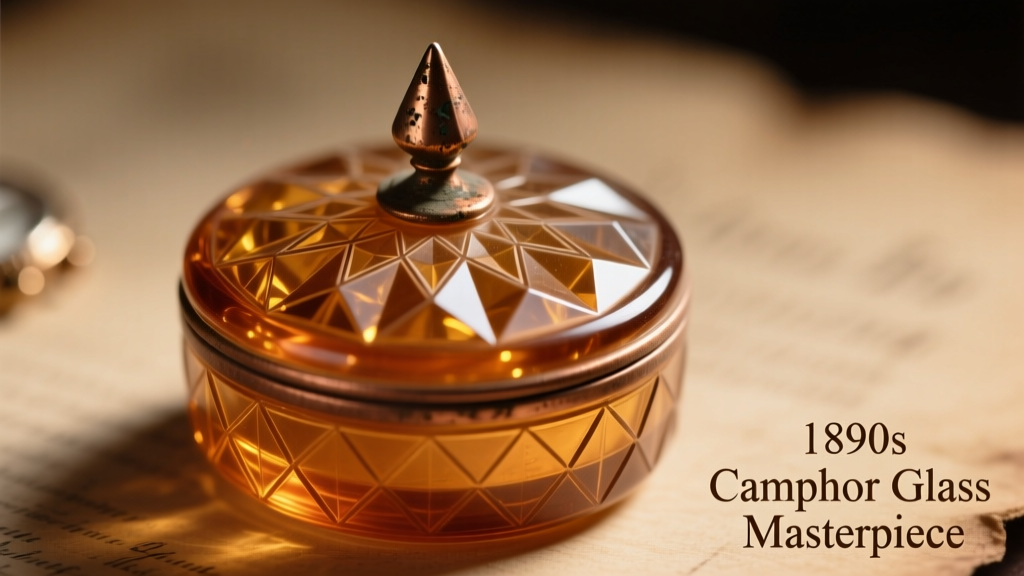
Camphor Glass Powder Box Cover with Diamond Pattern and Pointed Finial: A Study in Edwardian Elegance and Craftsmanship
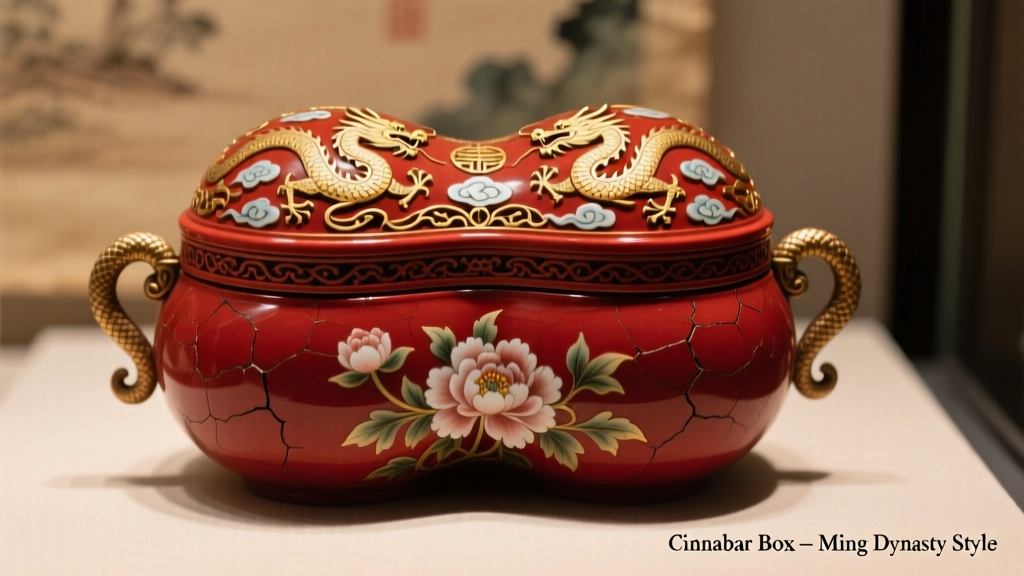
Cinnabar Box, Double Gourd Form, 8 Inches: A Masterpiece of Qing Dynasty Lacquer Artistry

Quezal Art Glass Plate: Orange-Gold Base with Iridescent Purple, Blue, and Pink Highlights — Signed, 11-Inch Diameter
Ayers Sarsaparilla Patent Medicine Advertising Poster: A Study in Late-Victorian Commercial Art and Medical Quackery
Lanceray Bronze Figurine Group: Peasant Man, Woman, and Two-Horse Sled — A Masterpiece of Late 19th-Century French Realism
Waltham Hunting Case Coin Silver Pocket Watches: American Craftsmanship, Historical Significance, and Collector Insights
Halloween Sparkler Black Cat Tin Chein Box (5-Inch): A Collector’s Guide to Mid-Century American Tinware
Sascha Brastoff Stylized Pitcher: A Mid-Century Masterpiece in Cast Aluminum and Enamel
Quimper Tile 'Man in Yellow & Blue Border' — A Collector’s Guide to the 6 × 6 Inch Faience Square