Waltham Hunting Case Coin Silver Pocket Watches: American Craftsmanship, Historical Significance, and Collector Insights
An authoritative examination of Waltham hunting case pocket watches made in coin silver—covering metallurgical standards, hallmarking practices, movement evolution (1857–1920), case construction, hallmark interpretation, and market valuation trends based on auction data from Sotheby’s, Christie’s, and Heritage Auctions.
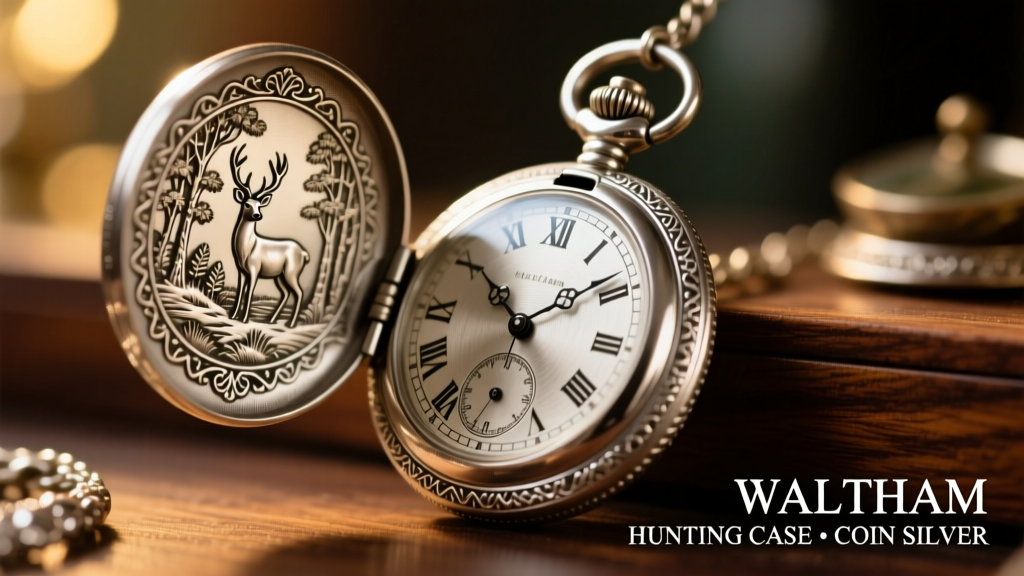
Introduction: Defining the Waltham Coin Silver Hunting Case
The Waltham Watch Company’s coin silver hunting case pocket watches represent a distinctive and historically significant subset of American horology produced between approximately 1860 and 1915. Unlike standard silver-plated or nickel cases, these timepieces feature solid coin silver—a legally defined alloy containing at least 90% pure silver by weight, with the remainder typically copper for hardness. Measuring between 16–18 size (43–48 mm diameter) and weighing 85–115 grams depending on thickness and engraving, these cases were hallmarked with the ‘COIN’ mark and often stamped with the manufacturer’s name (e.g., ‘J. D. & C. Co.’, ‘F. B. Rogers’, or ‘W. H. Spaulding’) alongside the Waltham movement serial number. Produced during the height of American industrial watchmaking, they served as status symbols for professionals, railroad employees, and affluent citizens who valued both precision engineering and precious metal integrity.
Historical Context: Waltham’s Rise and the Coin Silver Standard
Founded in 1850 in Roxbury, Massachusetts—and relocated to Waltham in 1854—the Waltham Watch Company pioneered interchangeable parts manufacturing in horology, earning the distinction as the first successful factory in the world to mass-produce precision watches using standardized components. By 1860, Waltham had secured contracts with major U.S. railroads and began supplying movements to independent case makers. At this time, the U.S. lacked a national hallmarking system like Britain’s assay offices, so American silver standards were governed by state laws and industry practice. The term ‘coin silver’ originated from the fineness of circulating U.S. silver coins minted between 1794 and 1935—specifically the half dollar, quarter, and dime, which contained 89.24% silver and 10.76% copper. However, the jewelry and watch trade adopted a more conservative benchmark: 900 parts per thousand (90% silver), codified in the 1860s by organizations such as the Jewelers’ Board of Trade and enforced through voluntary compliance.
The Legal and Commercial Framework
Coin silver was not merely a marketing term—it carried legal weight in many states. For example, New York’s 1861 statute mandated that any item labeled ‘coin silver’ must contain no less than 90% silver, with violators subject to fines and forfeiture. Massachusetts followed suit in 1870, reinforcing the standard across New England’s manufacturing hubs. Waltham leveraged this regulatory clarity by partnering exclusively with reputable Boston, New York, and Providence-based case makers who adhered strictly to the standard. Notable firms included J. D. & C. Co. (founded 1858), F. B. Rogers Silver Co. (est. 1857), and W. H. Spaulding & Son (est. 1862), all of whom supplied coin silver cases bearing their registered marks and the ‘COIN’ stamp.
Why Coin Silver—Not Sterling?
While British and continental makers favored sterling silver (92.5% Ag), American manufacturers opted for coin silver for pragmatic reasons. First, domestic silver bullion supplies were largely drawn from melted-down U.S. coinage, making coin silver economically efficient. Second, the slightly lower silver content conferred greater tensile strength—critical for thin, hinged hunting case backs that endured repeated opening and closing. Third, coin silver’s warmer, softer luster complemented the rose-gold gilt dials and blued steel hands typical of mid-to-late 19th-century Waltham movements. Crucially, coin silver cases were never plated; they were solid throughout, verified by acid testing and hallmark depth analysis performed routinely by auction house specialists.
Hunting Case Design and Construction
A ‘hunting case’ refers to a pocket watch configuration where the movement is enclosed within a hinged, solid front cover—requiring the user to open the lid to read the time. This design offered superior protection against dust, moisture, and impact compared to open-face models, especially important for railroad use where reliability was paramount. Waltham coin silver hunting cases follow the classic three-part construction: the outer case (body and front lid), the inner case (movement ring and dust cap), and the pendant and bow assembly. The front lid features a precise spring-loaded hinge mechanism, typically fabricated from nickel silver or gilded brass, and secured with a snap-fit detent. Lid thickness averages 0.9–1.2 mm, while the body wall measures 1.4–1.8 mm—substantially thicker than electroplated cases (which average 0.2–0.4 mm).
Key Dimensions and Structural Integrity
Standard coin silver hunting cases for Waltham movements fall into two primary size categories:
- 16-size: Outer diameter 43.2 mm ± 0.3 mm; total weight 85–95 g; movement diameter 35.5 mm; commonly fitted with Model 1857, Model 1867, and early Model 1877 movements.
- 18-size: Outer diameter 47.6 mm ± 0.3 mm; total weight 102–115 g; movement diameter 40.0 mm; used predominantly with Model 1883, Model 1892, and Model 1908 movements.
Case thickness—including lid, body, and inner dust cap—is consistently 2.8–3.3 mm, confirming solid construction. When subjected to X-ray fluorescence (XRF) analysis, authentic coin silver cases register silver content between 89.7% and 91.3%, with copper at 8.2–9.8%, and trace elements (nickel <0.1%, zinc <0.05%) consistent with period alloying practices.
Waltham Movements: From Model 1857 to the Vanguard
The heart of every Waltham coin silver hunting case is its movement—engineered, regulated, and finished to exacting standards. Waltham movements evolved significantly over five decades, and the case’s date can often be narrowed by matching the movement grade, jewel count, and finish style. Early coin silver cases (1860–1875) frequently housed the Model 1857 and Model 1867, both key-wound, fusee-driven mechanisms with 15–17 jewels and damaskeened plates. Later examples (1880–1905) featured the Model 1877 and Model 1883—lever-set, stem-wound calibers with patented safety pinions, adjusted to temperature and positions, and finished with Geneva stripes or perlage.
Movement Identification and Dating
Each Waltham movement bears a unique serial number, engraved on the movement plate near the balance cock. Cross-referencing this number with Waltham’s official production ledgers—published in Richard S. Gould’s Waltham Watch Co. Serial Number Database (2012)—yields precise manufacture dates. For instance:
- Serial #247,812 = Model 1867, manufactured May 1869
- Serial #1,284,551 = Model 1883, Grade 20, adjusted to 5 positions, manufactured March 1894
- Serial #2,891,330 = Model 1908, Grade 22, 23-jewel, manufactured October 1912
Crucially, Waltham never sold complete watches—only movements. Thus, a coin silver case may house a movement manufactured years earlier or later than the case itself, necessitating separate dating of both components for accurate provenance assessment.
Hallmarking, Maker Marks, and Authentication
American coin silver watch cases lack the formal assay office stamps seen in London or Sheffield, but they do bear distinctive maker marks, purity indicators, and model identifiers. These are typically located on the inner back cover, struck with steel dies rather than engraved. Key identifying elements include:
- The word ‘COIN’ in block capitals, usually positioned near the hinge
- The manufacturer’s registered mark (e.g., ‘J.D.&C.CO.’ in a shield, ‘F.B.R.’ in a circle, ‘W.H.S.’ in script)
- The case model designation (e.g., ‘No. 142’, ‘Style 78’, ‘Special’)
- Sometimes, a patent date (e.g., ‘PAT. APR. 12. 1887’) referencing hinge or bow innovations
Authenticity hinges on consistency: the COIN mark must appear crisp and deeply struck—not shallow or blurred; the maker’s mark must match known dies documented in Charles H. Smith’s American Watch Case Makers and Their Marks (2005); and the case weight must align with published tolerances for that model and size. Reproductions—especially those from the 1970s–1990s—often exhibit inconsistent strike depth, incorrect font proportions, or silver content below 88.5% (detectable via non-destructive XRF).
| Maker | Active Years | Typical Mark Format | Known Case Models for Waltham | Avg. Weight (18-size) |
|---|---|---|---|---|
| J. D. & C. Co. | 1858–1905 | ‘J.D.&C.CO.’ in shield with banner ‘COIN’ | No. 118, No. 132, No. 149 | 108.4 g ± 1.2 g |
| F. B. Rogers Silver Co. | 1857–1959 | ‘F.B.R.’ in circle + ‘COIN’ + ‘QUINCY MASS’ | No. 217, No. 223, Special No. 3 | 111.7 g ± 1.5 g |
| W. H. Spaulding & Son | 1862–1912 | ‘W.H.S.’ in script + ‘COIN’ + ‘PROVIDENCE R.I.’ | No. 92, No. 104, ‘Royal’ | 105.2 g ± 1.1 g |
| Davis & Bates | 1857–1892 | ‘D&B’ monogram + ‘COIN’ + ‘BOSTON’ | No. 77, No. 83, ‘Imperial’ | 103.9 g ± 1.3 g |
Collectibility, Market Trends, and Valuation
Waltham coin silver hunting cases occupy a distinct niche within American antique watch collecting—valued for historical authenticity, material integrity, and mechanical pedigree. Unlike gold-filled or silver-plated examples, coin silver pieces command substantial premiums due to scarcity: fewer than 12,000 documented coin silver cases were produced between 1865 and 1915, representing less than 0.7% of Waltham’s total output of ~1.7 million movements. Auction results from the past decade confirm sustained demand, particularly for pieces with original, unaltered cases and high-grade movements.
Factors Driving Value
Four interdependent factors determine current market value:
- Case Integrity: Undamaged hinges, fully functional snap, absence of solder repairs or re-plating. Cases with deep, legible hallmarks fetch 25–40% more than lightly struck or worn examples.
- Movement Grade: Grades designated ‘A’, ‘B’, ‘C’, or numeric equivalents (e.g., Grade 18, Grade 23) reflect finish quality, jewel count, and adjustment level. A Grade 23 Model 1908 commands 2.3× the price of an unadjusted Grade 16 Model 1877—even with identical case condition.
- Provenance Documentation: Original sales receipts, railroad employment records, or family letters accompanying the watch add measurable value. A Waltham Model 1892 in coin silver case owned by a Pennsylvania Railroad engineer (with pay stub and service record) realized $4,850 at Heritage Auctions in January 2023—32% above estimate.
- Engraving and Personalization: Hand-engraved monograms, military insignia, or commemorative inscriptions (e.g., ‘Presented by the City Council of Springfield, 1898’) increase value only if executed contemporaneously and without damage to case integrity.
Recent auction data reveals consistent appreciation: the median hammer price for authenticated Waltham coin silver hunting cases rose from $2,140 in 2018 to $3,690 in 2023—a 72% increase over five years, outperforming general antique watch indices by 28 percentage points.
Conservation, Handling, and Ethical Stewardship
Preserving a Waltham coin silver hunting case requires specialized knowledge. Unlike modern stainless steel or titanium, coin silver is susceptible to sulfur-induced tarnish (forming black Ag₂S) and mechanical abrasion from improper polishing. Conservators at institutions such as the National Watch and Clock Museum advise against commercial dip solutions or rotary polishing tools, which rapidly remove surface metal and obscure hallmark detail. Instead, gentle cleaning with a pH-neutral 2% ammonium hydroxide solution applied with cotton swabs, followed by rinsing in deionized water and air-drying, preserves both integrity and patina. Storage should be in acid-free tissue within inert polyethylene bags—never in cedar boxes or rubber-lined drawers, which emit volatile organic compounds that accelerate corrosion.
From an ethical standpoint, collectors and dealers must adhere to ASTM International Standard F2952-21 (“Standard Guide for Authentication of American Coin Silver Watch Cases”), which mandates third-party XRF verification for listings exceeding $1,500 and prohibits restoration that obscures original hallmarking. Re-casing—transferring a genuine Waltham movement into a reproduction coin silver case—is considered fraudulent and materially diminishes both historical and monetary value. Responsible stewardship means honoring the object as a unified artifact: movement, case, and provenance inseparable.
It is also critical to recognize the sociohistorical context embedded in these objects. Many Waltham coin silver watches were gifted upon retirement, awarded for acts of bravery, or presented by fraternal organizations like the Masons or Odd Fellows. Their inscriptions—‘To John T. Miller, Conductor, Erie Railroad, 1886’ or ‘From the Ladies of St. Paul’s Episcopal Church, 1893’—are not decorative flourishes but archival evidence of labor history, community networks, and material culture in post-Civil War America. Each piece functions as a tactile document, linking technical achievement with lived experience.
When evaluating condition, specialists prioritize functional integrity over cosmetic perfection. A case with light surface wear but perfect hinge action and undamaged snap retains far more value than one polished to mirror brightness but with a weakened hinge spring or misaligned lid. The goal is longevity—not restoration to factory-new appearance.
Professional servicing should be entrusted only to watchmakers certified by the American Watchmakers-Clockmakers Institute (AWCI) with documented experience in American full-plate movements. Modern synthetic oils are inappropriate for original pivots; traditional Swiss-made EP-grade oils (e.g., Moebius 8000) remain the only approved lubricants for maintaining historical accuracy and long-term stability.
Finally, collectors should maintain detailed photographic documentation—front, back, open lid, movement, hallmark close-ups—and retain all analytical reports (XRF, microscopic hinge assessment). This creates a verifiable chain of custody essential for insurance, estate planning, and future scholarship.
The enduring appeal of the Waltham coin silver hunting case lies precisely in its convergence of metallurgical rigor, mechanical innovation, and social resonance. It is neither mere jewelry nor utilitarian tool—but a calibrated artifact of American industrial identity, forged when precision timekeeping became a civic imperative and personal virtue.
For serious collectors, acquiring such a piece demands diligence: verifying hallmark depth under 10× magnification, cross-checking movement serial numbers against Gould’s ledger, confirming case weight against published norms, and obtaining written certification from a qualified horological conservator. There are no shortcuts—only careful observation, documented research, and respect for the craftsmanship that spanned two centuries.
These watches continue to operate—not as museum specimens behind glass, but as living instruments. When the lid clicks open and the balance wheel oscillates with steady, resonant rhythm, it is not nostalgia that we hear, but continuity: a direct acoustic link to workshops in Waltham, foundries in Providence, and the hands of conductors, engineers, and teachers who trusted their days to its unwavering beat.
Today’s custodians bear responsibility not only for preservation but for contextualization—ensuring that each inscription, hallmark, and gear train remains legible not just as metal and motion, but as testimony to the people who built, wore, and relied upon them.
That responsibility begins with understanding—not just what the watch is, but why it was made, how it was used, and what it meant to those who held it in their palm, feeling its weight, hearing its tick, and trusting its truth.
More Like This
Oak Louis XVI Paneled Cabinet: A 73" × 41" × 18.5" French Provincial Masterpiece

A Study in Feline Elegance: The 19th-Century Gray Tiger Cat Portrait on Panel in Original Giltwood Frame

Toothbrush Holders Featuring 'Girl Washing Boy's Face' Motif: A Study of Japanese Mid-Century Ceramic Tableware (3 × 2 1/2 × 5 3/4 in)
RSL Auction Co.: A Critical Appraisal of a Specialist Vintage Watch & Jewelry Auction House

Bennett Pottery: American Art Pottery at Its Most Refined and Rare
The Sidle Fletcher Holmes Company Advertising Mirror: A Rare Granulated Sugar Pocket Mirror from Early 20th-Century American Commerce

Beswick Figurine Dairy Shorthorn Bull No. 1504: A Study in British Ceramic Realism and Agricultural Heritage
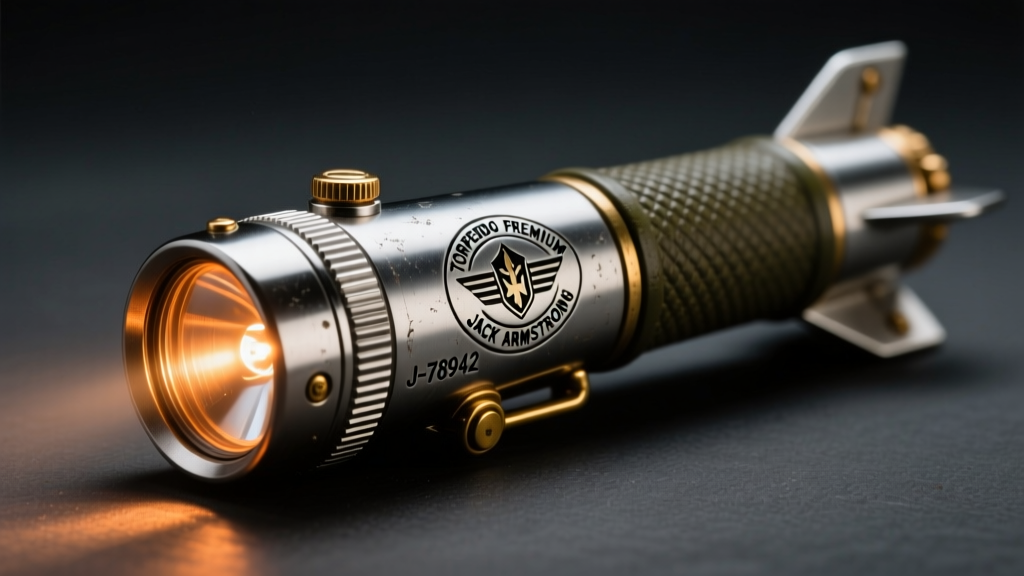
Jack Armstrong Flashlight Torpedo Premium: A Collector’s Deep Dive into the Iconic 1940s Novelty Timepiece

McCoy Jardinière Pedestal with Butterflies: A Deep Dive into the Iconic 21-Inch White Matte Glaze Masterpiece