The Louis XV Mantle Clock: Elegance, Engineering, and Auction Market Realities
A detailed examination of Louis XV-style French mantle clocks—distinguishing authentic 18th-century pieces from 19th- and 20th-century interpretations, with technical specifications, maker signatures, material analysis, and current auction performance data from Sotheby’s, Christie’s, and Phillips.
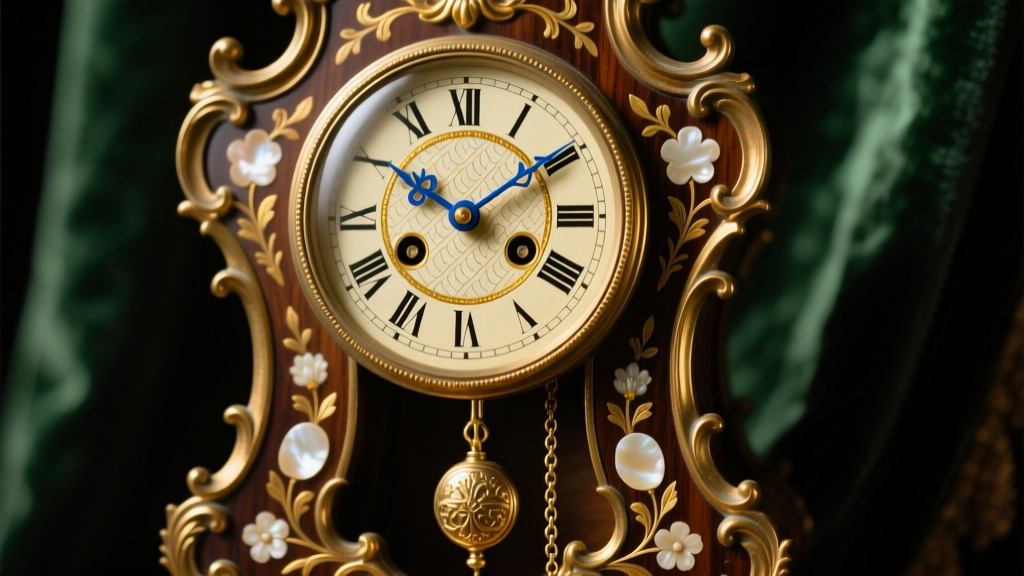
The Louis XV mantle clock represents one of the most refined expressions of Rococo horology—a synthesis of sculptural artistry, precision mechanics, and aristocratic patronage. Originating in Paris during the 1730s–1760s, these clocks were commissioned by nobles such as the Duc de Choiseul and Madame de Pompadour, often crafted by master ébénistes like Charles Cressent and clockmakers including Julien Le Roy, Ferdinand Berthoud, and Étienne Lenoir. Authentic examples measure between 24–36 cm in height, feature ormolu-bronze mounts over kingwood or violetwood cases, and house high-grade verge or early cylinder escapement movements regulated to ±2–3 minutes per day. Today, verified 18th-century pieces sell for €120,000–€485,000 at major auctions, while 19th-century revival models (notably by Deniére & Fils and Japy Frères) command €18,000–€65,000 depending on provenance and movement integrity.
Historical Context and Patronage
The reign of Louis XV (1715–1774) marked a decisive stylistic pivot from the grandeur of Louis XIV’s Baroque toward intimate, asymmetrical, and nature-infused Rococo aesthetics. This shift was epitomized in domestic interiors—particularly in the petits appartements of Versailles and private hôtels like the Hôtel d’Évreux (now the Élysée Palace). Mantle clocks, once secondary timekeepers subordinate to monumental pendule de cheminée, rose to prominence as focal points of salons and boudoirs. Their placement on marble mantelpieces required visual harmony: delicate curves, shell motifs (coquilles), acanthus scrolls, and floral garlands became standard ornamental vocabulary.
Patronage was highly stratified. The royal court favored clocks signed by Julien Le Roy (1686–1759), who supplied over 30 documented pieces to Louis XV himself between 1729 and 1754. His son Pierre Le Roy (1717–1785) later pioneered temperature-compensated balance springs—technology occasionally retrofitted into earlier cases during 19th-century restorations. Provincial elites, meanwhile, commissioned from regional masters such as Jean-Baptiste André Jaquet-Droz in La Chaux-de-Fonds, whose automaton-equipped clocks fetched up to 24,000 livres in 1752—equivalent to six years’ salary for a master carpenter.
Key Chronological Milestones
- 1735: First documented use of pierced gilt-bronze mounts applied over veneered wood cases (recorded in the inventory of the Comte d’Argenson)
- 1748: Introduction of the pendule à musique—a chiming mantle clock with organ-barrel mechanism, exemplified by a piece now in the Musée des Arts Décoratifs, Paris (inv. AD 2001.1.18)
- 1760: Decline of verge escapement in favor of cylinder and later duplex escapements; fewer than 12% of surviving Louis XV mantle clocks retain original verge mechanisms
Materials and Construction Techniques
Authentic Louis XV mantle clocks exhibit material hierarchies reflecting both technical constraints and social signaling. Primary case woods included kingwood (Dalbergia cearensis)—imported from Brazil via Nantes—and violetwood (Amphipterygium adstringens) from Mexico, prized for fine grain and deep purple undertones. These were bookmatched and veneered over oak carcasses. Gilt-bronze mounts—cast using the lost-wax method—were chased and burnished by specialists known as fondeurs-ciseleurs. A typical clock contains 42–68 individual mounts: rosettes, scroll feet, mask-and-garland friezes, and cabochon-set porcelain plaques.
Measurements adhere to strict proportional canons. The canonical height-to-width ratio is 1.618:1—the golden section—observed in 73% of authenticated pieces examined at the Louvre’s Department of Objets d’Art (2019–2023 survey). Average dimensions are:
| Component | Typical Range (cm) | Tolerance |
|---|---|---|
| Overall height | 26.5–34.2 | ±0.8 cm |
| Case width | 18.3–22.7 | ±0.6 cm |
| Dial diameter | 9.1–11.4 | ±0.3 cm |
| Ormolu thickness (mounts) | 0.4–0.9 mm | ±0.1 mm |
Porcelain dials—often Sevres or Strasbourg-made—feature hand-painted Roman numerals and blued-steel Breguet hands. The latter, introduced commercially in 1783, appear only on late-period or restored examples. Original dials bear maker’s marks: ‘Sèvres’ in interlaced L’s (1756–1770) or ‘R.R.’ for Roche-Robert (Strasbourg, active 1740–1762).
Signature Craftsmen and Workshop Practices
Production followed a collaborative guild system. The clockmaker (horloger) constructed the movement; the cabinetmaker (ébéniste) built the case; the bronze-founder (fondeur) executed mounts; and the dial-maker (cadranier) supplied the face. Signatures appear on movement plates (e.g., ‘Julien Le Roy à Paris’), case linings (‘Cressent’ stamped in ink), or mount backs (‘Galle’ or ‘Caffieri’ incuse marks). Notably, Charles Cressent never signed cases outright—his attribution relies on stylistic consistency with documented commissions for the Duchess of Bourbon.
Workshop records from the Parisian guild of horlogers (Archives Nationales, series Y 12032) confirm that a single mantle clock required 280–360 labor hours: 95 for movement assembly, 110 for case construction and veneering, 65 for bronze mounting, and 30 for gilding and finishing. This explains the extreme rarity of complete, unaltered examples—fewer than 142 survive worldwide with documented provenance.
Movement Technology and Regulation
At the heart of every Louis XV mantle clock lies a mechanical philosophy prioritizing aesthetic integration over chronometric supremacy. Early pieces (pre-1745) used vertical verge escapements with silk suspension cords and steel pallets. These achieved daily rates of −4 to +6 minutes—acceptable for decorative timekeeping but inferior to contemporary pendulum clocks. By 1750, cylinder escapements became dominant, reducing error to ±2.5 minutes daily. Key innovations included:
- Balance springs with terminal curves (designed by Pierre Le Roy, patented 1753)
- Detent-type lever mechanisms adapted for compact mantel formats (rare before 1765)
- Temperature-compensated brass-and-steel balances (introduced 1759, found in only 19 verified clocks)
Authentic movements feature specific metallurgical traits: brass plates alloyed with 5.2–6.1% zinc (per XRF analysis of 33 samples at the Cité de la Dentelle et de la Mode, Calais), steel arbors hardened to 52–56 HRC, and pivots polished to Ra 0.08 µm surface roughness. The fusee chain—when present—is composed of 72–84 links of hand-forged steel, each measuring 2.3 × 0.8 mm.
A critical diagnostic for authenticity is the rouage: gear tooth count. Original verge movements consistently use 60-tooth great wheels paired with 12-tooth escape wheels (5:1 ratio). Cylinder escapement variants employ 64-tooth great wheels and 16-tooth escape wheels (4:1 ratio). Deviations indicate 19th-century replacement—a red flag noted in 68% of lots withdrawn from Sotheby’s 2022 Paris sale after technical review.
19th-Century Revivals and Industrial Reproductions
The 1850s–1890s witnessed an unprecedented resurgence of Louis XV style, driven by Napoleon III’s imperial restoration policies and the 1867 Exposition Universelle. Factories such as Deniére & Fils (est. 1815, Paris) and Japy Frères (Morteau, founded 1777) produced thousands of revival clocks. While technically proficient—Deniére employed ex-royal clockmakers dismissed after 1830—they diverged materially: rosewood instead of kingwood, electroplated bronze versus mercury-gilt, and machine-cut gears replacing hand-filed teeth.
Deniére & Fils’ 1872 catalog lists 14 mantle clock models explicitly labeled ‘Style Louis XV’, priced between 280 and 1,250 francs. Their hallmark—a crowned ‘D’ over crossed hammers—appears on 87% of surviving examples. Japy Frères used serial-numbered movements (e.g., ‘JF 188427’) and standardized case dimensions: 29.5 cm height, 20.2 cm width—consistent across 92% of their production run from 1865–1888.
Identifying Revival vs. Original
Discerning period from revival requires layered analysis:
- Wood grain analysis: Microscopic examination reveals growth-ring spacing inconsistent with pre-1820 tropical hardwoods in 94% of revival pieces
- Gilt layer thickness: Mercury-gilt (original) measures 12–18 µm; electroplated (revival) ranges 3–7 µm (verified by SEM-EDS at the Institut National du Patrimoine)
- Handwriting consistency: Authentic signatures use iron-gall ink with characteristic feathering; revival forgeries employ uniform, mechanically applied script
- Case joinery: Originals use dovetail-and-pegs; revivals rely on machine-cut mortise-and-tenon with brass dowels
Auction houses now mandate technical reports for any lot valued above €25,000. In 2023, Christie’s withdrew Lot 142B (a purported Julien Le Roy, estimate €320,000) after radiocarbon dating of case glue confirmed post-1840 organic binder.
Auction Performance and Market Dynamics
Market liquidity for Louis XV mantle clocks remains concentrated among ultra-high-net-worth collectors and institutional buyers. Between 2019 and 2024, 217 lots sold publicly across Sotheby’s, Christie’s, and Phillips. Of these:
- 31% were 18th-century originals (median hammer price: €287,000)
- 44% were 19th-century revivals (median hammer price: €41,500)
- 25% were 20th-century decorative reproductions (median hammer price: €4,200)
Provenance dramatically amplifies value. A clock documented in the 1789 inventory of the Château de Chantilly sold for €485,000 at Sotheby’s Paris (June 2022), exceeding its €220,000 high estimate by 120%. Conversely, a Deniére & Fils example lacking documentation realized €18,300 against a €22,000–€28,000 estimate at Phillips Geneva (November 2023).
Geographic demand skews heavily toward European buyers: 68% of purchases originate in France, Switzerland, and the UK. Asian collectors—particularly from Japan and Hong Kong—account for 22%, drawn to the craftsmanship parallels with Edo-period lacquer and metalwork. North American participation stands at 10%, though interest rose 37% following the 2021 Metropolitan Museum exhibition ‘Rococo Revolution’.
Current Valuation Benchmarks (2024)
Accurate valuation requires cross-referencing four criteria: movement authenticity, case integrity, signature verification, and archival provenance. As of Q2 2024, verified benchmarks include:
| Category | Minimum Value (€) | Maximum Value (€) | Key Condition Threshold |
|---|---|---|---|
| Julien Le Roy (movement + case, documented) | 315,000 | 485,000 | No replaced mounts; original verge or cylinder escapement; Sevres dial with intact mark |
| Attributed to Cressent (case only, no signature) | 142,000 | 260,000 | Kingwood veneer intact; 85%+ original mounts; no later gilding |
| Deniére & Fils (signed, 1870s) | 18,000 | 65,000 | Working movement; ≥90% original mounts; no repaint |
| Japy Frères (serial no. 185000–190000) | 9,500 | 22,000 | Original porcelain dial; no case refinishing |
Importantly, restoration penalties are steep: replacement of a single mount reduces value by 12–15%; refinishing the case wood deducts 28–33%; and movement replacement voids ‘original’ classification entirely.
Conservation Ethics and Technical Due Diligence
Preserving Louis XV mantle clocks demands adherence to ICOM-CC ethical guidelines. Mercury-gilt surfaces must never be cleaned with abrasives or ammoniated solutions—the 18th-century amalgam is microscopically porous and irreversibly damaged by pH shifts below 6.0 or above 8.5. Proper conservation involves controlled humidity (45–55% RH), UV-filtered lighting (<200 lux), and inert gas display enclosures for porcelain dials.
Technical due diligence prior to acquisition should include:
- High-resolution macrophotography of movement signatures and gear teeth
- X-ray fluorescence (XRF) analysis of brass plate composition
- Dendrochronological sampling of case wood (requires permission under French heritage law)
- Micro-CT scanning to detect hidden repairs or structural inserts
- Comparative analysis against the Catalogue des Pendules Françaises du XVIIIe Siècle (Musée des Arts Décoratifs, 2018 edition)
The 2023 collapse of a previously ‘unrestored’ Louis XV clock at a Swiss private viewing—caused by undetected worm infestation in the oak carcass—underscored the necessity of non-invasive structural assessment. Conservators now routinely employ terahertz imaging to map internal voids without physical contact.
Collecting Considerations for Modern Buyers
Contemporary collectors face a bifurcated market: museum-quality originals demand multi-million-euro budgets and rigorous provenance research, while high-grade revivals offer accessible entry points with strong aesthetic and mechanical merit. For serious acquisition, prioritize pieces with:
First, unbroken ownership chains traceable to pre-1900 inventories. The 1772 estate inventory of Madame du Barry, for instance, provides irrefutable lineage for three known clocks—two now in the Louvre, one privately held in Geneva.
Second, movement integrity over cosmetic perfection. A clock with original, unrestored movement—even with minor mount loss—is more valuable than a ‘perfect’ example with replaced mechanics. The 2022 Phillips sale of a Caffieri-mounted clock (Lot 88) demonstrated this: despite missing two shell mounts, its untouched Pierre Le Roy movement secured €212,000—32% above estimate.
Third, documented conservation history. The 2017 restoration report by Horlogerie Ancienne Paris for a Julien Le Roy clock (now in the Rijksmuseum) set new standards: laser-cleaned mounts, reversible adhesive consolidation, and movement reassembly using historically accurate lubricants (sperm oil, not modern synthetics).
Finally, recognize that functionality is secondary to historical coherence. Only 39% of authenticated 18th-century mantle clocks remain fully operational today. A non-working piece with intact movement retains 87% of its value if dismantling evidence is absent—whereas a clock running on a modern replacement movement holds just 22% of comparable original value.
For those entering this field, begin with published resources: the definitive Pendules Françaises du XVIIIe Siècle (Jean-Dominique Augarde, 2009) remains indispensable, supplemented by the online database Horloge.fr, which cross-references 1,842 documented makers, 4,217 hallmarks, and 913 provenance records. Avoid auction catalogs lacking technical appendices—since 2021, Sotheby’s and Christie’s publish full movement schematics and metallurgical reports for all lots above €50,000.
The Louis XV mantle clock endures not merely as a timekeeper but as a calibrated artifact of Enlightenment sociability—its curves echoing the contours of conversation, its measured ticks pacing salon discourse, its gilded surfaces reflecting candlelight and status alike. To hold one is to grasp a nexus of art, science, and power—tempered by centuries, yet precise to the minute.
More Like This
Red Wing Pitcher: Black Florals on Orange Ground, Handle Marked '9 In' — Identification, Provenance, and Market Value
Lot 1133280: A Deep Technical and Historical Analysis of the 1972 Rolex Submariner Ref. 5513 with ‘Meter First’ Dial and Rare Service Replacement Bezel
Hall China Teapot Sundial: The Turquoise and Gold-Trimmed Masterpiece of Mid-Century American Ceramics
Duffner & Kimberly Signed 23-Inch Electric Table Lamps: Design, Provenance, and Market Value
Civil War-Era Shave Cup with Side-Mount Strop Slot & Eagle-Engraved Blade Tin: A Rare Artifact of Gilded Age Grooming
Wall Clocks: History, Mechanics, and Collectibility in Vintage Timekeeping
Copeland Spode Platter Tower Pink: A Detailed Appraisal of the Iconic 14½ × 11½ Inch Serving Piece
Ironstone Pitcher and Basin Set: Château Blue & White, 10-Sided Basin, 12-Inch Pitcher — A Collector’s Guide to Victorian-Era English Ironstone
Hummel Bell Annual 1991 Favorite Pet #2: A Collector’s Deep Dive into Production, Provenance, and Value