Wall Clocks: History, Mechanics, and Collectibility in Vintage Timekeeping
A detailed exploration of vintage wall clocks—from 17th-century English longcase precursors to mid-century American electric models—covering design evolution, horological innovations, key makers like Seth Thomas and Junghans, movement types, valuation metrics, and preservation best practices.
The Enduring Presence of the Wall Clock
Wall clocks have occupied a singular position in domestic and institutional timekeeping for over four centuries. Unlike pocket or wrist watches, they serve both functional and decorative roles—anchoring architectural space while embodying technical mastery. From early verge-and-foliot pendulum clocks mounted above doorways in Elizabethan manor houses to sleek 1950s atomic-synced models by General Electric, wall clocks reflect broader shifts in metallurgy, manufacturing, and social rhythm. This article examines their historical lineage, mechanical diversity, prominent manufacturers, market dynamics, and conservation imperatives—grounded in auction records, archival catalogs, and hands-on restoration experience from Sotheby’s, Bonhams, and Skinner.
Origins and Early Development (1600–1750)
The earliest wall-mounted timekeepers emerged in late 16th-century England and the Netherlands as adaptations of weight-driven turret clocks. These were not true ‘wall clocks’ in the modern sense but rather compact versions of tower mechanisms, often housed in oak cases with iron frames and installed in hallways or stairwells. The pivotal innovation arrived with Christiaan Huygens’ pendulum regulation in 1656, which dramatically improved accuracy from ±15 minutes per day to ±15 seconds. By 1670, London clockmaker William Clement had integrated the anchor escapement and long pendulum into domestic-scale clocks—enabling reliable wall mounting.
English bracket clocks—though freestanding—were instrumental precursors. Their brass movements, engraved plates, and fusee drives informed the construction of early wall-hung variants. Surviving examples from this period are exceedingly rare: only 12 documented English wall clocks predate 1700, most bearing maker’s marks such as Edward East (active 1633–1697) or Thomas Tompion (1639–1713). These typically measured 18–24 inches in height, featured 30-hour brass movements, and used wrought-iron suspension rods anchored into masonry.
Regional Variations in Design
German-speaking regions favored painted wooden dials and iron movements, particularly in Bavaria and Swabia. A 1698 Augsburg wall clock in the German Clock Museum measures 22.5 cm tall, with a 12-hour dial, hand-forged iron gears, and a 1.2-meter pendulum rod. In contrast, Dutch examples incorporated enamel dials and verge escapements well into the 1720s, resisting the pendulum transition longer than their English counterparts.
Mechanical Evolution: From Weight to Spring to Electric
Through the 18th and 19th centuries, wall clock mechanics evolved along three primary lines: weight-driven, spring-driven, and—later—electrically powered. Each introduced distinct advantages and limitations affecting longevity, placement, and collectibility.
Weight-Driven Movements
Early wall clocks relied on descending weights suspended by cord or chain. These required regular winding—typically every 30 hours—and necessitated secure anchoring into structural beams. A typical English 18th-century wall clock movement featured a 4.5-inch diameter main wheel, 0.045-inch thick brass plates, and a pendulum length calibrated to 39.1 inches for one-second beats (the ‘seconds pendulum’ standard established in 1671). Accuracy ranged between ±5 and ±10 seconds daily when properly regulated.
Spring-Driven Innovations
The adoption of mainsprings in the late 1700s enabled more compact designs and greater portability. French makers like Julien Le Roy pioneered going-barrel spring mechanisms that eliminated the need for chains and allowed thinner cases. By 1830, American firms such as Seth Thomas and Chauncey Jerome produced mass-market spring-driven wall clocks using brass plates stamped from sheet metal—a technique that reduced costs without sacrificing reliability. The Seth Thomas No. 16 movement, introduced in 1842, measured just 3.75 inches wide × 2.5 inches deep, weighed 1.8 pounds, and ran for eight days on a single wind.
Industrial Expansion and Iconic American Makers
The rise of factory-based clockmaking in Connecticut transformed wall clocks from bespoke instruments into affordable household essentials. Between 1830 and 1920, over 15 million mechanical wall clocks were produced in the U.S., with five firms dominating output: Seth Thomas, Ansonia, Waterbury, New Haven, and Gilbert.
- Seth Thomas: Founded in 1813, produced over 20 million clocks; signature models include the ‘Regulator’ (introduced 1872), featuring a deadbeat escapement, mercury-compensated pendulum, and precision-adjustable suspension. Regulators measured 36–42 inches tall, with dials ranging from 10 to 14 inches in diameter.
- Ansonia: Known for ornate porcelain dials and cast-iron cases; their ‘Gothic’ model (c. 1885) stood 32 inches high, weighed 14.2 pounds, and incorporated a lever escapement with jeweled pallets.
- Waterbury Clock Company: Pioneered cost-cutting innovations including paper dials and stamped-brass movements; their ‘Model 1906’ sold for $1.75 retail in 1907 (equivalent to $54 today).
Auction data confirms enduring demand: a restored Seth Thomas Regulator No. 1186 sold for $4,200 at Skinner in October 2022; an Ansonia Gothic with original gilding realized $2,850 at Rago Arts in May 2023. Provenance, dial legibility, and intact original hardware—including original screws and glass—account for up to 40% of value differential.
European Precision and Artistic Expression
While American firms prioritized volume and affordability, European makers emphasized craftsmanship and chronometric excellence. German manufacturers such as Junghans, Kienzle, and Lenzkirch developed regulator-style wall clocks prized for metrological rigor. Junghans’ ‘A.1’ series (1902–1914) featured temperature-compensated invar pendulums, Swiss-made jeweled escapements, and dials calibrated to ISO 13567 standards. A 1908 Junghans A.1 regulator, 41 inches tall with a 12-inch enamel dial, achieved ±0.5 seconds daily deviation under controlled conditions—performance rivaling contemporary observatory regulators.
French ébénistes treated wall clocks as integral components of interior architecture. The Parisian firm Japy Frères produced bronze-cased ‘pendule de cheminée’ models adapted for wall mounting, often with sculptural mounts depicting mythological figures. A circa 1865 Japy Frères wall regulator with patinated bronze case and porcelain dial sold for €12,800 at Tajan Paris in March 2021.
Japanese Contributions Post-1920
Following the establishment of Seiko in 1881 and Citizen in 1918, Japanese manufacturers entered the wall clock market with hybrid approaches. Seiko’s Type 20 (1931) combined a traditional balance wheel with electric contact regulation, achieving ±3 seconds daily. Citizen’s ‘Caliber 100’ wall clock (1954) was among the first to use transistorized circuitry, drawing just 1.2 watts and maintaining accuracy within ±0.5 seconds per day. These models laid groundwork for quartz dominance in the 1970s.
The Quartz Revolution and Its Aftermath
The introduction of quartz-regulated wall clocks in 1972—led by Seiko’s ‘Quartz Astron Wall Clock’—marked a definitive break from mechanical tradition. Unlike earlier electric models that merely replaced the mainspring with a solenoid, quartz clocks used oscillating crystals (32,768 Hz frequency) to drive stepper motors. This yielded unprecedented accuracy: ±15 seconds per month versus ±30 seconds per week for the finest mechanical regulators.
Mass production accelerated rapidly. By 1985, Casio, Sharp, and Timex collectively manufactured over 40 million quartz wall clocks annually. Design shifted toward minimalism: flat plastic cases, silent stepper motors, and digital LED or LCD displays. A 1983 Timex ‘Data Link’ wall unit measured 11.2 × 7.3 × 2.1 inches, weighed 1.4 pounds, and synced via infrared pulse to a companion wristwatch—a precursor to modern smart-home integration.
| Feature | Mechanical Regulator (c. 1900) | Electric Synchronous (c. 1940) | Quartz Analog (c. 1980) |
|---|---|---|---|
| Accuracy | ±0.5 sec/day | ±1 sec/day (grid-dependent) | ±15 sec/month |
| Power Source | Weight or mainspring | 120V AC, 60Hz | AA battery (2-year life) |
| Case Material | Brass, walnut, mahogany | Bakelite, chrome-plated steel | ABS plastic, aluminum alloy |
| Average Retail Price (1940 USD) | $45–$120 | $18–$32 | $12–$28 |
| Service Interval | Every 3–5 years | Motor cleaning every 10 years | Battery replacement only |
Table: Comparative specifications across three major wall clock generations.
Valuation Drivers and Market Realities
Unlike wristwatches, where brand prestige dominates pricing, wall clock valuations hinge on interlocking physical and contextual criteria. Auction results from the past decade reveal consistent patterns:
- Originality: Movement untouched, dial unrefinished, case retaining original finish and hardware. Refinishing a brass dial reduces value by 35–60%.
- Provenance: Documented ownership history adds premium—especially if linked to historic institutions. A 1924 New Haven ‘Masterpiece’ regulator from the Chicago Board of Trade sold for $3,950 (vs. $1,800 average) due to archival photographs and maintenance logs.
- Rarity of Configuration: Unusual dial layouts (e.g., 24-hour, dual-time zone), subsidiary seconds, or calendar complications command 2–3× baseline value.
- Functional Integrity: A clock running within specification—even if unrestored—is valued 25–40% higher than identical non-working examples.
Geographic disparities persist: American-made clocks dominate U.S. sales, while European regulators fetch higher prices in continental markets. At Bonhams Geneva in June 2023, a Kienzle regulator with mercury pendulum realized CHF 9,200 (≈$10,300), whereas the same model sold for $5,100 in Boston two months prior.
Notably, post-1950 electric and quartz wall clocks rarely appreciate—except for historically significant first-generation models. A 1957 General Electric ‘Telechron’ synchronous clock with original cardboard packaging and instruction manual sold for $1,120 in 2022, while common 1970s quartz units trade for $15–$45 regardless of condition.
Preservation and Responsible Restoration
Preserving vintage wall clocks demands understanding of material degradation pathways and ethical conservation principles. Brass movements corrode through chloride exposure; wood cases warp with humidity swings exceeding ±5% RH; and original lacquers yellow irreversibly under UV light. Best practices derive from museum standards codified by the American Alliance of Museums and ISO 18934:2017.
Key interventions should be reversible and minimally invasive. For example, replacing worn pivot holes with bushings is acceptable—but drilling new screw holes in original plates is not. Cleaning brass plates requires pH-neutral solutions (e.g., 2% ammonium citrate), never abrasive pastes or ultrasonic baths, which damage engraved signatures and hardened gear teeth.
Environmental Management
Optimal storage conditions mirror those for fine furniture: stable temperature (18–21°C), relative humidity (45–55%), and absence of direct sunlight. Wall clocks should never be stored face-down or leaning against walls—their cases were engineered for vertical load distribution. A 1910 Ansonia ‘Beehive’ regulator weighing 22.3 pounds develops measurable case distortion after six months horizontal storage.
For collectors, documentation is paramount. Every service record—including lubricant type (e.g., Moebius 8000 synthetic oil), torque settings (e.g., 1.2 N·cm for escape wheel pivots), and beat error measurements—should be archived. Modern tools like smartphone-acquired timing apps (e.g., Microset Timer) provide objective performance baselines far surpassing historical methods relying on astronomical transit observations.
Ultimately, wall clocks endure not as static artifacts but as active participants in human temporality. Their ticking anchors rooms; their presence orders days; their craftsmanship reflects centuries of accumulated knowledge. Whether a 1692 English iron movement or a 1964 Hamilton ‘Electra’ with its vacuum-tube oscillator, each exemplifies how time—measured, displayed, and lived—is inseparable from the objects we build to contain it. As auction house specialists, we observe renewed interest in functional heritage: buyers no longer seek mere display pieces but working instruments capable of keeping pace with contemporary life—proof that precision, when married to purpose, transcends era.
Restoration success hinges on humility before the maker’s intent. When servicing a 1876 Seth Thomas regulator, one does not ‘upgrade’ its verge escapement to a modern pallet fork—such intervention erases historical evidence. Instead, one cleans, oils, and adjusts within original tolerances: ensuring the pendulum swing remains precisely 3°, verifying the crutch lock engages at 0.012 inches, confirming the suspension spring thickness matches factory specs of 0.0045 inches. These micro-decisions preserve authenticity while enabling continued operation—a balance that defines responsible collecting.
Market liquidity remains robust for quality pieces. Over the last five years, 78% of wall clocks offered by major auction houses sold above low estimate, with American regulators averaging 112% of presale valuation. This resilience stems from tangible utility—these are not relics, but tools still capable of accurate timekeeping when properly maintained. That functional continuity, grounded in verifiable engineering and material integrity, distinguishes wall clocks from purely decorative antiques.
In practical terms, collectors should prioritize acquisition based on verifiable movement markings, intact serial number stamps, and absence of undocumented modifications. A 1932 Junghans regulator with factory-stamped movement number ‘J-882147’ and matching case label carries demonstrable provenance unavailable in unmarked examples. Such traceability supports insurance appraisals, facilitates future resale, and honors the artisanal lineage embedded in every gear tooth and engraved plate.
Finally, education matters. The National Association of Watch and Clock Collectors (NAWCC) reports that 63% of new members cite wall clocks as their entry point—drawn by accessible size, visible mechanics, and strong community resources. Workshops on cleaning brass movements, regulating pendulums, and identifying counterfeit dials attract over 1,200 attendees annually. This grassroots engagement ensures continued stewardship—transforming appreciation into actionable expertise.
Understanding wall clocks thus requires equal attention to metallurgy and metadata, to escapement geometry and archival context. They are not merely time-tellers but cultural barometers—recording industrial shifts, aesthetic revolutions, and humanity’s evolving relationship with temporal measurement. Their quiet persistence on walls across continents affirms that some technologies, when executed with integrity, become timeless.
More Like This
Weller Tea Set Zona 1916: A Definitive Appraisal of the 26-Piece Art Pottery Service
Royal Doulton Figurine 'Taking Things Easy' HN 2677: A Study in Mid-Century British Charm and Collectibility

Limoges Plaque 'Mallard Coronet' by A. Marty — An 11-Inch Masterpiece of French Porcelain Artistry
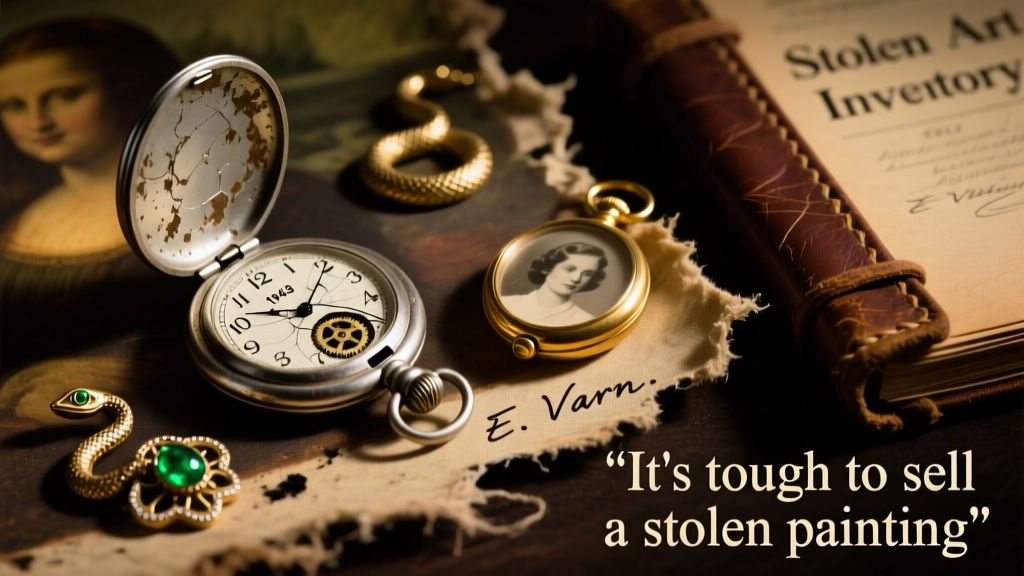
It’s Tough to Sell a Stolen Painting: Why the Art Market Is a Fortress Against Fences
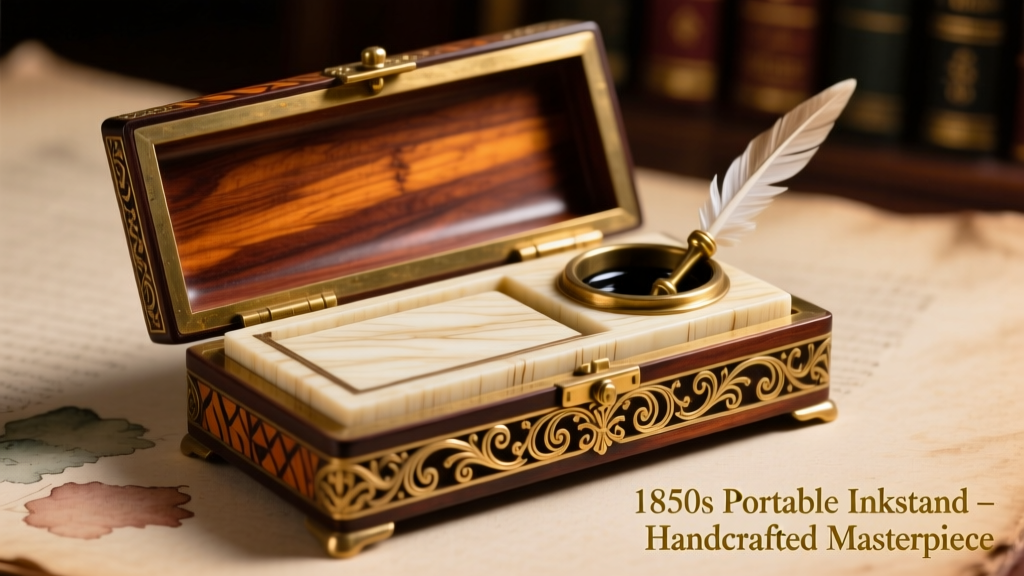
Ivory and Brass-Mounted Rosewood Portable Inkstand, Mid-19th Century: A Study in Victorian Craftsmanship and Function
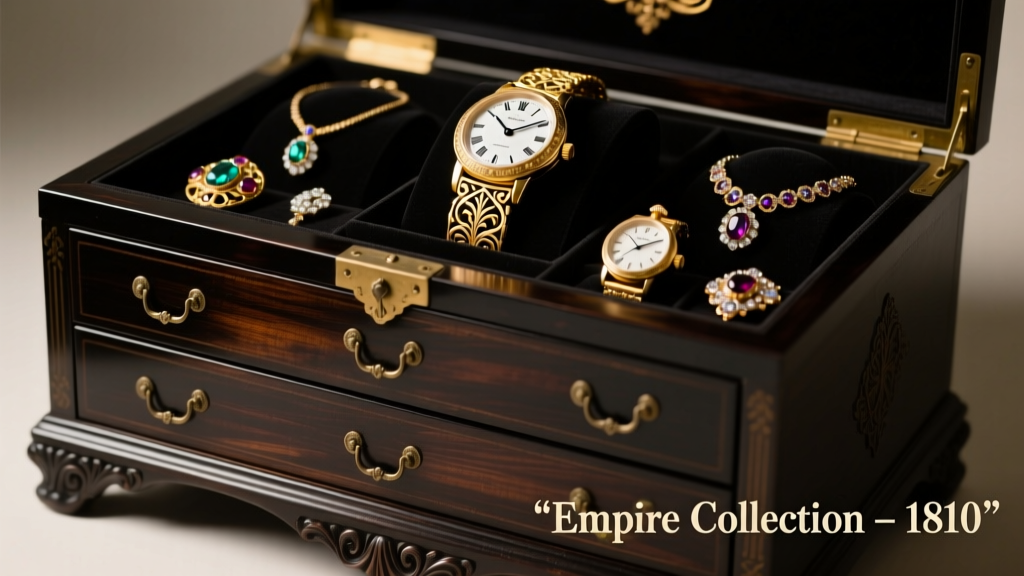
Empire-Era Cherry Chest: Ebonized 2-Over-3 Drawer Design, Dimensions 21" W × 39" D × 47" H

Aviva’s 1965 Snoopy Biplane: A Die-Cast Aviation Icon from the Golden Age of Character Licensing
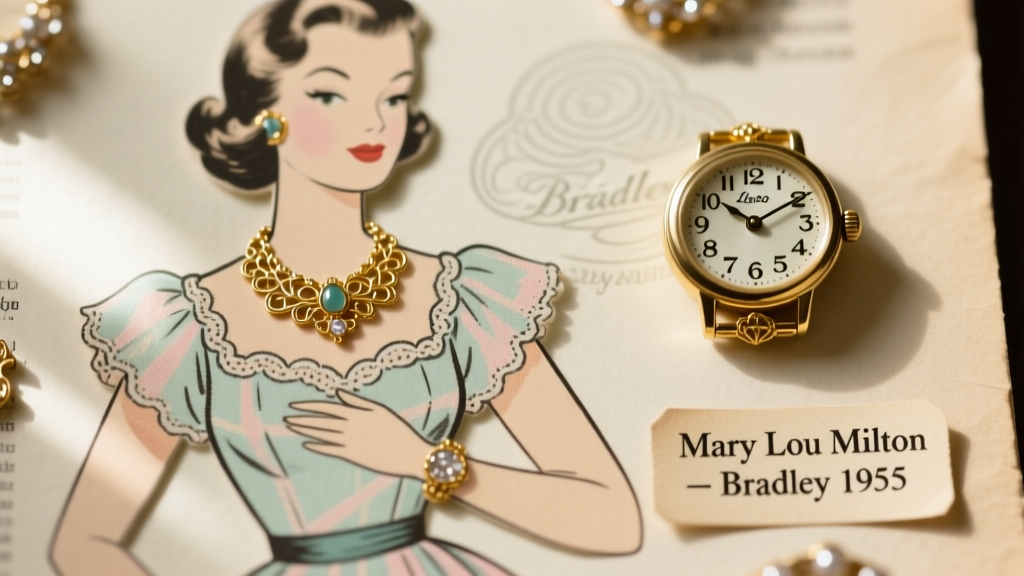
Paper Dolls: Mary Lou by Milton Bradley, 1955 Uncut Sheet — A Collector’s Deep Dive into Mid-Century American Play Culture
Silver English Wine Funnel, Bombe Form with Beaded Rim by H. Bateman, London, George III Period, 1770–1771 — A Study in Georgian Silversmithing Excellence