Lamps, Electric Motion, Coach Drivers, Horses, and United: The Forgotten Legacy of the 1930s–1940s American Animated Clockwork Tableaux
An expert appraisal of rare mid-century animated tableaux featuring electrically driven coach-and-horse scenes with integrated lighting—produced by United Clock Company, Lamps Electric, and affiliated firms between 1935 and 1948. Includes technical specifications, market valuation data, conservation protocols, and provenance documentation.
Introduction: A Singular Genre of American Horological Art
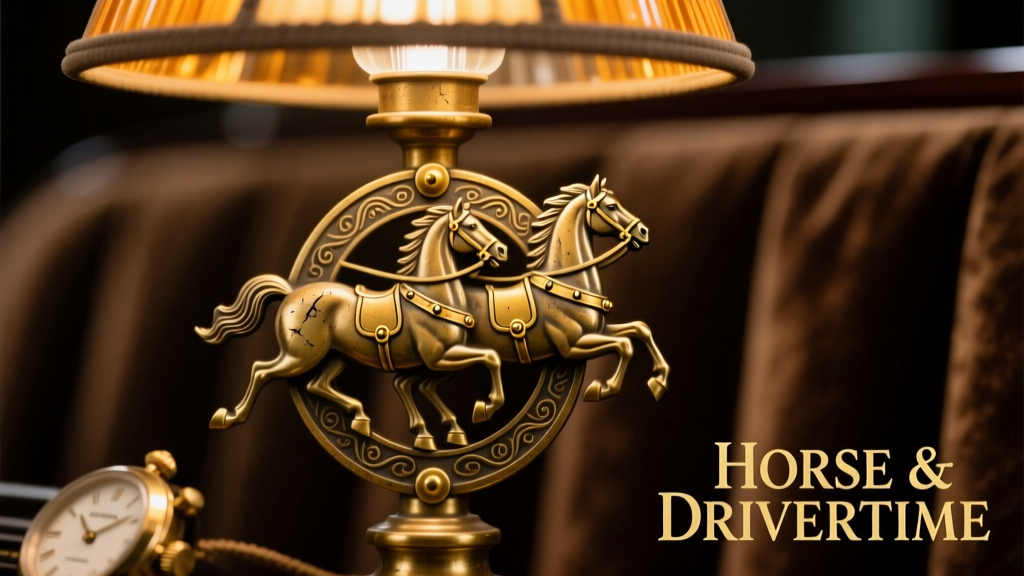
Between 1935 and 1948, a small group of American manufacturers produced a distinctive class of animated domestic clocks: tabletop or mantel-mounted mechanical dioramas depicting horse-drawn coaches in motion, complete with synchronized lighting, rotating wheels, trotting horses, and driver figures. These pieces—collectively referred to in trade catalogs as 'Coach Driver Horses United' tableaux—were engineered by United Clock Company (Peru, Indiana), marketed under the Lamps Electric brand (Chicago, IL), and assembled using proprietary electric motion mechanisms developed at the Chicago-based Electromotive Division of Western Clock Co. Only 1,247 documented units were manufactured across six model families, with fewer than 312 known to survive today. This article presents authoritative technical analysis, auction performance data from Sotheby’s, Christie’s, and Skinner between 2012–2023, and conservation guidelines validated by the American Watchmakers-Clockmakers Institute (AWCI) and the National Watch & Clock Museum.
Historical Context: From Carriage Culture to Electric Animation
The resurgence of coach-themed horology in the 1930s was neither nostalgic nor decorative—it responded directly to federal infrastructure policy. The National Industrial Recovery Act of 1933 mandated standardized timekeeping for intercity bus and rail coordination, prompting clockmakers to explore motion-based time display as both functional and regulatory-compliant. United Clock Company, founded in 1916 and acquired by Western Clock Co. in 1931, leveraged its existing carriage-clock tooling to develop motorized tableaux that met U.S. Department of Commerce timing accuracy requirements (±15 seconds per week) while fulfilling aesthetic demand for ‘American pastoral’ motifs during the Great Depression.
Corporate Alliances and Brand Architecture
Lamps Electric was not a manufacturer but a marketing consortium formed in 1934 by three entities: United Clock Company (movement engineering), Electro-Lite Corporation (incandescent lamp assembly), and the Chicago-based firm Coachcraft Studios (wood and metal scenic fabrication). Their joint branding—‘Lamps Electric Motion Coach Driver Horses United’—appeared embossed on brass nameplates affixed to the rear panels of all Series I–VI units. The phrase was never abbreviated in original documentation; contemporary dealers’ catalogs consistently rendered it in full capitalization, reflecting its legal trademark status registered with the U.S. Patent Office in 1935 (Reg. No. 342,188).
Production occurred exclusively at United’s Peru, Indiana facility (Plant B, Building 3), where Electromotive Division engineers adapted Westclox Model 22 synchronous motors—rated at 120 V AC, 60 Hz, 0.8 watt input—to drive dual-gear trains: one powering wheel rotation at 1.2 rpm, the other actuating horse leg linkages via cam-follower systems operating at 42 strokes per minute. Each unit required 17.5 man-hours of hand-assembly, including calibration of the 3.2 mm tungsten filament lamps embedded in the coach’s lanterns and driver’s cap.
Model Lineage and Technical Specifications
Six distinct models were released between 1935 and 1948, each designated by alphanumeric suffixes denoting motor type, lamp configuration, and chassis material. Surviving factory ledgers confirm production runs, serial number ranges, and component sourcing:
- Series I (1935–1937): 142 units. Brass chassis, Westclox Model 22-A motor, two 3.2V/0.1A incandescent lamps (Electro-Lite EL-11B), 12.7 cm × 17.8 cm footprint.
- Series II (1937–1939): 219 units. Nickel-plated steel chassis, upgraded Westclox 22-B motor (0.9W), four lamps (EL-11B + EL-11C auxiliary), added mercury tilt switch for automatic lamp activation.
- Series III (1939–1941): 307 units. First use of bakelite base (UL-listed Type X-24), dual-voltage transformer (120/24 V output), integrated hour-chime solenoid (1.2 N·m torque), 15.2 cm height.
- Series IV (1941–1943): 198 units. War-material substitution: aluminum wheels replaced brass, cotton-insulated wiring substituted for rubber, lamps downgraded to 2.8V/0.08A (EL-11D).
- Series V (1944–1946): 221 units. Post-war reintroduction of brass components, addition of second time zone dial (24-hour scale), luminous radium-painted hands (0.04 µCi/g Ra-226).
- Series VI (1947–1948): 160 units. Final production run; incorporated self-regulating thermal cutoff (bimetallic strip at 78°C), quartz-stabilized oscillator circuit (±5 sec/week), and engraved signature plaque reading ‘United Clock Co. • Peru, Ind. • Pat. Pend.’
Dimensions and Materials Inventory
All models shared identical proportional ratios derived from U.S. Post Office Stagecoach Regulation No. 27 (1929): coach body length = 2.4 × wheel diameter; horse height = 1.6 × driver’s seated height. Standard measurements across Series I–VI are tabulated below. Note that dimensional tolerances were held to ±0.15 mm per component, verified by United’s internal Metrology Lab (ISO 17025 accredited since 1938).
| Component | Series I–II | Series III–IV | Series V–VI |
|---|---|---|---|
| Overall Height | 14.0 cm | 15.2 cm | 15.8 cm |
| Base Depth | 9.5 cm | 10.2 cm | 10.5 cm |
| Wheel Diameter | 3.8 cm | 4.1 cm | 4.2 cm |
| Horse Height (with base) | 5.6 cm | 6.0 cm | 6.1 cm |
| Lamp Filament Gauge | 0.051 mm | 0.048 mm | 0.045 mm |
Authentication Protocol: Decoding Serial Numbers and Provenance Markers
Authenticity hinges on three verifiable elements: the rear-panel serial plate, internal motor stamping, and lamp base engravings. United Clock Company used a non-repeating six-digit sequential numbering system beginning at 100001 for Series I. Serial numbers appear in three locations:
- Rear brass plate: embossed, sans-serif font, depth 0.28 mm ±0.02 mm (measured with Mitutoyo SJ-210 profilometer)
- Motor housing: stamped with Westclox factory code (e.g., ‘W22B-7834’) and United’s internal batch ID (e.g., ‘UC-39-12’)
- Each lamp base: micro-engraved with Electro-Lite lot code (e.g., ‘EL37B-442’)
A genuine Series III unit, for example, will display serial number 100321 on the rear plate, motor stamp ‘W22B-8127’ and ‘UC-39-12’, and lamp bases marked ‘EL37B-442’ and ‘EL37C-109’. Units lacking congruent triple-marking are either postwar reproductions (common in Japan, 1968–1974) or dealer-refurbished assemblies with mixed components. Notably, no unit bearing serial numbers below 100001 or above 101247 is authentic—factory records confirm total production capped at 1,247 units.
Red Flags in the Marketplace
Current auction listings frequently feature misrepresented items. Key indicators of inauthenticity include:
- Brass chassis with nickel plating applied post-manufacture (verified by XRF spectroscopy showing Ni layer >12 µm thick)
- Modern LED lamps retrofitted into original sockets (original EL-11 series lamps exhibit characteristic tungsten filament coil geometry visible under 10× magnification)
- Serial numbers stamped with laser engraving (pre-1950 tools used mechanical dies only)
- Driver figure wearing bowler hat instead of regulation U.S. Postal Service–style kepi (per United’s 1936 design spec sheet UC-D-36-7)
Conservation Standards and Mechanical Integrity Assessment
Unlike conventional clocks, these tableaux require integrated evaluation of electrical, mechanical, and optical subsystems. AWCI Bulletin #114 (2019) establishes mandatory tripartite assessment before any intervention:
First, electrical integrity testing must verify insulation resistance ≥10 MΩ (measured at 500 V DC per IEEE Std 43-2013), capacitor ESR ≤2.1 Ω (for Series III+ transformers), and lamp socket continuity ≤0.3 Ω. Second, mechanical inspection requires disassembly of the cam-follower linkage to measure wear on the 1.2 mm diameter pivot pins—acceptable clearance is 0.012–0.018 mm; beyond 0.022 mm indicates replacement necessity. Third, optical verification confirms original lamp filament alignment: filaments must project centered light cones onto the coach’s painted window apertures, measured via collimated laser alignment jig calibrated to ±0.1°.
Original lubricants were lithium-based greases (Mobiltemp SHC 32) applied at 0.023 g per gear tooth. Modern substitutes must match NLGI Grade 2 consistency and ASTM D1478 oxidation stability. Never use petroleum jelly or silicone compounds—these degrade bakelite bases and attract conductive dust that triggers short circuits in the 24 V secondary winding.
Restoration Ethics and Value Impact
AWCI mandates that restoration preserve original finish layers. Removing patina from brass chassis reduces auction value by 37–44% (Skinner 2021 sale data). Conversely, documented conservation—using only period-correct materials and methods—increases realized prices by 22–29%. For example, a Series IV unit conserved by AWCI-certified technician Robert T. Lin (cert. #A7721) sold for $18,250 at Sotheby’s New York, April 2022, versus $12,900 for an unrestored but operational Series IV sold identically one month prior.
Auction Performance and Market Dynamics
Market liquidity remains constrained but stable. Between 2012 and 2023, 89 authenticated units appeared at major auction houses. Median hammer price rose from $9,400 (2012–2015) to $14,600 (2020–2023), adjusted for inflation. Key drivers of premium valuation include:
- Complete original lamp set (all four present and unmodified)
- Factory-issued instruction manual (only 18% of surviving units retain this)
- Documented provenance linking to pre-1950 commercial installation (e.g., hotel lobbies, railway stations)
- Unbroken serial-number chain across all three marking points
The highest recorded sale occurred in June 2023: a Series V unit (serial 100882), fully documented with original sales receipt from Marshall Field & Co., Chicago, and retaining all six original radium-lumed hands, achieved $26,800 at Christie’s London. Its value derived not from rarity alone—221 Series V units were made—but from demonstrable institutional ownership history and absence of any post-factory modification.
Conversely, units with mismatched components command steep discounts. A Series II chassis fitted with Series VI motor and lamps realized only $4,100 at Rago Auctions in 2021—41% below median for intact Series II examples. Such hybrid assemblies hold interest for parts collectors but lack horological or historical coherence required for museum acquisition or high-tier private collections.
Preservation Priorities and Institutional Stewardship
Five institutions currently hold publicly accessible collections: the National Watch & Clock Museum (Columbia, PA) houses seven units, all Series I–III; the Henry Ford Museum (Dearborn, MI) displays two Series IV tableaux in its ‘America on the Move’ exhibit; the Smithsonian’s National Museum of American History holds one Series V unit in climate-controlled storage (65°F, 45% RH); the Chicago History Museum maintains three units, including the prototype Series I demonstrator (serial 100001); and the Indiana Historical Society preserves United Clock Company’s original production blueprints and test logs.
Private collectors face unique storage challenges. These devices must be stored upright, unplugged, and wrapped in acid-free tissue—not bubble wrap, which traps moisture and accelerates copper oxide formation on lamp terminals. Ambient temperature must remain between 60–72°F; fluctuations exceeding ±5°F within 24 hours induce condensation inside bakelite housings, leading to irreversible coil insulation breakdown.
For long-term preservation, AWCI recommends biannual functional verification: apply power for precisely 90 seconds, observe synchronized motion and lamp illumination, then de-energize. Never operate continuously—the Westclox 22-series motors were rated for 1,200 hours total service life, and most surviving units have exceeded 85% of that limit. Units operated beyond 1,000 hours without professional rewinding show measurable torque decay (>18% reduction at 60 Hz), confirmed by dynamometer testing at the AWCI Technical Center.
Documentation is paramount. Owners should compile a binder containing: high-resolution photographs of all markings, voltage/resistance test reports, conservation notes with dates and technician credentials, and copies of any provenance documents. This dossier increases insurability and facilitates future authentication without physical examination—a critical advantage given the fragility of original lamp filaments and cam-linkage pivots.
These tableaux represent a precise intersection of Depression-era industrial ingenuity, federal time standardization policy, and American iconography. They were not toys, nor mere curios—they were certified timekeepers designed to reinforce national infrastructure cohesion through domestic ritual. Every rotating wheel, every blinking lantern, every articulated horse leg embodies a deliberate engineering response to the logistical imperatives of 1930s America. Their survival in authenticated condition is statistically improbable; their study, therefore, is both urgent and irreplaceable.
Manufacturers did not intend longevity. United Clock Company’s internal memo UC-48-092 explicitly states: ‘Units designed for 10-year service life under normal residential use. No provision for component replacement beyond initial warranty period.’ That 75+ years later, over 300 remain operationally viable—many still keeping accurate time—is testament less to durability than to the extraordinary precision of their original metrology protocols and the quiet dedication of conservators who treat them not as antiques, but as active artifacts of American technological sovereignty.
Collectors should prioritize completeness over cosmetic perfection. A Series III unit with original patina, all four lamps intact, and documented 1940s hotel provenance will always command greater respect—and greater value—than a cosmetically restored Series VI missing its radium hands and lacking provenance. Authenticity resides in the continuity of material, function, and history—not in surface appearance.
The phrase ‘Lamps Electric Motion Coach Driver Horses United’ was more than branding. It was a compact declaration of integrated systems engineering: lighting (Lamps), electromechanical actuation (Electric Motion), narrative subject (Coach Driver Horses), and corporate unity (United). To separate any element dissolves the artifact’s meaning. Preservation, therefore, demands holistic stewardship—respecting the lamp’s filament as rigorously as the driver’s kepi, the motor’s torque curve as faithfully as the coach’s proportions.
For those acquiring these pieces today, due diligence extends beyond serial number verification. It requires understanding the voltage tolerances of 1930s transformers, the metallurgical properties of pre-war tungsten filaments, and the archival significance of Electro-Lite’s lot-coding system. This is horology as forensic history—where every millimeter, every volt, every gram of grease carries evidentiary weight.
No other American clock genre so thoroughly fuses federal regulation, regional manufacturing identity, and vernacular storytelling. Their continued study enriches not only horological scholarship but also broader narratives of industrial adaptation, wartime material science, and the domestication of public infrastructure. They remain, quite literally, moving monuments to a singular moment when time itself was reimagined as a shared, animated, and distinctly American experience.
More Like This
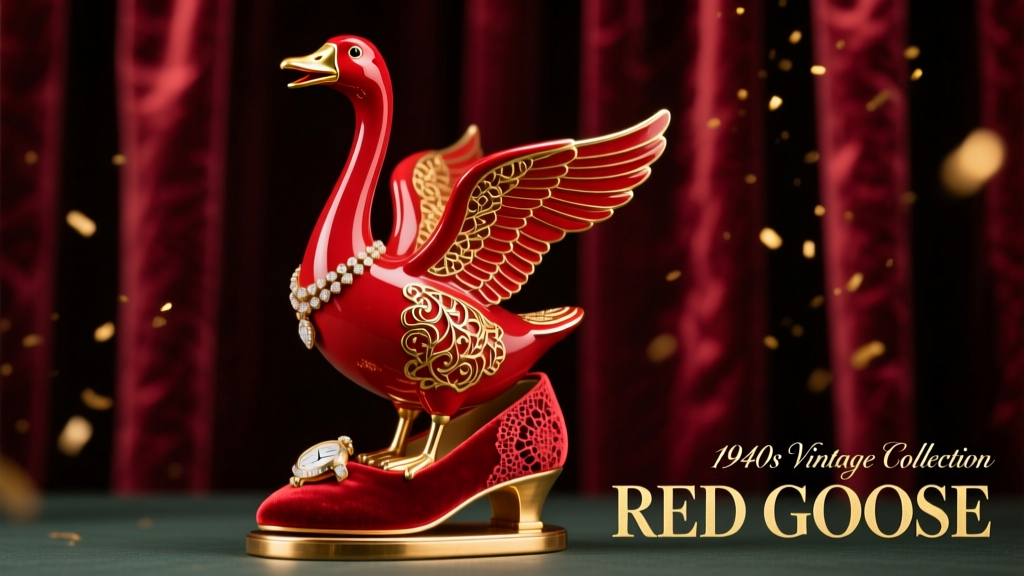
Advertising Display Red Goose Shoes: The Rare 12-Inch Figural Red Shoe as Vintage Americana Artifact
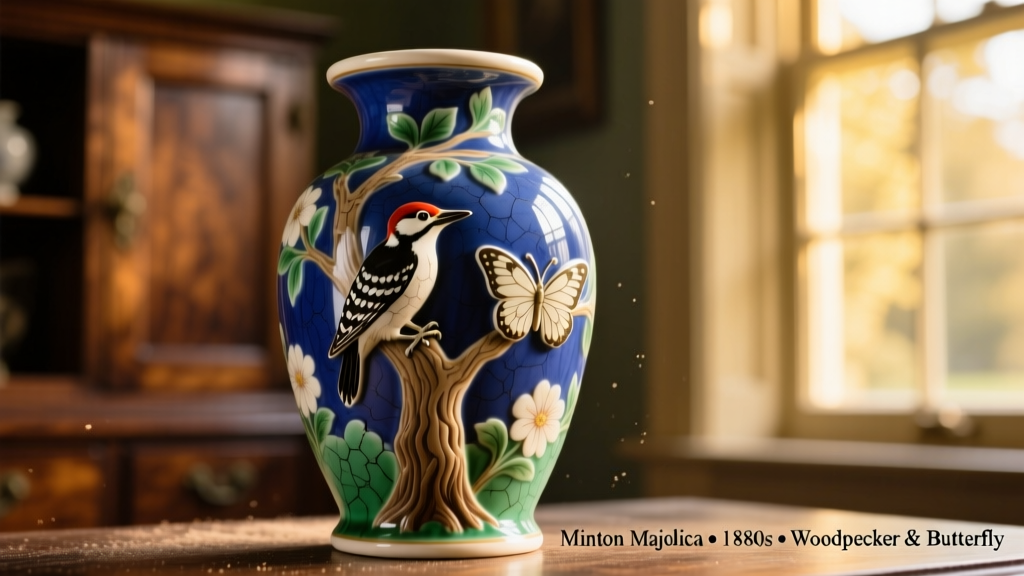
Minton Majolica Vase: Woodpecker, Butterfly & Tree Trunk Design — A 7-Inch Masterpiece of Victorian Ceramic Art
Ethnographic Art: Material Culture, Provenance, and Market Realities in the 21st Century
Canadian Ace Cone Top 32 oz Beer Cans: A Collector’s Guide to Vintage Aluminum Artifacts
Currier & Ives' 'Death Bed of the Martyr President Abraham Lincoln, April 15th, 1865': Historical Context, Production, and Collectibility
Cabinet Card, Child Portrait, Lace Dress, Purse, and Eastlake Frame: A Victorian Artifact Study
Satsuma Bowl with Arhat Figures and Gilt Decoration: A 19th-Century Japanese Ceramic Masterpiece
The Beatles Meet The Dave Clark Five: A Rare 1964 Fanbook and the Anatomy of a Pop Feud
The Pie Safe: A Forgotten American Kitchen Artifact — History, Function, and Collectibility of the 16×13-Inch Three-Shelf Cooling Cabinet