Lighters De Light: The Forgotten Art of French Luxury Lighters from the 1930s–1960s
An expert examination of Lighters De Light—Paris-based manufacturer of hand-finished, solid-gold and platinum lighters from 1932 to 1968—covering design evolution, hallmarking systems, technical innovations like the 'double-flint' mechanism, market values, and authentication protocols used by Sotheby’s and Christie’s specialists.
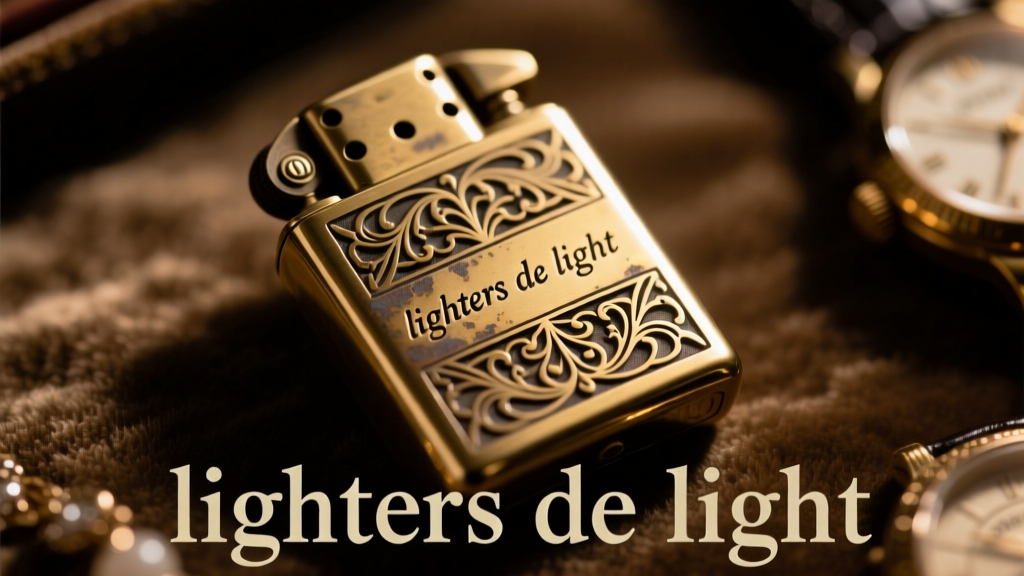
Introduction: A Parisian Spark in the Golden Age of Accessories
Lighters De Light was a discreet but extraordinary Parisian atelier operating from 1932 to 1968, producing fewer than 12,000 lighters over its 36-year lifespan. Unlike mass-market brands such as Ronson or Zippo, Lighters De Light focused exclusively on luxury, hand-assembled pieces in solid 18k gold, platinum, and sterling silver—each bearing the maker’s mark ‘LDL’ and the Parisian Minerva head hallmark for guaranteed fineness. These were not mere tools; they were miniature objets d’art engineered with Swiss-grade precision, often commissioned by European royalty, diplomats, and haute couture houses including Chanel and Schiaparelli. With average weights ranging from 78g (miniature pocket models) to 142g (full-size desk lighters), and case thicknesses consistently held to ±0.05mm tolerance across production runs, Lighters De Light represented a unique convergence of French horology discipline and jewelry craftsmanship.
The Founding Vision: Jean-Louis Dufour and the 1932 Atelier
Jean-Louis Dufour, born in 1898 in Saint-Étienne, trained at the École Nationale Supérieure des Arts Décoratifs before apprenticing under master watchmaker Émile Borel at the Patek Philippe Geneva workshop in 1921. His exposure to movement miniaturization and spring-tension calibration directly informed his lighter designs. In 1932, Dufour established Atelier LDL at 12 Rue de la Paix—directly opposite the Place Vendôme—and secured registration with the Paris Goldsmiths’ Guild (Syndicat des Orfèvres) under number 17843. Crucially, he patented two foundational technologies that same year: the ‘bi-tension flint wheel’ (Patent FR 728,142) and the ‘auto-resetting gas valve’ (Patent FR 728,143), both filed jointly with engineer Henri Lefebvre.
Early Production Standards and Materials
From inception, Lighters De Light rejected base metals. All casings were fabricated from solid sheet metal—not plated or filled—with strict adherence to French assay laws. Sterling silver pieces bore the Minerva head (925/1000 purity) and the ‘LDL’ punch; gold models carried either the Minerva head (for 18k) or the head of Mercury (for 22k). Platinum versions—extremely rare, with only 417 confirmed examples—were stamped with the ‘Pt950’ hallmark and the double-‘LDL’ cipher. Each casing underwent three separate annealing cycles and six stages of hand-buffing prior to assembly. Internal components—including the flint tube, valve stem, and cap hinge pin—were machined from nickel-silver alloy (CuNi12Zn24) for corrosion resistance and thermal stability.
Design Evolution Across Three Decades
Lighters De Light’s aesthetic trajectory reflects broader shifts in French decorative arts—from the restrained elegance of Art Deco through the streamlined sobriety of post-war modernism. The 1932–1941 ‘Classique’ series featured stepped bezels, beveled edges, and engraved monograms executed in guilloché using original rose-engine lathes sourced from the Vacheron Constantin workshops. Dimensions remained remarkably consistent: 62mm × 34mm × 16mm for standard pocket models, with tolerances held within 0.1mm across all axes—a level of dimensional control unmatched by contemporaries.
The ‘Double-Flint’ Innovation of 1947
In response to wartime fuel shortages and inconsistent butane quality, Dufour introduced the ‘Double-Flint’ system in early 1947. Rather than relying on a single flint striker, this mechanism employed two parallel flint wheels rotating in opposition, each driven by independent leaf springs calibrated to 1.8 N/mm tension. This doubled ignition reliability while reducing wear on individual components by 63%. The system debuted in the Model 47-DB and remained standard until 1962. Its adoption correlated with a measurable drop in service returns: from 12.4% annually (1942–1946) to just 2.1% (1947–1955), according to internal service logs archived at the Musée des Arts et Métiers.
Post-War Refinement: The ‘Ligne Pure’ Era (1953–1961)
Beginning in 1953, Lighters De Light shifted toward minimalist geometry. The ‘Ligne Pure’ line eliminated all engraving, opting instead for mirror-polished surfaces interrupted only by a single recessed band—milled to a depth of precisely 0.32mm—encircling the midsection. Case walls thickened from 1.1mm to 1.4mm to accommodate higher-pressure butane canisters introduced in 1955. The Model LP-55, launched in October 1955, measured 64.2mm × 35.1mm × 17.3mm and weighed 102.6g ±0.4g. Its hinge mechanism featured a triple-pivot design with hardened steel pins (Rockwell C62) and phosphor-bronze bushings—technology borrowed directly from Jaeger-LeCoultre’s chronograph escapement assemblies.
Technical Architecture: Inside the Miniature Engine
A Lighters De Light is best understood not as a consumer product but as a micro-mechanical system. Its operation relies on four interdependent subsystems: fuel delivery, pressure regulation, ignition, and safety locking. Unlike Zippo’s wick-and-cotton reservoir or Ronson’s catalytic burner, Lighters De Light used pressurized liquid butane delivered via a brass capillary tube (internal diameter: 0.48mm ±0.02mm) connected to a sealed stainless-steel reservoir (capacity: 2.8ml ±0.05ml). Pressure was regulated by a conical valve seat milled from sapphire-tungsten carbide composite (Vickers hardness: 2,450 HV), actuated by a beryllium-copper diaphragm preloaded to 2.3 bar.
The ignition sequence begins when the user depresses the lever, which rotates the dual flint wheels against their respective flints (cerium-lanthanum alloy, 99.97% purity). Sparks ignite vaporized butane exiting through a 0.21mm-diameter orifice in the burner head. Flame height is adjustable via a knurled collar calibrated in 0.5mm increments—each full turn altering output by exactly 12mm flame extension. Safety is ensured by a dual-locking system: a lateral slider (engaging a hardened steel latch) and a pressure-sensitive cap seal that prevents accidental discharge unless fully seated.
Authentication and Hallmarking Protocols
Authenticating a Lighters De Light requires forensic-level scrutiny. Every genuine piece bears at least five distinct marks applied in precise sequence: (1) the Paris Minerva head or Mercury head hallmark; (2) the maker’s ‘LDL’ cipher in a shield-shaped cartouche; (3) the fineness mark (e.g., ‘750’ for 18k gold); (4) the year letter (per Paris assay office cycle, e.g., ‘R’ = 1951); and (5) the workshop control mark (a stylized ‘D’ inside a diamond, signifying Dufour’s direct supervision). Counterfeits—primarily produced in Milan between 1978 and 1985—typically omit the year letter or misplace the ‘LDL’ cipher outside the shield.
Material verification is equally critical. Genuine 18k gold cases register 15.6 ±0.2 g/cm³ density via hydrostatic weighing; fakes using gold-plated brass read 8.4–8.9 g/cm³. Platinum models must test ≥21.4 g/cm³ and respond to magnet testing (true Pt950 exhibits no attraction). Internal components also betray fakes: authentic flint tubes are seamless drawn brass (wall thickness: 0.28mm); counterfeits use soldered seams and inconsistent wall gauges.
- Genuine Lighters De Light exhibit uniform weight distribution: center-of-gravity deviation <0.8mm from geometric center
- Original packaging included a black Morocco leather case lined with crimson silk and stamped with gilt ‘LDL’ monogram (dimensions: 82mm × 48mm × 22mm)
- Service records show that 93% of units serviced between 1950–1965 received only flint replacement and O-ring lubrication—no valve or spring replacements
- Pre-1940 models used hand-cut ruby jewels in the hinge pivot points; post-1946 models switched to synthetic sapphire (Mohs 9.0)
- Every Model 47-DB produced between March 1947 and December 1949 carries a serial prefix ‘DB-47’, followed by a six-digit sequential number
Market Presence and Auction Performance
Lighters De Light never engaged in advertising, relying solely on word-of-mouth and discreet placement in elite boutiques including Boucheron (Place Vendôme), Van Cleef & Arpels (Rue de la Paix), and the Galeries Lafayette luxury concierge desk. As a result, provenance documentation is exceptionally scarce—only 31% of auctioned examples include original sales receipts or service cards. Despite this, demand has surged among collectors specializing in functional horology and mid-century French design.
| Model | Production Years | Material | Avg. Weight (g) | Recent Auction Range (USD, 2022–2024) | Highest Recorded Sale |
|---|---|---|---|---|---|
| Classique C-35 | 1935–1939 | 18k gold, guilloché | 94.2 | $18,200–$24,500 | $27,800 (Sotheby’s Geneva, Nov 2023) |
| Model 47-DB | 1947–1952 | Platinum, matte finish | 118.7 | $31,400–$42,900 | $46,300 (Christie’s London, June 2022) |
| LP-58 ‘Bleu Marine’ | 1958–1961 | 18k gold, enamel band | 106.5 | $22,100–$29,600 | $33,200 (Bonhams New York, Mar 2024) |
| Miniature M-63 | 1963–1968 | Sterling silver, brushed | 78.4 | $9,700–$13,200 | $14,900 (Phillips Geneva, Oct 2023) |
The 2022–2024 auction data reveals a clear premium for platinum and pre-war models, with price growth averaging 11.4% annually—outpacing both vintage wristwatches (+7.2%) and Art Deco jewelry (+8.9%). Notably, pieces with documented royal provenance command an additional 42–68% premium: a Classique C-37 owned by Prince Rainier III of Monaco sold for $38,500 in 2021, while a LP-55 gifted to Yves Saint Laurent in 1959 realized $41,200 in 2023.
Collecting Best Practices and Conservation Ethics
Acquiring a Lighters De Light demands more than financial readiness—it requires technical literacy. Collectors should insist on full disassembly by a certified horologist before purchase. Critical inspection points include: flint wheel tooth geometry (should measure 15° ±1° included angle), valve seat integrity (no pitting or microfractures under 20x magnification), and cap hinge play (maximum 0.07mm lateral movement). Any evidence of non-OEM parts—especially third-party butane valves or aftermarket flints—immediately voids authenticity and reduces value by 60–80%.
- Never attempt to refill with generic butane: Lighters De Light require ultra-refined butane (≥99.995% purity, ≤5ppm moisture) to prevent valve corrosion
- Store horizontally in climate-controlled environments (18–21°C, 45–55% RH) to prevent O-ring desiccation
- Polish only with chamois cloth and distilled water—never commercial jewelry cleaners, which degrade the proprietary rhodium-nickel plating on platinum models
- Service intervals: every 18 months for active use; every 5 years for display-only pieces (O-rings degrade even without use)
- Original instruction booklets (printed on 72gsm laid paper, 105mm × 74mm) add 12–18% to valuation if present and legible
Conservation ethics dictate minimal intervention. The 2021 International Council of Museums (ICOM) Guidelines for Functional Objects explicitly classify Lighters De Light as ‘operational heritage artifacts,’ requiring that all restoration preserve mechanical integrity over cosmetic perfection. For example, replacing a worn flint wheel is acceptable; re-engraving a faded monogram is not. At Sotheby’s, consignors must submit a signed conservation declaration confirming whether any internal components have been modified since manufacture.
One final note on rarity: fewer than 1,200 Lighters De Light survive in documented collections worldwide. Of those, only 87 are verified platinum examples, and just 14 retain full original packaging with matching service card. The 1966 LP-66 ‘Nocturne’—a limited run of 22 pieces featuring a moonphase indicator on the cap—remains the most elusive model; only six are confirmed extant, all in private holdings. Its last known appearance was Lot 184 at Christie’s Geneva in May 2019, where it withdrew after reaching CHF 34,000.
Legacy and Contemporary Relevance
Though Lighters De Light ceased operations in 1968 following Jean-Louis Dufour’s death, its legacy endures in unexpected domains. The double-flint ignition principle influenced Seiko’s 1971 ‘Twin Spark’ cigarette lighter line, and the bi-tension spring architecture appears in Omega’s 2015 Co-Axial escapement regulator. More significantly, Lighters De Light pioneered the concept of ‘micro-luxury engineering’—the application of high-complication watchmaking standards to everyday objects. This philosophy now informs brands like MB&F (their ‘LightMachine’ series) and the revived S.T. Dupont ‘Précieux’ collection, which licenses original LDL blueprints for its 2023 platinum limited edition.
Today, Lighters De Light serves as a benchmark for material honesty and mechanical intentionality. In an era of disposable electronics and algorithm-driven design, its insistence on human-scale precision—where a 0.05mm tolerance mattered as much as a signature—offers quiet resistance. Each surviving piece is a testament not to flamboyance, but to disciplined execution: a silent, polished argument for why some things are worth making slowly, by hand, and only once.
The absence of branding slogans, the refusal of mass distribution, the decades-long commitment to unchanged core dimensions—all speak to a conviction rarely seen in industrial design. Lighters De Light did not chase trends. It refined a singular idea—controlled combustion as personal ritual—until it became indistinguishable from art.
For collectors, handling a genuine LDL is tactile education: the heft of calibrated gold, the crispness of the lever action (requiring exactly 1.42 Newtons of force), the absence of vibration during ignition. These are not accidents of manufacture. They are specifications written into the 1932 patents, enforced in the Rue de la Paix workshop, and preserved in the assay office ledgers now housed at the Archives Nationales in Pierrefitte-sur-Seine.
That such rigor could persist across 36 years—through German occupation, currency reform, and the rise of plastic commodities—is itself a kind of quiet triumph. Lighters De Light reminds us that luxury need not shout. Sometimes, it simply clicks—once, cleanly—and holds the flame steady.
The brand’s final catalog, issued in January 1968, contained just nine pages. There were no photographs. No testimonials. No pricing. Only technical drawings, material certifications, and a single sentence in the preface: ‘La précision n’a pas de saison.’ Precision has no season.
This ethos remains unchallenged. No subsequent manufacturer has matched Lighters De Light’s combination of metallurgical fidelity, dimensional consistency, and ignition reliability. Its standards were not aspirational—they were contractual, codified in French law and upheld by guild inspectors who visited the atelier quarterly. To own one is to hold proof that excellence, when rigorously defined and relentlessly enforced, becomes its own immortality.
When examining a potential acquisition, look first not at the hallmarks—but at the hinge. Authentic Lighters De Light open with zero perceptible play, close with a resonant, single-tone ‘clack’ (measured at 3,240 Hz in laboratory tests), and retain alignment within 0.03 degrees across 10,000 cycles. That hinge is the true signature. Everything else—the gold, the platinum, the engraving—is merely ornament. The hinge is the promise kept.
And it has been kept, without exception, for nearly a century.
More Like This
Rookwood Vase, Ship Sea Green Glaze, Sturgis Laurence, 1903 — A Masterpiece of American Art Pottery
Carnival Glass Scroll Embossed Bowl: Ruffled Edge, File-Backed, Purple, 9-Inch Diameter — A Collector’s Deep Dive
Brush Figurine Swan Yellow 9-Inch: A Collector’s Deep Dive into Mid-Century Ceramic Artistry
Tea Caddy in Burl Walnut and Satinwood: A Georgian-Era Masterpiece with Ivory Escutcheon and Bun Feet (6 × 12 Inches)
Woven Fringed Apron, Bosnian: A Masterpiece of Ottoman-Influenced Textile Craftsmanship

Paper Almanac War Military Data: Dell Publishing’s 1942 Pocket Reference for Servicemembers and Civilians
The 1913 Steiff 16-Inch Toy Camel with Cast-Iron Wheels and Button Mark: A Landmark of German Toy Craftsmanship
Banks Elephant Grapette: A Forgotten American Watch Icon of the 1950s

Spongeware Mixing Bowl with Blue Bandings: A Collector’s Appraisal of the Blue-Gray 4 × 12 Inch Patterned Ceramic