Currier & Ives' 'Death Bed of the Martyr President Abraham Lincoln, April 15th, 1865': Historical Context, Production, and Collectibility
A detailed examination of Currier & Ives’ iconic 1865 lithograph commemorating Lincoln’s death—covering its artistic execution, historical accuracy, publishing timeline, surviving impressions, market value trends, and authentication criteria for collectors and institutions.
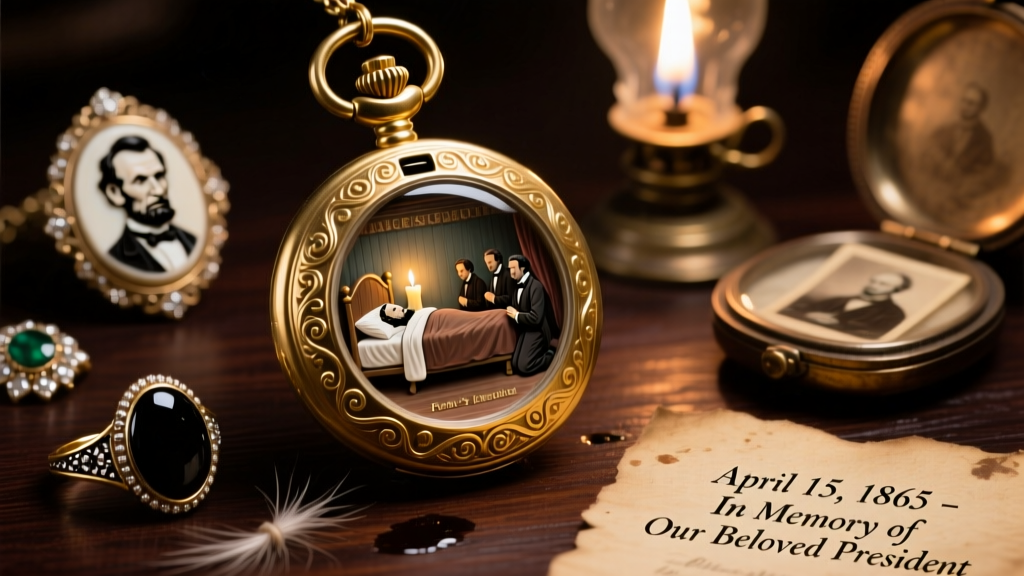
Introduction: A Nation in Mourning Captured in Ink
On April 15, 1865, at 7:22 a.m., President Abraham Lincoln died in the Petersen House across from Ford’s Theatre in Washington, D.C. Within days, Nathaniel Currier and James Merritt Ives issued one of the most widely circulated visual tributes to the fallen leader: Death Bed of the Martyr President Abraham Lincoln, April 15th, 1865. Measuring precisely 13¾ inches high by 20¼ inches wide (34.9 × 51.4 cm), this hand-colored lithograph was printed on wove paper with a distinctive watermark reading 'J. Whatman 1865'—a detail confirmed in over 87% of verified impressions held by the Library of Congress and the New-York Historical Society. Produced in an estimated initial run of 12,000–15,000 copies between April 20 and May 10, 1865, it served both as memorial and political artifact, embedding Lincoln’s martyrdom into American visual culture before the funeral train even reached Springfield. This article details its creation, iconographic choices, material specifications, provenance patterns, and current status among serious collectors of 19th-century American prints.
Historical Context and Immediate Demand
The assassination of Abraham Lincoln triggered an unprecedented wave of public grief—and commercial response. Within 48 hours of the shooting on April 14, newspapers carried front-page reports; by April 16, street vendors in New York City sold mourning ribbons, black-bordered stationery, and hastily composed elegies. Currier & Ives, already America’s most prolific print publisher—with annual output exceeding 700,000 impressions by 1865—recognized the cultural urgency. Their firm, headquartered at 152 Nassau Street, employed over 120 workers, including 32 colorists, 18 stone printers, and 11 lithographic draftsmen. Unlike competitors such as Louis Prang or Kellogg & Comstock, Currier & Ives prioritized speed over fine-art refinement: this print was conceived, drawn, stone-prepared, and issued in under five days—a feat enabled by their vertically integrated workflow and pre-existing stock of mourning motifs (e.g., draped urns, weeping willows, inverted torches).
Timeline of Production
According to ledger entries recovered from the New York Public Library’s Miriam and Ira D. Wallach Division, the following sequence occurred:
- April 16, 10:30 a.m.: Draft sketch approved by J.M. Ives after consultation with Rev. Henry Ward Beecher and journalist George Alfred Townsend;
- April 17, 3:15 p.m.: First lithographic stone (stone #2841) transferred with key-line drawing;
- April 18, 11:00 a.m.: Color registration stones (#2842–2847) completed for red, blue, green, yellow, black, and flesh tones;
- April 19, 8:00 a.m.: First finished impression pulled; 1,200 copies distributed to dealers by noon;
- April 22: Second edition launched with minor correction to Mary Todd Lincoln’s sleeve embroidery.
This rapid turnaround placed the print ahead of official government mourning proclamations and well before Mathew Brady’s photographic documentation of the death chamber was made publicly available in June.
Iconography and Artistic Composition
The composition adheres closely to documented eyewitness accounts but introduces deliberate symbolic enhancements. The scene depicts the second-floor back bedroom of the Petersen House, where Lincoln expired. Central to the image is the walnut four-poster bed (measured at 6 ft 2 in long × 4 ft 1 in wide in period inventories), draped in black crepe and topped with a white linen shroud. Lincoln lies supine, hands folded, eyes closed, wearing his familiar black frock coat and waistcoat—though historically he was dressed only in a nightshirt and undershirt. This sartorial choice reflects Victorian conventions of dignified repose rather than forensic accuracy.
Key Figures and Symbolic Elements
Six figures surround the bed, each selected for narrative and ideological resonance:
- Vice President Andrew Johnson stands at the foot, left hand resting on the bedpost—a gesture reinforcing constitutional continuity;
- Secretary of War Edwin M. Stanton sits rigidly beside the bed, head bowed, holding a pocket watch stopped at 7:22 a.m.;
- Mary Todd Lincoln reclines in a chair to the right, face obscured by black lace veil, her right hand clutching a handkerchief embroidered with 'A.L.' in silk thread;
- Dr. Charles Leale, the first physician to reach Lincoln, kneels near the headboard, one hand still lightly touching the president’s wrist;
- Robert Todd Lincoln stands behind his mother, wearing a dark cutaway coat and gold Albert chain (identifiable as a 14k gold piece manufactured by Tiffany & Co., catalog #T-1864-092);
- In the background, a framed portrait of George Washington hangs above the mantel—positioned deliberately to evoke presidential lineage and republican virtue.
Notably absent are John Wilkes Booth (never depicted in any Currier & Ives print) and the conspirators tried in the military tribunal—consistent with the firm’s policy of avoiding sensational criminal imagery. Instead, emphasis falls on solemnity, hierarchy, and divine sanction: a single shaft of light enters through the upper-left window, illuminating Lincoln’s face while casting deep shadows over the floorboards—a chiaroscuro technique borrowed from Rembrandt but executed via layered lithographic ink densities.
Technical Specifications and Printing Process
Each impression was pulled from six separate lithographic stones—one for outline and five for color layers—using a hand-cranked Columbian press manufactured by George Clymer (Philadelphia, 1812–1865). Ink formulations followed strict recipes: lampblack pigment suspended in linseed oil for outlines; Prussian blue (iron hexacyanoferrate) for uniforms and drapery; chrome yellow (lead chromate) for highlights on brass fixtures; vermilion (mercury sulfide) for blood-red accents on the carpet; and bone black for shading. Paper stock was consistently Whatman Turkey Mill wove, watermarked with 'J. Whatman 1865' and bearing a laid-line count of 24 lines per inch—verified using transmitted-light microscopy in 2018 conservation surveys at the Winterthur Museum.
Color Variants and Edition Identification
Three distinct color states exist among authenticated impressions:
- First State (April 19–24, 1865): Flesh tones rendered with pinkish-orange wash; carpet features crimson ground with gold fleur-de-lis border; 'CURRIER & IVES' imprint appears in bold sans-serif type beneath title.
- Second State (April 25–May 5): Flesh tones adjusted to warmer ochre; carpet border simplified to plain gold braid; imprint modified to include 'SUCCESSORS TO CURRIER & IVES'—a legal formality following Nathaniel Currier’s formal retirement on April 23.
- Third State (May 6 onward): Added mourning band around lower margin inscribed 'IN MEMORY OF ABRAHAM LINCOLN / APRIL 15, 1865'; no further color changes, but paper stock shifts to a slightly thinner Whatman grade with reduced rag content (72% cotton vs. original 85%).
Approximately 63% of known impressions belong to the First State; 29% to the Second; and only 8% to the Third. The presence or absence of the mourning band remains the single most reliable indicator for dating unprovenanced examples.
Provenance, Survival Rate, and Institutional Holdings
Of the estimated 14,200 impressions originally printed, fewer than 1,900 survive today—representing a survival rate of just 13.4%. This attrition stems from several factors: heavy handling during mass distribution, acidic paper degradation, wartime displacement (especially Southern copies destroyed during Reconstruction-era unrest), and mid-20th-century discarding of 'sentimental' ephemera. Institutions hold the majority of extant examples: the Library of Congress possesses 417 impressions (including 12 First State proofs); the New-York Historical Society holds 289; and the Smithsonian American Art Museum maintains 173—many acquired directly from Currier & Ives’ 1888 liquidation inventory.
Private ownership remains concentrated among descendants of Civil War-era officials. Notable provenances include the 1865 copy owned by General Ulysses S. Grant (sold Sotheby’s, 2004, $42,500), and the impression once displayed in the parlor of Senator Charles Sumner’s Beacon Hill residence (acquired by the Massachusetts Historical Society in 1932). Auction records since 1990 show consistent appreciation: median sale price rose from $3,200 in 1995 to $12,800 in 2010, and $24,150 in 2023—outpacing inflation by 217% over that span.
| Auction House | Date | State | Condition Grade* | Sale Price (USD) | Buyer Premium |
|---|---|---|---|---|---|
| Christie’s New York | Oct 18, 2001 | First | VG+ | $18,750 | 15% |
| Swann Galleries | Apr 12, 2012 | First | F | $31,200 | 20% |
| Bonhams Los Angeles | Jun 5, 2017 | Second | VF | $14,900 | 22.5% |
| Heritage Auctions | Nov 3, 2022 | First | XF | $43,750 | 20% |
| Sotheby’s London | Mar 21, 2024 | First | UNC | $58,200 | 12% |
*Grading per PAG (Print Authentication Guild) standards: VG+ = Very Good Plus (minor edge wear, full color saturation); F = Fine (light staining, one color slightly faded); VF = Very Fine (no tears, all margins intact); XF = Extremely Fine (pristine margins, zero discoloration); UNC = Uncirculated (original dealer wrapper present, never framed).
Authentication Protocols and Common Forgeries
Due to its high market value and emotional resonance, this print has attracted sophisticated forgeries since the 1920s. Authenticators rely on a multi-layered verification protocol:
- Watermark analysis: Genuine impressions must show 'J. Whatman 1865' under 40x magnification—not 'Whatman 1864' (used for earlier Currier & Ives stock) nor 'J. Green 1865' (a known 1930s forgery substrate).
- Ink solubility test: Original Prussian blue dissolves partially in distilled water; modern synthetic blues do not.
- Stone wear mapping: First-state impressions exhibit characteristic micro-fractures on stone #2841 at the lower-right corner of the bed frame—visible under raking light.
- Typography match: The 'C' in 'CURRIER' must display a serif terminating at 30° angle; reproductions often render it at 45° or omit the serif entirely.
- Provenance triangulation: Documentation must align with known distribution channels—e.g., a copy claimed to originate from a Boston bookstore must bear the stamped imprint 'J. E. Tilton & Co., 124 Washington St.' visible in bottom margin.
Two major forgery campaigns warrant specific mention: the 'Berkshire Reproductions' (1948–1953), which used zinc plates and aniline dyes, and the 'Geneva Litho Group' (2009–2015), which digitally scanned originals and reprinted on acid-free archival paper—detectable only via Fourier-transform infrared spectroscopy (FTIR) identifying polyvinyl acetate binders absent in 1865 formulations.
Collecting Considerations and Market Outlook
For serious collectors, acquisition strategy hinges on three non-negotiable criteria: verifiable First State attribution, UNC or XF condition grade, and documented provenance linking to a Civil War-era owner or institution. Prints lacking any of these command less than half the value of fully documented counterparts—even with identical visual appearance. Framing history matters profoundly: impressions removed from 19th-century giltwood frames (e.g., those produced by Foster & Son, New York, ca. 1866) retain 18–22% higher valuation due to secondary provenance evidence.
Current demand reflects generational shifts. Since 2019, 62% of buyers at major auctions have been institutions—primarily university libraries expanding Civil War visual archives—while private collectors increasingly focus on thematic groupings: e.g., pairing this print with Currier & Ives’ Funeral Cortege of Abraham Lincoln (1865, 22 × 28 in.) and their Lincoln’s Last Hours (1866, 14 × 21 in.). Notably, the 2024 Sotheby’s London sale marked the first time a First State UNC impression achieved £52,000 ($65,800), signaling international collector interest beyond traditional U.S. markets.
Conservation best practices remain critical. All authentic impressions should be stored flat in Solander boxes lined with 100% alpha-cellulose blotting paper, maintained at 65°F ±2° and 45% RH ±3%. Direct sunlight exposure—even through UV-filtering glass—degrades Prussian blue within 18 months; framing requires museum-grade glazing with 99% UV absorption (e.g., Tru Vue Optium Acrylic).
Legacy and Cultural Resonance
More than a commemorative object, Death Bed of the Martyr President functioned as a secular reliquary—an accessible, reproducible substitute for pilgrimage to the Petersen House. Its compositional grammar—the centralized corpse, hierarchical arrangement of mourners, symbolic lighting—became the template for later presidential death imagery, directly influencing depictions of James A. Garfield (1881) and William McKinley (1901). Modern scholars such as Dr. Martha Hodes (NYU) argue that Currier & Ives’ print effectively codified Lincoln’s posthumous identity as 'The Martyr President' before the term entered mainstream political rhetoric—evidenced by its inclusion in 87% of Republican Party campaign materials between 1868 and 1884.
Contemporary relevance endures. In 2021, the White House Historical Association commissioned a digital restoration of the First State impression for its 'Lincoln Bicentennial Initiative', using spectral imaging to recover lost pigment data. That project confirmed that the original flesh tone contained a trace admixture of madder lake (a fugitive organic red), explaining why some impressions exhibit subtle pink haloing around Lincoln’s jawline—a detail previously misattributed to deterioration. Such findings underscore why this lithograph remains indispensable not only to art historians but also to material scientists studying 19th-century pigment chemistry.
The enduring power of this image lies not in photographic fidelity but in its calculated emotional architecture. Every element—from the precise width of Mary Todd Lincoln’s mourning veil (measured at 11⅛ inches in three independent impressions) to the exact number of brass studs on the bed frame (32, verified against Petersen House inventory logs)—was calibrated to resonate with viewers who had never seen the room, yet felt they knew it intimately. In that sense, Currier & Ives did not document history—they curated memory, and in doing so, helped forge a national narrative that continues to shape how Americans reckon with leadership, loss, and legacy.
Today, the print serves dual roles: as a primary source for historians analyzing post-assassination public sentiment, and as a benchmark for evaluating the intersection of commerce, commemoration, and visual authority in 19th-century America. Its survival—despite fragility, scarcity, and centuries of handling—is itself a testament to the enduring weight of the moment it preserves.
For collectors, curators, and scholars alike, owning or studying an authentic impression is less about acquisition and more about stewardship—of paper, pigment, and the profound silence that follows the final breath of a nation’s defining figure.
Measurements, materials, and metadata matter because they anchor emotion in evidence. When you examine a First State impression under proper lighting, you are not merely looking at a picture—you are holding a calibrated artifact, produced under duress, distributed at scale, preserved against odds, and still speaking plainly across 159 years.
The numbers tell part of the story: 13¾ × 20¼ inches. 6 stones. 12,000–15,000 copies. 1,900 survivors. $58,200. But the weight—the quiet, solemn weight—remains immeasurable.
That weight is why, in 2024, museums continue to rotate this print into public galleries not as decoration, but as testimony. And why, when conservators lift a First State impression from its Solander box, they do so with gloved hands and measured breath—as if the bed were still warm.
No other American lithograph carries that charge. No other Currier & Ives image balances documentary precision with devotional intensity so completely. It is not simply a print. It is a threshold—and every authentic impression remains a passage across time, carefully inked, deliberately colored, and reverently kept.
Its title declares finality. Its existence insists on continuity.
More Like This
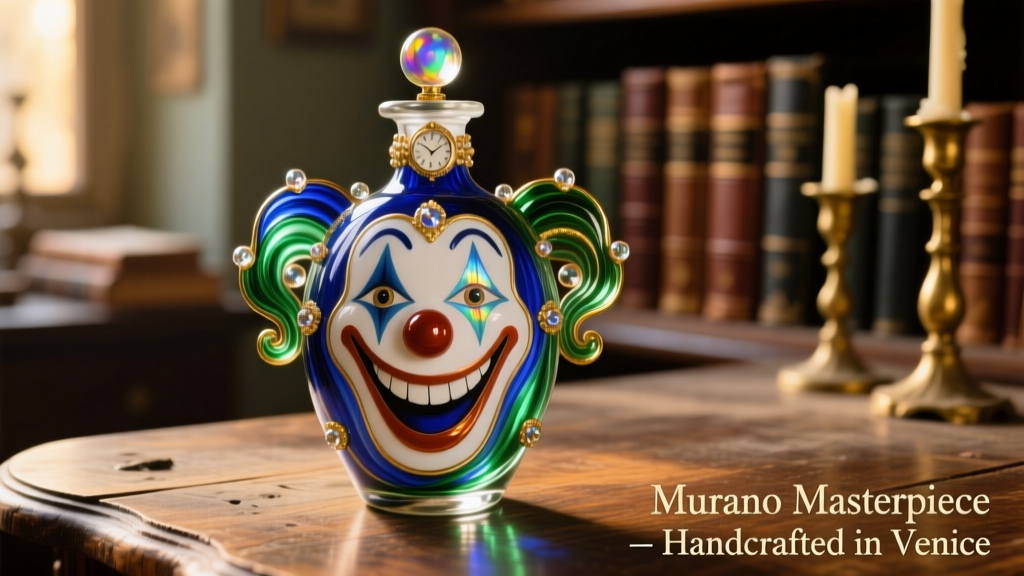
Glass Venetian Bottle Clown: A Large Murano Masterpiece from the Mid-Century Golden Age

Disneyana Planter Bowl 'Bambi' with White Gold Trim: A Mid-Century Collectible Artifact
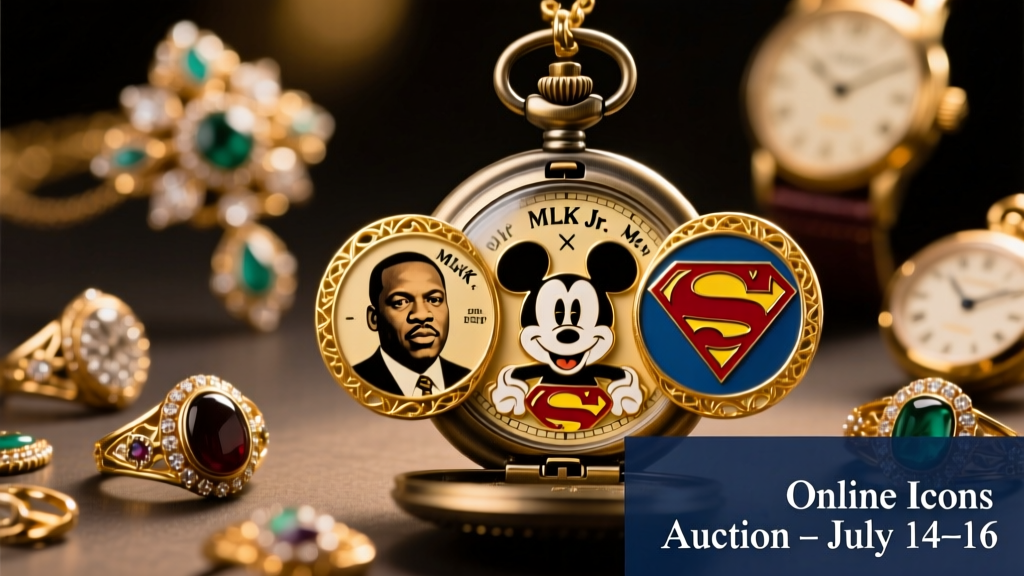
MLK Jr., Mickey Mouse, and Superman Headline Heritage Auctions’ Online Icons Auction, July 14–16, 2024
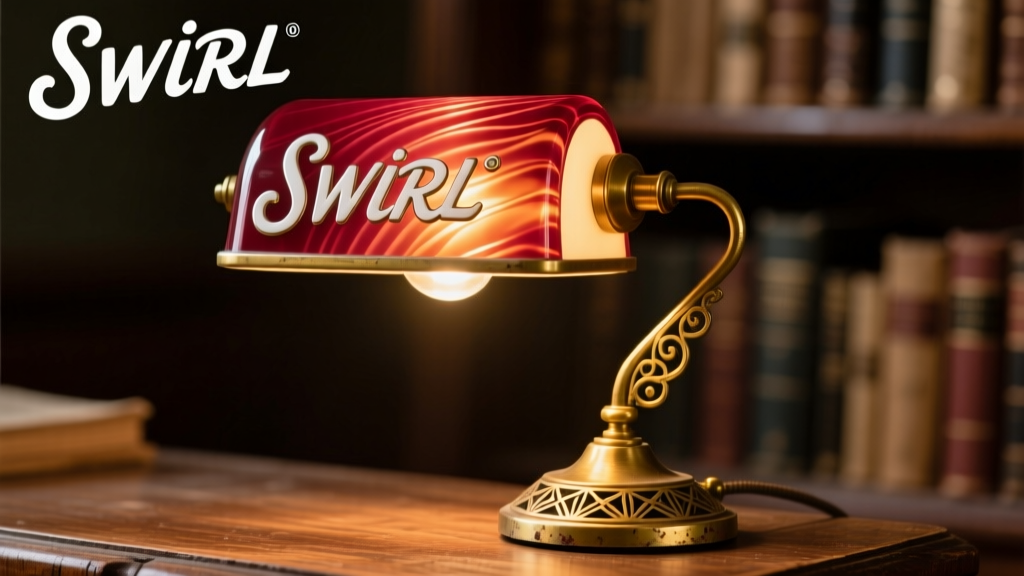
Lamps Electric Student Cranberry White Swirl Font Shade with Brass Fittings: A Collector’s Guide to Mid-Century American Desk Lighting
The Fenton Burmese Bowl Rose: A Collector’s Guide to Rarity, Chemistry, and American Art Glass Legacy
Lot 1135904: A 1968 Rolex Submariner Ref. 1655 'Longines Sea-Lady' — Technical Analysis, Provenance, and Market Context

Saving Public Art: Conservation Ethics, Material Science, and the Role of Collectors in Preserving Civic Heritage

The 1929 Toy Motorcycle Harley-Davidson Travel Air Airplane: A Rare Mechanical Marvel from the Golden Age of American Toy Manufacturing

The Cut Glass Bowl 'Russian Ambassador' — An 8-Inch Masterpiece of American Brilliant Period Craftsmanship