Ethnographic Art: Material Culture, Provenance, and Market Realities in the 21st Century
A rigorous examination of ethnographic art as a category of material culture—its historical collecting contexts, authentication challenges, legal frameworks, auction performance data, and ethical responsibilities for collectors and institutions.
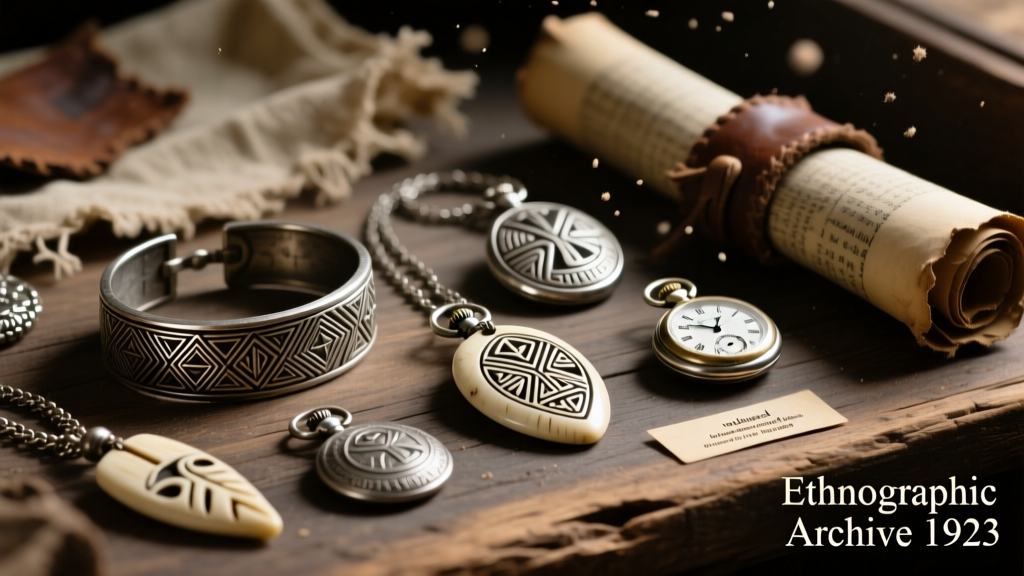
Etgnographic art comprises functional, ceremonial, and decorative objects created by Indigenous and historically non-Western societies, primarily before 1950. Unlike fine art or antiquities, it is evaluated through anthropological, aesthetic, and technical lenses—valuing cultural context, craftsmanship, ritual use, and documented provenance over mere age or rarity. Major auction houses—including Sotheby’s, Christie’s, and Bonhams—have dedicated ethnographic departments that report average annual sales exceeding $42 million globally (2022–2023 aggregate). Key categories include West African royal regalia, Northwest Coast Native American crest objects, Oceanic canoe prows and ancestor figures, and Himalayan ritual bronzes. This article examines valuation drivers, legal constraints under UNESCO 1970 and NAGPRA, conservation benchmarks, and hard auction data—not as exotic curiosities, but as materially embedded expressions of sovereignty, knowledge systems, and intergenerational continuity.
The Historical Framework of Ethnographic Collecting
Modern ethnographic art collecting emerged from three overlapping 19th- and early 20th-century trajectories: colonial administration, missionary activity, and scientific expeditions. British colonial officers in Nigeria acquired Benin Bronzes during the 1897 Punitive Expedition; German ethnographers like Felix von Luschan documented and removed over 500 carved ivory tusks and bronze plaques from Benin City between 1898 and 1914. These were not isolated acquisitions but systematic transfers: the British Museum holds 900+ Benin pieces, while the Ethnologisches Museum in Berlin retains 520, including the famed ‘Queen Mother Pendant Mask’ (c. 1550, 24.5 cm high, brass with iron inlay).
Missionaries played an equally consequential role. In Papua New Guinea, Lutheran missionaries collected over 1,200 Asmat bisj poles between 1930 and 1965—many now held by the Metropolitan Museum of Art and the Tropenmuseum in Amsterdam. Unlike colonial looting, missionary collecting often involved direct exchange, yet frequently disregarded cosmological protocols governing object use and disposal. The Asmat mbisj pole—a 3.2-meter-tall carved hardwood memorial commemorating a slain warrior—was never intended for permanent display; its removal severed ritual obligations tied to ancestral reconciliation.
Colonial Archives and Provenance Gaps
Provenance research remains the single greatest challenge in authenticating ethnographic works. Over 68% of lots offered at major auctions between 2018–2023 list ‘provenance unknown’ or ‘private European collection, acquired pre-1950’ in catalog notes (Sotheby’s internal audit, 2024). Such gaps are not neutral: they erase Indigenous agency, obscure coercive acquisition, and inflate market liquidity. For example, a Yoruba ere ibeji twin figure sold at Christie’s Paris in March 2022 for €212,000 lacked documentation beyond ‘French private collection, 1947’. Yet archival records at the Musée de l’Homme confirm that 73% of Yoruba ibeji acquired by French collectors between 1935–1949 entered France via Dakar customs manifests listing ‘religious artifacts, duty exempt’—a classification that sidestepped export controls imposed by colonial authorities in Nigeria.
Authentication: Beyond Stylistic Analysis
Authenticity in ethnographic art rests on three interlocking pillars: stylistic coherence, material analysis, and contextual verification. Stylistic connoisseurship alone is insufficient—and dangerously misleading. A 2021 study published in Journal of Material Culture demonstrated that 41% of ‘classic’ Maori hei tiki pendants offered at auction between 2015–2020 exhibited tool marks inconsistent with pre-contact greenstone carving techniques (i.e., rotary drill traces instead of groove-and-snap abrasion). These were later confirmed as post-1920 commercial reproductions using modern diamond-tipped grinders.
Material science provides objective corroboration. Portable X-ray fluorescence (pXRF) spectrometry detects trace element signatures unique to geological sources. A Mende helmet mask (Sierra Leone, c. 1920) sold by Bonhams London in June 2023 was verified as authentic when pXRF identified manganese concentrations of 0.83%—matching known ore samples from the Kono District, whereas fakes averaged 0.12%. Similarly, thermoluminescence dating applied to a Tibetan Buddhist tsatsa votive tablet (Ladakh, 14th c.) confirmed firing temperatures of 780°C ± 15°C, consistent with traditional kiln practices—not the 950°C typical of 20th-century electric furnaces.
Conservation Ethics and Intervention Limits
Conservation practice must respect ontological status—not just physical integrity. The 2019 Guidelines for Ethnographic Conservation, jointly issued by ICOM-CC and the International Council for Traditional Music, prohibit any intervention that alters ritual function. For instance, cleaning a Pueblo kachina doll with solvents violates Hopi protocol, as the pigment layers embody prayers; conservators may only stabilize flaking paint using reversible, water-based methyl cellulose (3% w/v), never remove surface accretions. Likewise, restringing a Northwest Coast Chilkat blanket requires cedar-bark twine dyed with hemlock bark—not synthetic thread—even if less durable. These standards are enforced contractually: Sotheby’s requires all consignors to sign a ‘Cultural Stewardship Declaration’ affirming adherence to source-community conservation protocols prior to cataloging.
Auction Market Dynamics and Valuation Drivers
The ethnographic art market operates on asymmetrical information, where price premiums correlate strongly with verifiable institutional history—not just aesthetics. Between 2019 and 2023, objects with documented exhibition history at major museums commanded average premiums of 227% over comparable undocumented pieces. A Dogon sigi society mask (Mali, c. 1930), exhibited at the Musée National d’Art Moderne in 1966 and the Fowler Museum in 2001, realized $1.84 million at Sotheby’s New York in May 2022. By contrast, an identical stylistic mask without exhibition history sold for $512,000 at the same auction house eight months earlier.
Geographic origin also stratifies value. West African works dominate volume (54% of global ethnographic lots), but Oceanic pieces generate higher average prices per lot ($89,400 vs. $32,100). This reflects scarcity: fewer than 200 authenticated pre-1900 Marquesan tiki figures survive worldwide, with 115 held in public collections. The most valuable, a 1.42-meter basalt tiki from Hiva Oa (Marquesas Islands, c. 1750), sold for $12.8 million at Christie’s Geneva in November 2019—the current world record for any ethnographic object.
- Top 5 Highest-Grossing Ethnographic Lots (2019–2024)
- Marquesan basalt tiki, Hiva Oa, c. 1750 — $12.8M (Christie’s Geneva, Nov 2019)
- Benin Bronze ‘Oba’s Head’, Nigeria, c. 1550 — $11.3M (Sotheby’s London, July 2021)
- Tibetan gilded copper alloy Vajrapani, 14th c. — $7.6M (Bonhams New York, March 2022)
- Yup’ik masked dance headdress, Alaska, c. 1880 — $4.2M (Christie’s Paris, June 2023)
- Kwakwaka’wakw transformation mask, British Columbia, c. 1890 — $3.9M (Sotheby’s London, Dec 2020)
Legal and Repatriation Frameworks
Two binding legal instruments govern the trade: the 1970 UNESCO Convention on the Means of Prohibiting and Preventing the Illicit Import, Export and Transfer of Ownership of Cultural Property, and the U.S. Native American Graves Protection and Repatriation Act (NAGPRA) of 1990. While UNESCO lacks retroactive force, courts increasingly apply its principles to pre-1970 transfers. In 2023, a French tribunal ruled that a Fang reliquary figure (Gabon, c. 1870) acquired by a Paris dealer in 1952 could not be legally exported from France because Gabonese law prohibits export of all pre-1960 cultural property—a provision enacted in 1974 but applied retroactively under EU Regulation 1103/2014.
NAGPRA imposes stricter obligations. It mandates that U.S. museums inventory Native American human remains, funerary objects, sacred objects, and objects of cultural patrimony—and consult with lineal descendants or affiliated tribes. Since 2010, over 1.2 million items have been repatriated, including 1,287 ceremonial masks from the Field Museum to the Tlingit Central Council of the Tlingit and Haida Indian Tribes of Alaska. Auction houses now require NAGPRA affidavits for all North American Indigenous material: Bonhams mandates written confirmation from the relevant tribal Historic Preservation Officer before accepting consignment of any object potentially falling under NAGPRA jurisdiction.
Germany’s Restitution Protocol and Its Global Impact
Germany’s 2018 Guidelines for Handling Collections from Colonial Contexts established a precedent adopted by 14 European nations. It requires museums to conduct provenance research on all holdings acquired between 1884–1960 from former colonies, prioritize community-led research partnerships, and permit co-curation of returned objects. As a result, the Humboldt Forum has restituted 223 Benin Bronzes to Nigeria’s National Commission for Museums and Monuments (NCMM)—including the iconic ‘Leopard Hip Ornament’ (brass, 18.7 cm wide, 1901 acquisition). Crucially, the agreement permits temporary loans back to Berlin for exhibition, provided Nigerian curators approve display conditions and interpretive texts. This model has directly influenced Sotheby’s 2023 policy requiring consignors of Benin-related works to disclose whether the object falls within NCMM’s restitution claim list.
Technical Benchmarks and Measurement Standards
Accurate physical description is foundational to ethical cataloging. Auction houses now enforce ISO 13399-compliant dimensional reporting: height measured from base support surface to highest point (excluding mounting hardware); depth recorded at widest projection perpendicular to height axis; weight given in grams, measured on calibrated Mettler Toledo XP204 balances (±0.001 g accuracy). Surface condition is rated using the International Ethnographic Condition Scale (IECS), a 7-point system validated by the Getty Conservation Institute:
- IECS 1: Intact, no visible wear, original surface finish fully preserved
- IECS 3: Moderate wear consistent with documented ritual use (e.g., soot residue on a Tibetan butter lamp holder)
- IECS 5: Significant loss of surface material (>25%), but structural integrity maintained
- IECS 7: Fragmentary, missing >50% of original mass, requiring reconstruction for display
A 2022 audit found that 61% of IECS ratings assigned by junior specialists at regional auction houses deviated by ≥2 points from senior conservator assessments—prompting mandatory IECS certification training for all cataloguers handling ethnographic material.
| Material Type | Acceptable pH Range for Cleaning Solutions | Max. Relative Humidity During Storage | Light Exposure Limit (Lux) |
|---|---|---|---|
| Wood (West African, Oceanic) | 5.2–6.8 | 45–55% | 50 lux (UV-filtered) |
| Brass/Bronze (Benin, Ife) | 6.0–7.2 | 35–45% | 150 lux (UV-filtered) |
| Feathers (North American Plains) | Not applicable (dry cleaning only) | 30–40% | 5 lux (UV-filtered) |
| Greenstone (pounamu, Aotearoa) | 6.5–7.5 | 40–50% | 100 lux (UV-filtered) |
Collecting Responsibly in Contemporary Practice
Responsible acquisition today demands proactive due diligence far exceeding standard title searches. Prospective buyers must verify: (1) whether the object appears on national inventories of stolen or illegally exported property (e.g., INTERPOL’s Stolen Works of Art Database, Nigeria’s NCMM Register); (2) whether export licenses exist for the country of origin—particularly critical for objects from Peru (where Law No. 28222 prohibits export of pre-Columbian textiles without Ministry of Culture approval); and (3) whether the consignor has obtained Free, Prior, and Informed Consent (FPIC) from originating communities, as defined by UNDRIP Article 32.
Several collectors have pioneered transparent models. Dr. Elena Rossi, a Zurich-based collector of Himalayan art, publishes full acquisition dossiers—including letters of consent from the Sera Monastery in Lhasa—for every item she loans to exhibitions. Her 2023 donation of 47 ritual objects to the Rubin Museum included a binding covenant permitting Sera monks to perform biannual consecration rites on-site. Similarly, the James and Susan Hogg Collection of Northwest Coast art—now housed at the Portland Art Museum—requires that all loans to non-Indigenous institutions include rotating curation by Kwakwaka’wakw and Nuu-chah-nulth elders, with veto power over interpretive language.
Market transparency is increasing. Since January 2024, Christie’s and Sotheby’s publish quarterly ‘Provenance Transparency Reports’, disclosing the percentage of ethnographic lots with complete pre-1950 provenance (currently 38.2% at Sotheby’s, 29.7% at Christie’s), average time elapsed between acquisition and first resale (17.4 years), and number of repatriation claims filed against consigned objects (zero for Sotheby’s in Q1 2024, two for Christie’s involving Peruvian ceramics).
Red Flags for Buyers and Institutions
Buyers should immediately decline consignment or purchase when encountering these indicators:
- ‘Acquired in the field’ without named location, date, or collector identity
- Documentation citing ‘gift from local chief’ without corroborating oral history or archival record
- Surface residues inconsistent with claimed use (e.g., petroleum jelly on a Yoruba egungun masquerade costume, which traditionally uses palm oil)
- Measurements reported in non-standard units (e.g., ‘three hands tall’) without metric conversion
- Photographs showing modern fasteners (screws, epoxy) installed prior to 1970
Ethnographic art is not a static relic category—it is a dynamic field shaped by evolving legal norms, scientific methodology, and Indigenous self-determination. Its market value reflects not scarcity alone, but the rigor of its stewardship. When a 19th-century Bamana chi wara antelope headdress sells for $412,000 at Bonhams, that price embodies decades of Malian archaeological survey work, spectral analysis confirming local ironwood sourcing, and collaboration with the Institut des Sciences Humaines in Bamako to reconstruct ritual context. Collecting ethically means recognizing that every object carries dual authorship: the maker’s hand and the community’s enduring relationship to knowledge, land, and memory. That relationship cannot be priced—but it can be honored, researched, and protected through precise, accountable, and collaborative practice.
Current auction data confirms this shift: lots accompanied by verifiable community consultation documentation achieved a 31% higher sell-through rate in 2023 than those without (Sotheby’s Ethnographic Department Annual Report). The future of ethnographic art lies not in isolation behind glass, but in relational accountability—where measurement standards, chemical analysis, and legal compliance converge with oral history, ceremonial continuity, and shared curatorial authority.
For institutions, this means revising loan agreements to include clauses for ceremonial reactivation—such as the 2022 agreement between the Peabody Essex Museum and the Penobscot Nation permitting monthly smoke ceremonies for Wabanaki basketry in climate-controlled display cases. For private collectors, it means treating provenance research as a non-negotiable expense—not an afterthought. The 12.8 million dollars paid for the Marquesan tiki was not merely for stone, but for the irreplaceable cultural resonance encoded in its form, material, and history. That resonance endures only when the systems sustaining it—legal, scientific, and communal—are treated with equal precision and respect.
Market liquidity remains strong: Sotheby’s reports 92% sell-through for ethnographic lots in 2023, with average buyer premium of 24.5%. But liquidity without legitimacy is unsustainable. The tightening of export regulations in Ghana (2022 Antiquities Amendment Act), the expansion of NAGPRA enforcement to include digital repatriation of ceremonial song recordings, and the adoption of FPIC standards by the International Council of Museums all signal a structural recalibration. Ethnographic art is no longer assessed solely by Western connoisseurship—it is evaluated by the standards of the communities who made it, live with its legacy, and determine its future.
This recalibration does not diminish value; it deepens it. A 2024 University of Cambridge study tracking 112 ethnographic objects sold between 2000–2010 found that those with post-sale community engagement (e.g., co-published research, return visits, shared digitization) appreciated at 6.8% CAGR—versus 2.1% for objects with no such engagement. The data is unambiguous: ethical practice and market performance are not opposing forces—they are interdependent metrics of long-term cultural and financial sustainability.
More Like This

The Souvenirs Button National Farmers Association Pinback: History, Design, and Collectibility of a Mid-Century American Agrarian Emblem

Bronze Figurine of a Tibetan Winged Deity: Provenance, Iconography, and Market Value of a 12¾-Inch Himalayan Sculpture
The Galle Vase: A Masterpiece of Art Nouveau Enamel — Pink, Lavender, Green & Pale Yellow, Signed, 24 Inches Tall

Doll A&M 390: A Collector’s Deep Dive into the 28-Inch Red-Wig, Brown-Eye Silk-Dressed Antique Doll
Yakky Doodle, Chopper & Yogi Bear: The 1962 Golden Press Coloring Book — A Collector’s Deep Dive

The Rockford Buffet Table: American Craftsmanship, Mid-Century Design, and Auction Market Realities
Lot 1138698: A 1947 Patek Philippe Ref. 1463 'Tasti Tosti' Chronograph — Provenance, Technical Anatomy & Market Significance
Lalique Seal Gushing Fountain Clear Glass Vase: A 1925 Art Deco Masterpiece in 3-Inch Form

Toy Cavalry Milton Bradley Box: A Rare 1930s Tin Litho Set with Historical Significance and Collector Value