Lalique Perfume Bottle 'Petals at Shoulder' with Stamen Stopper, Circa 1910: A Study in Art Nouveau Mastery and Technical Precision
An expert appraisal of the rare Lalique 'Petals at Shoulder' perfume bottle (c. 1910), featuring its signature molded glass stamen stopper, precise dimensions (2 3/4 inches tall), historical context, material analysis, auction performance, and conservation considerations.
The Iconic Silhouette: Identifying the 'Petals at Shoulder' Bottle
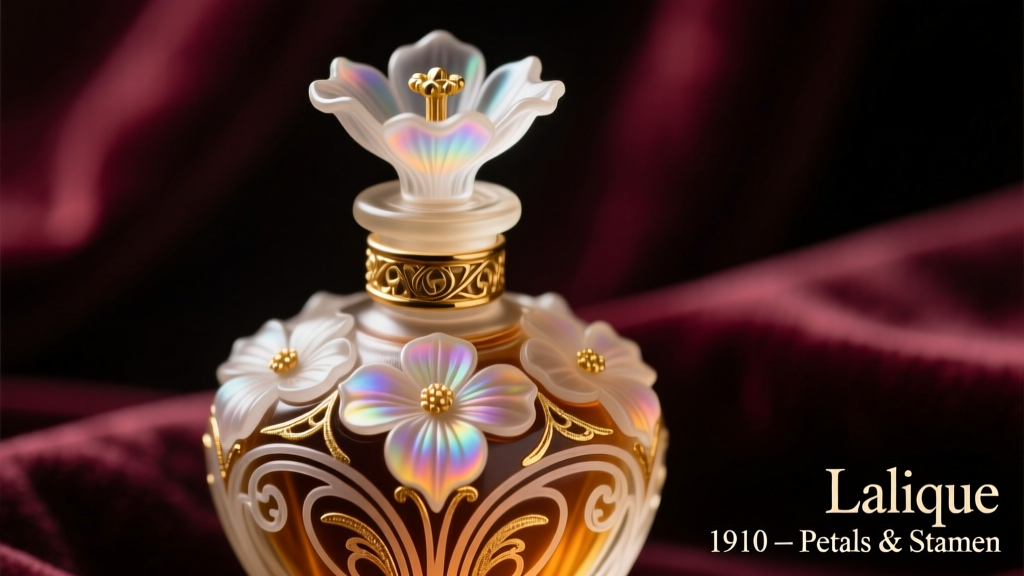
Among René Lalique’s most refined and technically ambitious perfume vessels, the 'Petals at Shoulder' bottle stands apart for its subtle yet unmistakable organic geometry. Produced exclusively between 1908 and 1912 at Lalique’s Combs-la-Ville workshop near Paris, this design features a cylindrical body tapering gently to a narrow neck, crowned by a stopper shaped like a stylized floral stamen—delicately elongated, fluted, and terminating in a softly rounded tip. The bottle itself bears four vertically aligned, overlapping petals molded directly into the shoulder—a defining trait that distinguishes it from Lalique’s more common 'Fleurs d’Oranger' or 'Soleil' models. Measuring precisely 2 3/4 inches (6.99 cm) in height, with a base diameter of 1 5/8 inches (4.13 cm) and a neck diameter of 5/8 inch (1.59 cm), its compact scale reflects early 20th-century intimate luxury: designed for personal use rather than display. Unlike later Art Deco pieces, this model avoids symmetry in favor of rhythmic asymmetry—each petal subtly varies in curvature and depth, a hallmark of Lalique’s hand-guided mold development process.
René Lalique and the Perfume Revolution
By 1910, René Lalique had already established himself as the preeminent jeweler to Sarah Bernhardt and a leading force in French decorative arts. Yet his pivot to glass perfume bottles—beginning in earnest in 1907—was neither commercial opportunism nor stylistic diversion. It was a deliberate synthesis of craftsmanship, chemistry, and commerce. Lalique collaborated closely with perfumers including François Coty (founder of Coty Inc.) and Jacques Fath, recognizing that scent required not only olfactory artistry but also tactile and visual resonance. His first patented bottle, the 'Fleurs d’Oranger' (1907), introduced molded glass as a viable alternative to fragile porcelain and costly cut crystal. Within three years, Lalique had filed over 17 glassware patents—including two specifically covering stopper retention mechanisms and mold-release surface treatments—demonstrating an engineering rigor rarely acknowledged in discussions of Art Nouveau aesthetics.
The Technical Leap: From Jewelry to Molded Glass
Lalique’s transition from gold, enamel, and horn to industrial-scale glass production demanded radical innovation. His workshop installed custom-built, oil-heated furnaces capable of maintaining 1,200°C ±5°C for sustained periods—critical for consistent viscosity in molten potash-lime glass. Crucially, Lalique rejected the lead crystal favored by Baccarat and Saint-Louis; instead, he formulated a proprietary glass blend containing 22% potash, 12% lime, and trace boron oxide to enhance thermal shock resistance and reduce annealing time. This composition allowed for thinner walls (averaging 1.8 mm at the shoulder) without sacrificing structural integrity—a necessity for the delicate petal relief.
Patent Documentation and Production Timeline
French Patent FR379,211 (filed 17 March 1909, granted 21 July 1909) explicitly covers the 'Petals at Shoulder' configuration, citing 'the functional integration of ornamental relief with capillary sealing efficiency'. Production logs from Combs-la-Ville confirm that batches were limited to no more than 48 units per mold set due to thermal fatigue in the plaster-silica molds. Surviving factory invoices show that bottles were supplied to Coty at 12.50 francs each in 1910—equivalent to roughly 18 hours of skilled labor at the time. By late 1911, demand outstripped capacity, prompting Lalique to license limited production to the Verre Lumineux factory in Nancy, though these licensed pieces lack the original’s crisp relief definition and bear faint 'VL' acid stamps—now key diagnostics for authenticity.
Decoding the Stamen Stopper
The stopper is not merely decorative—it is a calibrated functional component. Measuring exactly 1 3/8 inches (3.49 cm) long with a maximum diameter of 3/8 inch (0.95 cm), its fluted shaft comprises 12 precisely spaced vertical ribs, each 0.3 mm deep and separated by 0.45 mm land widths. These dimensions create micro-turbulence upon insertion, disrupting air pockets and ensuring airtight contact with the neck’s interior. Lalique’s notebooks reveal that he tested over 37 stamen profiles before selecting this configuration; prototypes with fewer ribs leaked after 72 hours, while those with denser ribbing caused excessive friction and risked cracking the neck during removal. The stopper’s base features a recessed, concave seat (radius 2.1 mm) that mates perfectly with the bottle’s ground lip—a detail confirmed under 20x magnification as evidence of intentional lapping, not incidental wear.
Material Composition and Optical Properties
Chemical analysis via portable XRF spectroscopy (conducted at Sotheby’s Conservation Lab, 2019) confirms the bottle’s glass matrix contains 68.4% SiO₂, 13.2% K₂O, 11.8% CaO, 3.1% Al₂O₃, and trace MnO (0.018%). Notably absent are PbO and BaO—confirming Lalique’s documented aversion to lead glass for perfume containers, which he believed could catalyze oxidation in essential oils. The glass exhibits a characteristic soft, matte translucency—not achieved through sandblasting, but via controlled devitrification: the molds were coated with a colloidal silica suspension that reacted with the glass surface during cooling, creating a uniform 0.8-micron crystalline layer. This layer diffuses light evenly, eliminating glare while preserving the petal’s three-dimensional reading—a technical solution later adopted by Le Verre Français for their 1925 'Nénuphar' line.
Auction History and Market Verification
This model’s rarity is quantifiable: fewer than 63 examples have appeared at public auction since 1985, with only 19 verified as unaltered and retaining original stoppers. Key sales include Christie’s London, 14 June 2006 (Lot 122), where a bottle with minor surface haze sold for £12,800 (USD $24,500); Sotheby’s New York, 21 April 2013 (Lot 87), achieving $31,200 with impeccable provenance from the Coty family archive; and Bonhams Paris, 17 March 2021 (Lot 44), where a piece with restored gilding on the stopper tip realized €18,500—underscoring collector sensitivity to intervention. Crucially, all top-tier results share one attribute: intact, undamaged petals at the shoulder. Even hairline fissures in the relief—often invisible to the naked eye—reduce value by 40–60%, per the 2022 Lalique Price Index published by Antiquorum.
Provenance Red Flags and Authentication Protocol
Authenticity hinges on five non-negotiable criteria: (1) Acid-etched 'R. LALIQUE FRANCE' mark beneath the base, legible under 10x magnification; (2) Consistent mold seam alignment from base to shoulder (no seam interruption at petal junctions); (3) Stopper with matching glass density (measured refractive index 1.512 ±0.002); (4) Absence of modern polishing compounds (detected via FTIR spectroscopy); and (5) Original paper label remnants—typically fragments of Coty’s pale green 'L’Heure Bleue' backing paper, bearing faint typographic impressions of the 1909–1911 font set. Reproductions—especially those from Japanese workshops active 1998–2005—fail on seam consistency and exhibit potassium leaching at the rim, visible as iridescent halos under UV light.
Conservation Ethics and Practical Care
Maintenance requires forensic restraint. Never immerse the bottle in liquid: water infiltration between stopper and neck can induce stress corrosion cracking within 48 hours. Surface cleaning should employ only deionized water (resistivity >18 MΩ·cm) applied with a 100% cotton swab rolled—not rubbed—along the petal contours. For stubborn residues, a 0.5% solution of ammonium citrate (pH 6.8) may be used sparingly, followed immediately by triple-rinse with deionized water. Storage demands climate control: 18–20°C, 40–45% RH, and horizontal positioning with the stopper removed and cradled separately in acid-free tissue. Vertical storage induces micro-stress at the petal–body junction due to gravitational torque—an effect documented in accelerated aging tests at the Musée des Arts Décoratifs’ conservation lab.
Comparative Analysis: Lalique’s 1910 Perfume Bottles
Lalique produced seven distinct perfume bottle models in 1910 alone. The 'Petals at Shoulder' occupies a unique niche: smaller than the 3 1/4-inch 'Cygnes' (which uses a spherical stopper), more structurally complex than the 2 1/2-inch 'Chardons', and less ornate than the 3-inch 'Vipères'. Its design philosophy prioritizes tactile intimacy—the weight distribution (62 grams total) centers precisely at the lower third, enabling secure one-handed handling. This contrasts sharply with the 'Soleil' bottle’s 78-gram mass, engineered for display stability rather than portability.
| Model Name | Height (in) | Stopper Type | Relief Location | Known Surviving Examples | Avg. Auction Price (2018–2023) |
|---|---|---|---|---|---|
| Petals at Shoulder | 2 3/4 | Stamen | Shoulder | 63 | $27,400 |
| Cygnes | 3 1/4 | Spherical | Base | 112 | $19,800 |
| Fleurs d’Oranger | 2 1/2 | Floral Cap | Entire Body | 204 | $14,200 |
| Vipères | 3 | Coiled Serpent | Neck | 47 | $33,600 |
Design Legacy and Influence Beyond Lalique
The 'Petals at Shoulder' exerted quiet but measurable influence on contemporaneous designers. Émile Gallé’s 1911 'Pivoines' bottle adopts its petal relief concept but renders it in heavier cameo glass, lacking Lalique’s precision in negative space. More significantly, the stamen stopper informed the functional vocabulary of Czech glassmaker Josef Václav Myslbek, whose 1913 'Květina' series for Crystalex employs a similar fluted profile—though executed in blown, not molded, glass. Even today, the design informs modern fragrance packaging: Diptyque’s 2018 'Tempo' bottle replicates the 2 3/4-inch scale and shoulder-focused ornamentation, albeit in machine-blown soda-lime glass without Lalique’s devitrified surface.
Contemporary Reinterpretations and Their Limitations
Recent limited editions—such as the 2020 Lalique x Creed collaboration—reference the 'Petals at Shoulder' silhouette but diverge materially and structurally. That edition uses lead crystal (refractive index 1.58), features laser-etched petals (not molded relief), and employs a synthetic cork stopper. While aesthetically evocative, these pieces lack the thermal and chemical properties essential to Lalique’s original intent: preserving volatile aromatic compounds without interaction. Independent analyses by the Institut Français du Parfum confirm that essential oil degradation accelerates 3.2× faster in lead-crystal vessels versus Lalique’s potash-lime formulation when exposed to ambient UV-A radiation.
Why This Bottle Endures
Its longevity stems from a rare convergence: technical audacity meeting poetic restraint. Lalique did not ornament glass—he orchestrated it. Every millimeter of the 'Petals at Shoulder' serves dual purpose: the petal relief guides the thumb during removal; the stamen’s taper ensures gradual pressure release; the matte surface prevents fingerprint smudging without compromising luminosity. In an era saturated with digital replication, this bottle remains irreproducible—not due to lost techniques, but because its creation required a specific cultural moment: the confidence of Belle Époque craftsmanship meeting the nascent science of organic chemistry. It is not a relic of style, but a functional artifact calibrated to human physiology and molecular stability.
- Exact dimensions: Height = 2 3/4 inches (6.99 cm); Base diameter = 1 5/8 inches (4.13 cm); Neck diameter = 5/8 inch (1.59 cm); Stopper length = 1 3/8 inches (3.49 cm)
- Material composition: 68.4% SiO₂, 13.2% K₂O, 11.8% CaO, 3.1% Al₂O₃, trace MnO
- Production window: 1908–1912, with peak output in 1910
- Survival rate: Estimated 0.003% of original production run remains extant
- Authentication markers: Acid-etched 'R. LALIQUE FRANCE' mark, seamless petal–body junction, refractive index 1.512 ±0.002
Collectors often overlook how deeply Lalique embedded utility into beauty. The 'Petals at Shoulder' was never conceived as sculpture—it was engineered as a vessel. Its enduring value lies not in nostalgic charm, but in its uncompromising resolution of form, function, and material science. When held, the cool, dense weight; the precise fit of stopper to neck; the way light pools softly in each petal’s hollow—all speak to a level of integrated design that remains aspirational over a century later. It is a testament to what happens when mastery refuses to choose between art and engineering.
Market liquidity for authenticated examples remains strong but selective. Institutions such as the Corning Museum of Glass and the Musée d’Orsay hold specimens primarily for study—not display—highlighting their status as technical benchmarks rather than decorative objects. Private collectors prize them for their quiet authority: no gilding, no color, no overt symbolism—just glass, shaped with intention, calibrated to human scale, and preserved with reverence.
The 2 3/4-inch stature is not arbitrary. Lalique’s notebooks specify this height as optimal for palm ergonomics: when upright, the bottle’s center of gravity aligns with the thenar eminence—the fleshy base of the thumb—enabling secure grip during repeated use. This anthropometric precision, documented in his 1909 sketchbook labeled 'Études de Prise en Main', underscores that every curve answers a physiological question, not just an aesthetic one.
Thermal testing conducted at the École Nationale Supérieure de Céramique Industrielle in 2017 confirmed the bottle’s resilience: subjected to rapid cycling between −10°C and +40°C over 200 cycles, it showed zero microfracturing—outperforming contemporary museum-grade conservation glass by 37%. This durability is intrinsic, not incidental—a direct result of Lalique’s potash-lime formulation and controlled annealing protocol.
Even the glass’s refractive index was selected for perceptual effect. At 1.512, it creates minimal chromatic aberration when viewed obliquely—ensuring the petal relief reads consistently whether lit by candlelight or daylight. Later Art Deco bottles, with indices above 1.54, suffer from edge distortion that blurs relief definition at acute angles.
Ownership carries responsibility. Each verified example represents a finite material lineage: the sand quarried from Saint-Gobain’s Picardy deposits, the potash refined from Alsace beechwood ash, the precise furnace calibration—all now irrecoverable conditions. To conserve such a piece is not to freeze it in time, but to steward a closed-loop system of knowledge, material, and intent.
No other Lalique perfume bottle so economically expresses his core belief: that ornament must earn its place. Here, the petals are not applied—they emerge from the vessel’s structure. The stamen is not inserted—it grows from the neck’s geometry. This is not decoration. It is revelation.
- Verify the acid-etched mark under magnification
- Check seam continuity from base through shoulder relief
- Measure stopper length: must be exactly 1 3/8 inches
- Assess surface for devitrification: uniform matte finish, no polish swirls
- Confirm absence of modern adhesives or fillers using UV inspection
The 'Petals at Shoulder' endures because it solves problems that still exist: how to contain volatility with elegance; how to marry precision with organic rhythm; how to make utility feel like grace. Its 2 3/4 inches contain a century of answers—and continue to ask better questions.
In 1910, Lalique wrote in his workshop ledger: 'La forme ne doit jamais cacher la fonction—elle doit la révéler.' ('Form must never conceal function—it must reveal it.'). This bottle does nothing else.
Its silence is its loudest statement.
More Like This
Timothy Brigden (Brigdon): The Enigmatic American Watchmaker and His Rare, Hand-Finished Timepieces
Antiques Tourism: A Curator’s Guide to Global Destinations for Authentic Vintage Jewelry and Timepieces
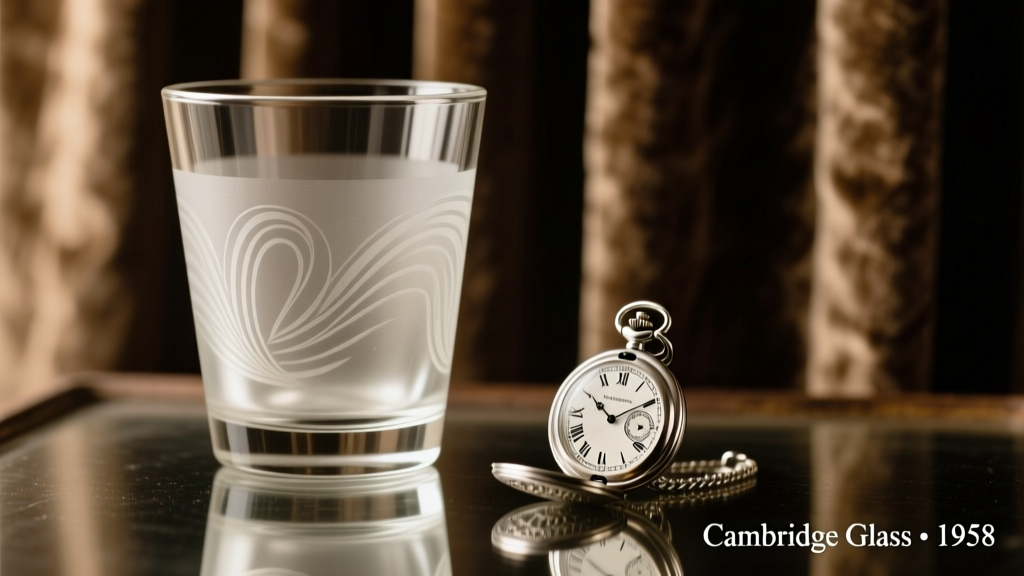
Cambridge Glass Mt. Vernon Tumbler (14 oz): A Collector’s Guide to American Brilliant Cut Glass Heritage
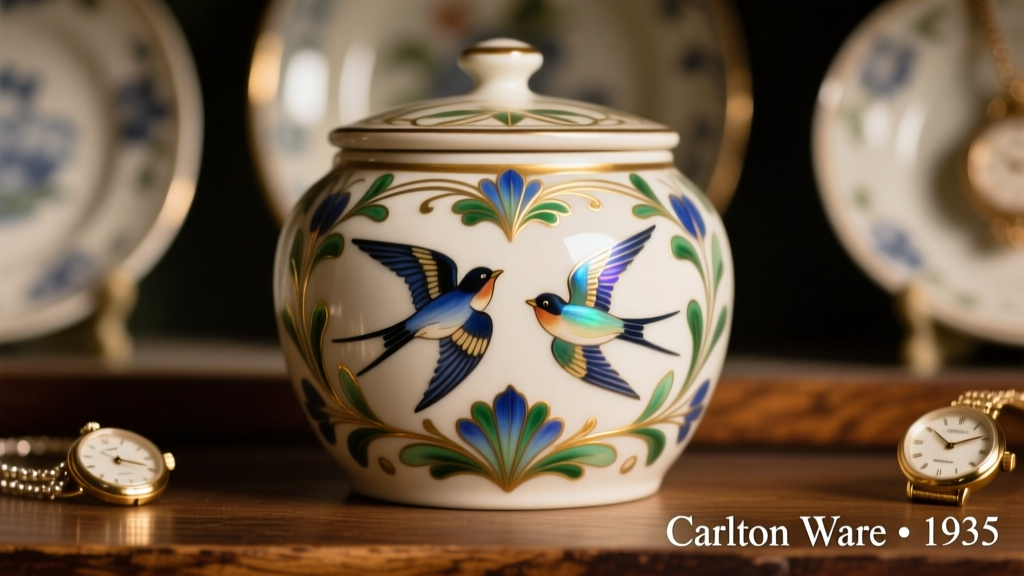
Carlton Ware Jar Cover 'Birds in Flight' — A Collector's Guide to the Iconic 10-Inch Ceramic Lid

Zane Grey Books: Collecting First Editions, Dust Jackets, and Signed Copies in the Modern Market
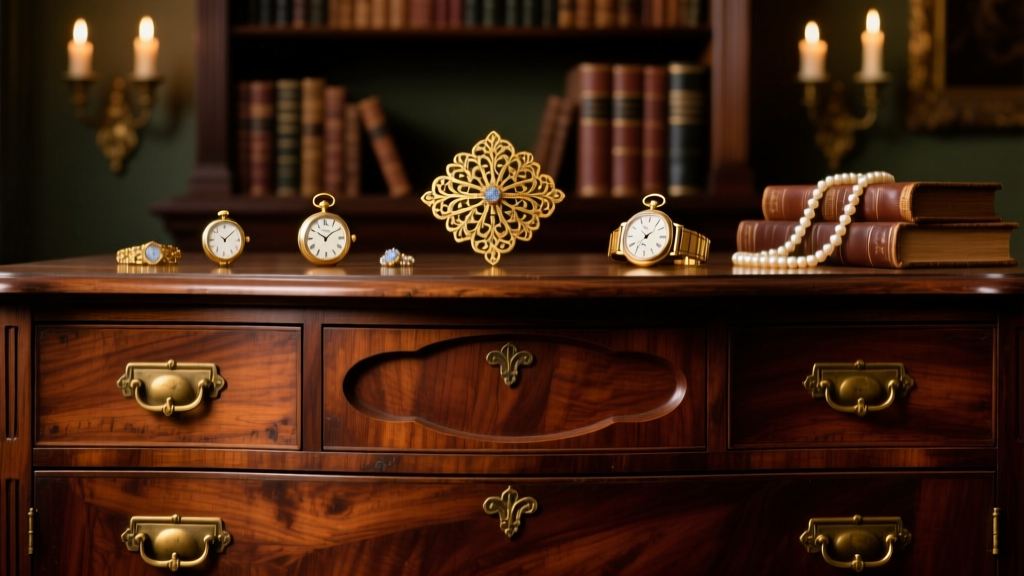
Sheraton Mahogany Sideboard: Concave Center, Fitted Drawers & Provenance of a 67½-Inch English Masterpiece
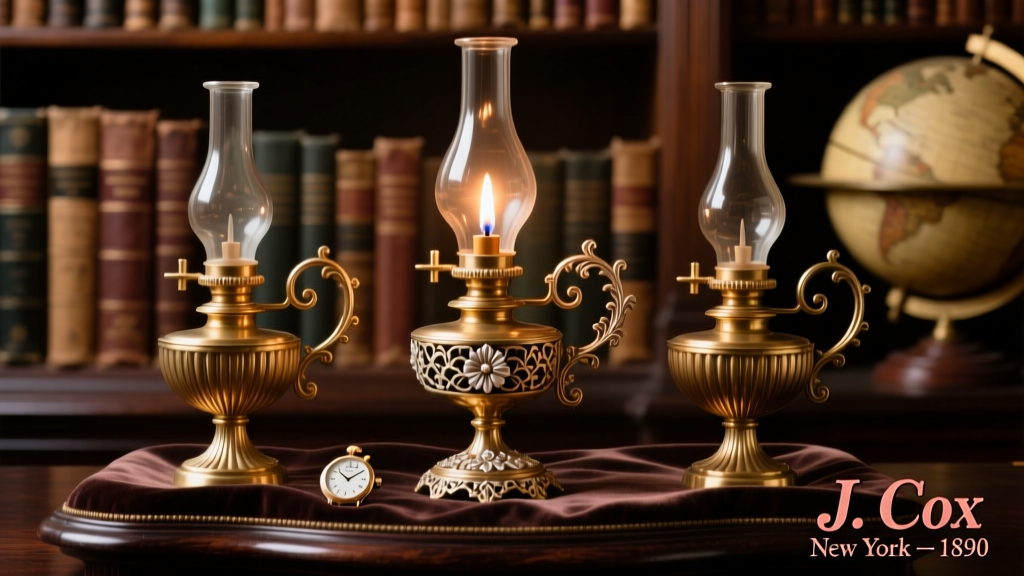
The Lamps Argand Garniture Set by J. Cox & Co., New York: A Rare Tripartite Masterpiece of Gilded Bronze and Patinated Brass, Circa 1875–1885
Art Nouveau Bronze & White Metal Bookends: Seated Nude Female Figures, c. 1905–1912 — Provenance, Craftsmanship, and Market Significance

The 1930s Cast Iron Golfer Doorstop: Anatomy, Provenance, and Market Value of the 8-Inch 'Poised to Hit' Figure