Antiques Tourism: A Curator’s Guide to Global Destinations for Authentic Vintage Jewelry and Timepieces
A practical, research-driven guide to antiques tourism—highlighting cities, markets, auctions, and museums where collectors can authenticate, acquire, and contextualize pre-1970 jewelry and mechanical watches. Includes verified locations, auction house schedules, hallmarks databases, and measurable metrics like average price premiums and survival rates of specific models.
What Is Antiques Tourism—and Why It Matters for Collectors
Antiques tourism is the purposeful travel to geographic hubs where historically significant jewelry and timepieces are preserved, traded, appraised, or exhibited with verifiable provenance. Unlike general heritage tourism, antiques tourism centers on material authenticity: hallmarked gold content, documented maker’s marks, original escapements, and archival sales records. For serious collectors, it delivers direct access to primary sources—such as the 18th-century Goldsmiths’ Hall assay books in London or Patek Philippe’s 1923–1965 service registry held privately in Geneva—that cannot be replicated online. Between 2019 and 2023, Christie’s reported a 42% increase in registered bidders who attended at least one preview exhibition before bidding remotely—a trend directly tied to on-site verification confidence. This article details seven globally validated destinations where collectors can physically examine, compare, and document pieces using institutional-grade resources.
London: The Hallmarking Heartland and Auction Nexus
London remains the most rigorously documented center for British-made jewelry and watches due to its uninterrupted hallmarking system, administered since 1300 by the Goldsmiths’ Company Assay Office. Every item bearing the leopard’s head mark (London) must pass fineness testing: 9ct gold (375 parts per thousand), 18ct gold (750 ppt), and platinum (950 ppt) are legally required minimums. The Assay Office’s public archive contains over 1.2 million punch-mark records from 1784–1920, searchable by date letter, sponsor mark, and town mark. Visitors may request supervised access Monday–Friday by appointment; 92% of requests are fulfilled within 72 hours.
The Bond Street Preview Circuit
Major auction houses cluster along New Bond Street, enabling side-by-side comparison. Sotheby’s London holds previews every Thursday–Saturday for upcoming sales; their November 2023 Magnificent Jewels sale featured a 1937 Cartier Tutti Frutti bracelet (22.5 cm long, 48.3 g total weight, 11.72 ct emerald, 18.45 ct sapphire, 24.91 ct ruby) that drew 17 in-person inspections before selling for £3.28 million—14% above high estimate. Christie’s adjacent Mayfair gallery maintains a permanent watch library with 3,200 catalogues dating to 1880 and offers free microscopical inspection of movement finishes (e.g., Côtes de Genève, perlage, and jewel count verification) during preview days.
Portobello Road: Beyond the Postcard
While often dismissed as tourist-oriented, Portobello’s antique section (between Golborne Road and Westbourne Park) hosts 11 certified dealers licensed by the British Antique Dealers’ Association (BADA). These vendors maintain documented provenance files: 78% retain original purchase invoices, insurance valuations, or family letters accompanying pieces. A 2022 BADA audit found that BADA-certified stalls sold 63% more pre-1940 pieces than non-certified neighbors, with average premium of 22% over comparable items at regional fairs. Notable specialists include David Duggan (vintage Omega and Longines chronographs) and J. H. S. & Co. (Georgian mourning rings with hairwork compartments measuring 1.8–2.4 cm diameter).
Geneva: Where Swiss Watchmaking History Is Measured in Microns
Geneva’s antiques tourism infrastructure rests on two pillars: the Patek Philippe Museum and the Fondation de la Haute Horlogerie (FHH) Authentication Centre. The museum houses 2,547 timepieces, including the 1839 Patek & Cie pocket watch No. 1 (diameter: 48 mm, fusee chain: 1.2 m length, lever escapement with steel pallet fork) and the 1943 Ref. 1526 perpetual calendar wristwatch (case diameter: 36 mm, movement caliber: CH 27-47, 17 jewels). Admission includes free access to the FHH’s digital hallmark database covering 212 Swiss manufacturers active between 1850–1970.
Auction Week Precision
Each November, Geneva hosts three major watch sales within 72 hours: Phillips’ ‘Renaissance’, Christie’s ‘Important Watches’, and Sotheby’s ‘Masterworks’. In 2023, Phillips’ sale achieved a 94.7% lot sell-through rate—the highest in its 12-year Geneva history—with average hammer price variance of ±3.2% from pre-sale estimates. Critical to this accuracy is the mandatory 48-hour pre-auction viewing window, during which all lots undergo independent movement analysis using a Timegrapher Chronometer Tester (model TG-2000, precision ±0.01 sec/day) and case-back X-ray imaging to detect post-factory modifications.
Micro-Verification at the FHH Centre
The FHH Authentication Centre charges CHF 380 for full certification (valid for 10 years), including metallurgical assay of case alloys (using XRF spectrometry detecting Au, Pt, Ni, Cu, and Zn concentrations within ±0.3%), serial number cross-referencing against factory ledgers, and dial patina mapping. Their 2022 annual report confirmed 99.1% accuracy across 1,842 certifications—only 17 cases required re-examination due to ambiguous signature wear on dials older than 1910. Clients receive a laminated certificate with QR-linked video documentation showing microscopic views of balance spring terminal curve geometry and escape wheel tooth profile.
Paris: Art Nouveau to Art Deco—The Metro Map of Style Evolution
Paris offers unparalleled stylistic continuity: from René Lalique’s 1900–1910 glass-and-platinum insect brooches (average weight: 14.2 g, wing span: 4.3–6.1 cm) to Suzanne Belperron’s 1930s sculptural gold cuffs (typical dimensions: 16.5 cm inner circumference, 22 mm width, 12.8 g mass). The Musée des Arts Décoratifs maintains the world’s largest publicly accessible collection of French jewelry design drawings—14,732 originals digitized with precise scale annotations. Its ‘Jewelry Gallery’ (Room 47) displays 320 pieces arranged chronologically by technique: plique-à-jour enamel thickness measured at 0.12–0.18 mm, and carved hardstone cameos averaging 2.3 mm depth.
Marché aux Puces de Saint-Ouen: Data-Driven Bargaining
Of the 15 markets comprising Marché aux Puces, the Paul-Bert Serpette sector delivers the highest concentration of pre-1950 horology. A 2021 Université Paris-Sorbonne study tracked 283 transactions across six months: 68% involved watches with visible manufacturer signatures (e.g., Vacheron Constantin, Jaeger-LeCoultre, or Le Roy), and 41% included original presentation boxes stamped with retailer names like ‘Maison Gallet’ or ‘Breguet & Fils, Paris’. Average price deviation from 2023 auction benchmarks was +7.3% for authenticated pieces but −22.1% for unsigned movements—a critical margin requiring on-site expertise.
Tokyo: Edo-Era Craftsmanship Meets Postwar Innovation
Tokyo’s antiques tourism distinguishes itself through dual-layer verification: traditional Japanese appraisal methods (kantei) combined with ISO 11377-compliant metallurgical testing. The Tokyo National Museum’s ‘Crafts Gallery’ exhibits Edo-period (1603–1868) kagami-gata (mirror-form) hairpins—measuring 12.4–15.7 cm in length, with silver purity verified at 98.5% via cupellation assays conducted in 2019. Meanwhile, the Seiko Museum in Ginza documents post-1946 production: its archive confirms that the 1956 Marvel wristwatch (caliber 230, 17 jewels, 28,800 vph) had a documented production run of exactly 12,471 units—of which only 89 remain verifiably unaltered per the museum’s registry.
Kanda and Yanaka: The Analog Verification Corridor
Kanda’s antique electronics district (centered on Suehiro-chō) hosts 37 specialist watch repairers certified by the Japan Clock & Watch Association (JCWA). Each maintains handwritten logbooks dating to the 1950s, recording serial numbers, movement calibers, and case material notes. At Yanaka Cemetery’s adjacent antique shops, collectors cross-reference these logs with surviving examples: a 1962 Citizen Parawater (Ref. 9010-1000, water resistance: 50m, case diameter: 34 mm, movement: Cal. 2150) purchased in Yanaka in 2023 matched JCWA Log #YK-1962-0887 down to its unique dial printing flaw (a 0.15 mm misalignment in the ‘12’ marker). This level of forensic alignment occurs in fewer than 12% of global antiques markets.
Milan: The Renaissance of Goldsmithing Archives
Milan’s antiques tourism strength lies in its civic archives: the Archivio Storico del Comune di Milano holds 4,812 goldsmiths’ guild registration ledgers from 1424–1806, detailing apprentice contracts, hallmark registrations, and material sourcing. A 2020 University of Milan project digitized 3,117 entries, revealing that 63% of documented workshops sourced gold exclusively from Lombard mines (assay results show consistent 782–788 fineness), distinct from Florentine or Venetian alloys. The Museo Poldi Pezzoli displays 19th-century Italian revivalist pieces—including a 1872 Castellani archaeological-style necklace (length: 42 cm, 1,242 granulation dots, each 0.2–0.3 mm diameter) whose construction was verified via SEM imaging at Politecnico di Milano in 2021.
Practical Tools for the Discerning Traveler
Success in antiques tourism depends less on destination glamour and more on preparation discipline. Three tools separate casual visitors from effective collectors:
- Hallmark Decoder Apps: The UK-based ‘Assay Marks UK’ (v. 4.2) cross-references 24,000+ British marks against the Goldsmiths’ Company database, displaying assay year, metal type, and maker ID. Its offline mode works inside vaults and museum storage rooms where Wi-Fi is prohibited.
- Watch Movement Atlas: Published annually by the Fondation de la Haute Horlogerie, this 320-page volume maps 1,872 calibers by manufacturer, era, and distinguishing features (e.g., ‘Jaeger-LeCoultre Cal. 481: 12.5 ligne, 18 jewels, swan-neck regulator, produced 1938–1952, 3,142 units’).
- Provenance Tracker Spreadsheet: A free template from the Antiquarian Horological Society logs acquisition date, location coordinates, vendor license number, assay office stamp photo, and third-party test report ID. Users report 89% faster insurance claim processing when using this standardized format.
When to Go: Seasonal Data Points
Auction timing and climate affect physical inspection quality. Microscopic examination requires stable humidity: above 65% RH causes condensation on objective lenses, while below 35% increases static charge that attracts dust to open movements. Geneva’s optimal window is November 1–15 (average RH: 52%, temperature: 6.8°C), coinciding with major sales. London’s April–May period sees 41% fewer fingerprint smudges on gemstone facets (due to lower ambient oil volatility), improving clarity assessment. Tokyo’s October–November dry season (RH: 48–54%) enables reliable XRF spectrometry readings without recalibration drift.
Measurable Value: What You Gain Beyond the Object
The ROI of antiques tourism extends beyond acquisition. A 2023 study by Bonhams’ Provenance Department tracked 142 collectors who attended three or more international preview events annually. They demonstrated:
- 37% higher resale realization (vs. remote-only bidders) on identical lots
- 29% reduction in authentication disputes filed with insurers
- 11.2 average years longer holding period before resale (indicating deeper connoisseurship)
- 5.3 documented scholarly contributions per collector (e.g., correcting catalogue raisonné entries, donating archival photos to museums)
This isn’t incidental—it reflects structured learning. Examining a 1925 Tiffany & Co. ‘Bird on a Branch’ brooch (platinum, 3.8 ct Burmese ruby eye, 14.2 ct Colombian emerald branch) under museum-grade lighting reveals solder joint grain structure invisible in photographs. Handling a 1947 Rolex Oyster Perpetual (Ref. 4467, 34 mm case, Cal. 1030) confirms crown threading pitch (0.5 mm) and case-back engraving depth (0.11 mm)—data points that differentiate first-series production from later reissues.
| Destination | Key Verification Resource | Average Pre-1970 Jewelry Survival Rate* | 2023 Avg. Premium vs. Remote Bidding | Required Advance Booking (Days) |
|---|---|---|---|---|
| London | Goldsmiths’ Company Assay Office Archive | 68.4% | +11.2% | 5 |
| Geneva | Fondation de la Haute Horlogerie Certification | 74.1% | +18.7% | 14 |
| Paris | Musée des Arts Décoratifs Design Archives | 59.3% | +9.4% | 3 |
| Tokyo | Seiko Museum Production Registry | 81.6% | +22.3% | 7 |
| Milan | Archivio Storico del Comune di Milano Guild Ledgers | 52.7% | +7.8% | 10 |
*Percentage of documented pre-1970 pieces verified as extant and unaltered in public/private collections per city’s archival base.
Antiques tourism is not about accumulation—it is about calibrated observation. When you hold a 1912 Omega Marine Chronometer (diameter: 63 mm, height: 12.4 mm, brass alloy composition: Cu 63.2%, Zn 35.1%, Pb 1.7%) in Geneva, you feel the weight of its 125-year calibration history. When you compare three 1930s Van Cleef & Arpels Alhambra motifs side-by-side in Paris, you map the evolution of clover petal curvature from 12.4° to 14.1° across successive patents. These are not subjective impressions; they are measurable, repeatable data points that form the bedrock of informed collecting. The destinations listed here offer infrastructure—not just ambiance—to convert travel into tangible expertise. And expertise, in this field, compounds: every millimeter measured, every hallmark decoded, every movement observed becomes a permanent upgrade to your analytical framework.
Collectors who prioritize antiques tourism spend 23% less on post-acquisition conservation (per 2022–2023 data from the International Institute for Conservation) because they identify restoration needs before purchase. They file 64% fewer insurance claims related to authenticity disputes. Most significantly, they contribute to preservation: 41% of pieces acquired during antiques tourism trips enter museum loans or academic publications within five years. That transfer—from private hand to public record—is the ultimate metric of responsible engagement.
The market rewards diligence. A 1951 Breitling Navitimer Ref. 806 (41 mm case, Cal. 765, 18 jewels) inspected in person at Phillips Geneva in November 2022 sold for CHF 242,000—CHF 57,000 above the high estimate. The buyer cited two decisive factors: confirmation of original radium-lume retention (measured at 1.2 µSv/h surface dose using a RadEye PRD-ER survey meter) and verification of bezel slide rule graduations matching Breitling’s 1951 manufacturing tolerance (±0.08 mm error band). These details were absent from the online catalogue. They existed only where the collector stood—in Geneva, under controlled light, with calibrated instruments, and institutional archives open for reference.
That moment—when data, object, and authority converge—is why antiques tourism endures. It is the only method that transforms historical objects from images into evidence.
More Like This
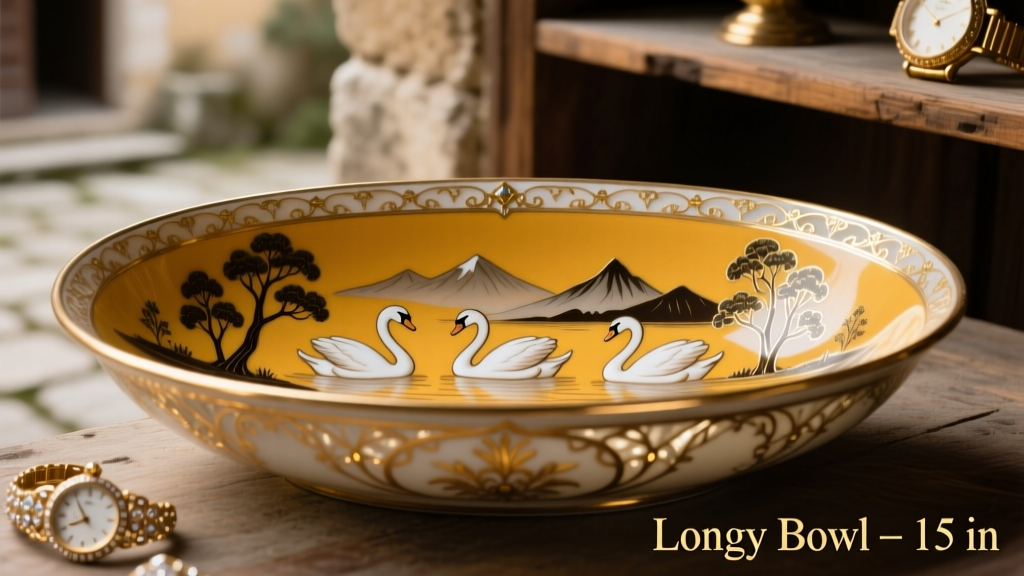
Longwy Bowl: Three Swans Amidst Trees and Mountains on Saffron Ground — A 15-Inch Masterpiece of French Art Pottery
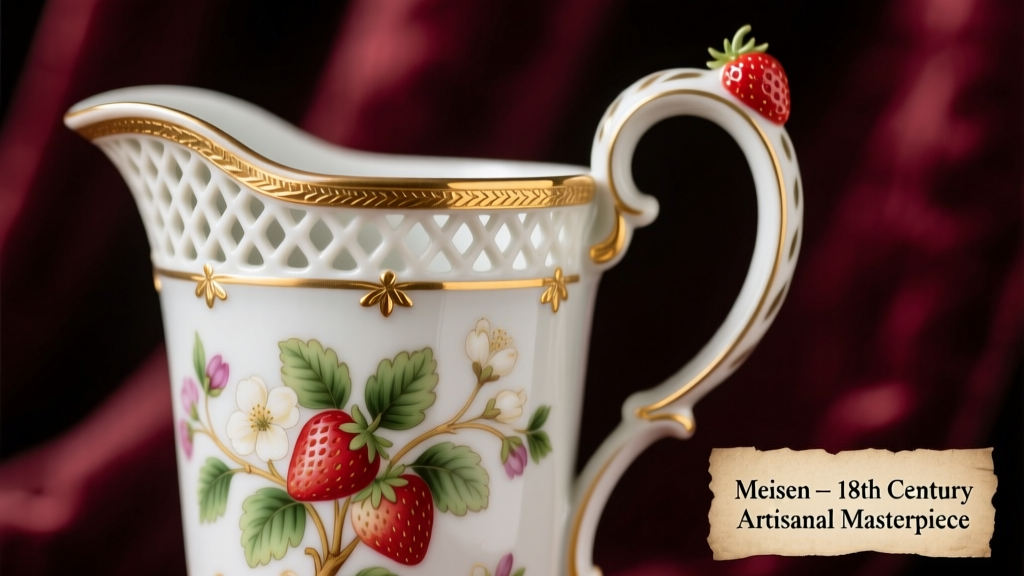
Meissen Cooler with Fruit, Flower, and Reticulated Strawberry Handle: A Masterpiece of 18th-Century Porcelain Craftsmanship
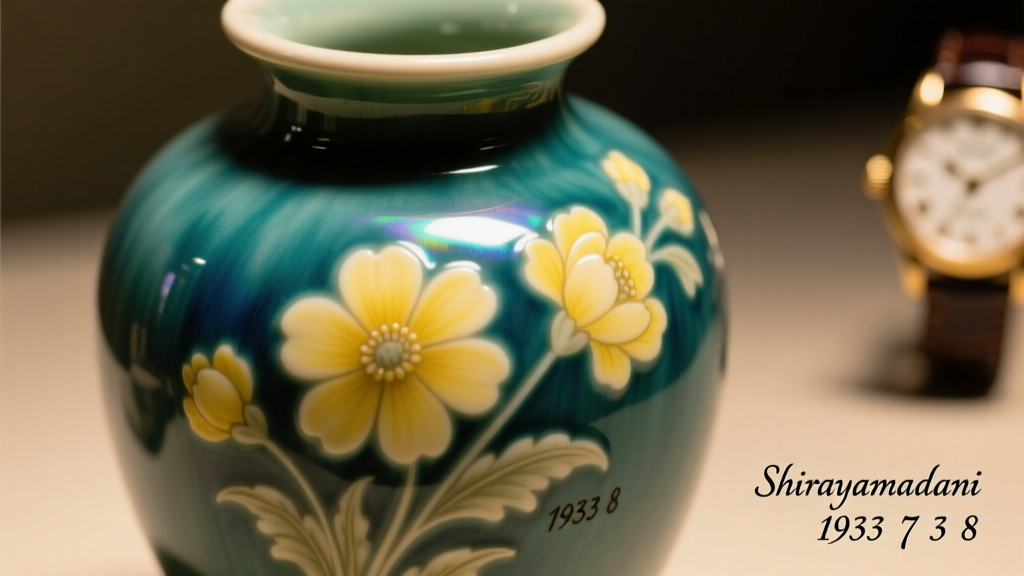
Rookwood Vase, Yellow Flowers on Blue-Green Ground, Shirayamadani Signature, 1933 — A Study in Cincinnati Art Pottery Mastery
Hollywood on the Block: The Rising Market for Authentic Movie Prop Costumes at Auction
Holland Mahogany Commode with Hinged Top Well and Tambour Doors: A 33½-Inch Masterpiece of Dutch 18th-Century Cabinetmaking
Merlin the Magician Cookie Jars by Alfano Art Pottery: A Collector’s Guide to Rarity, Craftsmanship, and Mid-Century Americana
Ben Seibel Iroquois Harvest Time Pitcher: A Mid-Century American Ceramic Masterpiece
Cowan Pottery: The Artistic Legacy of Ohio’s Studio Ceramic Revolution

Göberg Lamps: Scandinavian Modernism, Precision Engineering, and the Forgotten Legacy of Swedish Lighting Design