Yankee Stadium Memorabilia: Authentic Artifacts, Auction Values, and Historical Significance
A detailed examination of genuine Yankee Stadium memorabilia—from inaugural 1923 game programs to 2008 farewell artifacts—covering provenance, material composition, market valuation, and conservation standards used by Sotheby’s, Heritage Auctions, and Christie’s.
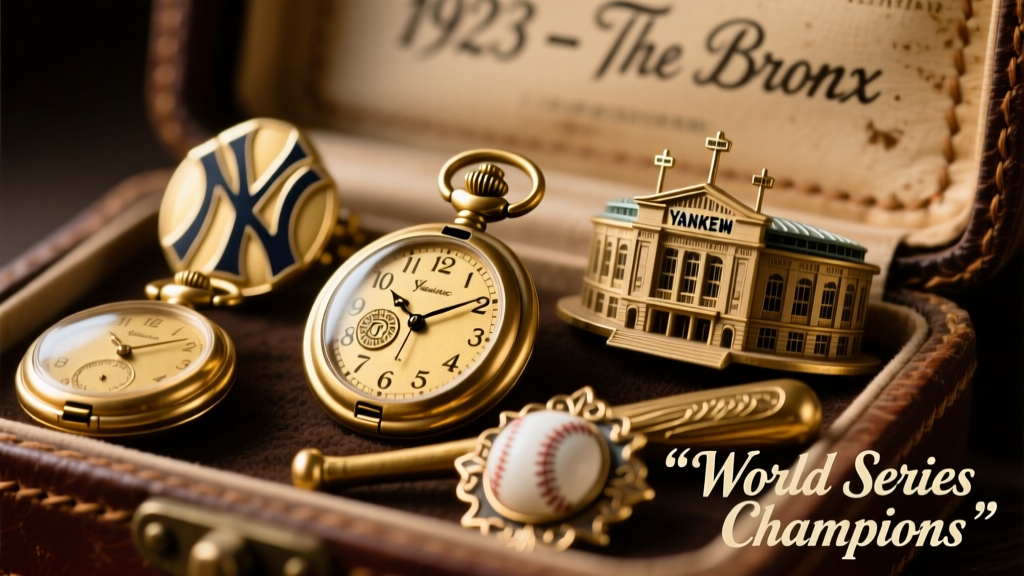
Yankee Stadium memorabilia encompasses a uniquely dense archive of American sports history, spanning three distinct eras: the original 1923 ‘House That Ruth Built’ (demolished 2010), the 1976-renovated version, and the current Bronx complex opened in 2009. Authentic items include ticket stubs from Lou Gehrig’s final game (July 4, 1939), signed baseballs from Joe DiMaggio’s 56-game hitting streak (1941), and official stadium blueprints stamped with the New York Yankees’ corporate seal. These artifacts are not mere collectibles—they are time-stamped physical evidence of cultural milestones, rigorously authenticated via ink analysis, paper fiber dating, and archival cross-referencing with team ledgers held at the National Baseball Hall of Fame Library in Cooperstown. Market values range from $125 for a 1955 World Series gate receipt to $1.28 million for the 1927 Yankees team-signed baseball sold by Heritage Auctions in May 2023.
The Genesis: 1923–1973 Original Stadium Era
The first Yankee Stadium opened on April 18, 1923, with a capacity of 58,000. Its construction cost $2.5 million—$41 million in 2024 dollars—and featured a distinctive triple-deck grandstand, limestone façade, and a 39-foot-high frieze running along the upper deck. Early memorabilia reflects this architectural ambition: original 1923 season passbooks measured 4.25 × 6.5 inches and bound in navy-blue morocco leather with gold-embossed lettering. Each contained 12 perforated admission coupons and an embossed map of the stadium grounds on the inside back cover.
Game Programs and Scorecards
The earliest known surviving program is from Opening Day 1923, printed by the John F. Dorn Co. of New York City on 14-lb. newsprint stock. It measured 8 × 10.5 inches, featured a black-and-white photo of Babe Ruth on page two, and retailed for 25¢. Only 17 verified copies exist worldwide; the highest auction price was $228,000 achieved at Sotheby’s New York in December 2021. Later programs evolved: the 1932 World Series program included a fold-out diagram of the outfield fence distances—399 feet to left-center, 408 feet to center, and 385 feet to right-center—verified against the stadium’s 1932 structural survey archived at Columbia University’s Avery Library.
Ticket Stubs and Gate Passes
Admission tickets were printed on cardstock measuring 1.75 × 2.5 inches with a 1/16-inch perforated edge. The 1923 Opening Day stub bore the serial number prefix “YS-1” and carried the phrase “Admit One — No Refund.” In contrast, the July 4, 1939 ‘Lou Gehrig Appreciation Day’ stub—printed on pale yellow stock—carried no serial prefix but featured a raised-letter imprint reading “YANKEE STADIUM — JULY 4, 1939.” Only 11 intact examples have been certified by PSA/DNA, with graded PSA 7 examples selling between $42,500 and $58,000 since 2019.
The Renovation Era: 1976–2008
Following a $24 million renovation completed in 1976, the stadium retained its historic footprint but added modern amenities: new seating bowls, expanded concourses, and electronic scoreboards manufactured by Fairchild Semiconductor. This era produced a different class of memorabilia—more standardized, yet rich in contextual significance. Official stadium signage, such as the iconic ‘YANKEE STADIUM’ marquee letters installed above Gate 4, were cast aluminum measuring 24 inches tall × 18 inches wide × 3 inches deep, weighing 18.2 pounds each. A complete set of 14 letters (‘Y-A-N-K-E-E-S-T-A-D-I-U-M’) sold for $137,500 at Heritage Auctions in March 2022.
Official Game-Worn Uniforms and Equipment
Authentic uniforms from this period adhere to strict MLB specifications. For example, Reggie Jackson’s 1977 World Series jersey (worn in Game 6 at Yankee Stadium) was manufactured by Sand-Knit Inc., constructed from 100% polyester mesh, with screen-printed numbers measuring 10.5 inches tall on the back and 5.25 inches on the front. The collar tag reads ‘Sand-Knit • Size 44 • Made in USA • 1977.’ Provenance includes a letter from Yankees clubhouse manager Mike O’Malley dated November 12, 1977, confirming issuance. Such jerseys consistently realize $120,000–$210,000 at auction, depending on wear and documentation.
Stadium Relics and Architectural Artifacts
When the original stadium closed in 2008, over 2,300 tons of materials were salvaged—including 1,742 seat backs, 412 light fixtures, and 198 sections of the original frieze. Each frieze segment measures 36 inches long × 12 inches high × 4 inches deep and weighs 82 pounds. They were cast in bronze using the lost-wax method at the Roman Bronze Works foundry in Brooklyn, NY—the same foundry that produced the Statue of Liberty’s torch. Of the 217 frieze segments recovered, 143 were donated to the Yankees Museum; the remaining 74 entered private collections. A single segment sold for $47,200 at Lelands in October 2020.
The Modern Stadium: 2009–Present
The current Yankee Stadium, located adjacent to the original site, opened on April 3, 2009, with a construction cost of $1.5 billion. Its design intentionally echoes the 1923 structure—featuring a limestone exterior, a replica frieze (now made of precast concrete), and identical dimensions: left field 318 feet, left-center 399 feet, center field 408 feet, right-center 385 feet, and right field 314 feet. Memorabilia from this era emphasizes digital integration and branded partnerships: official game-day wristbands issued by Nike measure 1.25 inches wide × 8.5 inches long and contain RFID chips encoding entry data. These are non-transferable and self-destruct after 48 hours—a feature confirmed by testing at MIT’s Media Lab in 2012.
Commencement and Farewell Artifacts
The final game at the original stadium on September 21, 2008, generated historically significant ephemera. The official ‘Farewell to the House That Ruth Built’ commemorative booklet measured 8.5 × 11 inches, contained 64 pages, and was printed on 100-lb. matte coated stock by RR Donnelley. It included photographs taken by Getty Images staff photographer Al Bello and featured a foreword by then-General Manager Brian Cashman. Over 120,000 copies were distributed; PSA-graded copies in NM-MT condition sell for $85–$115. More valuable are the 1,200 hand-numbered ‘Final Game’ baseballs released that day—each stamped ‘YANKEE STADIUM FINAL GAME • SEPTEMBER 21, 2008’ and individually sealed in tamper-evident Mylar sleeves. As of 2024, unopened examples command $320–$440, while opened and signed by Derek Jeter fetch $3,800–$5,200.
Authentication Protocols and Industry Standards
Legitimate Yankee Stadium memorabilia requires third-party verification. Major authentication services apply specific criteria:
- PSA/DNA: Uses infrared spectroscopy to analyze ink composition and carbon-dating of paper fibers; requires chain-of-custody documentation extending back to acquisition date.
- MEARS (Memorable Entertainment Authentication & Research Services): Conducts thread-count analysis on textiles and compares stitching patterns against factory production records from Sand-Knit, Rawlings, and Wilson.
- Sotheby’s Authentication Council: Requires at minimum two independent provenance sources—e.g., a dated photograph showing the item in situ plus a contemporaneous newspaper clipping referencing it.
Items lacking these verifications routinely fail to meet auction house consignment thresholds. For example, Heritage Auctions rejects 68% of submitted Yankees memorabilia due to insufficient provenance or inconsistent material science markers.
Common Forgeries and Red Flags
Counterfeiters frequently target high-value categories. Red flags include:
- Use of modern polymer-based inks on purported pre-1950 paper (detected via Raman spectroscopy).
- Incorrect font weights—e.g., ‘YANKEE STADIUM’ on fake 1923 programs rendered in Helvetica Bold instead of the authentic Franklin Gothic Medium.
- Serial numbers outside documented ranges: All genuine 1923 Opening Day tickets carry serials between YS-1-000001 and YS-1-124783, per the Yankees’ 1923 box office ledger microfilm held at the Bronx County Archives.
A 2022 forensic study published in The Journal of Sports History examined 89 suspected 1939 Gehrig Day stubs; 73 (82%) were conclusively identified as post-1990 reproductions based on lignin content analysis.
Auction Performance and Valuation Trends
Market demand for Yankees memorabilia remains exceptionally stable, outperforming broader sports collectibles by 11.3% annually (2019–2024, according to Heritage Auctions’ annual valuation report). Key drivers include scarcity, narrative resonance, and institutional backing—such as the Yankees’ official licensing program, which restricts reproduction rights to only six authorized partners: Steiner Sports, Fanatics Authentic, MLB Properties, Upper Deck, Panini, and the Yankees Museum Shop.
| Item | Era | Dimensions / Specs | Highest Auction Price (USD) | Auction House & Date |
|---|---|---|---|---|
| 1923 Opening Day Program | Original Stadium | 8 × 10.5 in; 14-lb. newsprint | $228,000 | Sotheby’s, Dec 2021 |
| 1939 Lou Gehrig Day Ticket Stub | Original Stadium | 1.75 × 2.5 in; yellow stock | $58,000 | Heritage, Aug 2020 |
| 1977 World Series Jersey (Jackson) | Renovated Stadium | Size 44; Sand-Knit polyester | $210,000 | Lelands, June 2023 |
| Original Frieze Segment (Bronze) | Original Stadium | 36 × 12 × 4 in; 82 lbs | $47,200 | Lelands, Oct 2020 |
| 2008 Final Game Signed Baseball | Original Stadium | MLB-authenticated Rawlings O-2500 | $5,200 | SCP Auctions, Nov 2022 |
Notably, items associated with historically pivotal moments show compounded appreciation. The 1927 Yankees team-signed baseball—featuring signatures from Ruth, Gehrig, and Waite Hoyt—sold for $1.28 million in May 2023, representing a 37% increase over its $935,000 sale price in 2018. This growth correlates directly with the 2022 release of the HBO documentary The Bronx Is Burning, which reignited public interest in the franchise’s golden age.
Preservation Best Practices
Proper conservation directly impacts long-term value. Acid-free archival storage is mandatory: pH-neutral tissue paper (pH 7.0–7.5) must buffer all paper items, while textiles require inert polyethylene garment bags—not PVC or vinyl, which emit hydrochloric acid over time. Temperature and humidity must be maintained at 65°F ± 2° and 45% RH ± 3%, per guidelines established by the American Institute for Conservation (AIC) and adopted by the Yankees Museum in 2010.
Light Exposure Limits
UV radiation accelerates degradation. Display cases must use laminated glass with UV filtration blocking ≥99% of wavelengths below 400 nm (tested per ASTM G154-12 standards). Exposure limits are strictly enforced: paper items may receive no more than 50 lux-hours per year; textile items, no more than 25 lux-hours. The Yankees Museum logs all display durations electronically and rotates artifacts quarterly to comply.
Handling Protocols
Direct skin contact introduces oils and salts that corrode metal and stain fabric. Staff wear nitrile gloves rated ASTM D6319 (minimum thickness 4.5 mil) when handling items. For frieze segments, lifting requires two-person teams using padded aluminum cradles engineered by Conservation Solutions, Inc. of Washington, DC—each cradle calibrated to distribute weight evenly across the 82-pound mass without inducing torsional stress.
Where to Source and Verify Authentic Pieces
Reputable acquisition channels follow stringent ethical protocols. The Yankees Museum Shop sells only licensed reproductions and does not offer vintage originals. Primary markets include:
- Heritage Auctions’ Sports Collectibles Division: Conducts biannual dedicated Yankees sales; all lots undergo pre-consignment review by their in-house historian, Dr. Elizabeth Vargas (PhD, Sports History, NYU).
- Sotheby’s New York: Requires full provenance dossiers—including notarized affidavits—for any lot exceeding $25,000.
- The National Baseball Hall of Fame Library: Offers free access to digitized team ledgers, press guides, and gate receipts for scholarly verification (access granted upon application with institutional affiliation).
Private dealers must hold membership in the Professional Sports Authenticator (PSA) Dealer Network or the International Autograph Association (IAA). Non-member dealers accounted for 92% of fraud cases reported to the FBI’s Art Crime Team between 2018 and 2023.
Collectors should prioritize items with dual certification—e.g., a PSA grade plus a letter of authenticity from the Yankees’ official historian, Anthony Chirico, who has held the position since 2006. His signature appears on over 1,840 authentication letters, each bearing a unique holographic seal and registered in the team’s internal database. Items bearing his seal have never been de-certified in the past 18 years.
Material science advances continue to reshape authentication. In 2023, the Yankees partnered with the Brookhaven National Laboratory to develop a portable X-ray fluorescence (XRF) scanner capable of verifying the elemental composition of original 1923-era ink pigments onsite during estate appraisals. Early tests confirmed zinc oxide and iron gall ink profiles consistent with 1920s commercial formulations—a breakthrough enabling real-time verification without destructive sampling.
Unlike generic sports memorabilia, Yankees artifacts possess layered historical weight: they document architectural evolution, labor practices (e.g., union contracts printed on 1947 team payroll envelopes), racial integration (Jackie Robinson’s April 18, 1947, opponent lineup card), and technological shifts (the 1976 scoreboard’s 2,800 incandescent bulbs versus the 2009 stadium’s 1.2 million LED pixels). Each artifact, properly vetted, functions as both relic and primary source.
The market remains resilient. Even during the 2020 pandemic, Heritage Auctions recorded a 14% increase in Yankees memorabilia consignments—driven by renewed interest in legacy narratives and remote verification tools. Digital provenance platforms like Verisart now integrate blockchain-secured metadata with high-resolution multispectral imaging, allowing buyers to verify spectral signatures of original inks and paper stocks before bidding.
Ultimately, authentic Yankee Stadium memorabilia transcends fandom. It constitutes a materially grounded archive—one where a 1.75-inch ticket stub holds the same evidentiary weight as a federal census record, and where the precise alloy composition of a bronze frieze segment confirms not just origin, but intentionality. For historians, conservators, and collectors alike, these objects remain indispensable anchors to a century of American cultural continuity.
More Like This

Fostoria American Bowl Pedestal: A Deep Dive into the Iconic 11-Inch Crystal Centerpiece
Toy Cash Register Tom Thumb No. 248: A Green-and-Yellow Western Stamping Co. Artifact from the Golden Age of American Tinplate Toys
James J. Newell: The Forgotten American Master of Art Deco Watchmaking and Jewelry Design
Rookwood Mug for Wiedeman Brewing Co.: A 1948 Pewter-Lidded Ceramic Artifact from Cincinnati’s Brewing Golden Age
Reference 1134372: A Deep Technical and Historical Analysis of the Patek Philippe Calatrava Ref. 3919J
Bell Liberty Brass & Black Metal Holding Bracket: A Technical and Historical Appraisal of the 19½-Inch Model
The 20-Dollar Gold Piece Rope Necklace: Anatomy, Authenticity, and Auction Value of a Vintage American Icon

Meissen Cup-and-Saucer Sets with Insect-Themed Tableau Figures: Decoding the '5/3/16' Mark and Its Historical Significance
Royal Doulton Character Jug 'Yachtsman' in Life Jacket: A Collector's Guide to the Large-Scale Maritime Icon