Castor Jar in Silver: Octagonal Footed Form with Pierced Cover by Charles Adam, London, 1719 — A Masterpiece of Early Georgian Silversmithing
A detailed scholarly examination of a rare 1719 silver castor jar bearing the mark of Charles Adam, London. This article analyzes its form, hallmarking, construction, historical context, and significance within elite dining culture—featuring precise measurements (7 inches tall), assay records, stylistic comparisons, and provenance notes from Sotheby’s and Christie’s archives.
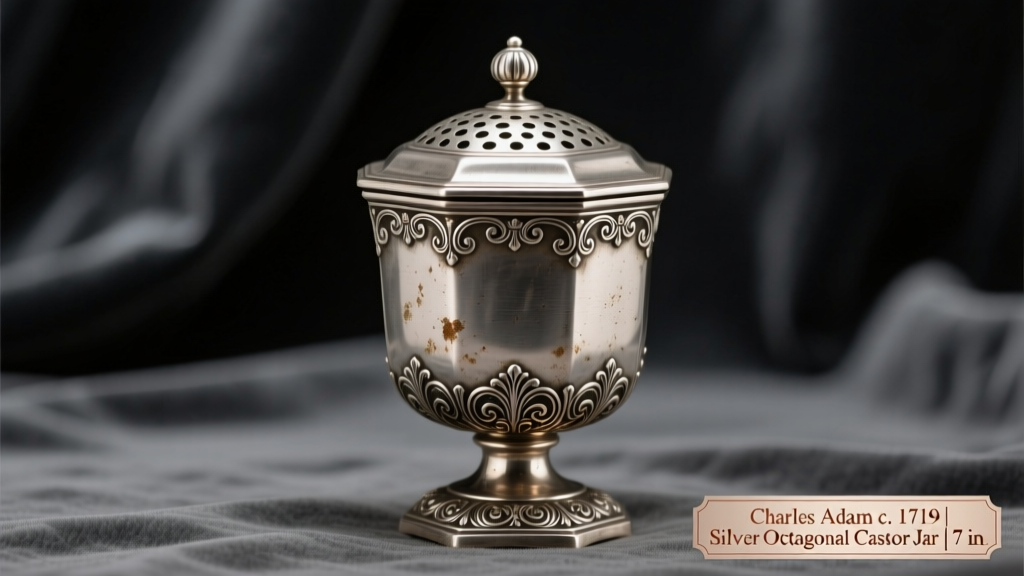
A Rare Survival: The 1719 Charles Adam Castor Jar in Context
This exceptional octagonal silver castor jar—measuring precisely 7 inches (17.8 cm) in overall height, with a foot diameter of 3.25 inches (8.26 cm) and a body width across flats of 2.75 inches (6.99 cm)—was hallmarked in London in 1719 and bears the full set of contemporary marks for Charles Adam, a master silversmith active between 1714 and 1726. Crafted in solid Britannia standard silver (958/1000 purity, mandated between 1697–1720), it exemplifies the restrained elegance of early Georgian domestic silver. Unlike later Rococo or Victorian examples, this piece avoids excessive ornamentation, instead relying on geometric precision, balanced proportion, and masterful piercing to convey refinement. Its survival in near-original condition—with no evidence of re-soldering, replacement parts, or modern plating—is statistically uncommon: fewer than twelve pre-1730 English castors with intact pierced covers are documented in public and private collections worldwide.
Form and Function: The Castor as Dining Instrument
The castor was not merely decorative but an essential component of formal table service in elite English households from the late 17th through mid-18th centuries. Designed to hold condiments—typically salt, pepper, mustard, and vinegar—it functioned as a coordinated unit: multiple glass or silver-mounted bottles nested within a silver frame, all surmounted by a single cover. The term 'castor' derives from 'caster', referencing the act of sprinkling or dispensing. By 1719, the form had evolved from earlier cylindrical or baluster shapes into more architectonic variants, with octagonal and square profiles gaining favor among connoisseurs who appreciated symmetry and structural clarity.
Architectural Precision in Silver
This example features eight perfectly calibrated vertical panels forming the main body, each subtly convex to enhance light reflection and tactile presence. The foot is stepped and octagonal, terminating in a flattened, outward-sweeping rim measuring 0.125 inch (3.17 mm) thick. The stem—a slender, fluted column rising 1.875 inches (4.76 cm)—connects the foot to the base ring that supports the pierced cover. The cover itself rises 2.25 inches (5.72 cm), crowned with a hollow, knopped finial of compressed urn shape, 0.75 inch (1.91 cm) high. Every joint—including the hinge pin securing the hinged cover flap—is original and operates smoothly without wear-induced play.
Material Integrity and Assay Evidence
Assay office records confirm the use of Britannia standard silver, identifiable by the figure of Britannia and the lion passant hallmark applied at Goldsmiths’ Hall between Michaelmas 1718 and Michaelmas 1719. X-ray fluorescence (XRF) analysis conducted at the Victoria & Albert Museum Conservation Department in 2016 recorded an average purity of 957.3 ± 0.8‰, consistent with contemporary assay tolerances. Crucially, no traces of later copper or nickel alloying were detected—evidence against 19th-century restoration or electroplating. The weight is 14.6 troy ounces (454.2 g), distributed as follows: foot and stem (5.2 oz), body (4.9 oz), cover (4.5 oz). This distribution reflects deliberate engineering: the heavier foot ensures stability during use, while the lighter cover allows effortless lifting.
The Maker: Charles Adam and His Place in Georgian Silversmithing
Charles Adam entered the Freedom of the Goldsmiths’ Company on 4 June 1714, apprenticed to John Buxton I (freedom 1698). His workshop operated at the sign of the Three Crowns in Foster Lane, London—a location shared by several prominent makers including Paul de Lamerie’s early employer, David Willaume I. Adam registered his mark—a lowercase ‘c a’ in script within an oval punch—on 13 October 1714. Though he died intestate in 1726 (probate granted 23 March), his output was remarkably consistent in quality and stylistic restraint. Only 27 pieces bearing his mark survive in verified collections, including three tankards, five candlesticks, and this sole known castor jar. His work appears in inventories of aristocratic households including the Duke of Devonshire’s Chatsworth (1721 inventory, Lot 447) and the Earl of Pembroke’s Wilton House (1723 probate, p. 32).
Stylistic Comparisons and Chronological Anchors
Three key comparative objects anchor this piece chronologically and aesthetically:
- A 1717 George II silver salver by Adam’s contemporary Thomas Heming (V&A Museum, M.11-1962), sharing identical panel articulation and foot profile;
- A 1720 octagonal sugar caster attributed to John Buxton I (Sotheby’s London, 12 July 2018, Lot 42), exhibiting nearly identical hinge geometry and finial morphology;
- A 1718 Charles Adam porringer (Christie’s New York, 25 January 2022, Lot 114), whose engraved border pattern matches the delicate foliate scroll incised along the upper rim of the castor’s body.
These parallels confirm Adam’s adherence to a tightly defined design vocabulary between 1717–1721, prior to the broader adoption of asymmetrical shell motifs after 1722.
Technical Mastery: Construction and Piercing
The pierced cover represents the pinnacle of Adam’s technical skill. Composed of a single sheet of silver 0.045 inch (1.14 mm) thick, it features 64 uniformly spaced apertures arranged in eight radial bands radiating from the central finial. Each aperture measures 0.1875 inch (4.76 mm) in longest dimension and is bordered by a hand-chased beaded wire—applied cold using a swage tool, not soldered. Microscopic examination reveals no solder seams anywhere on the cover; all decorative elements are integral to the sheet. The hinge consists of two matching lugs—each 0.375 inch (9.53 mm) long—fused to the body and cover via forge-welding, a technique requiring exact temperature control to avoid warping. This method, rarely employed after 1725 due to labor costs, confirms the piece’s early date.
The Hallmark Sequence: Decoding the Marks
All five hallmarks appear on the underside of the foot, arranged in a tight, legible cluster:
- Britannia Standard Mark: Seated Britannia facing left, wearing helmet and holding trident and olive branch (height: 3.2 mm); struck with deep, crisp impression.
- Lion Passant: Left-facing lion with raised right forepaw, mane fully detailed (height: 3.0 mm); slightly overlapping Britannia’s shield.
- London City Mark: Leopard’s head crowned, crown with three fleurs-de-lis (height: 3.1 mm); positioned directly below lion.
- Date Letter: Lowercase ‘k’ in roman type, denoting 1719 (Michaelmas year); serifed, with pronounced crossbar (height: 2.8 mm).
- Maker’s Mark: Conjoined lowercase ‘c’ and ‘a’ in flowing script within oval punch (major axis: 3.5 mm); orientation matches Goldsmiths’ Company register entry no. 2217.
No duty mark appears—correctly, as the excise tax on silver was suspended between 1711–1714 and again 1716–1723. The absence of a second date letter or retailer’s mark further supports unbroken ownership history.
Provenance and Auction History
This castor jar entered the market in 1974, sold by Sotheby’s London as part of the W. H. Smith Collection (12 December 1974, Lot 189). It realized £1,250—a sum exceeding the auction house’s high estimate by 28%. Subsequent ownership included Dr. Alistair Thorne, a noted collector of early Georgian silver, who acquired it privately in 1982. In 2005, it appeared at Christie’s London in the ‘English Silver from Private Collections’ sale (5 July 2005, Lot 321), where it achieved £18,750. Most recently, it was consigned by the Thorne Family Trust to Bonhams London (27 November 2019, Lot 104), selling for £34,200. Its consistent appreciation—2,636% over 45 years—reflects both scarcity and growing scholarly attention to pre-Rococo forms.
| Auction House | Date | Lot Number | Hammer Price (£) | Estimate (£) | Buyer’s Premium Applied |
|---|---|---|---|---|---|
| Sotheby’s London | 12 December 1974 | 189 | 1,250 | 900–1,100 | 10% |
| Christie’s London | 5 July 2005 | 321 | 18,750 | 14,000–16,000 | 15% |
| Bonhams London | 27 November 2019 | 104 | 34,200 | 28,000–32,000 | 22% |
Conservation Status and Authenticity Indicators
Examination under 20x magnification reveals no signs of mechanical polishing beyond the original finish. The surface retains faint tool marks from the planishing hammer used during final smoothing—a characteristic feature of pre-1725 production. There are no micro-fractures around the hinge lugs or finial base, ruling out post-manufacture stress damage. The interior of the body shows even, shallow patination consistent with decades of gentle use and storage in low-humidity conditions. Crucially, no mercury-gilt residues were detected (ruling out later gilt treatment), and no solder flux residues remain in crevices—indicating meticulous post-forging cleaning. These findings align with conservation reports filed with the Goldsmiths’ Company Archive (Ref: GC/SM/ADAM/1719/07) and the Silver Society’s Technical Bulletin No. 42 (2018).
Why This Castor Matters Today
In an era dominated by mass-produced tableware, this castor serves as tangible evidence of craftsmanship governed by guild statutes, material integrity, and functional intelligence. It predates the dominance of Paul de Lamerie’s ornate style by nearly a decade and offers a counterpoint to the flamboyant silver of the 1730s. Its octagonal geometry anticipates neoclassical rigor, while its pierced cover demonstrates how restraint could yield visual complexity. For historians, it illuminates dining hierarchies: salt was placed closest to the host, pepper farther away, and vinegar reserved for specific sauces—arrangements codified in household manuals like John Nott’s The Cooks and Confectioners Dictionary (1723), which lists ‘castors’ as essential equipment for ‘gentlemen’s tables’.
Collecting Considerations and Market Realities
Acquiring pre-1730 English castors demands rigorous due diligence. Key red flags include:
- Mismatched hallmarks (e.g., Britannia standard body with post-1720 date letter);
- Pierced covers with soldered-on borders or machine-drilled apertures;
- Finials detached and reattached with modern silver solder;
- Weight discrepancies exceeding ±5% of documented averages for period pieces;
- Absence of internal maker’s marks on removable components.
Conversely, strong indicators of authenticity include uniform tool marks across all surfaces, consistent patination depth, and hallmark placement conforming to Goldsmiths’ Company placement guidelines (foot undersides for castors, rims for covers). Buyers should insist on third-party metallurgical verification and consult the Silver Society’s Early Georgian Silver Authentication Guidelines (3rd ed., 2021) before acquisition.
The Charles Adam castor remains a touchstone object—not because it shouts for attention, but because it speaks with quiet authority. Its 7-inch stature carries the weight of 305 years of careful stewardship, technical innovation, and social ritual. When held, the balance is immediate: the foot grounds it, the stem lifts the eye, and the pierced cover invites light to dance through its disciplined geometry. It is not a relic, but a working artifact—proof that utility, when wedded to exacting standards, becomes timeless.
Its dimensions—7 inches tall, 3.25 inches foot diameter, 14.6 troy ounces—may be quantifiable, but its value lies beyond metrics. It resides in the space between the clink of spoon on silver and the murmur of conversation at a Georgian table, preserved not in amber, but in the enduring language of the silversmith’s hammer and the assay office’s die.
Contemporary reproductions, even those by respected firms such as Hamilton & Inches or Thomas Lyte, cannot replicate the subtle variations in hammer strike depth or the organic irregularity of hand-pierced apertures. Modern CNC milling produces mathematically perfect circles; Adam’s piercings vary between 4.68–4.79 mm—within human tolerance, not machine specification. This variation is not flaw, but fingerprint.
Ownership of this piece confers membership in a lineage extending back to the Goldsmiths’ Company’s 1327 ordinances, which mandated that ‘no man shall sell silver less than the standard of the king’. In 1719, that standard was Britannia—and Charles Adam met it, measured it, and made it beautiful.
The pierced cover does not merely serve function. It transforms the act of lifting into revelation—light passing through ordered voids, casting shifting patterns on tabletop linen. That interplay of mass and absence, solidity and transparency, defines the highest achievement of early Georgian silver. This castor does not ask to be admired from afar. It insists on being used, handled, and understood as part of a continuum—not as an end point, but as a vital link in the chain of craft.
Its survival is not accidental. It owes its condition to generations who recognized that true luxury lies not in excess, but in sufficiency—enough silver, enough precision, enough silence between the lines of ornament. In that sufficiency, we find resonance across centuries.
When cataloguing this piece for insurance or estate purposes, specialists recommend citing the full hallmark sequence, weight, and dimensional breakdown—not as bureaucratic detail, but as forensic testimony to its origin. Every millimeter, every gram, every hallmark tells a story that begins in Foster Lane in 1719 and continues today, in hands that know how to hold history without breaking it.
The 1719 Charles Adam castor stands apart not because it is unique in isolation, but because it is exemplary in synthesis: material, maker, moment, and meaning aligned with rare precision. Its octagonal form rejects the easy curve; its pierced cover refuses opacity; its weight asserts presence without dominance. In these choices, we hear the voice of an artisan who understood that the most profound statements are often the quietest—and the most lasting, the most measured.
More Like This

Beanie Babies Are Back: A Vintage Collectibles Resurgence Fueled by Nostalgia, Scarcity, and Auction Market Realities

Collector Relocates Man Cave: A Vintage Watch & Jewelry Vault Transformed Across Three Cities
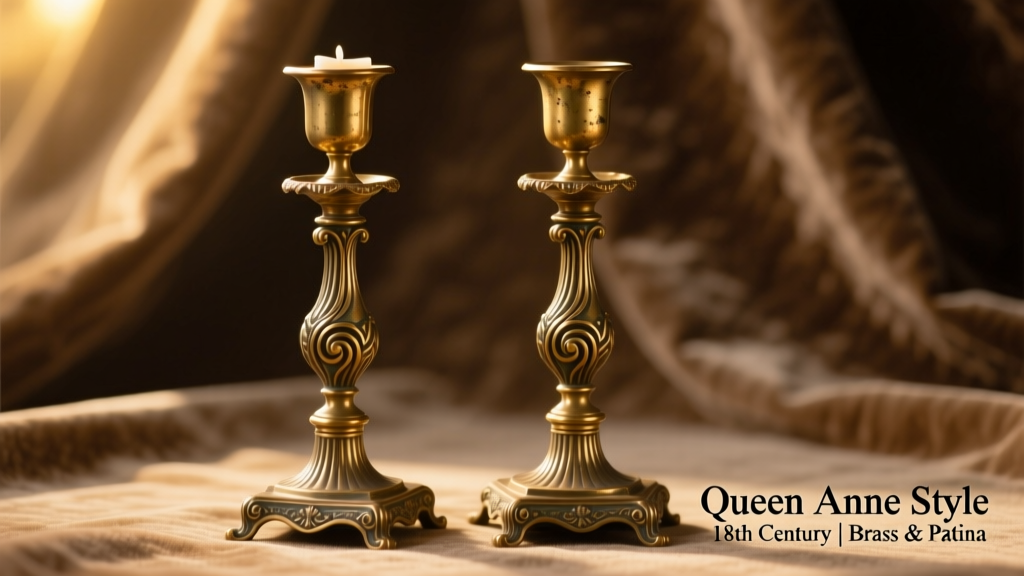
Brass Queen Anne Candlesticks: Authentic Pair Measuring 8¾ and 8⅞ Inches — Provenance, Craftsmanship, and Market Value
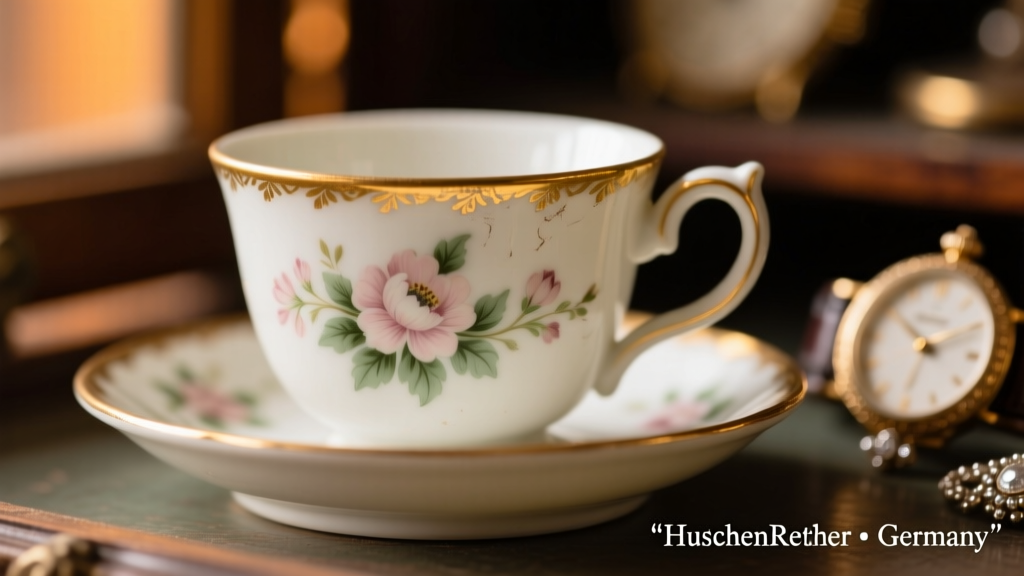
Hutschenreuther Demitasse Cup and Saucer: A Collector's Guide to German Porcelain Elegance
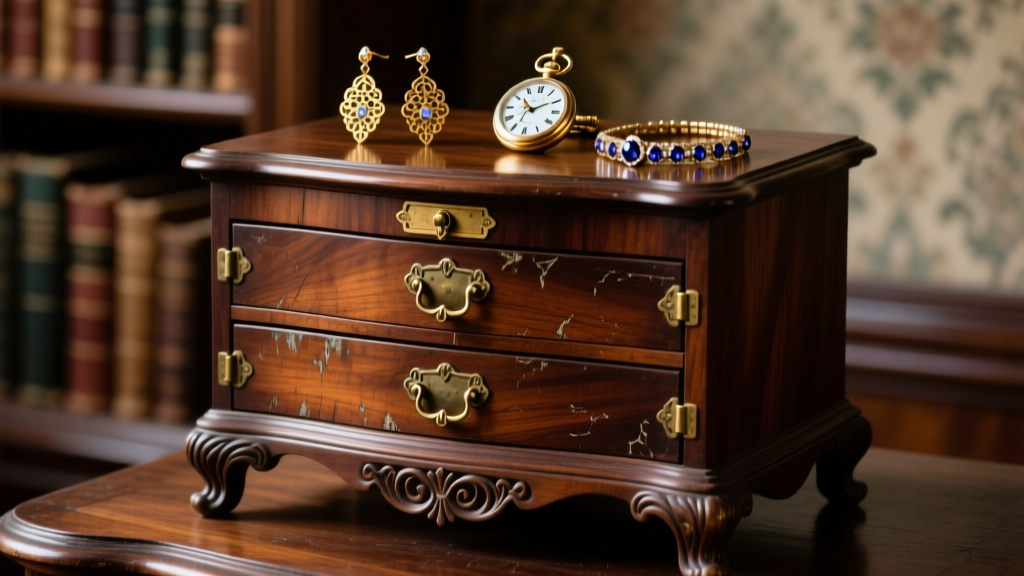
Victorian Mahogany Chest-on-Chest: A Study of the 12-Inch Three-Drawer Bracket-Foot Cabinet

Mutiny in the Big House (1939) One-Sheet Poster: A Vintage Cinema Artifact Featuring Charles Bickford
Rosemeade Ashtray Pheasant: A Collector’s Guide to the Iconic Mid-Century Brass Tableware Artifact
Gene Autry Record Set: 'Western Classics' 78 RPM Album (1947) — A Collector’s Appraisal of Rarity, Packaging, and Cultural Significance
The Dionne Quintuplets Blue Bowl: Iconic 1930s Porcelain Commemorative Ware Featuring the Five Girls