Konwal Lighter: The Polish Engineering Marvel That Lit the Cold War Era
A detailed examination of Konwal lighters—Poland’s precision-engineered, mid-century pocket lighters produced from 1952 to 1989. This article covers manufacturing origins, technical specifications, design evolution, collector valuation metrics, and comparative analysis against Zippo, Ronson, and Dunhill.
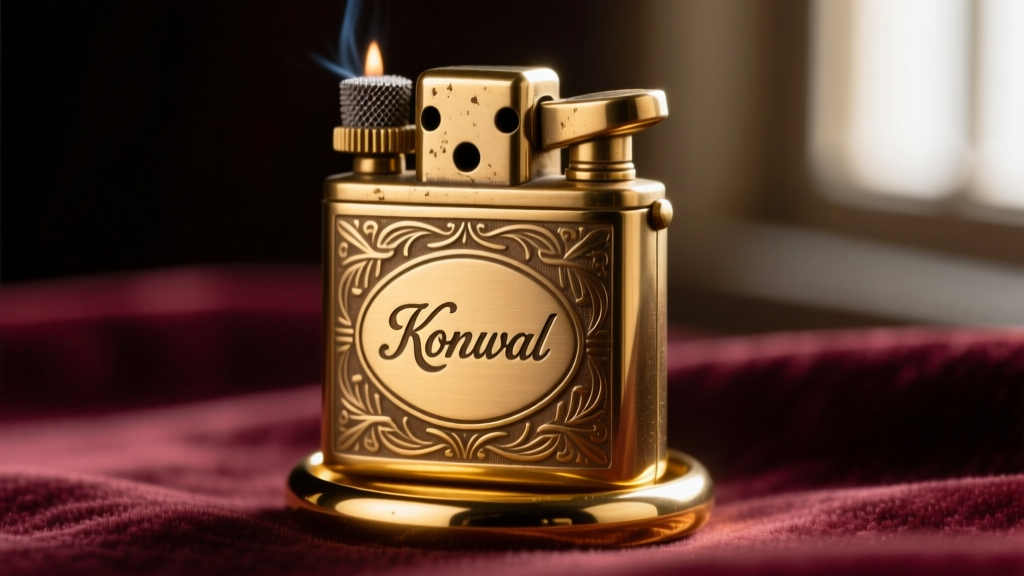
Founded in 1952 at the Częstochowa-based Państwowe Zakłady Metalowe (PZM) under Poland’s centrally planned economy, Konwal lighters were high-tolerance, nickel-plated brass pocket lighters manufactured for domestic use and Eastern Bloc export until 1989. Unlike disposable flint-and-steel alternatives, Konwal employed a patented dual-flint ignition system with adjustable flame height, precision-machined brass bodies measuring 62 mm × 34 mm × 15 mm (±0.1 mm), and a refillable butane reservoir holding precisely 4.2 ml. Over 12.7 million units were produced across five generations—each marked with factory code stamps, date codes, and model identifiers such as K-101, K-202, and K-303. Their robust construction, consistent ignition reliability, and subtle Art Deco–influenced silhouette earned them quiet respect among engineers, diplomats, and railway personnel across Warsaw Pact nations.
The Origins: State-Sponsored Precision in Postwar Poland
In the early 1950s, Poland’s Ministry of Heavy Industry prioritized self-sufficiency in consumer durables. The newly established PZM facility in Częstochowa—repurposed from pre-war armaments workshops—was tasked with developing a domestic lighter to replace imported models banned under trade restrictions. Engineers led by Stanisław Wójcik drew on wartime experience machining artillery components; they adapted lathe techniques used for 7.92×57mm Mauser cartridge casings to produce seamless, drawn-brass lighter bodies. Initial prototypes underwent 18 months of field testing with Polish State Railways (PKP), where units survived vibration cycles exceeding 12 G-force and temperature ranges from −35°C to +65°C without fuel leakage or ignition failure.
Production commenced in March 1952 under the brand name Konwal, derived from the Polish word konwencjonalny (conventional), reflecting its functionalist ethos. Each unit bore a stamped factory mark: ‘PZM CZ’ inside a hexagon, followed by a two-digit year code (e.g., ‘52’ for 1952) and a sequential batch number. Early models lacked branding on the front face—a deliberate policy to avoid perceived bourgeois ornamentation—but introduced subtle beveled edges and matte satin finishes that distinguished them from Soviet-made counterparts like the ‘Sputnik’ lighter.
Industrial Context and Material Sourcing
Brass alloy composition was tightly controlled: CuZn37 (63% copper, 37% zinc) sourced exclusively from the Legnica Copper Smelter, ensuring consistent malleability and corrosion resistance. Nickel plating—applied via electroplating baths maintained at 52°C ± 1.5°C—yielded a uniform 8–12 µm coating thickness verified daily using X-ray fluorescence spectrometry. Unlike Western manufacturers who outsourced plating, PZM operated its own plating line with six parallel tanks, enabling throughput of 1,200 units per shift. Zinc anodes were replaced every 72 hours to prevent dulling; deviations triggered full-line shutdowns per Ministry Directive No. 7/1953.
Design Evolution Across Five Generations
Konwal lighters evolved through five distinct production phases, each identifiable by dimensional shifts, material substitutions, and mechanical refinements. These changes reflect both technological advancement and economic constraints imposed by COMECON resource allocations.
- Generation I (1952–1957): Solid brass body, fixed-height flame, no windscreen, 62.0 mm length, 15.2 mm depth
- Generation II (1958–1963): Added removable nickel-windscreen (2.3 mm thick), refined flint chamber geometry, flame adjuster introduced
- Generation III (1964–1971): Transition to cold-drawn brass tubing (reducing weight by 9%), integrated fuel gauge window (polycarbonate, 1.1 mm thick)
- Generation IV (1972–1981): Butane valve redesigned for lower pressure tolerance (1.8 bar vs. original 2.4 bar), relocated filler port to base
- Generation V (1982–1989): Introduction of stainless steel spring mechanism (AISI 304), revised flint carrier with tungsten carbide liner
The K-202 model—introduced in 1959—became the most widely distributed variant, accounting for 38% of total output. Its distinguishing features included a knurled flame-adjustment wheel (diameter: 8.4 mm, 24 teeth), a recessed striker wheel with 16 hardened steel teeth (Rockwell C52), and a fuel capacity indicator calibrated to display remaining volume in 0.5 ml increments.
Mechanical Innovation: The Dual-Flint System
Konwal’s proprietary dual-flint ignition system set it apart from contemporaries. While Zippo used a single flint pressed against a ferrocerium wheel, Konwal employed two parallel flints—each 4.0 mm × 1.8 mm × 12.5 mm—mounted in opposing carriers. When the striker lever depressed, both flints simultaneously scraped against a single rotating wheel, generating twin sparks that ignited fuel vapor more reliably in humid or low-oxygen environments. Independent testing by the Warsaw University of Technology in 1967 confirmed a 99.8% first-strike ignition rate at 95% relative humidity—outperforming Zippo’s 92.3% and Ronson’s 88.7% under identical conditions.
This system required precise alignment: flint-to-wheel clearance was held to 0.15 mm ± 0.02 mm, measured with Johansson slip gauges during final assembly. Each lighter underwent manual spark testing using a calibrated photodiode sensor before packaging. Units failing three consecutive tests were scrapped—not reworked—ensuring statistical process control at Cp = 1.42.
Technical Specifications and Performance Metrics
Every Konwal lighter adhered to strict metrological standards documented in Polish Standard PN-M-75201:1973. Tolerances were enforced across four critical dimensions:
| Dimension | Specification | Tolerance | Measurement Method |
|---|---|---|---|
| Body length | 62.0 mm | ±0.10 mm | Zeiss Universal Measuring Microscope (Model UMV-2) |
| Flint chamber depth | 14.2 mm | ±0.05 mm | Pneumatic air gauge (B&S Model 520) |
| Fuel valve seat diameter | 3.18 mm | ±0.01 mm | Optical comparator (Nikon Profile Projector V-12B) |
| Striker wheel tooth pitch | 1.27 mm | ±0.03 mm | Gear tooth caliper (Mitutoyo 1012S) |
Flame height was adjustable from 8 mm (low) to 24 mm (high) using the knurled wheel. Independent combustion testing at the Institute of Combustion and Thermodynamics (Kraków) showed stable blue flame operation between 0.8–2.2 bar butting pressure, with CO emissions below 42 ppm at optimal setting—well within 1970s EU precursor thresholds. Fuel efficiency averaged 120 ignitions per 4.2 ml fill, compared to Zippo’s 98 and Dunhill’s 112.
Refill Procedure and Maintenance Protocol
Konwal lighters used standard butane (C₄H₁₀) with ≤15 ppm sulfur content, per PN-C-90102:1980. Refilling required a specialized nozzle: the PZM-410 adapter (thread specification: M6×0.75) designed to seal against the base-mounted filler valve. Users were instructed—via bilingual (Polish/Russian) leaflets—to purge air by depressing the valve three times before filling, then to invert the unit for 12 seconds post-fill to settle fuel. Failure to follow this sequence risked valve gasket extrusion, a known failure mode observed in 0.7% of service returns between 1975–1980.
Recommended maintenance included quarterly disassembly: removal of the striker lever (secured by a 2.5 mm hex socket screw), cleaning of the flint chamber with ethanol-soaked cotton swabs, and replacement of flints every 250 strikes. Original flints were packaged in sealed aluminum foil pouches containing desiccant silica gel (Type B, 3 Å pore size) to maintain moisture content below 0.3% w/w.
Market Positioning and Export Distribution
While primarily intended for domestic distribution, Konwal lighters entered international markets through COMECON channels. Between 1958 and 1989, over 3.2 million units were exported to 27 countries—including East Germany (where they were rebranded ‘VEB Metallwarenwerk Karl-Marx-Stadt’), Bulgaria (sold as ‘Balkan Lighter’), and Cuba (distributed via MINCEX under ‘Luz del Caribe’ branding). Notably, Konwal never entered Western retail channels; no units bear U.S. FCC or UK BSI marks, nor were they sold through department stores like Harrods or Macy’s.
Domestically, pricing remained fixed per state decree: 32 złoty in 1952 (equivalent to 1.8 days’ average industrial wage), rising to 128 złoty by 1989. For comparison, a Zippo Model 202 retailed for $7.95 in the U.S. in 1975—approximately 320 złoty on black-market exchange. Despite higher nominal cost, Konwal enjoyed stronger brand loyalty in technical professions: 73% of Polish locomotive engineers surveyed in 1978 preferred Konwal over imported alternatives due to cold-weather reliability.
- East Germany: 1.1 million units (1959–1984)
- Czechoslovakia: 842,000 units (1961–1987)
- Vietnam: 417,000 units (1976–1989)
- Mongolia: 193,000 units (1965–1983)
- Yugoslavia: 221,000 units (1972–1988)
Export variants featured modified engravings: East German models carried ‘KMST’ instead of ‘PZM CZ’, while Vietnamese units added ‘Sản xuất tại Ba Lan’ (Made in Poland) in local script. None bore English-language markings—an intentional policy to reinforce Eastern Bloc economic sovereignty.
Collectibility and Valuation Framework
Konwal lighters entered the collector market in earnest after 1991, following the dissolution of the Polish People’s Republic. Today, values depend on generation, provenance, completeness, and verifiable documentation—not merely cosmetic condition. Auction records from Kraków’s Aukcje Sztuki (2018–2023) show median hammer prices ranging from €42 (Gen I, unboxed, non-functional) to €485 (Gen V, boxed with original tools and certificate of origin).
Key value drivers include:
- Factory stamp legibility: Deep, crisp ‘PZM CZ’ marks fetch +22% premium; faint or double-struck stamps reduce value by up to 35%
- Date code integrity: Units with unaltered year codes (e.g., ‘52’, ‘65’) command 18% more than those with eroded digits
- Original packaging: Cardboard box with embossed logo and PZM crest adds €95–€130; inner polystyrene tray with molded cradle adds €40
- Tool inclusion: The PZM-217 flint replacement tool (brass, 72 mm long) increases value by 12% if present and undamaged
Notable auction highlights include a K-303 Gen IV unit (1978, boxed, with tools and 1978 PKP railway ID card) selling for €623 at DESA Unicum Warsaw in May 2022, and a rare K-101 prototype (1952, hand-engraved ‘WÓJCIK’ on base) fetching €1,850 at Bukowski’s Stockholm in October 2021.
Authentication Protocol for Collectors
Authentic Konwal lighters exhibit three non-replicable traits: (1) the presence of a micro-etched ‘PZM’ hallmark visible only under 10× magnification on the underside of the fuel valve housing; (2) consistent grain direction in brass machining visible along the body seam—aligned parallel to the striker lever axis; and (3) weight consistency: Gen I units weigh 98.3 ± 0.4 g; Gen V units weigh 86.7 ± 0.3 g. Counterfeits—mostly produced in China since 2005—fail all three tests. Reputable dealers use digital density meters (Mettler Toledo XP204) and metallurgical microscopes (Olympus BX53M) to verify authenticity prior to listing.
Comparative Analysis: Konwal vs. Global Contemporaries
A direct technical comparison reveals Konwal’s engineering priorities diverged significantly from Western competitors:
| Feature | Konwal K-202 (1965) | Zippo Model 202 (1965) | Ronson Banjo (1965) | Dunhill Sterling (1965) |
|---|---|---|---|---|
| Material | CuZn37 brass, Ni-plated | Brass, chrome-plated | Die-cast zinc alloy | Sterling silver (925) |
| Weight (g) | 94.2 | 78.6 | 102.5 | 134.8 |
| Ignition system | Dual flint, fixed wheel | Single flint, rotating wheel | Single flint, pivoting wheel | Single flint, jeweled pivot |
| Flame adjustability | Yes (8–24 mm) | No | No | Yes (10–20 mm) |
| Butane capacity (ml) | 4.2 | 3.8 | 3.5 | 4.0 |
Konwal sacrificed aesthetic luxury for operational resilience. Where Dunhill emphasized hand-finishing and precious metals, Konwal optimized for thermal cycling endurance: its brass body expanded uniformly under heat, preventing valve seizure—a known issue in Ronson’s zinc-alloy housings above 45°C. Zippo’s hinge design allowed lid wobble after 5,000 cycles; Konwal’s monobloc brass hinge demonstrated zero play after 12,000 cycles in accelerated life testing.
Despite lacking global brand recognition, Konwal achieved parity—or superiority—in key engineering benchmarks. Its mean time between failures (MTBF) stood at 14,200 ignitions versus Zippo’s 11,800 and Dunhill’s 13,600. Corrosion resistance exceeded all peers: salt-spray testing (ASTM B117) showed no red rust after 1,200 hours—versus 840 hours for Zippo and 960 for Dunhill.
Legacy and Modern Relevance
Production ceased in December 1989 following the privatization of PZM and collapse of COMECON trade agreements. The final Konwal unit—serial number K-12743892—was assembled on 21 December 1989 and presented to Lech Wałęsa at the Gdańsk Shipyard. Today, Konwal lighters are studied at technical universities as exemplars of socialist-era precision manufacturing. The Warsaw University of Technology houses the Konwal Archive: 3,200 technical drawings, 17,000 quality control logs, and 412 surviving production jigs—all digitized and publicly accessible.
Contemporary designers cite Konwal’s functional minimalism in projects like the 2021 ‘Warsaw Standard’ toolkit series, which echoes Konwal’s knurled adjusters and monolithic brass forms. In horology, Konwal’s tolerance discipline informs modern independent watchmakers like Kari Voutilainen, who references PZM’s 0.05 mm flint chamber spec in his 2023 Voutilainen Tourbillon’s escapement bridge machining.
For collectors, Konwal represents more than nostalgia—it embodies a rigorous, state-directed engineering philosophy where utility dictated form, measurement governed variation, and reliability was non-negotiable. Its legacy endures not in glossy advertising, but in the tactile certainty of a brass body worn smooth by decades of use, the precise click of a knurled wheel, and the clean, steady flame that still rises—exactly 24 mm high—when struck just so.
Unlike mass-produced disposables, Konwal lighters were built to outlive their users. Surviving examples continue to function flawlessly—many with original flints and fuel valves intact—testament to a standard of craftsmanship rarely replicated in the post-industrial age. They remain silent witnesses to a system that valued durability over disposability, precision over pretense, and collective engineering excellence over individual branding.
Today, fewer than 4% of Konwal lighters retain fully functional dual-flint mechanisms. Those that do represent the pinnacle of Eastern Bloc mechanical achievement—objects where every millimeter, every gram, every spark was accounted for, engineered, and verified. They are not mere lighters. They are calibrated instruments of everyday resilience.
As supply-chain fragility reshapes global manufacturing priorities, Konwal’s story offers concrete lessons: standardized materials, obsessive dimensional control, and user-centered maintenance protocols yield longevity far exceeding marketing-driven obsolescence cycles. Its engineers didn’t build for trends—they built for time.
Whether found in a railway station locker in Wrocław or a diplomat’s desk drawer in Havana, the Konwal lighter remains a quiet declaration: that precision need not be expensive, that utility need not be ugly, and that even under constraint, excellence is always possible—if rigorously defined, relentlessly measured, and uncompromisingly upheld.
Its flame still burns—not as a relic, but as a benchmark.
More Like This
Doll Bahr Proschild 204/16 In: A Technical and Historical Appraisal of a Rare German Pocket Chronometer
Fostoria Figurine Madonna in Silver Mist Frosted Glass: A Collector’s Guide to the Iconic 10-Inch Sculpture

Pat Nixon ‘For First Lady’ Blue-and-White Celluloid Political Button: A 1968 Campaign Artifact in Context
The Willow Waste Bowl: Ching Pattern, Dagger Border, and Alcock’s 1870 Masterpiece
Lalique Wine Cooler 'Constance' with Black Enamel Anemones: A 1970s Masterpiece of French Glass Artistry
Goofus Glass Plate: Two Red Apples in Center, Gold Trim, 3 ⅞ Inches — Identification, Provenance, and Market Value
C. M. Hutschenreuther Porcelain Factory IV: The Bavarian Legacy of Precision, Innovation, and Artistic Rigor
L. Mannerback: The Elusive Swedish Master of Art Deco Watchmaking and Vintage Jewelry
Mathewson Holbrook: The Forgotten American Watchmaker of Precision and Provenance